After a refresher this weekend on the first two films, I headed to the theater for Tron: Ares. It was labeled as a soft reboot but really is another sequel, picking up years after the second film in the series. It ended up bombing at the theaters, but the future of the franchise looked pretty bleak after the second movie (and the first movie didn’t do great back in ’82 either), so maybe they’ll make another one day? I’m hoping so, because I actually enjoyed it.
Sam Flynn is out the picture, and running the company now is Eve Kim, opposed by Dillinger’s (bad guy from the first film) grandson, who has his own company. Both groups are working towards the same goal, what they call the “permanence code.” We know from past Tron movies that people can physically enter “the grid” (computer networks), and the companies have made it possible to bring computer programs into the real world, but for some reason, they only last for 29 minutes before the programs fall apart (literally) and disintegrate. If they can figure it out to make those programs permanent, it could solve many of the world’s problems. Imagine writing a program about a field of fruit-producing trees and them 3D print them into the real world — no more starvation. Eve and her counterpart Julian Dillinger want to fix that problem (her to solve the world’s problems, him to print advanced weapons and super soldiers to sell to the military), and it’s a race to who gets there first.
To meet his goal, Julian has written a program named Ares (Jared Leto) who is hunting for the permanence code. Eve actually comes up with it first, so Ares is seeking her, and as a computer program with immediate access to anything that is networked (security cameras, text messages, etc) he’s pretty fast. And he has to be fast, because every time he is brought into the real world, he has just 29 minutes before he goes away and has to be re-integrated. There’s a lot of techy stuff here and it won’t be everyone’s cup of tea, but the film is action packed and a wild ride from beginning to end. It does set up for another sequel (which, based on box office numbers, may not come any time soon) but I hope Disney continues this train at some point. ★★★★
The Life of Chuck, based on a Stephen King short story, is a bit of a throwback. It is like some of the classic King books that were light on horror (though it does have a supernatural element) and heavy on heart. When the film begins, shit is starting to go wonky in the world. There have been intermittent internet outages across the globe, leading to panic, and shortly after, natural disasters begin ramping up. Rumors start flying that the world is ending. A teacher, Marty (Chiwetel Ejiofor) and his ex-wife Felicia (Karen Gillan) begin to notice billboards and TV commercials thanking an unknown man, Charles (Chuck) Krantz, for 39 years of an amazing life, and it seems whoever this Chuck is, his impending death is related to the destruction of the world. When Marty and Felicia are sitting outside one night, after the internet has gone down for good and California has fallen into the sea, they notice stars overhead are winking out. In mid-sentence, the screen cuts to black, and we know the world has ended. But why? We next flash back nine months, and finally meet Chuck (Tom Hiddleston), who seems to be a happy-go-lucky guy. Walking down the street, he comes across a busker playing the drums, and, reminded of his grandmother banging on a pot when he was a child, begins to spontaneously dance. Others pay notice and everyone has a good time. However, Chuck gets a headache, which leads to his diagnosis of brain cancer. Further flashbacks later show Chuck as a kid, being raised by his grandparents after a car accident killed his parents and little sister, and the secret in the attic that may lead to the future end of the world. There’s some great suspense, but also a lot of love, laughter, and joy. For a movie about the end of all things, its funny that I walked away feeling good. It really is kind of a feel-good film and I loved it. ★★★★½
Next up are two great international films, starting with Concrete Utopia out of South Korea. A drama disguised as a disaster film, the movie opens on a shot of a row of apartment buildings, just before a major earthquake topples all of them except one. Right in the middle, one tall building remains standing, and its inhabitants are left to decide how to handle other survivors who come seeking shelter, because as they say in Game of Thrones, winter is coming. As the days and weeks go by and no word comes from “the outside world,” the people realize they very much are on their own, so in order to save resources and survive, they make the decision to only allow the apartment’s original renters stay, and everyone else must go. They elect one of their own as a leader and decision-maker, and he starts by calling those non-residents “roaches” (because they only come out looking for a hand-out, according to him), and dehumanizing them has the intended effect of making it easier to ignore their pleas, even as they begin to freeze to death outside. Finally though, as weeks turn into months, the apartment’s residents must set up teams to go out in the wasteland and hunt for food and supplies, and there are still survivors out there who have memories for how they were treated, and even for those who were not kicked out, rumors have spread about “the wealth” that exists in the lone-standing apartment building. Not to mention the fallout that comes when the residents learn that their leader may not be who he says he is. Very intense film, with a stark look at what lows people will sink to when faced with hardship. ★★★★
From South Korea we move southwest to Hong Kong, for Time Still Turns the Pages. Told in the present as well as flashbacks to the past, the film focuses on a teacher named Cheng. The school is rocked when a suicide note is found in a wastebasket, and Cheng and his fellow teachers are on a mission to find who wrote the note, in order to get them help. Cheng in particular seems driven, and we learn why through flashbacks to his past. As a young boy, Cheng was lonely and emotionally abused by his parents. His younger brother is a prodigy, both in school and at the piano, and excels at everything he tries. As such, the parents heap praise on him, while constantly asking Cheng why he can’t be more like his brother. And Cheng really does try, practicing piano until his fingers hurt and studying long hours before tests, only to continue to fail, even being held back a grade, while his little brother is admitted to a prestigious private school. Cheng begins to write in his diary about how terrible he is, how he’ll never amount to anything, and writes his own suicide note. I always stay away from spoilers in my blog, but HUGE SPOILER HERE (you’ve been warned): we soon learn that adult Cheng is not the elder brother. He is the younger brother who survived and lived on after his older brother killed himself as a child. The death rocked the family, with the mother leaving, the father blaming himself (let’s be honest, rightfully so) and the younger Cheng deciding to become a teacher instead of a doctor or lawyer, as his father dreamed. Such a very sad film, my heart ached as the elder boy, aged no more than 9 or 10 and very young still, cried at night, aching for the love of a father who refused to do so. Definitely makes you want to go give your kids a hug. ★★★★½
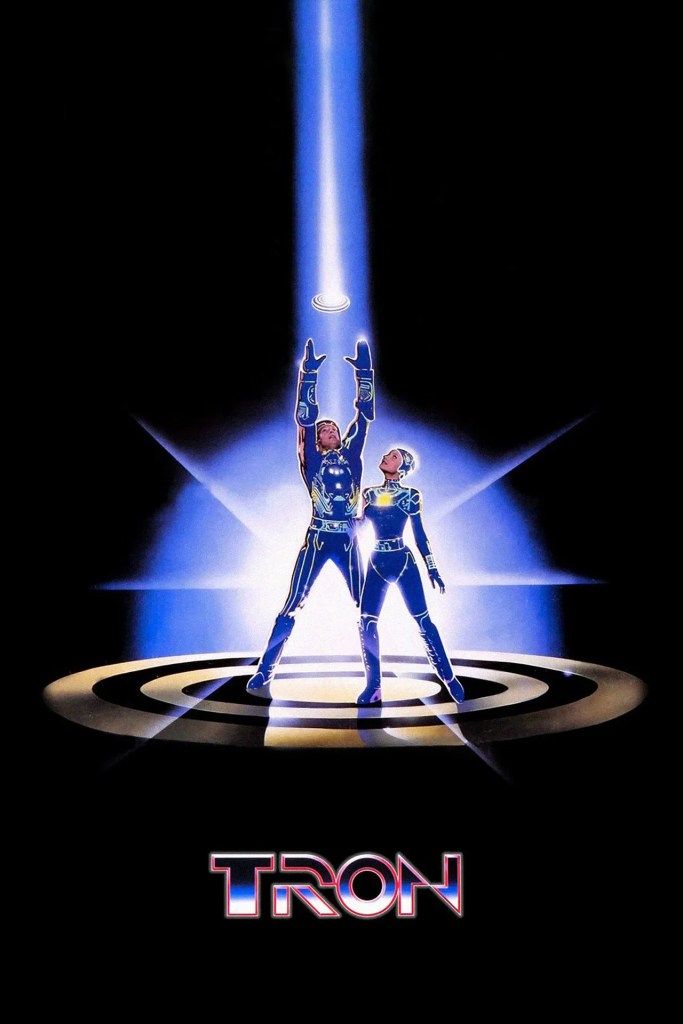
Will be seeing the newest Tron film shortly, so I decided to go back and revisit the first two movies. Tron was a favorite of mine as a child, so my thoughts on it are admittedly skewed positive. I’ve probably seen it more than 10 times as a kid, but it has been many years (decades) since I saw it last, and watching it as an adult is a much different experience. If I’d just seen it for the first time, I’d probably think it wasn’t very good, but I can’t separate my memories from it, so it’s still good to me! It stars Jeff Bridges as Kevin Flynn, a software engineer whose major program was absconded by an executive, Dillinger, at the company he worked for. Dillinger’s own program, the Master Control Program (MCP) is an early artificial intelligence that has been gobbling up programs to make itself smarter and more powerful. All of these programs exist in a virtual world, and when Flynn tries to start hacking into it, the MCP “zaps” him and digitally transports his body into the computer system. Now inside, Flynn must try to take out the MCP with the help of other programs, including Tron, the program written by Flynn’s fellow conspirator Alan Bradley. Being a “user” and not a written program, Flynn does have powers that the others do not, so they just might pull it off. The movie’s ideas are pretty groundbreaking for its day (1982!) and as such, the critics didn’t really get it and called it “incoherent.” It makes a lot more sense now, even if it often comes off as campy. Still, the film relied heavily on computer animation, the first of its kind, and while it is dated obviously by today’s standards, it isn’t half bad and is a whole lot of family fun to watch and relive. ★★★★
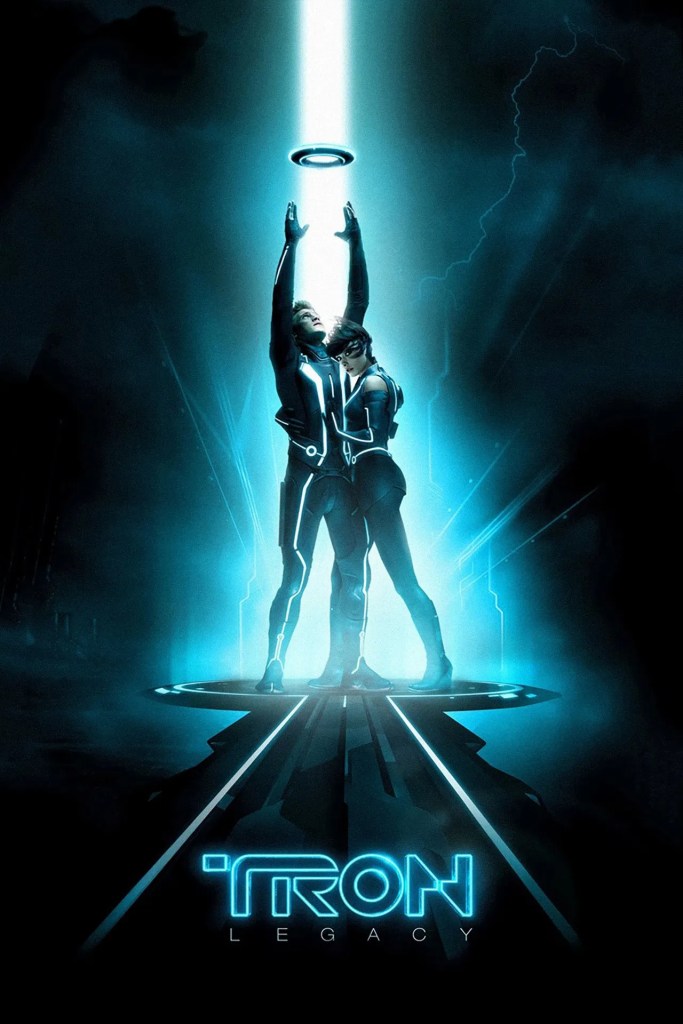
I was not a fan of Tron: Legacy when it came out (15 years ago already, time really flies) and this was just my second viewing. I liked it lot more this time around, maybe because I watched just after the first, and some of the campy nature felt as more of a continuation. (Side note: it was directed by Joseph Kosinski, his first film. He would later go on to do movies I really enjoyed like Oblivion, Top Gun: Maverick, and F1.) The film begins 7 years after the first, and Flynn has been building a new, connected virtual world. However, he mysteriously disappears one night, and after a flash forward to present day, his son, Sam, is all grown up. Sam has been struggling with his legacy of taking over the software company, and when he gets a clue as to the location of his missing father, his search leads him to be pulled into the virtual world. Turns out that Flynn had written a program, Clu, to help him in his building efforts, and Clu turned on him many years ago, trapping Flynn in the computer system. A few minutes in the real world can be years in the virtual, so since Flynn has been missing for 20 years, he’s lived in hiding in his virtual world for centuries. If he leaves his little sanctuary, Clu will know and hunt him down, with the ultimate goal of nabbing Flynn’s data disc, giving Clu the power to enter the real world. This must not happen, so when Sam reunites with Flynn, they team up to try to stop Clu and get to the portal to escape the virtual world together. There’s a whole lot going on here, and the film does suffer from trying to de-age actor Jeff Bridges to play the younger program Clu; the technology just wasn’t there yet in 2010 (and is still not quite to this day), giving the digital actor a blank, glass-like look. However, the exciting moments are still plenty good, so I’m hoping for a solid continuation in Tron: Ares when I see it later today. ★★★
TV series recently watched: Chief of War (series), Portlandia (seasons 1-2)
Book currently reading: Crossroads of Twilight by Robert Jordan
40 Acres is a post-apocalyptic film (my favorite!) taking place a dozen years in the future, after a fungal infection wiped out livestock, which was followed by a second civil war in the USA and the complete breakdown of government. Citizens have been left to fend for themselves, with families grouping together around any small plot of land they can farm, which they fiercely (and violently) defend against marauders, the worst of whom have become cannibals. The movie revolves around one such farm, where former marine soldier Hailey Freeman and her small family and close-knit friends have built a pretty comfortable life. It would be very comfortable if not for the occasional bad guys trying to come in and kill everyone, but the Freemans have done a good job of not broadcasting where they are, and even the youngest members of the group are well trained in firearms and hand-to-hand combat. Hailey runs the place with military precision, but when her eldest son Emanuel sees a hot young stranger bathing in a nearby river, and later rescues her when she’s being chased in the woods from some bad characters and brings her back to the barn, he puts the entirety of their existence in peril. There’s some not-so-great acting from a few of the characters, and a few silly throw-away scenes (one in particular near the end of the film, where the Freemans let some bad guys in and purposefully put the kids in danger, only to set up a joke that was referenced earlier in the film, is truly cringe-worthy), but the story is a step above the norm and there’s enough mystery and tons of trepidation built in to overcome some of the film’s shortcomings. Overall pretty good movie, which could have been great. ★★★½
The next couple films are about people eking out a life on the fringes of society. Paradise is Burning follows 3 sisters trying to survive on their own after their mother, who has suffered a lifetime of mental illness, has disappeared (as she has done before) for several months. The eldest, Laura, is finishing high school (barely, when she goes to class) and is trying to keep the secret of the missing mom from social services, who would swoop in and split up the girls to the foster care system. Th middle daughter, Mira, is around 11 or 12 and helps when she can, leaving 7-year-old Steffi to often fend for herself. The family is constantly on a knife’s edge, where any small error can explode in their faces, and they are currently facing a problem not so small. Child services does call one day after Laura’s latest unexplained school absence, needing to set up a meeting with mom to make sure all is OK, and Laura assures them that mom is just busy, but will be available to meet in a week. With a deadline looming, Laura needs to find a stand-in “mom,” and sets her eyes on a new woman in the neighborhood whom Laura hopes she can convince to act the part. Laura even goes so far as to seduce the woman, but as you know, the best laid plans… Really startling film about the bonds of sisterhood and what lengths people will go to to keep a family together. ★★★★½
Another good one in Souleymane’s Story, the most recent film (of many in the last half-dozen years) shining a light on the plight of immigrants in Europe. Souleymane escaped Guinea to France looking for a better life, but his time there may be coming to an end. His asylum petition meeting is in 2 days, and until immigrants clear that hurdle, they are not allowed to work. Obviously people need money to live not to mention help themselves on the path to asylum, so Souleymane has been “renting” the food delivery account (think Uber Eats or Door Dash) from an immigrant who has been granted asylum already, for an astronomical fee, despite Souleymane doing all the work. He’s also been paying a swindler for fake papers and a concocted “story” that he can give the asylum interviewers for a better chance of passing. But all shit breaks loose in those final 2 days. Always tight on funds, Souleymane is stiffed on a couple deliveries, gets hit on his bike by a car, and faces not having papers for his meeting if he can’t come up with the payment for his handler. Everyone continually rips him off, because he has no recourse. Add onto all of this the kinds of things that every immigrant has to go through (sleeping in a cot in a homeless shelter, which he has to set an alarm on his phone in the wee hours of the morning every day to get up and call in to reserve a bed that night, not to mention making sure to catch the bus to the shelter at night or end up sleeping on the street) and it quickly becomes apparent that Souleymane is burning the candle from both ends and can’t possibly keep going like this. Every human has a breaking point, and Souleymane is fighting a losing battle. And lest we forget, this situation is still better than what he left behind, all in the hopes of finding a better life. Pretty eye opening, anyone lacking for compassion by what the far right is spewing should watch it. ★★★★
Day of the Fight is an awesome sports film with a lot of heart (as the best ones always do). Mikey Flannigan is recently out of prison after having served nearly a decade behind bars; we don’t learn why until much later. Once the boxing middleweight champion of the world, he’s trying to make a comeback, and his trainer and a former admirer (the current heavyweight champion) pulled some strings to get Mikey on the card for a big fight at Madison Square Garden. The film begins on the morning of the match, and he spends his day making peace with himself and those in his life that led him to here: his ex-wife and estranged daughter, his abusive father, his childhood friend (now a priest), etc. It’s gritty with a very authentic feel, and not just because it is shown in black and white. Mikey is being very introspective, and we see glimpses of the past, random memories that surface here and there throughout the film, which, together, define and make up who Mikey is, on this, the most important day of his life. Michael Pitt is solid as the fighter on a redemption path, with a strong supporting cast including Ron Perlman, Joe Pesci, and Steve Buscemi. The “real critics” will poo-poo this film as just another boxing film like any other, but there’s nothing wrong with a good formula when it works, and this one is told extremely well. ★★★★★
And while I’m on the subject of real critics, look no further than Goldfish, a film that was “universally acclaimed” but which, in my view, is a total bore. Anamika (Ana for short) is a young woman who has mostly abandoned her Indian heritage, but is confronted with it when she returns to her mother’s home in England. Her mom, Sadhana, has dementia and is progressively getting worse, so Ana has come home to decide what to do with her. Sadhana lives in a predominantly Indian neighborhood, where tradition is you take care of your family as they age, and heaven forbid you put someone in a home, which is exactly what Ana was considering. Ana must also face really terrible memories of growing up under Sadhana, who openly has stated she wishes she’d never had kids, and mentally and physically abused Ana as a child. Pretty terrible stuff, to the point you wonder why Ana came home at all, until you realize she’s hoping to inherit the house. Everyone in this film is a terrible person, no one to root for, and all you get for 90 minutes is a slow crawl. There isn’t even a big “ah-ha” moment where you find some deep nugget of clarity that makes it all come together in the end. Just boring slush from beginning to end. I’d rather visit an elderly folks’ home and listen to some of their (probably much more interesting) stories than sit through something like this again. ★½
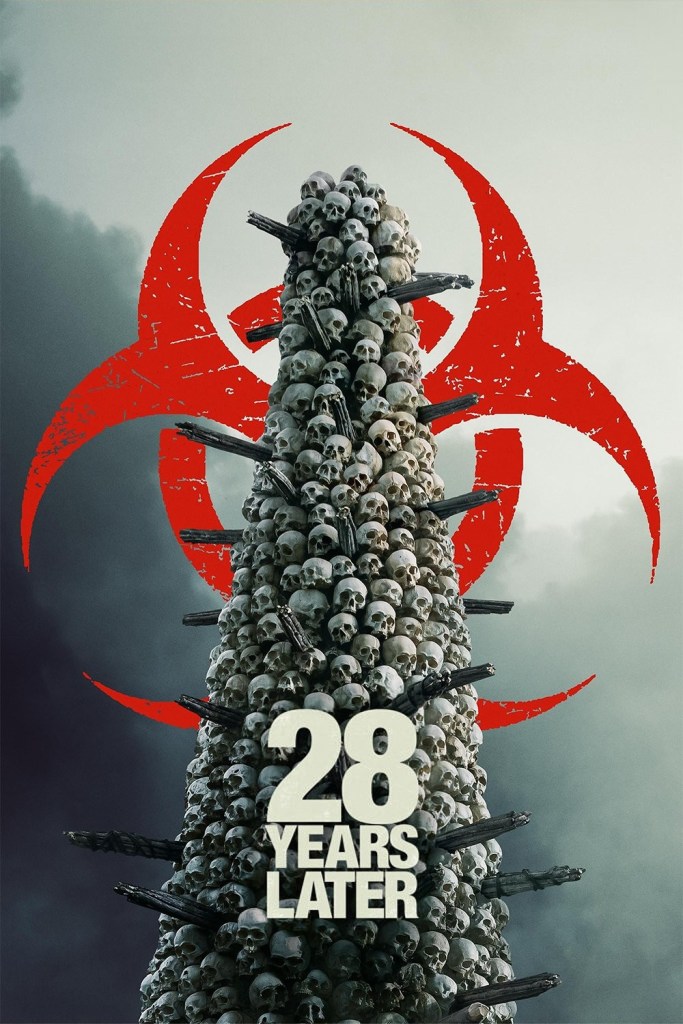
Unlike many (just about everyone I know) I did not like 28 Days Later. I even rewatched it recently to see if my mind had changed, and it had not. Too much shaky cam for me (I get the reason why, for such a low budget film, but it was so bad that I couldn’t tell what was going on) and the sequel, 28 Weeks Later, was just as bad for my tastes. But this years-long-gestating sequel came with great promise, as it returned the original director (the great Danny Boyle) and writer (Alex Garland, who has gone on to great things since 28 Days, helming some really great films like Ex Machina, Annihilation, Men, and Civil War, all of which you can find reviewed in my history). So getting to it: 28 Years Later finally broke the curse, and delivered a movie I really enjoyed. It has been a generation since the “rage virus” turned most of the UK into a zombie zone, and nearly the entirety of the country has been quarantined from the rest of the world. A small community survives on a tiny island off the coast, only accessible by a land bridge during low tide, and its inhabitants have, if not thrived, at least are doing well enough. A coming-of-age tradition sees its young men sent out as teenagers to kill any zombies encroaching near to their island, and the newest young man is 12-year-old Spike. He and his father Jamie go to the mainland one day where Spike is able to kill a couple of the slow-moving monsters, but when they are attacked by some of the fast moving zombies, who can full-on sprint at you, Spike freezes in fear and the father and son barely make it back alive. Despite this fear, Spike has heard tale of a doctor living in the quarantined zone, and thinks that he can help his (Spike’s) mother, who lies abed with some debilitating illness. Spike absconds with his mom and seeks the doctor, traversing through overrun lands where anything can kill you. Great, tense film from the very beginning, almost to the point that it is exhausting to watch because you can never catch a breath. The ending was fairly divisive because it shifts tonally very suddenly, setting up a sequel that will soon hit, but I didn’t have a problem with it, and in fact, kind of liked it the more I think about it. Bring on the next film in the series! ★★★★
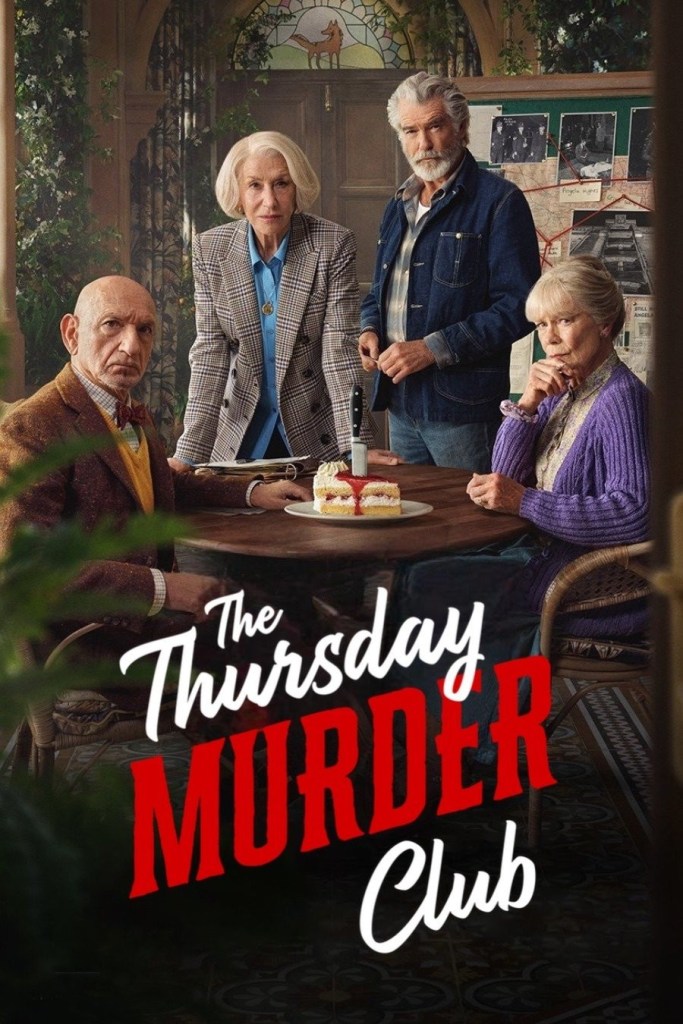
The Thursday Murder Club seemed like a “safe” movie for a stay-in movie night with the wife, featuring a strong cast (Helen Mirren, Pierce Brosnan, Ben Kingsley) and a ho-hum murder mystery at an old folks home. And safe is what I got. The eponymous club meets weekly to look at cold cases and drink tea, but when a real murder happens, they take it upon themselves to do what the cops can’t. The owner of their retirement center is killed, and the new controlling owner is wanting to kick everyone out and turn the place into upscale apartments. Before that can happen, our plucky geriatric sleuths need to get to the bottom of the murder. Nothing too surprising here, and it’s a pleasant enough film, even if it definitely more geared for the older crowd (lots of corny jokes and whatnot), but it is intriguing enough to keep your attention. ★★½
Materialists is the followup from director Celine Song (bonus trivia: I learned she took her Western name from Jacques Rivette’s Céline and Julie Go Boating); her debut film Past Lives was a darling of the critics, even if I wasn’t as high on it as some. In Materialists, Dakota Johnson plays Lucy Mason, a matchmaker in New York who works to bring love to others, even if she can’t find it for herself. She spends her days interviewing would-be customers about their perfect matches, who too often care more for how tall their mate would be or how much they make. Lucy is really no different. She was once in love with (perhaps) her soulmate in John Finch (Chris Evans, a Captan America sighting!) but she broke it off with him over money. He was (and continues) pursuing his dream of acting but as such, is living dirt poor, and Lucy “doesn’t want to worry about spending $25 at a restaurant.” At least she admits to herself what she wants. She might just find her perfect match in Harry Castillo (Pedro Pascal), a wealthy investor with a $12 million apartment, and the two hit it off. But when one of Lucy’s clients is assaulted, by a match that Lucy had set up, she begins to ask herself serious questions about what she really wants, and if “settling for money alone” is really what will make her happy. It’s a charming film, exploring the same kind of ideas of fate and love-conquers-all themes that the director tackled in her first film. ★★★
The Naked Gun is a soft sequel of the classic Leslie Nielsen film trilogy from the 80s/90s, and has the exact same amount of ridiculous laughs as its predecessors. In case you’ve forgotten how ridiculous, it isn’t 3 minutes into the film before bank robbers pull off a heist with the goal of stealing a small electronic device labeled “plot device,” while cop Frank Drebin Jr (Liam Neeson, as Nielsen’s too-old son (*wink*) barrels in, chewing off guns, knocking down shooters as bowling pins, etc. That stolen device has a nefarious purpose, and as Frank and his partner Ed (Paul Walter Hauser) try to get to the bottom of the case, a femme fatale (Pamela Anderson) will either help or stand in their way before the end. The visual humor comes at you a mile a minute, and while I usually don’t do comedies, this one is so dumb that it is funny. Like, really funny. I laughed (out lout, to my wife’s chagrin) from beginning to end. Makes me want to go back and re-watch the originals after all this time, as I was a kid when they came out. ★★★★
All of You is a bittersweet romantic film starring (and written by) Brett Goldstein, with co-lead (and the always charming) Imogen Poots. They play best friends Simon and Laura, with the kind of closeness and non-sexual intimacy you can only have with a friend with whom you’ve shared everything for years. However, the viewer immediately gets the impression that Simon wishes it was more, but is unwilling to risk the friendship he has. Taking place in the near-future, in the beginning of the film Simon is driving Laura to Soul Connex, a company that has discovered the guaranteed ability to match people with their soulmates. Laura is excited for the chance to finally find true love, but Simon laughs it off, saying he’d rather find a mate “the old fashioned way.” When Laura’s match comes back, not as Simon but as a stranger named Lukas, Simon is obviously disheartened, but he’s not going to stand in her way. From here, the film starts to jump forward after every scene or two, sometimes a year, sometimes more, as we see the development of Laura’s marriage to Lukas and subsequent birth of a daughter, and what all this means for her friendship with Simon, who continues to (privately) hold on to hope. He dates here and there, relationships that never work out, until eventually, some years down the line, Laura’s father dies. With emotions high, Laura and Simon begin an affair that night, but afterwards, she refuses to leave her husband, whom she still loves (he is her legitimate soulmate after all, and makes her happy), but she continues on with Simon on the side. This can only last so long, as Simon wants more. Beautiful film with superb acting from Poots (as to be expected; how she’s never won a major acting award is beyond me) and spot-on writing from Goldstein, which isn’t surprising if you’re a fan of the heartwarming moments of Ted Lasso; he was originally hired as a writer on that show before taking on the role of Roy Kent. I absolutely adored this picture. ★★★★★
Jurassic World Rebirth is the latest in the film series (up to 7 now!) and a soft relaunch. The first Jurassic World film (the first one with Chris Pratt, a decade ago now) was pretty good but the subsequent two films got worse and worse. New cast, new setting for Rebirth, but in a good move, they brought back David Koepp, the original writer on the first 2 Jurassic Park films back in the 90s. In this film, set 3 years after the last, climate change has forced all dinosaurs to migrate towards the equator, and all the countries of the world have banned travel there for safety reasons. That’s fine for most of the population of the world, for whom the novelty of seeing dinosaurs has worn off, and no one cares anymore. However, a rich man has a scheme (don’t they always?) to sample the blood from 3 large dinosaurs for a new heart disease treatment, and he hires a crackshot crew including Scarlett Johansson and Mahershala Ali to escort him into the quarantined zone to retrieve his samples. This island hosts the worst of the worst dinosaurs, not just the T-Rex’s and Velociraptors, but also genetically modified and mutated dinosaurs that the company was experimenting with. The team goes in, rescuing a family of boaters who had strayed too close to the unsafe zone, and together they must try to obtain their samples and then survive a day before rescue can arrive. Honestly lots of the same kind of scenes that are in every Jurassic Park film (people hiding behind something while a stealthy dino sniffs them out) but there are enough new-ish exciting moments to make up for it. The movie is long at over 2 hours, and I felt it, but it is better than the last movie in the series, so here’s hoping they are taking the franchise in a better direction. Because I’m sure there will be a film # 8 on this money train. ★★★
TV series recently watched: Deep Space 9 (season 4), Marvel Zombies (series), Strange New Worlds (season 3), Voyager (season 2), John Adams (series)
Book currently reading: Crossroads of Twilight by Robert Jordan
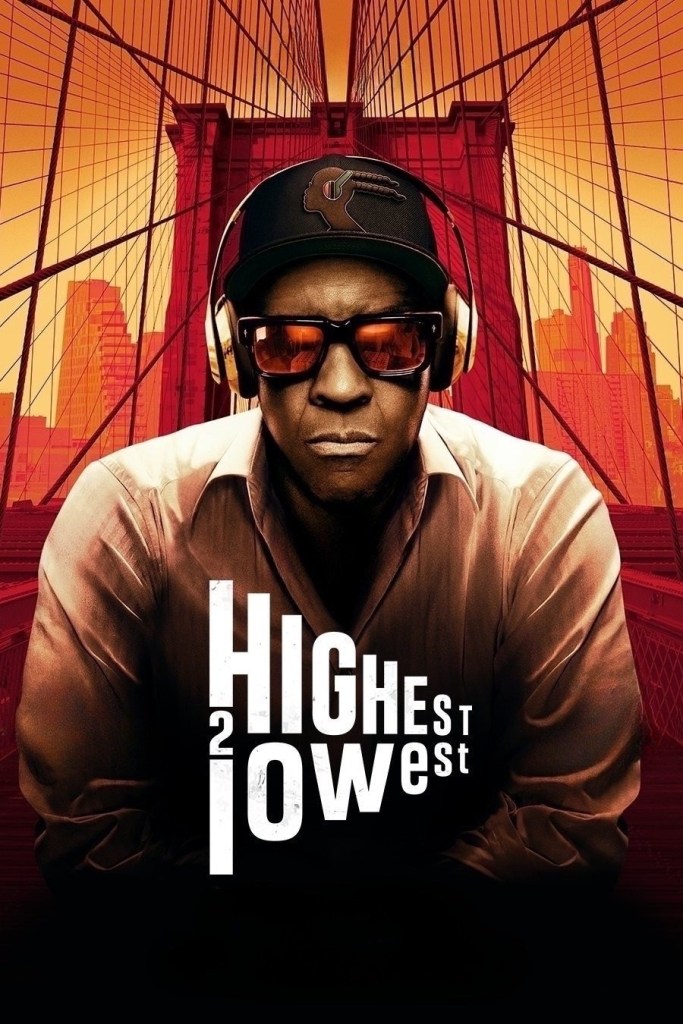
Highest 2 Lowest is the newest Spike Lee film and is based on the masterpiece Japanese film High and Low from Akira Kurosawa. Denzel Washington plays David King, a successful record company executive whose glory days may be behind him. In the modern TikTok age of fast-changing trends, King hasn’t had a really successful musical act on his label in a decade, and others in his company are considering selling out before the ship sinks further. King however doesn’t want to give up on the company he founded, and has secured investors to buy out his partners and thus keep control. On the eve of the deal though, his high school son, Trey, is kidnapped, along with Trey’s friend and King’s godson Kyle, who is King’s chauffeur’s (Paul’s) son. Paul is an ex-con and owes much to King, and is willing to do anything to bring back Trey, but is the reverse true? We’ll find out, because Trey shows up at the house after a day, and it turns out the kidnappers grabbed Kyle instead, thinking it was Trey. Though they have the wrong kid, they still want their ransom, $17.5 million, all of the money King has rounded up to buy control of his company. Initially hesitant to do the deal, as it will leave him and his family penniless, King is persuaded to go through with it (mostly from fear of public backlash), and the rest of the film plays out as a quasi-action drama. This “middle” of the film is undeniably thrilling, with hot pursuits and some light cop action, but the beginning of the movie felt a little weird, sort of like a low budget flick with Grade A actors, and an (at times) off-putting and distracting soundtrack. The very ending, the coda, also was a bit out-of-place. Solid 3 1/2 stars, but could have been really great. ★★★½
Sister Midnight is an Indian film with a funny, quirky feel, with some dark elements that come out at points that add lots of tension. The film begins on the wedding night of Uma and Gopal. Like many marriages still to this day in India, it was an arranged marriage, and Uma has been brought to Gopal’s tiny little hovel in the city, where she, a country girl, knows no one nor how to get around. Uma shuts herself off from Gopal and her neighbors. She starts going out at night, and her encounters after dark are sort of funny, sort of haunting, but always entertaining. Something strange starts to happen thought. She starts gathering dead animals she finds, mostly birds, and wrapping them up and bringing them home to hide under the bed. Sometimes, after a strong emotion, one or two will come back to life and fly out the door. After Uma and Gopal finally start to develop a relationship and eventually sleep together, many of the dead animals are brought back to life. But when Gopal dies suddenly one night, and Uma props him up in the corner of the room like a decoration, the town starts to whisper that she’s a witch. Very quirky film, and you can definitely see some Wes Anderson influences in the way the actors move and the camera work and whatnot. However, while I was entertained throughout, I got a little lost somewhere and the style started to rub me wrong after awhile. I’m going with an average 2 1/2 stars, with the caveat that it is probably a much better film than I’m giving it credit for, and I bet if I were to watch it on a different day or different mood, I would have been more into it. ★★½
The New Boy stars Cate Blanchett, which is usually a sign of a good film. Taking place in the Australian Outback in 1944, she plays a nun, Sister Eileen, who is overseeing a very remote orphanage. She and the other nun there take in abandoned or found aboriginal boys, convert them to Christianity, teach them to read and write, and then send them off to work at farms in the area. Sort of a win-win for everyone, except for the boys themselves, obviously. As a nun, she’s not supposed to be in charge, which is supposed to be a priest, but he died a year ago and Sister Eileen has kept up the illusion of him still living to the outside world, for fear of others coming to interrupt her work. Into this environment comes the newest boy, who comes in without a name, and even without any way to communicate with others; he doesn’t speak English and seems to have no interest in learning to do so. He does, however, grow to have a weird fascination with the large statue of Jesus on the cross above the alter of their church building. And while Jesus healed people 2000 years ago, miraculously, this “new boy” (who won’t get a name until he is baptized) is able to cure ailments, pains, and even near-death in the always-dangerous outback. Really startling movie, and whether you agree or not with message it is delivering, it is powerful. Excellent acting, as you’d expect from Blanchett, but also from Deborah Mailman as Sister Mum and newcomer young Aswan Reid as New Boy. ★★★½
It’s strange to think this about a Pixar film, but the newest, Elio, is just… boring. Not all Pixar movies are great, but they’re usually at least entertaining, and this film has almost none of that. It’s about the eponymous Elio, whose parents die when he is a young boy, so he is raised by his Aunt Olga on her military base. A few years later, Elio is a middle-schooler, and has grown obsessed with finding aliens. In a world where he feels alone (despite his aunt’s best intentions), Elio is lonely, and he wants to find some people where he can feel wanted. He thinks aliens are the key. He uses the satellite dishes at Olga’s base to send a message out into space, and amazingly, someone hears. A spaceship comes and takes Elio, and he learns of an intergalactic group of explorers ready to bring him into the fold. Unfortunately, they think that Elio is the leader of planet Earth and that he has more pull than he does, and maybe more unfortunately, the group is currently being threatened by a warmonger who was refused entry into their numbers, and who is hellbent on subduing them to gain access to their extremely advanced technology. It seems the only way Elio can cement his membership is if he can turn away the attacker. Should be a great movie about finding a home in maybe the most unlooked-for location, but I couldn’t stop the yawns from coming and was ready for it just to end long before the credits came. A rare miss from the company. ★½
Sovereign stars Nick Offerman in one of his dramatic rolls (when he’s at his best, imo) and is based on a true story. He plays Jerry Kane, a self-proclaimed Sovereign Citizen (this is a batshit crazy group of people, look it up), raising his son Joe (Jacob Tremblay, who stole our hearts 10 years ago as a little kid in Room) to believe as he does. Joe is a teenager though, and sees others his age doing things that he wishes he could do, even mundane things like going to school (Jerry would never send his kid to that brainwashing institution, so Joe is homeschooled). Much of the movie is exploring what it means to be a Sovereign Citizen, with Jerry refusing to pay his bills since “he never entered into a contract with an entity that has power over him” and getting into trouble when he gets pulled over and has no driver’s license. As the film goes along, Jerry becomes increasingly combative towards police, judges, basically anyone of authority in a world that he refuses to recognize, so Joe may find himself on the wrong side of the law too. A very powerful film, and it blows my mind that there are radicals out there that actually believe this craziness. Seems like just a way to try to get out of paying for stuff (didn’t Jerry “enter into a contract” when he bought his house, a house that the bank is trying to foreclose on?). Anyway, well worth watching, it will open your eyes. ★★★½
TV series recently watched: Breaking Bad (season 2), Landman (season 1), Alien Earth (series)
Book currently reading: Crossroads of Twilight by Robert Jordan
4 1/2 years ago I hit 1500 movies blogged on this site, and I recently doubled that to over 3000 now. Quite a lot of movies seen in the 10+ years I’ve been keeping track of this. As I did in early 2023, it’s time for me to take a bit of a break again. My movie watching has definitely come down a bit from my peak of close-to or over 400 movies a year from 2019-2022, to 241 in 2023 and 321 in 2024. I was on pace for around 275 movies this year, but with this break, I expect it will be far less than that. Part of that is my grandkids (I’m blessed to be able to have them over every week all year long, and several nights a week often), so whereas I used to watch 6-8 movies a week, I’m often now watching half that and playing “catch up” on the weekends. Part of my lower totals is also my new love of jogging; I get out and run anytime I have some free time, and recently completed my first half marathon. I’d love to work up towards a marathon in the next year, and after that, who knows? I always thought I’ve have more free time as I got older, but the opposite seems to be the case!
As I said on my last little break, I’ll still chime in with some movies here and there, so please subscribe here, follow me on Letterboxd, etc, and let me know if there’s ever anything that I should really check out.
Last Holiday, released in 1950, is an early-film-career movie from Alec Guinness (a recurring actor today, through no planning on my part; he was just very active in the 50s UK film scene). He plays George Bird, a very average man in a very average job, for whom nothing seems to have ever gone right in his life. The latest ill luck: the doctor (rather too cheerfully) informs George that he has Lampington’s Disease and has weeks to live. George has no family, no relationships, no ties, but he does have £300 in the bank and an insurance policy that he can cash in for an additional £500, so he decides to take the money and go on the first vacation of his life. He books a room at a ritzy resort, with secondhand luggage that makes it appear that he’s been traveling the world, and so the other posh vacationers think that George is a well-to-do mystery man. George quickly confides in a housekeeper (without telling her that he is dying) that he is out of his element, and she helps school him on how to approach the other guests. Even so, George nudges them to take chances that they normally wouldn’t, which leads several of them to personal and financial successes. They take a liking to George, offering him money and job prospects, the kind of which he’s never experienced before. All, of course, coming at the wrong time of his life. But when Lampington himself shows up at the hotel and knows what the disease for which he is named looks like, it may change George’s outlook. Very funny movie, but with a powerful ending too that will stick with you, and proof that Sir Alec Guinness, known by so many only as old Obi-Wan, is worth delving deep into. ★★★★
More Alec Guinness in 1958’s The Horse’s Mouth (and he also wrote the screenplay), from director Ronald Neame. A comedy, Guinness plays Gully Jimson, who is getting out of jail when the film starts. We quickly learn that Jimson is a “free spirit,” part shyster, part artist, and completely eccentric in everything he does. As a talented painter, he is obsessed with any blank wall he comes across, envisioning it as a canvas for his latest masterpiece. And he wholeheartedly believes that everything he paints is a masterpiece. Now out of jail, he takes to harassing the people who have come into possession of his works, including a wealthy former sponsor named Mr Hickson, and his (Jimson’s) ex-wife, the newly remarried Mrs Monday. Unable to secure them, he cooks up new means for displaying his talent, such as squatting in a wealthy apartment when the owners are on vacation for 6 weeks and painting a mural on one of their expansive walls, or charging for painting lessons and getting students to just paint the side of an abandoned building slotted for demolition. Jimson’s antics are laugh-out-loud funny, and his interactions with everyone around him are comedy gold, whether it be because they “just don’t understand his talent” or, in the case of a sculptor who crashes his squatting party, because they are just as crazy as he is. Some of the laughs come because Jimson actually is talented; he just can’t get out of his own way for the world to realize it. ★★★½
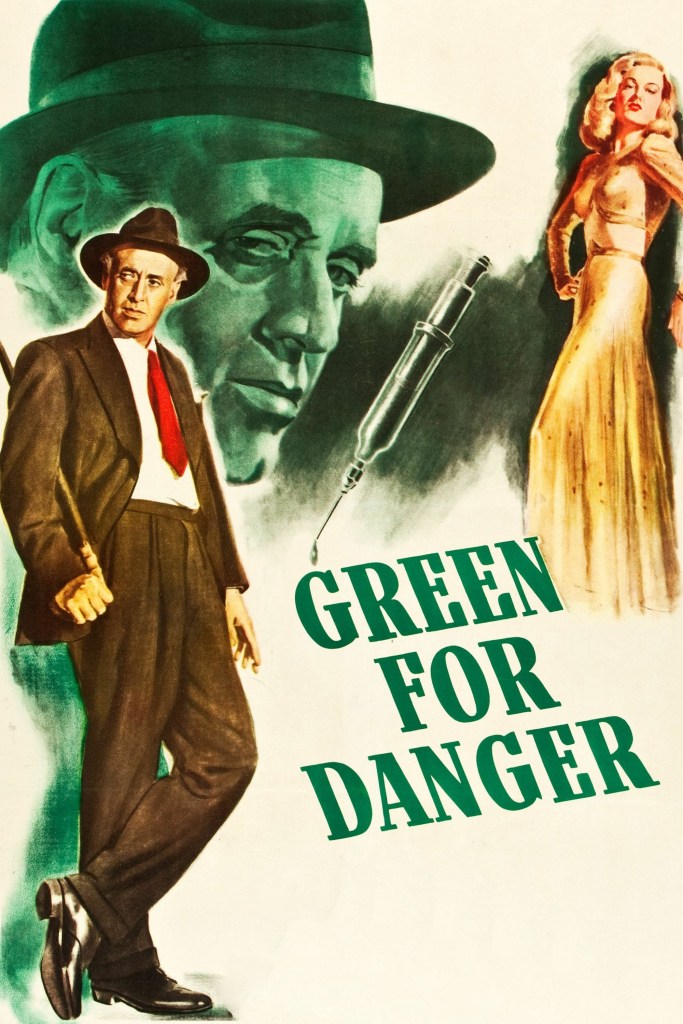
Green for Danger is an old-school whodunit with a classic Poirot-like character to guide us to the killer. It takes place in 1944 over an English town which is constantly under the threat of Nazi bombing. The town’s postman, Higgins, is hurt when a bomb falls on his building, but at the hospital, it is determined that he’ll be fine after some minor clean-up surgery. However, something goes wrong in the prep to the surgery, and Higgins dies, but not before he recognizes the voice of one of the nurses from somewhere. A day or two later, another dies: a different nurse. This murder prompts Scotland Yard to send a detective, and this guy is not convinced that Higgins’ death was an accident, and that there are actually 2 murders to solve instead of one. The suspect is one of the 5 remaining doctors and nurses at the rural hospital, and he tells them all to be on the lookout, as one of them is the guilty party and will almost certainly kill again. He’s not wrong. I absolutely loved most of the movie, with the twists and turns, the clues and the “hunt” for the guilty. The end is just a bit too clever for its own good, but sill, a very engaging murder mystery. ★★★½
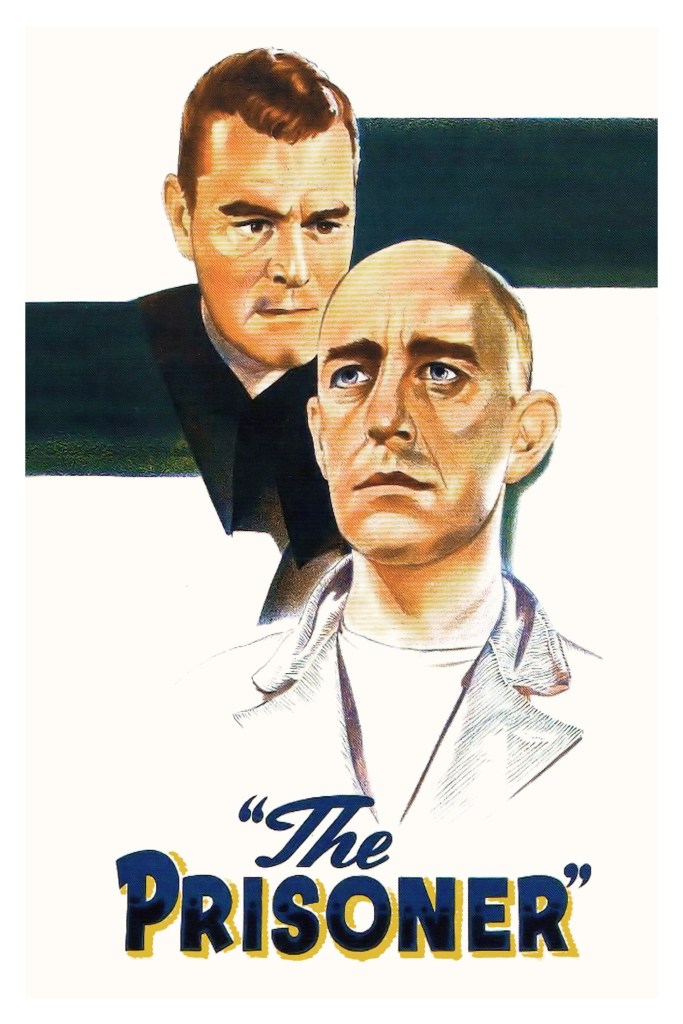
Based on a play, The Prisoner, from 1955, stars Guinness as an unnamed priest falsely accused of treason by the new communist government. The interrogator brought in to wring out a confession knows the priest well: the two fought side-by-side in the resistance against the Nazi’s (hinting that unnamed country is Poland). After the war, whereas the interrogator has thrown in with the communists, the priest claims that they’ve just substituted one oppressor for another. The government fears religion, as it gives the people a power outside of the state in which they can put their trust, and thus are targeting this popular priest. The interrogator knows, from their time together in the war, that the priest is strong willed and will not succumb to physical torture, so he sets up psychological torture in order to bend the priest. But will he break? Great acting, but the story falls apart and lacks substance. What should be a fantastic psychological thriller is left wanting by the end. Solid stars for the performances though! The film was, oddly enough, one of those that faced criticism on all sides when it came out. Some called it anti-communist, some called it pro-communist, some called it anti-Catholic, while some thought it was in favor of the church. Sometimes you just can’t win. ★★½
One more Alec Guinness film to close it out, and this is his best role yet. Tunes of Glory (also from director Ronald Neame) follows a Scottish battalion in the late 40s as it sees a handover of power. Sinclair (Guinness) is the longtime commanding officer, though he lacks the sufficient rank. He has, however, come up through the ranks in the historical battalion, having been a piper and front-line combat soldier. As such, he’s popular with those under his command, and isn’t as strict with them as he maybe should be. In fact, the night that his replacement arrives, Sinclair is leading a drunken dance with his men. The newcomer is Barrow (John Mills), who is everything that Sinclair is not. Barrow is an Oxford man who came from a military upbringing, with little combat experience as he has spent much of his career behind a desk. But he has the correct rank and the brass love him, so he will be taking over, much to Sinclair’s chagrin. Barrow immediately lays down the law and enacts the regulations that Sinclair has let slide, causing Sinclair to become unruly and a malcontent, whispering to the other soldiers about Barrow’s shortcomings. When Sinclair strikes another officer, a young man dating his daughter, Barrow must decide if he will play it by the book, bringing up court-martial proceedings, or if he will try to make the more popular move for the troops. As it turns out, Barrow has no choice at all. Outstanding acting all around, but especially from Guinness, who shows that he really is one of the best English actors of all time. ★★★★½
TV series recently watched: Foundation (season 3), X-Files (season 1), Dexter Resurrection (series)
Book currently reading: Crossroads of Twilight by Robert Jordan
I honestly didn’t know much about Polish director Andrzej Wajda, but have heard good things about his War Films trilogy, fictionalizing events of the Polish effort during World War II. First up is 1955’s A Generation, the first film to deal with the Warsaw Uprising. I had a hard time getting into this movie, despite its heavy subject matter. It follows two young men, both with boyish faces and seemingly not much more than boys, but it shows how fast boys have to grow up when war is in your backyard. One of the boys falls for a pretty young woman who has been getting men to join the communist party, and by extension, the resistance to Germany. The other boy is initially resistant to joining the anti-Nazi group, not because of love for Germany but because he is the sole breadwinner and if he were to get arrested, his elderly father would be alone. But he too gets caught up in the fight by the end. Sometimes these two (again, very young looking) guys seem like kids playing at dress up, or attempting to impress “the grownups,” but their actions get very serious very quickly. Again, I couldn’t quite get into it for some reason, but the film is highly thought of, so I’ll admit it’s probably me. ★★½
The director’s followup, however, is one of the best war films I’ve recently seen, and hits on all cylinders. Set a couple years after the above movie, it shows the final days of the Warsaw Uprising in 1944. The Polish resistance is hanging on by a thread. They keep expecting the Russian army to swoop in and blow the Germans out of the city, but as we know from history now, the Soviets stayed away for political reasons, letting the resistance (who was supported by the Polish government in exile, based out of London) fall to Germany, so that the Soviets could then set up their own Communist-friendly new government. As the film begins, the Polish resistance knows they can’t hold out much longer, so the decision is made to literally go underground, to go down into the sewers, in hopes of getting outside of the city to escape and live to fight another day. Down in the sewers is where their nightmare truly begins. Initially the troop is led by a young woman who knows the sewers well, having been smuggling goods around the city through them for awhile, but when she decides to hang back with her boyfriend, who has been wounded and is slowing everyone down, the rest of the group proceeds without her, and end up getting separated from each other, and finally completely lost. As minutes become hours become days, surrounded by the stench, threats of gas, fear of Nazi soldiers overhead, and no signs of fresh air or escape, madness creeps in. A movie that will make you feel claustrophobic as the walls come closer and the dark seem just a bit darker, it pulls you into the plight of these last soldiers, trying everything to hold on to a losing cause when we know there is no hope. ★★★★★
We had a film at the beginning of the Warsaw Uprising, a film at its end, and we conclude the trilogy with a film at the end of the war. Ashes and Diamonds begins on VE Day, and Poland is prepping to celebrate. However, the battle for the future of the country is not yet over. A couple former resistance fighters try to assassinate the secretary of the pro-Communist Polish Workers Party, but accidentally kill the wrong person. As they plan to take out their target at an upcoming banquet, the lead killer, Maciek, who has been able to set emotions aside until now, falls for a pretty young woman tending bar at the hotel. As the night moves on, the two grow close, and now, suddenly, Maciek has something to live for, something to lose, that he didn’t have before, and it changes his perspective on his mission. The first 10 minutes and the final 25 minutes were great, but honestly it felt like a lot of filler in the middle. I know it had a purpose (showing the slow transition Maciek made as well as exploring the inner workings of some of the tertiary characters) but it was awfully slow. ★★★
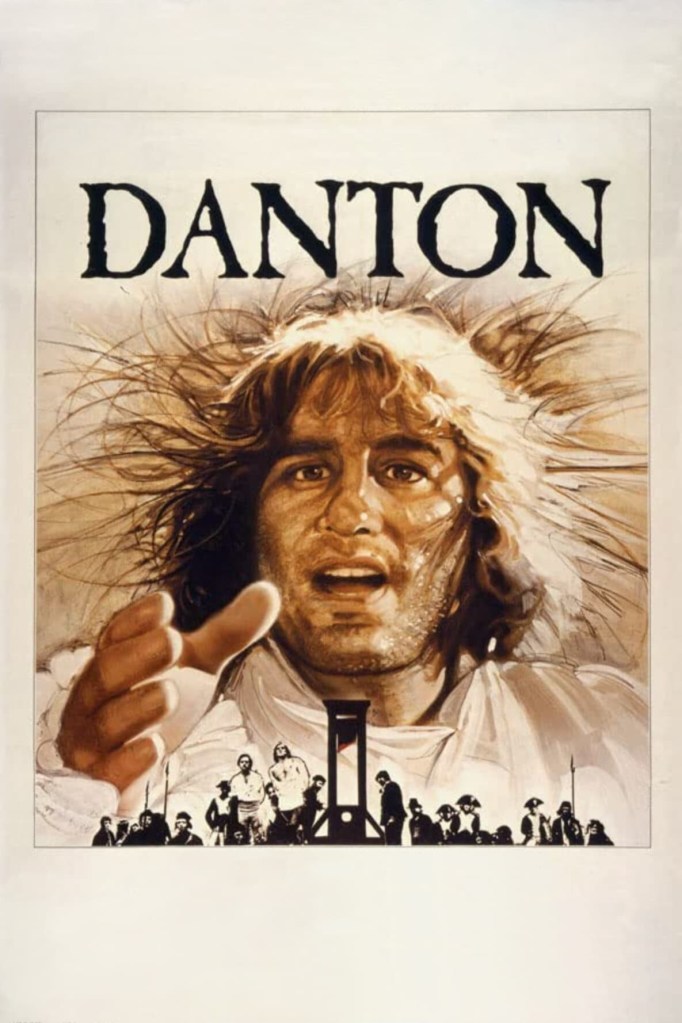
Wajda was never shy about his anti-Communist views (even if he was very successful at hiding subversive themes in his movies to get past Polish censors), so for a time in the 80s he turned to other countries for more freedom in filmmaking. In 1983 he made Danton, portraying a popular figure in the French Revolution. In 1794, the Revolution is hanging on by a thread. The Committee of Public Safety, essentially the seat of execute power in the country, is led by Maximilien Robespierre and is not very popular by the citizens nor the legislative assembly, the National Convention. The people’s champion is Georges Danton, which puts him at odds with Robespierre, and they are clamoring for Danton to depose Robespierre and lead the nation. However, Danton is tired of fighting and bloodshed, and while he doesn’t like Robespierre’s tactics (he has been silencing newspapers, and jailing and beheading critics), he doesn’t want to see anyone, himself included, be made king again, after he’s fought so hard to do away with the monarchy. As the two circle closer and closer to each other, the fate of the nation hangs in the balance. Great film, buoyed by Danton’s speeches as delivered by lead actor Gérard Depardieu. The only off-putting thing was the fact that half the actors are French, and the other half are transplants from Wajda’s native Poland, who had their voices dubbed over by French speakers for the film. You can clearly tell, as their lips don’t match… That’s my only quibble. For a film with little “action” and almost entirely fought over words, it’s very exciting. Lots of people drew lines between Robespierre’s totalitarianism and the state of Poland at the time, though Wajda (maybe with a wink) always denied any parallels. ★★★★
TV series recently watched: Back to the Frontier (series), Wednesday (season 2), Frasier (season 1), Jessica Jones (season 2)
Book currently reading: Crossroads of Twilight by Robert Jordan
I’m generally a big fan of director Darren Aronofsky, who’s had far more hits (Black Swan, Requiem for a Dream, The Whale) than misses (*cough*), and I’ve been wanting to see Caught Stealing since it’s first high-speed trailer dropped. It stars Austin Butler and takes place in the late 90s (as if this Gen-X’er needed another excuse to see it!), about a man caught in the wrong place at the wrong time.
Hank was once a promising baseball player with a bright future, but he was drinking one day when he wrecked his car and tore up his knee, on the eve of the baseball draft where he would have stamped his ticket to stardom. Now he’s a late night bartender and alcoholic in the Lower East Side of Manhattan, with the two bright spots in his life being his love of the San Francisco Giants and his girlfriend Yvonne (Zoe Kravitz), maybe in that order. One day his apartment neighbor, brit punk rocker Russ (Matt Smith) asks him to watch his cat as he has to fly to London on a dime’s notice to see after his ailing father. Russ isn’t gone a day before Russians are banging on the door looking for him, and Hank gets caught in the middle. The Russians think Russ handed something of importance off to Hank, and despite Hank’s protestations, they beat him badly enough that he ruptures a kidney and ends up in the hospital for days after emergency surgery. It only gets worse from there. In addition to the Russians, before long Hank has a gang of Hasidic Jews (Liev Schreiber and Vincent D’Onofrio), a Puerto Rican night club owner (Bad Bunny), and a police detective (Regina King) all on his tail as well. Whatever everyone thinks he has is important enough that many people are willing to torture and kill to get it. When Russ shows back up, he’s got some ‘splaining to do.
This is a fast-paced film with a lot of action and a raw, authentic feel, and I loved it all. The action is intense and I caught myself gasping aloud several times. I also appreciated that it takes place in 1998, and as I was near the age of the “hero” at that time, there were tons of throwbacks to that little sliver of time. Great film that I can’t wait to watch again. ★★★★½
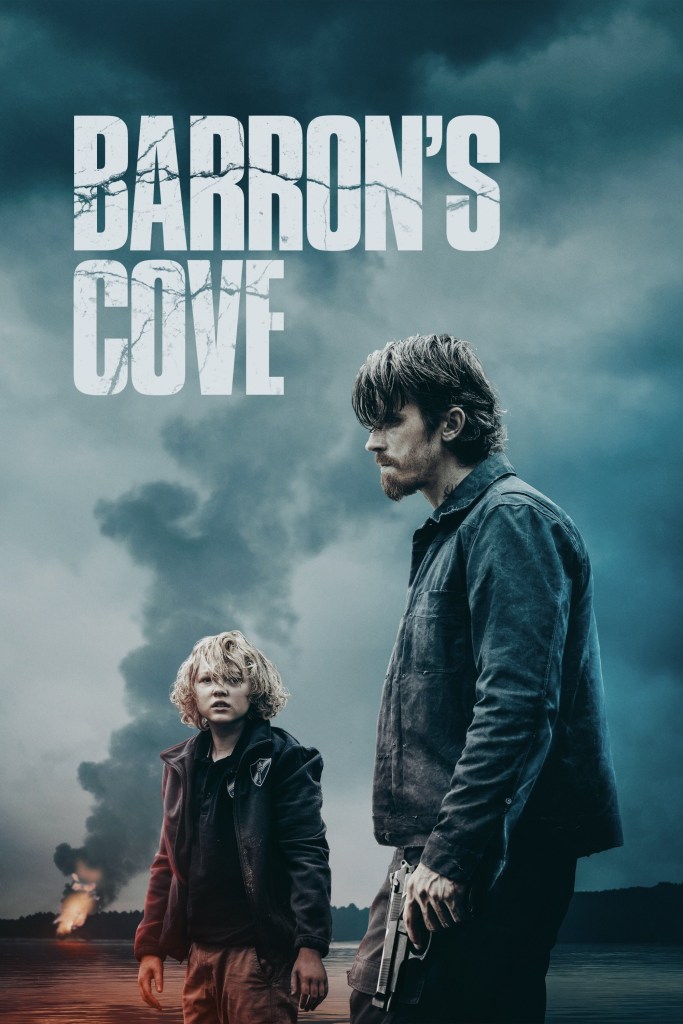
Barron’s Cove is marketed as a crime drama thriller mystery. It gets at least 2 of those wrong. Caleb is basically a hired thug for a construction company, who puts pressure on clients who try to back out of their deals with owner Benji, a gangster moonlighting as a businessman. At the beginning of the film, Caleb’s son Barron is killed by a train as he lay on the tracks. The police quickly call it a suicide, but Caleb isn’t buying it, and wants to ask the other two boys, who were there, what they saw. One of the boys is Ethan, son of an up-and-coming politician in the area, and Ethan is a little shit. An obvious bully, Ethan is hiding something, and Caleb kidnaps him and takes him to a secluded cabin, threatening violence to get Ethan talking. Up to this point, the movie was pretty good (in the solid 3 1/2 star range), because you are wondering if Caleb, despite his rough-and-tumble past, is really going to torture a child. But from here, the film starts to go off the rails, and it only got worse as it goes along. People attack the cabin trying to kill Ethan instead of Caleb, dirty cops get involved, Benji is unmasked as being in league with the politician (who has plenty of dirty secrets too)… it all starts cascading pretty quickly. 3 1/2 stars became 2 1/2 and, finally, by the end, I couldn’t wait for it to end. Started out with so much promise too. ★½
Meeting With Pol Pot is a fictionalized story about a real-life event, when Cambodian dictator and despot Pol Pot invited 3 French journalists to come to his country in 1978 in an attempt to dispel rumors of genocide and government collapse. In France and the rest of the western world, there are whispers that Pol Pot’s regime has emptied the country’s largest city, Phnom Penh, and killed thousands of dissidents (later, we would learn the number was over a million, nearly a quarter of the country’s population). One of the journalists, Alain, went to school with Pol Pot when he attended college in Paris (and where he received his idealistic communism views) and is keen to justify his old college pal’s actions. The other two, Lise and Paul, get bad vibes from the very beginning. They instantly recognize that they aren’t being shown the whole story. People they interview are obviously being fed what to say, and they have no access to actual communities, and instead are shown only Potemkin villages. When Paul escapes his escorts one day and gets out into the countryside, he witnesses first hand the rampant famine, disease, and death that is tearing the country apart. When he is found, Paul is only with his friends for a couple days until he “runs away again” (as the official word says), but Lise suspects he has come to a deadly end for his previous actions. The whole time, as the journalists continually ask if they will ever actually meet Pol Pot, we start to wonder too if the whole thing is just a set up. Great film, about a dark time in that country’s history, and a stark reminder of what a totalitarian government is capable of, as we watch the teachers rewrite history, deny things that are happening right in front of their eyes, and explain away evils as “being caused by the enemy.” ★★★★
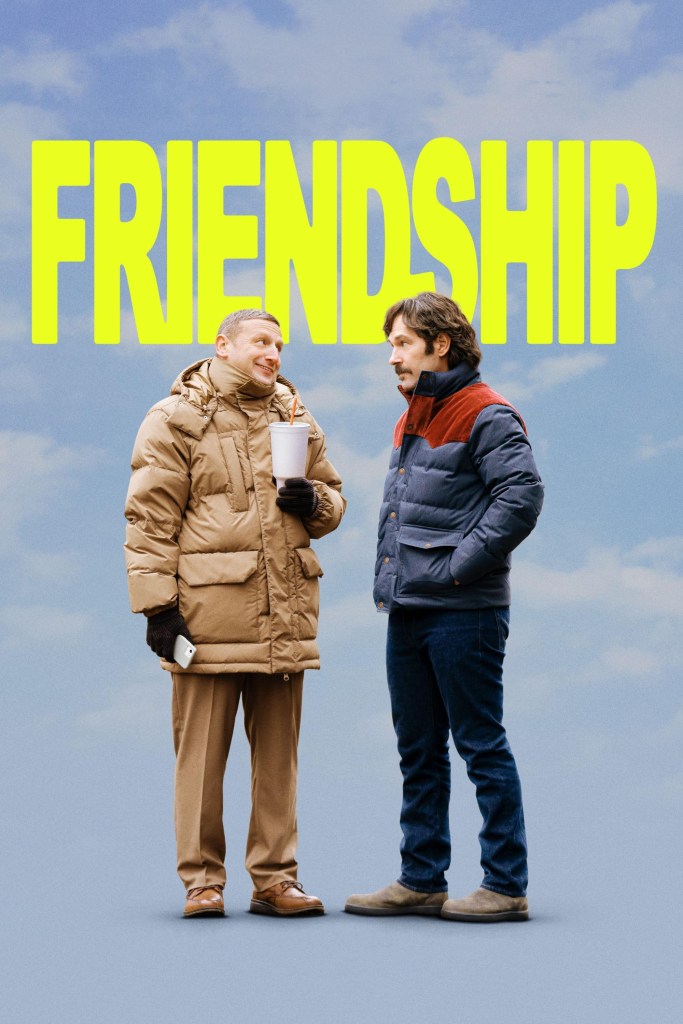
Friendship is a dark comedy starring Tim Robinson as Craig Waterman, a boring man with a boring life, where even his wife and son don’t show him much respect. He doesn’t go out, doesn’t have any friends, and even the stuff/hobbies he is interested in are lame. His life takes a turn when new neighbor Austin (Paul Rudd) moves in, and invites Craig out for some guy time. Austin’s a normal dude but he is not prepared for the insanity that follows Craig around like flies after a dead animal. His behavior is absurd from the beginning, but Austin gives him a few shots until Craig finally does something that crosses the line, and then Austin gives him the “maybe we shouldn’t be friends anymore” spiel. Then Craig goes all fatal attraction on Austin, and his behavior around his family spirals out of control too. For once Paul Rudd isn’t providing the comedy, all of it comes from Craig’s cringe-worthy dialogue and actions. I imagine some (many?) people will laugh often and hard at Craig, but honestly I didn’t even crack a chuckle once. Not once. Just too cringy for me. ★★
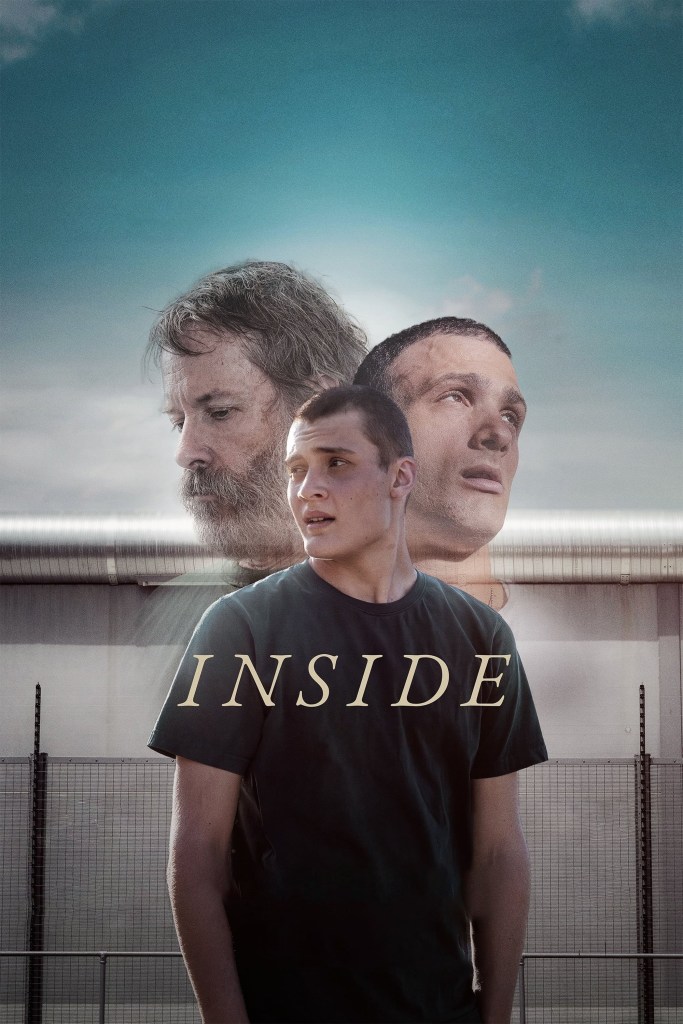
Another banger starring Guy Pearce. I’ve said it before, but man does this guy have a knack for finding good roles. Inside is the story of 3 convicted murderers doing time in an Australian prison, and how each deals with their sentence in their own way. The film follows Mel (newcomer Vincent Miller), who, as a 12-year-old, killed a classmate, and he’s been serving time in juvenile hall ever since. Now 18, he’s being transferred to an adult prison to serve out the final year of his sentence before parole. He doesn’t know how to handle that, and he still has flashbacks to his crime, and we see glimpses of the shitty life he was having that led up to it. If he thought juvie was rough, he’s unprepared for adult gen pop. His first roommate will open his eyes, because he is housed with the country’s most notorious inmate, Mark Shepard (Cosmo Jarvis, the main guy in the wildly popular show Shogun). We don’t immediately know Mark’s crime, only that he is whispered about everywhere he walks, which is incongruous with the man Mark is now: he’s found God, preaches salvation at a weekly church service he runs (he asks Mel to provide music), and takes Mel under his wing to protect and guide him. Only later in the film does a news story airing on TV in the background update the public on Mark’s crime, and we see a picture of a little girl, so you know it was bad. After Mel’s initial complaint about housing with Mark, the jail takes their time, but eventually moves Mel to Warren’s (Guy Pearce) room. Warren has been serving a long time but the end is near, with a parole hearing a couple months away. If the public thinks that Mark is evil incarnate, we the viewer can see that Warren, while maybe not as notorious, is certainly capable of anything. The first time we see Mark and Warren cross paths, he is Mark who becomes wary, so immediately we know that this is a man to watch. Utterly captivating, with excellent tension, top-notch acting, and an ending that will stick with you. ★★★★★
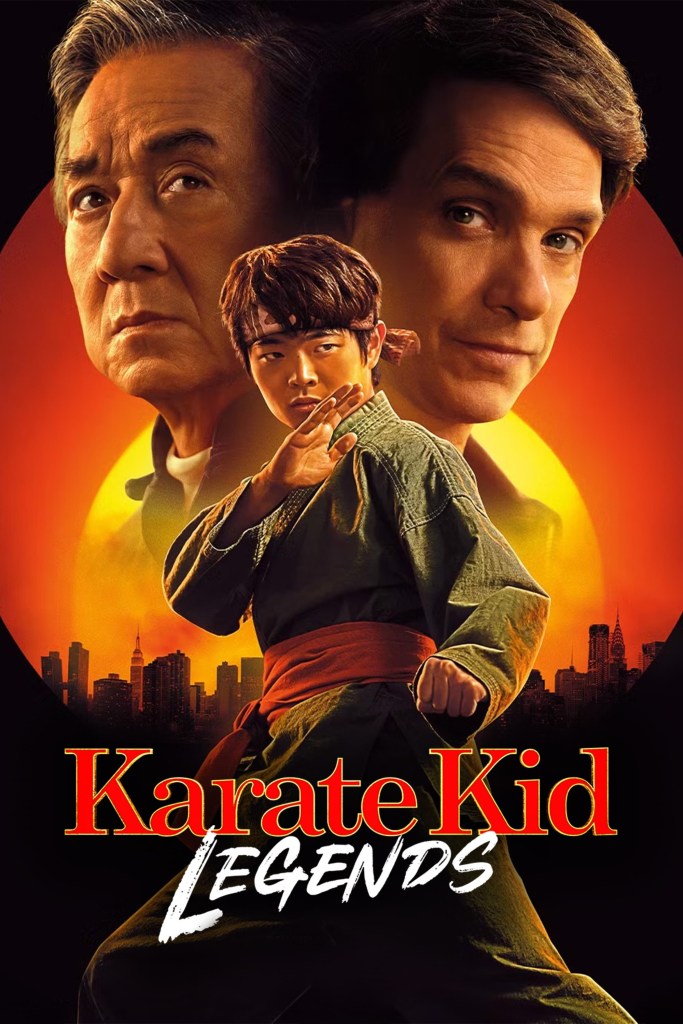
Karate Kid Legends continues the franchise that we all thought was dead, until it was revived by the surprise hit show Cobra Kai, though it only loosely references the show. More so, it combines the earlier Ralph Macchio movies with the 2010 Jackie Chan reboot (though, thankfully, Jaden Smith is nowhere to be seen). In Beijing, young student Li Fong has been studying kung fu from Mr Han (Chan) but his mother is now moving him to New York. There, we get the same old Karate Kid story: boy meets girl, girl falls for boy, boy must deal with girl’s ex-boyfriend, who happens to be a karate expert. Once again, there’s a big tournament coming up where Li will have to prove his worth and take out the competition. Mr Han comes to NY to help Li train, and when he realizes his kung fu won’t be enough, he brings Daniel LaRusso and his karate training in for help. It all goes just as you’d expect. Like the TV show, the plot and acting are as hokey as it gets, with some truly cringy moments. The “family fun” is a bit over the top for sure. But if you can look past some of its shortcomings, and if you are a child of the 80s and practiced the Daniel LaRusso kick to the head like all little boys back then, then there’s enough nostalgia to at least provide a modicum of entertainment. ★★½

























 Jons Movie Takes