Quick takes on Bugonia and other films

Nouvelle Vague, the newest from director Richard Linklater, tells the story of the making of the film Breathless. In 1959, self-professed film genius Jean-Luc Godard has yet to make his first film, even as his contemporaries at the Cahiers du Cinéma have already begun, to rave reviews (such as François Truffault’s The 400 Blows, a darling at Cannes). Godard feels the pressure to produce a masterpiece, but he has a vision to make this first film in his own way. He secures a small budget, and even a promising young actress (American Jean Seberg) in the lead role, and is given 20 days by his producer to get the film done. So begins a fly-by-your-seat production, in which Godard is often writing scenes in the morning just to shoot them that afternoon, with little-to-no rehearsals for the actors, all of whom are as in the dark as everyone else about what kind of movie they are making. Jean-Paul Belmondo goes with the punches and trusts Godard’s vision (even if his agent tells him it is a mistake and he’ll never work in the industry again), but Seberg becomes increasingly frustrated with Godard’s style and antics. Obviously, we all know how this ultimately turns out though. This is not a film for the masses. Unless you are a cinephile, the names Truffaut, Chabrol, Varda, Demy, and Rivette probably mean nothing to you (actors playing them, and many more from this era, turn up) but if you love film as much as I do, and cherish the groundbreaking French New Wave for how it changed the trajectory of motion pictures, this is a wonderful view behind the scenes at making one of the most influential films of all time. Linklater nails the style and in true Godard fashion, put together a cast of almost entirely new faces; with the exception of Seberg (Zoey Deutch), I didn’t recognize a single person. For the majority of them, this was either their first acting role, or their first major motion picture. New wave resurrected, indeed. ★★★★★

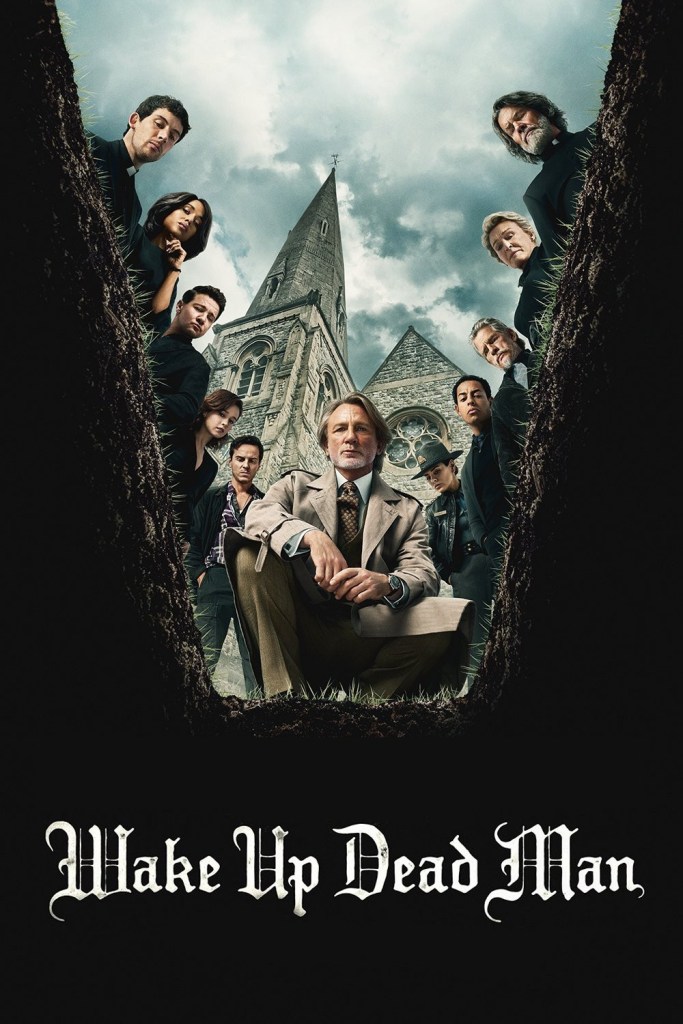
The Knives Out films series continues with Wake Up Dead Man, bringing back detective Benoit Blanc (Daniel Craig) to solve a new murder case. The accused is Jud Duplenticy (Josh O’Connor, in a star-making turn), a young idealistic priest who seems to have murdered the senior priest at their church. Monsignor Jefferson Wicks (Josh Brolin) was a charismatic priest but he chose to use the power of his words to alienate and manipulate his parishioners, pushing away most until only a small group of regulars remain in the flock. Jud declares his innocence, and Benoit believes him, but he’ll need to find out which of those church regulars is the real killer. A fantastic murder mystery with plenty of twists and turns, some truly gasp-inducing moments, it will keep you on your toes and make you think, time and again, that you have it all figured out, until of course, it shows you that you didn’t. Excellent cast too, including Glenn Close, Jeremy Renner, Kerry Washington, Mila Kunis, Jeffrey Wright, and Andrew Scott, who always seems to nail every role he’s in. ★★★★★

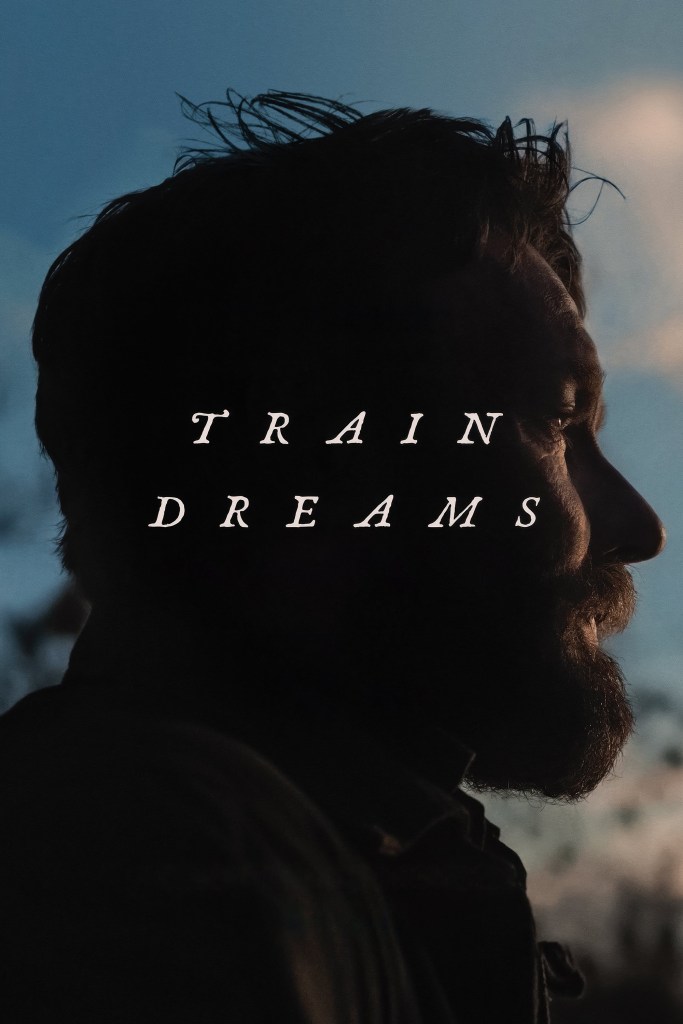
Train Dreams is one of those movies, as soon as the music starts up, you know they are going for deep, introspective, and meaningful. I’m not sure it hits on all three, but I’ll give it an A for effort. It stars Joel Edgerton as Robert, made an orphan at a young age in the late 19th century, and who never had anything easy in life. From fighting for scraps as a kid, to working the railroad as an adult, life was always a struggle. Robert does find happiness for a time, when he marries and has a little girl, but the hard life of a lumberjack never offers guarantees: people are killed on the dangerous job, or sometimes outright murdered for one reason or another, and no one bats an eye. Robert lives in constant fear that his family will lose him. As (bad) luck would have it, the reverse comes true, and a wildfire striking the area while he is away at work kills his wife and child. Robert spends the rest of his days alone, hoping that his missing wife and little girl will miraculously come back to him. The movie has its bright spots. William H Macy has a small, short role as a curmudgeony lumber lifer who regales coworkers about how easy it is for them compared to how it used to be. There’s plenty of deep moments too, like an early scene, a “flash forward” so to speak, when an older Robert is riding the train across a bridge that he helped build decades ago, only to look across the gorge at a modern “concrete and steel contraption” with cars zooming by on it. In the end, Robert lives long enough to see a man on the moon, but he cares nothing for it, only looking back at a long, hard life with little happiness. A real downer, and one that doesn’t reach the heights to which it aspires. ★★½

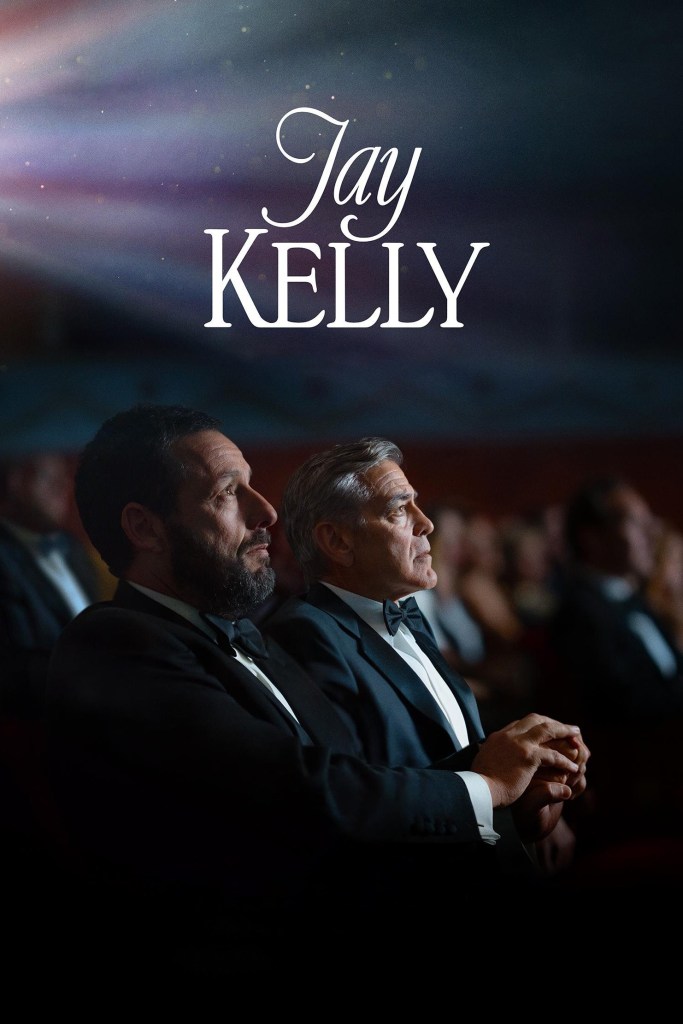
Jay Kelly, from director Noah Baumbach (small rant on how really great directors sign deals with Netflix, ugh), stars George Clooney as, well, himself. Jay Kelly is an instantly recognizable movie star with decades of films in his past, the kind of person who can’t go on a train without being identified by every person there, as we see later in the film. While he’s faced the criticism that he always “plays himself” (as Clooney has also been charged), he is beloved by the people. He has sacrificed much to be an actor though, with one alienated daughter and a second on the way there too. Knowing he screwed up the first and wanting to not follow the same mistake, Jay does all he can to convince the youngest girl to spend her last summer before college with him. She, of course, just wants to go hang out with friends in Europe, so Jay gives chase. He is followed by his “team” as it is known in the business, his always-by-his-side manager Ron (Adam Sandler), his publicist Liz (Laura Dern), and a big burly security detail. Part of what is giving Jay his moment of reflection is the recent death of Peter Schneider, a film director who gave Jay his first job in the business, and a long-time mentor. At the funeral, Jay runs into Timothy (Billy Crudup) who was Jay’s best friend in acting school, and while the two initially talk old times as buddies, eventually the truth comes out. Timothy was always the better actor, but was nervous at auditions, and when he clammed up in front of Peter Schneider all those years ago, the part went to Jay, and a star was born. Timothy accuses Jay of stealing his life, and what’s worse, Jay (deep down) believes it. He thus wants to make one thing right in his life, and that is his relationship with his daughter. Clooney has been quick to point out that, despite similarities, this is just a movie and that he is happy with the relationships and the way his life has gone, but still it’s a great “peak behind the curtain” at a successful actor’s life, not just from Jay, but from his team too, who often see themselves as babysitters for their star. Jay wasn’t a “bad” father, in that he didn’t abuse his kids or anything like that, but he just was never there. Something we can all take lessons from. While director Baumbach co-wrote Barbie with his wife Greta Gerwig, this is his first film since White Noise, which, in an amazing coincidence, I saw the same week as the last Knives Out movie and they showed up in the same blog then too. ★★★½

Bugonia is the latest from director Yorgos Lanthimos (lots of great directors in today’s blog!), and I really liked his last movie, even if it wasn’t for everyone. This one is a remake a popular 2004 Korean film, and begins by introducing us to Michelle Fuller (Emma Stone), a successful CEO of a pharmaceutical company. Michelle has become the target and obsession of conspiracy theorist Teddy Gatz (Jesse Plemons). Teddy and his autistic cousin Don (Aidan Delbis) kidnap Michelle and bring her to Teddy’s house, chaining her up in the basement. Rape? Ransom? No, the men kidnapped her because Teddy is convinced that Michelle is an alien sent to Earth to force humans into subservience, and they want her to grant an audience for Teddy with the alien’s supreme emperor, to negotiate the future of humanity. Over the course of a couple days, Teddy tortures Michelle until she is willing to admit to anything they ask. The whole time, Michelle is wondering why she was targeted, until she realizes Teddy is the son of a woman that her company used an experimental drug on. It’s a dark film, marketed as a black comedy (and there’s plenty of black) but with Lanthimos’s trademark off-the-wall crazy comedy as well. Shines a frightening look at the depths the internet can take us. The ending takes a hard left (though if you’ve seen films from this director before, it’s not unforeseen), but I really enjoyed it. ★★★★

Quick takes on Roofman and other films

One Battle After Another is the latest from writer/director Paul Thomas Anderson, and from everything I’ve heard, I thought it would be a return to form. Unfortunately, it’s yet another miss for my tastes. It stars Leonardo DiCaprio and Teyana Taylor as Pat and Perfidia, a couple involved in a radical, militant, revolutionary group known as the French 75, who bomb government buildings and “fight the system.” On one mission to free immigrants, Perfidia humiliates the military commander, Steven Lockjaw (Sean Penn), of the immigrant detention center, which only leads to him being sexually obsessed with her. Lockjaw tracks her down afterwards and blackmails her into having sex with him, unbeknownst to Pat. Later, after she has a child, Pat wants to leave the group and settle down as a family, but she refuses and leaves them, to continue the fight. Lockjaw orchestrates having Perfidia arrested, and she turns states evidence to enter witness protection, only to escape and flee herself. Her testimony though gets a lot of people in the group killed, and forces Pat and their daughter Charlene to change names and go into hiding. The story picks up 16 years later, where they are living quietly, albeit always full of paranoia of being found. Lockjaw has finally located them, and the film turns into an action thriller as Lockjaw’s military group descends on the quiet little town, with a subplot involving Lockjaw’s attempts to get into a white supremacist organization. It definitely has its funny moments, like when Pat tries to call into French 75 for help, but can’t remember the code words to get through to someone who would remember him. Entertaining in spots, but the ridiculous plot elements eventually catch up to it and by the end, I was only watching to see how it ended. ★★★

I sort of knew American Sweatshop wasn’t going to be any good, but it had an intriguing premise so I took a flier on it. It ended up being exactly as I suspected, but oh well. It’s about a woman named Daisy who works as a content moderator at a YouTube-like video host company. Her job is to look at videos that users have reported as offensive or against user guidelines, and decide if the video should be removed or left up. As such, she often sees the worst of the worst, gruesome videos including murder, animal cruelty, rape, etc. Most at the company become numb to what they are seeing, but Daisy is haunted by the images, relying on drugs an alcohol after her shifts. One day, she watches a video of a man torturing a drugged woman by driving nails into her body, and Daisy wants to report it to the police. The company doesn’t agree though, with excuses that the film could be fake or consensual, and even when Daisy goes over their head, straight to the police, they too refuse to proceed. Thus, Daisy takes things into her own hands, attempting to track down who made the video, in order to meet out vigilante justice. Silly movie, which relies on gross imagery for grisly titillation. ★½

Roofman, unbelievably, is based on a true story and stars Channing Tatum as Jeffrey Manchester, an ex-military crook who was arrested in 2000 for breaking into and robbing McDonalds stores over a period of a couple years. Sentenced to 45 years in prison, Jeffrey can’t live with the fact that he won’t see his kids grow up, despite his ex-wife promising to cut off communication with him anyway. Jeffrey hatches an elaborate escape plan and somehow pulls it off. Rather than flee the area, as he knows the police would be watching the major roads, he hides in a local Toys R Us and sets up a home. He disables the recoding on the cameras in case anyone tries to look up the history on them, and comes out at night to eat candy and baby food from the shelves. Eventually, he starts heading outside during the day and sneaking back before close. In doing so, he begins a relationship with a Toys R Us worker, Leigh (Kirsten Dunst) and befriends her two daughters. He even becomes involved in her church. Jeffrey was always a nice guy, despite his flaws, and his easygoing nature makes him popular. Things go bad one day though, when he encounters the store’s manager (Peter Dinklage) coming in to work early, so the store beefs up their security. Knowing time is short, Jeffrey reaches out to a former military buddy for help in getting a fake passport, but the friend demands a lot of money, forcing Jeffrey into an unobtainable decision. Funny movie, with a surprising amount of heart, and worthy of a single watch/date night, but nothing profound or that I’d watch more than once. ★★★

Good Fortune is the directorial debut of Parks and Rec alum Aziz Ansari, who also stars as Arj. Arj is down-on-his-luck, currently sleeping in his car and working menial jobs, just trying to squeak by, while his parents back in India brag about his other hard-working cousins are succeeding in America. His saved from a car accident one day by Gabriel, a guardian angel in charge of texting and driving, but who has aspirations of doing more. Gabriel is a bit jealous of Azrael, the guardian angel of lost souls, who regales the other angels at their weekly meetings about inspiring people who otherwise have no hope. Gabriel sees that in Arj and attempts to turn his spirits around, by giving Arj an “It’s a Wonderful Life” moment. Gabriel switch’s Arj’s life with that of a wealthy investor (played by Seth Rogan) in an attempt to show Arj that living the high life isn’t all it’s cracked up to be. Unfortunately for Gabriel, money does seem to solve all of Arj’s problems, and Arj doesn’t want to go back to the way things were (nor give the rich man his life back). Mildly funny at times, mostly due to Gabriel’s (played by Keanu Reeves) deadpan delivery, but no deep belly laughs. Couldn’t get more than a few chuckles from me, and when the story is feathery-light, it would need far more laughs to be a success. ★★

Left-Handed Girl was written and directed by Shih-Ching Tsou, and if that name isn’t familiar, I know the name Sean Baker is, especially after he swept the Oscars last year with Anora. Tsou co-directed Baker’s first film in 2004 and was a producer on his later films, so it was no surprise that Baker’s name showed up on this one as a co-writer, producer, etc. Out of Taiwan, it is about a family struggling to survive. Mother Shu-Fen is newly single after leaving her philandering husband, and raising her daughters I-Ann and I-Jing on her own. I-Ann is a late-teen, never finished high school, and gives off the impression of a party girl, though she does get a job to help support the family. I-Jing is only 5, and a very precocious 5 at that. As Shu-Fen opens a noodle stand (which doesn’t do well), I-Jing wanders the busy market and makes friends with kids and adults alike. Her grandfather (Shu-Fen’s father) chides her for being left-handed, calling it “the devil’s hand” in old superstition, and I-Jing takes that to heart, using her left hand to steal trinkets from the stands around her, and later, when it gets her into trouble, contemplates chopping it off to excise its evil influence. I-Ann, meanwhile, starts sleeping with her boss and gets pregnant, the ramifications which will lead to a bombshell revelation in the end. Great, subtle film that explores the fringes of society (as Baker’s films often do) and Nina Ye as little I-Jing really steals the show. The camera is often down at her level as she moves around, so we see the world from her eyes. She is up to the task, a real talent. ★★★★

  • TV series recently watched: It: Welcome to Derry (season 1), Portlandia (seasons 3-4)
  • Book currently reading: Amber and Blood by Margaret Weis

Avatar 3 is more of the same (for good and bad)

My review for the last Avatar movie was something along the lines of, “Good film, but maybe James Cameron is running out of ideas.” The newest installment, Fire and Ash, only confirms those misgivings. While still visually stunning, beauty can only take the viewer so far, and the writer/director continues to trot out the same plot lines over and over again.

This film picks up where the last ended. Jake Sully and his family have settled in with the Metkayina people after having fought off the latest incursion by the humans. A rift has grown between Jake and his wife Neytiri, as Jake is in favor of arming the people with guns from the humans as better protection, but Neytiri feels that in doing so, they are straying too far from her religious beliefs in Eywa. Their son Lo’ak is haunted by the death of his brother, for which he feels responsible, and the family’s adopted daughter Kiri feels cut off from Eywa for an unknown reason. The bad guys are still around too, led by the clone/resurrected avatar of Colonel Miles, who just can’t seem to stay dead. He finds a new ally to help him hunt Jake Sully: the Mangkwan clan. A group of Na’vi who worship a volcano and have spurned Eywa, they are militaristic and would love to get their hands on the humans’ guns and advanced weapons. Miles has another goal too, because he has learned that his human son Spider, who has been raised by Jake and the Na’vi, has been given the gift of breathing Pandora’s air by Eywa. If Miles can get Spider back to the human settlement to be studied by its scientists, perhaps they can engineer a way to allow all humans to breathe the air without masks, greatly aiding their campaign on the planet.

As I said at the start, way too many plot elements from the first two films are recycled. We see Neytiri and her people crying out for Eywa to protect the planet, asking the animals to come aid the people in the fight against humans. The battles in the skies between the flying beasts and the human ships is a near carbon-copy from the first film, with the same moves shown again. We even get Jake Sully having to seek out and ride Toruk again, to show that he is chief of chiefs and to unite the tribes (again) to fight back against the humans. I feel like I’ve seen this all before.

Again, the film is gorgeous and a true spectacle, but the story is not fresh. Cameron wants to do 2 more Avatar movies, but he really needs to go back to the drawing board and come up with something new and exciting. ★★★

Quick takes on Breaking the Waves and other 90s films

In between My Own Private Idaho and his huge hit Good Will Hunting, director Gus Van Sant did To Die For, a (sadly prescient) film about a woman willing to do anything to get on TV, because you aren’t anyone unless you are on TV. Shortly after her breakout role in Days of Thunder (and released the same year as Batman Forever), Nicole Kidman stars as Suzanne Stone, who only cares for becoming a star. The film is told as a mokumentary with interviews with her and her husband’s family, and from the beginning, we know that Suzanne was a suspect in her husband’s murder, but we don’t know the details until the film plays out. In flashbacks, we see Suzanne marry Larry Maretto (Matt Dillon) after a short, whirlwind romance, which neither sets of parents really condone. Larry supports his new wife’s desire to get on TV and applauds the loudest when she lands a gig as a weather lady at the local public broadcast network, but ultimately he expects her to be a wife and mother, and wants kids before too long. She doesn’t want anything (including children) that could stand in her way, so Suzanne quickly starts hatching a plan to put Larry out of the picture. Under the guise of putting together a documentary about teenagers and their current points of view, Suzanne goes into a high school and lures a couple teens into her sphere of influence. She woos one into her bed, and sets him up to be her patsy. You’ll just have to watch through to see if she gets away with it. A great cast including a very young Joaquin Phoenix and Casey Affleck in his first film role, as well as plenty of other recognizable faces from the 90s (Illeana Douglas, Kurtwood Smith, and Dan Hedaya (the dad in Clueless), among many others). It’s a good black comedy satire, but with today’s social media influencers and whatnot, not sure it hits as hard. Maybe I’m just desensitized. ★★★

Love Jones is a romantic drama and a tale as old as time, but put in a new light (especially for the mid-90s, but still holds today). Darius is a local poet in Chicago who reads his work at a nightclub/jazz hall when he meets Nina, and up-and-coming photographer. Darius is a legendary lady’s man, with no prior relationships lasting more than a couple months, but he is instantly smitten with Nina’s looks and intelligence. He tries to put on a facade that he doesn’t care for her as much as he does, as he has a reputation to uphold after all, but he can’t help himself. Soon after, they begin a sexual relationship, but Darius tries to blow it off as simply physical, so much so that Nina begins to believe him, and she leaves for a trip to New York to reconnect with an old boyfriend. When that doesn’t work out and she comes back to Chicago, she sees Darius hanging out with a woman friend and misconstrues it to thinking he has moved on. She starts dating someone else too, setting up the ending that we’ve all seen before. What makes this movie different is the cast. All black, all college educated with blooming careers. Made at a time when most black people in film were either gang bangers or relegated to “the black friend,” (and unfortunately still too-often the case), this movie is a much more accurate portrayal of what the real world is like. An awesome soundtrack of jazz, soul, and R&B, taking place in middle-class and upscale Chicago and following the life of future movers-and-shakers, it is a very refreshing movie. ★★★½

Breaking the Waves was the breakout for director Lars von Trier, starring Emily Watson and Stellan Skarsgård (another Good Will Hunting reference! this one released the year before in 1996). Watson plays Bess, a somewhat simple-minded, innocent and naive woman newly married to oil rig worker Jan (Skarsgård). Bess is completely trusting in God’s will, having conversations with Him in her prayers, where she answers back in “God’s voice” to reassure herself in times of trouble. When Jan goes away to work offshore for awhile, Bess misses him terribly and begs God to bring him home. He does come, but not the way she would have hoped. He is in an accident, leaving him a paraplegic and on the cusp of death. Jan wants Bess to move on with her life, but knowing her religion will never allow a divorce, he asks her to seek physical relations with other men. Bess initially refuses, but when his condition worsens, she believes it is God punishing her for not doing as Jan requested. She begins have trysts with strangers, and when Jan begins to improve in the hospital, Bess sees it as divine permission, or even Godly edict, and she continues, though she hates herself for it. All culminates in a terrible event when she “must” do whatever it takes to see her husband safely through the ordeal. Watson is amazing in her first film role, earning her an Oscar nom. ★★★★½

Cheating on this “90s list” a bit, as Ghost World was released in 2001, but it is based on a 90s comic book and definitely has 90s vibes. I had recently watched director Terry Zwigoff’s documentary Crumb (highly recommend) and this was his first fiction film. It follows two best friends, Enid and Rebecca (a young Scarlet Johansson) graduating from high school. Rebecca is prepping for college like everyone else in their class, but Enid is without a compass. She already has to repeat an art class over the summer to get her diploma, and she doesn’t really know what she wants to do next. The two prank phone call a want ad from a man seeking a date and set up a date with him, but when they later watch him arrive at the diner and make fun of him, Enid feels bad and goes to meet the guy, Seymour (Steve Buscemi). Like the girls, Seymour is an odd duck and socially awkward. He’s into records (before records were cool again) and his bedroom is filled with eclectic art. Enid and Seymour become friends, though nothing more than friendship is ever brought up due to the gap in their age, even if it is apparent that Seymour wishes for more. Enid starts to try to set him up on dates, but when he hits it off with one woman, Enid becomes jealous. It also starts to bug her that Rebecca, with her blond hair and filled-out body, gets all the attention from boys their age too. Lots of funny moments, mostly provided by Enid’s and Rebecca’s cynical attitude towards social norms and the world in general. Not sure it is a super great movie, but plenty to like for children of the 90s like myself, for all the nostalgia. Probably a movie I wouldn’t have liked much if I’d seen it upon release, but hits better as an older adult with some reflection. ★★★½

The Game is sort of the opposite. This one I’ve seen before, and while I usually stay away from blogging about movies I’ve already seen, it has been decades (since before I was aware who the director, David Fincher, was) so I thought it was worth a revisit. It stars Michael Douglas as Nicholas, a wealthy investor on the cusp of his 48th birthday, the age when his father committed suicide. While haunted by those memories, Nicholas goes through the motions of life without excitement or caring. This changes when his ne’er-do-well brother Conrad (Sean Penn) gifts him “an experience” for a “game” with startup company CRS. Nicholas can’t get a straight answer from anyone what this game is supposed to be, only that it will change his life and give him new perspective. Things start going batty right away, but initially it seems pretty innocuous. His briefcase won’t open, someone spills something on his shirt, he is handed a note to follow a woman, etc. But it isn’t long before people are chasing him with guns and he is being locked in the back seat of a cab as it drives into the river. Nicholas keeps trying to tell himself it is all just a game, but he is visited by Conrad again who says CRS ended up being a scam, that he’s been hounded by them ever since signing up, and it’s all a shakedown for more money. Nicholas’s head starts spinning, not knowing what is real and what isn’t. When I saw this movie in the late 90s, I remember liking it quite a bit, being blown away by the premise and action in it. Now, I thought it was just “ok,” and felt a bit dated. Maybe it was more groundbreaking in its time, or maybe I was just younger and more doe eyed. ★★½

  • TV series recently watched: Luke Cage (season 2), Breaking Bad (season 4)
  • Book currently reading: Lost Stars by Claudia Gray

Quick takes on The Long Walk and other films

Based on a true story, Eden follows the Wittmer family as they try to make a new beginning on the tiny Galápagos Island of Floreana in the late 1920s. Lured by the writings of fellow German Friedrich Ritter, who fled there to write his manifesto on the rise of the bourgeois/bureaucracy and decline of humanity, the Wittmers instead find a cold, uncaring Dr Ritter and an equally inhospitable island, with little clean water sources and packs of roving wild dogs descended from abandoned animals by previous explorers. While they are still trying to settle in to build a homestead, the island greets a third arrival, the Baroness Eloise Bosquet de Wagner Wehrhorn, whom I immediately labeled a fraud. She is accompanied by two lovesick workers and a single servant, whom she’s hired to build her a mansion on the island. Of course, Eloise and her entourage are unprepared for the harshness of the environment, and soon take to living off of and stealing from the Wittmers. For awhile, the Ritters stay out of the feud, but when Eloise’s antics encroach on his carved-out little area, Friedrich’s libertarianism-esque views are tested and he begins a descent into madness. To be honest I thought the movie was going nowhere for a good while. It has intriguing moments but at one point, I had the real thought, “Man, director Ron Howard has lost his touch.” But it has a fantastic ending that changed my mind about the whole film. Still not great, but certainly a worthy watch. I don’t know how much of it is true, but if even half of it is, Floreana is cursed. Great cast of Jude Law and Vanessa Kirby (Ritters), Daniel Brühl and Sydney Sweeney (Witmers), and Ana de Armas (the Baroness). ★★★½

She Rides Shotgun is a thriller starring Taron Egerton as Nate, a man on the run with his 10-year-old daughter Polly. Newly released from prison, he picks her up after school though she is obviously hesitant to get in his car. She asks where her mom is, and we hear a quick snippet of news on the radio about a double homicide before Nate flips it off. Nate drives them to a motel, cuts and dyes Polly’s hair, and crashes on the bed. Later, Polly flips on the TV to see the report of her murdered mother and stepfather, with the police naming Nate as the prime suspect. Polly flees to the motel office to call the police, but Nate gets to her first and is able to explain the situation. Nate, a former member of a white supremacist group, tried to cut ties with them and did something that brought retribution. It was them that killed his ex-wife, and they are now hunting him too. Nate is just trying to keep his little girl safe, so they go on the road. After a run-in with someone chasing them, I gave up on the movie. While it sounds exciting, I figured I knew how this was all going to play out, because stories like this have been done a million times (and better too). All I did was feel sorry for little Polly, who is probably looking forward to a lifetime of therapy sessions. ★

Americana is a very entertaining neowestern with plenty of action and even a few good laughs. It opens in a tiny South Dakota town, on a young boy, Cal, as he buys a Native American headband and then practices bow and arrow in the yard. His big sister, Mandy, comes storming out of the house saying she’s just clobbered her abusive boyfriend over the head, so get in the car ‘cause they gotta go. Cal refuses, saying he is the reincarnation of Sitting Bull and he needs to stay with his fellow Lakota people in the area. Mandy drives off, while Cal confronts the awakening boyfriend and shoots him dead with an arrow. We then go back in time, to see how we got here, and meet the rest of the cast. There’s Lefty (his birth name, because he’s actually right-handed), the town’s waitress Penny (who has a severe stutter, but who dreams of singing in Nashville), Roy (an Antiques dealer hot to get the rare and valuable Native American ghost shirt that ended up in the trunk of Mandy’s car), and Ghost Eye (leader of a local militant Native American gang). It’s a zany group each with their own motives, all swirling around that shirt, that is worth over a million. There’s action, crazy-but-plausible twists, and like I said, some great humor (Ghost Eye to Cal about his claim to be Sitting Bull: “This isn’t exactly the golden age of cultural appropriation right now.” Cal looks around and says: “I remember more horses in my day.” Ghost Eye: “Motherf**er…”). And in the end, as any good movie should, it has some heart too. Like the above Eden, strong cast though maybe not as well known, including Paul Walter Hauser as Lefty, Simon Rex (continuing his career resurgence) as Roy, Zahn McClarnon as Ghost Eye, and, stealing the show, Halsey as Mandy and Sydney Sweeney as Penny, both of whom carry every scene. ★★★½

I don’t go for comedies often, but Splitsville had an interesting premise. It opens on a couple driving down the road. Carey and Ashley have been married for just over a year and seem happy, but after they witness a car accident where someone dies, Ashley has an epiphany and tells Carey she wants a divorce. She’s obviously been thinking about it for some time, because she pulls out a letter she had written and starts reading it to him (“Maybe its because I’ve only been with 7 guys,” “Wait, I thought I was # 4?” “You were….”). Unable to handle the situation, Carey flees on foot and arrives to his best friend’s house some time later. Carey and Paul have been friends since childhood, and Carey crashes there for awhile to get his bearings. He is surprised to hear that Paul and his wife Julie have opened their marriage up to others. Julie confides to Carey that she is sure Paul is seeing someone when he goes into the city for “work,” but she has yet to find another partner. In his current emotional state, Carey *ahem* fills that void. Of course, his buddy Paul doesn’t like that at all, no matter what he’d previously said about their open marriage, leading to a huge fight between the two friends. Since he can’t stay there anymore, Carey moves back into his old house, much to Ashley’s chagrin. She’ll hate it even more soon enough, because Carey starts befriending all of Ashley’s ex-lovers and one-night-stands, allowing the other guys to continue to stay in the house too. It isn’t long before the house is full, and Paul joins the group too after his marriage with Julie goes on the rocks. That shaky ground is obviously an opening for Carey to pursue Julie again… This film is a wild ride and I was laughing a whole lot in the beginning, though it seemed to lose steam before the end. The jokes stopped landing at some point, and the movie starts to drag. But it was good for awhile though. ★★★

The Long Walk is how Stephen King does The Hunger Games. Based on one of his books, it takes place in a dystopian 1970s era after some kind of war has devastated the USA’s economy. To spur citizens to work hard and “give them motivation,” the military hosts an annual long walk, with one young man from each state chosen from volunteers (though everyone volunteers), where the participants must keep a pace of 3 miles an hour and never stop, never deviate from the road, or they are shot and killed. The final survivor is given a wish and a huge cash prize, with the idea being that hard work is rewarded. The film’s main character is Ray Garraty, a young man ready to do his walk, with an ulterior motive that isn’t learned until much later. As the days-long walk begins, Ray makes really good friends with Pete and a couple other young men, in a “Stand By Me” sort of bond. People start dying before too long, from either being unable to keep up, illness, trying to make a run for it, or simply losing their mind over the constant mental pressure. Seeing some of these people, normal otherwise, break down over the course of a couple days of walking hundreds of miles without a rest, is what provides most of the thrills. Ray and Pete form a strong bond to help see each other through the ordeal, and confide in each about their past and what has led them here. Fantastic film that is emotional and tense and never lets up. ★★★★½

  • TV series recently watched: Task (season 1), Lost (season 1)
  • Book currently reading: Lost Stars by Claudia Gray

Quick takes on El Jockey and other films

This Too Shall Pass follows a group of friends on a Ferris Bueller-like day. Simon (Maxwell Jenkins, Will Robinson from the rebooted Lost in Space show) feels stifled by his strict Mormon family, who don’t allow him to date or do anything that other boys his age are doing. When his crush heads off to Canada for the weekend, and off-handedly remarks that she’d like Simon to go, he gathers his best friends to make the trip there “to surprise her,” under the guise of seeing their hometown hockey club square off in the Stanley Cup playoffs. The trio of friends jumps on a bus, and off they go, for a couple days they’ll never forget. Funny and endearing, the film borrows heavily from John Hughes’ filmography (even the film poster hearkens to The Breakfast Club) and the filmmaker isn’t shy about it; in an early scene, the friends are talking about the pros and cons of Hughes’ movies. Ultimately, this feels like a movie John would have made in 2025, and though it takes place in the 80s, it tackles modern problems that today’s teenagers still face (though obviously with less online bullying). And best of all, these “kids” are at that perfect age between childhood and adulthood, where everything is a traumatic event, making it both the best and worst time to be alive, depending on how the afternoon is going. Great film that makes you remember those years with fondness. ★★★★★

In Vitro takes place in a near-future where humanity is facing a (very plausible) catastrophe. Meat has become scarce, so Jack, a scientist-turned-rancher, has been working on cloning cows for their beef. He’s been facing setbacks though, with the cloned animals getting sick and dying, unsafe for human consumption. His wife Layla gave up her profession to stay at their remote ranch and help him, while their young son is off in the city at boarding school. Layla misses their son terribly, and just goes through the motions at the house. Things start getting weird at home too. Layla starts hearing noises both in the barn/lab, and out in the woods, and Jack is pretty mum about what it could be. The big “twist” drops halfway through, when Layla stumbles upon a clone of herself, getting ill like the animals were, and she starts to wonder what Jack is really up to. From there, the film takes a strange turn, becoming more of a low budget almost-slasher film, as the unhinged Jack comes after Layla and her increasingly sicker clone. I liked the start of the film, it gave off Interstellar vibes, in that it takes place in a world that is starting to crumble, but really fell apart in the second half. ★★½

Relay is a great thriller starring Riz Ahmed as Ash, a “fixer” unlike any you’ve seen in a movie  before. Usually these guys are big, brawny, and handle problems with their fists. If you know Ahmed from his films like Nightcrawler or Sound of Metal, then you know he’s a little guy, so he fixes problems with his brains. When an employee, a potential whistleblower, is feeling pressure or being harassed by their workplace, Ash steps in to blackmail the company in staying away from the employee. After the company pays up and backs off, the former employee would be safe from retribution because Ash keeps a “safe copy” of the incriminating report that he would send to the press, if needed. His latest client is Sarah (Lily James), who was fired after she raised questions about a health study showing her genetic food-growing company ignored troubling results in the testing phase. Sarah has a copy of the report and initially was going to go to the press, but fear for her own life has led her to want to get out of her predicament with her health intact. Thus, she contacts Ash after an attorney recommends him. Ash lives in secrecy, constantly switching phones and never talking to people one-on-one or even over the phone. He communicates through a relay system which anonymously reads his messages to and from his clients. Ash takes Lily’s case, even as the company ups the harassment by parking a van in front of her place and keeping an eye on her. Ash reaches out to the company with his demands of staying away from her, in return for the report she holds. But they aren’t going to give up easily, and continue to try to find Ash’s identity. A very good spy-like thriller with twists and turns, and it saves the best surprise for the very end. ★★★★

Unicorns follows a man named Luke, a single father raising a little boy after the mother ran off. Luke is a guy’s guy, working in his dad’s garage. He happens into a club one night and is instantly smitten by a woman dancing on stage. He meets her outside afterwards and the two start making out, before the girl is drawn away by some friends for a minute. While they are off talking, Luke looks around and realizes the bar’s clientele is nearly all men, and then becomes aware that the girl he was just kissing on is no girl. Ashiq is a drag queen, and Luke is disgusted with himself and runs off. As days go by though, he can’t get Ashiq out of his mind. The two reconnect, and a very confused Luke tries to figure out what is going on his own head. The film is well acted, but honestly I couldn’t get into it. If they were just 2 straight people, we wouldn’t even have a movie here. I like a good art film, but this one was too much even for me. ★★

El Jockey (released in the USA as Kill the Jockey) is not a film with mass appeal, despite its very intriguing premise. It is marketed as being about a jockey who works for the mob, who goes on the run after accidentally killing a prized race horse. Sounds like an action film or maybe a thriller of some kind, but that couldn’t be further from the truth, and the end result is so much better than any standard thriller. At first, I thought it was just a bit weird but oddly intoxicating, as the jockey (Remo, a famous thoroughbred jockey who dulls his life with alcohol) breaks out in dance with his wife (fellow jockey Abril) in a Napolean Dynamite-like way. Before long though, I realize the movie is heavy in surrealism (a big giveaway is when Remo, walking down the street, is suddenly surrounded by a marching band and a military parade, who continue on parading around and through him), which is my jam, though I know these kinds of films can be divisive. There’s lots of strange imagery, and it would be easy to get lost in it all, but stick with it. The death of the horse comes pretty early in the movie, as Remo takes his ride right into a wall after a turn. Remo barely survives, and in a near-comatose state, wanders out of the hospital with a huge bandage around his head. The mobsters go on the hunt for him, while Remo finds friends here and there to help him stay hidden. Remo soon dresses as a woman to stay incognito, and this keeps him safe for awhile. The final act, after Remo is arrested and put in jail, flips the script on the viewer and answers just about all the questions you might have to this point. And that ending. Damn. I need to rewatch from the beginning to look for clues! ★★★★★

  • TV series recently watched: All Her Fault (series)
  • Book currently reading: Sunrise on the Reaping by Suzanne Collins

Elpheba’s tragic fate is sealed in Wicked: For Good

The big joke about the film Titanic is that it was so popular despite everyone knowing how it was going to end. Well, everyone has seen The Wizard of Oz, so we all know the Wicked Witch of the West (Elphaba) is going down, but the story behind the story is no less riveting, and director Jon Chu delivers an epic tale.

This sequel picks up some time after the end of last year’s Wicked. Elphaba is now the Wicked Witch and is reviled all over Oz. This, despite the fact that she is actually trying to do good, and protect the speaking Animals who the Wizard of Oz has made scapegoats and targets for Oz’s human citizens. Everything Elphaba tries to do, the Wizard and his crony Morrible twists to appear to be evil. Glinda, now ensconced as a figurehead/spewer of propaganda by the Wizard as Glinda the Good, goes around praising the Wizard and keeping people happy. An eternal optimist, he sees her work as good, encouraging Oz’s citizens, while secretly hoping that Elphaba will have a change of heart and join the Wizard. Elphaba’s sister Nessa has become the new governor of Munchkinland after the death of their father, and she has become cruel, hoarding her power and commanding those under her, especially munchkin Boq, whom Nessa thinks loves her, though he still only has eyes for Glinda. Fiyero is still in the mix too; he’s been dating Glinda because he cares for her happiness, but still carries a flame for Elphaba too, though he lacks the courage to stand against the Wizard as she has. Into this maelstrom comes Dorothy, who really is just a side character in the grander battle between Elphaba and the Wizard, but Dorothy becomes the catalyst that sets everything on its course.

The film does a great job of staying true to original film/story, while delving into the backstory and the development of all of its characters. There’s plenty of hints of how it all would fit together too. Some great songs (though personally, the bangers were all in the first film). Definitely a darker film than the first, with less laughs and more emotion. There’s enough scary moments that small children may be frightened, though a couple 5-7 year olds in our theater seemed just fine. Overall, an exhilarating film and a must-see for musical fans like myself. ★★★★

  • TV series recently watched: The Terminal List: Dark Wolf (series), The Girlfriend (season 1), ST Voyager (season 3), Devil in Disguise (series), Stargate SG1 (season 1)
  • Book currently reading: Sandworms of Dune by Herbert & Anderson

Quick takes on Hedda and other films

Guillermo del Toro brings his style to the newest take on the classic Frankenstein tale. The film begins at the end: in the late 1800s, a large boat has become stuck in the ice and the captain is pushing his crew to break it free, lest they become trapped for good and all freeze to death. In the distance they see an explosion, and upon inspection they find a wounded and near-frozen Dr Victor Frankenstein (Oscar Isaac). When he comes to, Victor warns them of impending doom, and soon after his “monster” approaches, killing all who get in its way. We then get a flashback, first to Victor’s childhood being raised by a demanding and cold father, and then as a young adult, where Victor is already possessed with the idea of reanimating the dead. While his early experiments have brought positive results, his cadavers don’t live past a few minutes. His father left him a name but no funds, so Victor does not have the capital to pursue his testing. However, he gets financing backing from wealthy arms dealer Henrich (played by Christoph Waltz), who has his own ulterior motives for funding the research, and is thus able to pursue his goal. While he is building his “monster” in a secluded castle away from society (with some macabre scenes of Victor sawing through corpses and sewing them together) Victor meets his brother’s fiancee the Lady Elizabeth, who also, in a turn of events, happens to be Henrich’s niece, and Victor falls for her. For awhile we don’t know if Victor will love his creation or the girl more, but ultimately the experiment goes off with only a small hitch. However, Victor is crestfallen when he realizes the new life has no intelligence; it can only mimic the word “Victor” and copy his movements. When he is visited by his brother and Elizabeth, Victor admits his failure and in a fit of rage, tries to destroy the castle and monster inside it. The creation survives, and pursues Victor, setting up the scene at the beginning of the film. All of this, however, was Victor’s side of the story, as told to the ship captain. We then get the monster’s viewpoint, and those intervening years as it/he raced after Victor, the monster’s version of events puts everything into an entirely new light. I loved the new take on the classic story, sort of modernizing it while keeping to its roots, and the whole thing is beautifully told, expertly acted, and has all of del Toro’s flare. ★★★★½

Sorry, Baby opens on two adult friends, Agnes and Lydie, getting together for the first time in awhile, though they are best friends from their college days. Lydie tells Agnes that she and her wife are expecting their first child, but the good news is tempered shortly after when the two friends have dinner with other college buds, and one of their old professors comes up in conversation. The story then reverts back to those days in grad school, when Agnes seemed to be an obvious favorite of their collective advisor, Preston Decker, who is helping the group of them on their theses. One of the other girls whispers that maybe Agnes and he have a relationship on the side, but it isn’t until Agnes goes to his house one night for feedback on her thesis that something happens, and that something, which Agnes afterwards will always refer to as “the bad thing,” changes her life. She is ultimately able to move past it, but it seems reminders are always waiting around the corner, including in the present when she has become a professor at her alma mater and is given Decker’s old office. It’s a really good film about one of the most terrible things that can happen to a person. I want to like the movie more, but a few things detract from it for me. I’m no ultra conservative and I use the correct pronouns where appropriate (I know some who would roll their eyes when a couple they/thems are thrown out in the course of this film), but when she and her friend shame a doctor for using the word rape or asking if the attacker ejaculated in her (“such a harsh word” they respond) it makes me wonder where this world is going. By going too far to protect the victim, it softens the ugly act. Let’s call a despicable act what it is, and shame the person who did it, not the person trying to help. Too many safe spaces create a society that can’t face bad shit, and let’s be honest, there will always be bad shit to face. All that aside, it’s a great look at how a person finds the strength to move on, and succeed, with life. ★★★½

After finishing up season 4 of The Witcher, I dove into the The Rats: A Witcher Tale, a surprise release streaming film that fills in the backstory of the gang of young thieves known as the rats in that season. I’m glad the production company decided to do it, because while watching the show, I sort of didn’t like the rats. Every time their scenes came on, I sighed, because it seemed they were interrupting the story of Geralt (which they were) and they all seemed so hollow and one-dimensional. The movie doesn’t do much to remedy my second criticism, but it does give some history of the team of misfits, and thus make them, not just tolerable, but (dare I say it) likable. And it stars Dolph Lundgren! What more need I say?! If you are unfamiliar with The Witcher lore, it takes place in a kingdom where monsters roam free, and Witchers are people who’ve been trained since birth to kill the monsters, but their powers also make them pariahs amongst most of the general populace. There’s a big holy war going on too that separates the kingdoms, but not necessary to get into that for this movie. The film definitely needs to be seen after season 4 though, as it begins right at the end of that season. In his bounty hunting for Ciri, the evil Leo Bonhart (Sharlto Copley), has killed all of the rats and wounded Ciri. We then get a flashback to a big heist the rats did before Ciri joined them, and how they needed help to pull it off, enlisting former Witcher and now current drunk Brehan (Lundgren) for aid. Brehan must clean up his act if he’s to give any help at all, and the team must also evade Leo, who has a penchant for killing Witchers. For a film based around a group I hated in the series, I really enjoyed the film. Lots of action, old Dolph was great as a Witcher past his prime, and overall just a lot of fun. I came to the Witcher series late (I think I watched the first 3 seasons right around when season 3 was releasing) and played Witcher 3 on PS4 years after everyone else, but I’ve enjoyed it all (for the most part). ★★★½

Eddington is the newest from writer/director Ari Aster, and while his last film was divisive, I really enjoyed it. This new movie split viewers and critics even further, and this time I couldn’t buy in. It stars Joachim Phoenix again, this time as Joe Cross, sheriff in a very tiny town in a very tiny county in New Mexico. It is May 2020 and the COVID pandemic is in full bloom, with recent mask mandates splitting the town. Town mayor Ted Garcia (Pedro Pascal) is pushing the mandates and social distancing, but some in the town don’t agree, including Joe, whose asthma makes wearing a mask troublesome. Joe has another reason to hate Ted though: Joe’s wife Louise (Emma Stone) was once in a relationship with Ted, and there are whispers of a sexual assault that took place, that no one wants to bring up, including Louise. Louise’s mother also lives with them, and she is a far right conspiracy theorist, spending her days reading all kinds of crazy shit online. In his fight against Ted, Joe decides to run for mayor, standing against mask mandates and any platform that Ted champions, including a divisive data center that Ted wants to get built on the outskirts of town. And as if we didn’t need another social hot button, Black Lives Matter protests envelope the town. Now we have neighbor against neighbor and child against parent. The movie skirts the line between comedy and ridiculousness, poking fun at the over-the-top reactions of both sides of the political spectrum (though with an obvious lean towards the left) and it almost seemed Aster was just trying to troll everyone. Maybe the whole COVID thing is still too recent to poke fun at, but it certainly wasn’t fun to live through it. Looking back we obviously know now that some of what was said was absurd (“Don’t touch that, COVID lives for 5 weeks on paper,” or shoppers cheering when a store owner kicks out an older gentleman for not wearing a mask) but at the time, scare tactics were in full force. BLM isn’t spared either: the college-aged kids in town are up in arms about George Floyd and taking down “whiteness,” but their parents respond with, “Are you stupid or something? You’re all white.” Definitely some funny moments, but that aside, the movie just isn’t very good, going for over-the-top more than a relatable story, and the satire is too on-the-nose to be real satire. ★½

Hedda is a brilliant film based on the late 19th century Henrik Ibsen play Hedda Gabler, and shows that you can definitely modernize the classics in a way that makes them relevant while keeping to their roots. The title character is played by Tessa Thompson. Hedda Tesman (nee Gabler) is recently married, living in a large expansive house that her husband has gone heavily in debt to restore (because Hedda wanted it), and yet she is still bored with her life. You soon realize that Hedda, a former party girl, only married George Tesman because she thought those party days were behind her and she needed to settle down, but that’s not the person Hedda is. The movie takes place over one long day, as the Tesmans throw a lavish party to welcome their friends to their newly renovated home. George needs Hedda to woo Professor Greenwood, in order to secure a professorship for George and thus pay off their substantial debt, but Hedda has other plans for the evening. She learns that Eileen Lovborg will be attending the party, and Eileen and Hedda have a history. Eileen is a noted lesbian in high society, but her private life is ignored because she is a renowned author. However, she is also a devastating drunk, and that is something that has shut doors in her face. Rumor has it, though, that Eileen has a new partner, who has cleaned her up and kept her off the bottle, and if she can stay sober, she has a shot at getting that professorship instead of George. Hedda isn’t going to let that happen, and with her history with Eileen, she knows which buttons to press. Hedda isn’t doing this to help George, nor to save her lavish lifestyle, but only because Hedda has always gotten off on manipulating people. It’s what she knows, and what she does best. A thriller without being a thriller (if that makes sense), it is one of those films that is nearly entirely dialogue-driven but no less exhilarating, with A-list caliber acting in every scene. I was enthralled. ★★★★½

  • TV series recently watched: Star Wars Visions (season 3), The Witcher (season 4)
  • Book currently reading: Heir of Strahd by Delilah S Dawson

Quick takes on Grand Tour and other films

Just about everything Barry Keoghan does is good. He’s not the main character in Bring Them Down, but he’s a central part. Like many of his movies, it takes place in his native Ireland. After a prologue in which we are introduced to Michael (Christopher Abbott), where we see him cause a car wreck that kills his mother and injures his girlfriend Caroline (Nora-Jane Noone), we jump to present day, many years later. Michael has continued his family’s 500-year tradition of being shepherds, and tends a flock in the hills above a small town. His father Ray (the always-great Colm Meaney) is a cranky old SOB who looks for any opportunity to belittle Michael. Michael seems to always be butting heads with fellow shepherd Gary, who ended up marrying Caroline and producing a son, Jack (Keoghan). Gary is heavily in debt, and seems to have a chip on his shoulder over perceived feelings Caroline still has for Michael, and that rubs off on son Jack. When Michael learns that Gary has stolen two of his rams and tried to sell them off as his own, he confronts him but backs off to avoid a confrontation, only to be driven off the road by an angry Gary shortly after. Returning home later, Michael finds that someone has gone into his herd and cut off all of the legs of his sheep, leaving the dying animals bleating horrendously. When Michael tells his father, Ray screams for Gary’s head and charges Michael to bring it back to him. The movie then goes back a’ways to see the story from Gary’s and Jack’s point of views, and everything is not as it seemed to be. Fantastic film with lots of intrigue and spine-tingling thrills, and I (thankfully) had no problem understanding some of the heavy Irish accents (there were subtitles for the Gaelic language moments). ★★★★

Ghost Trail is a Munich-like film (which is a great movie!) in that it follows a person (and team) hunting down bad guys whom other governments have let go free. Hamid is a former prisoner of the notorious Sednaya Prison in Syria, and he is hunting the man, Harfaz, who tortured him there. Though there are many Syrian refugees in Germany, and most of Hamid’s fellow team is there looking for Harfaz and others in the former Assad regime, Hamid has followed clues linking Harfaz to France, and that is where the movie takes place. Sleuthing it up, Hamid finally narrows down his target to a man living under a different name, who is teaching at a university. But though Hamid is nearly certain this is his man, doubt starts to creep in. Hamid was always hooded during his torture, so all he can go off is the sound of Harfaz’s voice, the touch of his hand, and while he listens to testimonies of other victims at night, he still can’t be sure. And he doesn’t want to condemn an innocent man, because Hamid’s group is looking for blood, not for a guilty verdict. The idea of the film is good, even if it has been done before, but it goes in fits and starts. Great, edge-of-your-seat moments are followed by long, repetitive introspections, and the lead actor just goes around brooding all the time, showing little nuance. I expected more from such a charged topic. ★★

At the heart of Grand Tour, there’s a very simple story: in 1917, Edward and Molly have been engaged for 6 years, and Molly is tired of waiting. She’s coming to meet him, but with a constant case of cold feet, Edward flees to the other side of the world. Not one to give up so easily, Molly pursues. The film is really just Edward trying to stay one step ahead of his fiancee, continuing from country to country across East Asia. However, the deeper you go into the movie, you realize there’s more to interpret. The first half of the film follows just Edward, and honestly I was just starting to get bored when Molly’s viewpoint showed up in the second half. She never believed that Edward doesn’t want to marry her, just thinking that his work keeps pulling him away, and the viewer starts to see that the director is trying to tell us more about our world than just the one Edward and Molly inhabit. For one, modern scenes are juxtaposed in between narrative moments. When Edward flees from one city to the next, we don’t see him on a boat in 1917, we see scenes of highway traffic or the hectic hustle-and-bustle of a modern city. When Molly follows, she takes the time to get to know the people around her in each successive city, even being wooed by an eligible bachelor, and her intermediary “travel scenes” are more relaxed and softer. Before the end of the movie, you realize that the story of Edward and Molly isn’t really the story of this film at all, it is the people and the places they met and visited. ★★★★★

I know duds can come from any country, but the films out of China, especially the socially conscious dramas, are usually so reliable! Upstream was written and directed by (and stars) Xu Zheng, one of China’s biggest stars of the last couple decades. When he said he’d be making a film about China’s exploding gig economy, I think people expected him to make a statement with it. He does a bit, but not as hard as he should have. Xu plays Gao Zhilei, a middle-aged man who works as a software programmer at a large company, whose job is eliminated after cutbacks. Other tech companies don’t want to hire an oldie like him to start anew, so a couple months go by with no new job leads. Gao gets desperate, as his is the only big income in a household including a young daughter with aspirations of a nice school, and two aging parents with growing medical bills. Knowing he needs to clear 15 thousand renminbi for their immediate bills, Gao takes a job as a food deliveryman (think Ubereats or DoorDash). There’s some growing pains for sure, as he is competing for deliveries with people half his age, but Gao is smart and determined, and slowly, over the course of the film, gets better at the job until the end is in sight. There’s some funny moments, some endearing moments, but ultimately I just shrugged and said, “Ok.” Xu could have really gone after the plight of gig workers in China (and in the USA…), a group that doesn’t get insurance or protection, who work a dangerous job (especially in large cities where many ride bikes or motorcycles in crazy traffic), but who have limited other options for income. Instead, he basically says if you work hard enough, good thinks will happen. Sounds like propaganda to me. ★½

What We Hide is a super low budget indie film with a story that has been told before, but if films are meant to elicit an emotional response, it certainly does that. The opening scene will get you right away: two sisters, 15-year-old Spider and gradeschooler Jessie, are standing over their dead mother’s body, who’s just died of a heroine overdose. While Jessie is distraught, Spider has lived a lot longer with their mom’s drug problem and knows the toll it has taken on them, and is already looking ahead. She knows that she and her sister are doomed to being split up into the foster system, and she refuses to let that happen. They dump the body in a crate in the shed, and try to pretend to the world that their mom is still around. They still have her welfare money, which loads a debit card once a month with $600, and so the sisters go about as if nothing has changed. Unfortunately the charade can only hold so long, as a determined social worker wants to have a sit down with the family to make sure everyone is doing ok, and Spider’s best friend’s dad is the town sheriff, who also happened to go to school with the deceased. Not to mention their mom’s old drug dealer, who is wondering what happened to one of his best customers. It’s a total B movie with “not so great” acting (though honestly, the youngest actor in the film, who played Jessie, is pretty good!) but I was still swept up in the plight for the two girls, who only have each other and are willing to do whatever it takes to keep that. ★★★½

  • TV series recently watched: Deep Space 9 (season 5), Only Murders in the Building (season 5), Slow Horses (season 5), The Reluctant Traveler (season 3), Mussolini: Son of the Century (series)
  • Book currently reading: Heir of Strahd by Delilah S Dawson

Quick takes on Weapons and other films

Kathryn Bigelow is back doing what she does best: delivering gripping dramas that keep you on the edge of your seat from start to finish. The director who gave us The Hurt Locker and Zero Dark Thirty is back with A House of Dynamite, and it wastes no time in getting the heart pounding. It starts as a seemingly normal day showing various spots around the globe, each of which deal with the USA’s response to threats: the Situation Room in the White House, a high tech radar station in the middle of the Pacific Ocean, a missile silo in Montana, the Pentagon, etc. At each, people are starting their days/shifts and it seems like any other, until the radar base picks up a ballistic missile launch from somewhere near southeast Asia. Initially, no one bats an eye, everyone supposing it is North Korea saber-rattling again, and that the missile will splash down in the Sea of Japan, as they always do. But after a few minutes go by, radar shows the missile isn’t sinking, it is going into a suborbital trajectory headed somewhere towards the continental states. Our countermeasures immediately go into effect, as time ticks down (just 19 minutes to impact from initial launch) and the missile’s ultimate target of Chicago is determined. The film is broken down into 3 segments, each showing roughly the same window of time (from before the launch right up to the moment before impact), and each section shows the time from the point of view of increasingly higher-ups in the government. The first is the grounds crew and Situation Room, who spot the missile and try to stop it, then from the generals and cabinet members who are providing advice and preparing counteroffensives, and finally from the President himself. As such, each segment builds in intensity right up to the end, and when the next section starts, you get to go through it all again. Great film, with a tremendous cast of who’s who, all delivering their A-game. And the scariest part of it all? It’s completely believable, making you think how close we are on any given day to complete annihilation. ★★★★★

Weapons is a (very) scary horror film that was a critics’ darling and for good reason. I generally don’t do scary movies, but several of my friends told me I had to see it, so I went in (with eyes half closed). The premise is scary enough: in a small suburban town one evening, 17 out of 18 children in a classroom go missing. Video door cameras saw them simply run out of their houses at the same time (2:17 AM) and none ever came back. The townsfolk, and especially the parents of the missing children, immediately turn on the classroom’s teacher, Justine (Julia Garner), calling her a witch and demanding answers. She has none, and starts trying to pin down the 1 child who did not disappear that night, Alex, but he refuses to answer her questions. While Justine is dealing with belligerent parents and obsessing over an ex-boyfriend (a local police officer, who will also play a big part before the film is done), one of the missing boys’ fathers, Archer (Josh Brolin), is starting his own investigation. As 30 days approaches since the kids went missing, Archer finds a few clues to where the kids may have headed that night, and the viewer quickly sees that it was Alex’s house. Their fate and the supernatural power that is running everything, a big mystery that is carefully hidden from the viewer until the final act, slowly comes together even as the tension builds. Outstanding film with plenty of heart-pounding moments, and one that I never want to see again. ★★★★★

Cloud is a Japanese thriller, and a tale of 2 parts. The first half is fantastic. Yoshii is a flipper, meaning he buys goods on the cheap and re-sells them online for a profit. In the beginning of the movie, he is purchasing a truck full of medical devices from a company going out of business, buying them for pennies on the dollar because the owner has no other choice but to accept the lowball offer. Yoshii turns his investment, nearly all the money he has, into over a million Yen, and his little business is off. A couple more transactions don’t go as well, but he is still doing OK, though starting to make enemies. His dirty handed tactics have gotten people upset, and Yoshii starts getting jumpy around his apartment when shadowy figures start hanging around and making threats. Yoshii rents a house outside of Tokyo, hires an assistant, and his girlfriend moves in too. Yoshii’s next buy is a wall-full of designer handbags, and when the assistant asks if they are real or counterfeit, Yoshii quips, “Who cares? We’ll make the same profit either way.” Well his buyers care, because the threats ramp up, and the police start sniffing around about counterfeit sales too. When Yoshii learns that there is an online group actively seeking Yoshii’s location because some past customers want payback, he tries to make a run for it, but by then it is too late. Up to this point in the movie, it was great stuff, with lots of intrigue and suspense, but after this point, it devolves into a ridiculous shoot-em-up flick. All of a sudden, the assistant is a trained fighter with ties to the Yakuza, and why is he so beholden to Yoshii anyway? Silly finale, but I’ll give it 3 stars for the first half. ★★★

Man, on a roll today, with another great film with Familiar Touch. A much more subtle movie that those above, it begins innocuously enough on an elderly woman, Ruth, preparing a meal. She gets it all set up just as a middle-aged man knocks on her front door and comes in. The two engage in playful banter, giving the impression of a date, even if the man, Steve, seems uncomfortable with some of Ruth’s advances. Finally, when she becomes more forward, Steve says it is time go, and packs Ruth into his car, along with a suitcase. She asks if they are going on a trip together, and Steve replies with a half-assed answer. They pull up to an old folks home, and Steve helps Ruth inside. When she asks what they are doing there, Steve replies, “Mom, you’ve been here before, remember? We’re moving you in today.” The truth that Ruth is suffering from dementia, to the point that she didn’t recognize her son, hits hard, and the movie only continues to add heartbreak from there. We really only see Ruth on her good days, and while she undoubtedly forgets people or why she’s there, she seems so “with it” that you can’t help but feel immense sadness that she is stuck there. She continues to do complex things like cook meals, and is outgoing and talkative to the staff. Unlike others on her floor, she’s aware of her surroundings and not “a zombie” or spaced out all the time. But there are reminders that it will only get worse and never better. One of the saddest moments in the film: Ruth is taking a shower after a swimming lesson, and she has an epiphany, saying aloud, “Steve, he’s my son… I won’t remember him.”  It makes your heart ache. As our population gets older, it’s something more and more of us will have to face. ★★★★

Lurker is a timely film about the perils of stardom and what people will do to achieve it. Matthew is working at a clothing store when up-and-coming musician Oliver and his posse walk in. Matthew is a fan (we later see Oliver t-shirts in his closet) but, unlike other customers in the store who immediately fawn over him, Matthew plays it cool and feigns ignorance as to who Oliver is. Oliver finds it endearing and invites him back to his house to hang out. Over a few weeks, Matthew ingratiates himself into Oliver’s inner circle, and the other hangers-on see him as a threat; they care for nothing more than staying as close to Oliver as they can, and there is definitely a flowing hierarchy among them. They know people float in and out according to Oliver’s preferences. Once Matthew has gotten close, he becomes “one of them” as well, and see other newcomers as threats. When Matthew takes a drastic step to cut a newcomer out, Oliver retaliates and kicks Matthew out, but he will not go quietly. Matthew is willing to do whatever it takes to keep his position so close to stardom and the perks that it brings. A great thriller made for today’s celebrity fascinated masses. ★★★½

  • TV series recently watched: Breaking Bad (season 3), Peacemaker (season 2), Walking Dead Darryl Dixon (season 3), The Diplomat (season 3)
  • Book currently reading: Crossroads of Twilight by Robert Jordan