Quick takes on Falcon Lake and other films

I was excited for Shortcomings, as the premise is about a young filmmaker obsessed with classic films, but it pays little homage to films of the past and stays strictly in romcom territory. Directed by Fresh Off the Boat’s Randall Park, it follows a young man named Ben, who went to film school but it is stuck working at an arthouse film theater and can’t come up with an idea for a film of his own. He is dismayed when his girlfriend Miko’s first film is shown at a film festival to rousing applause, even when Ben thinks it isn’t high brow enough for his tastes. This leads to an argument, and Miko leaves Berkeley to go to New York, putting a pause on their relationship. Ben turns to his longtime friend Alice, a gay woman with her own problems, such as a deeply religious family unable to accept her. When Ben starts to suspect that Miko is seeing another man in NY, even as he hypocritically is dating women while she is away, Ben flies off to NY to confront her. I like the inclusion of an Asian cast, even if the film does a bit too much to continually beat you over the head with it, but the film is awfully shallow and doesn’t encourage any retrospective that Ben so glaringly calls for. I would have rather it gone one way or the other, instead of trying to find the middle. ★★½

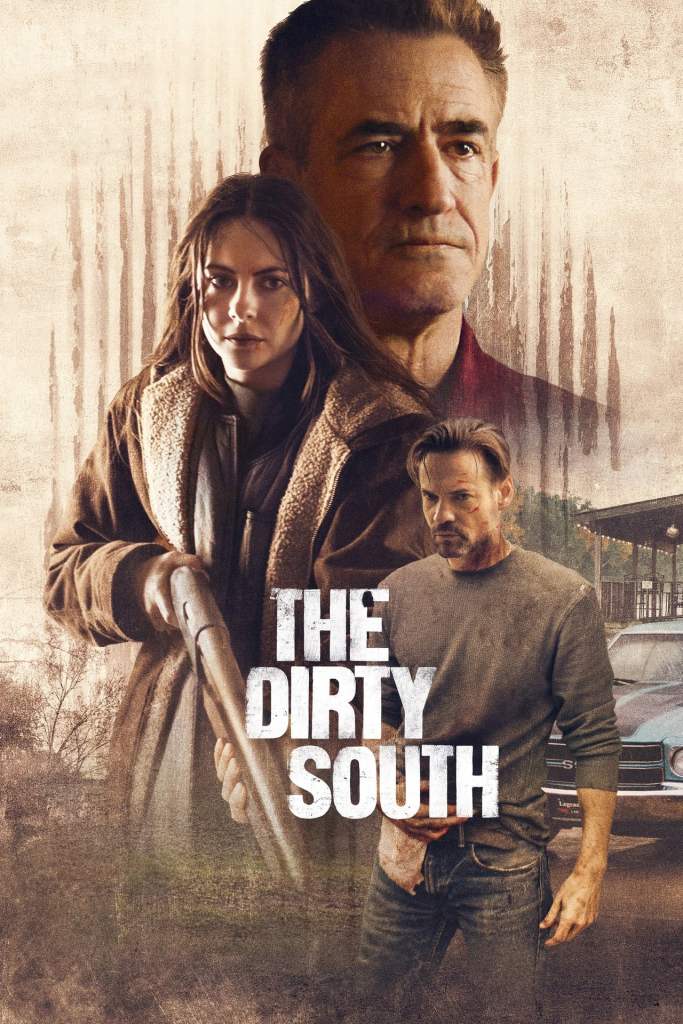
Sometimes a film doesn’t have to be stellar to give you exactly what you want. The Dirty South is one such movie, or maybe it just caught me on a good day. It stars Willa Holland (Arrow), Shane West (A Walk to Remember and ER), and Dermont Mulroney (of many films; the most recognizable face in the movie) and takes place in a small town quite literally divided by railroad tracks. On one side is the well-to-do’s, and on the other, the trailer park-living working class. Sue Parker is of the latter, running a bar owned by her alcoholic and drug-abusing father Gary. Sue is up against a wall: the bar owes $30k to the richest man in town, Jeb Roy, and he has given her until Monday to pay up, or he’ll take the bar and the land, including Sue’s home. Sue’s get-out-of-jail-free card may have just walked in the door in the form of Dion. A drifter, Dion is a two-bit thief who gets through life by pickpocketing patrons at bars just like Sue’s and coasting until he runs low on cash, then repeating the cycle. In a town like hers, she knows where the wealthy hang out, and Dion agrees to help her if he can keep everything of their score over her needed 30k. A blink-and-you’ll-miss-it kind of movie, there’s so much plot going on that you may need a map by the end, so don’t let your attention stray. It doesn’t promise anything more than it delivers though. Mildly compelling in all the right spots, and while it won’t win any awards, it’s a solid afternoon movie. ★★★

There’s not really much to say about The Unknown Country. The premise was something like “a woman drives cross country after the loss of a family member,” or something like that, and that’s about all the movie is about. In the film, a woman named Tana sets out from the north (only known because it is cold and snowy, and at some point after awhile we see a sign for South Dakota) and, eventually, she ends up in Texas. Along the way, she reflects on the life of her grandmother, and meets some eccentric people in the backwaters of America on her trip (real people, whose stories are told in a documentary-like way). There’s only the barest of plots here, and you know me — I need a story to get behind. Needless to say, this was not my kind of film. I stuck it out, mostly hoping for the big “ah ha” moment in the end, but it wasn’t enough to satisfy my curiosity. ★

Pakistani film Joyland is one of those films that you think it is about one thing, and ends up being about something else entirely. Sometimes that doesn’t work, but it does here. The film mostly follows a man named Haider, who lives in a small apartment with his wife Muntaz, brother Saleem (with his wife and daughters), and their ailing father Aman. In their culture, Aman, as patriarch, is head of household until his death, so his word is law, and he derides Haider for not being a “manly man.” Haider keeps the house while his wife Muntaz works, and when he finally finds work, it isn’t a job the family would approve of. Haider becomes a backup dancer at a local dance theater; not only that, but he is backing up a transgender woman named Biba. Haider is attached to Biba immediately, and we start to learn a whole lot about Haider as the film goes along. A movie like this, you think Haider and/or Biba is going to be the focus, and Haider is definitely the main actor throughout, but it isn’t his story that all of this revolves around. I can’t tell you who because that would ruin the surprise. Suffice to say that you should sit back and ride the wave of emotions of the film, and if you think it isn’t moving fast enough for you, just stick around for the ending. The movie’s a bit uneven at times, and does seem to lose focus in the second half, but it is all worth it when it comes together in the end. ★★★½

Falcon Lake is such a great film, combining elements of supernatural, psychological thriller, and a coming-of-age in French Canada. Young teen Bastien and his family are staying the summer at the vacation home of longtime friends, situated near a picturesque lake. It’s been a few years since the families all got together; last time, the friends’ daughter Chloe was 10 or 11 and Bastien was 7 — a big gap at that age. But now, Bastien is 13 (almost 14, as he reminds people) and Chloe is 16, and the gap doesn’t seem so large. At first, Chloe tests Bastien with a story about a previous drowning in the lake, and it now being haunted by a ghost, but it doesn’t seem to faze Bastien, though he does carry a fear of drowning as he can’t swim. Passing Chloe’s “test” to see if he is a kid or not, the two start to bond; however, whenever other (older) boys come around, Chloe obviously latches on to them, freezing Bastien out. Still, the two grow close as the summer progresses. They alternate between being carefree kids and adolescents on the cusp of sexual awakening. It’s a great film and a reminder of those last days of childhood, but with poignant reminders that adulthood isn’t too far away. ★★★★★

Quick takes on 5 Italian films of the 60s

It’s been a little while since a film completely blew me away. Fists in the Pocket did just that, with a tale of a dysfunctional family in a rural villa. Once from money, the family has fallen on hard times, in no small part because of its living members. The matriarch is blind and mostly forgotten in the house; eldest son Augusto is the true man of the house and the only breadwinner; daughter Giulia is a self-absorbed bitch; and fellow brothers Leone and Alessandro are epileptic and have their own problems: Leone is simple of mind, and “Ale” is a psychopath by every definition of the word. It is mostly Ale and Giulia who vie for Augusto’s attention, but in the most unhealthy of ways. Giulia flaunts the lover letter her brother Ale wrote her, and Ale tries to exert power over anyone who is perceived weaker than himself, while fermenting an incestuous relationship with his sister. Augusto though, for the most part, keeps the family in check, but I get the feeling he secretly loves the power he wields, and he hoards it over his siblings. If Ale is going to get more of the power he covets, he will need to get Augusto out of the picture. He’s too afraid to attack him directly, so he instead plots to kill the rest of the family, which would then free Augusto to marry his girlfriend and move to the city. A lot goes on in this movie, but what makes it stand out is the amazing performances by the trio of leads. Lou Castel as Ale is always arresting in every scene, as a lunatic with no redeeming qualities, yet he fools his family enough to get by. Little things like when he rehearses movements with his hands before conversations with his brother drive home how hard Ale is working to appear normal. The film drew a lot of criticism from the Catholic church when it came out, as Ale also goes through the motions of observing his faith, often right before or after committing some crime, but I think it was used more to show the depths of Ale’s sociopathy. Loved every minute of it. ★★★★★

La Commare Secca gives the set up of the film from the very start: a prostitute is found dead along the riverfront, just outside of a park. The police round up a bunch of suspects, people who were in the park that night, and start getting alibis. For each one, the viewer sees immediately that no one is telling the truth. The film plays out as each person gives their side of the story, but unfortunately it plays out as sort of a poor man’s Rashomon. Though none of them are faultless, there’s one man in particular who exudes villainy from the get-go, so you don’t have to guess too far to know who the murderer is. ★★

Dillinger is Dead is a slow-burn drama and very nearly one-man show, a showcase for the talents of esteemed French actor Michel Piccoli. The film follows his character, Glauco, over the course of one long day. We immediately see that the man is a bit disturbed and pervy, into voyeurism (when he can get away with it), and he is hiding his “true” self from the world around him. After leaving work (he designs gas masks, and his coworkers laud his work as an existential effort about masking ourselves from industrialist society, when in reality Glauco designed them from his own dark soul), he goes home to find his wife sick in bed. She made him dinner, but it is cold, so he begins to prepare a new, gourmet meal for himself. While looking for ingredients in the back of the cabinet, he stumbles upon a very old revolver, wrapped in a newspaper extolling the death of John Dillinger. Thinking this may be the killing weapon, Glauco sets out for the evening to restore the gun, cleaning and oiling it while he prepares his dinner. At times, he’ll hold it to his head and play-act at suicide. At some point, the family maid comes in, a woman to whom Glauco is attracted, and he later seduces her. The movie ticks by slowly, with this always-simmering feeling of perverseness and a real sense of impending doom. The finale does not disappoint. I got sort of Jeanne Dielman, 23 quai du Commerce, 1080 Bruxelles vibes. There are a lot of similarities, such as a nearly complete lack of dialogue, as well as watching our main character go about mundane actions (cooking, watching TV, etc), but mostly because of the boiling sense of wrongness and the fact that the character loses it in the end; but whereas Jeanne was just done with society because of the role it forced her into, Glauco is a pure sociopath from the beginning. ★★★★½

Some heavy films in a row there, so for some lighter fare, I hunted down a comedy, and to boot, it stars arguably the most recognizable Italian actor of all time, Marcello Mastroianni. Divorce Italian Style is fantastic, and an easy viewing for all, even if you are usually hesitant about reading subtitles. Mastroianni plays Ferdinando Cefalû (Fefè), a man from a formerly wealthy estate but whose father has lost much of their lands to his brother (Fefè’s uncle). Fefè is married 12 years to Rosalia, a woman for whom he has no more feelings. In fact, Fefè is deeply in love with his cousin (said uncle’s daughter), 16-year-old Angela. And Fefè is willing to do anything to get her, up to and including murder. After witnessing a recent trial where a woman was given a light sentence after murdering her philandering husband, Fefè hatches a plan to find a man to woo Rosalia, so that Fefè can kill her and free himself. He has trouble finding a candidate, until fate throws him just the man he needs. Rosalia was in love with a man before the war (WW2), but he was thought dead, and she moved on. Turns out he is alive, and Fefè hires him to do some work around the house. When this man and Rosalia see each other for the first time, Fefè thinks he is golden. But he still needs to enact his scheme. Lots of funny stuff, including from Fefè’s sister, who is in love with a man but whom Fefè has yet to approve their marriage, despite he continually walking in on their amorous actions in every dark corner of the house. You’ll laugh often and loud throughout this one. ★★★★
I liked the above movie so much that I went and found another from the same director (Pietro Germi). Seduced and Abandoned is another comedy, from 1964, and while elements are a whole lot darker, it was uproariously funny at times too. In a small town where everyone is in everyone else’s business, patriarch Vincenzo cares very much for his family’s honor. His daughter Matilde is about to marry a young man named Peppino, but Peppino seduces and beds Matilde’s 15-year-old sister Agnese one afternoon, setting off the film’s chain of events, especially after it is found that she is pregnant. Vincenzo will slap around Agnese and call her a tramp in his own home, but he doesn’t want anyone else knowing it, and he is dead set on getting Peppino to marry her before she starts showing. In a strange turn of events through, Peppino refuses, as he wants to marry a virgin (not forgetting that Agnese isn’t a virgin because of him). In the little town full of gossip, both families are doing everything they can to save face. It has slow moments, and some of the humor can be hard to get behind in 2023, but a lot of it is still very funny, and it’s an overall enjoyable comedy. ★★★

  • TV series recently watched: Succession (season 4), The Serpent Queen (season 1), Lawmen: Bass Reeves (series), Gen V (season 1)
  • Book currently reading: Lord of Chaos by Robert Jordan

Quick takes on 6 classic Jackie Chan films

Today, going to look back at some of the films that put Jackie Chan on the map, thanks to the excellent set from Criterion. Starting with 1978’s Half a Loaf of Kung Fu, which is a silly movie, but it’s a fun silly movie. Chan would continue this style of slapstick-style comedy mixed with fantastic fighting sequences for a long time. In this film, with so many subplots that your head will spin, Chan plays a bumbling nobody who has a dream of learning kung fu. For awhile, he always seems to turn up at the wrong place at the right time, Some big villains get killed by kung fu experts when Chan is around, and it is Chan that people think did the killing, so his reputation grows as a hero. With his new status under his arm, he seeks out a kung fu master to teach him. In a running gag, the way Chan ends up learning all of his moves is through reading the pages of the master’s “kung fu manual,” and can seemingly pick up advanced moves from a quick look at each page. By the end of the film, Chan is a master, fighting off hoards of bad guys at a time, with 3 separate gangs coming after Chan and his master for some ancient artifacts they supposedly carry. Silly antics go hand-in-hand with incredible fighting sequences. You might laugh one second and “ooh and ahh” the next. I’ve admittedly not seen a lot of these old kung fu films before, but I was very impressed with the action scenes, made in a time long before computer-aided effects could make anyone look like a fighting master. ★★★

In Spiritual Kung Fu, Chan plays Yi-Lang, a student at a martial arts school under attack. A rival has stolen a book teaching the Seven Deadly Fists technique, which is supposedly unbeatable. Legend has it that only one other technique would stand a chance against it, the Five Style Fists. Unfortunately this book has been lost to time, and the wielder of the Seven Deadly Fists has been going around killing the masters of other schools. Thankfully, Yi-Lang has the spirits on his side. Five spirits descend from the heavens, each representing a style (Crane, Serpent, Dragon, Leopard, and Tiger), and they begin teaching Yi-Lang their long-lost techniques. The beginning of this movie is silly to the point of stupidity, and I very nearly gave up. The spirits are invisible to all by Yi-Lang, and their hijinks on the other students in his school are nothing more than tricky camera work and 70s style special effects, and it goes on way too long (nearly 30 minutes). Get past that though, and the high flying kung-fu is even better than the above film. The final hour of this film is incredible, if you can wade through the opening slosh. ★★★

Jackie Chan takes full control of a film for the first time in 1979’s The Fearless Hyena, his directorial debut. With more control comes more of Jackie’s personality, including all those silly bits, ramped up to level 10. If you are a big fan, you’ll find plenty to like, but I’m here for the action, and while there is less of it, what is there is still top-notch. The story revolves around a young kung fu student (seeing a trend here?) named Lung who is learning from his grandfather Pang-fei. Pang-fei doesn’t want Lung using his skills outside of their home, because his clan has been targeted by a rival in the past who would love to wipe out its surviving members. Lung is young and impetuous though, taking a job at a local kung fu school as an instructor of his own, but mostly as the hired muscle, to beat rival toughs so as to recruit more students at the school. His rise in fame does catch the eye of grandfather’s rivals though. In the final fight, Lung is trained in “emotional kung fu” to finally take out the big bad guy. Yes, it is as silly as it sounds. Slapstick runs amok, but not entirely wasteful. ★★

By 1983, Chan was no longer an up-and-comer, but a bonafide star, which can have good and bad consequences. The bad can result in a film like Fearless Hyena Part II. Not sure it is actually a sequel, because while the actors are the same, the characters seem different. This is just a really bad movie. There are a million characters that appear and disappear with little rhyme or reason, and the movie’s biggest star, Jackie, disappears for huge stretches. And when he’s gone, it is gravely apparent: the fighting isn’t nearly as fast-paced nor as intricate as when he’s involved. There’s a loose story about two men whose fathers are killed by a duo of bad guys, and the men go out to seek vengeance, but there’s so much else that goes on that I became hopelessly lost. Characters come in for a seemingly important reason, only to leave after their scene and never be heard from again. And that missing Jackie Chan problem… I first suspected something was up in the final fight sequence, when there is clearly re-used footage from the previous film. After finishing the movie, I read that Jackie left the film halfway through, left the studio entirely, to go to a rival studio. This prompted the director to finish the film with reused film and outtakes from the previous entry, while substituting Chan with a double where needed. Anything for a buck. We’re in a spiral here, hope the next one is better. ★

The Young Master was Chan’s first film at his new studio home (Golden Harvest), and was released in 1980 (before the previous studio was able to finish the above film sans Chan’s involvement). It’s a much more dramatic turn than his previous films, and is my favorite yet. He plays a young man named Dragon, who, along with his brother Tiger, was taken in as an orphan by a kung fu school master. The school raised the boys to be the brightest students in the establishment. The annual lion dance competition is coming up, and Tiger is slated to be the head, but he is injured just before the comp. Dragon takes his place, and during their fight as the Gold Dragon against the Black Dragon, Dragon (the person) sees that his brother Tiger is performing as Black Dragon, for the rival school. Turns out Tiger took a bribe to do so, and when he is found out, he flees his home in shame and hooks up with a gang of thugs. They free a convicted criminal named Kam, but unfortunately it is Dragon that authorities think did the job. Dragon runs aground with the local constable (and his family!) but it isn’t until Tiger is made to be the scapegoat of the villains’ latest bank robbery than Dragon gets a chance to save his brother from himself, and take down Kam too. Chan gets to show a more emotional side for the first time in these films, and while no one is ever going to wax poetic about his acting chops, it is nice to see him play something besides the goofball. ★★★½

Finishing up with 1985’s My Lucky Stars, the middle of a loose “trilogy” of films starring the same actors across the series. Chan get’s top billing due to his drawing power by 1985, and while he is the first person you see on screen, he disappears for a large section in the middle before returning in the end. The film involves a quintet of friends, all petty criminals tied to each other from having all been orphans in the same home as kids. Muscle (Chan) is a cop trying to take down a mob family, and he hails from the same orphanage. Muscle knows dirty cops are keeping him from his goal, so he recruits his five childhood buddies to infiltrate the bad guys’ lair, along with some eye candy in the form of a kung fu wielding badass woman nicknamed Poison Ivy. Action in the beginning, action in the end, with a lot of comedy in the middle. Not too bad, and seeing a martial arts film set in current day (well, 80s, that is) was a refreshing change of pace after all of the earlier films. A little hokey, but not terrible. ★★½

  • TV series recently watched: The Wheel of Time (season 1), Star Trek Lower Decks (season 4), Colin From Accounts (season 1)
  • Book currently reading: The Thorn Birds by Colleen McCullough

Quick takes on Plan 75 and other films

Stonewalling is technically a Japanese film (Japanese directors and production company), but it was filmed in China and has the feel of some of the great, leisurely Chinese films of the last decade. The film follows 20-year-old Lynn in the year 2019. She’s living with her boyfriend, going to school to be a flight attendant, and taking English classes to help her career choice, but she doesn’t seem excited about any of it (including her boyfriend). Back home, her dad runs a health clinic and her mom is always into get-rich-quick schemes, the latest being a pyramid scheme involving beauty products. As such, Lynn’s parents are always in debt, and Lynn is continually trying to find odd jobs to send money. Her latest is an egg donation clinic, but lo and behold, she is unable to donate because she finds out she is pregnant. Not one to look a gift horse in the mouth, she moves back home to give birth in secret with her parents, and they start looking for ways to sell the baby to a couple looking to adopt. There’s laughs about the absurdity of Lynn’s life, but also lots of heart-wrenching moments that sometimes pop up unexpectedly. As I’ve said, Lynn doesn’t seem to care about much in life, but she obviously does want to have children one day (when she first found about egg donation, her first question was if she could still have children after the surgery). And in a don’t-blink-or-you’ll-miss-it short dialogue, we find out the real reason Lynn wants to sell this baby, and her reasoning will make you wince with pain for her. And even as her due date in the spring approaches, I had this sense of foreboding, because we all know what came out of China in early 2020. A very poignant film, but definitely takes its time in telling the story, so go in with time and patience and let it come to you. ★★★★

The Lesson is a “thriller” (heavy on the quotations, because it isn’t really) following a promising young writer named Liam. Liam has all the talent but has been working on the same first novel for years, but he is well regarded in scholarly circles. Because of this, he is hired by renowned author JM Sinclair to tutor his son Bertie, as Bertie nears his entrance exams for Oxford. Liam jumps at the opportunity, as Sinclair is his personal hero. Sinclair hasn’t written a book though in five years, and is feeling the pressure to keep the legacy going. As such, Liam enters a household fraught with tension: Sinclair, who can’t seem to finish this book; Bertie, who doesn’t even enjoy writing, but is being forced to follow in his father’s footsteps; and Sinclair’s wife Helene, who has her own part to play in all this. Add to everything the loss of their first son, Felix, who drowned a couple years ago in the small lake behind the house, and whose presence is still felt throughout the house. At first, I was getting vibes from the Letters from Zedelghem sections of the novel Cloud Atlas; substitute “author” for “composer” and it felt like much the same set up, and it would seem, even if the plots diverge, the writer for this film definitely found inspiration there. In the end, it does become its own story, though the acting is better than the telling of it. It has some heavy hitters (Richard Grant and Julie Delpy) but ultimately became too pulpy for what I was initially expecting. ★★½

The title Scrapper refers to Georgie, a 12-year-old girl whose mother recently died after a prolonged illness, leaving her alone. She’s convinced the world that an uncle, “Winston Churchill,” has moved in to take care of her, but she is very much by herself, with only a friend (Ali) knowing the truth. She is scraping by by stealing bikes and selling them, but the writing is on the wall that this will not last forever, despite what she may think. Her plans go awry when her biological father, Jason, shows up. She doesn’t remember him, as he’s never been in the picture, but Georgie’s mother contacted him before she died, pleading for him to come take care of Georgie. The two immediately butt heads, as Georgie doesn’t think she needs him, and Jason has made a life of shirking responsibility. Jason needs to grow up, and Georgie needs to move past her grief. We all know where this is going. I didn’t much like the movie in the beginning; it seemed the young director (Charlotte Regan) was trying too hard to press all the right “indie film” buttons, but it settled in after awhile, and the performance by the always great Harris Dickinson (Where the Crawdads Sing, Triangle of Sadness, Beach Rats, etc) really helps. ★★★

Plan 75 is a dystopian Japanese film which shines a light on a very real problem in that country. Japan has the highest population of elderly in the world, and is a society where older folks would rather commit suicide than be a burden on their kids and grandkids. In this film, the government has enacted a program called Plan 75, in which people that age and older are given the option of a government assisted suicide. The movie follows 3 people involved in the program. Mishi is in her 70s and facing terrible age discrimination. Fired at her job, unable to find a new job because of her age, and too proud to take welfare, she’s facing the real possibility of becoming homeless. After she sees a friend commit suicide in her apartment because of similar problems, Mishi decides to sign up for Plan 75. However, as her day approaches, she struggles with letting go of this world, terrible as it may be at times. We also get to know Himoru, a young man who works at Plan 75, who discovers that the program isn’t as respectful with people’s remains as they claim to be. With this knowledge, he is torn when his estranged uncle signs up for the program. Though Himoru hasn’t seen his uncle in 20 years, he is reminded of his deceased father. The final person is Maria, an immigrant who loves caring for elderly at a nursing home, but hears that she can make more money at Plan 75. Expecting to care for old people there too, she finds the job is much different than advertised. You’d think a movie like this would be exceedingly depressing, and there are plenty of sad moments for sure, but I also found lots of heartwarming instances as well. A real reminder that, as a society, we should embrace rather than forget those that came before, and draw from their lifetime of experience and perspective. ★★★★½

The Equalizer 3 returns Denzel Washington as Robert McCall, a do-gooder with the skills to brutally kill any bad guy in his way. In the opening of the film, McCall is in Sicily, killing a bunch of thugs in a winery. He’s there’s for a key (reason unknown until the end of the film), but stumbles upon something much more: evidence of a huge drug smuggling operation. Shot while exiting the villa, McCall makes it to mainland Italy before passing out, and is rescued by a policeman and doctor in the small coastal town of Altamonte. Recouping there for a few days, he phones in an anonymous tip to the CIA about his findings, and considers the matter resolved. Unfortunately for him, the bad guys won’t let it go so easily, and neither, for that matter, will the CIA. The town he is in happens to be a focal point for the mafia, involved in that drug operation, and McCall, who has grown close to the town’s warm and welcoming people, will not let them come to harm. I was a big fan of the first film in 2014 (the year I saw practically every movie released in theaters), but the sequel, while heavy on action, felt a lot lighter on plot. This film returned to its roots a bit, letting a real plot develop and letting the viewer get to know the victims (and hate the aggressors), so that when McCall goes on his rampage, we are cheering him on. However, the ending did fall a little flat, and seemed too neat. Still, a step up from the last film, and very enjoyable overall. ★★★½

  • TV series recently watched: Succession (season 3), Justified: City Primeval (series), Scavengers Reign (series), Lessons in Chemistry (season 1)
  • Book currently reading: The Thorn Birds by Colleen McCullough

Quick takes on 5 British films of the 60s

How about a group of classic 1960s films from Britain? Up first is Blow-Up, the first English language film from Italian director Michelangelo Antonioni. A heralded film in its time (more on that in a bit), I had a terrible time getting into this one, even though I really liked some of Antonioni’s earlier films and am definitely a fan of his style. I enjoy counterculture cinema as much as the next guy, but when nothing much happens for an hour, even my patience is tested. This film follows a photographer named Thomas, who spends his time alternating between having sex with multiple women and berating them in his photo studio. Not a very good guy. Out one afternoon strolling through a park, he takes some photos of a couple, after which the woman chases him down demanding the film. Thomas refuses, and it isn’t until he gets back to his studio and develops the film that he realizes why: it seems the woman may have hired a man in the woods to kill the man she was with in the park, and Thomas caught a pretty good photo of it going down, without knowing it at the time. Sounds great doesn’t it? But man, this movie meanders along with no end in sight, and seems to enjoy really just pushing boundaries for what you can show on screen. And push boundaries it did. The sexual content was in open defiance of the Hollywood Hays Code at the time, and ultimately led to Hollywood abandoning the code for a new system (the MPAA film rating system that later became the one we still use today). Blow-Up is still very well regarded today, so I can only chalk this one up to not being my cup of tea. ★

The Servant was directed by American director Joseph Losey, who spent the rest of his life making films overseas after being blacklisted in Hollywood during the McCarthy era. It is a delightfully weird and strange film about a manservant turning the tables on his master in London. Tony is a wealthy socialite who always seems to have a scheme cooking (his latest is getting financiers to build cities in Brazil) but who never seems to actually do anything. He’s recently purchased a large London house to renovate, and now needs a servant to keep the place. He hires Hugo Barrett, possibly the worst mistake in his life. Barrett seems very able and willing, anticipating Tony’s desires before he asks, but Tony’s girlfriend, Susan, takes an instant disliking to him. She finds something subversive about Barrett, and as the viewer, we see that she is right. First, Barrett convinces Tony that he needs a maid too, so they hire Barrett’s girlfriend, Vera, under the guise that Vera is Barrett’s sister. It is then hinted that Barrett has told Vera to seduce Tony, to some as-yet unknown goal. As the film goes along, Tony becomes more and more reliant on Barrett, until their roles are very much switched by the end of the picture. Gorgeous black-and-white cinematography and a superb turn from Dirk Bogarde as Barrett, an actor who took a lot of envelope-pushing roles in the latter half of his career (himself a gay man in England, at a time when that was outlawed). ★★★½

Women in Love is based on the scandalous DH Lawrence novel, a book I once tried to read (but was unable to finish). Was hoping the movie would be better, but unfortunately, again, I could not get all the way through this story. Taking place in the early 20th century, the film follows two sisters, Ursula and Gudrun, as they navigate life, love, and relationships in central England. Much like the book, there’s tons of discourse about current societal norms and taboos, and just like the book, the film really pushed the censors. There’s a scene where friends Gerald and Rupert engage in a naked wrestling match in front of a fireplace, and it was one of the first theatrical films to show male genitals on screen, in both this scene and others. The sexual tension between these two men is also hinted, but never shown, at least not as far as I got in the film. As I said, I couldn’t finish, and gave up about halfway through. The film is gorgeously shot, but so heavy in dialogue (and not even engaging, entertaining dialogue) that I could see no hope of it improving before the end. ½

This Sporting Life is a stark realism drama (called a “kitchen sink” film, a term I’d never heard before) starring Richard Harris as a coal miner-turned-rugby player named Frank Machin. Not particularly talented but willing to play hard and dirty, he quickly becomes a fan favorite, forcing the team to sign him to a huge salary. Suddenly, and for the first time in his life, Frank has everything he could want, but the one thing he desires seems to be out of his grasp. Frank has an almost unhealthy attraction for his landlady, Margaret, a widow whose husband died under shady circumstances. The man died when he lost control of a tool at a lathe and was impaled, but an investigation stated he did it on purpose and ruled it a suicide, leaving her with no insurance payout. Trying to raise 2 kids on her own, she relies on Frank’s income, but in doing so, makes her feel like a kept woman, and she despises the whisperings when they are out together. Frank seems oblivious, and can’t understand why Margaret can share her body but not her affection, leading to fights and further turbulence at home. This film is sort of the anti-Rocky. Frank comes from a life where all he knew was pain and suffering, and whenever confronted with any setback in life, he reacts with anger and violence, never able to rise above. The movie takes a long time to develop, but that time is spent getting inside the heads and motivations of each of the characters, so that when the final act comes, it hits hard. Excellent film, with strong acting from Harris and especially Rachel Roberts as Margaret. The two of them reaped a bunch of award nominations, with Harris winning one at Cannes and Roberts winning a British Academy Award. ★★★½

I didn’t really set out to watch a bunch of movies that pushed boundaries, but that’s about what ended up happening, as there is more of the same in 1961’s A Taste of Honey. I guess it comes from watching movies from this era. This film shines a light on society outcasts Helen and her 17-year-old daughter Jo. The two bounce from home to home, leaving whenever they’ve fallen too far behind on rent (by sneaking out the window so as to avoid a confrontation with the landlord). Walking home from school one day, Jo catches the eye of a young sailor, Jimmy, who is black. The two start a fling just before Jimmy heads back to sea, and all Jo gets from it is an empty promise ring and a pregnancy. Before Jo is aware of the baby though, Helen finds a new man of her own and gets married fast enough to make your head spin. The new man of the house doesn’t want Jo around, so Jo finds a cheap place of her own and lands a job in shoe store. It is implied that she has dropped out of school. To help out around the apartment, Jo finds a man of her own, only this one will not be out to nab her: Geoffrey is gay, and thus an outcast too. He is willing to act a father though, in order to fool the neighbors, so you think Jo may actually have a path forward in her life. Until, that is, Helen’s husband finds a new toy and she lands in Jo’s tiny apartment too. This film starts as a comedy but gets real serious by the end, and its depiction of a gay man and an interracial couple on screen turned plenty of heads (think about what was going on in the USA in 1961…). Excellent subject matter far ahead of its time, but the movie felt a bit uneven for my tastes. I can appreciate its scope even if I wasn’t always on the same page with its presentation. ★★½

Quick takes on Afire and other films

Cherry is a small indie film built on a simple concept but presented without any easy answers. Cherry is a young woman, a 20-something free spirit who seems to be pretty aimless at this point in her life. She might need to find a path, and quick, because at the beginning of the film she takes an at-home pregnancy test and it comes back positive. It’s a Saturday afternoon, and she begs her way into a clinic just as they are closing to consult with a doctor, who confirms the pregnancy and gives her a tough dilemma. The doctor pegs Cherry at 10 weeks, and California law only allows the easier (and cheaper) abortion by bill up until 11 weeks. Cherry basically has Sunday to decide what she’s going to do, and despite what all the pundits say, it isn’t an easy decision. Cherry is currently living with her boyfriend, Nick, and 3 other roommates in a tiny apartment. Nick has a mountain of student debt and is pursing a career in music, not the most reliable in terms of financial structure obviously. Cherry herself has bounced from job to job. Her mother is making a big deal that she’s happy that the house is empty for the first time and is looking forward to peace and quiet, and her dad has always been estranged. Cherry is dying to tell someone, anyone, for advice and help, but no one has the time to really listen. She goes through Sunday dealing with everyone else’s problems with no one to talk to about her own. She comes around to the idea that she wants to be a mother, but in her chaotic current situation, is that what’s best? Being a low budget film, the acting is honestly subpar from everyone except Cherry (newcomer Alex Trewhitt), who delivers as a woman at a crossroads. Clunky dialogue aside, it’s a thoughtful film, though it’s unlikely to change anyone’s minds about the subject matter. ★★★

On Fire is a super low budget film, and it shows in the opening credits, but sometimes you can find a diamond in the rough. Unfortunately that’s not the case this time. After the “based on true events” tag, we meet the characters: a father, his pregnant wife, their teen son, and the father’s aging dad, who lives with them. They live in a manufactured home in a rural mountainous community, with an under-control wildfire currently burning on the next hill over. Taking place over the course of one long day, that fire spreads quickly, creating a harrowing environment as the family tries to make it down off the mountain alive. There’s some tense moments, but those fleeting minutes are the only reason to keep watching. Just 2 familiar faces (and both character actors at that), all of the main folks are no-names and never-will-be’s, unless they start honing their craft. Cringy acting, silly dialogue, and forced emotions all add up to a forgettable film. ★½

L’immensità, however, shows what you can do with stellar acting, even without a real “story” to drive the plot. This movie is a showcase for its co-leads: established star Penélope Cruz and newcomer Luana Giuliani. Taking place in 1970’s Italy, at first, the movie seems to focus on Giuliani’s character Adri. Born a girl and named Adriana by her parents, Adri prefers to go by Andrew and dresses like a boy. His parents and family (little brother and sister) aren’t buying in, it being the 70s after all, so Andrew’s only acceptance as a boy is with a Romani girl named Sara, perhaps because she too is an outcast because of her culture. Most of Andrew’s life revolves around his family, and it is a violent household. His mom is Cruz’s character, Clara, a Spanish woman married to Italian businessman Felice, who runs around on her and beats her if she questions him. Clara hides her hurt with makeup and tries to protect her children from the truth by playing silly games to distract them. But Andrew, the oldest and approaching adolescence, is starting to see through the act and knows what is going on. The two of them carry this film on their worthy shoulders. It’s sort of a coming-of-age film regarding Andrew, but with a big helping of Clara’s journey as well, and even some fantasy/dreamlike moments as well. I’m in the 3 1/2 to 4 range on this movie, but will bump it up to a 4 based on those performances alone. They really are that good. ★★★★

The Caine Mutiny Court-Martial is a courtroom drama taking place almost entirely in the court, during a navy tribunal. Lieutenant Maryk is on trial for mutiny aboard the USS Caine, and is being defended by appointed counsel, Lieutenant Greenwald, who doesn’t always see eye to eye with his client but who will serve to the best of his ability. Maryk’s defense is largely centered on the incompetence of the Caine’s captain, Lt. Commander Queeq. During a cyclone in the pacific on the fateful day, Maryk relieved Queeg of duty and took command of the ship, purportedly to save the ship and its crew, but naval prosecutors are out to paint a very different picture of that day. Entirely dialogue driven, the viewer learns the events of that day and the characters of the various crew through the cross examination of the witnesses during trial, and each piece of evidence builds the case and the story. The film is based on a 1953 stage play, and while the dialogue is a bit old-timey in spots, the movie is masterfully told and utterly gripping from beginning to end. It shows that you don’t need big Hollywood special effects to deliver a tremendous attention-holding epic. It helps when you have an amazing cast and crew. It was director William Friedkin’s (The French Connection, The Exorcist) final film before his death, and cast included Kiefer Sutherland, Jason Clarke, Jake Lacy, and Lance Reddick (again, one of the handful of films to be released posthumously after his untimely death). ★★★★
Afire is the latest from director Christian Petzold, and returns Paula Beer from his last film, Undine. First though, we meet Leon and Felix, a couple of friends staying at Felix’s mom’s seaside house in Germany (on the Baltic). Felix is there to take photos, putting together his portfolio as a photographer, but Leon is hoping for some peaceful solitude to put the final touches on his second novel, a manuscript that was not received well by his publisher. The quiet is shattered immediately when they find out they’ll have a roommate, Nadja. Nadja sells ice cream on the boardwalk of the nearby seaside town and has loud sex with the lifeguard, Devid, disrupting Leon’s sleep and putting him into an ever-more fouler mood. Despite his surly attitude, Leon can’t help but be captivated by Nadja, and goes so far as to try to nitpick and humiliate Devid. For a large portion of the film, I didn’t really know how it was going to all come together. It is beautiful told with real, complex people with charged emotions, but it seemed a bit aimless. That is, until the final 20 or so minutes, when Leon’s world is upended and everything he thought he knew is thrown out the window. Leon is used to being (or, at least, thinking that he is) the smartest person in the room, and he can be quite petulant when things don’t go his way, and that is exactly what happens. And that ending… wow. One of those movies that I think you can gleam more from multiple viewings. ★★★★★

Quick takes on 5 films from 1950s France

Going back in time to France in the 1950s for a set of films today, starting with 1955’s Rififi, a film that Roger Ebert credited as “the invention of the heist movie.” I mentioned wanting to see this one over 3 years ago and am just getting to it (I have quite the “wish list!”) but the wait was worth it. Directed by Jules Dassin while he was blacklisted in Hollywood during the McCarthy era, it is a film noir/heist picture about a quartet of thugs who’ve come together to pull off a near impossible job, and how even once they are out, they aren’t able to escape the city’s underworld unscathed. Tony “the Stephanois” has just gotten out of jail for serving five years for another robbery when he is approached for this new job: stealing from a high class jewelry store. At first hesitant, Tony takes the job in hopes of wooing back his girl Mado, who has taken up with crime lord Pierre Grutter. Tony is joined by Jo (who Tony took the rap for on the previous job, saving Jo from doing time as well), Mario, a two-bit gangster, and Cesar, an Italian safecracker with a penchant for the ladies. The four men take the time to case the job, planning every detail, and then execute. They do get the jewels successfully, but when word gets out and a hefty reward is offered for the recovery of the merchandise, Grutter and his henchmen will do anything to get their hands on that ice. The set up to the robbery is fantastic, when the team painstakingly routing the nighttime schedule of the neighbors, cops, and delivery people, not to mention how they plan on beating the alarm system, but the highlight of the film is the heist itself: a 30 minute-plus scene filmed with no dialogue, no music, just pure tension in silence as the men try to get in and out before the city awakens the next morning. It’s a film technique that was often imitated later (Le cercle rouge comes to mind) but anyone would be hard pressed to do it better. ★★★★★

Fanfan la Tulipe, from 1952 and directed by Christian-Jaque, is a swashbuckling adventure film. Fanfan is a ladies man with no desire to settle down, but at least he tells that directly to his targets rather than woo them with false pretenses. He come across a traveling show where a gypsy foretells that Fanfan will marry the daughter of the King of France, and he buys in. Unfortunately for him, the gypsy, Adeline, works for the King’s army and is just making things up to get men to sign up for the army while it is at war, but even when faced with that news, Fanfan still believes it is his destiny to marry the princess. To make matters worse, Adeline herself starts to fall for Fanfan. Lots of sword fights and innuendo, and while there are some funny moments, the movie is fairly forgettable by the end. Too many loops and doubling back and some action sequences that run on a bit too long. ★★

Getting back on track with 1956’s And God Created Woman, from director Roger Vadim. This film is mostly known as the movie that launched the career of Brigitte Bardot (and termed the phrase “sex kitten” too!). She plays 18-year-old Juliette, a woman who cannot and will not be tamed by any man. She already has a bad reputation around town at the beginning of the film, when she is being pursued by two men: the wealthy older Eric and the working class Antoine. Juliette would prefer Antoine, who is young and strong, but he refuses to be with such a strong-willed woman, even when he can’t help but be aroused by her. Eric has money, for sure, but Juliette would be just another trophy for him, and she doesn’t want that either. Instead, Juliette ends up marrying Antoine’s younger brother Michel, who isn’t nearly the big strapping man that Antoine is. The older and wiser Eric knows this will not end well, as Michel doesn’t have the will to match Juliette’s, and sure enough, it isn’t long before Juliette is hanging out at the local bar and catching eyes again. Juliette bemoans her ability to find true happiness and wishes she could settle down with Michel, but it isn’t in her nature. Though the film does have plenty of sexist moments that wouldn’t fly today (it is from the 50s after all), it is a great early example of the sexual revolution. It caused quite the stir on its release: American posters used the tagline, “And God created woman… but the devil invented Brigitte Bardot,” and the Catholic Legion of Decency condemned it. ★★★½

Finishing up today with two films from director René Clément, who is famous for launching the career of Alain Delon in Purple Noon (the first film developed from the book The Talented Mr Ripley). First is 1952’s Forbidden Games, a heart wrenching film dealing with the consequences on humanity from war. Taking place during World War II, the movie begins by following a sea of refugees fleeing Paris. The people are bombed from German planes flying overhead, and Paulette’s mother and father are killed. Young Paulette grabs their dog (also dead, but it’s the last remnant of her old life) and flees to the countryside, where she is found by Michel, a young boy who lives with his poor family. Though Michel and Paulette are about the same age, his harder life on a farm has given him a much more worldly view than the sheltered Paulette has experienced until now, and it is up to him to explain death and its meaning to her. Paulette is unable to let go, and she convinces Michel to build an impromptu cemetery inside a nearby abandoned mill. The cemetery starts with the remains of the dog, but it quickly grows from there, with Michel and Paulette burying anything dead they can find, from animals to insects. To make it a proper cemetery, Michel starts stealing crosses from a nearby (human) cemetery, and Paulette’s fascination with crosses everywhere (including on the garments of the local priest) leads to plenty of humor. But the humor is hiding Paulette’s loss of innocence, and if you are expecting a happy ending, remember that there is still a terrible war going on around them. A wonderful and engrossing film, it was France’s most successful picture in 1952, and picked up a Golden Lion at Venice and a Special Award at the Oscar’s (before there was a Best Foreign Language Film category). ★★★★½

Gervaise tells the life of a woman who can’t seem to ever catch a break. In the beginning of the film, Gervaise gets left by the man in her life, Lantier, who was the father of her 2 boys. As a single mother in 1950s France she has few prospects, but seems to luck out when a roofer named Coupeau takes a liking to her and marries her, despite her past. Coupeau seems like a good guy, but an accident leaves him crippled and turns him into an alcoholic, and the couple’s path towards success is put in a precarious position. Add to this, Lantier shows back up in the area, and for some reason, he and Coupeau hit it off, so much so that Coupeau invites him to live with them. This of course starts a scandal in the neighborhood, but Coupeau doesn’t seem to care in his current state. Throughout all this, there’s Virginie, the sister of the woman Lantier initially left Gervaise for, who, for awhile, seemed to befriend Gervaise, but I always thought that she was a wolf in sheep’s clothing, and that certainly played out in the end. However, through all of Gervaise’s travails, I couldn’t help but think that she brought some of this on herself. If she had been more firm with Coupeau, or if she had taken the initiative to leave him for the blacksmith Goujet (Coupeau’s friend, but a much better stand-up guy who is apprenticing Gervaise’s and Lantier’s son Etienne), then maybe her life wouldn’t lead to complete shit at the end of the film. There’s some emotional moments, but honestly the movie felt really long (2 hours) and there’s a lot of soapy drama that drags. ★★½

  • TV series recently watched: Fear the Walking Dead (final season), For All Mankind (season 2), Curb Your Enthusiasm (seasons 9-11)
  • Books recently read: Candide by Voltaire, The Time Machine by HG Wells

The Marvels team-up fails to find magic together

Seems to be popular to shit on the new Marvel movies these days. Don’t get me wrong, The Marvels is not up to their usual standards of excellence, but while it does have some troubling elements, there’s still a lot of entertainment there. It’s not complete garbage, no matter what you’ve heard.

The sequel to 2019’s Captain Marvel and also relying heavily on the viewer’s knowledge of the Disney+ miniseries WandaVision and Ms Marvel, the film follows the trio of Carol Danvers (Captain Marvel), Monica Rambeau, and Kamala Khan (Ms Marvel). The film’s bad guy, Dar-Benn, is using a magical bangle (identical to the one that Khan found in her show) to rip holes in space to plunder planets of their natural resources. In doing so, she has destabilized light energy. Since Danvers, Rambeau, and Khan’s respective powers all draw from light, their powers have now gone wonky. Whenever any two of them use their powers at the same time, their physical bodies switch places with each other. This leads to lots of comedy in the first third of the film, as they keep swapping whenever each is fighting a bad guy while stranding each other in bad spots. Once they get the hang of it, they are able to put the swaps to good use later on. As they hunt down Dar-Benn and discover her motives, they have to put their combined powers to use to stop her before the rips she creates tear space apart.

The film has some exciting moments, and the action is top notch. There’s also a lot of laughs (the audience at my particular theater was having a really good time, with lots of infectious laughter throughout the film) to break up the seriousness of the danger at times. However, the film falls short in a lot of spots, and most notably, by two of its stars. Brie Larson is honestly awful, and it makes me reconsider her as an actor. I remember her being great in The Room, but that was almost a decade ago, and maybe she’s just a one-hit wonder. It is even more glaring when her costar, Iman Vellani as Kamala Khan, is absolutely wonderful. Her effervescent personality exudes joy, and I found myself focusing on her in every scene. Marvel would do well to do the same in future plans for the franchise. Larson isn’t the only bad one either; Zawe Ashton as the big bad guy Dar-Benn is equally (and completely cringe-worthy) bad, so much so that the two facing off on screen was hard to watch.

Acting aside, there’s also some weird editing, and some plot points/scenes that didn’t add anything at all to the overall picture. Seems like the film was 2 hours until they realized it just wasn’t working, so they started cutting (the final result is about 90 minutes) in hopes of salvaging something. It didn’t completely work. All that being said, as I stated earlier, the movie still has lots of fun and is a general good time, but since I have a habit of throwing out 4 and 5 stars for Marvel films, this one is definitely a letdown. ★★½

Quick takes on Gran Turismo and other films

Readers of my blog know of my allegiance to the Marvel universe over DC’s. We’ll see if that holds up after a bumpy few movies now (will be seeing The Marvels early next week), but looking back at my ratings of DC’s films over the last 3 years, they’ve done very well. I liked The Flash a whole lot (more than many, it seems), and also thought very well of The Suicide Squad and Zack Snyder’s version of Justice League. Blue Beetle is yet another hit, so maybe I need to stop thinking of DC as the “lesser” of the comic book-turned-movie universes. The film stars Cobra Kai’s Xolo Maridueña as Jaime Reyes, a recent college grad who returns home to find his family in dire financial straights, a fact they’ve hidden from him till now. Through a turn of events, Jaime meets Jenny Kord, wealthy heiress to the Kord Industries conglomerate. Jenny is at odds with her aunt Victoria (Susan Sarandon); Victoria wants to take the company in a direction of military weapons, and Jenny wants to follow in her father’s footsteps and pursue more humanitarian efforts. At the heart of Victoria’s research is a super soldier program built around an ancient artifact known as the scarab. The scarab has the ability to meld with a person of its own choosing and bequeath super human powers. Of course, Jaime becomes the lucky person, and he finds himself with powers to fight Victoria and her private army. Lots of action obviously, but also a lot of humor, and the film reminds me of what Marvel use to be, before they took themselves too seriously. These movies are supposed to be fun obviously, and Blue Beetle definitely delivers that, in an all-family accessible format with laughs, thrills, and heart. ★★★★★

In the history of film adaptations from video games, there’s a whole lot more misses than hits. Gran Turismo falls somewhere in the middle. Based on a true story, it follows a young man named Jann Mardenborough, an avid gamer, especially of the racing simulator Gran Turismo (don’t call it a video game!). Jann has dreams of being a real race car driver, believing that the realness of the game would translate to a real course, but it’s an expensive sport so he has little chance of ever realizing his dream. He gets his opportunity when Nissan puts on a challenge to give Gran Turismo gamers the chance to race for real, in hopes of tapping the next generation of car buyers. Nissan brings in an old racer to properly train the young drivers and see if their video game skills can translate to the race track. The movie slows (too much) in between the races, and hokey dialogue and subpar acting (even from establishers actors like David Harbour and Orlando Bloom) really drag it down. There’s no drag in the races though, which are definitely the highlights, and really the only saving grace. They are exciting and completely captivating from start to finish. Still, as a whole, a very average film. ★★½

War Pony is an indie film from a lot of first-timers (actors and crew alike, though co-director Riley Keough has acted in plenty, but is perhaps more famously known as Elvis’s granddaughter). The film follows two people living on an Indian reservation in South Dakota. 23-year-old Bill is basically a two-bit crook. He’s got a couple babies from two different women (the first of whom is currently in jail; that’s the kind of group they run with) but doesn’t support them, leaving the kids with his mom while he goes out and gets high with his friends. He finally lands a job from a white farmer, which may at last be Bill’s ticket to something stable in his life, but even then, the owner uses Bill to do a few unsavory jobs in addition to his normal duties. The other main character is 11-year-old Matho, who seems to be following Bill’s trajectory. Throughout the course of the film, Matho bounces from house to house (when he isn’t straight up homeless), but nowhere does he find anything resembling a normal family life. He deals a little in drugs (easily gotten from the so-called parental figures at each house) and seems to sink further and further from any hope of a successful future as the film goes along. After awhile, you definitely get the sense that Matho and Bill could be the same person; Bill is who Matho will become if nothing changes in his life. It’s a bleak thought. Much has been written and said about poverty on reservations, and this movie gives a good glimpse into why. When faced with no opportunities, the youth are left to fend for themselves or just give up. Very uneven acting (though young Matho is a bright spot) but a strong, realistic story. ★★★½

After Murder on the Orient Express and Death on the Nile, super sleuth Poirot is back again in A Haunting in Venice, with a whole new all-star cast around him. Once again, the cast is the best part, and it hides problems in the film, though it’s not entirely without some fun. At the start of the film, Poirot (Kenneth Branagh, who also directed again) has retired and is living in Venice, but is called on by a mystery writer, Ariadne (Tina Fey), to come to a “haunted house” with a checkered past. Rumor has it that years ago, many kids died of plague in the house, and recently, a young woman committed suicide by jumping from the upper floors to the canal below. On this evening, the woman’s surviving mom, Rowena (Yellowstone’s Kelly Reilly), has hired a psychic medium (Michelle Yeoh) to reach to her daughter from beyond the grave. Poirot, who doesn’t believe in any of that stuff, is brought by Ariadne to find holes in the medium’s seance, and, if possible, look for clues as to what brought the daughter to her death. The cast also includes Camille Cottin and Jamie Dornan, and there’s some stellar acting, especially from Yeoh who is always fantastic, but the film skirts the line of mystery and horror, and it doesn’t really work. You can be a murder mystery or a supernatural thriller, but you can’t really be both, and sometimes the film comes off as silly, even if they try to explain it all at the end. So far, all of the films in this series have been OK, but nothing spectacular. ★★★

Jules is an endearing low-key sci-fi comedy starring Ben Kingsley, Jane Curtain, and Harriet Sansom Harris as a trio of older retirees living in a quiet small town in Pennsylvania. Milton is 78 and lives alone, though his daughter lives in the town too as its veterinarian; he is estranged from his son, who lives in California. Milton is a simple man who cares deeply for the kinds of things that older people take to heart but which the younger generation just doesn’t: he goes to the weekly city council meetings to urge changing the town’s motto and to put in a crosswalk on a busy street. No one takes him seriously, so when a spaceship crashes in his backyard and an alien is left stranded, they think crazy ol’ Milton is just being Milton. But Milton starts feeding the alien, and then the alien starts fixing up his ship to leave. Two other older ladies in town, Sandy and Joyce, find out, and they do what they can to help “Jules” get back to space. They have to do it before government agencies, who have been asking the public for help in locating a “downed satellite” descend on them, or before Milton’s daughter, who notices that his mental capacity is slipping, puts him in a home. Very funny movie and oddly heartwarming too, with Sir Ben Kingsley great as always. The film can be enjoyed at face value, or if you want to delve deeper, it offers a look at how our society views the elderly. ★★★½

  • TV series recently watched: Doom Patrol (season 4), Loki (season 2), The Continental (series), Jack Ryan (season 4)
  • Book currently reading: The Eve of the Maelstrom by Jean Rabe

Quick takes on 5 1970s American films

Up today are some films from my parent’s generation: American movies of the 1970s. First is 1975’s Shampoo (which takes place in 1968), from acclaimed director Hal Ashby. Starring Warren Beatty, Julie Christie, and Goldie Hawn (as well as a minor role for Carrie Fisher in her first movie at aged 17, 2 years before Star Wars made her a star), the film follows a Beverly Hills hairdresser named George, who seems to sleep with as many women as haircuts he gives. He starts the movie in bed with Felicia, but afterwards gets a call from his girlfriend Jill. Satisfied, Felicia is going to be hitting her wealthy husband Lester up for money to invest in George’s solo salon. Lester is willing to do anything to keep Felicia happy, so that she doesn’t notice his own dalliances with mistress Jackie. In fact, the pinnacle of the movie is a party where all of these people end up one night, and the hijinks that come about from the clandestine engagements. I laughed often and hard through that section of the movie, but otherwise, wasn’t hugely impressed. Very strong acting, but as is sometimes the problem with satire, if you didn’t live through that time period, it doesn’t always hit as hard. I bet my parents would enjoy the jokes aimed at societal norms and George’s crazy over-the-top behavior. The end has some very thoughtful, and frankly bleak, ideas on the state of things in America in the late 60s, but even then, there’s a bit of a disconnect from how the rest of the movie feels. 3 stars for that middle section, but could have been much more. ★★★

Another film from Ashby is 1979’s Being There, one of his most critically acclaimed films. Also a satire, but this one holds up well; in fact, it (alarmingly) seems even more timely in today’s explosion of social media “stars.” Chance (an amazing Peter Sellers) is a gardener to a wealthy old man. Chance has literally never left the large house and its gardens; his earliest memories are there, and he never went to school, learned to read, or had interactions with anyone other than the man or their housekeeper. Chance’s only education comes from watching television. A simple man, he is very deliberate in his way of speech, and everything he says is either something he saw on TV or something about gardening. Chance’s life changes one day when the old man dies, and Chance is cast out onto the street. A series of events lands him in another wealthy estate, that of political mover-and-shaker Ben Rand (Melvyn Douglas). Ben is dying, but before he goes, the current President of the United States is hoping for an endorsement to help his reelection campaign. Ben and his much younger wife Eve (Shirley MacLaine) are blown away by Chance. Mishearing “Chance the gardener” as “Chauncey Gardiner,” they think he is a former aristocrat fallen on hard times. Dressed in his old boss’s stylish but antiquated suits and speaking slowly and deliberately, they think Chance’s gardening talk is actually metaphors on society and politics. It’s a hilarious take on propping up a, excuse the wording, dummy, and fooling the world to believe he knows more than you do. I laughed often and hard, with jokes coming from anything from everything from sight gags to puns to good ol’ comedy. Great film that holds up well. ★★★★½

Up next is a romantic comedy/drama from 1974, Claudine, which stars Diahann Carroll and James Earl Jones. Claudine Price is barely scraping by; as she says, she’s been married twice and almost-married twice more, but all that has left her is 6 kids in a tiny 4-room apartment in Harlem. She has to work side jobs for cash under the table, or else risk losing her welfare benefits, which she desperately needs to help support her family. The last thing she needs in her life is another man, but that’s what she finds in Rupert Marshall, a happy-go-lucky garbage collector. The two fall in love quickly, and while the kids don’t take an immediate liking to him as “an interloper,” he wins them over before too long. But the situation is always on the edge of a knife, with the “welfare lady” frequently coming around to make sure no one is supporting Claudine with money or gifts and Rupert also having to acknowledge that, in the past, he hasn’t been the best father figure. Very funny moments, but also ground breaking for its depiction of the struggles of an inner city black family unit in the 1970s. There’s some very frank language that you won’t find in a similar movie with white people in the same era, and it speaks to the dehumanizing of the poor (no matter your color). Really tremendous film, ★★★★★

If I’m going to do a set from 70s, I had to find an unwatched film from John Cassavetes; for my money, one of the best filmmakers from that era. Unfortunately this one did not come close to my lofty expectations. Husbands came out in 1970, and stars Ben Gazzara, Peter Falk, and Cassavetes himself as three best friends coming together after the death of one of their buddies. The four of them had been friends since childhood, and now they’ve lost one of their own, too young as they all look to be no more than middle aged. This loss has the three remaining friends taking a close look at where their lives are, and whereas some would make changes to “be better,” this trio descends into a weekend of debauchery, reliving their glory days. The night of the funeral, they go out to a bar and stay out until dawn, carousing it up. In the morning, faced with having to return to the “real world,” they decide to extend their “vacation” and jump on a flight to London, where the party continues. Here though, they finally come face to face with their ages: when they pick up women, their ineptitude and clumsy overtures do not yield success. Ultimately, two of the friends realize it is time to return home to their wives and families, but the third cannot go back, and maybe never will. The idea of the film sounds a lot better than its realization. I have an idea that the film was mostly improvised, because there are long, awkward silences in the dialogue, and characters will repeat themselves often. The friends laugh constantly, at inside jokes that the viewer doesn’t get a chance to get in on, and scenes drag out for an ungodly amount of time. The great film reviewer Roger Ebert said in his review of this film that Cassavetes’ “Faces” was almost totally scripted, but seemed improvised (because of how easy the dialogue flowed and how “real” it felt), but that Husbands “sounds improvised in the worst sort of way.” Couldn’t agree more. ★½

Ending on a good note with a Brian De Palma film. De Palma’s biggest hits were Scarface, the first Mission Impossible, and Casualties of War, but four years before his breakout with his adaption of Stephen King’s Carrie, he came out with Sisters in 1972. After a strange, very 70s-era introduction where two characters meet at a candid camera game show, they go on a date. Philip is into Danielle (played by Margot Kidder in an early, pre-Superman role) immediately, and they end up back at her place afterwards. The next morning, he hears Danielle fighting with another woman in the kitchen. Turns out Danielle has a twin sister who is staying there for a time. Danielle asks Philip to go run an errand while her sister Dominique cools off. When he comes back, he approaches who he thinks is Danielle from the rear, but it turns out to be Dominique (again, Kidder as the twin), and she attacks him with a knife, mortally wounding him. Before he dies, Philip crawls to the window and gets the attention of Grace, a journalist who lives in an apartment across the street. Grace calls the cops and, as soon as they arrive, storms up to the apartment. By then though, Danielle’s ex-husband, who always seems to be around, has already hidden the body and cleaned up the place. Danielle denies anyone else is in the place, and there’s no sign of Dominique. The police think Grace is making it all up, so she hires a P.I. to get to the bottom of it. The rest of the films plays out much the same, with twists and turns and some great psychological thrills. These days, the plot would seem a bit overdone, but it is still done very well here, and De Palma is obviously showing glimpses of greatness to come. I enjoyed it, even the wild ending. ★★★½

  • TV series recently watched: Justified (season 6), For All Mankind (season 1), The Thorn Birds (series), Gotham Knights (season 1), Succession (season 2)
  • Book currently reading: Dune House Corrino by Herbert & Anderson