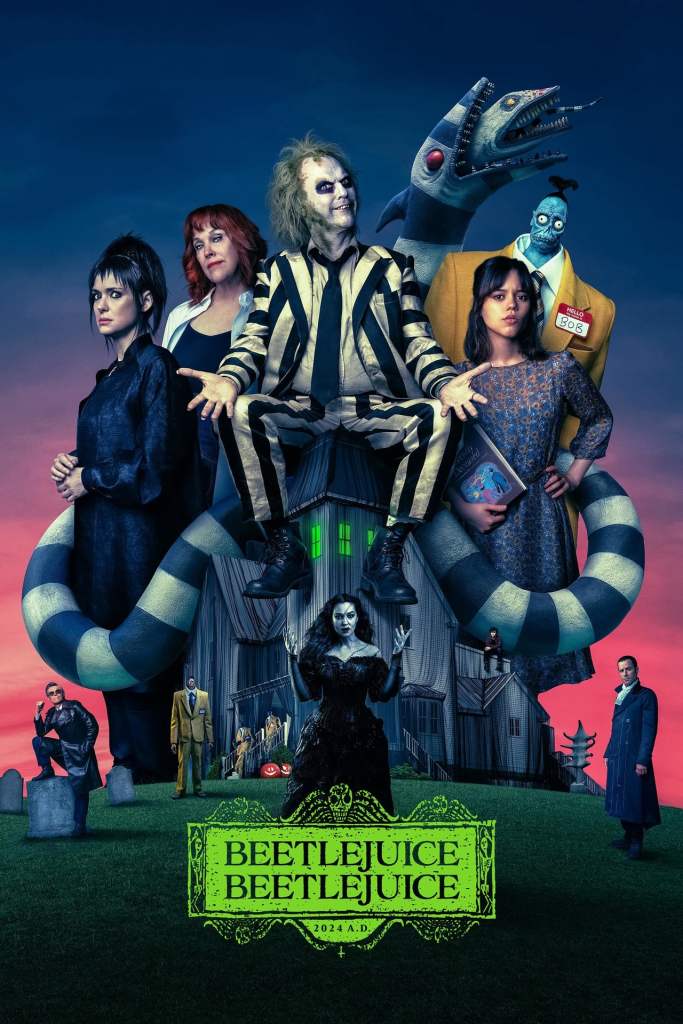
I loved the original Beetlejuice movie in the 80s. It was one of those movies I watched a million times and can practically quote it line for line. I was excited to see the sequel, all these years later. In the new movie, Lydia Deetz is all grown up. With her power to see ghosts, she has become a popular talk show host, where she visits haunted houses and helps people get through their supernatural problems. The only problem is her own daughter, Astrid, doesn’t believe her, and thinks it’s all a sham, and the two are estranged ever since the death of Astrid’s father.
Lydia gets a call one day from her stepmom Delia, with the sad news that her dad Charles has died (that’s an easy way to keep actor Jeffrey Jones out of the film). The family gathers back at the old house from the first movie to have a memorial. While all this is going on, the Juice himself is having his own problems in the afterlife. Everyone remember the scene in the first film when Beetlejuice is trying to marry Lydia and pulls a ring off a chopped finger, claiming, “She meant nothing to me.”? Well, that woman is back, and she has got revenge on the mind. As she hunts Beetlejuice in the netherworld, Beetlejuice is still trying to get hitched in the world above as a way to come back to life.
There’s some good laughs here and there amongst all the silliness (and it does indeed get very silly at times), but there’s not enough there, and there’s some serious problems in the plot. It plays up Beetlejuice’s ex as a major villain, until, all of a sudden, she’s not. There’s a nice subplot involving Astrid and a boy she meets, until suddenly, it resolves itself in a flash. After awhile, it seemed like director Tim Burton was just throwing ideas around and couldn’t pick one to stick with. Michael Keaton is fantastic as Beetlejuice, but the rest of the cast, and there’s some respected names in there, are middling-to-downright awful. I’m giving it 2 1/2 stars, but the reality is some of that is based on my own personal nostalgia. It’s really not that great of a movie. ★★½
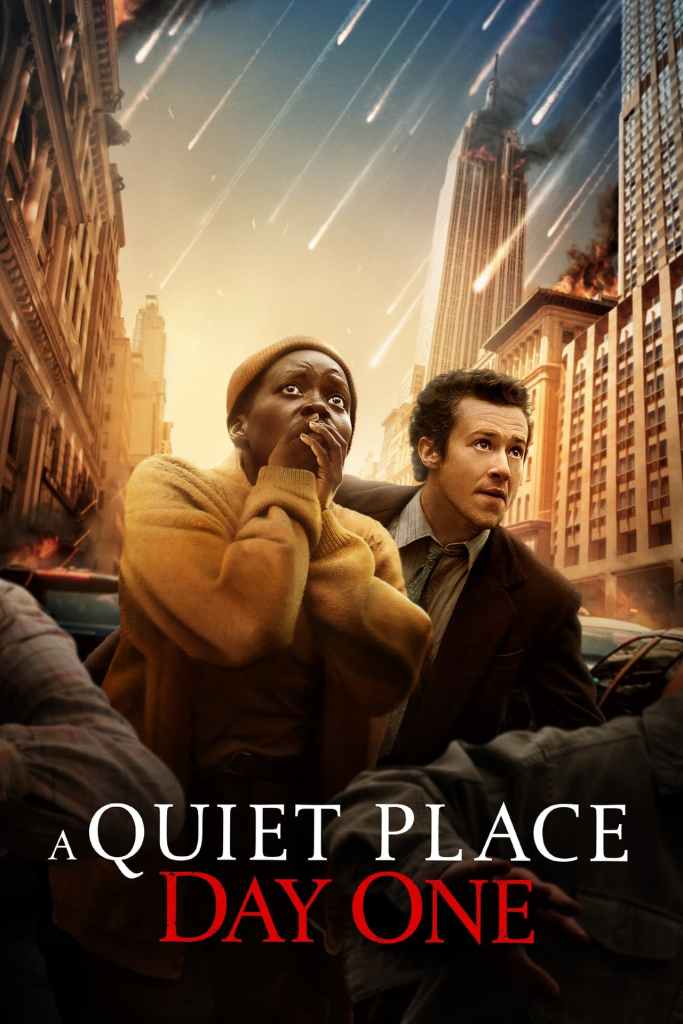
I was a big fan of the first two A Quiet Place films, and went into this one with high hopes. For the most part, it delivers. As the title states, we see more of what went down when the aliens first arrived, unlike the short flashback we got in the last film. This time too, it’s in a big city (New York) and not in a remote area, so there are way more killer aliens taking down a much larger population. The main character is Sam, who is dying of cancer and who is living in hospice when she and the others go for a day trip to a marionette show in Manhattan. Afterwards, with the nurse/director trying to get everyone on the bus amid news reports of weird things happening in the city, the group starts seeing what looks like meteorites falling from the sky. Sam is knocked unconscious when one crashes close, and when she awakens, she’s inside the theater with others urging her to be quiet. The aliens have arrived, and people have quickly learned that any noise will draw them. The rest of the movie is pure thriller. An army helicopter overhead relays a message to survivors to head to the river, where boats are awaiting (the aliens apparently can’t swim), so Sam joins the throng of people going in that direction, but of course a large group of people moving together can’t be completely silent, so it isn’t long before aliens attack and the situation becomes chaotic. In hiding after, Sam meets Eric, a young man with anxiety issues, and the two, along with Sam’s cat, start trying to work their way to the river. I do wish the film would have spent more time exploring the chaos of learning about the aliens and their abilities (Sam “slept” through all of that), but the thrills are great and just as exciting as the first two films. Nice ending too. ★★★★
I went ahead and saw The Watchers despite its terrible reviews, solely because the trailer, when I first saw it quite awhile ago, looked fantastic. Trailers aren’t movies though, and this one disappoints. Written and directed by M Night Shyamalan’s daughter Ishana Night Shyamalan, the film very much feels like one of her dad’s movies. And that’s not always a good thing. Dakota Fanning plays Mina, an American living and working in Ireland, when she is given a job to deliver a valuable bird to a remote zoo. Mina’s car breaks down in a gloomy forest along the way, and she walks until she finds a strange bunker and its inhabitants, Madeline, Ciara, and Daniel. Madeline explains that this is “the coop,” where they must take shelter each night, when the watchers come out. Inside the coop, which is just a single large room with beds, a TV, and a pot to piss in in the corner, there’s one strange feature: a 2-way mirror covering one whole wall. This allows the watchers to view the occupants every night. Madeline and the others also explain the rules: the watchers kill anyone outside the coop at night, you can’t turn your back on the mirror, and they must never enter the burrows, which are tunnels in the ground around the forest. And there’s no way out; a previous inhabitant has placed warnings half a day’s walk from the coop in every direction as a “point of no return;” going past that you can’t make it back to the coop before dark. Mina will not just accept this situation for the rest of her life, so when an opportunity arrives to leave, she grabs it. The explanation for what the watchers are isn’t awful, and there’s decent thrills here and there, but much of the film comes off as silly, and it even has some of Shyamalan’s awful dialogue thrown in (guess the apple doesn’t fall far from the tree). The final 20 minutes of the film just gets idiotic. ★★
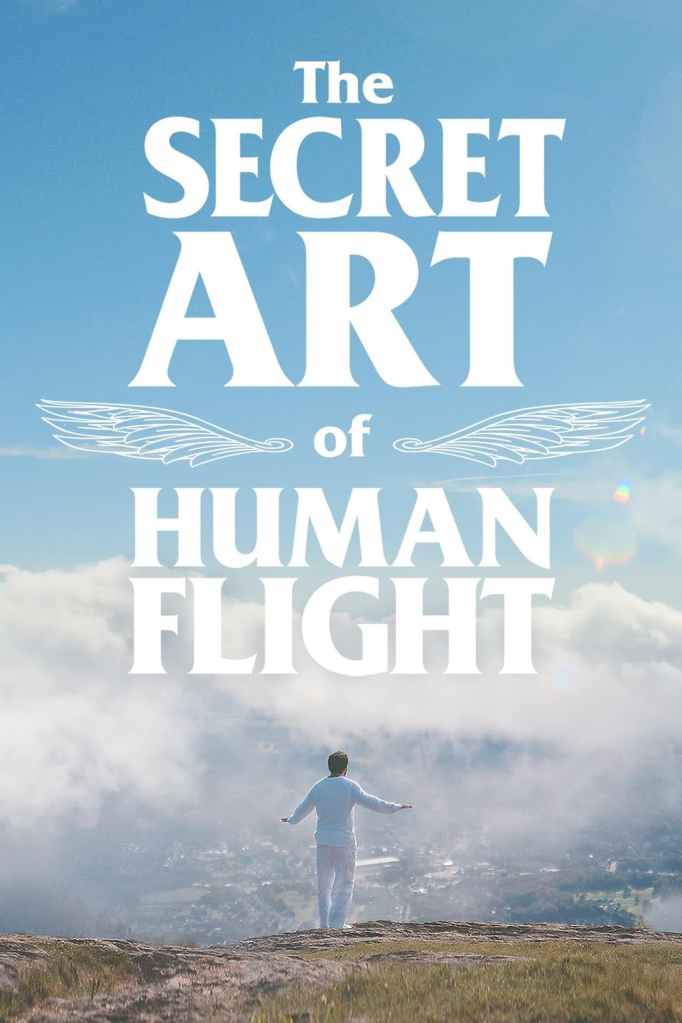
The Secret Art of Human Flight is one of those absolutely great films that no one seems to be talking about. A tiny indie film, the movie follows a young man named Ben, who is dealing with the sudden tragic death of his wife. In his grief, he is browsing the web one night and impulsively sends $5k to a spiritual man named Mealworm, who promises to teach believers how to fly. A few days later, Ben gets Mealworm’s handwritten book in the mail, with weird instructions like “you must lose 18 pounds, no more, no less” and to paint his living space to resemble the clouds. Ben follows all of the instructions, and he has help when Mealworm inexplicably shows up at Ben’s front door, Winnebago parked out front (don’t called it an RV). Mealworm become’s Ben’s spiritual guide, continuing to give strange advice and guidance. Throughout all of this, a persistent police investigator is hanging around, with unfounded suspicions that Ben killed his wife for the insurance money. Lots of laughs thanks mostly to Mealworm (played wonderfully by Paul Raci, who you’ll remember from his Oscar-nominated role in Sound of Metal a couple years ago), but the film isn’t really a comedy. It’s about Ben’s journey, not to flight, but in dealing with his unfathomable grief. In flashbacks, we see his relationship with his wife, warts and all, and get to know them personally. You can tell it is a super-low budget film, but it wasn’t long before I stopped noticing and became completely involved in the story. I laughed and cried, which is all you can hope from any good movie. ★★★★½
Crossing is about a woman looking for someone who may not want to be found. Lia is a retired teacher living in Georgia (the country), and who is trying to fulfill her dead sister’s wish to find Tekla, Lia’s missing niece. Tekla was kicked out of the house years ago for being transgender, for fear of the shame that would bring to the family. First, Lia goes to a house on the edge of town, where Tekla was known to hang nearby, and there meets Achi, who used to be one of her (Lia’s) students. He remembers Tekla as “that girl that used to hang out with the tranny’s” and offers to help Lia locate her. Achi is eager to get away from home, where he lives under his older brother’s thumb. Lia and Achi head across the border to Turkey, to Istanbul, where rumor has it that Tekla has relocated. Their journey will take them to an underworld of transgender people trying to find a voice, shown by spotlight in the role of Evrim. Evrim has recently graduated from law school, but before she can practice, she has to get a group of professionals to sign off, and she’s also trying to get her new state ID as a female, both of which will take convincing with all of the prejudices still prominent in the city. But what Evrim does have is a big heart, and she does what she can to help Lia and Achi find Tekla. For much of the film, I was like, “who cares?” but it all comes together nicely in the end. While it may not satisfy people who like clean, tidy endings, it is a very emotional film and is well acted. ★★★½
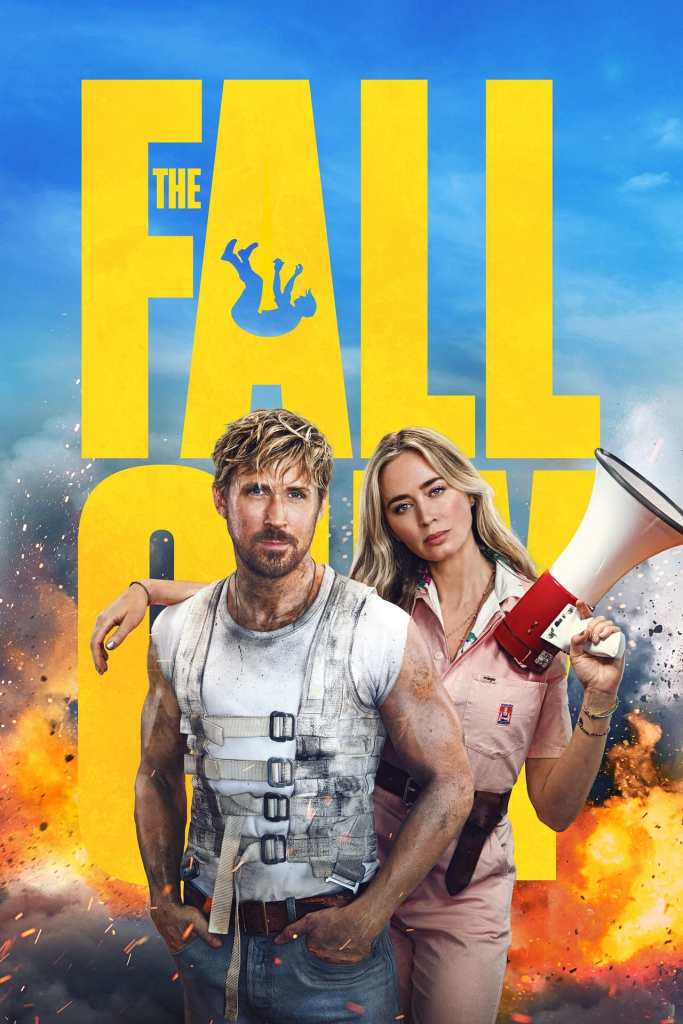
I skipped The Fall Guy in theaters because it looked a little too silly for my tastes, and after seeing it on streaming now, it is pretty much exactly as I expected. A reboot of the classic Lee Majors TV series (which I enjoyed in reruns as a kid), it stars Ryan Gosling as stunt man Colt Seavers, who is in a relationship with cameraperson Jody Moreno (Emily Blunt). Colt is one of Hollywood’s best stunt men and has been standing in for A-list action star Tom Ryder for 6 years, but a stunt goes tragically wrong on their latest film and Colt breaks his back. 18 months later, Colt is now parking cars for a living when he gets a call from Tom’s film producer Gail, asking Colt to come back one more time, with the incentive that Jody is getting her big chance as a first-time director. Colt and Jody had a falling out after the accident and Colt is ready to try again, so he accepts and flies to Australia for filming. Colt will be filling in for the previous stunt man who has suddenly disappeared. Also missing on set is Tom Ryder, so Jody has been filming all the stunt scenes until Tom can be found. Colt is walking into a powder keg, and it isn’t long before the previous stunt man’s dead body is found, and villains start coming out the woodwork to silence Colt too. Thankfully he knows a thing or two about how to talk a fall, and is able to get along just fine, as the mystery behind the death and Tom’s disappearance slowly unfolds. Really good action in this movie, with lots of good old (non-blue screen) stunt sequences, but as I feared, it borders on the silly and far too often comes off as unbelievable. Not all the comedy is bad, I did manage a few laughs here and there, but some of the ridiculousness was just too much. ★★½
TV series recently watched: Battlestar Galactica (season 3), Mayor of Kingstown (season 3)
Book currently reading: Pride and Prejudice by Jane Austen
Italian director Pier Paolo Pasolini was a complicated guy. His movies are often critically acclaimed but many faced a lot of censorship, and his outspoken views rankled many, probably what led to his abduction, torture, and murder in 1975 at the age of 53. I’ve seen a number of his movies but recently picked up the excellent Criterion box set, so I’ve got 7 films from him today, all dating from the 1960s.
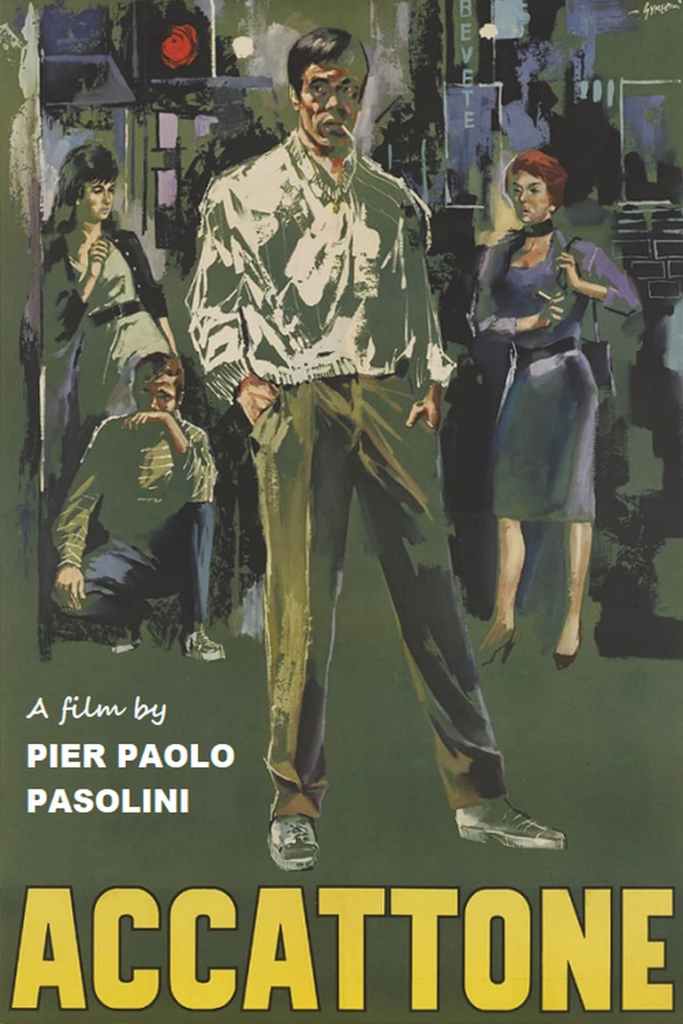
Pasolini was credited as writer on a handful of films in the ‘50s, but Accattone was his directorial debut in 1961. Accattone is the nickname of Vittorio, a street level pimp in Rome. He and his buddies are always up to no good, refusing to work and even belittling Accattone’s little brother for holding a job. Thus, they are always looking for the latest scam, but never really getting anywhere in doing so. Accattone’s income is mostly from pimping out a young woman, Maddalena, but after she is attacked one evening by some potential customers, it is she who is jailed for false testimony after her attackers are able to come up with some fake alibis. This takes away Accattone’s source of income, and leaves him broke. After trying to weasel money out of his abandoned wife, who lives in a slum with her father and her and Accattone’s small son, Accattone decides to find himself a new prostitute to bankroll him. His target is Stella, a pretty, young, innocent woman, but unfortunately for Accattone, he falls in love with her himself. Things don’t get any better for our anti-hero, leading to his downfall in the end. It’s hard to root for a scumbag but Pasolini makes it easy, as Accattone is so darn likable, even as he commits heinous acts. The director’s views are clear throughout, being very anti-capitalist and pro-humanism, and he delivers a starkly bleak film about those on the fringes of society. ★★★★½
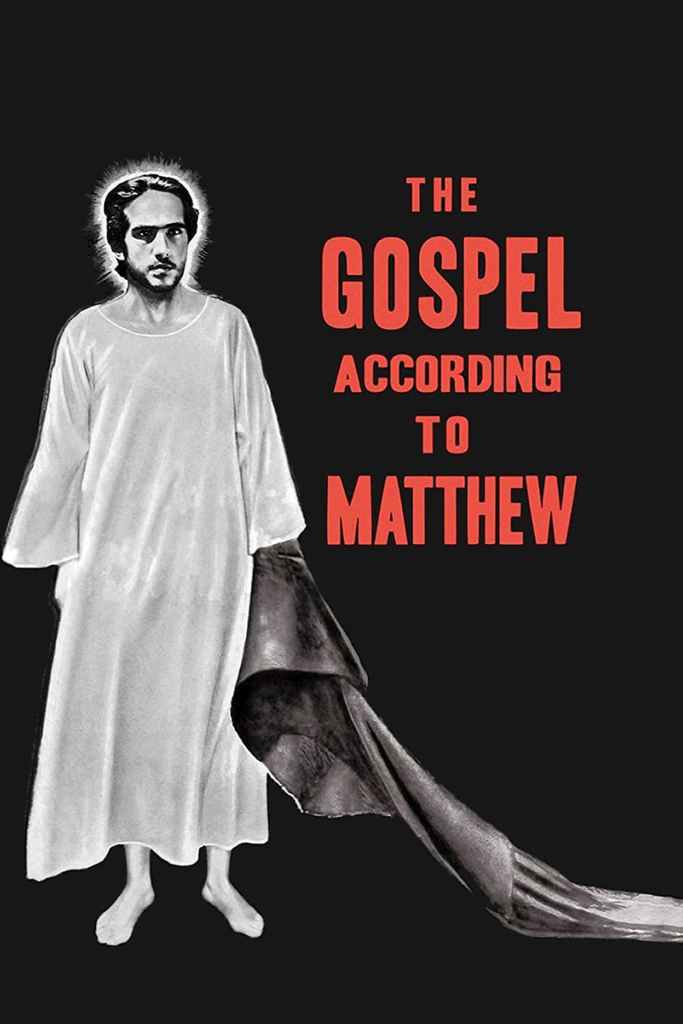
As I said in the beginning, Pasolini was complicated. I think the stereotypical Marxist thinks little of religion except as a tool to exploit the poor, but while Pasolini was an atheist as an adult, he was raised Catholic and many of his films have religious undertones (even many references in the above Accattone). His 1964 film The Gospel According to Matthew may be one of the most biblically accurate films ever made. He picked this book because “John was too mystical, Mark too vulgar, and Luke too sentimental,” and it is a faithful adaptation. The dialogue is lifted straight from the Bible with nothing else thrown in, and the film follows along the Gospel from Jesus’s birth to death to, yes, resurrection (though I expected the director to cut it short before he rose, Jesus does indeed come out of the tomb in the end). If you think about it, Jesus’s story can be painted as a strong parallel by a young Marxist director wanting to tell a story about lifting up your common man and calling out hypocrisies of the ruling class. But the film, on its own merit, is extremely well told. Filmed in the countryside of rural Italy to look like the Middle East, with many non-professional actors and locals to fill out the large cast, it has an authentic feel, and features lasting, memorable scenes throughout. ★★★★
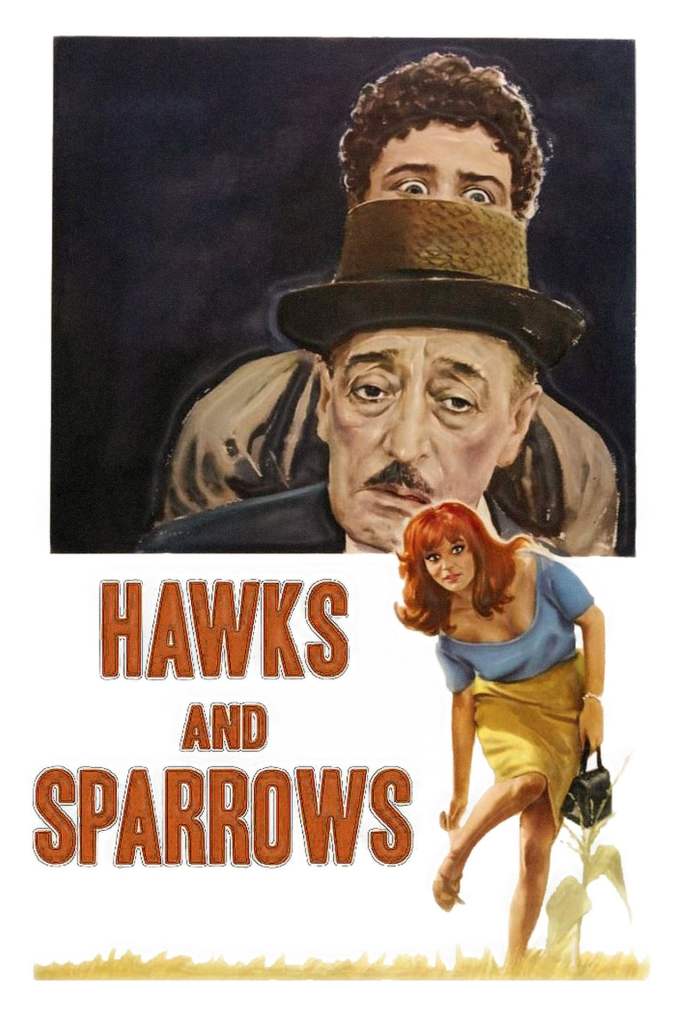
The Hawks and the Sparrows is a rare comedy from this director. In the film, a father and his adult son, Toto and Ninetto, roam the countryside of Italy and see some strange sights, one of which is a talking crow, described to the viewer as a “left wing intellectual.” The crow relates a tale of hawks and sparrows. The same actors play two friars who have been tasked with teaching the Gospel to birds. Obviously to do so, they must first learn the language. The elder plants his feet in the dirt and doesn’t move for a year, in observance and meditation, until he is able to communicate with the hawks. He teaches them of God and love, and then spends a year learning to converse with sparrows, so he can teach them too. Almost immediately afterwards, he and the younger friar are walking through a field when they see a hawk attack and kill a sparrow. The men are aghast at the hawk’s brutality after the sermon, but the hawk can only explain that it is what it is. The friar’s leader gives a very Marxist point of view, that the powerful hawks will always lord their power over the weaker sparrow, which will always struggle in life. From there we return to Toto and Ninetto, who have more adventures along the way. There’s lots of humor in this film, but most is delivered in a heavy handed way. Pasolini can’t help himself but to make every scenario political. Entertaining if you can wade through the proselytism. ★★★
Oedipus Rex is an adaptation of the famous Greek play, and one of my favorite Pasolini films to date. It begins in close-to modern day Italy, where a boy is born but who’s father becomes jealous of the attention the baby gets from the mother/wife. The father has the baby taken out to the desert to be killed, and here the film’s setting changes to ancient Greece (actually filmed in Morroco, so very desolate). The baby is rescued and given to barren parents Polybus and Merope, King and Queen of Corinth, who name him Oedipus and raise him as their own. But as a young man, Oedipus finally hears the rumors that he was a founding, and he sets out on a journey to the Oracle of Delphi to learn who he really is. The Oracle gives him the famous prophecy, that Oedipus will kill his father and bed his mother. Afterwards, Oedipus wanders the desert, coming upon a troupe of soldiers protecting a man. Oedipus antagonizes them, eventually killing all of the guards and the man they were guarding, with only a servant getting away. Oedipus then finds himself in Thebes, where he kills the Sphinx and wins the marriage of the Queen, Jocasta. Of course, we know that Queen will turn out to be his mother, and the murdered man in the desert his father. This is just about the perfect film. It is gorgeously shot in 1.85:1 widescreen color and Pasolini makes use of it, showcasing a starkly beautiful country and people, with fantastic acting by all, especially Franco Citti in the lead. Certainly lives up to its reputation as one of the all-time great Greek tragedies. ★★★★★
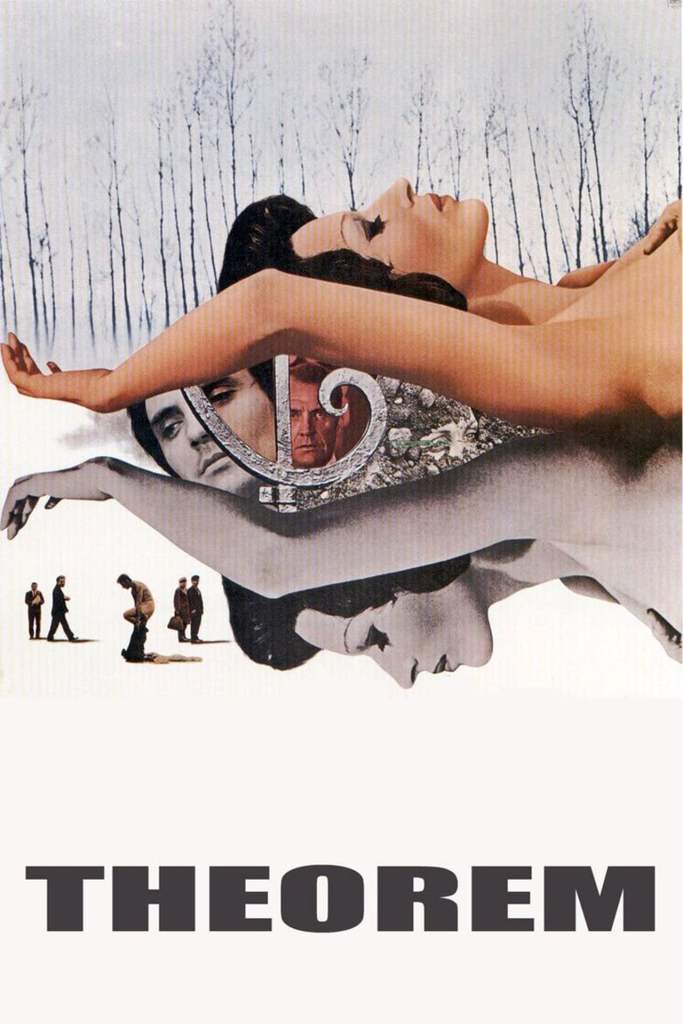
Pasolini gets into surrealism with 1968’s Teorema. This is a weird one, and I’m not exactly sure what it is all about, but it is very interesting. At a bourgeois estate in Italy, a family is visited by an unnamed man who just sort of moves in and hangs around. No one seems to mind him, but he begins an intimated relationship with every person in the house. He sleeps with the devoutly religious maid, then the timid and unsure college-aged son, then the sexually repressed wife. He doesn’t sleep with the dad, but does give him intimate massages to help alleviate his stress and daily pain. He doesn’t sleep with the daughter either, but does become a confidant, guiding her through a tough time. Then suddenly, the visitor leaves, and his abrupt disappearance throws each family member into chaos. Each person has to face those things that they were previously unaware of, and it doesn’t go well for any of them. For example, the maid leaves the house and returns to her remote village. She begins to perform miracles, but is consumed by sadness for the hole in her life. The daughter becomes catatonic and is sent to an institution. The others, I will leave for you to enjoy, should you watch the film. It’s a very good film. I don’t get it, but I so desperately want to get it, if that makes sense. As some reviewers have said, was the visitor an angel, there to guide them through tough times, and the family can’t live without him, or was he the devil, starting them down the road to hell? Great stuff, and the more I think about the film, the more I like it. ★★★★½
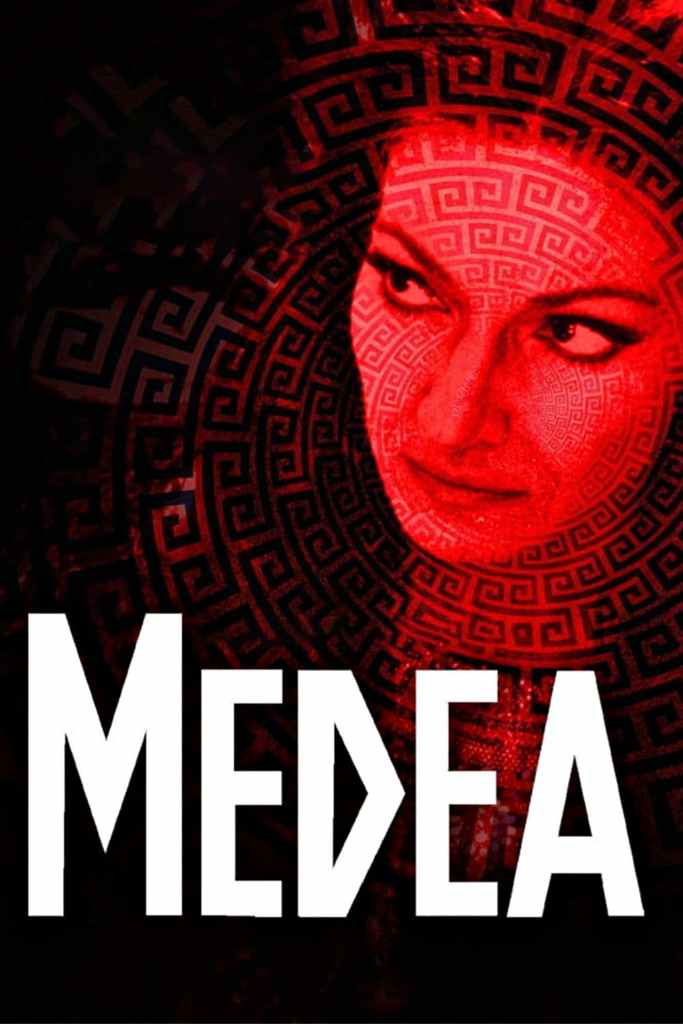
Medea is based on another Greek play, and as much as I loved the first, I was excited to get into this one too. It’s not as good, but still decent, telling the tale of Medea, but starting at the beginning with Jason. Jason was rightful heir to the city-state of Iolcus, but his father was removed from power by brother Pelias, and baby Jason was taken into hiding, raised from a child by a centaur. Years later as an adult, Jason sets out to reclaim his throne, but his uncle Pelias will only give it up if Jason retrieves the golden fleece. Jason teams up with the Argonauts and heads to Colchis, where the fleece resides, and there is aided by Medea. Media is queen of Colchis, and has mystical or sorcerous powers. She falls in love with Jason and flees Colchis with him. Jason brings the fleece back to Pelias, but the king reneges. Jason replies he no longer wants the tiny kingdom, as he has discovered a greater world out there. He and Medea settle in Corinth, and have a couple children together, but before the end, Jason decides to marry a Corinth princess, Glauce, in order to further his ambition. The jealous Medea will not let this go down, leading to an explosive finale. Another great Greek tragedy, but it’s honestly a bit hard to follow. There’s dream sequences that you don’t know are dreams until they are over, and a lot of the finer points of the plot/story are left for you to figure out as it goes along. Still, who doesn’t love these old Greek stories? ★★★
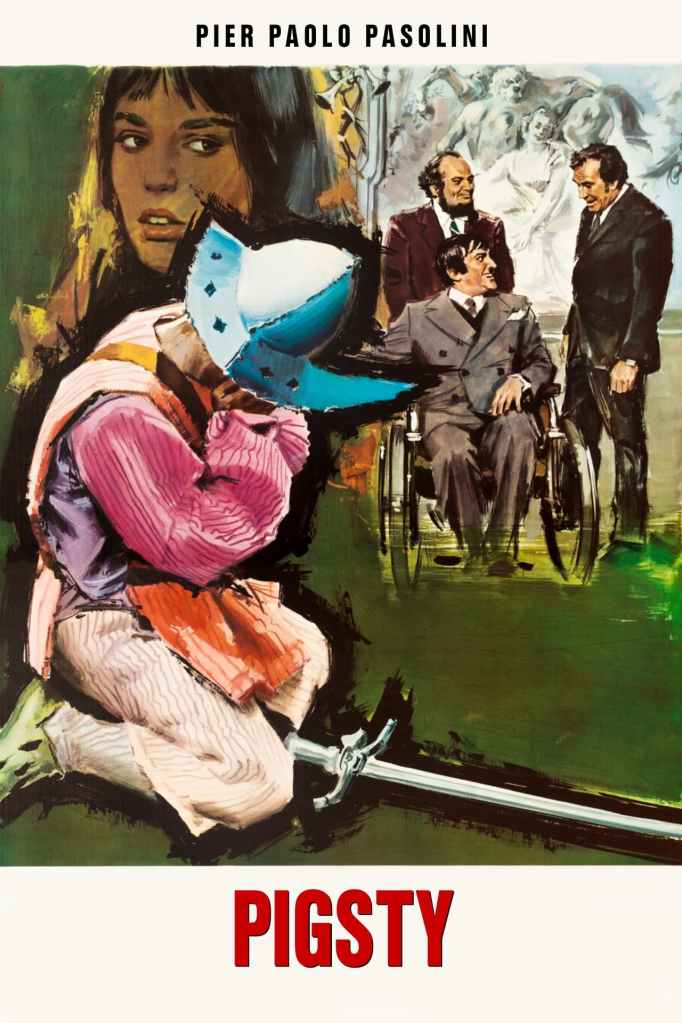
Lots of good movies today, but unfortunately finishing on a dud. Pigsty follows two narratives, one in the middle ages in a barren countryside in Italy, and the second in a bourgeois estate in Germany in the 1960s. In the first, a loner wanders the hills eating bugs, but advances later to cannibalism, picking off people here and there. He is joined by others who grow to have the same morbid appetites, allowing his growing group to attack larger parties. That is, until the nearby town has had enough, and put together a posse to put a stop to the man and his followers. In the second story, Julian is the son of a former Nazi officer who has escaped prosecution and is living well. The dad is a businessman, but Julian seems content living an aimless life, much to the chagrin of his girlfriend who wants him to show some ambition. Like the man in the first story, Julian has a dark secret too, going into pigpens in the evenings for a little animal loving. In both stories, the degenerates do not come to good ends. A disturbing movie, I’m not sure there was much of a point other than the debauchery of man. ★
TV series recently watched: Star Trek Animated Series (seasons 1-2), Hit Monkey (season 2)
Book currently reading: Pride and Prejudice by Jane Austen
In Aisha, Letitia Wright (who broke out in Marvel’s Black Panther films) plays the title character, a Nigerian immigrant trying to eke out a living in Ireland. She came there after her father and brother were murdered back home, and she’s been working and sending money back to her mother, who is trying to save up enough to make the trip. Asylums were created just for people in Aisha’s position, as she’d face danger if she returned to Nigeria, but still, the system is set against her. She lives in public housing, and the managers at each place (they bounce her around a lot) always seem to have it out for those under their care, setting silly rules that need to be obeyed “or else.” Aisha is even sent out to a remote housing facility one time, far removed from anywhere she could work (she has a legal work permit), so she is unable to send money to her mom. The one bright spot in her life is Conor (Josh O’Connor), a security guard at one of the facilities, but she can’t focus on her friendship with him with the growing threat of losing her asylum case and being sent back to Nigeria. Stellar acting from those two, in a deeply heartfelt film. The right loves to scare everyone with tales of immigrant hordes coming for your jobs and safety, but the reality is there are people like Aisha who just want a break. If you expect her to get one in this film, don’t hold your breath. It’s a downer from start to finish, but an important movie. ★★★★
Femme is another emotional film, and probably another that many will find objection with. In London, Jules is a gay man who performs in a drag show. One night, Jules is attacked by a group of testosterone-heavy young men for making a crack that one of them was eyeing him up earlier (which is true). Jules is badly beaten and left traumatized, unable to leave his apartment after healing up. When he finally does, he goes to a gay sauna to unwind, but rebuffs offers of a tryst, until he spots the man who attacked him. Jules approaches the young man, Preston, who doesn’t recognize Jules without his drag attire. Turns out Preston is a closet homosexual, but puts on a brash exterior for fear of reprisal from his gang of buddies. Preston and Jules begin a sexual relationship, with Jules having an ulterior motive: secretly recording Preston during a sex act in order to publicly “out” him and get his revenge. Things obviously take some dark turns, if it wasn’t already dark enough for you. It’s a complex movie, and the ending will give you plenty to think about. Outstanding performances from Nathan Stewart-Jarrett and George MacKay in the leads. ★★★½
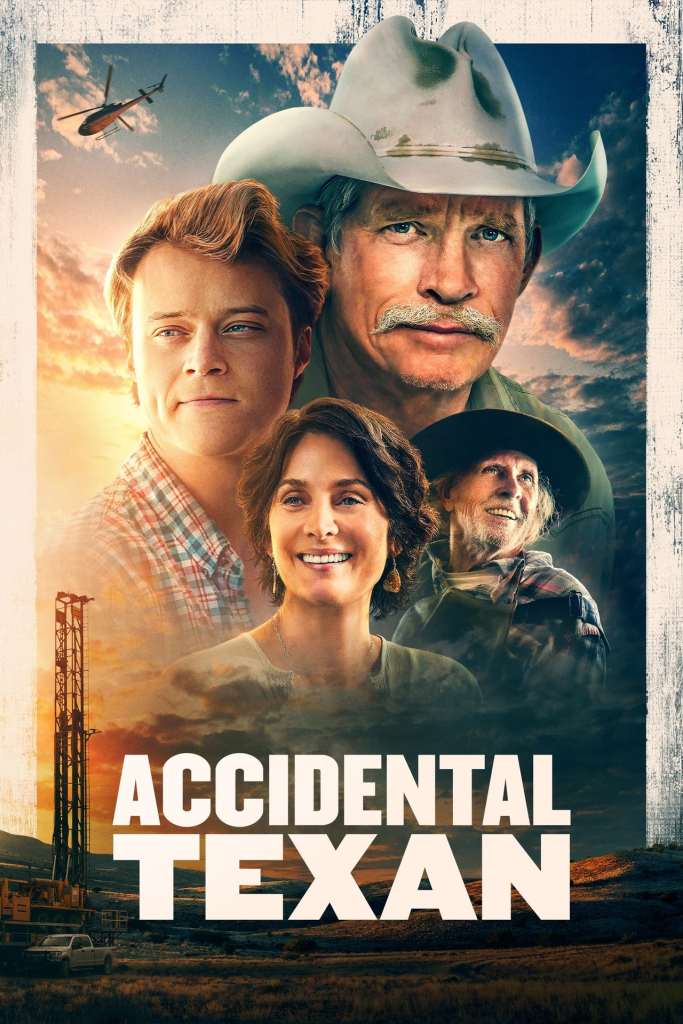
Accidental Texan is one of those movies that isn’t really a great film, but it is plenty entertaining. Erwin is an actor who’s been struggling in Hollywood for several years but has finally landed his first leading role in a movie, to be filmed in New Orleans. He drives cross country and shows up on set ready to go, in awe of having his own trailer and star treatment. Unfortunately for Erwin, his shoot on the very first day goes horribly (and hilariously) wrong, and he is fired on the spot. Driving back to LA that night, his car breaks down in middle-of-nowhere Texas. Broke, Erwin is left with no options but to find help in the local small town. As luck would have it, an oil driller, Merle, takes a liking to Erwin and hires him to help on his latest, last venture. Merle is deep in debt and has 30 days to find and secure a new oil well, or it’ll be the end of his family-run business and the handful of employees who have stayed faithful to him. The big oil companies have been trying for years to force him out, but there are still a couple leads on untapped oil reserves in the area, and it is up to Merle and Erwin to get those land rights secured and the drilling done in time. Some big names in the cast here, including Thomas Haden Church, Bruce Dern, and Carrie-Anne Moss, with relative newcomer Rudy Pankow in the lead, but the strength of the movie is in the occasional laughs, though it’s not really a comedy per se. The story of underdog vs goliath is tried-and-true and works again. ★★★½
Ezra is a movie that works better on paper than in the telling. It stars Bobby Cannavale as Max and newcomer William Fitzgerald as Max’s son Ezra. Ezra is on the autistic spectrum and has been having a hard time at school and in life in general. Ezra’s mom and Max’s ex-wife Jenna (Rose Byrne) wants to take the school’s position of drug therapy, but Max has been steadfast against that, wanting Ezra to learn to “blend in” and be able to live and interact with normal people without drugs. It comes to a head when Ezra overhears Jenna’s boyfriend make a snarky crack about “taking care of Max” and Ezra freaks out, thinking he really means to harm his father, and runs out into the street in front of oncoming traffic. Not having the whole story, the school thinks Ezra is a danger to himself and wants to expel him if he doesn’t start taking medicine. Rather than see this happen, Max kidnaps Ezra and heads out on the road, but it will not be easy for either of them. There’s some corny humor here and there, and while I applaud the decision to cast a young person with real autism in the lead as Ezra, it makes for an uneven viewing experience. Plot is a bit all over the place too. The supporting cast includes Rainn Wilson, Robert De Niro, and Vera Farmiga, but the whole of the group can’t bring it all together all of the time. ★★
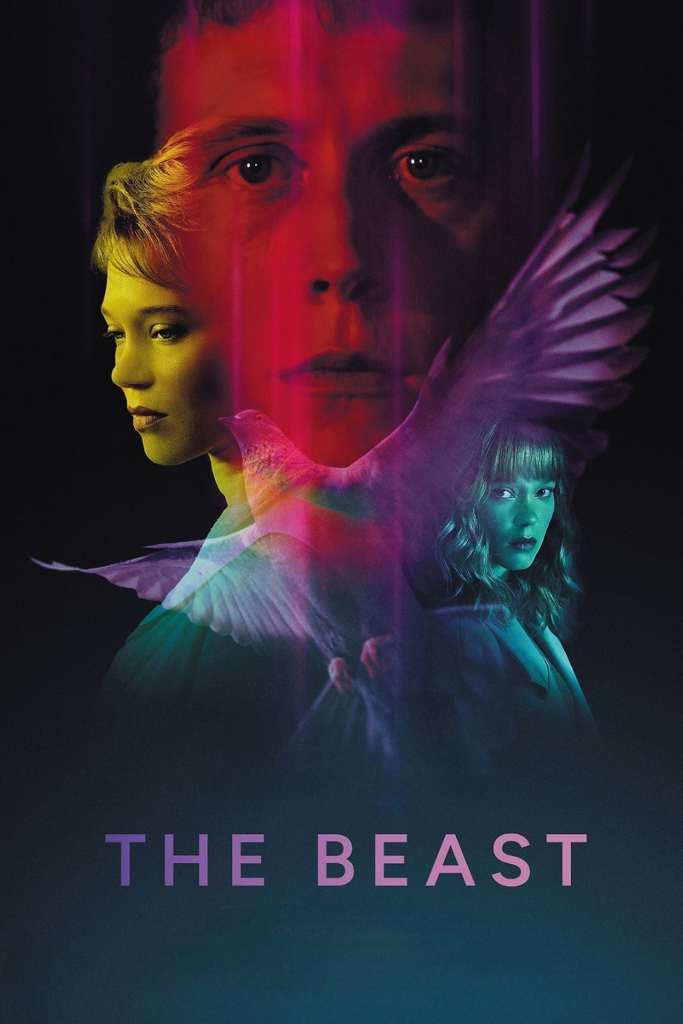
Not sure how I feel about The Beast, the newest film from French director Bertrand Bonello. I watched this one a couple days ago and have been thinking about it here or there since; sometimes I think I love it, sometimes I think I hate it. It stars the great Léa Seydoux as Gabrielle, and being completely transparent, it takes the viewer awhile to figure out what’s going on. Sometimes Gabrielle is in the future, talking to an A.I. about acting out a scene with a beast intent to kill her. Sometimes Gabrielle is in the past, early 20th centrury-ish, at a dance and talking about fears of a beast hunting her, a recurring nightmare since she was a child. Later, Gabrielle is in present day, where she is house-sitting a mansion in LA. In all three time periods, she encounters a man named Louis (George MacKay again, he’s all the place today!). Little spoiler here, so you may want to stop if that would bother you—>. We finally learn that, in the future, Gabrielle is trying to get a better job, but humans must go through “purification” in order to erase certain emotions, in order to make them better, more productive workers. This involves reliving emotional moments in past lives, and softening those memories out. Gabrielle and Louis have crossed paths several times in their past existences, with varying outcomes, in a star-crossed lovers kind of way. It’s very muddled but does eventually make a bit of sense, but I’m not sure the payoff was worth all the confusion I had throughout the movie. So I’m going to give it a solid 3. Maybe a second viewing would raise my feelings on it, but not sure I want to put myself through that again anytime soon. ★★★
TV series recently watched: Cobra Kai (season 6.1), Batman Caped Crusader (season 1), Batman Beyond (season 2)
Book currently reading: Glacier’s Edge by RA Salvatore
I’m a few days late to the party, but finally got out today to see the newest in the Alien franchise. Alien: Romulus is a sequel to the original Alien film from 1979, and takes place before its 1986 sequel Aliens. Thus, it’s great for moviegoers who’ve only seen the first film, with no deep learning curve to get into the action.
The action does come, but there’s quite a bit of setup to get there. On a mining planet 65 light years from Earth, Rain is an older teen living on her own, her only companion a synthetic human (android) named Andy. Rain’s parents died in the mine and that will be most likely be her fate one day too, so when an opportunity comes to leave the planet, she takes it. Her friends have a plan to board a derelict, drifting space station that has come into the planet’s orbit, in order to grab some cryostasis chambers. This would allow the friends to go to sleep over the journey to a better world. Unfortunately, the station is empty for a reason, and of course we all know why.
Things go wrong right away. The cryo chambers lack the power they need, and in searching for juice, the group wakes up some facehuggers. In the ensuing frenzy, the space station’s decaying orbit is accelerated, pushing it towards the rings of the planet below. Whereas they thought they had 36 hours, now they have less than 1 before the station crashes into the rings. The station’s android, Rook (another version of the Ash model in the original Alien film, thanks to computer-aided technology to bring back his face in this film) comes online and wants to continue its agenda, to get the Xenomorph’s DNA back to “the company” for further study. When the shit really starts to hit the fan and everyone starts dying, the action and thrills ramp up.
After a slow start, the movie gets going and is very exciting in the second hour. It’s downright scary at times, and *feels* more like the original Alien films than the last couple (though unlike many, I actually enjoyed Alien: Covenant). And contrary to the last movie, this one is making lots of money, so it should set the franchise back on the map. Here’s hoping. ★★★★
Never heard of It Ends With Us, but saw it recently with the wife, who read the (extremely popular) book by author Colleen Hoover. It stars Blake Lively as Lily Bloom, who, at the start of the film, is at her father’s funeral, unable to find anything good to say about him. We learn why as the film goes along. Lily meets Ryle, a suave doctor who is used to getting his way, as well as Ryle’s sister Allysa, who goes into business with Lily to open a flower shop. Ryle doesn’t date, opting for one-night-stands, but Lily is having none of that, and the two eventually do start a relationship. He is loving and kind, which is just what Lily needs, because we finally learn that her father physically abused her mom throughout her life. In flashbacks, we see the violence in the home, and also of Lily’s first love, Atlas. Atlas was a homeless young man from their town, who was kicked out for fighting back when his own mom’s new boyfriend got violent with her as well. Their tale ends up being a sad one too, as the viewer learns later, but in a twist of fate, Lily and Ryle have dinner in a hip new restaurant in town one evening, and there is Atlas. Seeing him brings back all kinds of memories for Lily, but if you think this will have a typical romantic-drama ending, you’ll be surprised. Going in blind, the surprise was indeed a shock to me, so if you can avoid spoilers, it creates a much better film. Blake Lively is (maybe surprisingly?) very good as Lily, and while the film can’t help but be a little too “middle aged woman romance novel” in its feel at times, it’s still better than I was expecting, and a decent date night flick. ★★★
The Forgotten Battle is based on a true story and takes a look at a key moment in World War II, a battle of which most people have most likely been unaware. In the late summer 1944, as Allied troops are pushing into France and heading towards Germany, they need a port where they can resupply troops. Antwerp, in northen Belgium, is an obvious choice, but the Germans have dug in there and along the waterways connecting it to the North Sea. The local Dutch resistance have been trying to get info on German troop locations and movements, in hopes of getting the data to the Brits, but spies have been caught, tortured, and forced to give up their cohorts. While all this is going on, a British plane has crashed nearby, and the survivors are doing what they can to aid the war movement from behind enemy lines. Even when the Germans do start to pull out, there’s still plenty of dangers for citizens and allied soldiers trying to beat the Nazis. It’s an “ok” movie, nothing really wrong with it, it’s just… fine. It doesn’t stir the blood, and while the whole thing is probably taught in Belgium as an important moment in their history, not every battle needs to have a movie made about it. ★★½
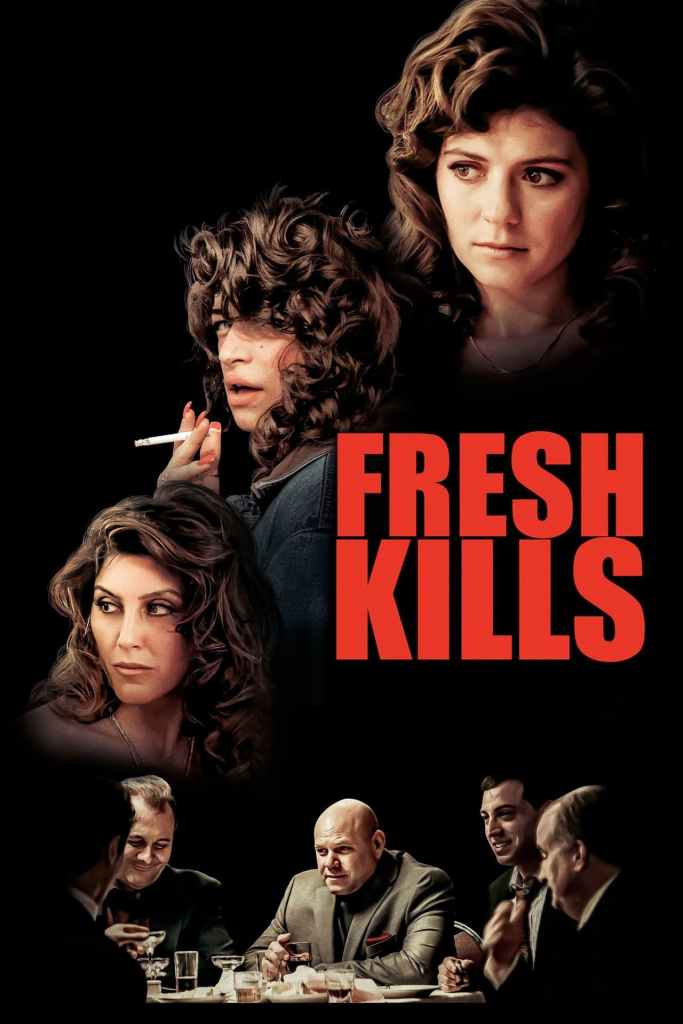
Fresh Kills presents a mob film from a new perspective, one often ignored in typical mafia films and shows, namely, that of the women attached to the mob. Joe is high up in the family, but the movie doesn’t follow him; instead, it is from the perspective of his daughters, Connie and Rose, and from a lesser view, their mother Francine (Jennifer Esposito, who also wrote and directed). Even from a young age, Connie buys in to the idea of “the family,” using her fists to do the talking when other students at school make jokes about crime bosses or things of that nature. Rose is more tight lipped and is haunted by a scene as a child when she overhears her dad talking about “taking care of someone.” But no matter how hard Rose tries to distance herself from her family’s path, which takes place over decades as the sisters grow into adults, she is always brought back into the fold. I really wanted to like this movie, because it puts a unique twist on the (often paint-by-numbers) mafia film, but the acting is very uneven in the lead role (Emily Bader as Rose), distracting from an otherwise well-done film with plenty of powerful moments. Rose is just alright, but Bader isn’t able to deliver the nuance than the role requires. Still, Esposito is fantastic as mother Francine. A longtime actor, she is definitely up to the task as a first-time writer/director. Put a better actress in the lead and this film would have been a knockout. ★★★
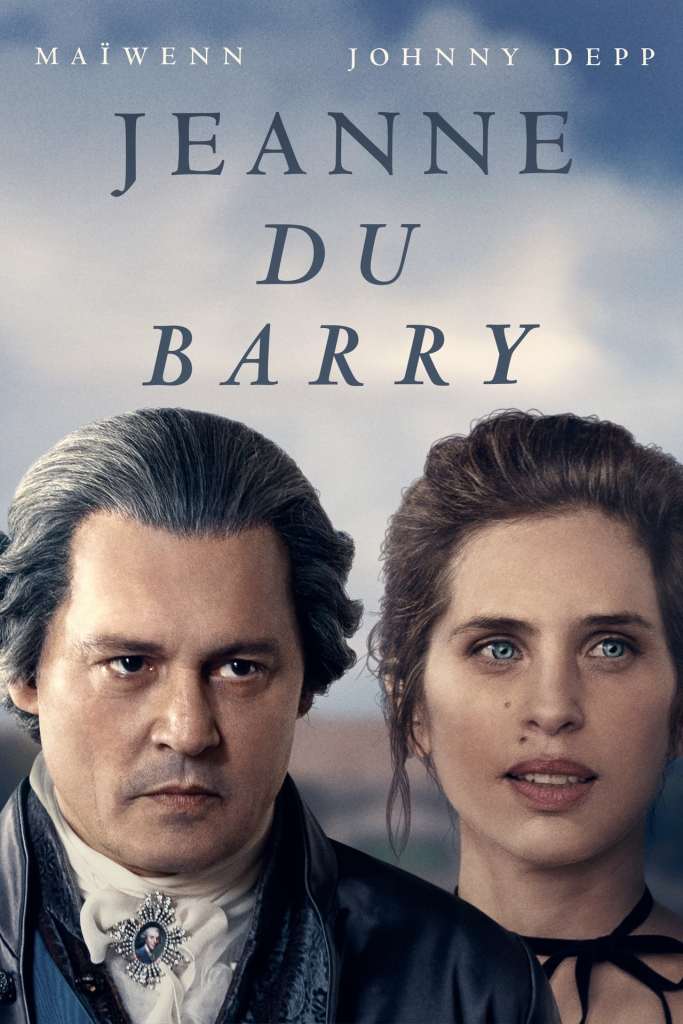
Sometimes I ignore the reviews and it bites me in the ass. Jeanne du Barry didn’t exactly light it up with the critics, but it is an historical drama, which I have a propensity to enjoy, so I gave it a whirl. It really isn’t very good. A biopic about the scandalous life of Madame du Barry, it begins with her as a girl. Jeanne Bécu was born out of wedlock and raised with nothing, but her good looks always help her out of situations. As a teenager, she catches the eye of the wealthy Count du Barry, who takes her as a mistress and whores her out to other wealthy nobles and elites. Jeanne doesn’t seem to mind, but she has her eyes on a greater prize, and eventually it comes to be when she is invited to court one evening. There, the king of France, Louis XV, becomes smitten, and Jeanne finds herself as his newest private mistress. To keep with French tradition, the king is not supposed to have a mistress who is unmarried (which might legitimize any children they have; if she’s married, offspring can at least have the guise of belonging to the husband), so Jeanne marries Count du Barry on paper and moves into the Palace of Versailles. It’s a good life, until Louis’s heir, the dauphin and future Louis XVI, finds a wife, Marie Antoinette. As the future queen, Marie exerts influence over the court, and begins pushing Jeanne out. If it sounds like a lot of intrigue, it should, but unfortunately it is better on paper than on screen. The movie treats itself like a history lesson, seemingly more interested in pointing out all of the old customs and court rituals than providing a compelling narrative. Maïwenn is passable as the lady du Barry, but Johnny Depp (in his film return after the whole Amanda Heard incident, and in a French movie no less! Who knew he could speak French?) seems like he is just going through the motions as the King of France. Pretty boring film, which should be anything but considering the woman at the center. ★½
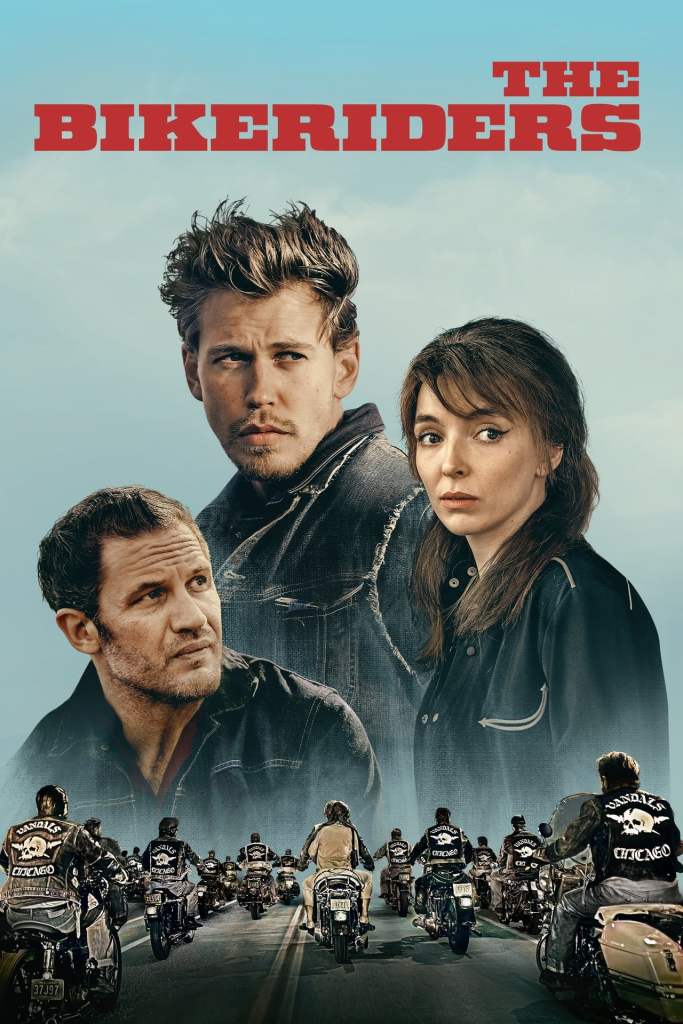
The Bikeriders follows the rise of a motorcycle club in Chicago called the Vandals. At the start of the film, a young man is interviewing Kathy because he’s writing a book about the club, and Kathy is married to one of its members, Benny. She tells how the club started when its founder, Johnny, was watching Marlon Brando’s The Wild One, and got a whim to “go outlaw.” Johnny, and many of the club’s early members, weren’t your typical biker gang: they were married men with families, but they loved motorcycles, and formed the club to get together, work on their bikes, and hang out. Benny was an outlier, as he was younger than many of them, single at the time, and a definite rebel. While the group was fiercely loyal to each other and weren’t afraid to violently protect one another if others tried to mess with one of their own, for the most part the Vandals were just normal guys. The beginning of the end comes when they start allowing new chapters to form, separate satellite groups who would purportedly still follow Johnny as head, but would form their own charters under the Vandal name in other cities. The Vandals yearly get-togethers become much larger afterwards, and some of the newcomers are a lot more rough-and-tumble. Kathy becomes afraid of some of the former soldiers who have returned home from Vietnam addicted to drugs, and other younger men who are looking to join up just because they are full of anger. It’s a wonderfully gritty film, and while the story might not lead to any surprises, it is told very well and the actors are top-notch, including Norman Reedus, Austin Butler (Benny), Jodie Corner (Kathy), Michael Shannon (albeit in a small role), and at the head of the table, Tom Hardy as Johnny. And anything with Tom Hardy is worth the price of admission. I’m bordering between 3 1/2 and 4 on this one, but bumping up due to the incredible performances. ★★★★
TV series recently watched: Battlestar Galactica (season 2), The Boys (season 4), Star Trek Next Generation (season 1), 3 Body Problem (season 1)
Book currently reading: What This Comedian Said Will Shock You by Bill Maher
Unless you’ve been under a rock, you are probably aware how the newest film in the Marvel Cinematic Universe has taken the world by storm, breaking records in its first weekend. When first announced, Deadpool fans worried how the former 20th Century Fox franchise would fit under the family-friendly Disney umbrella. The fears were unfounded, as “the merc with the mouth” well-earns a hard R rating with a constant stream of both curse words and gore.
For those initiated, Deadpool is a bit of an anti-hero with a penchant for breaking the fourth wall, talking to the audience almost as often as the other characters in the film (and often referencing real-world events and people in his constant stream of dialogue; he’ll refer to himself as Ryan (Reynolds), the actor portraying Deadpool, as well as Hugh Jackman, the actor playing Wolverine). In the film, Deadpool is happy to kiss Fox goodbye and welcomes his triumphant foray into the Marvel Universe, but unfortunately the powers-at-be don’t welcome him into the Avengers. With that door closed, he tries to be a used car salesman, but of course that doesn’t work out. He ends up kidnapped by the Time Variance Authority (the group that oversees the multiverse, as seen in Marvel’s Loki show) because they are about to wipe his universe. Deadpool doesn’t want to see his friends killed, so he sets out to save his home. Unfortunately for him, saving it involves bringing Logan (Wolverine) back. But everyone remember how he died in the film Logan, one of the last X-Men movies under Fox? Doesn’t deter Deadpool, who will comb through all the universes to find a Logan who still lives and can help him save his own world from destruction.
This film is fun and funny; the whole audience was laughing with me from start to finish. There’s almost too much, to the point that I feel like I need to rewatch it (and maybe twice more!) to catch all the little one-liners and references to pop culture, fourth-wall breaking, and the like. There’s also a ton of cameos, from actors/characters from Marvel’s Fox franchise, dating back decades. Some you’d expect, many you will not, and some I had forgotten! But surprisingly, the film has heart too, and it is easy to get emotional as the big climax (queue Deadpool joke) arrives. It really has it all. Much has been said about the average movie-goers fatigue with superhero films. This one is bucking the trend, but whether it is a true turning point for Marvel/Disney, with a return to films that broke records and wowed critics, or merely an outlier because of how different it is from the others, remains to be seen. On its own merits though, it is a rip-roaring good time, and has certainly brought crowds back. It ended up making $211 million in the USA on opening weekend (far-and-away the most ever by an R-rated film) and $438 worldwide. ★★★★½
TV series recently watched: Halo (season 2), Star Trek Prodigy (season 2), Supacell (season 1)
Book currently reading: Dragons of a Vanished Moon by Weis & Hickman
Hendrix, Morrison, Joplin, and Cobain are linked in the “27 club,” famous musicians who all died at that age. Another member is Amy Winehouse, who tragically died in 2011. Back to Black is her story, with Marisa Abela taking on the iconic singer. The film charts Amy’s life from 19-ish year old up through 2008. In the beginning, she’s singing at clubs and has recorded a demo, which garners attention from a local talent manager. This leads to Amy signing with Island Records in the UK, and releasing her first album, Frank. Frank is heavily jazz influenced and gets a lot of play in England, and the record company starts thinking ahead about how to broaden Amy’s appeal in the USA. Unfortunately she only writes very personal songs, and not much has happened to her lately to get the creative juices flowing. That changes when she meets Blake Fielder-Civil (Jack O’Connell), a bad boy who instantly grabs Amy’s attention. Until then, she’d been a heavy smoker and drinker, but Blake introduces her to heavy drugs, and while their on-and-off-again relationship leads to some of Amy’s biggest songs on her second album, Back to Black, released in 2006, it is also the beginning of the end. The movie does end on a somewhat hopeful time in Amy’s life, having just won a bunch of Grammy’s and having successfully completed rehab (she supposedly stayed off drugs from then on), but knowing her story, we know she dies 3 years later of alcohol poisoning. Very sad for anyone in my generation who was a fan. Great film, done very well, and doesn’t shy away from the good and the bad that was Amy. ★★★★
Scrambled is an excellent comedy/drama from first time director Leah McKendrick, who also stars in the lead role. Nellie is 34, and being 34, every weekend she is attending either a wedding (usually as a bridesmaid) or a baby shower among her large circle of friends. At one wedding, she’s talking to a friend who confesses her struggles with fertility. This makes Nellie realize she’s no spring chicken herself, and she heads straight to a gynecologist. He gives her the diagnosis that no would-be mother wants to hear: diminished ovarian reserve. Nellie sleeps around but the one time she had a steady boyfriend in the last few years, it didn’t work out, and she has no prospects on the horizon (something that is hilariously driven home when she starts contacting past hookups). Nellie doesn’t know if she ever wants to be a mom, but she doesn’t know that she doesn’t want to be a mom either (read that twice if you need to…), so she makes the decision to freeze her eggs. First, she needs eggs to freeze, so she has to go through the whole daily injections business (something that anyone who has dealt with fertility issues will be well aware of) and all that that entails. Meanwhile, she’s dealing with guilt over not giving her parents a grandchild, arguing with family, traversing the life of a mid-30’s single woman who is trying “grow up” a little past her party girl days, and trying to find her path in this crazy world. Very funny, but also very emotional in all the right ways. ★★★★
I didn’t really know much about Challengers, other than lead star Zendaya was promoting the snot out of it a little while back in tennis-inspired outfits during the film’s press tour. She plays Tashi, center of a decade-long love triangle between best friends Patrick and Art. At the beginning of the film, in present day, the two men are facing off in a tennis tournament with Tashi looking on from the stands, and in flashbacks, we learn their story. The two guys have been childhood friends, growing up with their love of tennis. Patrick was the better player then, but in present day, he’s relegated to amateur tournaments and occasionally qualifying for something better, whereas Art is one major win short of a career grand slam. Back then, Tashi was a rising star, but a bad injury in college put her in the stands. At first, she dated Patrick, but after high school, he turned pro immediately whereas Art and Tashi went to Stanford, where Art insinuated that Patrick had moved on without her. Thus, Tashi ends up with Art and the two eventually marry, and she becomes his coach when her playing career is over. The love triangle never stopped though, with Patrick continuing to lust after Tashi. Lately, Art’s play has been in the toilet, and Tashi, always one for the limelight, may be willing to jump ship. If it sounds childish and convoluted, it is. This feels like such an amateur movie. The dialogue seems to have been written by a teenager, which works (a little) when the characters are teens, but not so much when they are older. There’s also gratuitous sexual references to get the young crowd excited, but does nothing for the plot. Also, has a soundtrack that is night club ready for all the bro’s out there, which surprises me because it was done by Trent Reznor; does not seem to be up to his standard. That techno beat plays non-stop, under- (or over-?) lying everything. Story bounces around, which is fine, but when you see things like “The Day Before….” all you can do is roll your eyes. Now, all that being said, there are some good ideas here. Art and Patrick’s rivalry for the attentions of Tashi, even years later after Art and Tashi are married, has deeper undertones about worth and ambition, but those ideas are often covered up by all the minutiae. ★★
The American (released internationally as Joika) is based on a true story, about a 15-year-old ballerina, Joy, who moves to Moscow to pursue her dream of making the famed Bolshoi Company. She is one of the few Americans ever accepted to the academy there, but when she arrives, she finds she will need to do more than just dance well to advance. She is bullied by the other girls for not being Russian, and her teacher, Volkova, seems to have it out for her. For awhile, you think this is just another film about a lead character overcoming adversary to become a star, especially when a possible love interest is introduced, but the film takes a dark turn halfway through and I realized there’s more to Joy’s story. Even after Joy has earned Volkova’s respect and done all that she can to make the ballet company, she learns that she will be passed over because she is not Russian. To rectify that, she quickly marries a young man who she barely knows, in order to game Russian citizenship. And that will not be the last drastic step she’ll take to see her dreams come true. I don’t think I’m giving anything away by saying Joy does indeed become a famous dancer by the end (though not in the way she may have hoped), but you have to ask yourself if it was all worth it. The story is based on Joy Womack’s life and much of it seems to be true (at least, according to her; the Bolshoi Company denies a lot of it) and it’s a pretty stark picture of the high stakes pressure boiler that is ballet at the highest levels. Not stellar acting, but the story is definitely engaging. ★★½
Still not exactly sure how I feel about Love Lies Bleeding. Taking place in the 80s (lots of mullets!) it follows a gym manager named Lou (“Louise,” played by Kristen Stewart). She becomes smitten by newcomer Jackie (real-world bodybuilder Katy O’Brian) and the two start a relationship. Whereas Lou is a lesbian, Jackie is bisexual, and just before she started dating Lou, she slept with JJ (Dave Franco) as a way to land a job at JJ’s father-in-law’s business, a gun range. Jackie is broke but looking to raise money to attend an upcoming bodybuilding competition in Las Vegas. To help Jackie out in her pursuit, Lou offers her steroids from the gym, and Jackie accepts. From there, it’s a spiral down, as Jackie becomes hooked, injecting to the point of developing hallucinations and steroid-fueled anger and volatility. In a twist of fate, JJ is also Lou’s brother-in-law, and gun range owner is Lou’s estranged father Lou Sr (Ed Harris). Ol’ Lou Sr is involved in some shady stuff, and before the end, we’re going to see more than one murder and some crazy double-crossing with lots of action. What should be a stellar thriller loses a bunch of stars for me for a couple reasons. One, way too much sex. I have no problem with sex scenes that add something to the movie, but sometimes lower budget indie filmmakers feel the need to throw them in “just because” and it advances the movie nothing at all. Secondly, there’s some weird moments at the end that make the film spin off the wheels (what track there was…) and it’s just strange. However, really great acting from Stewart in particular, so maybe worth watching for her alone? ★★
TV series recently watched: Star Trek (season 3), Fallout (season 1), Batman Beyond (season 1)
Book currently reading: Dragons of a Vanished Moon by Weis & Hickman
One thing writer/director Alex Garland does is think outside the box. From his breakout a decade ago in Ex Machina to Annihilation to Men, his films are unique. He continues with Civil War, built on an idea that is certainly not new in today’s politically polarizing landscape, but seeing it play out in front of you is jarring. When the film starts, the second American civil war has already been playing out. The unnamed President of the United States (Nick Offerman) has been unpopular for awhile, now on his third term, implying a dictatorship of some kind allowing him to do so. It’s not just the south and the north this time, as several secessions have happened, with a Florida Alliance in the south, the Western Forces (Texas and California), and the New People’s Army in the northwest. The Western Forces are the most powerful and their armies are in spitting distance of Washington DC. Everyone knows Washington will fall soon, but before it does, reporters Lee Smith (Kirsten Dunst) and Joel (Wagner Moura) want to get there and let the President give a final interview for posterity’s sake. They set out from New York City, along with young wannabe photojournalist Jessie (Cailee Spaeny), who is a big fan of Lee, and older reporter Sammy (Stephen McKinley Henderson) in tow. On their journey, we see everything from communities trying to pretend nothing has changed to complete lawlessness on the streets. Though they are supposed to be protected from harm as the press, they will face danger at every corner, especially from bad apples in the USA’s military who know their time is up. Though it is one thing to see war films take place in other countries, or even a movie like Olympus Has Fallen where, while we do see an attack on the White House, it still feels like fiction. This movie feels real, and provides a dark glimpse at a possibility which, hopefully, despite the rhetoric from the fringes, no one would really want to see. The images of our capital under attack stuck with me, and when one of the reporters asks the military unit they are trailing, “What is the plan when you get to the president?” and the answer is, “No capture. Just kill,” it sent a chill up my spine. To top it off, Oscar-worthy acting from everyone, including Dunst as a legend in her field who, after a lifetime covering wars, has become numb to its travesties, or Spaeny, who will become her hero by the end. ★★★★★
*I wrote this on Saturday morning, before the assassination attempt on former President Trump. No matter your politics, violence is not the answer, and to do it in a crowd with families around is even worse. Whether you believe the right is a bunch of a fascists or the left is too woke, vote with a pen and not a weapon. And to those condemning the attack while also posting memes on social media (on both sides), know that your posts only stir people up, making you more of the problem than the solution.
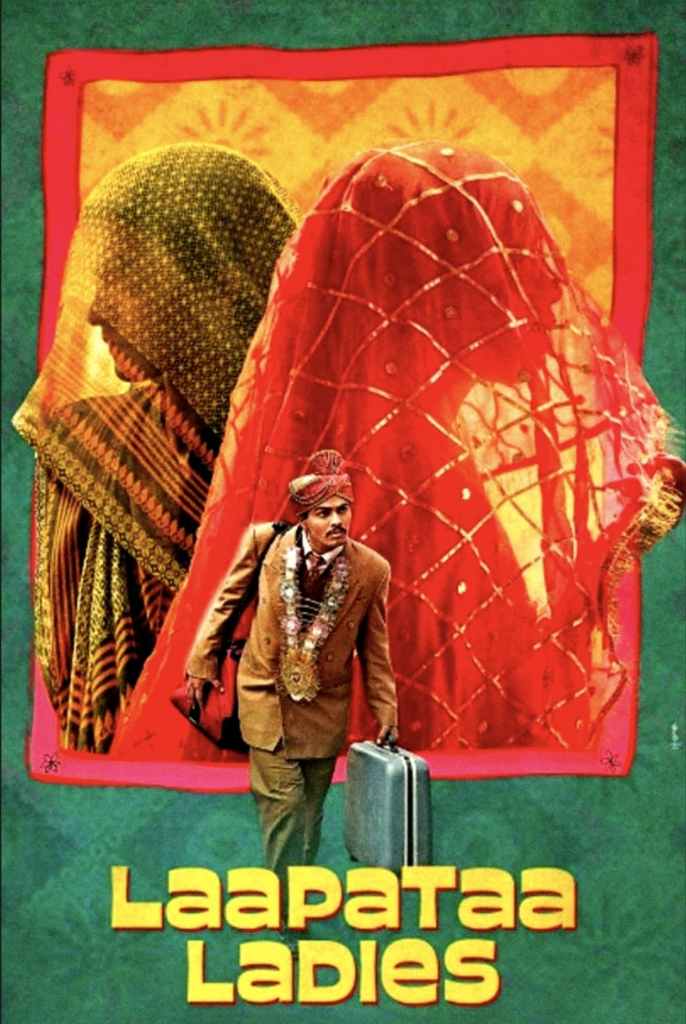
Laapataa Ladies (English: Lost Ladies) is a charming comedy/drama out of India. Just after their wedding, Deepak and Phool are traveling from her village to his. In keeping with local tradition, Phool is veiled and can’t see a thing, relying on her new husband to guide her around the hustle and bustle of boats, buses, and trains. During the long trip, the couple fall asleep sitting up on the train, and Deepak wakes just as the train is getting ready to depart where they are supposed to get off. He grabs his veiled wife’s hand to wake her, they successfully disembark, and hop on a bike to travel the couple miles to his family’s house. Unfortunately, when they arrive, they discover Deepak has grabbed the wrong bride. This bride, Pushpa, was confused at first, but later kept her mouth shut, as we learn that she was forced into marriage with a greedy man who just wanted her dowry. She does not want to return to him. Meanwhile, back on the train, Phool wakes up to find herself at the wrong train stop. She’s from a sheltered village and was raised to be a proper wife (can handle the kitchen and keep a house, but knows nothing of the outside world) so she has no way to communicate where she came from or where she’s supposed to be. Deepak sets out to find his missing wife, with Pushpa trying to evade the authorities (who’d ultimately want to return her to her husband) while Phool finds new friends in a new city, willing to help her in whatever way they can. Lots of laughs, lots of emotion, and beautiful cinematography in the bright and colorful Indian countryside. ★★★★
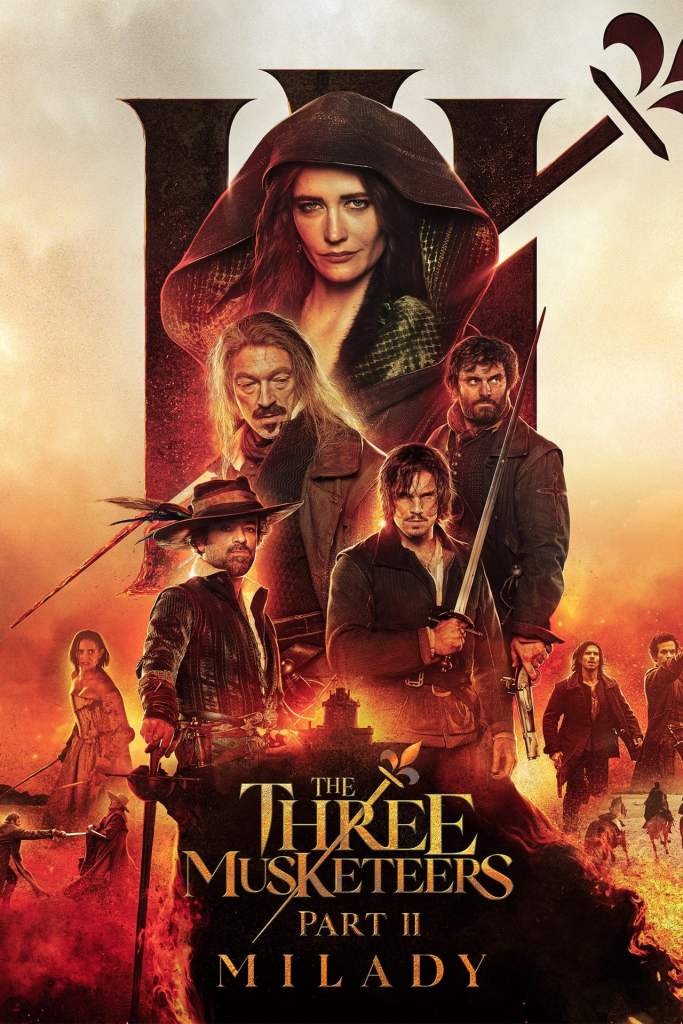
The Three Musketeers: Milady is the sequel (or, actually, feels like the second half of a one long film) to D’Artagnan, a film I very much enjoyed. This film picks up right at the end of part 1. Constance was just kidnapped, and D’Artagnan wakes to find himself captured and ready to be killed to keep his silence. He is able to escape, and while wandering around the castle, finds Milady, who was also being held there. D’Artagnan reluctantly frees her and the two are able to escape the castle together, ultimately making their way back to the French army. Meanwhile, King Louis XIII, having survived the attempt on his life in the last film, has decided to send his army to attack La Rochelle, a fortified castle held by the Protestants. The Musketeers are tasked to sneak in under cover of darkness in preparation of a full attack, but they are ambushed and most of the party is killed. Obviously someone in the government is playing both sides, but while that plays out, D’Artagnan leaves to continue his search for Constance, which takes him all over northern France and up into England. The film is packing in action with swordfights and battles both hand-to-hand and in large scale, and while it is exciting from start to finish, it doesn’t always clearly state what all is happening politically. There’s some double-crossing going on, some political machinations that, frankly, surprised me, because I didn’t always catch what was happening. Just as exciting as the first film, but I feel like they could have made this movie just a bit longer (maybe 2 1/2 hours instead of just 2) and fleshed out some of those plot points, in order to make more sense of it all. Still, very enjoyable, and one of the “biggest” films to come out of France in a long time. ★★★★
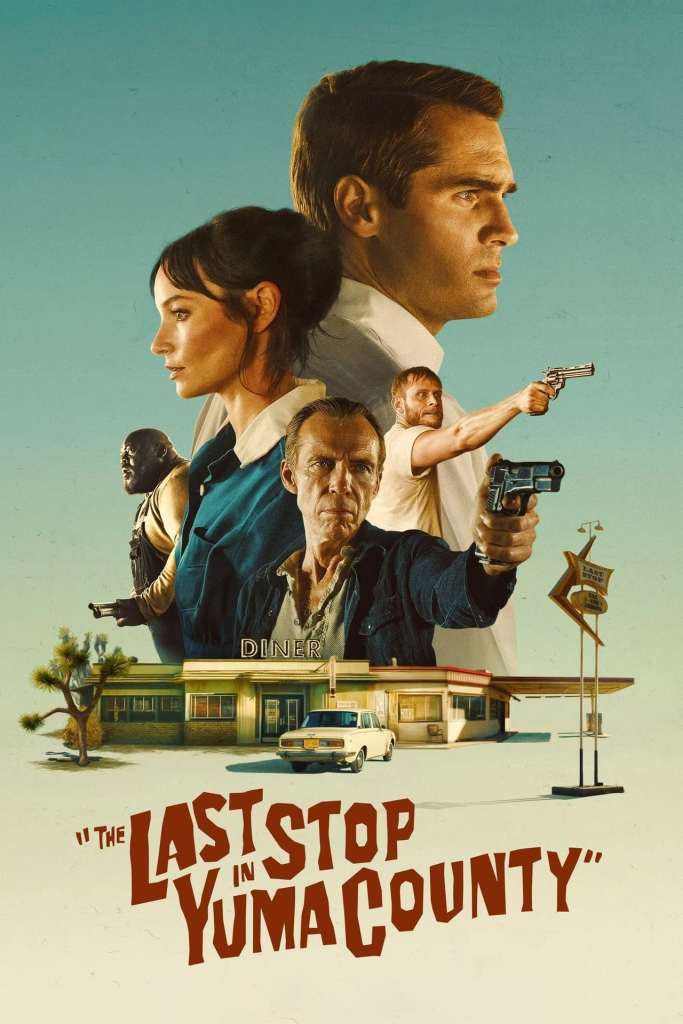
You ever wonder if the critics are just watching a different movie than everyone else? The Last Stop in Yuma County seems universally loved, but man is it a bad movie. Vernon, a mild mannered traveling salesman, pulls up to a remote gas station in rural Arizona in the 1970s, but the station is out of gas and awaiting a tanker delivery. He goes next door to the diner and sits down to wait for the gas and strikes up a conversation with the only worker, waitress Charlotte. As they are talking, two more men come in, also waiting for gas. These two, Travis and Beau, have just robbed a bank and have $700k in their trunk, so they are hot-to-trot to hit the road. The robbers confront Vernon and Charlotte and tell them to just play it cool and they’ll be ok. Their plan is steal the first car that stops that has gas, and make their way out. Other guests do come in, but they are all in the same situation, needing gas, so the bad guys continue to wait as the afternoon drags on. It does lead to a big climax, but unfortunately that comes with about 30 minutes left in the movie, and then it takes a weird left turn before we get to the actual end of the film. The only thing it really has going for it is style: it looks slick and cool and the camerawork is quite good for such an (obviously) low budget film, but the acting is subpar, the story is anything but unique, and you will be waiting for the end long before it actually comes. ★½
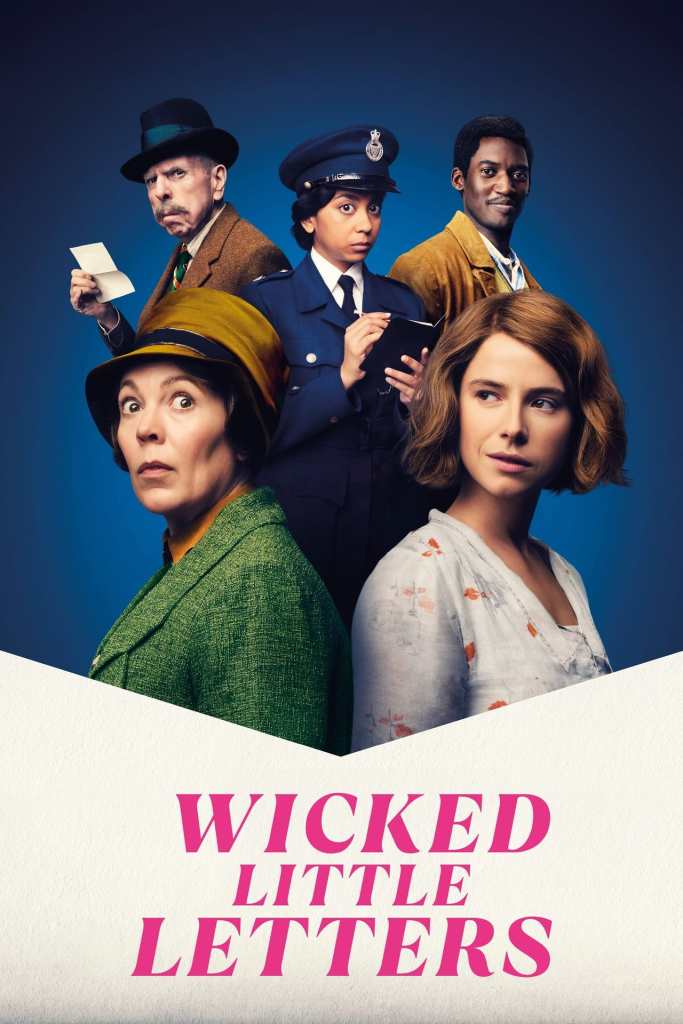
Wicked Little Letters is a cute little movie, supposedly based on a true story, about a scandal that rocked a community in England in the early 20th century. Edith Swan (Olivia Colman) is a cultured and religious woman who never married, living with her elderly parents in Littlehampton. Their neighbor is Rose Gooding (the always entertaining Jessie Buckley), an Irish woman and single mother who lost her husband in The Great War. The polar opposite of the refined Edith, Rose cusses like a sailor and drinks and smokes at the local bar, so when Edith starts getting vile poison pen letters in the mail, sent anonymously, Rose becomes the first suspect, despite Edith and Rose seeming to be on good terms. Eventually their friendship sours, so Edith implicates Rose to the police, and Rose is arrested. As it turns out, a couple women in the area actually believe Rose didn’t do it, one of whom is lady constable Gladys Moss, but she being a woman in 1920, the male officers don’t believe her. Before too long, we learn who the real sender is: none other than Edith herself, venting out pent up frustrations with her spinster life. Since she can’t out herself, she continues to accuse Rose, leading to a trial, so Gladys must find proof that Edith is the culprit before Rose is sent to jail and loses her daughter. Some mild laughs, mostly just because of hearing filthy language in English and Irish accents that scandalizes everyone around, but otherwise nothing too groundbreaking, but it is an overall fun movie, worthy of an afternoon watch. ★★½
TV series recently watched: The Chosen (season 4), Star Wars: The Acolyte (season 1)
Book currently reading: Star Wars Aftermath by Chuck Wendig
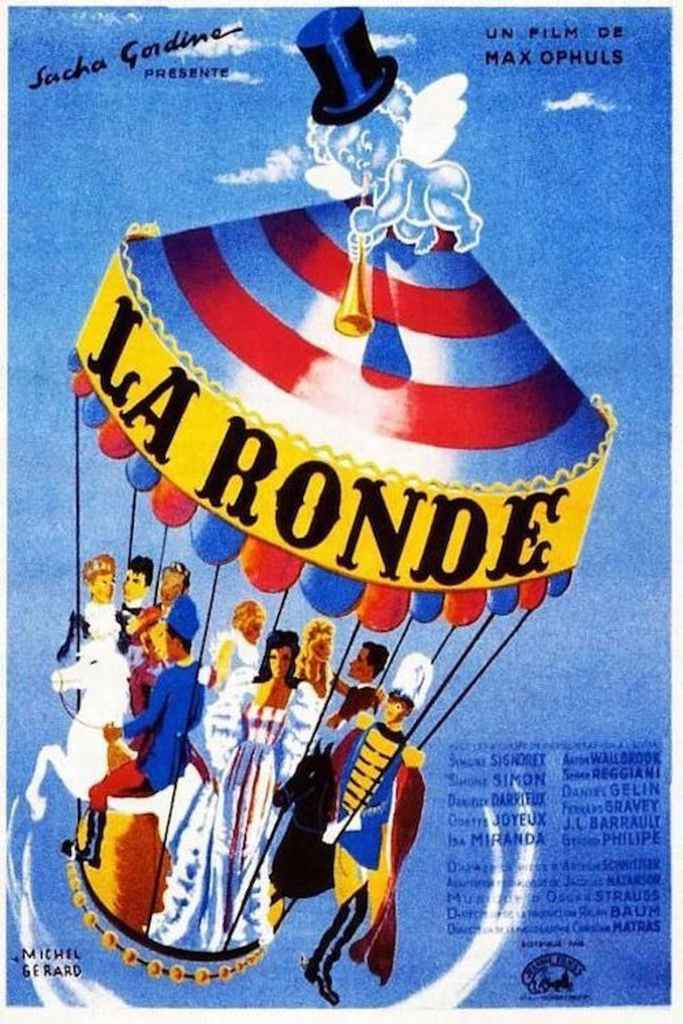
Max Ophüls was a German director who made films all around the world during his life, but today I’ll be looking at his last 4 films, made mostly in France. La ronde (“Roundabout”) is a funny little film with some racy moments, enough so that it was classified as immoral in the USA when it was released in 1950, and it took an appeal to the Supreme Court a couple years later before it was shown here. The film opens on our narrator/emcee. He will hold our hand over the course of the film, weaving a tale of lust and debauchery, but also playing a part in it himself at times (as a carriage driver, or passerby in the street giving advice to a character, or whatever the case may be). He promises a circling tale around the merry-go-round, and we’ll soon see what he means. In the beginning, a young soldier is being propositioned by a prostitute. The man tries to duck out for lack of funds, but gives in when she says she doesn’t charge for the military. What red blooded man is going to turn away a romp for free? No sooner is the deed done though that the man heads out and goes to a party, in an attempt to pick up a new girl. His target, a chambermaid, eventually gives in to his wares. But she isn’t sitting around pining away for him afterwards; she too moves on to the next bed-partner. And so on and so forth. Each subsequent partner becomes the central character and hunter for a new partner afterwards, until, of course, we make it back to the prostitute. There’s lots of very funny moments, often provided by the narrator breaking the fourth wall to us viewers (like when one man tries to go again too soon after his previous foray, leading to a scene where the merry-go-round has broke down and the narrator has to bang on it with a wrench to get it going again). I’m sure it caused quite the scandal in its day, and is still a lot of fun today. ★★★½
Le plaisir adapts three 19th century short stories into a film of vignettes. The first and third are short (around 20 minutes) but good, but the middle, longer story is the star. The first is “Le masque” and tells about an old man who dons a mask to frolic with younger women at public dances, much to the consternation of his wife. The third, “Le modele,” is about an artist who falls head-over-heels for a woman, only to find that a relationship with her is not the same as a dalliance. The middle story, “La maison tellier,” is full of humor but also introspection for the characters. It begins in Paris, where a madame runs a “house of women,” as the narrator tries to delicately tell us. There’s a lot of laughs about how the men around town congregate there every night, and who is their favorite, but it is mostly a way to introduce us to the girls. One day, the madame suddenly closes with no notice (much to the dismay of the men!), but she has a reason: her niece out in the country is having her first communion, and the madame is taking all of her girls to visit her family and witness the big day for the young girl. More jokes on the train ride over, as the women are mistaken for high society by a country couple, and exposed for what they are by a traveling salesman, but the film turns more serious when they reach their destination. The madame’s brother (played by Jean Gabin, one of France’s all-time most popular leading men) becomes smitten by the beautiful young Rosa, and is willing to drop everything and move to the city, but of course, he has a life there in the country. There’s also a heart-warming moment at the niece’s ceremony at church, when Rosa and the other women are moved by this peaceful, religious moment, so different from their everyday lives. All good things come to an end though, and the women pack up that night to return to Paris, where “men may forgive one night closed, but would never forgive two.” Very moving film. ★★★★½
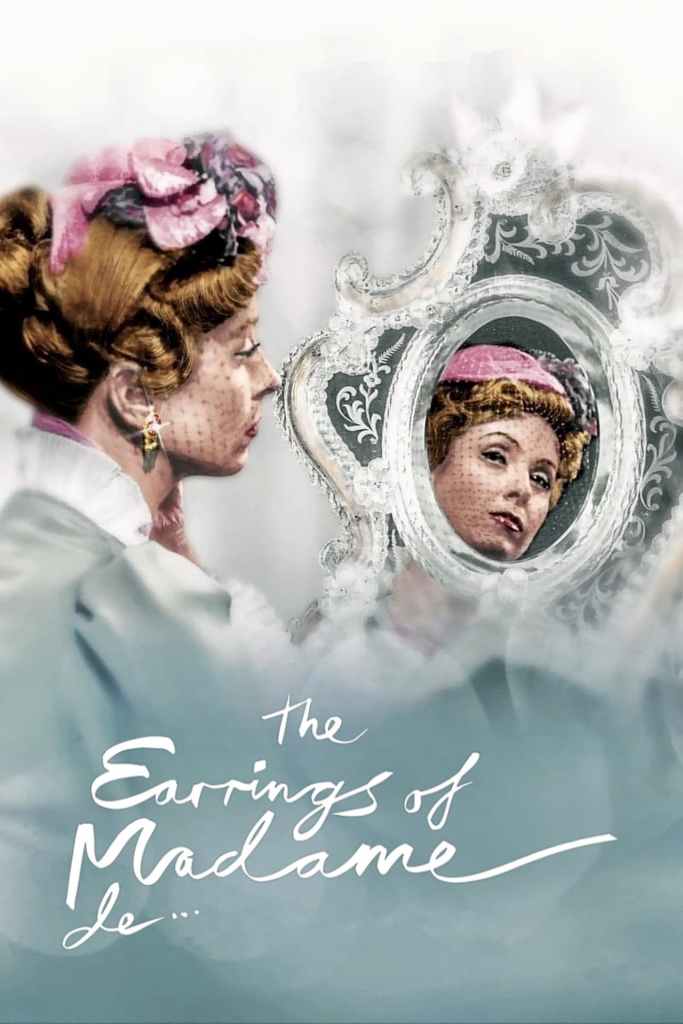
The Earrings of Madame de… has been called by some critics, “The most perfect film ever made.” Lofty praise, and I have to say after one viewing, it is indeed a great one. At the start of the movie, the titled madame, Louise (her last name is always carefully hidden through camera or sound tricks), is selling a pair of diamond earrings to a jeweler. The earrings were a wedding gift from her husband André, a count and general in the French army, but it has from the beginning been a marriage of convenience, and Louise could use the money to pay for her extravagant lifestyle more than she needs the memories of the wedding day. The jeweler, thinking the earrings are more emotionally significant than they are, contacts André and sells them back to him. To avoid a messy confrontation with his wife, André instead gifts them to his mistress, who is heading out of town to Constantinople, where she loses them in gambling, and they are later purchased by the Baron Donati. In a twist of fate, Donati crosses paths with Louise and becomes smitten, eventually gifting her the earrings. She recognizes them, but then must hatch a plan as to how she got them back (as far as she believes André knows, they were stolen and never recovered). The twists keep going from there. On face value, it’s a charming film full of humor and unexpected fate, a love story with twists and turns to keep you on your toes. But for those who look deeper, it is a movie about class/social status, love, and honor, with gorgeous sets and meticulous camera work. Maybe not the best film ever made, but certainly one you’ll want to watch again and again. ★★★★★
Lola Montès is the one stinker out of this batch, and that’s unfortunate because the subject material is fascinating. Lola Montez was a wannabe dancer in the mid-19th century who used her body to try to advance her career. Unfortunately for her, she wasn’t a good enough dancer, even by giving away her “wares,” and she never amounted to much on stage. At the start of the movie, she’s in a two-bit circus in New Orleans, USA, with a ringleader telling her tale to the audience as Lola acts out parts of it. In flashbacks, we learn of her history. After a short flashback to 1844 when Lola had a brief affair with composer Franz Liszt (the ringleader expounds that he wasn’t the only famous composer to be Lola’s lover, with others including Chopin and Wagner), we go back to her childhood. Born in Ireland, first her mom tries to marry her off to a wealthy (but very old) baron, but Lola instead flees and marries her mom’s boyfriend instead, at the time, her only way out of the situation. The marriage doesn’t last, so next, she ends up traveling in Germany, eventually becoming the main mistress to King Ludwig I. In fact, it is her ministrations that lead to an uprising in Bavaria and King Ludwig stepping down, after policies he enacts at Lola’s urging. Lola fleeing an angry mob is what ultimately lands her in America, trying to recapture some of the influence she once had. Amazing life, right? The movie however is a bore, and doesn’t do anything for this exciting person. I think it would have worked better if they’d just ditch the circus act/ringleader narration and told her story in a more straightforward way (something the studio tried to do in later re-edits, when the movie initially bombed upon release). Do yourself a favor and just read about the real Lola Montez. ★★


















 Jons Movie Takes