Moana 2 is the sequel that no one asked for, but for those who were kids when the first came out nearly a decade ago, or are kids now, there’s still enough entertainment there to keep you engaged. For the rest of us old fogies, it’s a pretty average film with exactly one catchy tune (and several forgettable ones).
Taking place 3 years after the first film, an older and more traveled Moana is exploring the ocean but has still yet to come across any other people/tribes. She knows they’re out there somewhere, but other inhabited lands elude her. Turns out it is because the storm god Nalo once placed a curse on a tiny island, sending it under the sea. In times past, the sea currents carried ocean travelers to this island, so they would meet each other. The only way to break the curse is for a human to touch the land of the island, but with it buried under the ocean and a perpetual storm hovering over it, that doesn’t seem likely to happen. Cue Moana’s friendly demigod, Maui. He hatches a plot to confront Nalo, lasso the island and raise it to the surface, while Moana and her friends sneak up to it. Of course, nothing goes as planned, but that’s part of the fun.
I’m going to rag on this movie a bit, but don’t get me wrong, it isn’t bad per se. It just felt unnecessary. I really liked the first Moana film, but there’s nothing wrong with a really good movie standing on its own without a sequel. But this is Disney we’re talking about, who in the last few years has churned out sequel after sequel (and remake after remake; in the previews for this one I saw live action remakes upcoming for Snow White and Lilo and Stitch, as well as Mufasa, itself a sequel-to-the-remake of The Lion King). Moana 2 is very average as an adult moviegoing experience. The House of Mouse should try for better than average. ★★½
For a change of pace, how about a series of classic foreign films? Ballad of a Soldier came out of the USSR in 1959, but got some theater showings in the USA in 1960 during a thawing in the Cold War, and it was a hit. Taking place in the Eastern Front during World War II, it follows 19-year-old soldier Alyosha. There’s a short prelude in the beginning where we meet Alyosha’s mother, who talks about how her son never returned to her from the war, after which we get into the action. Alyosha heroically takes down 2 German tanks by himself, for which the general rewards him with 2 days leave to visit his mother in his hometown. But first, Alyosha needs to get there, and his trip will show the travails Russia is going through during the war. Alyosha will meet a soldier afraid to return home to his wife, now that he is missing a leg, and a mother living in fear that her son will not return. The always kind and helping Alyosha will push jeeps out of mud, promise to bring a message from one soldier to his wife in a neighboring town, and sometimes just be an ear when someone along the way needs to talk. All of these little side trips hold him up, but the most important one is Shura, a young woman hiding in a train car to get across the countryside, with whom Alyosha unexpectedly falls in love. When Alyosha finally does make it back to his hometown, his 2 days are up, and he has just minutes to hug his mom and promise he’ll be back. Of course, after the beginning of the movie, we know that will never happen, making their short reunion that much more poignant. A wonderful film about the effects of war, and told (and shown) beautifully in start black and white. It was extremely popular in its home nation even by higher-ups, yet is completely devoid of soviet propaganda (even referring to Alyosha as a Russian Soldier and not a Soviet). ★★★★½
From the opening you think you might be in for a comedy, as you hear some light-hearted, playful music, but when you see it is a band playing in a square, with armed guards walking around, you realize you’ve been duped. Then a title card stating that it is 1942, and the Slovak Republic has adopted the Nuremberg Race Laws from Hitler’s Germany, and the setting for The Shop on Main Street is set. Tóno is a struggling carpenter, sidelined when much of the country’s laborers are doing well, because his brother-in-law, a higher-up in the new fascist government, doesn’t like him. He is given a chance when the government decides to take over businesses owned by Jewish citizens, under the guise of an Aryan controller, and Tóno is gifted the widow Mrs Lautmannová’s sewing shop. The problem for Tóno though is Lautmannová is hard of hearing, old as snot, and doesn’t understand that he is basically her new boss, so she continues to boss him around as if he’s a servant. Of course Tóno has to keep this hidden from the soldiers in the city and, even worse, his overbearing wife, who expects him to find “the gold that Jew hid under the floorboards.” Tóno doesn’t know what he got himself into, because it turns out the Jewish citizens and their sympathizers have been keeping Lautmannová and others like her funded, and they’re going to pay Tóno a nice monthly salary now to look the other way. He is willing to do so until the government decides it is time to round the Jews up and ship them off to Germany, but by now, Tóno has come to like Lautmannová. The ending is soul-crushing and one of the hardest moments I’ve seen in awhile. Lots of humor in this movie, but it definitely gets dark. ★★★½
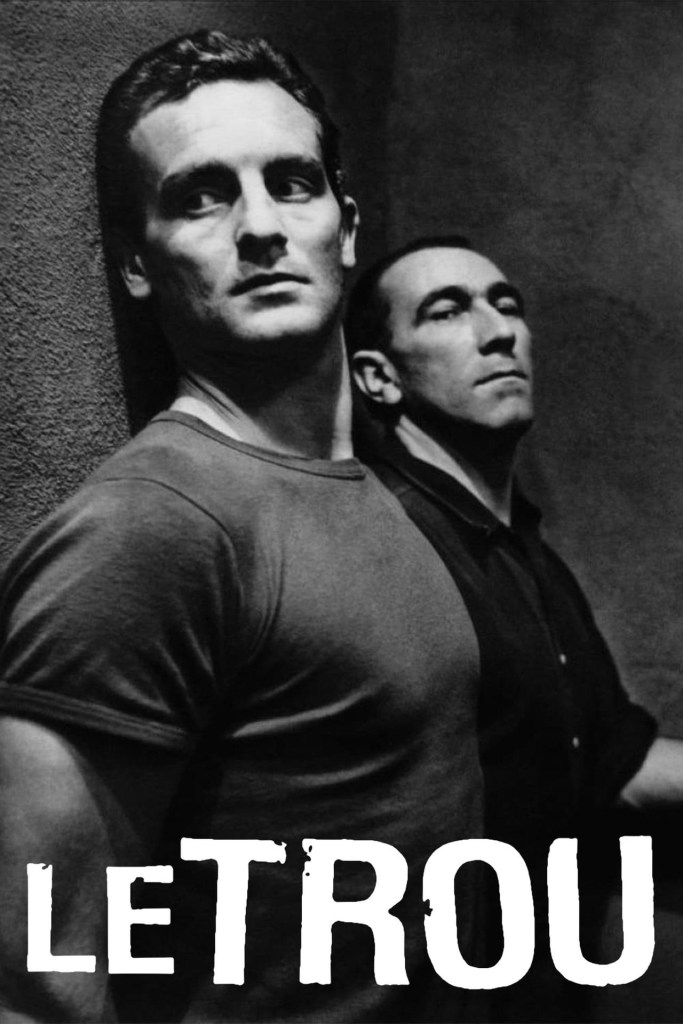
Le Trou (“The Hole”) is a fascinating film behind the camera, but let’s start with in front of it. Gaspard is in prison, charged with the attempted murder of his wife, and he gets put in a full cell with 4 other men, all of whom look like career hardened criminals compared to the wide-eyed younger Gaspard. He quickly ingratiates with them though, with his cool, easy personality, and since he’s in the small room with them and they have basically no choice, they bring him into their scheme: they are planning an escape. Once they tell Gaspard that his crime will net him 20 years at least, he is ready and willing to join in their feat. Prison escape films are a dime-a-dozen, but this one is a cut above the rest. For starters, we see their painstaking chiseling through the concrete floor, filing through bars, and working around obstacles, which takes place over weeks or months, but which is blended together so that the passage of time goes almost unnoticed by the viewer (much different for the jailed, I’m sure!). Through it all, there is always the very real fear that an unplanned search and toss by the guards will bring ruin to them all, so there’s tension for almost all of the movie that never really lets up. It’s an old-school thriller, one without scares, but no less intense. And if all that isn’t great enough, know what’s even better? It’s all true. As we are told in the beginning, it is based on a real-life jail escape, and the person who did it plays one of the characters in the film. I’m often not a fan of non-professional actors in films, but I didn’t even notice in this one, and everything is perfect. Great film, and it was also director Jacques Becker’s last— he died before it was released. ★★★★½
After so many heavy movies, I was in the mood for some lighter fare, so next up was a comedy, Big Deal on Madonna Street. It’s sort of like Ocean’s 11, if the team was made up of a bunch of bumbling idiots. In the opening scene, a couple crooks are trying to steal a car, but make a mess of it and one of them is arrested trying to flee. He’s fine doing his time until he hears of a possible easy robbery target with a limited window, so he needs out. First, he has to find someone to take the fall for this car thing, so he tasks a buddy to pay off someone willing to sit in jail for a couple months. Of course, in the circles they run, everyone has a record, so their time would be a lot more than 3 months. When they finally find a patsy, our original criminal ends up stuck in jail longer anyway, due to an unsympathetic judge! While he’s in, all the fools that were approached about doing time in his place band together to pull off the job on their own. It involves tunneling through an empty apartment to a pawn shop and cracking its safe. Nothing goes right from the beginning, such as a couple spinsters moving into the “empty” apartment, and even when the would-be robbers get into the apartment, they drill through the wrong wall! There’s lots of slapstick style comedy, with a recognizable cast including one of Italy’s all-time greats, Marcello Mastroianni. Very funny movie, as the crooks can’t ever seen to get out of their own ways. ★★★½
For awhile there I was watching a lot of old Japanese black-and-white films, but it seems like it has been a long time. Double Suicide is a great one, and it is told in a very interesting way. The movie is based on an 18th century bunraki, a traditional Japanese puppet theater play, and the film opens with puppets getting set up. We soon realize that the movie, though using human actors, is set up as a puppet show; some people dressed all in black act as stage hands, and will manipulate characters or scenery here and there, and every now and then, a narrator relates some kind of background tidbit or recounts a scene or something, so we are definitely being told a story. It is thus: Jihei is a paper merchant with a wife and child at home, but he has been seeing a prostate, Koharu, for a year. He is too poor to buy out her 5 year contract at the brothel, and another man, the rich Tahei, has been eyeing her too. Jihei and Koharu make a pact to kill themselves should it come to that, before Tahei or someone else can take Koharu away. All seems well and good, but Jihei’s wife, brother, and father-in-law will have something to say about it before all is done. It’s an extremely engrossing film, I was at the edge of my seat for a lot of it. Lots of tension, and the characters dressed all in black that move stuff around seem to come out at the most tension-filled times, adding suspense. Black-shrouded figures moving clandestinely around tends to do that! And they’ll draw your attention to things that you may not have noticed, not to mention that, like a puppet show, it sometimes seems Jihei has no power over his situation, that someone else is “pulling all the strings,” leaving him powerless. And did you notice the same actress plays both the mistress and the wife? What does that intend to say about Jihei? Great stuff. ★★★★★
Was going to stop at 5 films, but I enjoyed Le Trou so much that I grabbed another from director Jacques Becker. Casque d’Or is supposed to be one of his more heralded films, but I couldn’t get into this one. The film opens on a river as a group of men, with their girlfriends in tow, are boating down and pulling up on the banks of a quaint outdoor restaurant and dance floor. Any idea that this is a routine outing are dashed when we learn that the men have just robbed a bank, and they are now celebrating. One man in the gang is Roland, a brute who likes to slap around his girlfriend Marie, the prettiest woman of the bunch. Their trip to the restaurant is ill-fated though, as Marie falls head over heels with newcomer Manda. Manda is friends with another man in the gang’s troupe, having done time with him years past, but Manda has since turned his life around and is working as a carpenter, with a fiancee at home. Marie, though, is used to getting her way, and she latches on to Manda. When Roland tries to intervene, Manda slaps him around and leaves. This will eventually lead to a knife fight between Manda and Roland, with Manda coming out on top again. You’d think that’d be the end of it, but the head of the gang, Leca, also has eyes for the beautiful Marie, and is willing to set Manda up to get his way. There’s so many twists going on that my head spun, and some weird plot elements end up going nowhere (what ever happened to Manda’s fiancee?!). And as they would have said back in the 50s when this movie was made, all this over a dame? ★★
TV series recently watched: Disclaimer (series), Star Trek Next Generation (season 4), The Devil’s Hour (season 1)
Book currently reading: The Battle of Corrin by Herbert & Anderson
The King Tide is a tremendous film with a new idea (rare these days). On a tiny remote village on a small island by itself, on the same day that a mother loses a child in a miscarriage, another baby washes up on the shore. In rescuing the baby, the mayor of the village, Bobby, cuts himself badly, but as he holds the baby, the cut heals itself. We fast forward 10 years, and see what life is like in a village with a child with healing powers. Every day, a line of people come to visit Isla while she reads stories to them, just to be in her presence so they can ease whatever aches and pains (or hangovers) that they have that day. Her parents, Mayor Bobby and wife Grace (who lost the child in the beginning), haven’t aged a day in 10 years, by being around Isla all the time, and even Grace’s mom Faye, who was suffering from dementia 10 years ago, is perfectly fine. It’s a little creepy, as the villagers leave her presence with a constant stream of “Thanks to you Isla” as if she is some kind of savior, and in many ways she is, because the town relies on her for more than just healing as you’ll soon learn in the film. If that’s not bad enough, what happens when all of a sudden Isla loses her powers, in a village that hasn’t had to deal with loss or pain in 10 years? And as bad as it is for adults, what about for Isla, who has never known fear or hurt? The film touches on lots of “what-ifs” and explores some deep questions about the lengths people will go to for comfort. Outstanding movie that does a whole lot on a little budget, most of which went to filming in a remote location. ★★★★★
When I first saw Charlie Plummer (nearly a decade ago in King Jack), I thought this was an actor destined for stardom. He’s had some acclaim in indie film circuits since then, including a couple films I really loved, but for whatever reason he hasn’t exploded into an A-lister. He brings his talents to National Anthem, where he is once again great, but unfortunately the film around him is anything but. He plays Dylan, a 21-year-old looking after his alcoholic and dead-beat mother and his little brother. It’s a lot of responsibility for a young man, and being the breadwinner leaves no time for fun. That changes when he meets Sky, a transgender rancher. All of a sudden Dylan is making time to hang out with her and the other sexually fluid cowboys/cowgirls/cow-people at an all-inclusive ranch. I had to suspend belief a bit, because even in today’s new-age-y accepting circles, I find it hard to believe Sky and her friends would be so openly accepted at the rodeos they attend, yet it seems there are more gay people at the rodeo (in the deep south, no less) than straight. Ok…. Anyway, Plummer is good as expected, but I got tired of the gratuitous sex quickly. And don’t let any hard-righters see this movie; when Dylan takes his little brother to a drag show and dresses the boy in a dress “for fun,” the cries of grooming would deafen you. Certainly doesn’t seem very realistic. ★½
Slow is an international film out of Lithuania, something you don’t see much. It’s a very nice little film about an unlikely relationship. Dovydas is a sign language interpreter (knowing sign because his brother is deaf) and he meets a contemporary dancer named Elena. The two hit it off from the bat, but before anything gets serious, Dovydas makes an admission: he is asexual, having no sex drive or sexual attraction to others. For the free-spirited, open-loving Elena, this is anathema; she just doesn’t understand no matter how hard he tries to explain it. If Elena could be rational, she would know that for her, for whom sex is very important, she should just move on, but for the first time in a long time, she’s really truly in love, so rationality is out the window. But no matter how much Dovydas wants Elena to be happy, he can’t help who he is, leading to lots of anger and hurt feelings by the end of the movie. It’s a wonderful understated film with a lot of raw emotion, and great for lovers of international film. ★★★½
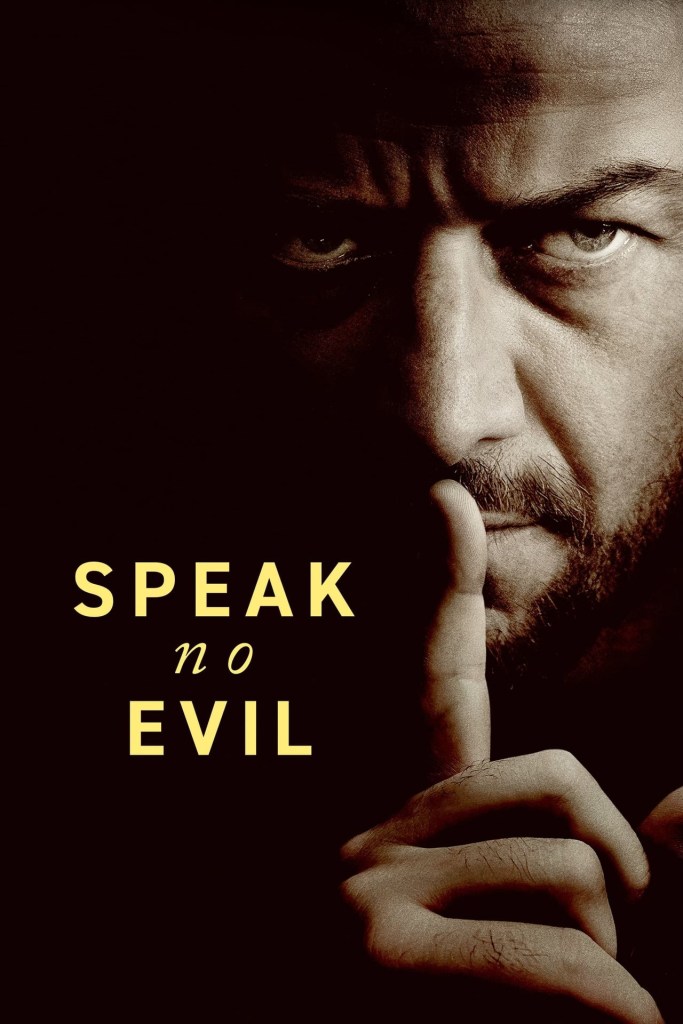
Speak No Evil is a very good, very tense thriller, based on a 2022 Danish film. A nice family consisting of Ben, Louise, and daughter Agnes (Scoot McNairy, Mackenzie Davis, and Alix West Lefler) are vacationing in Italy when they meet another American family, Paddy, Ciara, and son Ant (James McAvoy, Aisling Franciosi, and Dan Hough). Paddy is a guy’s guy and a bit loud and obnoxious, but at first, it’s the kind of temper that comes off as appealing and welcoming, and the two families become fast friends. Paddy invites Ben’s family to come stay with him at his western Italy villa, which is out in the middle of nowhere, for some peace and quiet. Things are weird as soon as Ben’s family arrives there. Paddy berates his wife and son in front of Ben’s family, and forces Louise to eat a goose he butchered, though she is a vegetarian. Ant is mute, from a seeming birth defect to his tongue, but as the film goes along he tries to communicate to Agnes that things in the house are not good at all, lending to a suspenseful feeling. Eventually, we learn that Paddy and Ciara are definitely up to no good, and Ben and his family will be lucky to just get out alive. The only problem with this movie is that the trailers gave away the big twist, so that for a long portion of the movie in the first half, I kept waiting for Paddy to show his true colors, knowing what was coming. I think I would have enjoyed the movie a whole lot more had I gone in blind, straight from the beginning, because McAvoy just oozes sinister feelings that are spot on. He really gives you the creeps, so much so that I’m not sure I could watch this one again! Once the action really gets going, the thrills are top notch. ★★★½
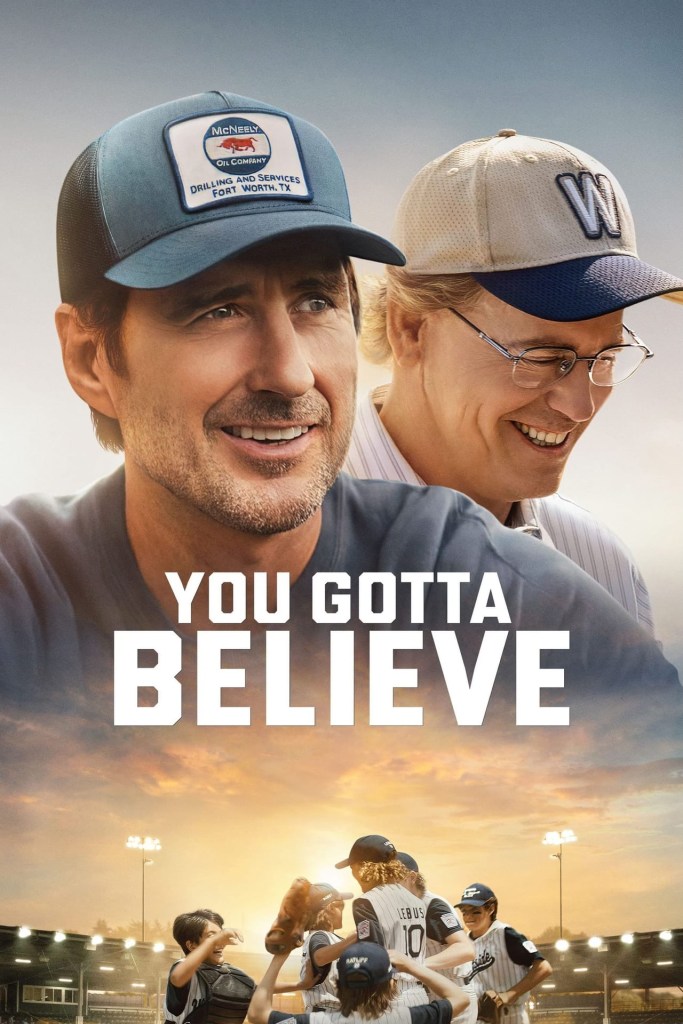
You Gotta Believe is pretty much exactly as I expected, which is an “ok” inspirational sports film. Based on a true story, it stars Luke Wilson, Greg Kinnear, Sarah Gadon, and Molly Parker, as parents around a little league baseball team in Fort Worth, TX, in 2002. Jon is the head coach of the team, but he does paperwork for his day job as a lawyer during the games, and pays little attention to the boys. Assistant coach Bobby is more involved, but he gets a diagnosis of terminal skin cancer and will be sidelined during treatments. Coach Jon realizes the team will rely on him more than ever, and the boys rally around their coach and each other, advancing all the way to the playoffs for the Little League World Series. The comedy is as hokey as its gets, but it is still a fairly entertaining family film if you are in the right mood for it. Nothing spectacular, but because it is based on a true story, it gets a pass. ★★½
TV series recently watched: Lioness (season 1), Superman & Lois (season 4)
Book currently reading: The Battle of Corrin by Herbert & Anderson
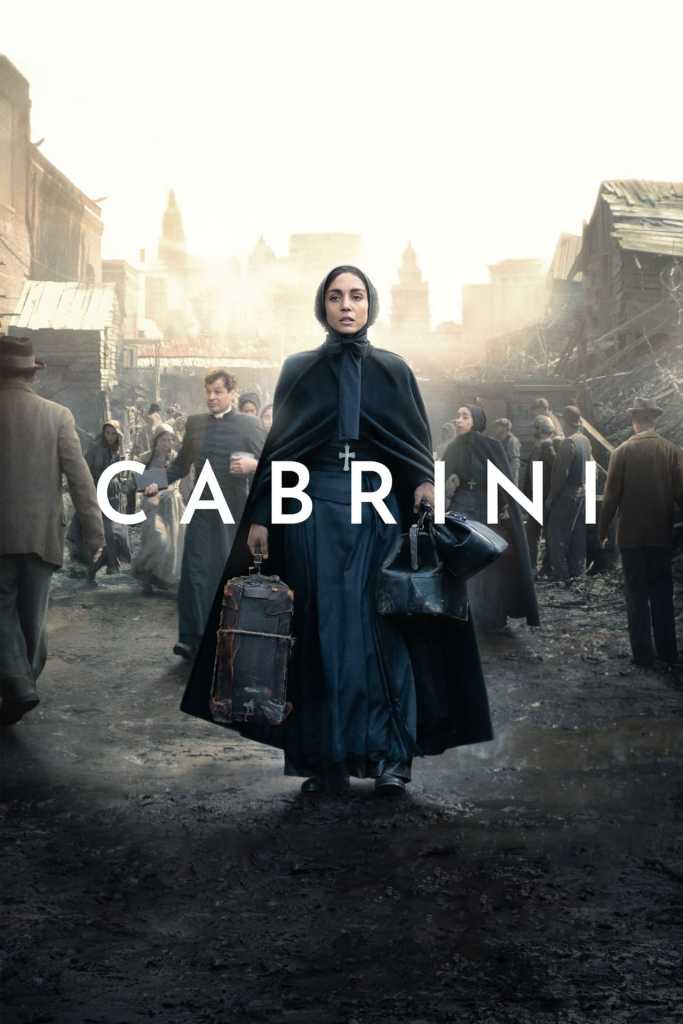
Cabrini is a bio film about Frances Xavier Cabrini, an Italian Catholic nun who lived in the late 19th/early 20th centuries. She made it her life’s work to care for orphans, and when the film opens, she’s already started a successful one in her home area of Lombardy. She wants to do more though, and makes entreaties up the food chain all the way to the Pope in hopes of being sent on a mission to China to do the same there. After much hemming and hawing over the fact that she’s a woman, the Pope grants her request but tasks her to start in America instead of China. Italian immigrants in New York are having an exceedingly hard time, with public opinion against all immigrants in general and Italians specifically at an all-time low. Cabrini goes there with a half dozen of her sisters, and they begin the long hard work to build, at first, an orphanage for the many children whose parents have died in hard labor in the USA and, later, a hospital and other facilities to care for them. At every turn, Cabrini and her crew face adversity, to the point that it got ridiculous after awhile. The movie is more than a bit heavy handed, in fact it hits you over the head (repeatedly) with how cruel all the Americans are to the Italians at every turn. It never lets up. Continuing to hammer it home leads to diminishing returns; it is one step forward, two steps back over and over (and over) again. I can be reminded that Cabrini is a woman living in a man’s world only so many times. Even if it’s a completely true story (I don’t know the answer to that), it gets old, and some creative license could have been used to make for a more interesting telling. One thing that didn’t get old though is the sets and costumes, which should net someone some recognition, as everything looks great. ★★
My Old Ass looked like dumb Gen-Z bullshit, but I gave it a shot based on some great reviews. I should have trusted my gut on this one, it is a total waste of time for anyone over the age of 20. Elliott (a perfect name for the genderfluid generation) is turning 18 and starting to envision a life away from the lake home where she’s always lived with her family. But first, she’s going to spend her last summer sleeping with her girlfriend and getting high on mushrooms with her friends. On one such bender, she starts hallucinating and meets her “older self.” Older Elliot gives her some life advice, which young Elliot doesn’t really want to hear at 18, but one thing the older self insists on is to stay away from Chad. Young Elliot doesn’t even know a Chad, but that changes the next day, when a new guy shows up in the area. Suddenly Elliot starts liking guys for the first time in her life, and questions what it is about this guy that her older self is warning her away from. It doesn’t get any better from there. The ending is wholly predictable and not worth sticking through the entire movie just to see. ★½
I’m striking out across the board today, as my next film isn’t much better, despite coming from a heralded directed (Steve McQueen) and starring A-lister Saoirse Ronan. It takes place in London during World War II, when the city was being heavily bombarded by German air raids. Single mother Rita cares for her young biracial son George, who is ridiculed by others for his mixed ethnicity at a time when that was unheard of. They live in a terraced house with Rita’s father, and have to regularly find shelter during the constant nightly bombings. During the war effort, Rita and most of her fellow women are supporting the war effort by working in factories, meaning she can’t be looking after George during the day. To keep him safe, Rita makes the hard decision to send him off (with many other children) to an evacuation center out in the countryside. At the train station, Rita and George get into a fight, and overcome with guilt, George jumps off the train before it gets too far away. Still, it’s far enough for a young boy to try to get back, so most of the film is George’s perilous journey back to the city. He comes across fellow runaways, bullying (and some friendly) soldiers, and even thieves who try to make use of George’s small size in their nefarious plans. He’ll see a lot of things that kids shouldn’t see, and live through things that no one of any age should have to endure. It should be a really great movie, but I could not connect with it at all. Somehow it never really felt “real.” Maybe a bit too much shock factor and too many leaps of faith that it wants us to buy into. Like Cabrini, it looks great, but it’s just a shiny veneer without substance underneath. ★★
Finally a good film, and in a genre that I often don’t bother with! I give huge props to Strange Darling, because it is sort of a low budget thriller, which I’m usually not into, but it does it well enough that I was really liking it for a long time. In fact, I’m going to guess that it becomes a long-lasting cult film, and that fans of this genre will absolutely love it. The movie is told in 6 chapters, but the chapters are out of order, which is on purpose. The movie starts in the middle, where a woman is fleeing in a car, bleeding heavily from the side of her head, while being pursued by a crazed killer with a long rifle. He causes her to wreck the car and she runs off into the woods. The man continues to give chase, and the woman comes across an older couple’s house and seeks refuge there. But the man will not give up easily. That’s all I can say, and that’s only about the first third of the film. A big surprise hits around this point during a flashback (to the first couple chapters), and while I started to suspect the surprise before it was delivered. It is no less satisfying. The film honestly petered out a bit before the end, but it was still a crazy, wild ride. If you like hack-and-slash thrillers with a high level of gore, this movie is right up your alley. Truly great acting by the lead (Willa Fitzgerald, someone I can’t remember seeing before). A little fun fact: the movie was filmed by actor Giovanni Ribisi, his first film as cinematographer. ★★★½
You know you are in for a leisurely paced movie when it doesn’t drop the title card on you until 32 minutes in. That’s the case for The Shadowless Tower, and for viewers like me who love a good introspective Chinese film, it doesn’t get much better. The film follows Gu, a middle-aged man who, despite being a popular food critic, leads a fairly aimless life. When we meet him in the beginning, he is with a group of people at the funeral for his mother. He’s there with his sister, her husband, and their child, Smiley, though you quickly learn that Smiley is actually Gu’s daughter, but she is being raised by Gu’s sister. Much later we learn this is because Gu is divorced, with no mom in the picture, and he knows he isn’t reliable enough to watch over his own daughter; when he does visit her (often late), he is sometimes drunk. At that funeral in the beginning, Gu’s brother-in-law hands him a slip of paper saying there’s the phone number for Gu’s and his sister’s father, a relationship that is obviously strained all around, and tells Gu not to let his sister know about it. The reason for the estrangement doesn’t come until much later in the movie, and the revelation of which explains a lot about Gu’s life and why he feels like he does, so I’m not going to ruin the surprise. Gu spends much of the film obsessing over whether he should call his dad (he dials several times, only to listen to the voice on the other side without saying a word), and spending time with young 20-something Ouyang. She’s a photographer and a free spirit, making playful flirtations with Gu, but we don’t know whether because she likes him or because she’s bored (she alternately introduces him as her boyfriend and her father to other people). This is the kind of movie that doesn’t have any action, and many questions are not answered by the end, it’s just a snapshot of a time in life of a tormented man trying to come to peace with himself. And I loved it all. ★★★★½
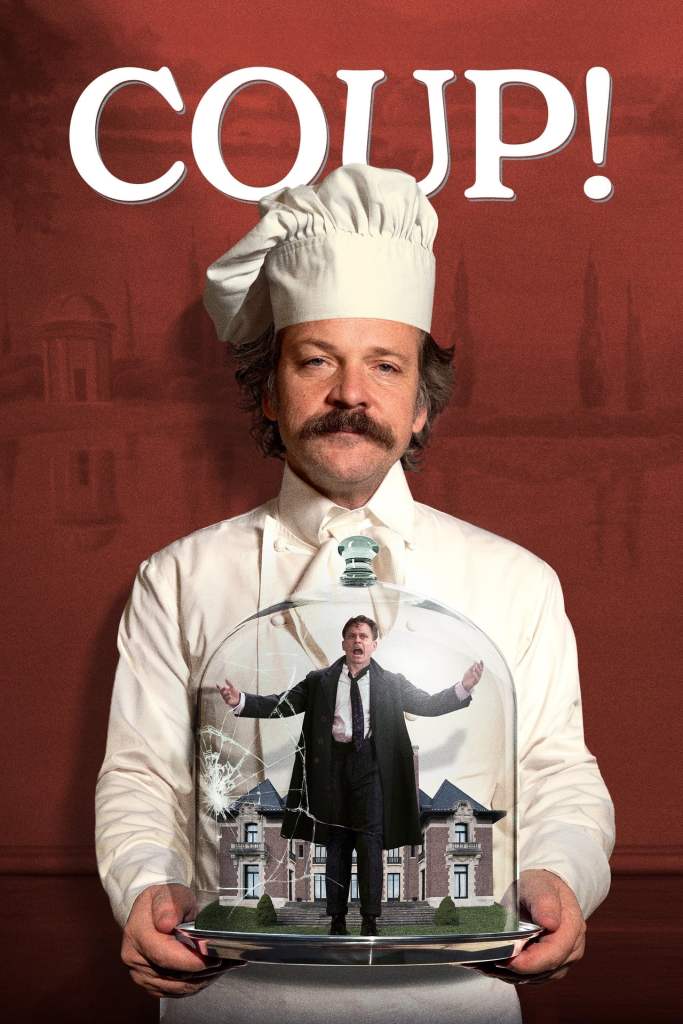
Coup! is a sort-of-fun film about class warfare, taking place on a remote island mansion in 1918. With the Spanish Flu running rampant, the owner of the mansion, JC Horton, has to buckle down with his wife and servants, as no one can come to or leave the island; all boat traffic is halted. Unfortunately for JC, his new cook, Floyd (Peter Sarsgaard) has an agenda. The film opened with Floyd taking on the persona of the cook who was supposed to come to the island; we see the cook dead on the boat, victim of a gunshot, and Floyd doing his best to look like the dead man. Now in JC’s employ, Floyd immediately starts flexing his muscles, getting the staff to negotiate for better pay and living conditions, while making JC look weaker in his family’s view. JC, a celebrated journalist, has always written about being progressive and fighting for the common man (his personal hero is Upton Sinclair), but it is easy to see that he loves his large home and the status that comes from his wealth and privilege. It isn’t hard for Floyd to poke holes in JC’s paper-thin veneer as an every-man. There’s some funny moments and a couple light thrills by the end, when Floyd has really turned the screws on JC, but the whole thing seems to abandon its main purpose before the conclusion comes, leaving me to wonder if it was really just a light comedy that tricked us (viewers) into thinking it was more. ★★½
I saw Slingshot despite the poor reviews, because, A) it’s a space movie and I’m a sucker for those, and B) it has Casey Affleck in the lead and he’s (usually) pretty good. Not this time, unfortunately. He plays John, one of 3 astronauts on a deep space mission to Saturn’s moon Titan, to collect natural resources to help Earth deal with its climate change problem. To make the long trip shorter, the team first heads to Jupiter, where the spacecraft will use the large planet’s gravity to slingshot around towards Saturn, building speed along the way. To pass time, each member goes into hibernation for 3 months at a time on the years-long trip. However, as the computer reminds them each time they wake up, the meds used to induce deep sleep have side effects, such as confusion, hallucinations, and paranoia. As the trip goes along, John has a harder and harder time each time he wakes up. He starts hearing voices, and seeing visions of the girl he left back on Earth. He isn’t the only one, as another astronaut, Nash (Tomer Capone) starts talking about how the ship wasn’t built well and they need to turn around before they all die, while mission lead Franks (Laurence Fishburne) begins threatening John and Nash with violence if they don’t stick to the mission. What should be a head-trippy space drama is bogged down by absolutely terrible acting, which is somewhat expected from Fishburne and Capone, but bad from Affleck too, who just gives the same tired, dull, depressed performance that he so often does in his movies, and this time it seems like he doesn’t want to be there. Neither did I, by the end. ★½
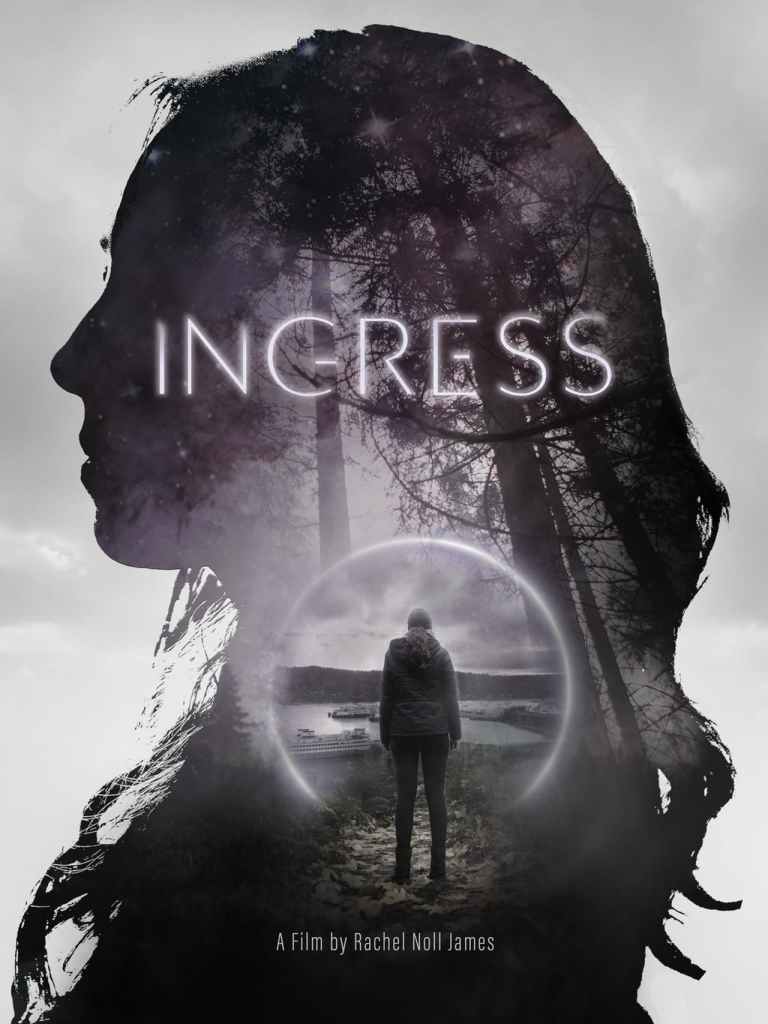
Ingress is one of those low budget indie films that starts with a great idea and is able to do just enough with it to warrant looking past some of its obvious shortcomings. Written and directed by Rachel Noll James, who also stars as lead character Riley, it is about a woman who seems to be phasing in and out of her reality, especially when she becomes upset over thoughts of her recently deceased husband, Toby. Riley is intrigued when she learns of a motivational speaker/author named Daniel who talks about communicating with other beings who can converse through time and space. Riley approaches him at a book signing and states her case: since childhood, she has been cursed with the ability to slip through the various multiverses. Whenever it happens, and she has been unable to control it thus far, it will take her a few minutes to get her bearing, but then “new” memories would replace the old ones, so that she used to be unaware of the changes that were made. However, after teenage hood, she kept her original memories as well as her new ones, so that now, as an adult, she remembers various conflicts such as her parents still being alive (they are dead in her current existence) and her husband still being alive too. These conflicting memories have made her life very hard, to the point that a therapist has helped her stay grounded in this, her current, reality, and she hasn’t phased to a new multiverse in awhile. Riley is hoping Daniel can use his abilities to talk to these beings and find a way for her to permanently return to an existence where Toby is still alive. Daniel too has struggled his whole life; when you are a child talking about hearing voices, obviously society wants to send you to get help and load you up on medications. Together, the two start to work through their baggage, even as Daniel starts having visions himself of a life spent with Riley, where they are married and have children. It’s a great basis of story, but the execution isn’t always there. Director/actor Rachel James is quite good in the lead as Riley, perhaps because it is her characters and story to tell, but everyone else seems to be lifted from the local theater shop, and none are very good. The film was obviously shot on a low budget so the camera work suffers, but there’s just enough there to be entertaining throughout. ★★★
Amerikatsi (“American” in Armenian) is another indie film where the writer and director is the lead, and this one was a surprisingly refreshing picture. After a brief intro in which a young boy is smuggled out of Armenia in 1911 during the Armenian genocide by the Ottoman Empire, we fast forward to 1948. The USSR has been luring former Armenian citizens back to the country in a repopulation effort, and Charlie, now a grown man raised in America, took the bait. He isn’t there a day before he is arrested by the Communist controlled regime for making the sign of the cross (religious propaganda) and wearing an expensive tie (capitalism and worshipping western ideology), and sentenced to 10 years hard labor. Before being shipped to Siberia though, a stone wall at his Armenian prison falls during an earthquake, and the prisoners are tasked with rebuilding it, which ends up taking through the winter. To pass the time in the evenings, Charlie looks out the window of his cell, allowing him to see into the house across the street (with the missing wall no longer obstructing his view) and he sees a man and woman living together. Turns out the man, a guard in the prison, is only working for the Communists as a way to get by, but he too seems to be (secretly, of course) religious, and is a former painter before his art landed him in hot water with the Communists. Charlie lives vicariously through watching the guard across the way, crying with him when his wife leaves him, and rejoicing when she later returns. The movie starts out as a quasi-comedy; even though Charlie goes through some bad stuff, much of it happens because he doesn’t speak a lick of the language and only knows English. However, it is definitely a heartfelt drama by the end, by when Charlie has endeared himself to the guards and fellow prisoners. A wonderful film if you don’t mind the frequent subtitles from Armenian and Russian languages throughout. ★★★★
The Good Half stars Nick Jonas as Renn, a middling 20-something who, like a whole lot of people in his generation, is a bit aimless and goalless in life. His mother Lily (Elizabeth Shue) has recently died after a long battle with cancer, and Renn has put off returning home, so he was not there when she died. He can’t stay away now though, as funeral plans move forward. Renn’s sister Leigh (Brittany Snow) is doing most of the work, with a little help from their father Matt (Matt Walsh) as well as some unwanted help from their stepfather (Lily’s second husband) Rick (David Arquette). As Renn gets acclimated to Cleveland, he wonders why his free-spirited mom never left this town as he did. At the same time, he has flashbacks to his younger life and interactions with his mom, who maybe wasn’t the great mother that he wants to remember her as, and we get an explanation as to why he stayed away at the end of her life. As a Gen-X’er, I wanted to yell at Renn to stop moping around and do something with his life and face his guilt, but I’m sure the film will speak more to those viewers younger than myself. Still, not a bad film, even if it comes off as a not-as-good Garden State (which definitely is my generation). ★★★½
TV series recently watched: Cheers (seasons 1-2), The Penguin (series)
Book currently reading: Breaking the Dark by Lisa Jewell
You have to be living under a rock to not notice the hype machine behind the film Wicked, the newest film adaptation of a Broadway musical. Close to 30 years ago I tried to read the book upon which it is based, giving a new take from the eyes of the Wicked Witch of the West and how she came to be (and not so wicked in the beginning after all), but I couldn’t get into it at the time. And despite being an admitted musical junkie, I’ve never seen the production, so I went into the movie blind (outside of knowing the one musical hit, Defying Gravity, that everyone knows). All I can say is, sometimes the hype machine misses, but it does not this time.
The film begins where the Wizard of Oz ends: the land of Oz is rejoicing the death of the Wicked Witch, and as we see Dorothy and her friends in the distance, walking the yellow brick road towards the Emerald City, we zoom over to watch the munchkins celebrating. Glinda the Good Witch joins them but doesn’t seem to participate in their happy feelings, and when someone asks if it is true that she was once friends with the Wicked Witch, Glinda becomes introspective and begins her tale. As they say in another great musical, let’s start at the very beginning, a very good place to start.
Elphaba (a name invented for the musical since she never had a name in the first movie, and a play on the original author’s name L Frank Baum) was born green, much to the chagrin of her father, the governor of Munchkinland. He spurns her from the beginning, so life is never good for her, and she is always an outcast wherever she goes. She has one thing going for her: magic, though she doesn’t know how to control it. When her little sister goes away to college, Elphaba goes along to help her get settled, but is noticed by the university sorceress professor, Madame Morrible. Magic has become rare in Oz, and Morrible wants to train Elphaba to become powerful enough to warrant the attention of the Wizard of Oz. It will not be an easy road, especially with the bullying and teasing Elphaba will experience at school. Just when you think she’s hit rock bottom though, an unexpected ally emerges. Galinda (as she was known back then), the school’s most popular student, who also wants to be a sorceress but who shows no talent in magic, pulls a mean trick on Elphaba at a school party. When everyone is laughing at Elphaba, Galinda feels bad for her trick, and pulls Elphaba over and welcomes her in front of everyone, immediately making Elphaba “one of the cool kids.” Thereafter, they become best friends, and when the Wizard finally extends an invitation to Elphaba to meet him in his city, Galinda goes along. What they find there though will change their friendship and the trajectory of Elphaba’s life.
This is a fantastic, high flying movie (literally, once Elphaba pulls out that broom near the end!) with everything you could hope for. Lots of laughs (often provided by the completely self-absorbed Galinda) with equal measures of heart, fear, triumph, and exhilaration, with catchy tunes and gorgeous scenes straight out of the magical kingdom of Oz. Be warned, though they haven’t marketed it as such (purposefully so, I’m sure), this is a “part 1,” with “part 2” due to be released a year from now. Rest assured that the film doesn’t end on a heavy cliffhanger, it just sets you up for what is hopefully an equally thrilling conclusion. ★★★★★
Across the River and Into the Trees is one of those lowkey, subtle movies that I would guess a lot of people would have a hard time getting into, myself included on most days, but it must have caught me on a good day because I loved it. Liev Schreiber gets to show a more quiet side that he is often tasked with, as Richard, a US army colonel in Venice after World War II. He says he’s there to go duck hunting, but really he is visiting the site where his son was killed by Nazis during the war. He is also haunted by a battle where his entire company of young men (boys, really) were killed. Though he was only following orders, the event has stayed with him and is always near the forefront of his thoughts, more so now than ever, as Richard has been diagnosed with a terminal disease. In Venice to make peace with himself and say his goodbyes, he unexpectedly meets Renata. Renata is from a long-storied family in the area, with a name that goes back 600 years, but at this point the family only has its name left. Her mother has arranged for Renata to be married to a wealthy man to get some cash flow into the family once again. Based on a later-life book by Ernest Hemingway (I’ve read some of his, but not this one), I may have to look it up and put it on my reading list. My estimation of the film went up as it went along, so definitely stick with it to the end. Schreiber gets to show that he has a range much wider than he usually gets to show. ★★★★
Man, I did not get Family Portrait at all. Thank goodness it is only about 70 minutes long because any longer and I would have been mad for sticking through to the end. It begins in a park, where a large extended family is gathering for the day. They get together yearly to take a family photo for Christmas. As they gather, there’s this ominous drone sound muting out the vocals, so we can’t hear what they are saying as they meet up, and it creates this sort of foreboding feeling. Great setting, so I thought I was in for something good. Nope, that’s the highlight of the movie. It meanders along from there, as the central character gets upset with her family because she wants to get the photo taken so she can move on with her day with her boyfriend, but no one seems to be in a rush to do it. Later, the family learns that a cousin died of a mysterious virus (the film takes place in the early days of COVID) and the mom in the family goes missing, much to the angst of the young woman trying to get this photo taken and done. There’s a weird scene where she jumps in the lake for no reason that I could tell, and the missing mom is never resolved anyway. Not sure what I watched, seemed like it was a reality show where cameras were set up to record mundane conversations. If I wanted to hear people talk about how to make proper coffee, I wouldn’t watch a movie about it, I’d just attend my own only family reunion. ★
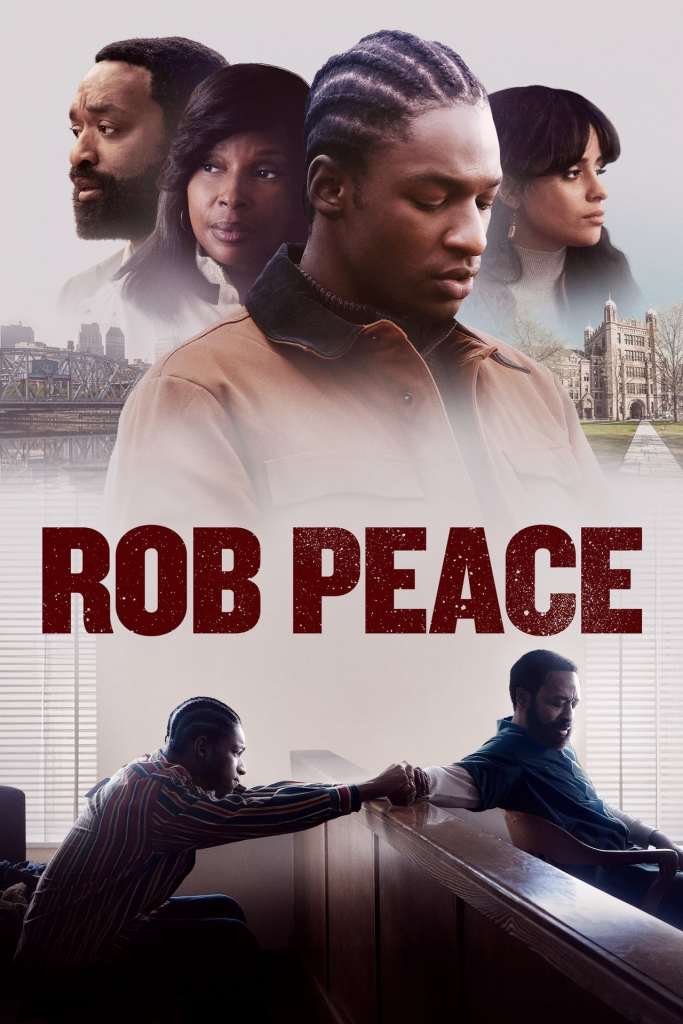
Rob Peace is based on a book (The Short and Tragic Life of Robert Peace, by Jeff Hobbs) which is a biography about the eponymous man. The film follows his life from a young boy, where Rob (as an adult, played by Jay Will) is being raised in a rougher neighborhood by his separated parents. His dad (unnamed in the film, played by Chiwetel Ejiofor, who also wrote and directed) seems like a good guy but he has a past in dealing drugs, and Rob’s mom (Mary J Blige) wants nothing but for her son to escape his trappings. Rob is very bright, next level kind of smarts, and his mom knows this is his ticket out. His future is put at risk when his dad is arrested and convicted of murdering two women in his apartment building, something the man vehemently denies. He is sentenced to life in prison, and implores Rob not to give up on him, to find a way to get him out of prison. It’s a lot of pressure to put on Rob from a young age, who, as he gets older, works 2-3 jobs along with his mother, to enable to send him to a private high school and then on to Yale when good scholarships come his way. In college, it doesn’t get any easier for Rob, and he resorts to selling marijuana in order to fund lawyers for his dad and, later, expensive cancer treatments when his dad gets brain cancer. Rob overcomes, at first, by graduating, but being found out by his advisor shortly before graduation prevents him from getting a letter of recommendation to grad school, so he returns to his high school to teach and inspire. Hoping to turn his neighborhood around, Rob and friends start buying up vacant buildings to restore and flip, but then the housing crisis of 2008 hits, and they are left with nothing. Rob once again turns to dealing, not to enrich himself, but to help his neighbors from losing their homes and investments. It does not end well. Really strong performances all around, and while you’d think a movie like this would be a bit too on-the-nose, it manages to flip the script on the viewer a couple times and keeps you engaged. It made me angry, seeing a man like Robert who could have changed the world, resorted to doing the only thing society allowed him to do. ★★★½
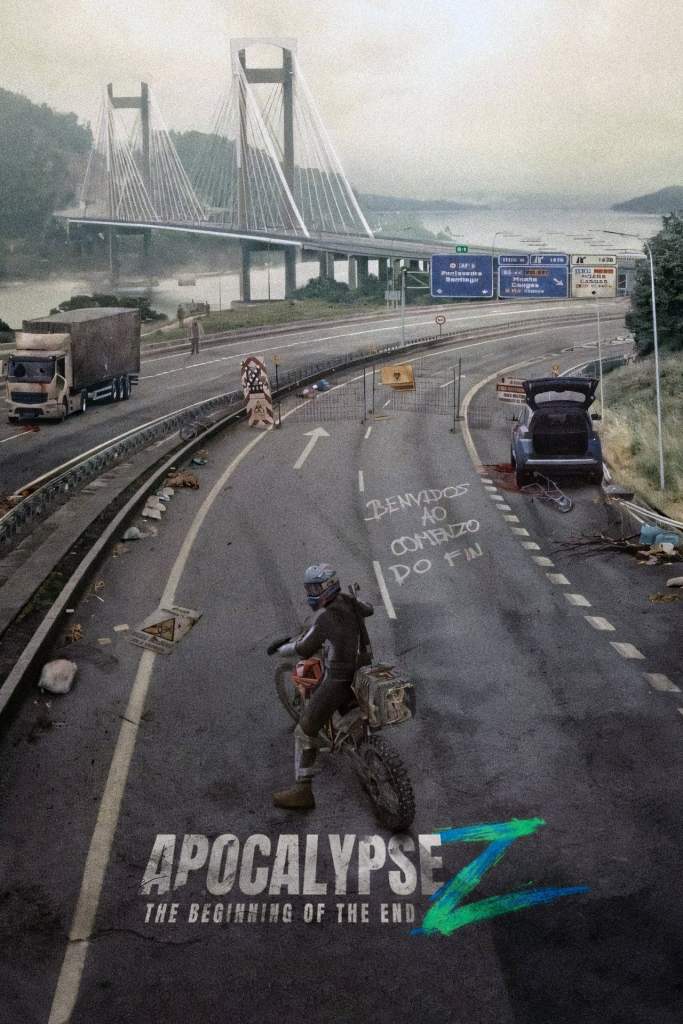
I love a good apocalyptic movie, and it’s right there in the title of Apocalypse Z: The Beginning of the End, a Spanish language film. But even my love of the genre couldn’t save this one for my tastes. It starts out well enough, with rumors of a new virus causing people to get sick. So soon after COVID, the residents don’t really bat an eye when talk of quarantines starts up, but when the virus mutates and a new variant makes the incubation period change from days to minutes, the situation gets serious fast. Manel is the main character, a single man mourning the death of his wife a year ago in a car accident. When things start to look bad, the government rounds up residents to transport them to evacuation centers. Manel hides, rightfully fearing being around a crowd like that, and stays in his apartment after everyone leaves. He finds a friend in an old lady across the street, who was too weak to make it to the buses, and the two look after each other while Manel goes out daily, breaking into houses in the empty streets looking for food. When a radio signal tells them survivors are gathering in the Canary Islands, Manel wants to go for it. His new partner, fearing she’ll hold him back, commits suicide, freeing Manel to make the dangerous trip. It was good until about this point, which had some light zombie action and some decent thrills, but the movie really started to drag in the second half. Even as a zombie film/show lover, you’ve got to bring something new to the table to keep my interest, and this movie offers little. The final half is same old/same old and even sets up for a sequel, which I will definitely pass on. ★½
Transformers One is a computer animated origin story for those wonderful old transforming robots. Long before Optimus Prime and Megatron were rivals on Earth, they were Orion Pax and D-16, best buddies on Cybertron. The two are miners, digging deep into the planet for the life sustaining mineral Energon. Miners are those robots born without transformation cogs, thus they are not able to transform, making them the lowest tier in the societal rungs on the planet. Orion Pax has been digging through archives for information on the old Primes, the former rulers of the planet before its current ruler, Sentinel Prime, in hopes of finding some way to help their plight and end the long war with the invading Quintessons. In searching for answers, Orion Pax and D-16, along with fellow friends B-127 (future Bumblebee) and Elita-1 discover that Sentinel has been working for the Quintessons this whole time. He gives the mined Energon to them, and it was he who double-crossed the Primes and later devised the plan to remove the cogs from some robots, setting up miners to do his bidding. They all want to put an end to Sentinel’s tyrannical rule, but Orion Pax and D-16 have very differing views about how that should happen, leading to what ultimately lays the groundwork for the future wars between Optimus Prime and Megatron, and those that follow each of them in their pursuits. It’s a very fine movie, with lots of humor and an engaging plot for kids and adult fans alike. If you grew up on the Transformers cartoons of the 80s like myself, you’ll find plenty to like. ★★★½
TV series recently watched: Bad Monkey (season 1), Cobra Kai (season 5.2)
Book currently reading: Breaking the Dark by Lisa Jewell
Woman of the Hour is a fantastic true crime film based on serial killer Rodney Alcala, known in the late 70s as the “Dating Game Killer” for having appeared on that show shortly before his capture. The film follows the woman guest on that show, Sheryl Bradshaw (played by Anna Kendrick, who also directed in her debut). An aspiring actress whose career is going nowhere, she takes the gig to be on The Dating Game because she has no other options and is about ready to call it quits and move back home. Of course, no ones knows that one of the eligible bachelors, Bachelor # 3, is Rodney (Daniel Zovatto). Throughout the evening as Sheryl poses questions to the men on the other side of the divide, we see flashbacks to Rodney’s murders, and a flash-forward to the woman who finally escaped him, leading to his arrest. There is high tension throughout, especially as the film slowly builds and goes along, and we see the horrendous acts Rodney is capable of, and what may await Sheryl. You’ll definitely be holding your breath a couple times! Zovatto plays the sociopathic killer expertly well, giving me the heebie jeebies, and I was rooting for his capture so much that when it finally came, I pounded my fist in triumph. The ending postscript that stated Rodney was linked to 8 murders, but that the true number of his victims could be as high as 130, sent chills down my spine. ★★★★½
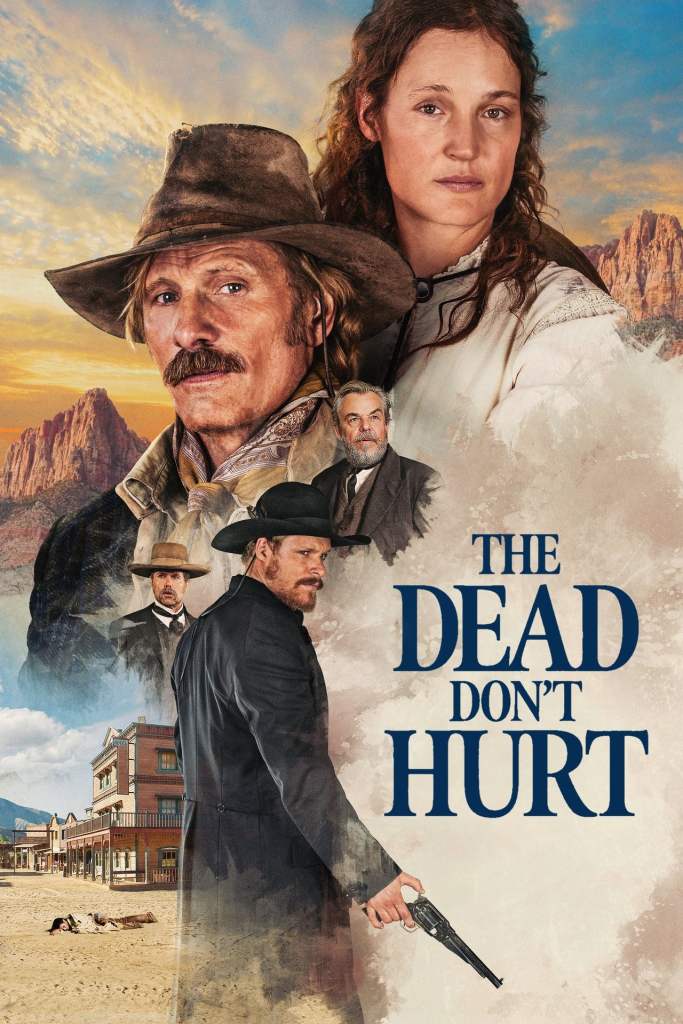
There are some movies I’ll see based on one actor alone, and that is the case for The Dead Don’t Hurt, starring (and directed by) Viggo Mortensen, who always delivers. This is a good old fashioned western, even if it manages to avoid a lot of the tropes. For example, the co-lead is Vicky Krieps, who plays a strong-willed independent woman, Vivienne, living in a time when that was not expected nor wanted by most men. In fact, early in the film, she leaves a wealthy boyfriend because he wants to treat her like a piece of art to be admired, and she shortly after ends up with Danish immigrant Holger Olsen (Mortensen). The movie actually begins near the end though: Olsen stands over Vivienne’s dying body. She whispers something in his ear before expiring, with Olsen burying her and leaving home with their young son. We then get their tale told in flashbacks, with an interlude here or there to catch up on Olsen in the current day. The bad buy in town is a man named Weston Jeffries, who gets away with murder (literally) because his dad is the wealthiest man around, owning much of the town and all of its business enterprises. When Olsen leaves for a few years to fight in the American Civil War, Vivienne is raped by Jeffries, and the result is a child, the same boy that Olsen claims as his own later on/at the beginning of the film. How the family gets to that point is the journey you’ll take with them, and it is everything I’d want in a good tale. Good guys, bad guys, with various shades of gray in the middle, and outstanding performances by every single person involved, including the many familiar faces (Garret Dillahunt, Danny Huston). I could watch this movie again and again, and probably pick up some new nuance every time. Mortensen isn’t an established director, this being just his second film, but he has a steady hand a great eye for letting scenes develop. ★★★★★
Two great movies, then a bit of a letdown. 1992 isn’t awful, but compared to the above, it’s very average. It stars Tyrese Gibson as Mercer, a man 6 months out of prison for gang activity who is trying to turn his life around. His boys on the street keep trying to bring him back into the fold, but he is wanting to raise his teenage son right and is working maintenance at a catalytic converter manufacturing plant in LA. On the day the jury delivers the “not guilty” verdict on the police officers involved in the Rodney King beating, the shit is about to hit the fan on the streets of LA. Mercer and his son live in the projects, an area that Mercer doesn’t want to spend the chaotic night in, so he asks his buddy, the security guard at work, if he (Mercer) and his son can hang at the plant that night. The guard will relish the company, so agrees. Unfortunately for everyone, a family of thieves (led by Ray Liotta and Scott Eastwood) are planning to rob the platinum used in those catalytic converters that night, using the chaos on the streets as a cover. Nothing that really stands out in this film, but it is decent mindless action for fans of the genre. ★★½
Just like ol’ Viggo above, another actor I’ll seek out is Guy Pearce. His latest is The Convert, a historical film out of New Zealand. He plays Thomas Monroe, a British clergyman in the early 19th century, newly come to New Zealand to spread Christianity to “the savages.” Internally, he sent himself to the most remote place on Earth as penance for some atrocities he once committed as a soldier in The King’s Army. Monroe walks right into a brewing war in New Zealand though. There are two tribes at odds, and the daughter of one chieftain has just been kidnapped by the other. She is about to be executed when Monroe begs for her life, trading his prized horse for her. The chieftain agrees and Rangimai goes to live in the English settlement with Monroe. Just when you think this is going to be another white man savior film (and I thought we were long past that), the real shit hits the fan. The long-simmering hatred between the two clans bubbles over, and a war breaks out. Monroe tries to caution peace, knowing that sooner or later the Brits will come in force and only a united people will be able to keep them at bay, but Rangimai’s chieftain father retorts that peace can only come after war. Unfortunately for him, the rival chief has been trading with the British for years, and has more access to guns and knowledge of their warfare. It’s an “ok” movie, nothing that really breaks new ground, but there’s plenty of bloodshed to satisfy the masses and a story that is engaging enough to keep you wondering how it all ends. The one knock is all of the characters are pretty stereotypical, so don’t expect anything too deep. ★★★
Writer/director Kevin Smith has (almost) always done will with moviegoers, but his films have long struggled with the critics. His latest, The 4:30 Movie, has done much better with the latter, perhaps owing to being a much more personal film (critics tend to eat that up). It’s about a junior in high school named Brian who obsesses over movies and can rattle off info about films with the best of them. For a year, Brian has secretly been in love with sophomore Melody, but hasn’t had the nerve to ask her out. That changes when a film comes out that he knows she would like to see, so he finally finds the courage to call her and ask her to see the 4:30 showing of this new movie. She responds positively, and the date is set. First though, Brian has to contend with his two buddies, one of which hides behind a masculine macho veneer to mask his own feelies of inadequacy. The three friends have a full day planned at the local theater, buying tickets to the matinee show and then sneaking into various R rated movies the rest of the day, including the film that Brian and Melody plan on seeing. Obstacles in their path include overbearing parents and the theater’s owner, who keeps trying to kick the boys out (played hilariously by Ken Jeong). Taking place in 1986, there’s tons of funny throwbacks and easter eggs for those who lived in the 80s, and it is definitely a trip down memory lane. The film (almost) drops the raunchy humor that usually infuses a Kevin Smith film, settling more for a teen flick about friends and love that holds as true now as it did in ’86, though maybe with fewer mullet haircuts. Smith based the film on his own experiences of sneaking in movie theaters and his first romantic encounters as a teen, and you can tell that he wrote from the heart on this one, even if some tidbits are still heavily pulled from his earlier films too (there’s even a Silent Bob-like stand-in in the form of one of Brian’s friends). ★★★½
TV series recently watched: The Diplomat (season 2), Static Shock (seasons 1-2), Tulsa King (season 2)
Today I’ve got a set of classic films out of the UK, but I’m starting off on rocky footing with 1978’s Jubilee. It’s an anarchist film about what Queen Elizabeth I would see if she looked into a future England. What she sees is pure madness. Social order is gone. Roving bands of women terrorize anyone on the streets. Buckingham Palace has been taken over by a record producer, who is the real controlling power in the nation. And everyone seems insane. There’s a loose plot about a group of friends who hang out breaking shit all day, but the whole thing is a real mess. I made it through about an hour and finally quit. Doesn’t make any sense, doesn’t seem to be going anywhere, and honestly seems to have been thrown together and improved without a script or plan. Hopefully this is the low point in today’s films! ½
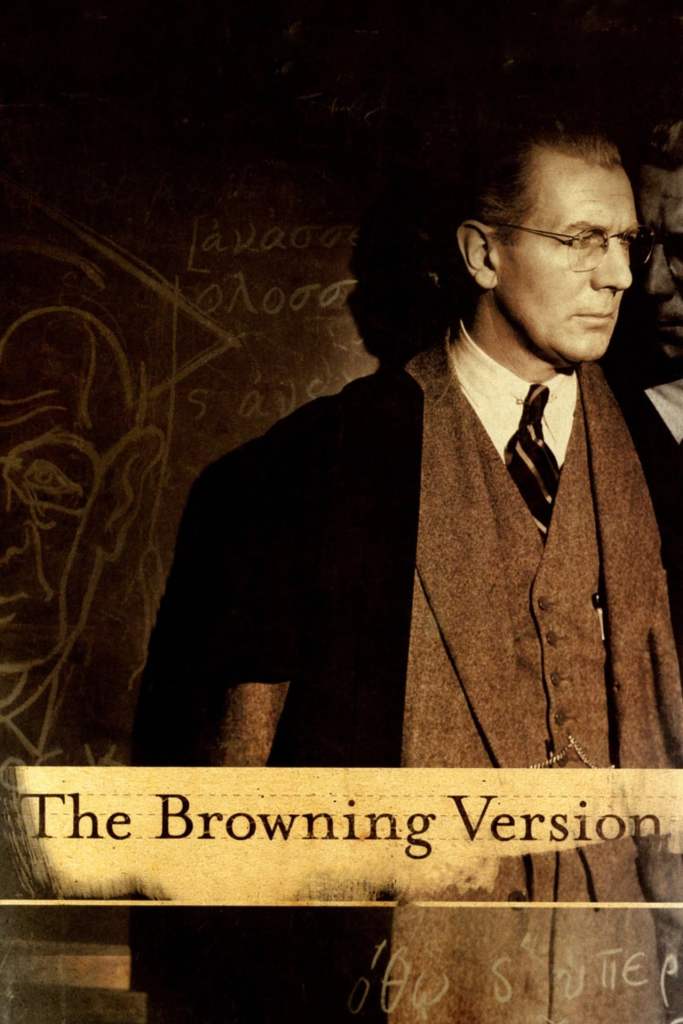
There’s a lot of talk today of nepo babies, but it is far from a new concept. Director Anthony Asquith was the son of the Prime Minister of England, but he did do his best to distance himself from the “family trade” and make his own mark (even if his lineage did open plenty of doors early in his career). After a few well-received silent films and a breakout in Pygmalion, he had a big hit in 1951 with The Browning Version. The film takes place in a boys school in England and follows teacher Andrew Crocker-Harris (played by Michael Redgrave, who won Best Actor at Cannes for the role). Andrew is being forced into retirement, with the school using his failing health an excuse, though we quickly learn it is actually because of his poor popularity. Despised by his wife (who is opening cheating on him, and who he can no longer provide for after the loss of his career), ridiculed by the students, and not well thought-of by the other teachers either, Andrew’s life turned out nothing like he would have thought. At one point in the film he admits he was a bright student with a promising future, but went into teaching to inspire the next generation. He has done anything but, and any hope or inspiration he was displayed is long gone. A totalitarian, he has no sympathy for his students, reprimanding them for any small infraction, and demanding perfection in their work and play. It’s easy to dislike Andrew for his dour attitude towards everyone in his life, both professionally and personally, but the film slowly turns as you realize that, while maybe a product of his own making, it is still a very sad life to live. There is, though, a glimmer of hope near the end of the film, when a student gives Andrew a parting gift that leaves him full of emotion, and the idea that, just maybe, he can be redeemed. You have think that this was a deeply personal film for Asquith to make. With his Prime Minister father and popular socialite mother, and an early film career where he was neck-and-neck with Alfred Hitchcock in the silent film era as two “up and comers,” Asquith’s career obviously never reached the heights that may have been expected of him. I adored this film, and Redgrave’s performance of a man beaten by society and himself is superb. ★★★★★
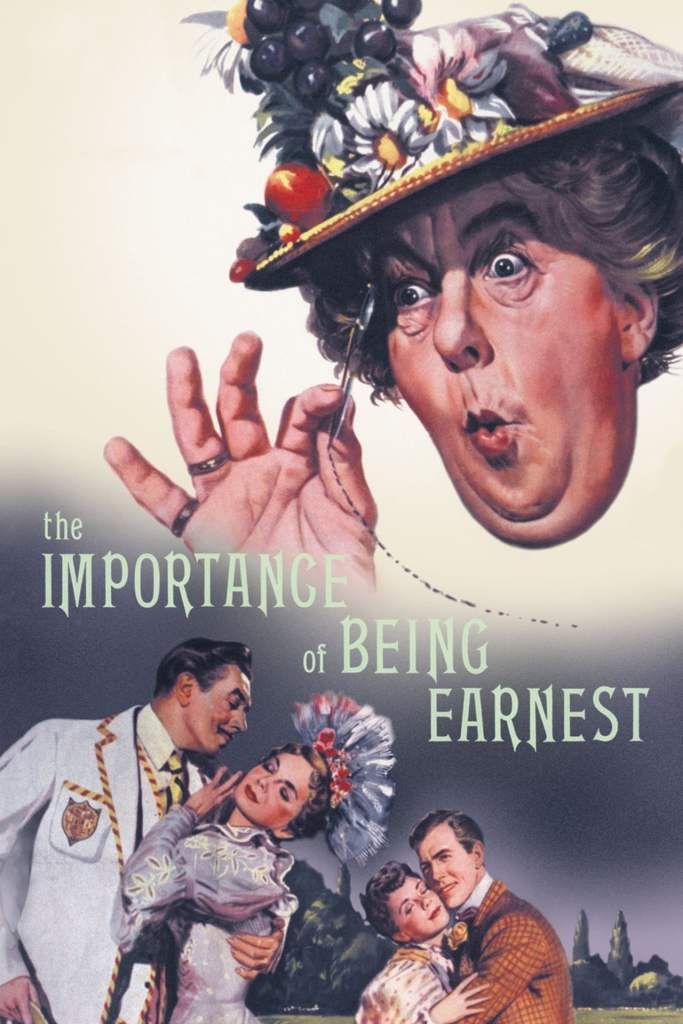
Asquith followed up the next year with The Importance of Being Earnest, based on an Oscar Wilde play. The play was hugely popular but its initial run was cut short, as Wilde was on trial for being a homosexual. They may have silenced Wilde but they didn’t silence his works, and this story has gone on to become one of his most popular. In the opening we are introduced to Jack Worthington and Algernon Moncrieff, two friends and men-about-town in late 19th century London. Jack has an estate in the country and a ward who lives there, Cecily, who is almost of age to be introduced to society. The city-loving Jack couldn’t abide to stay in the country all the time, so long ago he told Cecily that he has a ne’er-do-well brother in the city named Ernest, who he continually has to bail out. In fact, Algernon thought Jack’s name was Ernest, as that is what he goes by when in the city. Algernon admits that he too has an imaginary “friend,” Bunbury, who he uses as an excuse to avoid dinner dates with his oppressive aunt Lady Bracknell. Here comes the twist: Jack (as Ernest) falls in love with Lady Bracknell’s daughter Gwendolen, who loves Jack principally because his name is Ernest (“a refined and dignified name”). Later, Algernon goes to Jack’s country state and pretends to be Jack’s nefarious brother Ernest, and Cecily falls in love with him, also owing partly to that dashing name Ernest. So now we have 2 Ernest’s, neither of which is a real person, and they are all in a big pickle, with the Lady Bracknell wanting to get to the bottom of it before she lets her daughter or nephew marry. This is one of the dialogue-driving plays the likes of which you don’t see much anymore, and the repartee flies fast and furious, so you’ve got to pay attention, but if you do, you’ll find plenty to laugh at. It’s hilarious (especially the scene when Gwendolyn and Cecily meet, each thinking they are engaged to the same man, Ernest, and start to try to one-up each other over lunch). Lady Bracknell is pure comedic gold. A great film. ★★★½
The Ruling Class is a dark comedy released in 1972 and stars the great Peter O’Toole as Jack Gurney. Jack’s father Ralph, Earl of Gurney, holds an important seat in the House of Lords, but Ralph accidentally suffocates himself one night, leaving Jack as heir to the seat. Unfortunately, Jack, a schizophrenic, thinks he is Jesus Christ, or “JC” as he likes to be called. But don’t worry! The family has a plan. Jack’s uncle Charles plans on getting Jack to marry his (Charles’) mistress Grace, getting her pregnant with the next heir of Gurney, and then getting Jack committed to an asylum so that the seat will move over into Charles’ lineage. Plans go awry when Grace actually falls in love with crazy old Jack, and the waters get murkier when Charles’ wife Clare starts sleeping with the psychiatrist overseeing Jack’s condition, in order to further her own plans and ambitions. This film is very funny, with Jack providing plenty of laughs as “JC.” Whenever someone says “Oh my God” and he pops up. Or going to sleep standing upright on a cross he had built in the parlor. Just use your imagination, and ol’ crazy JC will one-up you. I laughed long and hard, even when the film takes a dark turn in the final third, when Jack is “cured” of thinking he is Jesus Christ, only to now think he is Jack the Ripper. A satire on the people in power, it’s good stuff. ★★★½
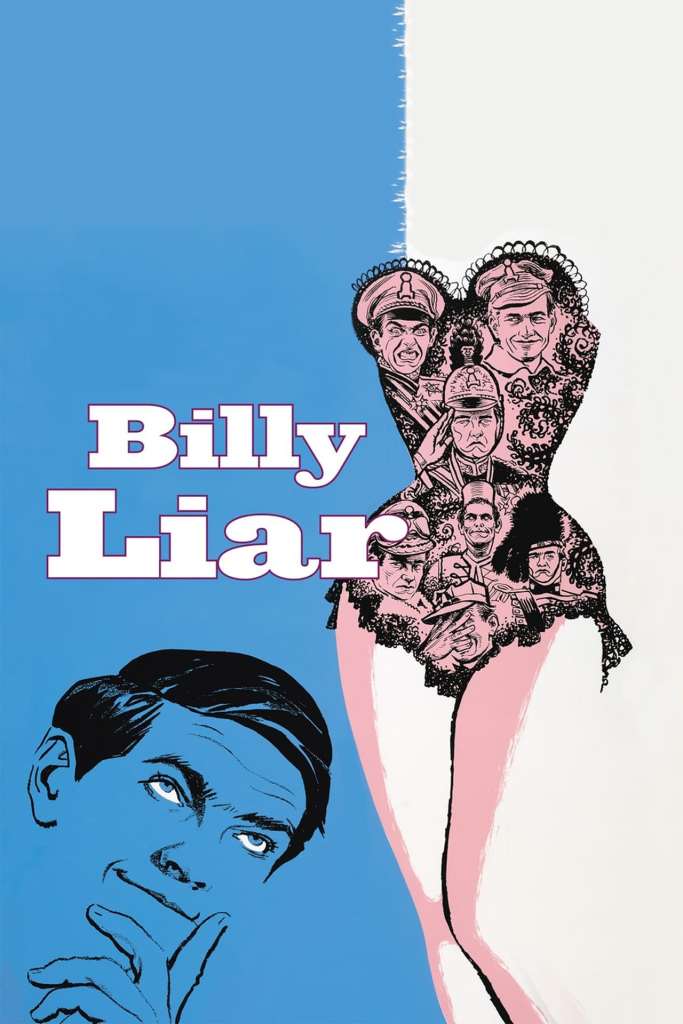
Billy Liar is an early film from celebrated director John Schlesinger, and stars Tom Courtenay and a young Julie Christie in her breakout role. The eponymous Billy is Billy Fisher, a young man living with his parents and grandma in a semi-detached house outside London. Billy lies with every breath that he takes, to his parents, his friends, his boss and coworkers (at a funeral home). He lies because he hates the monotony of it all, and feels stuck in this dreary life. To escape, he daydreams about being a celebrated general of the fictional kingdom Ambrosia, where he gives speeches in front of stadiums full of people cheering his every word. The likeness to Hitler or some other autocrat is not lost on the viewer; in a life where Billy feels he has no power, he dreams about having absolute control over everything. Unfortunately for Billy, his lies are about to catch up with him. He has two girls that he is supposed to be engaged to (he “borrowed the ring back” from one, to give to the other), and he is quitting his job because he has “landed a promising new career in London,” which is definitely not true. For much of the film I was pretty indifferent to Billy’s cause, feeling like his problems are the result of his own actions, but I came around to realizing the impotence he feels in his life by the end, which lends sympathy to his decisions. And when he has a chance to really leave in the end, with a friend willing to go with him for support, will Billy finally make the move? The ending raised this film in my esteem, it was not doing it for me at all before then. ★★★
I usually only blog about movies I’ve never seen before, but everyone has seen Monty Python’s Life of Brian a time or two. However, I hadn’t seen it in 25-30 years, since I was in school anyway, so I got to see it with fresh eyes. The story made waves when it was released in 1979, about a man (Brian) born in a manger next door to Jesus. Talk about drawing the short straw. Nothing goes right for Brian throughout his life. From learning that he is the son of a Roman (he tearily asks his mom if she was raped, and she quips, “Well, yeah, at first…”) to being mistaken as the Messiah, leading to his own crucification in the end, Brian lives a life that would never be confused with inspiring. Nothing is off limits for the Pythons, and the troupe makes fun of just about everything, leading to lots of laughs but also lots of censorship when it came out. Catholics trying to get it banned only made people want to see it more, and certainly gave it cult status early in its release. Today it is considered a true classic and its comedy has stood the test of time. ★★★★½
TV series recently watched: Agatha All Along (series)
Up today are 5 classic films, some old, some not-so-old. It was going to be a set of American films, but the first one I picked ended up being out of Jamaica, so blew that right off the bat. Well worth it though, because it’s a good one! The Harder They Come (1972) stars music legend Jimmy Cliff as down-and-out Ivan, who has recently returned to Kingston. He’d been living in the countryside with his grandmother but she died, so he’s back to his mother’s house, and finding life in the city to be harder than expected. Ivan can’t find work anywhere, and his dreams of being a star singer are dashed because the local record producer reigns over the music scene with an iron fist. Everything Ivan touches goes to shit. All of his goods are stolen upon landing in Kingston. He starts running drugs, but even in a deadly business like that, he is paid peanuts compared to the worth of the goods he is moving. Even at church, the woman he eyes has been hand picked by the preacher as his next partner. When Ivan tries to get his bike fixed, the repairer claims it as his own. Literally, nothing goes right. When he does finally get a song recorded, the record producer realizes it will be a hit, but gives Ivan a take-it-or-leave it offer of $20 for the track. In the end, Ivan gets tangled up in some bad people related to those drug deals, but when the police descend on him, he realizes he has finally found the acclaim he’d been seeking. A great film dealing with the socially downtrodden and the plight of the poor, with a killer soundtrack provided by Cliff and other reggae and rocksteady groups of the day. Extremely popular in Jamaica, it’s fame in the USA helped explode reggae music in the early 70s. ★★★★
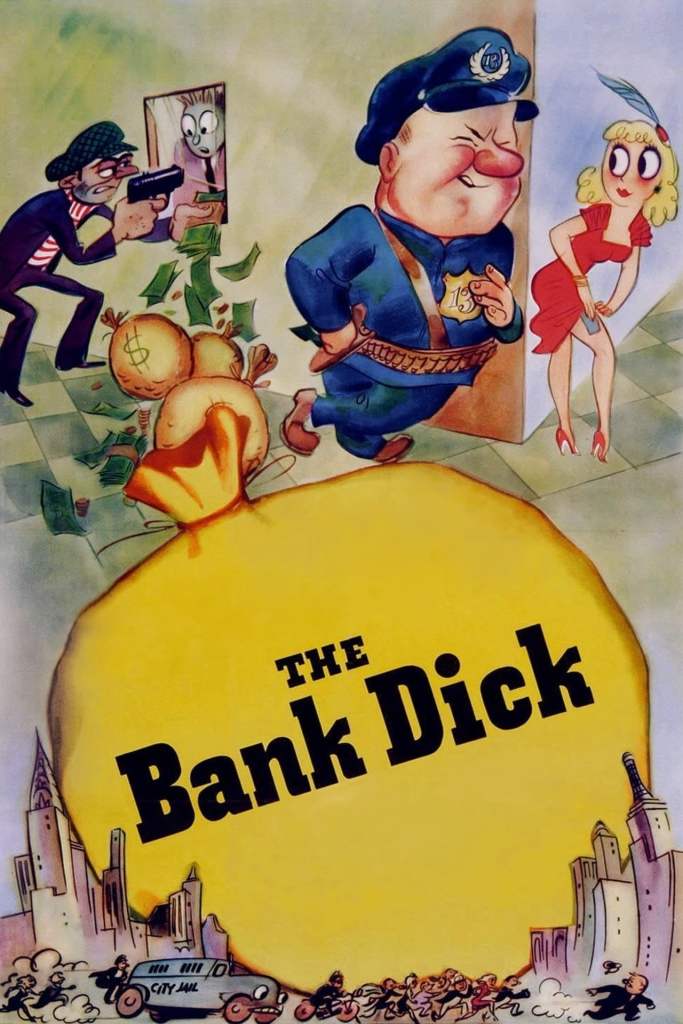
I’ve seen a couple films from “comedic legend” W.C. Fields, but have been very underwhelmed, and this coming from a guy who tends to like old-timey humor. Unfortunately 1940’s The Bank Dick continues that trend; it’s just not funny. Fields plays Egbert Sousé (note the accent mark, but without it, the viewer realizes Egbert is definitely a souse, or drunk), a man whose own family can’t stand him. He spends his days drinking and smoking at the local bar (tended by Shemp Howard of all people, made during his hiatus from the Three Stooges!) and generally not doing anything to contribute to society. That is, until he “accidentally” foils a robbery at the bank. The bank manager offers him a security job on the spot, and Egbert the drunk becomes Egbert the guard. Nothing changes about his life though. The finale deals with Egbert trying to waylay the bank examiner while some funds are missing in a scheme of Egbert’s, just as the bank is getting robbed again. There’s a lot of verbal gags (Fields’ bread and butter) but they have not held up. I can’t say I even chuckled more than a time or two. I laugh hard at the classic Charlie Chaplin films, but this movie is as dry as Egbert is wet. ★½
Unfaithfully Yours is a delightful dark comedy (and by dark, I mean pitch black, with pretty frank depictions of murder) from director Preston Sturges and released in 1948. Rex Harrison plays Alfred, a world-renowned symphony conductor with a young wife, Daphne (Linda Darnell). As many men can be with a beautiful younger wife, Alfred is a bit jealous, and this explodes when he returns from conducting overseas. While away, his brother-in-law August (the great Rudy Vallée) promised to “look after her” in Alfred’s absence, which in August’s terms, means hiring a private investigator to follow her around. The P.I. detailed that Daphne went to Alfred’s secretary Anthony’s hotel room one night, wearing only a nightgown, and was there for 38 minutes. That night, while conducting the orchestra, Alfred fantasizes about 3 scenarios regarding his wife. During the first musical number, a mischievous flighty tune, Alfred envisions the perfect crime, where he murders Daphne but sets it up to look like Anthony did it. In the second, a slower more thought-provoking musical number, Alfred writes Daphne a big check to go live her life without him. In the third, a fiery, tempestuous Tchaikovsky piece, Alfred imagines playing Russian roulette with the two lovers, but ultimately comes out on the bottom. Alfred tries to go with door # 1, but finds that in real life, a murder is a whole lot harder to pull off, to great comedic effect. It’s a rip-roaring, hilarious good time throughout. ★★★★½
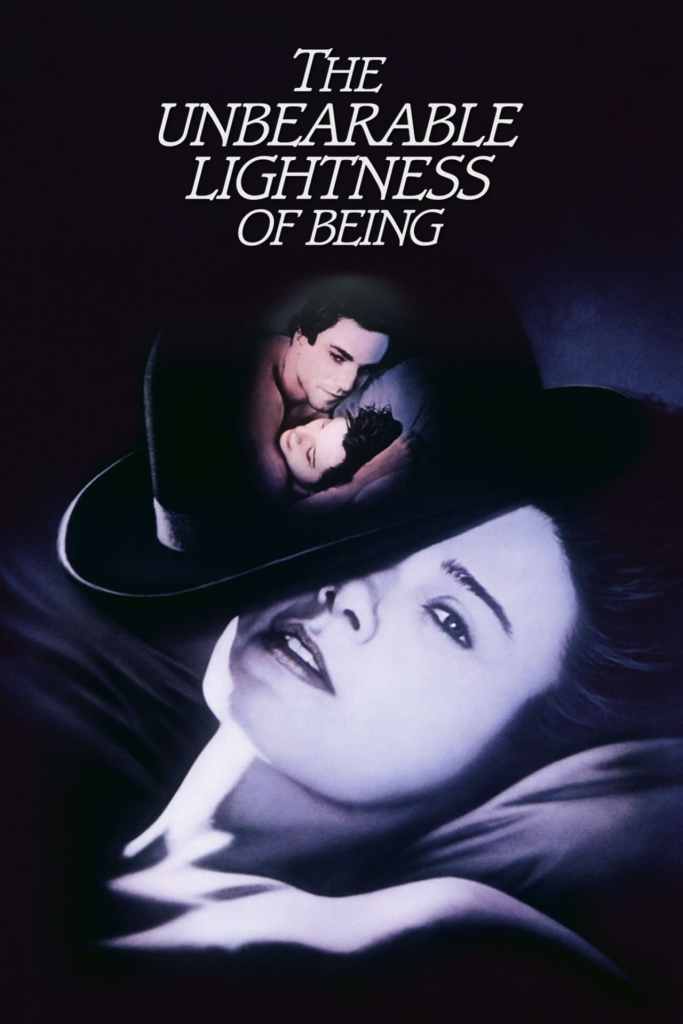
I really want to like The Unbearable Lightness of Being more. It’s good, but I didn’t get “stellar” vibes from it, despite a great cast including younger versions of Juliette Binoche and Daniel Day-Lewis. Released in 1988 and taking place 20 years earlier in Prague, surgeon Tomas is a huge womanizer. Somehow his trademark opening line of “Take your clothes off,” seems to work with just about every woman. He always returns to Sabina though, an artist who seems to “get him” as he puts it. She has an eye for more than just art, and really seems to see Tomas as more than just a philanderer. Tomas may have to find room for another girl though, because he gets swept off his feet one day by the young and beautiful Tereza. A whirlwind relationship leads to marriage, but putting a ring on his finger won’t settle Tomas’s wandering eye. He continues to see Sabina, which initially upsets Tereza until she gets to know the mistress better, and eventually the two become good friends. However, their world is about to crash down. In the dark of night one evening in 1968, Soviet Russia invades Czechoslovakia. Tomas, being a well known surgeon with a highly valued opinion, has been critical of the communist government to this point, so for safety, he and Tereza flee to Switzerland. If Tereza thinks this will be a fresh start, those hopes are dashed when Tomas starts his tomcat ways again. She leaves him, returning to Prague despite knowing the restrictions she’ll face there. Tomas, despite his womanizing ways, truly does love Tereza, and follows her there, knowing the repercussions he could face. There’s a lot going on here and much of it is really good, but the film is hurt by long, seemingly unneeded erotic scenes between Tereza and Sabina, Sabina and her short-time boyfriend, etc. I don’t see how any of it adds to the plot, and the film could have been better served by cutting down on its long (3 hour) runtime. ★★★
Director Gus Van Sant is best known for Drugstore Cowboy, My Own Private Idaho, and my personal favorite, Good Will Hunting, but before all those hits came his first film, 1988’s Mala Noche. I’ve seen a lot of “first films” and they often aren’t great. Usually low budget affairs with no-name actors (and this film has both measuring sticks), a director’s first movie is usually just a stepping stone. This movie, though, is quite good, and I was surprised how engrossed into it I was by the end. The protagonist is a gay convenience store clerk named Walt. Walt is completely enamored by teenage Mexican immigrant Johnny, but Johnny isn’t having it. Walt tries every trick in the book, and admits to the viewer via narration that he is aware that he has all the power as a privileged white man trying to woo an illegal immigrant who has no money and a real fear of being deported if apprehended, but Walt continues to try to beguile, threaten, or cajole Johnny into sleeping with him. Johnny continually rebuffs him, leaving Walt “no other option” but to sleep with Johnny’s friend Roberto instead, theorizing it is “as close as he’s going to get.” Roberto doesn’t really come off as gay (neither is Johnny, but Walt doesn’t care), always wanting to be “on top” and sleep with the lights off, but he’ll take Walt’s money and a place to sleep at night. While Walt and Roberto are in this relationship, Walt is still trying to woo Johnny, until one day Johnny goes missing. Rumors abound that he went on vacation or was arrested and deported, but no one knows. The film leads to an explosive ending. When the movie started I didn’t think I’d get into it, as it gives off creepster vibes with the older Walt preying on teenage immigrants, but Walt convinces himself (and in a way, us too) that he is aware how the situation looks, but insists it is anything but. Walt is really in love with Johnny, or at least in lust, and cannot think about anything else. And Roberto is exploiting Walt as much as Walt is trying to exploit Johnny. Shot on a shoestring budget ($25k) it has the feel of a film from an established director who knows what he wants to show, not from a newcomer. ★★★★
TV series recently watched: Kite Man (season 1), The Walking Dead: Daryl Dixon (season 2), Only Murders in the Building (season 4)






























 Jons Movie Takes