Quick takes on Sentimental Value and other films

I usually don’t review the shows I watch, but I think Hal & Harper (an 8 episode miniseries) is worth saying a few things about. Written and directed by (and starring) Indie film darling Cooper Raiff, it follows the lives of the eponymous siblings (Raiff is Hal, Lili Reinhart is his 2-year-older sister Harper). Their story unfolds in an unhurried, sublimely emotional way. We know early on that they lost their mother (for a long time, we don’t know how or why) at an early age, when Hal was going into first grade and Harper into 3rd. They are thus raised by their newly single father, an unnamed “Dad,” played by Mark Ruffalo. We initially don’t think much of Dad’s fatherly skills, as he is curt with the kids and doesn’t exhibit much in the way of parenting knowledge (in present day, he apologizes to his adult kids for making them grow up too fast, and his comment leads to the adult actors playing their younger selves in a very Indie way), however, you do learn as subsequent episodes continue that Dad did the best with what he had, as he was fighting his own depression and the loss of his loving wife. In the present day, Dad is having a baby with his (much younger) girlfriend and has told Hal and Harper that he is selling their childhood home, so that brings up all kinds of emotions to the twenty-something adults. These two, with their lifetime baggage of fearing the loss of loved ones, have never been able to find lasting relationships with others and have become very codependent on each other, with Hal often sleeping on Harper’s couch and each turning to each other whenever they dump their newest partner (often in fear that the relationship was getting “too real”). Wonderfully heartfelt series, you’ll laugh and cry (I did both within seconds of each other in the last episode), and told so extremely well. Highly recommended, and probably one of those series you’ll return to again and again for its emotional depth. ★★★★★

The Wrecking Crew is one of your typical straight-to-streaming action films, albeit with a couple bonafide stars in the leads (Jason Momoa and Dave Bautista). Name recognition notwithstanding, there’s a reason this one was straight-to-streaming. James and Jonny are two estranged brothers and their father, Walter, was recently killed via a hit-and-run in their home state of Hawaii. James (Bautista) lives there still, but Jonny (Momoa) left years ago and has had little contact with either his brother or father in years. He initially isn’t even going back for the funeral, but when he is attacked in his home in Oklahoma by some Japanese Yakuza thugs, seeking a package he may have purportedly received from Walter before his death, Jonny suspects there’s more to this than meets the eye. He heads to Hawaii and starts digging into his dad’s death, while James does the same. Lots of action ensues, which is the best part of the movie (including a pretty dynamic, if completely implausible, bridge scene where they are shot at by a flying-over helicopter). The mystery behind Walter’s death isn’t all that intriguing, and outside of the action scenes, the movie is pretty boring, though there are some good one-liners between the fighting brothers. ★★½

Predator: Badlands is the newest in the franchise, though can be watched as a stand-alone film too. Dek is a runt in his Yautja (the predator species) clan, and in a society that favors strength, he should have been killed as a child. Still, his older brother has trained him to become a decent fighter, to the point that Dek wants to earn his right to carry the predator’s cloaking device. When he declares his intentions though, the brothers’ father kills the eldest for insolence, while Dek gets away before he too can be murdered. Dek finds himself on the planet Genna, a hostile world where every living creature, including the plant life, is out to kill you. Dek is on the hunt for the monstrous Kalisk, a beast so deadly that even Dek’s clan is afraid of it, since that trophy will finally earn him some respect. On his hunt, Dek picks up to would-be friends: an android synth named Thia (cue the Alien franchise crossovers, as she’s on the planet on a mission from Weyland-Yutani), and a local monkey-like creature that Thia names Bud. Together, the trio hunt the Kalisk, even as Thea’s former team of deadly synths also seek the same prize. Writer/director Dan Trachtenberg, who also helmed Prey and Predator: Killer of Killers, has this franchise on solid footing again, can’t wait to see where they take it next. ★★★★

Sentimental Value is the latest from Norwegian director Joachim Trier, and it’s been getting plenty of acclaim in the last year. It stars Stellan Skarsgård (showing no signs of slowing down) as Gustav, a one-time acclaimed director whose drinking has derailed his career, and he’s having a hard time getting movies financed these days. He’s written a new one though, that he thinks has potential to be great, if he can get it made. Semi-biographical, it is about a woman who commits suicide, as Gustav’s mother herself did when he was a child of 7. Gustav wants his daughter Nora, herself an acclaimed stage actress, to play the lead role, but she is not interested. Nora and her sister Agnes are estranged from their father after he walked out on them and their mother when they were little girls, and he always seemed to put his career before being a father. It is their mother’s recent death that brought the family back together, and stirred up all kinds of feelings. As luck would have it, a film restrospective about Gustav’s films has intrigued American actress Rachel Kemp (Elle Fanning, proving that she can do it all; she was in the above Predator film as Thia). Rachel is an up-and-coming star, and she is chomping at the bit for a serious dramatic role, and thinks Gustav’s new film is just the ticket. She signs on, which gets Netflix interested in financially backing the picture, and so they begin. But there is still family healing to be done, and the result is movie magic. Be patient with this movie. Absorb every word, every nuanced movement by the actors. It builds without you realizing it, until a powerful conclusion. One of the best movies I’ve seen in a long time. ★★★★★

From wiki: As-Sirāt is, according to Islam, the bridge over which every person must pass on the Yawm al-Qiyamah (“Day of Resurrection”) in order to enter Jannah (“Paradise”). Whether you want to take the film Sirāt as narrative or allegory, it is definitely Luis’s journey to make. At the beginning of the movie, he and his son Esteban are searching the deserts of Morocco for news of missing daughter Mar. A large group of Bohemian-esques are throwing a rave in the middle of the desert, and Luis is there looking for Mar. After a couple days, soldiers arrive to break up the party, telling Europeans that they must go home, as war is breaking out in the area. A group of free-thinkers break off from the others and head back into the desert, and Luis gives chase, hoping they’ll lead him to his daughter. They tell Luis that there’s to be another rave soon, and let Luis and Esteban tag along. Islam says As-Sirāt is thinner than a strand of hair and as sharp as the sharpest knife, and danger lies everywhere for Luis on his path. He will face hardship and anguish, with no guarantee of paradise in the end. While I was watching the movie, and even as it neared its end, I was thinking, “What the hell even is this?” But there’s no denying its emotional punch, whether you want to take it as allegory or fact, of a man going through hell to reach (maybe?) something new on the other side. Awesome soundtrack too, that keeps the tension ratcheted up throughout. ★★★½

  • TV series recently watched: A Knight of the Seven Kingdoms (season 1), Breaking Bad (season 5)
  • Book currently reading: Paul of Dune by Herbert & Anderson 

Quick takes on 5 Kelly Reichart films

After recently watching her newest, The Mastermind, and enjoying 2 others I’d previously seen (First Cow and Certain Women) I decided to dive into more. A running theme in her films tends to be a slower pace, leading critics to call her masterful and viewers (on RT) to call her boring. I tend to like slower paces, so I think I’m in for a treat today.

I think we’ve all had those times where we try to revisit or relive a time or place from our past, some moment that was special, and it’s never the same the second time around, because you are a different person now than you were then. That’s at the crux of Old Joy. Mark is married and getting ready to have a baby when he gets a call from old friend Kurt, asking if he wants to go camp out for a night or two and visit some hot springs in the Cascades. While Mark has settled down, Kurt is still living the hippie lifestyle of their youth, in a state of near-homelessness, crashing on couches and very carefree. Against his wife’s apprehensions, Mark heads out with Kurt. It’s a poignant film that can be summed up in a scene that takes place about halfway through, when the two friends are lost and camp down overnight. Kurt is talking about a (probably drug-induced) theory on the universe he once had, and Mark asks, “Did you tell *them* about your theory?” It’s a question out of left field and takes Kurt by surprise. Mark seems to be referencing Kurt’s time in a mental hospital, and Kurt is obviously taken aback, thinking that Mark sees him the same way that everyone sees him these days. Kurt can only shake his head at the gulf that has opened between himself and his old friend, and finally says something along the lines that he wishes they could still be friends like the old days. When Mark replies that of course they are still friends, Kurt (and we viewers) see that time has moved on. Very melancholic movie, but in a good way, if that makes sense. The kind of feeling you get when you look back fondly at a good memory, enjoying it for what it was, but a little sad that you can’t go back to it. ★★★★★

Wendy & Lucy stars Michelle Williams (in the first of many collaborations between the actor and director) as Wendy, a homeless young woman trying to get to Alaska from Indiana, pursing a job at a cannery. She’s made it to Oregon with her trusty dog Lucy, but it’s here where she hits a wall. She gets a warning from a store security guard for sleeping in her car on the private parking lot, and then her car won’t start. While waiting for the mechanic to open, she goes to a local grocery store, ties up Lucy in front, and then gets nabbed shoplifting dog food. After being booked and released at the jail, she makes her way back to the grocery store hours later, only to find Lucy is gone. The kind security guard from earlier lets Wendy use his cell phone to keep tabs with the local dog rescue, in hopes that Lucy will turn up, but in the meantime she gets bad news from the mechanic: the repairs will be far more money than she has left. Wendy is out of options, at the very end of the road. It’s a bleak movie about a woman out of options, powerfully acted by Williams, and emotionally taught. ★★★★

Meek’s Cutoff is how Reichardt does westerns, and is loosely based on a fateful voyage along the Oregon Trail in 1845. Led by Stephen Meek (Bruce Greenwood), a wagon train of a trio of families has left the traditional Trail for a cutoff, or “shortcut,” that Meek hopes will shave some time off. However, the trip takes the group through the Oregon High Desert, and the lack of water becomes a real problem very quickly. To compound matters, the travelers notice an American Indian watching over their progress from time to time. Some of the wives worry they’ll all end up dead from thirst or Indian attack, while Meek tries to waylay their fears, stating he knows the area and he’ll get them through to the other side, but as the miles and days of endless parched earth compile, death seems pretty certain. When the trailing Indian is captured one day, Meek wants to kill him immediately, but some, in particular Mrs Emily Tetherow (Michelle Williams) argue to keep him alive, as he must know where water is. This movie doesn’t have a lot of answers and ends on a very obtuse note, but is expertly crafted to create that sense of real, growing danger with no end in sight. Great cast too, including Will Patton, Paul Danoe, and Zoe Kazan. ★★★

Night Moves brings another great cast (Jesse Eisenberg, Dakota Fanning, and Peter Sarsgaard; I’m always amazed that auteur directors can get big names to do these low budget films) together for a lowkey thriller. Josh and Dena are friends who share common ideals about the environment and sustainability, and view a local dam as a real threat to the area’s ecosystem. Thus, they want to blow it up. They bring in an ex-Marine, Harmon, with knowledge of such things, and together hatch a plot. The first half of the film is blowing up the dam. With fake ID in hand, Dena buys 500 lbs of fertilizer and Josh procures a boat. The actual act goes off more or less without a hitch, but the next day, they learn from the news that a camper who was in the area has gone missing and is presumed dead. Dena was determined from the beginning that no one would be hurt, and she is wracked with guilt. Josh and Harmon start to wonder if she’ll go to the police and turn them all in, so something needs to be done (in sinister voice). There’s slow burn, and then there’s Night Moves. Using the term thriller is a bit misleading as the tension is light at best, and when there is action, it mostly takes place off camera, but I was still completely engrossed at this trio, who think they are doing a good thing, but who obviously have no idea the ramifications of their actions and who are in way over their heads. ★★★½

After Night Moves came Certain Women (2016) and First Cow (2019), but after that was Showing Up in 2022, her penultimate film before The Mastermind. Michelle Williams is back, this time as an artist/sculptor named Lizzy. She works in the offices of an art school in Oregon, while also working on her own art in the evenings. Lizzy is prepping for a showing of her latest works, but the world seems bent on slowing her down. Her landlord is a fellow artist who doesn’t seem to value Lizzy’s time (and is a terrible landlord to boot), and then her cat maims a pigeon one night. Lizzy throws the bird out the window, but of course the landlord finds it and starts to nurse it back to health, only to ditch it on Lizzy in the end anyway. Lizzy is also dealing with a brother with mental health issues and divorced parents who bicker over anything when they run into each other. As Lizzy’s show nears, she starts to wonder if anyone will attend, even her own family. And that’s it, that’s the movie. There isn’t really a plot per se, it’s just the normal, everyday machinations of a mundane life. Williams is nearly unrecognizable as a slouching, disheveled woman, the kind of person who disappears in a crowd and isn’t noticed. I didn’t connect with this movie at all, I just get what it was trying to say. The rare dud from this director. ★½

  • TV series recently watched: Girl Taken (series), Fallout (season 2), Hal & Harper (season 1), The Artful Dodger (season 2), Lost (season 2)
  • Book currently reading: Paul of Dune by Herbert & Anderson

A bleak future painted with laughs in Good Luck, Have Fun, Don’t Die

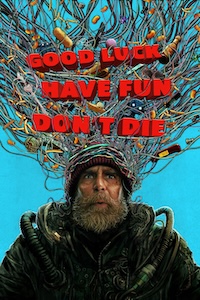
Good Luck, Have Fun, Don’t Die intrigued me the first time I saw it’s trailer, and when a friend said he wanted to see it because he liked Sam Rockwell (I didn’t even realize it was Sam in the trailer, he’s all done up), I knew I was in for a treat. The premise is thus: a crazy-eyed man from the future (Rockwell as an unnamed character) walks into a diner one night and proclaims he is there to save the world. He is convinced there is the right combination of heroes in this diner, but that he has tried 116 times so far to find the right group, and they haven’t succeeded yet. As crazy as it sounds, he doesn’t seem to be making it up, because he knows everyone in the diner and some personal things about them too, in a Groundhog Day sort of way. It’s all a pretty hilarious game of finding volunteers, When he finally has his ragtag group for this attempt, they are ready to begin.

The man tells the group that they must work their way across town to a 9-year-old who is building an A.I. The group scoffs, saying isn’t that a thing already, but the man says that this particular A.I. will grow to control social media and thus people’s minds. People get so absorbed in their phones that they stop doing their jobs, and half the world’s population will die off within 50 years from failing systems and lack of food. It’s bleak, but the man knows they can stop it from coming. Viewers may think it might be too late, as people are already absorbed in their phones constantly as the movie goes along (one of the man’s volunteers, a teacher played by Michael Pena, has recently had a run-in with smartphone-obsessed students at school who seem to be brainwashed into a zombie-like mob). The team’s leader uses his knowledge from past attempts to guide them across town, but the hardest part awaits when they finally get to the kid’s house, as he has never made it inside. It seems everything in the world is trying to stop them.

The film’s laughs come a mile-a-minute, which does drown out some of the tension in the final act, but I still had a great time. Rockwell is perfect as the crazy (yet somehow sane?) future figure with nothing to lose, and there’s some great twists here and there. It’s also the kind of comedy that has a high re-watchability factor, and that always wins points in my book. ★★★½

Crime 101 breaks the safe but no molds

It’s rare that my wife wants to see a thriller in theaters, but Crime 101 stars Chris Hemsworth, so I’m sure that’s what changed her mind on this one. He plays a high-end jewelry thief named Mike Davis. Mike’s MO is hitting couriers who transport jewels from one location to another in the LA area, and he’s disciplined enough that he’s been doing it awhile without leaving any real clues for the police to follow. The lead investigator for some time has been Lou (Mark Ruffalo), who knows they are looking for a thief who plans every heist down the most minute detail, but Lou can never seem to get any closer to fingering a suspect.

On his most recent job, Mike is grazed by a bullet which does leave a spec of blood in the otherwise completely clean getaway car, but Mike goes about his business in hopes that it won’t be enough. He has other problems, as his planning partner (an old Nick Nolte) doesn’t care for Mike’s penchant for choosing safe jobs where no one will get hurt, and doesn’t care if they were to “crack a few eggs” in order to get the jewels. When Mike steps away from the next job due to too much risk, the old man hires a thug, Ormon (Barry Keoghan), to do the job anyway. Ormon has no such qualms about hurting people, and he beats a few heads before making off with the bag of jewels and cash. Afterwards, Ormon is directed to tail Mike to learn about the next job Mike is planning, and then to take over to elbow Mike out of the way. The next job Mike has in mind: convincing a frustrated luxury insurance agent (Halle Berry) to betray her company and give up some rich prick who’d be ripe for getting some jewelry stolen. While all this is going on, Mike is getting to know a woman and falling in love, something he’s kept himself from doing all these years. He must move past his emotional hangups even as his professional life is facing hardship.

The tense moments in this movie are very good, with edge-of-seat thrills. Keoghan is always great and he plays a fantastic bad guy. Hemsworth is purposefully emotionally detached, as Mike comes from a poor, rough upbringing and possibly is on the autistic spectrum too. The only problem with the film is there’s too much unsaid and undone. It’s longer than 2 hours but it feels like there were subplots left unexplored, and just about all of the characters are one-dimensional but could have been more interesting with a little more fleshing out. It’s the kind of thing that would have worked better as a 5 or 6 episode miniseries than a feature film. Still, I was entertained, and anytime I go to the theater, that’s what I’m looking for. ★★★

Quick takes on If I Had Legs… and other films

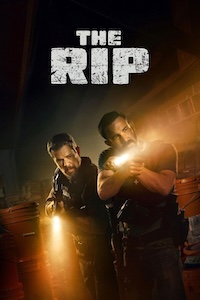
The Rip is one of those straight-to-“video” action films that have thrived in the streaming era. It stars Matt Damon and Ben Affleck as members of a narcotics team who bust up drug houses. Sometimes they find drugs or guns, but usually they find money, so it is a team that is always under suspicion from internal affairs, on the lookout for dirty cops pocketing money. The suspicion is heightened lately too, after one of the team’s own is murdered in what may be an inside job, and the feds have no suspects The day after, the team gets a tip about a drug house where there is $300k on hand, a big haul. When they arrive, they instead find $20 million. Matt and Ben’s characters, the two leads, know they are in serious trouble, from inside and out, because that kind of money will tempt anyone, and the criminals won’t let that kind of money walk out the door without trying to get it back. It leads to these two best friends to start second-guessing each other and everyone in their team. It’s a gritty action film that keeps you on your toes, even if there are a couple too many plot twists; it keeps going “Clue-style” in getting the viewer to suspect one person, and then flipping it on you to suspect someone else. Still, not a bad way to spend a couple hours in mindless gunfights and tension. ★★★

To a Land Unknown is another immigrant movie (lot of those lately) and a rather straight-forward one at that, though it is presented well. Chatila and Reda are two Palestinians who’ve been trying to raise enough money to buy fake passports to Germany; thus far they’ve been stuck in Greece, living in an abandoned warehouse with a bunch of other homeless immigrants. They just about have enough money when Reda relapses to his heroine addiction and blows it all. Chatila wants to say “enough is enough” and go it alone, but he cannot abandon his lifelong friend Reda, who was raised as his brother. Thus, Chatila will do whatever it takes to get them out of Greece together. His first scheme involves helping a solo teen traveler make the trip to Italy, hoping for a payment from the boy’s aunt awaiting him there, but after the trip, Chatila never hears back from them. He then settles on conning other Palestinians out of their voyage money, but this is a much more dangerous proposition, with some violent, powerful men who may not look kindly on Chatila’s machinations. It’s a tense movie, especially in the final act as everything goes wrong and Chatila tries to keep his head above water. Not a complex movie, and the acting is hit-or-miss from a bunch of unknowns, but it is a powerful and timely story. ★★★½

Die My Love is the latest from director Lynne Ramsay, who had a big hit in her first film Ratcatcher (been a long time since I saw it, but I remember it’s powerful story), but who’s failed to match it since. In this one, Jackson (Robert Pattinson) and his pregnant girlfriend Grace (Jennifer Lawrence) move in together to an abandoned old house left to Jackson by his recently deceased uncle. After the baby’s birth, Grace’s behavior grows increasingly erratic, and sometimes violent; she’s definitely high on the Hot-Crazy Matrix. She’ll destroy the bathroom in a fit of rage, or shoot the family dog with a shotgun. Jackson’s mom Pam (Sissy Spacek) tries to comfort Grace by sharing stories of the difficulties new mothers face, with all the stresses and anxieties that come with it, but it doesn’t seem to get through to Grace. Sometimes she’ll have “good days” when things go well and everyone is happy, but most days are a chaotic mess. Jackson tries to save their relationship by marriage, but on their wedding night, Grace makes an advance to a worker at the hotel, crashes her head into a mirror in the bathroom, and then walks home barefoot. Jackson has her committed to a hospital, but that is a short-term fix, and she snaps at a welcome-home party shortly after. This film was a lot like Ramsay’s last, You Were Never Really Here, in that the acting by the lead (Jennifer Lawrence here, Joaquin Phoenix in the other) is absolutely phenomenal and award-worthy, but the movie by itself is just so-so. It is definitely worth watching for Lawrence’s performance, but you probably don’t need to watch it more than once. ★★★
If I Had Legs I’d Kick You is the story of a woman who has no power over where her life is going, despite her best efforts. Linda (Rose Byrne, in a career-defining role) is caring for her young daughter alone, as her husband, a commercial pilot, is off for work for an extended stretch. He picked a bad time to be away, as calamity after calamity keeps hitting Linda right between the eyes. Their daughter has a feeding tube because she’s been refusing to eat, and Linda has been told in no uncertain terms that the girl needs get up to 50 pounds within a couple weeks or the hospital will look at new (very ominous-sounding) measures. Then, the roof of their apartment caves in after a water leak in the apartment above, so Linda and the little girl have to move into a shabby motel while repairs are made. Of course, the hired contractor disappears after a couple days, leaving them in a lurch. At work, where Linda is a therapist, she is bombarded by patient after patient, each with a worse story than the one before, until one even abandons a baby with Linda after a particularly rough therapy session. To top things off, everyone Linda comes in contact with seems to have it out for her, giving her shit left and right. As the movie progresses, she is looking progressively haggard and run-down, as each day brings new challenges that never let up. The movie paints a great portrait of a woman who is expected to balance everything in life but who gets absolutely no help from anyone, but the film also does a good job of not always giving Linda a free pass for her behaviors; sometimes she deserves the ills that come her way (like when she continually leaves her daughter alone in the motel room). Excellent performance by Byrne too. ★★★★

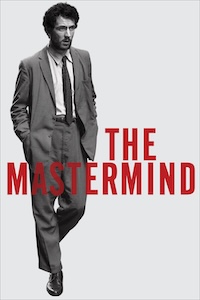
The Mastermind is the latest from critics’ darling indie director Kelly Reichardt, and is “the other” film (with a much smaller budget) that Josh O’Connor did last year, the other being his Rian Johnson smash in the Knives Out series. Taking place in 1970, he plays JB, an unemployed carpenter struggling to find a job. He has an appreciation for art, having studied it a bit in college, and he and his wife and kids frequent the local art museum. One day, he steals a small trinket on display there, and his wife looks the other way as they enjoy their little thrill of “being bad,” but it gives JB the nugget of an idea. He brings in two buddies to his plan to rob the museum of 4 high profile and valuable paintings, but the job goes sideways from the very beginning. One of the friends bails out at the last minute, forcing JB to bring in a newcomer, a two-bit criminal who shows up with a gun. While the heist does go off without (much of a) hitch, the criminal newcomer is nabbed shortly after while trying to rob a bank, and fingers JB as “the mastermind” behind the art heist. Police knock on his door to question him, and it is only his ties to his father, a prominent local judge, that keep them from arresting him on the spot. JB flees immediately, first to some friends out of town, and then on to whatever comes next. The movie has a great jazzy soundtrack that feels like it is moving the plot along even in slower moments of the film, and adds tension to JB’s plight. And despite being a crook, you really root for him, a seemingly good guy just trying to get ahead. Taking place in 1970 against the backdrop of the anti-war efforts and a down economy, there’s a lot of parallels events of the last few years too. ★★★½

Quick takes on 5 John Waters films

Every now and then, you just got to get down and dirty, and it doesn’t get much dirtier than the films of John Waters. Especially in his earlier films, no one raced to the bottom of the barrel faster (or more completely), with nothing sacred or off limits. His second film, 1970’s Multiple Maniacs, starred his muse Divine as Lady Divine, the owner of a traveling freak show called The Cavalcade of Perversion. And perverse it is, featuring acts like “the puke eater,” someone licking a bicycle seat, a heroine addict thrashing around in the in throes of withdrawal, etc. The fiendish acts get people in the door, after which Divine goes on stage to rob them, but this time, she’s tired of robbing and shoots and kills one in the crowd. Divine and her troupe run for it, but not before a fan grabs Divine’s lover, Mr David, and begs to be in the show. Those two start an affair, which eventually leads Divine to a jealous rage. But not before she is raped by two glue-sniffers in an alley, and later has lesbian sex in a church. It’s crazy, off-the-wall, completely absurd, vile, and in that last scene, crudely blasphemous, but at the end of the day, it is engaging and grossly funny. I don’t know if entertaining is the right word, but it is certainly memorable. There’s a lot of trashy films out there, but I’m not sure anyone purposefully made trash like John Waters. ★★★

Divine and the rest of Waters’ acting troupe, known as the Dreamlanders, returned for 1972’s Pink Flamingos. With more than double the budget of the last film (up to a whopping $12,000!) it does have a more polished look. At least, it didn’t look like it was shot in a day, but still. Divine is a career criminal living in a trailer outside Baltimore, there with her son and simple-minded mother, who has a fetish for eggs. Divine loves the tabloid press which calls her “the filthiest person alive.” However, married couple Connie and Raymond Marble are hoping to usurp that title. The Marbles kidnap young women, chain them in the basement (very Silent of the Lambs-esque, I can see the obvious inspiration there), and have their servant impregnate them. When babies are born, the couple sells them to lesbian couples, and when a mother dies in childbirth, the body is discarded and she is replaced with another. To dig up dirt on Divine, the Marbles send a spy to have sex with her son Crackers, who only gets off when live chickens are involved. When Divine gets wind of the Marbles and their scheme, she goes there to kill them, but when they aren’t home, she settles for freeing the girls in the basement and leaves, though not before having incest sex with her son on the couch. Finally Divine does catch the Marbles, calling the tabloid press out to witness their mock trial, charging them with first-degree stupidity and being assholes. Capital punishment, of course, ensues. It’s gross, it’s perverted, and unlike the first film, isn’t nearly as funny. I’ll watch anything once, but not going to this one again in the future. That being said, it did launch Waters’ career and became a hit at midnight movie screenings. In 2021 it was even selected for inclusion to the Library of Congress’ National Film Registry for its “cultural, historical, and aesthetic contribution.” Will wonders never cease. ★★

The vileness is turned down (just a little) and the comedy is dialed up for 1974’s Female Trouble. Divine plays Dawn Davenport, and the movie follows her life from a teen in 1960 to an adult in the mid-70s. Running away from home because her parents didn’t get her the cha-cha heels she wanted for Christmas, Dawn is raped outside of town, gives birth to a girl she names Taffy, and ends up a waitress by day and a prostitute by night. Later, as an adult, she falls in love with a young man named Gater, who lives nearby with his Aunt Ida (Aunt Ida is pretty hilarious; she is distraught that her nephew is straight and bemoans that he’ll have a boring life unless he “turns queer.” She keeps trying to set him up with guys throughout the film). Dawn gets in good with the owners of a local beauty salon who extol her looks, but after an irate Aunt Ida throws acid on her face, Dawn is left disfigured. Amazingly, the beauty salon owners say she looks even better know, and shower her with money and gifts as long as she continues to pose for their fetish photography. Eventually Dawn is brought down after murdering some people in a crowd, and the salon owners turn against her during testimony. There’s a ton of laugh-out-loud one-liners in this film, even if I can’t repeat most of them in polite society! It’s toned down quite a bit from the above 2 films, though still plenty crass in spots. Jokes about child abuse and abortion? Nothing is off the table. ★★★½

John Waters continued moving (ever-so-slightly) mainstream with 1981’s Polyester, though not as mainstream as the opening shots of suburban America would have you think. Divine plays Francine Fishpaw, a devout, pious homemaker, who hates her husband’s, Elmer’s, career of running an X-rated theater in town. Their two kids are kind of a mess too. Daughter Lu-Lu is sleeping around (announcing one day that she is pregnant, much to the ire of the God-fearing Francine), and son Dexter is secretly the area’s notorious “foot stomper,” a delinquent who’s been going around stomping on women’s feet due to his foot fetish, and gaining lots of news coverage because of it. Francine’s mom is also a cocaine addict who’s been stealing from her. It’s a funny little picture of a seemingly happy suburban family but with obvious problems under the surface. It comes to a head when Elmer leaves Francine for his secretary, sending Francine on an alcoholic drinking binge, and confronting those problems in her life. Sometimes those problems will be confronted with guns. Gonzo film, with plenty of bizarre funny moments but unfortunately lots of down time too. ★★½

Waters most famous film is 1988’s Hairspray, the inspiration for the popular musical that came later. It stars a young Ricki Lake as Tracy Turnblad, a dance-obsessed “pleasantly plump” teen with marvelously big hair in Baltimore. She’s a huge fan of The Corny Collins Show, a local teen dance show, the kind of which was so popular in the 1960s. When she and her friend Penny Pingleton sneak out to a record hop one night, they get noticed by Corny Collins who invites Tracy out to audition for his show. Tracy’s high energy dance style is a hit with the fans, but she becomes a target for Amber Von Tussle, who until now has been the center of attention on the dance show. Amber brings out the fat jokes, but they fall on deaf ears as Tracy’s popularity continues to bloom. With her popularity up, Tracy uses the opportunity to speak out for ending the segregated dance shows, and to integrate them so she and all her friends can dance together. The movie is funny in spots, but without any of the outlandish crude humor of Waters’ earlier films. Unfortunately I’m starting to think that the gross jokes, no matter how vulgar, is what Waters excelled at. Neither of the last 2 movies were as entertaining as the earlier, more raw stuff. Good cast in this one though, with Jerry Stiller as Tracy’s dad and Sonny Bono as Amber’s dad; it was also Divine’s (Tracy’s mom) last picture, as he died weeks after its release. ★★½

  • TV series recently watched: Iron Fist (season 2), His & Hers (series), Wonder Man (series), Stargate SG1 (season 2)
  • Book currently reading: New Spring by Robert Jordan

Indie surprise hit Iron Lung delivers bloody thrills

I’m an old guy. I don’t follow streamers, I don’t keep up with social media influencers, and I don’t play many video games anymore. I’d never played the video game Iron Lung, and have never heard of YouTuber Markiplier. But my Gen Z son is a fan, and invited me to see the movie adaptation. I’m pretty sure I was the oldest guy in a (fairly packed 10pm showing) room full of 20-somethings, but I had a good time.

It’s a post-apocalyptic futuristic film taking place after a mysterious calamity has caused half the stars in the sky and a good number of space stations to go dark, to the point that humanity is on the brink of extinction. On an unnamed moon, scientists are looking for answers deep in a blood-red ocean. To further that effort, they’ve built a janky submarine and stuck a convict in it to go down and explore. His only view outside of the sub is a relic camera that captures still images and displays them on a view screen, and his only communication with the people sending him down is an unreliable radio. As the film goes along, we learn more about the convict, what sent him there, and what the scientists hope to discover. We also learn that he isn’t alone deep in the dark ocean, with some kind of large alien monsters lurking in its depths. Over time, the combination of low oxygen, high carbon dioxide, and the stress of the environment lead our main character to having a nervous breakdown, as it starts having increasingly bizarre and disturbing hallucinations.

The movie was alright. The lead actor is obviously not a “real” actor but he gives it his all (Markiplier was also the writer, director, handled production, and encouraged his online followers to request it at their local theaters in a true grassroots fashion; it paid off, with the $3 million dollar movie making $17 million+ in its opening weekend). The movie has lots of slow moments which don’t always help build the tension it is trying to build, but it is one of the better video game adaptions I’ve seen. I’m probably a little too old for it’s true market; when the movie ended the teen boy sitting in front of me turned to his friend and said, “That’s the best movie I’ve seen in a long time!” And it was a good night out with my son, always a plus! ★★★

Quick takes on some Wim Wenders films

Most Americans are familiar with the 90s Nic Cage/Meg Ryan film City of Angels, but did you know it was based on Wender’s 1987 movie Wings of Desire? It follows two angels, Damiel and Cassiel, who oversee the people of Berlin. The angels can be seen by children but not by adults, and while they can comfort and influence, they can’t directly interact with the people or environment. We later learn that they’ve been in the area for thousands of years, predating humans coming to the region, and have been silent observers all of that time. Damiel begins to fall in love with a circus trapeze artist named Marion, who is depressed at the news that her troupe will be closing down. He sees her zest for live but can’t experience that himself, in fact, he and his fellow angels can’t feel anything, seeing the world in black and white and unable to feel the wind in their hair or the sunshine on their faces. Cassiel seems fine with this, knowing his place in the world, but Damiel seeks a way out. Actor Peter Falk (playing himself) is in the area to film a movie, and amazingly, he feels Damiel’s presence and speaks out to him. Peter tells Damiel that he used to be an angel too, but fell in love with humanity and became mortal. Damiel wants that too, more than anything. It’s a heartfelt movie full of emotion and magic, and defining what it is to be human. I see why it is widely regarded as Wender’s best. ★★★★★

Wim Wenders may be the king of the road movie, but it is true that there can be too much of a good thing. Until the End of the World had Wender’s biggest budget (more than all of his previous films combined), and was filmed over 5 months, visiting 11 countries on 4 continents. After all that filming, he wanted to release a picture about 5 hours long, but was contractually obligated to deliver a movie of around 2 1/2 hours. He sent the studio a “reader’s digest” version of his film, which was released, and bombed. Years later, he was given a chance to release the version he wanted to, and it received acclaim. It was this 5-ish hour version I sat through, and I might as well have watched the smaller one. There’s a lot going on here. Taking place in the near future (and oddly prescient too, for the year it was made), it follows a woman named Claire. The news is reporting a rogue Indian satellite that is going to crash to Earth, most likely in southern France where Claire is, so the area is in chaos. That becomes a backdrop though, as the meandering story mostly revolves around Claire getting involved with some bank robbers, and then falling in love with chasing a man (Trevor, played by William Hurt) around the globe, who is also pursued by a private detective and the CIA, while Claire is also chased by her ex-boyfriend (Eugene, played by Sam Neill), all because Trevor has some tech that could be worth a lot of money. It’s a big mess, though at times, an entertaining mess. There’s some laughs, like when they run through a hotel in Japan, fleeing from bounty hunters, and some tears, like when it is revealed that Trevor’s tech involves “taping” film with a virtual-reality-like device in order to “implant” scenes into blind people’s eyes, all in hopes of letting Trevor’s blind mother “see” again, and even some tense moments, like when Trevor and Claire are stranded in the outback in Australia and set off on foot through the dead land, but overall, there’s a lot of dead space in those 5 hours. And the film really changes focus several times. If it were some other director without a proven track record, I’d wonder if they even had a plan going in as to how it was going to end, because there’s several hard left turns going on here. I appreciate the scope and ambition of the project, and it does have some great scenes and moments (and the soundtrack is truly awesome with Talking Heads, Lou Reed, REM, Elvis Costello, Patti Smith, Depeche Mood, and others) but as a whole, it’s not my cup of tea. ★★

In addition to all of his feature films, Wenders was prolific in making documentaries too, and while I don’t watch many docs, I decided to get in some of them here to “fill out” his oeuvre. While at Cannes in 1982, when a lot of talk in the film industry was about the future of cinema with the growth of television and VCR’s (watching movies at home instead of in the theater), Wenders set up camera in his hotel room (Room 666) and asked a series of directors if cinema is an art that is about to die. The answers ranged from “yes for sure,” to “no, it will evolve,” to “I’m old, I don’t care.” The directors included some big names too, like Jean-Luc Godard, Rainer Werner Fassbinder (just weeks before his sudden death), Paul Morrissey, Werner Herzog, Michelangelo Antonioni, and Steven Spielberg, who gave the optimist answer that everything was fine with cinema. Easy for him to say; in 1982, his film E.T. set the record for highest grossing film for the next 11 years. 40 years later, in 2022, with streaming being what it is today, filmmaker Lubna Playoust asked the same question to today’s directors in the film Room 999. Wenders is there to answer the question this time, along with 30 others including Joachim Trier, David Cronenberg, James Gray, Asghar Farhadi, Olivier Assayas, Baz Luhrmann, Paolo Sorrentino, and Ruben Östlund. Like in the first film, the answers vary across the spectrum, but it does provide insight into how these acclaimed directors see the world and the future of their craft. Not really groundbreaking or anything, but I always enjoy a view into how filmmakers think. ★★★

Buena Vista Social Club was released in 1999 and is about the musicians involved with the same-named album released a couple years prior. Wenders strolls the neighborhoods of Cuba while interviewing the musicians about growing up there, their influences and history with music, and what they are up to now. Interspersed throughout are the songs they perform, some recorded while they were in Amsterdam in 1998, some at Carnegie Hall later that same year, and some recorded spontaneously there in Cuba during the doc’s filming. Like most musicians, there’s a lot of characters there, and they all have interesting stories to tell. The music is great, but my favorite parts were the scenes in and around Cuba, in all of its vibrancy. Fun movie. I also watched his docs Pina, about the dancer/choreographer Pina Bausch, and his newest film Anselm, about German painter and sculptor Anselm Kiefer. They were OK, not really my cup of tea, and reinforced that I’m just not much of a documentary guy. ★★★

Quick takes on Deliver Me from Nowhere and other films

The Running Man is based on a Stephen King book, and the second film to be based on the material; the original 1987 Schwarzenegger film was a childhood favorite of mine. It follows recent Hollywood star Glen Powell as Ben Richards. Richards and his wife and baby are struggling to get by, as Richards’ quick-to-anger temper keeps getting him fired from job after job. The movie takes place in a near-future where society has broken down. Inflation has killed the dollar so the new currency is the “new dollar” which seems to be printed just for the wealthy. The poor live outside the urban centers and away from public eye, and many resort to deadly games, broadcast on television (with the network execs seeming to hold the most power in the country), in order to earn new dollars for their family. Running Man is the most popular of these shows. Contestants are tasked to survive 30 days without being caught and killed; every day they survive, their family gets money. They are hunted by cops, security, and “hunters,” with citizens being rewarded for reporting sightings of them too. So basically, everyone is out to get you, but if you can make it to 30 days, you get $1 billion. With a sick kid at home (only the flu, but only the rich can afford even simple meds), Richards signs up for Running Man. So begins his adventure, broadcast live on TV, as he tries to hide, run, fight back, or do anything he can to survive. If you are expecting a deep film, there’s little of that (though it is a pretty biting look at unchecked power by those with money and influence, and could be prescient enough if our society keeps caring more for reality stars than their fellow man), but it’s still a hell of a ride. Crazy, off-the-wall action, and completely unbelievable, but it’s a great time. Not as many memorable one-lines as the original film, but no less entertaining. ★★★½

The documentary Secret Mall Apartment has been on my radar for over a year, since my wife told me about it. I’m not often into docs, but the premise of this one, following a group of friends who lived in a hidden space in a mall in Rhode Island for four years, intrigued me. As a child of the 90s, I’ve always loved malls. Though quickly disappearing, for my generation it was the place to hang out. Whether it was to hang with friends, catch a movie, shop with a girlfriend, or just to blow your whole paycheck, it was the social place to be. I worked at a mall store (Waldenbooks) throughout college, and met my wife there. So this documentary grabbed my attention. Unfortunately the title and marketing is a bit misleading, as it is mostly about Michael Townsend, the young twenty-something artist whose idea it was to “retake” unused space in the mall, and that mall project isn’t the only story shown in the movie. The rest delves into Townsend’s other art projects, and while interesting, I was mostly wanting more of the mall story. What’s there though, is very good. Michael and a couple of his friends live in the area when the mall was being built in the late 90s, and immediately saw a space up in the second floor that was being walled off, sort of a tucked-away corner that wasn’t going to be retail space, storage, or anything else. Wandering around in 2003 after the mall has opened, they find the space, and sure enough, nothing is there. Over a few months, they would park a car at a stairwell exit, push the door open (sounding the alarm, which shut off after 2 minutes and which the mall security always seem to ignore), and move in furniture. In total, the space is about 800 square feet (bigger than my first apartment!) and 4 other friends are brought into the project as well. It becomes a place for the artists to hang out and talk. It’s a bit misleading that they all “lived” there, because while they did sleep from time to time, some for a few nights in a row, they always had homes somewhere else. Ultimately, 4 years later, they are found and charged with trespassing, with Townsend being banned from the mall for life. Those parts about the mall are the highlights for sure, and filled me with nostalgia. Kids these days will never get it, that era before cell phones when you would go to the mall just in hopes of running into friends, and you usually did. ★★½

Brides is a fantastic film out of of the UK. While not based on a specific person, it is inspired by true events, like the life of Shamima Begum, who was a teen who fled Britain to join ISIS. In this movie, two 15-year-olds, Doe and Muna, have made the decision to run away from home and flee to Syria. Best friends, they each have very different reasons for running away, but both are motivated. Doe was born in Somalia but came to England with her mother as a young child. Her mother adopted Western ideas and culture while Doe has stuck to her Islamic religion faithfully. Her mom’s new boyfriend has been eyeing Doe, making her very uncomfortable. Muna’s family is from Pakistan and while Muna is no longer a practicing Muslim, she has faced increasing violent racism in the predominantly white area they live, and her home life is rough too. Girls like this are prime targets for ISIS recruiters. The two girls grab a flight to Turkey, where they are supposed to meet a man who will guide them across the Syrian border to their new lives, except he never shows up. Abandoned in a country where they don’t speak the language, they decide to try to get to Syria by themselves, a harrowing adventure. There are moments where the two young women are still just kids being kids, but there’s always that feeling of being on the edge of a knife, and you know that if they do make it to Syria, it’s not peace, love, and harmony waiting for them. Two naive girls who are in way over their heads, and I always felt like disaster was just around the corner. ★★★★

The Smashing Machine, written and directed by Benny Safdie (half of the Safdie brothers), is a biopic of Mark Kerr, with Dwayne Johnson starring as Kerr. Kerr was a former wrestler who became a pioneer in mixed martial arts, and the movie follows his career from 1997-2000. In 97, he is a blooming star with championship bouts traveling the world, but his personal life is on the skids. His longtime girlfriend Dawn (Emily Blunt) knows how to twist Mark into getting what she wants and is manipulative enough to make him feel guilty for not giving her everything she asks. Before the biggest fight of his career, when Mark should be focused solely on his training, he is fighting with Dawn. The subsequent distractions cause him to lose the fight, for the first lose in his career. To deal with the pain, both physically and emotionally, Mark turns to opiates. It will be another year until Mark hits rock bottom and starts to try to make a comeback, but he’ll still need to deal with Dawn before he can really devote himself to his career. I think The Rock thought this was going to be his coming out party, showing the world that he could tackle a dramatic role, but honestly he (and the movie) are pretty average. Blunt steals every scene she’s in, but I wasn’t really emotionally invested in either of them. Despite all the hype the movie got before its release, it’s just OK. ★★½

Following with another biopic, and this one I enjoyed a lot more, mostly because it feels like a more personal story. Springsteen: Deliver Me from Nowhere is about, of course, The Boss, but in particular it is the story of a small but important moment in his life. It takes place in 1981, when Bruce has just wrapped a long tour promoting his album The River, which has made him a star. He’s now recognizable wherever he goes, and is having a hard time with the success. Bruce rents a home near where he grew up in New Jersey, which dredges up memories of growing up in an abusive household. He begins playing with local bands at a venue where he once played, and meets a girl whom he starts to date. Restless and aimless, Bruce starts writing new songs, and gets the itch to record there in the rented house, just him and an acoustic guitar. His manager supports him, but the record company pushes back, especially when they hear the recordings, which are stripped down folk songs. With Springsteen on the cusp of global superstardom, they want another rock album to appeal to the masses, and this album isn’t that, but it is a personal album that Bruce needed to make at that moment in his life, helping him to move past emotional blocks. It, and the urging of his manager, help him with the depression he’s been facing. And of course, the next rock album would eventually follow, and it’s single Born in the USA would indeed make Bruce a worldwide icon. Great movie with strong performances from Jeremy Allen White in the lead and especially Jeremy Strong as his manager; it’s awesome seeing him make the most with this opportunity after his breakout in Succession. ★★★½

  • TV series recently watched: Blossoms Shanghai (series), ST Voyager (season 4)
  • Book currently reading: The Priory of the Orange Tree by Samantha Shannon

More rage (and a little hope) in the bleak world of 28 Years Later

28 Years Later: The Bone Temple picks up right where last year’s film ended. Spike has been waylaid by Jimmy Crystal and his (completely psychopathic) gang, each of whom is also named Jimmy (or Jimmima, as one of girls goes by). The end of the last movie was a bit controversial, as it was a very dark film until Jimmy showed up at the very end with a zany, off-the-wall intro, but it makes sense when put in the overall context with this follow-up. Jimmy and his group are batshit crazy, and it shows right away when Jimmy offers Spike a choice of fighting one of his fellow Jimmy’s to the death, or to be given “charity,” meaning killed as a sacrifice to Old Nick, their deity. Of course Spike chooses to fight, and though outsized and out-muscled, he miraculously survives and kills the bigger fighter by dumb luck. Spike is given a blonde wig to match everyone else, and becomes a new Jimmy.

Meanwhile, we catch up Dr Ian Kelson, the eccentric doctor Spike befriended in the last movie. Ian lives in his bone graveyard and has been experimenting with the Alpha in the area, the leader of those infected with the rage virus. Ian is convinced that it is indeed a virus and that, unlike mythical zombies, the infected can be healed. Because the Alpha is huge with long flowing hair, Ian has grown accustomed to calling him Samson. At first, Ian shot Samson with a blowdart of morphine, in order to pacify Samson before he could reach Ian to kill him. However, when they cross paths again, Samson does not immediately charge Ian, and Ian realizes Samson wants the morphine again. They form an uneasy relationship, with Ian eventually feeling comfortable enough to leave himself vulnerable around Samson even when Samson isn’t high as a kite, and sure enough, Samson still does not kill him. Ian makes it a goal to find the human that is still inside Samson and somehow bring that back to life.

In the countryside, Jimmy and his cult attack a family and skin them alive in the barn, more sacrifices to Old Nick. We learn that Old Nick is Jimmy’s version of Satan, and Jimmy claims himself as Satan’s son on Earth. Spike is revolted, and gets a little sympathy from one of the female Jimmy’s, who seems to only be going along with the group for self survival, and doesn’t agree with everything Jimmy Crystal does. When the group spots Ian from afar one day, covered in red dye (the iodine Ian uses to repel the virus from himself) and converting with demons (Samson), they think that it is Old Nick come to Earth in the flesh. Jimmy Crystal obviously knows it is not, but he must play along to keep his flock, leading to a grotesquely sublime climax in the shadow of the bone temple.

This isn’t a deep movie, and while engrossing (and wonderfully gross!), it lacks a bit of the depth and overall “creepy” feeling of 28 Years Later. It has a different director (Nia DaCosta) but Alex Garland is still handling writing duties, and while I still really enjoyed it, just as much as the previous entry, it is a more of a straight-forward thriller. It does set up a third film, and while Boyle and Garland have said from the beginning that they saw this as a trilogy, another sequel isn’t guaranteed yet. Depends on how this one does in theaters. As much as I’ve liked both entries, I hope it happens. ★★★★