Author: jonsax201
A classic story gets a new twist in Wide Sargasso Sea
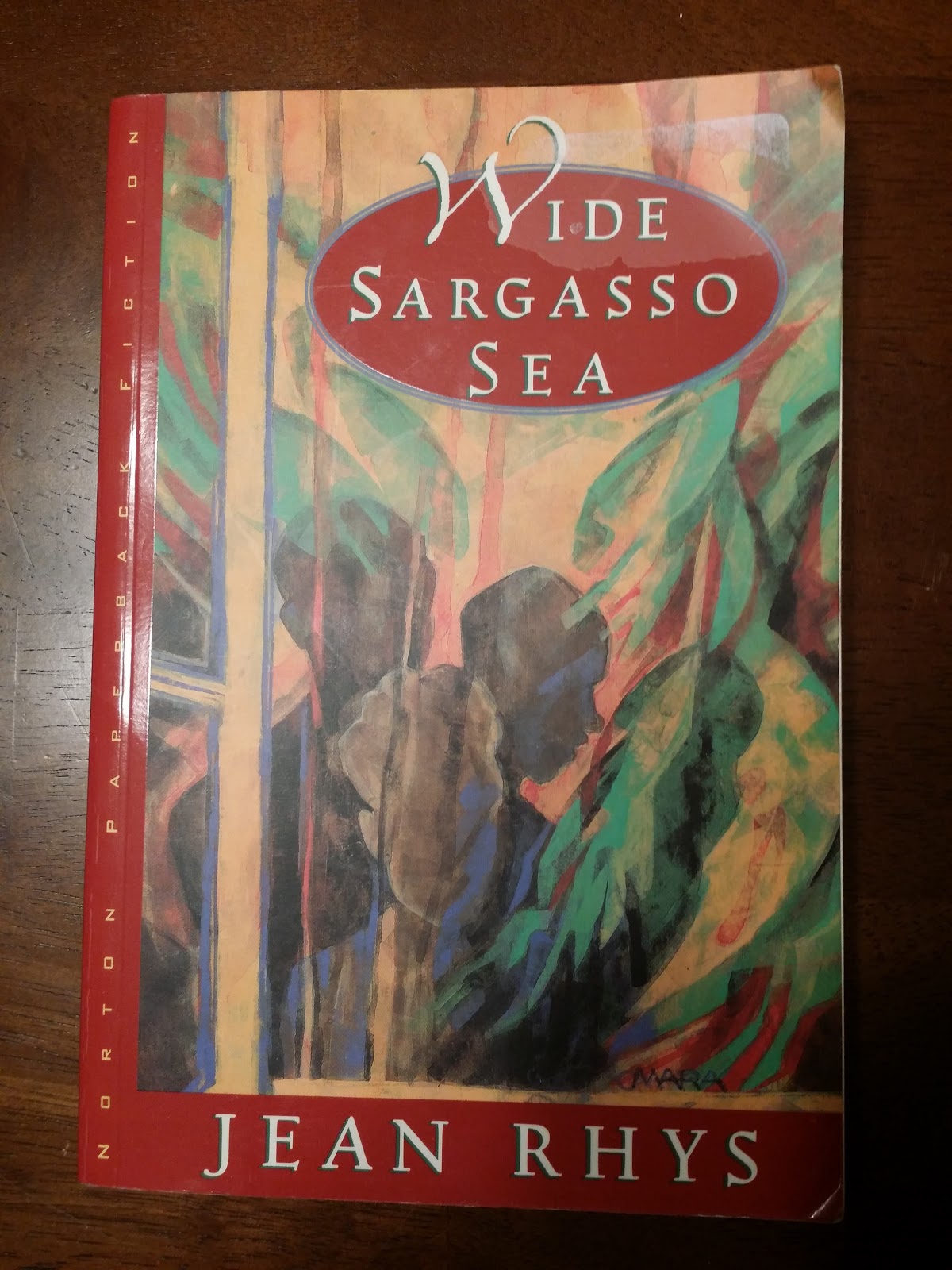
At first I didn’t know what to make of Wide Sargasso Sea by Jean Rhys. This story is a “prequel” to Bronte’s Jane Eyre, telling the backstory of Mr Rochester’s first wife, the insane woman in the attic in that famous novel. The book shows that all things are perhaps not what they seem, and every story has two sides.
Sea is separated into three parts, each told in the first person. The first section is the female protagonist’s, Antoinette’s, childhood. Her mother’s first husband has died, leaving them a lot of land in Jamaica but no money to back it up. The locals resent the family as former slave owners, but they are “rescued” by Mr Mason, who comes and marries the mother and restores their estate. However, one night the house is set afire by an angry mob. Antoinette’s brother dies, and her mother, already mentally unstable, goes insane.
The second part is told from the first person of a new gentleman. Though it never says his name, we learn later that it is Mr Rochester. He has come to marry Antoinette for money, and their marriage quickly falls apart. Antoinette slips quickly towards insanity, but we as readers find her to a be a sympathetic figure. Her husband sleeps with the help, she has no true friends, as most still carry animosity towards her family from years ago, and it seems there is no help or hope coming. Her husband has grown to despise her and has started inexplicably calling her Bertha, a name she hates. One night after a drunken arguement, the man announces he is leaving Jamaica and bringing his wife to England. Antoinette has always wanted to see England, but now just wants to stay at her home.
The third short section again switches to Antoinette’s view. She is totally insane now, and her narrative falls in and out of coherency. Her husband has locked her in an attic, and she refuses to believe this cell is the idyllic England she had envisioned. She doesn’t recognize Mr Mason or other visitors, and is convinced she has only been there for days, when in reality years have gone by. She escapes out of her room one day, and during a vision she sets fire to the building (obviously the same from Jane Eyre).
This book paints her as a tragic figure indeed. She obviously has mental disease in her family, but many factors outside of her control put her in that attic by Mr Rochester. The book is a little hard to get sometimes, much of it is told like a stereotypical creole story, with truth and present sometimes muddled with spirit and effervescence, to the point that you aren’t exactly sure what is actually happening. A good book though for sure, reminding you that the bad guy may not always be who you think.
Quick takes on 5 films
The background of death surrounds in White Noise
White Noise by Don DeLillo is an interesting book. It is written in a playful, wry style. For instance, the main character Jack, is a Hitler studies expert and professor in a small, prestigious university (famous for Jack’s studies, since he was the first in the country to promote this course), yet he doesn’t speak German. The book follows Jack in his everyday life, and his dealings with quirky family members and work associates. As a modern family, the tv is always on in one room or another, so you think the title refers to the constant stream of commercials and background sound (the author does intersperse a line regularly into the novel from the tv), but really it is about the death all around us. The backdrop of the novel is Jack’s obsessive fear of death. He thinks about it often, such as when he will die, how he will die, etc.
Jack’s fear grows exponentially when there is a waste spill just outside of town, and the residents must evacuate for a time for safety. Jack is exposed, and the response team (again humorously, a “fake” response team that is meant to practice for calamities is instead having to do the real thing first, and practice later in the novel) tells Jack that his life has almost definitely been shortened. When Jack finally tells his wife Babette about his real fear, she says she has the same fear, but while it is a nagging obsession with Jack, it is a paralyzing fear for Babette. She has gone so far as to find a black market pill that is supposed to subdue the fear of death, and she has been having an affair with the drug-maker to keep a steady supply coming. Jack takes this news in stride; with his own increasing dread he realizes he would do just about anything to rid himself of the fear as well.
In the end, something snaps in Jack, and he wants to get the medicine his wife has been taking, to see if it will help. He goes to the sleazy motel where she has been meeting the drug maker, and confronts him with the intent to rob and kill him. It goes astray though, and both end up at a local religious hospital, being cared for by nuns. Jack turns to a nun, looking for some faith to ease his troubled mind, and she admits she isn’t even religious and doesn’t believe in God or an after-life.
Funny little stories about death fill the book, such as Jack’s son’s friend who wants to sit in a pit with 70 deadly vipers to get in the Guinness book of records, or youngest son Wilder, who Babette is always checking on, but manages to find himself in the middle of a busy interstate at the end of the novel (he doesn’t get hurt). There are many more. Even the local grocery store where Jack and his friend Murray shop can be a metaphor for death. This book was much different than most of the other classics I’ve been reading lately, and a good, if somewhat unsettling, change of pace.
Farm and family struggles in O Pioneers!
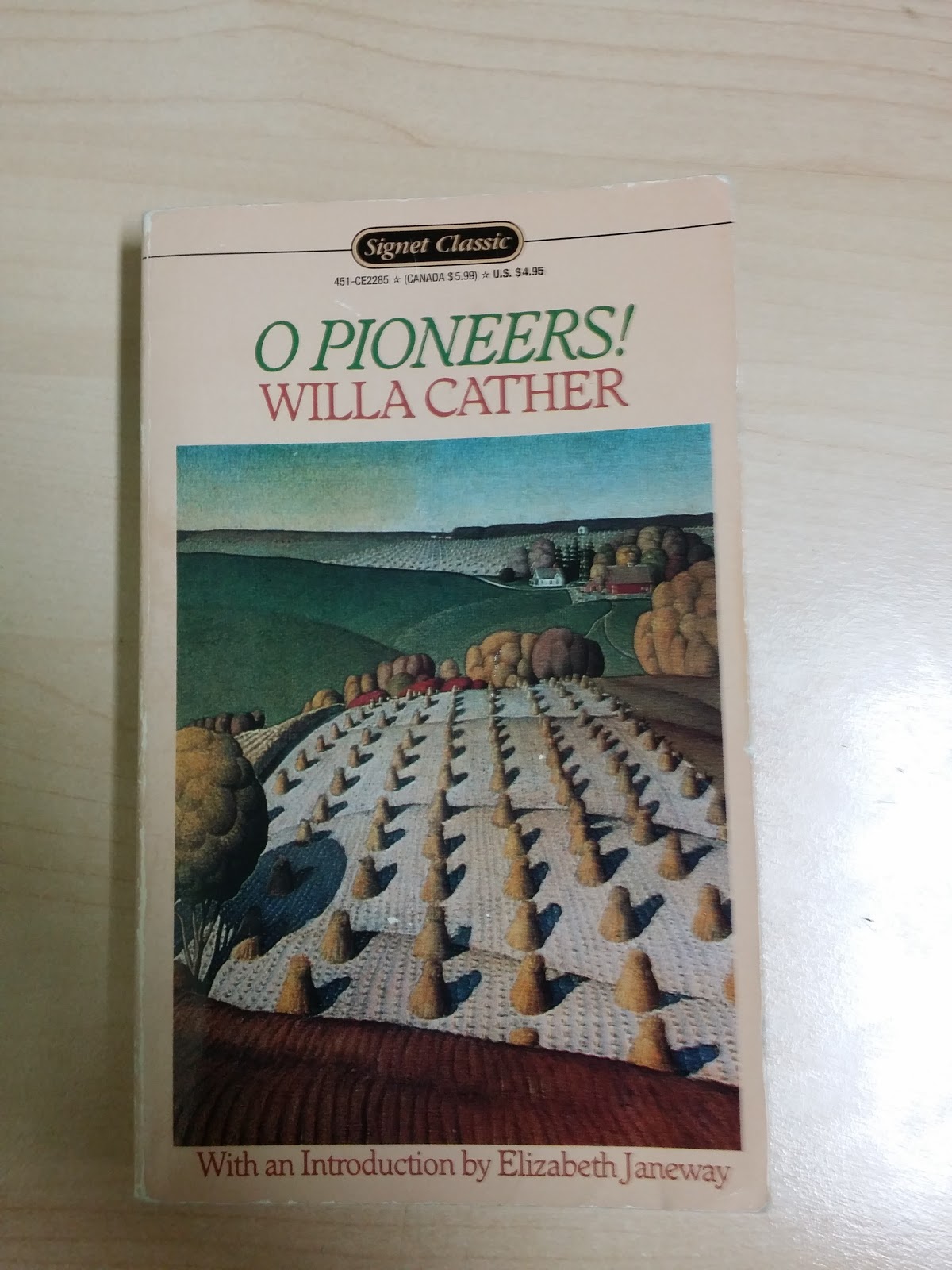
O Pioneers! is the second novel of Willa Cather’s I’ve read in this list of 100. Written many years before Death Comes for the Archbishop, it is a softer story but is still very moving. It tells the story of Alexandra Bergson, an independent strong-willed woman struggling to build a farm in rural Nebraska in the early part of the 20th century.
It starts when Alexandra is a young adult. Her father brought their family to the USA from Sweden to start a new life, and after struggling for years to get something to grow in the strange Nebraskan soil, he is dying. Alexandra is the eldest child and must now look after the farm and her three younger brothers. Brothers Lou and Oscar are similar in that they lack the foresight for grander schemes, and want to sell the land and settle on a smaller farm by the river where farming may be easier. Alexandra wants to further her father’s goal of the kids having a better life, so resists their efforts, while grooming youngest brother Emil to go to university one day and move on to bigger and better things. She puts her personal life on hold, keeping her only male friend Carl at a distance.
From these beginnings, the novel shoots forward from chapter to chapter. Sometimes a week or month will go by, sometimes years. Over time, Alexandra is able to turn her small farm into a sprawling plantation. Lou and Oscar still pine away for an easier life, Emil has gone to school and come back for a short time, deciding what to do next, and Carl is having is own adventures around the country, but always returning from time to time hoping Alexandra is ready to settle down with him. Emil ends up falling in love with Marie, a neighbor who is all ready married to a burly farmer named Frank. Emil struggles with his feelings, finally deciding to leave before anything comes of it, but when he goes to say good-bye, the two give in to their feelings. Frank finds them and shoots them both in a crime of passion. Alexandra’s hopes of Emil being the one sibling to go off to a new life are shattered, and she realizes that has been the big goal of her life, more than the farm or prosperity she has brought to the area. Now in her 40’s, she finally allows herself some personal comfort and agrees to marry Carl. She knows that no matter how hard she tries to hold on to something, whether it is Emil or the land, all things fade and time keeps moving on.
This is a quiet, unassuming, “little house on the prairie” kind of book, but a good one. In fact one of the more moving books I’ve read in a little while. Much of the book is told in dialogue, and the descriptive background writing is sometimes sparse, leaving much to the imagination. Cather does a fantastic job of writing just enough to give you a sense of the open land they live on and the life it holds there, and lets your mind fill in the rest. Alexandra is a different kind of feminist. She doesn’t stand on a soapbox shouting for equality, but she does her work quietly, as well as any man could, and doesn’t even listen when her brothers try to move her to do something she doesn’t think is right. An enjoyable, quick read.
Tropic of Cancer ground-breaking in its day, has not held up
The force is alive in the new Star Wars
Yes, I saw the new Star Wars on opening night. I’m that big of a nerd. The Star Wars films were integral to my childhood, being born in 1980, I really grew up on them. I’m not going to write anything here that you won’t read anywhere else, so in the interest of not leaving any spoilers, all I will say is I loved it. Even my wife, who generally hates sci-fi movies, really liked it (enough to go back and re-watch, or in some cases watch for the first time, the first 6 movies). It fires on all the right cylinders. I’m sure Disney is counting on this film to reboot the franchise, and with all of the new Star Wars films coming over the years, they have at least started on the right course.
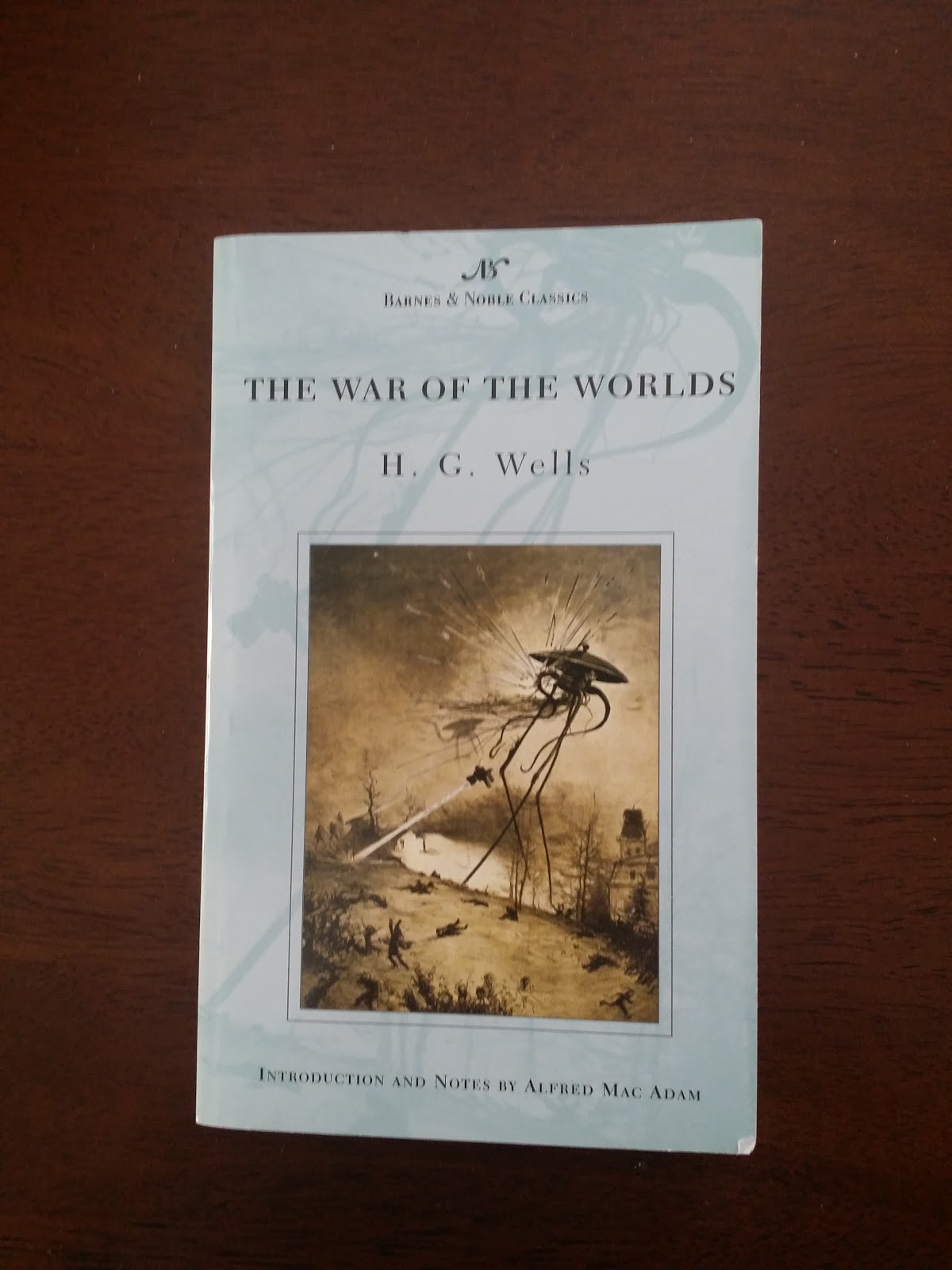
Early science fiction in War of the Worlds
Quick takes on 5 films