Quick takes on 5 Classic films

I’ve got some all-time great classics up today, starting with a 1948 western, Red River. The film stars John Wayne as Thomas Dunson, a man who builds a large cattle ranch near the Mexico border in Texas. At first he is aided only by a sidekick, Groot (Walter Brennan) and a young survivor of an Indian attack on a wagon train, Matt (Montgomery Clift), but over 14 years he turns it into a large ranch. Unfortunately there is no where in Texas to sell his beef, so they make the perilous trek to Missouri, where they can find a railroad and sell their stock for good money. Along the way, stampedes, illness, and infighting break up the spirit of the group. Matt, now a man, wants to take the shorter trip to Abilene, because rumors of a new train out of there would save the group from finishing the longer, more dangerous journey, but Thomas is stubborn, and bullies and threatens his way to keep Missouri as their goal. One of the great westerns of all time, Red River shows the wide open skies and rough and tumble life of the frontier, with some serious acting chops too. John Wayne gets to play the despicable villain, something you rarely (ever?) see.


I don’t cover many documentaries but Grey Gardens is one of the all-time greats. From 1975, it is about the lives of “Big Edie” Edith Beale and her daughter, “Little Edie” Edith, aunt and first cousin, respectively, to Jacqueline Kennedy Onassis. After tabloid and newspaper stories brought the Beale story to national attention, filmmakers Albert and David Maysles came in to cover them. The Beales were living in a large Hampton mansion which had been allowed to deteriorate to squalor. They were hoarders long before the term became common. Unlike a lot of documentaries, the Maysles don’t ask a lot of questions, they let the Beales do all the talking, and we learn about them from their dialogue and interactions to each other and to the cameraperson. There was obviously a lot of codependency here. There are several powerful scenes where we can get a glimpse of what brought them to this point. Formerly very wealthy but now almost broke, we see a mother who demanded perfection from her socialite and beautiful daughter (once called the most beautiful and graceful of all the grandchildren, including Jackie). However, Big Edie never let her daughter stray far from the roost. Little Edie had dreams (or maybe delusions) of achieving great fame as a singer or dancer, and displays these talents during the film. While obviously mentally abused by her mother, she seems to dote over her, going so far as to want to be the only person with access to Big Edie. They end up keeping each other locked up alone in the house, with almost no outside interaction. A startling look at mental disease, the rabbit hole down which one may go if no help is given (or accepted). I was fascinated by the film and spent a long time reading up more about the family afterwards.


Anatomy of a Murder from 1959 is one of the best crime dramas ever made. It stars James Stewart as a small town lawyer, Paul Biegler. He takes on the defense of a man, Manny, who has been accused of a killing a man, Barney Quill, after Quill raped Manny’s wife Laura. Manny admits to the murder, but with Biegler, the two decide to argue for a temporary insanity case. The movie is a true mystery. You know the basic details from the beginning, but all the things that make up the case play out over the course of a couple hours. It is extremely detailed and realistic, and the movie allowed James Stewart to play a different kind of role than the public was used to seeing up to that point. Still an “aw shucks” kind of guy, as a lawyer he was conniving, manipulative, and creative to lean the jury to his side. As Biegler and his team research and investigate the true facts of the case, he of course only presents evidence that will help Manny get off. And while the viewer doesn’t like Manny much (he is cocky, and jealous and abusive to Laura), we still like Biegler and cheer for him every time the judge sustains his objections in court. A truly fantastic film, and genre defining.


A Man Escaped is widely considered one of French director Robert Bresson’s greatest films, and that is saying a lot from his reputation. From 1956, it is based on the true story of a French resistance fighter incarcerated by the occupying Nazi German forces. From the minute he is put in a jail cell, Fontaine begins looking for a way out. Like many Bresson films, the musical soundtrack is sparse, so the suspense (and there is plenty of it!) is built entirely from the filming, direction, and acting ability of the people on camera, even though Bresson again, like he often did, used amateurs in the movie instead of professional actors. Fontaine patiently devises his plan, using tools he can find or steal around the jail, and is always wary of troops finding him out, other prisoners willing to sell him out, or the jailor coming to execute him before he can make his attempt. The tension slowly but surely builds throughout, until I found myself on the edge of the seat at the end, waiting for the catastrophe that seems to be lurking just around every turn.


1945’s Mildred Pierce is a classic film noir dominated by its two leading ladies. Joan Crawford won an Oscar as Mildred, the matriarch of the family, who dotes over her oldest daughter Veda, played by Ann Blyth, also nominated. Veda is a spoiled brat, but only because her mother has made her so. The film starts with a man being shot to death, with “Mildred” being his last dying word. We don’t see the killer, but soon after we do see Mildred standing on a bridge contemplating her end. She is saved by a passing officer and brought to the station, where we hear the story that led up the killing. The dead man was her second husband, after her first left her for another woman. We see how Veda was raised and how she manipulated her way to get everything she ever wanted. Mildred even married her second husband purely for his money, so he could supply all of Veda’s desires. The film takes a not-unforeseen-twist near its conclusion, but still it is a gripping and dark murder mystery, culminating in the big reveal at the end.

Quick takes on 5 films

Adrift is a fairly well done survivor movie, made more gripping for its true-life muse. It is based on a couple who survived over 40 days on a small sailboat, meandering through the Pacific Ocean after a hurricane left the boat crippled. The story’s present and past is told concurrently, where we see the couple striving to survive, but also how they met, fell in love, and started their adventure. The film is good, though maybe not necessarily great, but the saving grace is the Shailene Woodley in the lead female role. The character is vulnerable yet strong, with Woodley getting to show off her acting chops, and you can’t help but root for her to make it out alive, against impossible odds. A good date movie.


Another one with an outstanding female lead is the heralded I, Tonya, the story of Tonya Harding. From the first few minutes, the film makes it clear that this is not just her narrative, and it does a great job of giving everyone their say (except Nancy Kerrigan, whose depiction is strangely absent). Like most people, I had a cursory knowledge of Harding’s involvement on the attack on Kerrigan before the ’94 Olympics, but I didn’t know the whole story, or anything about Harding’s upbringing. This film shows it all, and holds nothing back. It shows Harding and all of her warts, but does ultimately depict her as a tragic figure who tries again and again to overcome the odds stacked against her, such as her abusive mother and husband, an absent father, and her fight against judges who didn’t want to see her succeed because she was a redneck and not polished like the other figure skaters. Again, you really want Tonya to triumph, though as we all know, that was not to be her destiny. Margot Robbie is absolutely brilliant as Tonya (Oscar nominated), as was Allison Janney as her vile mother (Oscar winning).


A Wrinkle in Time is beautiful, visually stunning, and a mess. Even for a children’s movie, the dialogue is laughably bad, the plot paper-thin, and the only thing keeping the film going is the visuals. Based on the classic book (which I’ve never read), it is about a couple kids who go in search for their father who disappeared a few years earlier. The dad was a scientist who was researching traveling through space in an instant, and apparently it worked, sending him light years away. The kids are aided by some good powers and opposed by an evil one, called simply “it”. I just finished reading the book The Wizard of Oz, and this film reminding me a little of that one, where plot points jump around with less flow than you see in modern films, but Wrinkle lacks the magic of that classic film.


A few years ago I watched Liam Neeson’s Non-Stop and wrote that it was basically Taken on a plane, and while it got bad reviews, I enjoyed it. I thought The Commuter would be Taken on a train, but this one is far less fun. He plays a former cop-turned-insurance salesman who commutes to work, every day for 10 years, but has just lost his job. On his way home from being fired, he is approached by a woman offering $100k to identify a single person on the train for her. He must do so before the last stop when the target will be exiting. If he does it, he gets the movie, but if he doesn’t, his family will be killed. Putting aside the wildly implausible plot, this movie never does find traction. Neeson goes up and down the train interviewing passengers he doesn’t know (he knows many of the regulars all ready), gets in fights, and causes a big stir, and yet all the other passengers just go with the flow, even when people start showing up dead. Eye-rollingly bad.


Not quite as bad, but not nearly good, is 12 Strong, a war film based on a team of elite soldiers sent to Afghanistan in the immediate aftermath of September 11. The group find themselves relying on Afghan soldiers on the ground to teach them the terrain and guide them to the Taliban, comrades in arms who the Americans aren’t sure they can trust. The film features a great cast of some of my favorites, including Michael Shannon and Michael Pena, with unheralded Chris Hemsworth leading them. Unfortunately the talent can’t save this boring war flick. The story is simple and thinly plotted, the battle scenes are uninspired, the dialogue is bland and tedious, and the attempts at brevity would only find laughs among the 75+ crowd. Even die hard war buff films like myself will find little to enjoy here.

Mrs Dalloway is beautiful and a bore


Virginia Woolf’s Mrs Dalloway baffled me. I’ll freely admit I wasn’t ready for this kind of book at the time when I attempted to read it. There isn’t much of a story there, the book is simply a day in the life of Clarissa Dalloway, a woman who married for privilege rather than love, as she is preparing to host a social party that evening. We learn about her past, how she got in to her marriage, and the man she left behind (as he shows up in town after an extended absence, on today of all days). People in her circle float in and out throughout the short novel, and most of the book is told inside each person’s head. It isn’t quite stream-of-conscious writing, but it is close. Thoughts pop in and get explored before moving on to the next one. The only real action of the book is told through the story of Clarissa’s acquaintance Septimus, a war veteran who is descending into depression and madness, who kills himself towards the end of the book (we are privy to his delusional thoughts as well).
This is my second Woolf reading, after I was bored to tears by Orlando last year. This one is beautifully written, but I really struggled to get through it. You have to approach this book as you would a piece of art. It needs to be read slowly, digesting the words before moving to the next passage. It is definitely one for which the journey is more important than the destination. After having read two of her books now, I have to say I’m not a big fan of Woolf’s style (I deplore the “realism” of stream of consciousness writing, give me a true story to follow any day of the week), but you can’t argue against her prose, she is a true master of the language. Knowing now how Mrs Dalloway goes together, I’ll probably attempt this one again sometime down the line, give it another chance to move me.

The book which preceded the classic The Wizard of Oz

The original kid’s book The Wizard of Oz by L Frank Baum is a quick read, but a good one. With a lot more details than the movie, it is a more comprehensive tale. Everyone knows the gist of it: Dorothy rides a tornado from Kansas to the land of Oz. Her house falls on a wicked witch, making her instantly famous, and she sets out to meet the Wizard to get her back home. On the way, she meets up with Scarecrow, who needs a brain, the tin Woodsman, who is missing a heart, and a cowardly Lion, lacking courage. In their ensuing adventures, each is proved to all ready have what they thought they were lacking. The book does a much better job of showing these instances, mostly because just a lot more happens. But as nicely as it is written, it doesn’t quite have the magic of the beloved classic film. This is probably because those images are so ingrained in my mind. A good little read though, and fun to see more of the story fleshed out and to point out the changes (silver shoes instead of the ruby, which the filmmakers apparently thought looked better in technicolor!). 

An important game-changing novel in Lady Chatterley’s Lover


I went into D.H. Lawrence’s Lady Chatterley’s Lover with a healthy dose of trepidation. Women in Love after all was the only book in this crusade that I’ve been unable to finish so far. But this one is a lot better.
The book follows Constance (Connie) Chatterley, who has married into the wealthy upper class. However, she finds it is a loveless marriage to a man, Clifford, who is not manly enough for her, and not because he is bound to a wheelchair as a result of the war. She begins to stray and falls in love with the gameskeeper, Oliver Mellors. Mellors is a strapping man who has intelligence too, but he is of the lower class. When she can no longer live this double life, she hatches a plan to leave her husband and force him into a divorce.
Like Women in Love, this novel is short on story and heavy on debate, including such topics as the meaning of life, the meaning of love, the meaning of intelligence. Dry writing to be sure, and not page-turning worthy, but the story itself is very well written and engaging enough to keep you going, wondering what is going to happen. The book is really all about relationships and Lawrence’s rather bleak look at the future of humankind.
This book was first published in 1928, but faced an uphill battle due to charges of obscenity. Lawrence is fairly graphic describing Connie and Oliver’s sex scenes, more to show their intimate and loving connection than for any perverse reason, and the publisher had to win trials in both the UK and the USA over the course of several decades before it was openly available. Maybe not the most interesting book I’ve read so far, but perhaps one of the most groundbreaking ones, as it opened up a whole new chapter for freedom of speech.

Quick takes on 5 films

I don’t get the hype behind The Shape of Water. Beautifully shot and wonderfully acted (as I noted a couple years ago on Maudie, Sally Hawkins is incredible), the story is neither fresh nor exciting. Any life-long sci-fi lover has seen this story before, in much the same way. Elisa is an intelligent but mute woman, working as a cleaning person at a government facility during the Cold War. When a mysterious water creature/man is brought it for study, she befriends him and hatches a plot to free him. Once out and in hiding in her apartment, they begin a love affair. There are a lot of wild leaps here (I understand Elisa is mute and her best friend is a homosexual, but she seriously has never found someone that “understood her” before this creature showed up?) and I just couldn’t suspend belief enough to get through it, even as a magical science fiction film.


Another dud that strong actors can’t save is the newest film version of the beloved classic novel Fahrenheit 451. This one stars Michael B Jordan and Michael Shannon (also in the above The Shape of Water), and I’m fans of both, but their talents are wasted here. If you don’t know the story, this one takes place in a near-future dystopian society where reading (and basically free thinking) have been outlawed, with all books and art being burned. Montag is a young hotshot who has grown up in this world and knows no better, but eventually he becomes curious about the books he is destroying and begins to save some to read, and then seeks out the resistance to give them aid. It’s a slick looking film but is a poor movie in all other aspects. The story is disjointed and choppy, with gaping holes in the plot and story threads that never get developed. Why was reading outlawed? Obviously for control of the people, but other reasons are hinted but never explored, such as an over-correction for extreme political correctness. Really off film which is just too bad for such a great book.


After the duds above, I couldn’t have found a more redeeming film than Lady Bird. A beautiful coming-of-age movie, its stars Saoirse Ronan as a very typical high schooler in the early new millennium. Christine, or “Lady Bird” as she has decided to call herself, has a lot of “millennial” traits in her, even though the film takes place in 2002, making her closer to my generation than my son’s. She is a bit aimless, not having her license yet and being forced to get a job by her mom, and seems to be bit entitled too as she isn’t very understanding of her family’s plight. She is going to an expensive catholic school which her parents can hardly afford, with a strong willed, passive-aggressive mother (Laurie Metcalf in a career-defining role) with whom she constantly butts heads. Lady Bird wants nothing more than be free from her parents and go to school far away from home, but as most teenagers do, she wants freedom without responsibility, and paradoxically still wants to fit in with the cool crowd at school. She says things that aren’t true and does things she doesn’t want to in order to be “cool” while alienating her true friends. While watching it and even while writing about it now, there were times when I thought to myself this is the kind of movie I would typically loathe, because it sounds pretentious and entitled, but in the end, it doesn’t come off as that. It is just a girl, like many young people, trying to find her own place in a crazy world. A very moving and powerful film.


Red Sparrow was much hyped before release, but not reviewed well when it hit. It’s a spy thriller with a female lead, Jennifer Lawrence as the Russian Dominika Egorova. She is recruited into Russia’s “sparrow” program, which teaches good looking young people to use sex to get close to their targets for information. She ends up developing a connection with her American target, and becomes a double agent for the USA. There’s a lot of intrigue and some good spy moments, but the plot is almost too convoluted (even for a spy film) and sometimes the viewer is left wondering what exactly is going on, and not in a good who-done-it kind of way. Plus, some of her “training” in the sparrow school is only there for shock value and lends nothing to the plot. Overall, I don’t think it is as bad as some of the reviews say, but it isn’t great either. Lawrence is definitely captivating as the lead.


A movie that did, however, live up to the hype, is Three Billboards Outside Ebbing, Missouri, about a woman, Mildred Hayes (Frances McDormand), who is seeking the person who raped and killed her daughter. Seven months have gone by without any real leads, so to light a fire under the police department, she rents out billboards calling out the sheriff, Bill Willoughby (Woody Harrelson). Bill is a good man who wants to solve it, but it really is a dead end case, and Bill himself is facing his mortality in the final months of pancreatic cancer. Mildred is a sympathetic character, but it is hard to really like her in the first third of the film, as she is a royal bitch to everyone she comes in contact with. The star of the film is Sam Rockwell as deputy Jason Dixon, a rough-around-the-edges cop with an attitude, who skirts the law and seems like a bad case, until you get to know him better in the latter parts of the film. Part drama, part dark comedy, this is an enthralling, at times tense, and altogether beautifully written movie.

Get tolchocked in your litso by A Clockwork Orange

Just finished one of my son’s favorite books, A Clockwork Orange by Anthony Burgess. I recently watched the movie for the first time, and unlike my son, I liked the movie better. It is a pretty faithful adaptation, except the movie doesn’t carry over the final chapter.
The book is written in the first person by “your humble narrator” Alex. Alex is a teenager in a near-future dystopian society where cops are barely keeping lawlessness at bay. Speaking in a language full of slang called “nadsat” (it does take a little while to understand what all the made-up words mean), Alex tells his tale. He and his hoodlum friends spend their nights performing horrendous acts of violence, from beating up the homeless, to breaking-and-entering, to rape. On one such night, Alex ends up killing one of their victims and is arrested, while the others in his troop make their getaway.
In jail, Alex becomes the test subject of a government psychological experiment to rehabilitate. Through a drug program, they make it so Alex becomes ill whenever he even thinks about doing something violent. Just 2 years into his sentence, Alex is released as a new man. His past catches up to him though, as he runs in to many of his previous victims, who can now retaliate against him without fear of Alex fighting back. He eventually ends up back at the home of a woman he raped, who has since killed herself, and her widowed husband recognizes him. The husband sees a way to use Alex’s case to discredit the current reviled government, and forces Alex to commit suicide by jumping out of a window.
Alex survives however, and the government officials swoop in to blame the other party and the doctors that did all this to Alex in the first place. They put Alex back to the way his was, reviving his evil tendencies. Here is where the film ends, with the applied assumption that Alex will revert to his sociopathic ways. The book’s final chapter though shows that Alex has “grown up,” and wants to leave the past and become a man and raise a family. Even without coercion, he no longer wants to do evil.
The novel’s end feels too clean cut for me, and I much prefer the open-ending unknown of the film finale. The book does do a much better job of detailing all the little nuances going on in the background, such as the questions of good vs evil, less in regards to Alex’s actions and more involving the government’s removing of his free will. I like the invented language of nadsat which makes the book seem like an entirely different time and place. Not my favorite book in this book reading adventure, but still a good one.

Solo satisfies but fails to inspire

After Rogue One from a couple years ago, Solo is the newest “standalone” Star Wars film to come from the Disney conglomerate. As the name implies, it is the backstory of the beloved Han Solo character. It shows just above everything any Star Wars die-hard fan would want to see. We see his early days on Corellia struggling to even survive, moments that gave him the tough exterior we see later in his life. Solo gets pilot training by the Empire, meets Chewbacca and Lando, and gets his hands on the Millennium Falcon. He also has his first grand adventure, and his first love.
The movie is good, but not great. Don’t get me wrong, I really enjoyed it, and it is jam-packed with easter eggs to satisfy fans of the series (though some are beat on your head to make sure you don’t miss them). But through a good portion of the middle of the movie, I found myself thinking it lacked the magic of all of the Star Wars films to date. Even with its flaws, the prequel trilogy still has the sense of wonder, the feeling of a “galaxy far, far away.” This film, at times, almost seemed like a generic space movie with characters that seem familiar, but different from the heroes we know. Having said that, during the famous Kessel Run that Han is always going on about, when that famous Star Wars music kicks on, I still felt the rush. All in all, a very enjoyable film, but it does lack just a little of the luster we’ve come to expect.

Early 20th Century feminism has an Awakening in Chopin’s classic

The Awakening is a very short novel by Kate Chopin. Censored when it was published in 1899 for its feminism approach, it is now widely regarded as a very important work. It isn’t risque by today’s standards, but it does depict a woman who desires more than just staying home and pleasing her husband.
At the beginning of the book, Edna Pontellier looks like the typical housewife. She is raising 2 kids at home while her husband goes away to work regularly. We soon see though that she is not content with her life, despite social norms telling her this is the way it should be. Younger than her husband Leonce, she is attracted to a much younger man, Robert Lebrun, while on vacation. She seeks him out to spend time together, though makes no brazen advances. She finally has a glimpse at what a powerful, strong-willed woman can be when she meets Mademoiselle Reisz, a pianist, towards the end of the summer vacation.
Upon returning home, Edna sets out to make her life what she wants. Quietly and slowly at first, she starts taking walks by herself around town, not returning house calls by other women of society, and meeting with people she perhaps should not be seen with in public, including the dashing Alcee Arobin who has a poor reputation for sleeping with married women. When Leonce goes out of town for work, Edna drops the kids off with the grandparents for an extended visit, moves out of her family house, and begins a true affair with Alcee, though secretly, she still longs for Robert. Robert had gone away to try to suppress his own desires for Edna, but he does eventually return. Now that Edna has found her voice, she openly solicits Robert, but he confesses that he loves her too much to shame her by sleeping with her as a married woman. Edna cannot live with the rebuff, returning to the vacation isle where it all started, and drowns herself.
Written at a time when women in the USA were having their own “awakening,” this book faced a lot of opposition for showing that women can have sexual desires of their own, as well as for fighting the social norms of the day. Edna’s friends are each very symbolic of different aspects of her life and society in general. Though a short read, it is beautifully written with plenty of deeper meaning to ponder. A very nice little novel.

Quick takes on 5 films

Blockers is totally vulgar, but damn if it isn’t hilarious. Three separate parents have seen their individual daughters grow up as best friends from their first day of school until prom night, and on the day of prom, they find that their girls have made a sex pact to lose their virginity’s that night. So they set out to be c*ckblockers and stop the acts before they go down. In the end it is a bit of a coming-of-age movie from a perspective we don’t usually see (the parents), and everyone involved has some learning to do, even the adults. Though a pretty straight forward comedy (and a great one at that), it doesn’t fail to raise serious questions about gender equality, acceptance (of many kinds), and what it means to be a parent. The good comedies do more than just make you laugh, and Blockers is one such example.


Sometimes you know you will like a movie before you ever watch it, and my recent example is The Greatest Showman. I’m a sucker for musicals, even movie ones, and I’m a big fan of the supremely talented Hugh Jackman, so put it all together and I knew it was going to be up my alley. Jackman plays P.T. Barnum, and the film is about his rise to stardom as he starts his circus and grows it into the draw that it was for so long. It is a little light on depth, and the story is a bit paint-by-numbers without a lot of fleshing out, but the songs are catchy and radio-ready, and the sets and costumes are colorful and gorgeous. A fun movie for fans of the genre, others may not find much to enjoy though.


The Death Cure is the finale to the Maze Runner trilogy of films. It didn’t get great reviews, and it doesn’t live up to the suspense and mystery of the first film, but I found it very entertaining, albeit a little campy at times, as many films based on young adult books often are. Light on the mystery but heavy on the action, this film follows Thomas as he and his fellow survivors of an illness that has all but wiped out humanity, in their endeavors to rescue captured friends from a sinister group. The first film in this set, from 2014, was a great thriller with a lot of intrigue, leaving the viewer to guess what all is going on and why, and while the subsequent films lost that element, it is still a satisfying set for fans of the post-apocalyptic genre.


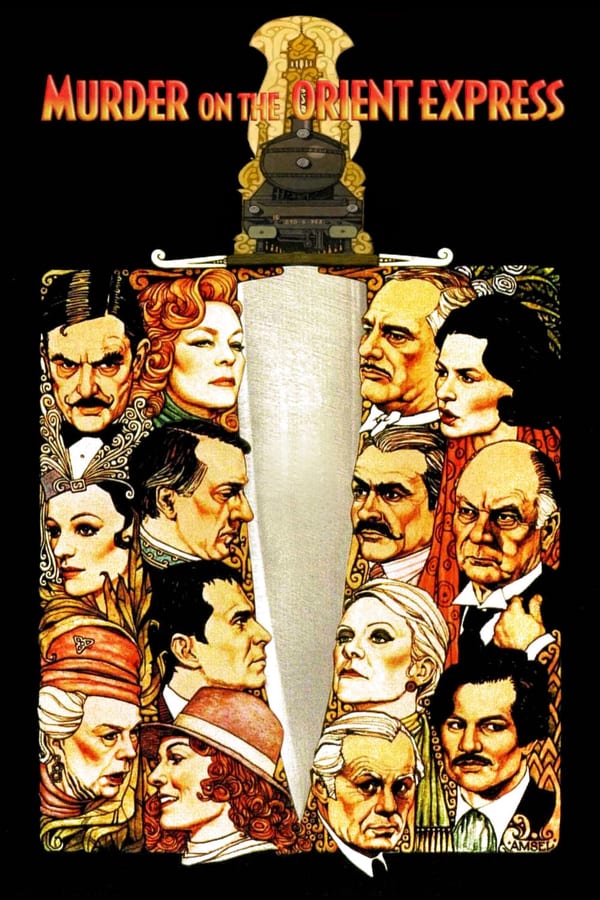
Murder on the Orient Express is a new film based on an old book, and if you’ve never read it, it is basically the film Clue on a train. A high profile passenger is murdered, and the world’s best sleuth, who happens to also be present, sets about to find the killer among his fellows. Beautifully filmed and well acted, it however doesn’t quite get as gripping and edge-of-your-seat thrilling as it maybe hoped. A tremendous cast props it up nicely though, including Johnny Depp, Willem Dafoe, and Judi Dench, with Kenneth Branagh as detective Hercule Poirot, the longtime star of many of Agatha Christie’s mysteries. If Clue had never existed, I might have enjoyed this one more, but that film is far more entertaining with its wildly preposterous cast and ultimately a more satisfying ending.


The Post is another one where I can’t quite agree with the professional critics. They heralded this one because it is the kind of film media types eat up, but if you set aside the two engaging leads (Tom Hanks and Meryl Streep), and you are left with a cut and dry, paint-by-numbers historical film that follows just like reading the paper (ironically enough). The true story of the rise of the Washington Post during its coverage of the Pentagon Papers, detailing their reporting of the classified documents of the US involvement in the Vietnam War, it has plenty to be excited about without ever truly being exciting. I can appreciate the historical aspect of it, freedom of the press and all that, especially in today’s age when a politician can scream “fake news” if they don’t like the content (factual or not), but it doesn’t make for a very entertaining film.