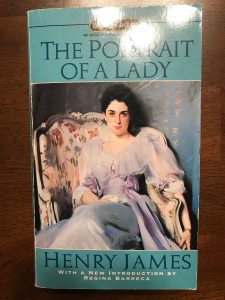
My third and final Henry James book is The Portrait of a Lady. This one is more like to The Bostonians (a wordy book that was good, but a bit tough to read) than The Wings of the Dove (still eloquent, but more accessible). Like the other two, this one again showcases James as a true master of the English language; he weaves together words as easily as I tie my shoes. This creates a very verbose narrative, but for those with the patience to get through it, it also foretells an enchanting and rewarding experience.
The eponymous lady is Isabel, a vibrant young woman from America who comes to Europe after the death of her parents, brought by her previously unknown aunt, Mrs. Touchett. Isabel is refined and well educated, but comes from no money, and Touchett and her dying husband have plenty. In England Isabel meets her cousin Ralph, a sickly man who enjoys every day knowing he doesn’t have many in front of him. She also meets a neighbor, Lord Warburton, a true English lord, who almost immediately falls in love with her. However, Isabel is obsessed with living life to the fullest, and is determined to not be tied down too early in her life. She declines Warburton’s offer of marriage, as she did a previous suitor in America as well, Caspar Goodwood. When Mr. Touchett dies, he leaves Isabel a small fortune (from Ralph’s insistence, who wants to see what Isabel, a beautiful young woman with unlimited prospects, can do with money behind her). Now wealthy, Isabel heads to Florence with her aunt.
In Florence, Isabel meets Gilbert Osmond, an older bachelor who seems to have class and charm, but no money. Madame Merle, another American who seems to be everything that Isabel hopes to be herself (elegant and full of life, and not caring what others think of her), subtly nudges Isabel into seeing something in Osmond. After traveling all over Europe over the course of a year or two, Isabel tells Ralph and his mother Mrs Touchett that she will marry Osmond. Both react with amazement, and pretty much tell her she is making a mistake, to which Isabel shows only resentment, thinking they don’t know him like she does.
Here the book jumps ahead 2 years. The Osmonds are established in high society thanks to Isabel’s money, and Gilbert’s daughter (from his first marriage) is a beautiful young woman attracting attention from eligible men. Everything seems fine on the surface, but over the next few chapters, we find that Isabel is miserable in her marriage. Everything she was attracted to in Gilbert turned out to be, well, not a lie, but not exactly what she presumed. His class and taste for the finer things was in fact due to his supreme egotism. Gilbert has always placed himself above all others, and only wanted a pretty young wife (with money) to give him all of the things to which he thought he was due. Even worse, whereas Isabel never previously cared what others thought, Gilbert cares very much that people think him to be the best of humanity, and makes Isabel throw weekly parties for society to come and fawn over him. And Isabel only blames herself for her predicament, since she didn’t recognize Gilbert for what he was in the beginning.
The family receives news that Ralph is finally dying, having returned to his father’s house in England. Gilbert, who covets Isabel as a he would a belonging, forbids her to go to, but Isabel finally stands up for herself, exposes Gilbert for the craven abuser that he is, and leaves. In England she is reunited with Warburton, who has finally given up his chase for her, and Goodwood, who has not. Goodwood tries to convince Isabel to leave Gilbert, but the ending is abrupt, and we do not know her final decision. It is implied that the strong-willed Isabel has finally given in to societal norms and will not leave her husband, but at the same time, perhaps she did, and James just didn’t want to write it as it would be taboo for the time he lived in. Completely up to interpretation.
Really I didn’t know what I wanted for Isabel in the end. She had one man (Goodwood) who obsessed over her to the extreme, to the point of being a stalker, and another (Warburton) who could have given her everything she needed, though obviously need and want are two completely different things. I found her just a person who couldn’t make up her mind; she felt like she wanted freedom but ended up roped into an impossible situation from where there was none. I think most people wanted to see her with Warburton, a true gentleman who would treat her well, but ultimately I think she ended up with what she deserved.
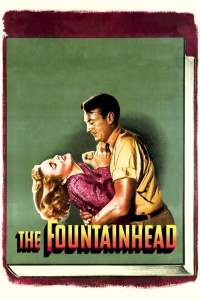 Rarely does a movie live up to the book it was based on. I read Ayn Rand’s The Fountainhead a little while ago, and absolutely loved it. When the film version was made in 1949, they obviously had to cut a lot of material (the book was over 700 pages, while the movie clicks in just under 2 hours), but they made the right decisions, and the film faithfully conveys the intent and character of Rand’s work. Gary Cooper portrays Howard Roark, a determined and self motivated architect who will only design and build modern buildings to his own standard, and will not compromise even if it means losing a commission when he is all ready struggling financially. The world tries again and again to tear him down and force him into compromising his ideals, but he refuses, and finally is able to overcome. A brilliant film with outstanding acting. I urge you to see it so you can fall in love with the story, and then go read the book for the more detailed attention to the characters and struggle that only it can portray.
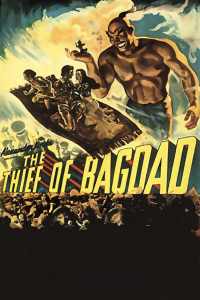 The Thief of Bagdad from 1940 (and the original from which it was based, in 1924) is a major influence for the Disney Aladdin film, though the Aladdin character is split up into two people in this film. The movie is about Ahmad, the young sultan of Bagdad, whose kingdom is stolen from him by his vizier, Jaffar. With the help of a local thief, Abu, Ahmad flees to the city of Basra, where he sees and immediately falls in love with that city’s sultan’s daughter, the princess. Jaffar ultimately comes to Basra to marry her too, and uses his sorcerous powers to win over the sultan there. Many adventures follow, including, of course, a genie and a flying carpet. It is an enchanting film, with some heavy hitters behind the camera, including producer Alexander Korda and directors Michael Powell and Ludwig Berger, among others. It won a few awards at the Oscars, mostly relating to its cinematography and special effects, for its use of blue screen (first in the business) in detailing the giant genie, the carpet and magic horse flying around above the city, etc. There is a touch of the wide eyes over-acting (by today’s standards), but that can be forgiven for the day it was made, and the whole presentation is still beautiful.
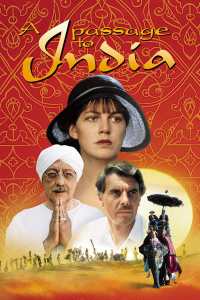 A Passage to India was David Lean’s last film, from 1984. The director who brought us Lawrence of Arabia and The Bridge on the River Kwai (and my personal favorite, Brief Encounter) faithfully adapts
 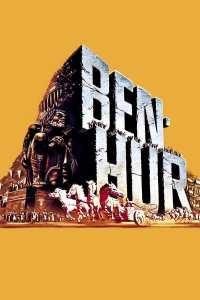 How can a purported movie lover make it to age 39 without having seen Ben-Hur? I finally remedied that this weekend. The grand epic from 1959 starring Charlton Heston is a movie that takes place in the time of Jesus Christ, and while He is a secondary actor usually off-screen, this film obviously follows Ben-Hur, a local Jewish aristocrat. Ben-Hur accidentally kills a Roman governor and is sentenced to slavery in a ship’s galley, and so sets off a chain of events that leads to one of the most heralded films of all time. In no way could I write a short synopsis of a 3 ½ hour film, so instead, I’ll wow you with the stats of its production (lifted from wikipedia). Pre-production of over a year, 8 months of shooting (12-14 hours a day, 6 days a week), followed by another 6 months of post-production. 10,000 extras, 200 camels, and 2500 horses. The wardrobe staff alone consisted of 100 fabricators, and another 200 artists and workman made all the statues and ornamental architecture. It had the biggest budget of any film before it, and the largest sets. And amazingly, it all paid off. When it was done, it ranked # 2 for highest grossing films of all time (behind Gone With the Wind). Adjusted for inflation, it still ranks # 14 in domestic gross to this day.
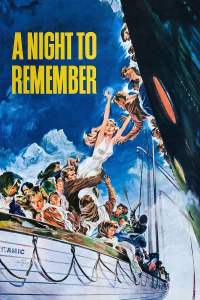 Up last is a titanic film that can give DiCaprio’s a run for its money. A Night to Remember was released in 1958, and while it wasn’t the first film about the failed ship, it was the most accurate at its time. Unlike the newer release, it doesn’t create a single over-arching story to follow, but instead charts the paths of a dozen or more crew and passengers before and during the disaster. In fact, some scenes seem to lifted straight from this film to James Cameron’s movie. Starting a day or two before boarding, we see various people prepare and then depart, then the crash with the iceberg, and then the sinking and aftermath. It also follows the Carpathia, which came to look for survivors, and the California, which ignores the SOS calls though it was just 10 miles away, a fact not shown in the newer film. Why and how it sank is pretty much the same as it was shown in Cameron’s film, with the exception that it does not show the ship breaking apart, a fact not fully accepted in 1958 when this movie was made. Otherwise, extremely accurate, well shot, and supremely engaging, in glorious black and white.
 The newest remake of The Predator isn’t the worst high budget action film, but it may very well be in the discussion. That’s not to say it is a terrible movie. It doesn’t take itself too seriously, has some OK humor, and plenty of bodies getting ripped apart with copious amounts of gore. But for all that, it is pretty dull. In this film, a quasi-sequel of the Predator films that have come before, humans have realized that they are being harvested by this alien race, and being visited more often because the aliens know that our planet is on its last legs. They have used our DNA to breed an even bigger super soldier. The body count goes way up as the movie goes along, but even at less than 2 hours, you may wish you were one of the casualties before it is finally over. Unfortunately, it made enough money overseas that we’ll probably see (another) sequel.
 The Equalizer 2 follows the original 2014 film, bringing Denzel Washington back to mete out more justice. I was a big fan of the first, but this one unfortunately grew dull after awhile. Robert McCall is pulled into an investigation when a long-time friend is murdered in Belgium, seemingly as part of a cover-up as she was on the case of a separate killing. The plot devolves into the worst action film tropes, including when a single man is able to take out a group intent on his death because they are determined to come at him one at a time. I found the film most entertaining in the first half, before the plot really kicks in, when McCall is just mindlessly killing evil-doers in fantastic ways. Denzel is always arresting on screen, but that is really the only reason to watch this film.
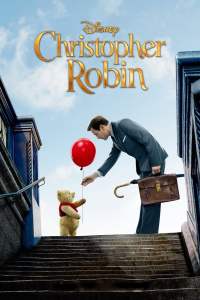 I enjoyed Christopher Robin more, maybe because I’m a sucker for films that hearken your childhood without being melodramatic. Winnie the Pooh’s favorite boy is all grown up and has forgotten his childhood friends (who are most definitely not make believe) until one day, when Pooh shows up at his house in London. At first, Christopher Robin tries his best to brush Pooh off, as he has an important work presentation to prep, but he is roped in to a little adventure to help Pooh find Eeyore, Tigger, and all the others. Lots of humor (from Ewan McGregor as Robin as well as all of his fur-friends; their banter is delightful) and a heart-warming plot. A great family film which stresses the importance of living life for those that really are most important in your life.
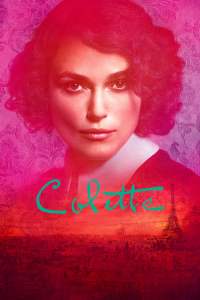 Colette is a fantastic character-driven film about the famous eponymous writer in late 19th century France. Keira Knightley plays Colette, a woman from a small town who is thrust into fame through her work. Her husband Willy (Dominic West) has a name for writing but no talent of his own, and hires ghostwriters to supply him with novels to publish under his own name. His extravagant lifestyle though leaves them always on the edge of poverty, so rather than pay others to give him books, he coerces Colette to write for him. Her semi-autographical books about a strong, independent woman with homosexual tendencies, named Claudine, become huge hits. Over time, each of them find separate lovers to satisfy themselves, and Colette grows more animus of Willy. Ultimately she must decide if she can continue to live under his heel or not. Knightley and West are equally extraordinary in this important story of a woman’s independence.
 Operation Finale is like if the films Munich and Argo had a baby, but unfortunately it doesn’t live up to either of those 2 great movies. It is based on the true story of the hunt for Nazi war criminal Adolf Eichmann, the so-called “architect of the Holocaust,” who fled Germany at the end of the war to hide in Argentina. Israel sends a team to capture him and then quietly flee Argentina with him, so that he can stand trial. The investigation and kidnapping of Eichmann, in a country with plenty of Germans still sympathetic to the Nazi cause, is often gripping cinema, but the film doesn’t reach the heights it set out to. There is however superb acting by veterans Oscar Isaac and Ben Kingsley, and their face off against each other is as good as it gets.










 Jons Movie Takes