
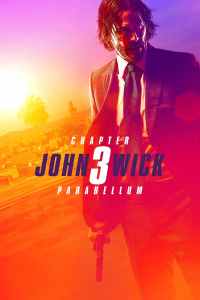
 John Wick 3 continues the ass kicking that Keanu Reeves as Wick has been putting on for the last few years. It picks up exactly where the last film left off: John Wick has just killed his nemesis on neutral ground. As such, he has lost the protection of the secret organization of killers, and everyone under the sun is now out to kill him for the huge bounty on his head. There’s no deep plot here, no hidden surprises; it is just amazingly detailed gun, knife, and fist fights for 2 hours. The action is beyond over the top as John Wick and the few friends he has left go on a rampage killing what seems like hundreds of people, in gruesome, blood-splattering, video-game-like fashion. It’s a great pure action film, if that’s up your alley, you’ll enjoy it. ★★★½
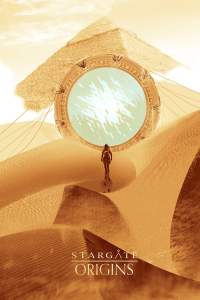 15 years ago when I was heavy into sci-fi movies and shows, I was big into Stargate SG1. Despite its awful reviews, I wanted to watch Stargate Origins: Catherine just to see what the franchise has been up to. It is unsurprisingly terrible. Originally a 10 part webseries which has been edited to a full movie, it follows a young adult Catherine Langford and her father as they are first studying the stargate in the 1930s. When Nazis show up with advanced knowledge of the gate and force Mr Langford through it to another world, Catherine follows to rescue him. This film has it all: atrocious acting, worse dialogue and writing, low production values (I think I could find someone who could do better on any college campus right now), and a shoddy story. They do their best to clean up the continuity problems with the team learning how to open the gate 60 years before they supposedly did it for the first time in the original mid-90s film starring James Spader and Kurt Russell, but it is rough. I think the Stargate franchise is one of the great sci-fi premises of all time, but until the people behind it can find the funding to do it right, they need to let it lie. ½
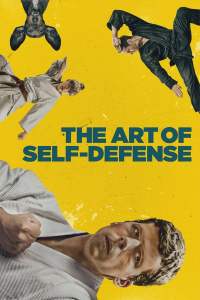 The Art of Self-Defense stars Jesse Eisenberg as Casey Davies, a shy, effeminate man, who is quite possibly on the Autistic spectrum. Though socially awkward, he throws himself into new hobbies, the latest being karate, which he enrolls in after getting mugged one night. His instructor is a bit of a nut-job and a prototypical dominant male. He urges Casey to start listening to metal music and learn German instead of French, since it is a stronger language. As Casey throws himself into karate in all aspects of his life (for instance, buying only yellow foods once he attains yellow belt), he becomes more “manly.” A woman who has been at the dojo for years, Anna (Imogen Poots), is constantly passed up, though she’s clearly better at karate than any of the men. It’s a quirky funny movie at times, but gets real serious by the end. It also gives strong social commentary on the definition of masculinity, the importance (or false importance?) of feeling strong in your daily life, and of course, male/female roles and how they are looked at in our society. A strong film. ★★★½
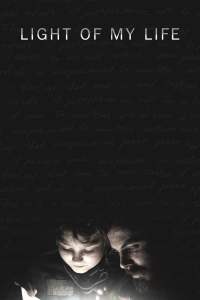 Light of My Life is written by, directed by, and stars Casey Affleck as an unnamed father to “Rag,” an 11 year old girl. This is made fantastical because they live in a time when a plague wiped out nearly all women in the planet 10 years ago. A baby Rag was one of the few who was immune, though her mother was not. Dad and Rag have spent 10 years living off the grid, because Dad knows there are plenty of dangerous men out there who would love to get their hands on a girl. When they do need to go into town for goods, Rag dresses as a boy and keeps quiet. However, she is approaching the age where that will no longer be possible. They go from camp to camp, always moving whenever Dad gets a bad feeling that they’ve been spotted or that people may suspect Rag is a girl, and always have a backup plan to abandon any camp quickly. When they finally find what looks like a safe place – an old house with a couple religious older men who seem to be protective of Rag – they are lulled into a false sense of safety. This is a quietly tense film, with edge-of-your-seat thrills. It was like watching a train barreling towards you from off in the distance, but you can’t seem to get out of its way, it has that kind of constant fear and dread. Great picture. ★★★½
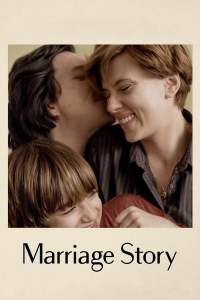 Marriage Story features two great actors in quite possibly their finest performances, and is one of the most raw, emotional, and saddest films I’ve seen in awhile. Despite what you might think about the title, it isn’t a love story about two people coming together, but it is about their love coming unglued. Nicole and Charlie (Scarlett Johansson and Adam Driver) were once deeply in love, and the film opens with each penning a letter about all the things they love about each other. The letters are heartfelt and endearing, but we learn right away that they were written as an exercise for their mediator, a first step in a conscious separation. As Nicole moves from New York back to her hometown of LA, taking their son with her, their separation heads towards contentious and hate-fueled divorce proceedings. The director, indie-film hero Noah Baumbach, does an amazing job of showing how sometimes love just isn’t enough, as Nicole and Charlie cared very much for each other, but they were just on different paths. Johansson and Driver are simply amazing in this film; I wouldn’t be surprised if they both don’t get nominations in this year’s awards’ cycle. The camera will at times stay glued to their faces, showing the intensity of their emotions as each runs the gamut from joy to hatred. A must-see film, just be prepared for the roller coast of emotion. ★★★★★
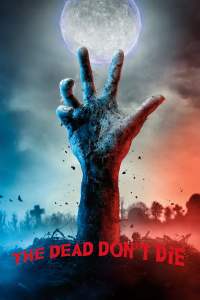 The Dead Don’t Die is proof that a lot of good moments do not always come together into a good movie. The latest from quirky indie director Jim Jarmusch, it brings his style of filmmaking to the zombie genre. The government has been doing some “polar fracking” which has spun the Earth off its axis. This has made the planet screwy, with electronics failing, days being randomly longer or shorter, and, most bizarrely, the dead start rising. Jarmusch brought in a bunch of actors he’s worked with in the past, so the film features an all-star cast including Adam Driver, Bill Murray, Tilda Swinton, Tom Waits, Danny Glover, Selena Gomez, and others. While the film has plenty of good moments and lots of funny dialogue, I couldn’t help but feel like the movie is just a bunch of fluff. Nothing that was all that memorable once it was over. I guess worthy of a single viewing, especially big Jarmusch fans, but overall, not great.
  Frozen was one of those films that didn’t need a sequel; it had a definitive ending with no more story to tell… until Disney invented more story to tell. Having said that, the sequel is good. Elsa is hearing a song from the north, and goes to investigate, aided by Anna, Olaf, Kristoff, and trusty Sven. Along the way, they unravel some of the backstory of their parents and, of course, save the kingdom again. The animation just keeps getting better, and the movie is visually stunning. The new songs certainly live up to the legacy of the first film too. For a movie that focuses heavily on magic, it lacks some of the movie magic of the first film: there are less surprises and some plot points are forced, but it is still great family fun for the cliché children of all ages.
 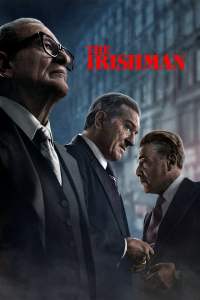 If you’ve been reading a lot of Martin Scorsese quotes in the news lately about his comments on the marvel films, it is from the context of him promoting his new film, The Irishman. This is a good old mobster film, based on a nonfiction book by Charles Brandt, which is itself based on confessions of mob hitman Frank Sheeran. Frank is portrayed by Robert DeNiro, and the film follows him from his early days as a young man in Philadelphia starting to do favors for mob boss Russell Bufalino (Joe Pesci), through his mid-life working for Jimmy Hoffa (Al Pacino), and up until old age, when he has outlived them all. It is an incredibly engaging story, full of incredible actors who haven’t lost a step, and playing in the types of roles they were born for. It’s a long one at 3 ½ hours, but it didn’t feel like it. Excellent pacing and deceptively funny dialogue too keep the wheels turning throughout. Who knows how much of it is true, but when the movie is this good, who cares.
 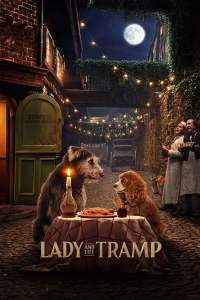 I haven’t seen the original cartoon The Lady and the Tramp since I was a little kid, but I have fond memories of it. I went into the new live action one with a bit of trepidation due to the mixed reviews, but I mostly enjoyed it. For anyone who was never a child (because that would be the only way you could have missed the original), the story is of a pretty female dog who lives a pampered life in a house, but finds herself neglected when the young couple have a child. She runs away for a short time and falls in love with a street dog who others call The Tramp. When she is reunited with her family, she misses her love, and teams up with other neighborhood dogs to save him from the pound. Like the live action Lion King, I still think the original cartoon is better, but still this is an above-average family fun movie with heart.
 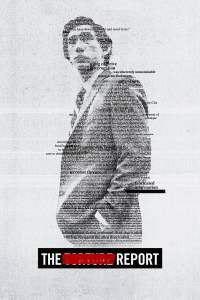 The Report is a new film detailing the hunt by a Senate-backed commission to get to the bottom of the “enhanced interrogation techniques” (torture) used by CIA operatives overseas. Adam Driver plays Daniel Jones, a staffer in Senate Feinstein’s office, who builds a report which said, despite what the CIA officially stated, tortue never lead to any reliable data to stop terrorism or to find Al Qaeda members. The first half of the film is great, as Jones does his digging and we see, through flashbacks, the way those techniques were given the green light: who knew what, when, and how. I thought the second half slowed down, as Jones fights the CIA higher-ups as they try to protect themselves, and the whole thing becomes a political fight. As a whole, it is a very interesting film. I’m sure people who bone up heavily on the constant stream of government news were aware already of much of the info portrayed in the movie, but for myself, I learned a lot about how widespread the initial plan and the following cover-up went. It does a good job of making sitting at a computer digging through miles and miles of confidential memos look exciting. And Adam Driver gets to show a lot more than he did in Jarmusch’s film.
 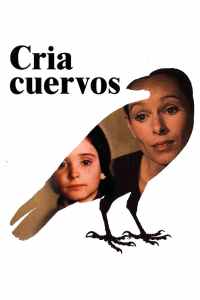 Up today is 5 Spanish language films (but not necessarily from Spain). I really enjoyed Cria Cuervos, from the great director Carlos Saura (I can’t think of a movie of his I have not enjoyed!). This one is a beautiful blend of realism and a daydream-like fantasy, from the eyes of a young girl dealing with the recent loss of her mom. It begins with Ana (played by Ana Torrent, famous as the young lead actress in Spirit of the Beehive) seeing her father die, but rather than be upset, she is pleased, and believes she is the one who killed him. As Ana’s aunt moves into the house to take care of her and her sisters, what follows is Ana going about her life in the present, but at times she has visions of her mom, or housekeeper, or dad, either memories or, at other times, events that she probably didn’t witness but can imagine how they went down. She sees her mother unhappy in her marriage to a strict military man, and Ana believes ultimately this unhappiness led to her mother’s death, for which Ana blames the father. These serious moments are interposed with moments of play when Ana and her sisters are just the children they should be, playing at dress-up. I cannot stress how much I loved his film, on its own merits, but even more so when you take into context of when it was made. Released in 1975 amid a time of extreme uncertainty in Spain (dictator Francisco Franco’s regime was crumbling, his named successor had already been assassinated, and the country was heading for its first change in leadership in nearly 40 years), this movie too has a sense of wonder, of anticipation, and of hope for a new beginning. Lots of not-too-deep metaphors, such as the death of military/dictator (the dad), the love/hate relationship with that figure (the mom), and the uncertainty of what comes next (Ana). Brilliant stuff.
  For the Luis Buñuel films I’ve seen, they’ve been hit and miss for me. I’ve really enjoyed the more linear plot-driven films, his more traditional stuff, but really hated his more esoteric stuff (I’m looking at you
 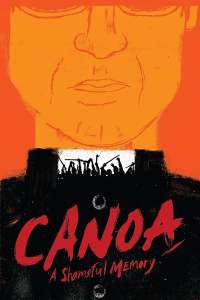 Canoa: A Shameful Memory is a Mexican film recounting the true story of a lynching of 5 young men in the tiny town of San Miguel Canoa in 1976. Parts of the film play out as a quasi-documentary, with actors relating directly to the camera the political environment at this time in Mexico, and others are acted out. Across the country, the state was wary of the rising political power of the younger generation, and spreading fear that they were communists and socialists (sound familiar?). In San Miguel Canoa in particular, a corrupt Catholic priest had stirred people to a frenzy. After the opening narration, the fateful day is acted out. 5 young employees at the university in Puebla come to visit to climb a local dormant volcano, but are stuck in the town overnight. due to heavy rains. While they find refuge in a local farmer’s house, a man who knows the priest for what he is, the priest stirs up the local population with news that the communists have finally come to their peaceful town. The whole town turns out and attacks the 5 young men, ultimately killing two as well as the owner of the house where they were staying. It is a stark, raw, emotional portrayal of what fear can do to a population.
 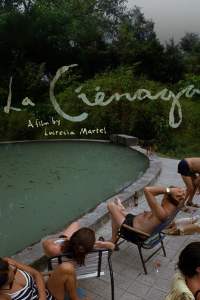 La Ciénaga is not a film I should like, but I did. It is a neo-realist picture heavy on plot elements but light on actual plot, not the type of film I like since I’m so into “stories.” But it is a fascinating picture. An Argentine film from director Lucrecia Martel and translated as “the swamp,” this film follows an extended family during one sweltering hot summer. Mecha is the matriarch; she’s an alcoholic living with her husband Gregorio in a crumbling manor in the countryside. Though the family probably once had money, it looks like it is evaporating. They still have a couple servants, but the house is falling apart around them, seen most clearly in the filthy pool the woman hang around all day. In the first scene of the movie, a drunken Mecha falls by the pool and cuts herself on a broken glass. This brings everybody over to visit: her sister with all of her kids, as well as her adult son. There’s too much going on to get it all in a short synopsis, but a lot is touched on, including some quasi-flirtatious actions between a brother and sister, extreme racism by Mecha and her family towards the American Indian servants, and the tight grip of a bourgeois past which the family can obviously no longer claim. The movie feels as real as the family next door and is mesmerizing in a voyeur-like way. We see a family in a way that is usually only kept behind closed doors.
 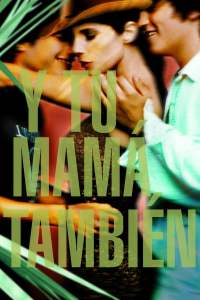 Y Tu Mamá También is an early film from director Alfonso Cuarón, who would go on to be a megastar with Gravity and, most recently,
  Booksmart is a movie that I didn’t initially care to see. I thought it was another stoner-, drunk-, orgy-kind of high school “coming of age” film that usually bores me to tears. I watched it only because there was nothing else to watch one late night on the streaming. I’m so glad I did; this film is fantastic. It is directed by Olivia Wilde (in her directorial debut) and is about two friends who spent high school playing by the rules and supremely focused on college and what comes next. On the last day of class, Molly is in the gender-neutral bathroom when she hears a couple boys and another girl talking about her. She comes out of the stall to put them in their place, telling them how she is going to Yale and they will always be losers, when her misconceptions are completely shattered. Just when you think, “yeah girl, you tell them!” they tell Molly that they too have been accepted into prestigious schools, or, in one case, has already landed a 6-figure job at Google. Molly is thunderstruck due to her low opinion of these classmates, and quips, “But you guys didn’t even care about high school.” Their reply, “No, we didn’t ONLY care about high school.” Molly and her friend Amy decide they’ve had it all wrong, that this whole time they could have had the best of both worlds, and decide to party it up on their last night of high school before they graduate the next day. It’s a coming-of-age movie for today’s kids, so the language and behavior is a lot rougher than you might expect of a John Hughes film of the 80s, but it is also just as good. Boisterous yet heartwarming, laugh-out-loud funny yet endearing, it has it all.
 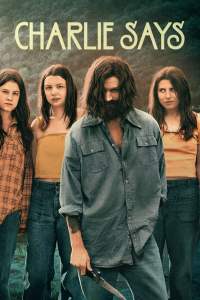 Charlie Says is the story of the Charles Manson murders from the viewpoints of the three most prominent women in the “Manson family.” Two separate timelines are shown: the first starting when “Lulu” (Leslie Van Houten) joins the group, up until the murders go down; and the second showing three years later, when the women are behind bars and a psychologist is trying to help them free themselves from Manson’s influence. From the beginning, the film shows how Manson is able to lure girls to his cult, with promises of leaving harsh lives behind and finding a new existence. But as the film goes, and Manson gets crazier, we begin to wonder how these girls fail to see what he has become. I don’t know how accurate the film is, this all went down before my time and I never read up much on these events, but even if half the film is factually accurate, it’s pretty nuts. There are some good moments and good actors, lead by Hannah Murray as Lulu (Gilly from Game of Thrones), but the movie does suffer from the usual paint-by-numbers syndrome that docudramas tend to, meaning heavy on facts and light on art. The ending also felt very disjointed for me, and there’s a definite lack of cohesion to the whole film.
 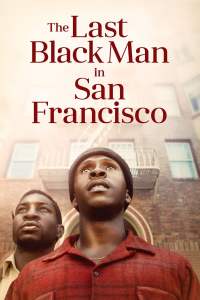 The Last Black Man in San Francisco is a very well-done film from first-time director Joe Talbot. Jimmy is a poor, homeless black man struggling to find his place in a changing city. He lives on the floor of his friend Mont’s house and works as a caregiver at an old folks’ home, but in his free time, is obsessed with a cool old Victorian home in a well-to-do area of the city. A little old white couple live there, and haven’t maintained the house in years, and Jimmy shows up to do some minor repairs here and their, work that is not welcome by the owners. After a little while though, Jimmy finds them moving out, and discovers the house is being argued over among the family after a death. A realtor tells him that in these kinds of familial disputes, some houses can stay empty for years, so Jimmy hatches a plan with Mont to move in and squat. We finally learn that it was Jimmy’s grandfather who built this house in the 40’s, but his family lost it decades ago when Jimmy was just a kid, due to his father’s drug problem. Things get murkier when the realtor backstabs them and throws them out and lists the house for sale. All of this is against the backdrop of race relations and racial injustices in the city, including a friend of Jimmy’s and Mont’s who ends up shot to death for thugging it up to the wrong person. Front and center is the friendship of Mont and Jimmy. It’s a good movie; if I can find any flaws, I think it is that they try a little too hard sometimes to force some elements, where I think it could have played better if the director had just taken a step back and let the magic happen. While I don’t think everything works, enough does to create a powerful and resonant film.
  Brittany Runs a Marathon is a film I’ve been looking forward to awhile, and even more so lately as I thought I could relate to the main character, as a person who started walking, then jogging in the last 5-6 months to try to lose a bunch of weight. But this film is a total bore. It’s supposed to be a comedy-drama I guess? It’s about an overweight young woman, Brittany of course, who is told by her doctor that she needs to lose weight. At first she can only run to the end of the street on her block, but obviously we know she builds to a marathon. She has a skinny-bitch friend who, obvious to the viewer but not to Brittany, likes to keep her around to feel better about herself; and she was just getting into a relationship when I gave up on the film. It’s just not funny, despite Brittany trying so hard to make it so. Honestly I found her character annoying and her attempts at humor were like nails on a chalkboard for me. I’ll give a star for the premise, but that’s it.
 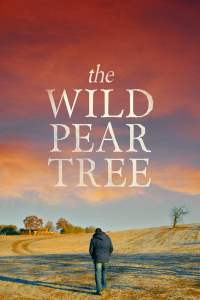 The Wild Pear Tree is a Turkish film directed by Nuri Bilge Ceylan. It is about a young man, Sinan, who has recently graduated from college with a degree in teaching. He studied teaching but actually wants to be a writer, and has already written his first book and is trying to scrape together money to get it published. Sinan has returned to his family in their small, rural town, and immediately starts clashing with them. His father is a teacher as well, and while he was once respected in the community, he has gambled away the family’s money, forcing them to move into a tiny apartment. Sinan is the young, hotshot, cocky college grad, who reminds me of myself (and probably many others) at that time of our lives, when we thought we had it all figured out. He looks down on his dad and his mom (for staying with the father through all this), can’t wait to leave the small town, etc. He even belittles the one local celebrity, a writer, because he thinks his books pander to the population rather than open new ideas. Sinan comes off as a narcissist and a bit of an asshole, but he’s just as conflicted as every flawed human being. He’ll deride his father one minute, and defend him the next. After finally getting his book published and confronting his family over their issues, Sinan, who did not score high enough on his exit exams to land a good teaching job, goes away to perform his military service (which is compulsory in Turkey). He returns a couple years later, hopefully a little wiser, but you’ll just have to watch to see. It’s a beautiful film, and the story does an amazing job of blending realism with Sinan’s poetic dreams. I rarely give five stars to modern films, because I don’t know how they’ll stand the test of time, but this one deserves it.
 Awhile back I watched some of Rainer Werner Fassbinder’s films, for the first time, and really liked them. Those were some of his bigger hits, so today I’m looking at his earlier, lesser-known pieces. Love is Colder Than Death was his first film, in 1969. It’s about a small-time thief, Franz (Fassbinder himself), who pimps out his girlfriend and hangs with a thug named Bruno. Franz seems to act tough but always leaves the real dirty work to Bruno, which doesn’t bode well for Bruno in the long run. I’m not sure what Fassbinder was trying to say here, unless it is maybe that you can trust no one in life. Not a great picture, and the shoestring budget is telling, but there are glimpses of the greatness that would come. Fassbinder doesn’t rush his scenes (as a director); he lets moments develop. In fact the whole film has a leisurely pace to it, which can be good or bad depending on your mood. I wasn’t feeling it, but might try it again at a later date.
  Katzelmacher was his second film, based on a play he also wrote. It follows a group of young adults (some of whom would go on to be Fassbinder regulars in his films), who are frankly really boring people. All they do is have sex and talk about it with each other. Even the sex is boring, and why the women don’t leave these sad specimens of men is beyond me. But all that changes when Jorgos, a Greek immigrant, takes a room at one of their places. Rumors immediately swirl about the size of his manhood and his prowess in the sack, getting the women excited and the men jealous. However, no one seems to really get to know Jorgos, or even tries. This one I liked a lot more. You have to be patient, it is a full 40 minutes of crawling on screen before Jorgos arrives to shake things up, but there’s humor there to keep you entertained. Once our Greek gets involved, the payoff is worth it. It’s a really nice movie that doesn’t get much attention.
  And….Fassbinder crashes back to earth. I gave up on Gods of the Plague 45 minutes in. 45 minutes of literally nothing happening. It revolves around a man just out of jail. Outside of that, I can’t really tell you anything, as I’m not really sure what the plot was. There were a couple girls vying for his attention, and he seemed to still be engaged in some criminal activity here and there, but nothing much was going on. We got to watch him visit his mom, play with a record player, and take long, slow walks down the street. If there’s a story here, I completely missed it. Fassbinder’s earlier 2 films took a solid 40-45 minutes to build to something, so maybe this one would eventually too, but at least those two were interesting enough for me to hang around to get to the denouement. This one was not. ½
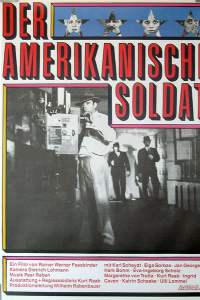 The American Soldier is Fassbinder’s take on a noir, which means it is really nothing like a noir. It has the look of a noir, but the feel of something quite different. Ricky is a German-born American citizen returned to Germany after fighting in Vietnam. He is locally known as a contract killer, and he starts getting calls to continue his killing ways immediately. However, it seems the contracts are being called in by the police, who are looking to entrap him. There’s also a side plot involving Ricky’s bisexuality, which never really plays out. Some film noirs have a nice slow burn, but this one, in true Fassbinder fashion, is more of a snail burn. It moves at a crawl, and plot points are sparse, to the point that 40 minutes in, I wasn’t sure what was going on. It filled out nicely by the end, but still a lot of stuff was left unexplained.
 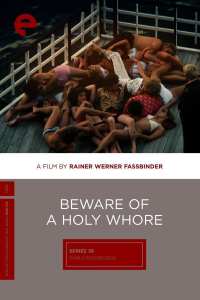 Beware of a Holy Whore is much better. It is a quasi-satirical, quasi-autobiographical film about a film production team brought together to shoot some scenes at a villa in Italy. Fassbinder used as inspiration his latest film shoot (a film called Whity, that I have not seen), and pokes plenty of fun at himself and his team of actors and film workers. Many of the people involved in the movie-within-a-movie are all ready at the villa (actors, makeup, producer, cameramen, etc) before the director and the star actor ever show up. When the director does arrive, we see him as a childish, pig-headed narcissist; all he does is yell and fire people who don’t jump when he commands. The film plays out as a train wreck of epic proportions, with revolving relationships on set, jealousies, and the producer and director constantly looking for funds to keep it going. The viewer thinks, surely this will end in failure, but when one actor is asked how the director gets away with his antics, the actor prophetically responds that the director is a genius. Sure enough, everyone is amazed by the quality of the filming when it gets underway. It’s a stark look behind the curtain of filmmaking, I can only hope that most sets show a little more professionalism.
 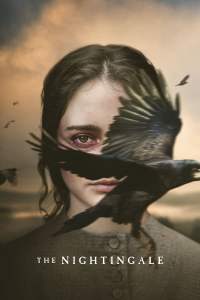 I really enjoyed The Nightingale, but it is a brutally uncomfortable film that I’m not sure I could watch again. It takes place in the early 19th century on a British penal colony, which is now Tasmania, off the coast of Australia. The film follows two main characters: Clare is an Irish young woman who has served her prison time and is ready for release, and Billy is a black Aborigine. The commander of the local settlement, Hawkins, refuses to release Clare, because he’s been raping her and forcing her to sing for entertainment for his troops. When she finally has had enough, she convinces her husband to leave the settlement with her, but Hawkins intercedes, killing both the husband and their baby. Hawkins then takes a few troops and heads cross country towards the only port on the island, in hopes of getting a promotion and leaving this place. Clare survives the last assault, and hires Billy to track Hawkins across the wild and dangerous jungle. The film takes place during the Black War, a time when most of the Aboriginal people of Tasmania were butchered by British soldiers (the war nearly wiped out the indigenous population of the island), and the movie doesn’t shy away from the brutality of the times. Clare and Billy are in constant danger of being caught and killed, she for being a runaway prisoner, and he for the color of his skin. The rape scenes, of which there are multiple, are tough to watch obviously, but they certainly add realism. You feel Clare’s plight and root for her, but the director (Jennifer Kent) subtly makes Billy just as big of a hero, even before the big climax. Tremendous acting from those two as well. I highly recommend it, but the squeamish may want to cover their eyes (and ears) at times.
 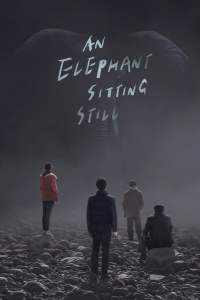 Simply wow. An Elephant Sitting Still is one of the deepest, most profound, most introspective movies I’ve seen in quite awhile. This Chinese film follows four individuals whose lives intersect, all lonely and dealing with terrible situations in their personal lives: a young man who pushed a bully down a set of stair, causing possibly fatal injury; an older neighbor of his who is getting shoved into a nursing home by his selfish children; a classmate with an alcoholic and abusive mother; and the aforementioned bully’s older brother, who watched his best friend kill himself after finding him in bed with his girlfriend. This four hour film follows these lives as they weave in and around each other over the course of a long day. For a good part of the film, our characters face tragedy after tragedy (the young man discovers his grandmother’s dead body, the old man’s dog is attacked by a bigger dog, etc.). Slowly, each individually hears of an elephant, previously part of a circus, which has sat in a neighboring town and refused to move. Whether it is pondering life or given up hope, no one knows, but our leads feel driven to get there and find out why. Each of our four main characters seems alone and apart from the busy world around them; with little music, we hear the city noise constantly, a steady drum of car beeps and construction is made all the more deafening when you don’t hear it for a moment. And the camerawork is incredible. It gets you into the character’s eyes, often sitting just behind them and watching their actions up close (purposefully uncomfortably so at times), with super-long shots that go on for minute after minute. The film is all about the main characters, everything else (scenery, other people) are off center and, often, out of focus. What was director Hu Bo, just 29 years old, trying to tell us? That we are destined to be alone, or that camaraderie can be attained? That hope can be found in the world, or that all is hopeless? Since he took his own life once the film was finished, and before its release, I think we know what his answer was. This is an astounding film. Its pace and length make it not for the faint of heart, but it is rewarding for those that appreciate art in film.
 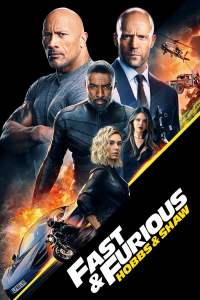 Hobbs & Shaw brings together two of the biggest stars of the Fast and Furious film franchise in a spin-off of their own. Dwayne Johnson and Jason Stathum are the eponymous duo, brought together to hunt down a deadly virus which can wipe out mankind, and is currently in the possession of Shaw’s badass sister. On the bad-guy side, Brixton (Idris Elba) want the virus too. The F&F films are always over the top, but also (almost) always highly entertaining; this film hits on the first part but unfortunately is exceedingly average on the second. The action scenes are intense and thrilling, and the banter between our two heroes, who can’t stand each other, is great, but there is a dull period for a good 30-40 minutes in the second half of the film that just doesn’t fit. I understand you can’t keep the action going for 2 hours straight, but maybe just cut the film down and stick with what works. It’s a decent enough film as far a spin-offs go, but let’s be honest, it’s a cash grab, and on that front, it definitely succeeded, making three quarters of a billion worldwide. Good enough to make another spin-off if they wanted.
  If you like a different kind of movie, it doesn’t get any more so than Anna and the Apocalypse, a musical/zombie film mash up. On its merits as a film by itself, it is just OK, but it is entertaining and does feature some catchy tunes for fans of the musical genre (though the gratuitous gore may turn some of those people off). In high school film standard, the movie follows a group of outcast friends dealing with bullies, parents, and teachers. They tip you off early on that this isn’t your standard high school movie though, while singing that this film isn’t going to have a Hollywood ending. Sure enough, the next day, the zombie apocalypse has hit, and hit quickly, and not everyone is going to survive. The cast, mostly unknowns, are actually quite good, and Ella Hunt in the starring role is the darling of the show. I give the filmmakers props for trying something different: it doesn’t always work, but there’s enough moments that do that it is worth a watch.
 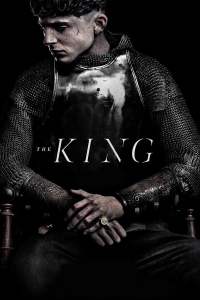 The King is a recent Netflix release, starring Timothée Chalamet as King Henry V and Joel Edgerton (who also co-wrote) as John Falstaff, and is based on the Shakespearean plays on this king and his father. “Hal,” as he is known to his friends, cares only for drinking and partying, and his father Henry IV, nearing death, is prepared to pass Hal and hand the rulership to his second son, Thomas. Henry IV has been fighting skirmishes for years with lesser English lords, anytime he sees a perceived slight, and in one such battle, Thomas is killed. Henry V becomes king and vows to put an end to those conflicts, and he does in his own country, but he is swept into renewed war with France when an assassin tries to kill him. His father Henry IV had been claiming kingship in France too, as part of the 100 Years War, and Henry V marches off to continue the conflict, with trusted captain Falstaff at his side. I usually think Chalamet’s acting is a bit wooden, even though he received a lot of acclaim for Call Me By Your Name (which I hated), and I wasn’t impressed again here, but Edgerton is good, and the cinematography and sets are amazingly detailed. It plays more like a period drama than a medieval war film, though there is plenty of sword fights, and overall is a better-than-average film in both regards.
 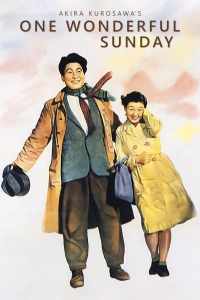 What a snoozefest, so boring I almost don’t believe it is Kurosawa. One Wonderful Sunday follows a young couple in 1947, right after World War II, when the nation is going through hyper inflation and the two cannot afford anything. They dream of a place together, but are forced to live apart (he with a roommate, her with her large family of 16 in a tiny house). Their situation makes the man completely depressed. As the two run around town this day, the girl tries to cheer him by day dreaming about their future house and business, playing with street kids, going to the zoo, but nothing lifts her boyfriend’s spirits for long. The only interesting moment comes near the end, when the girl breaks the fourth wall, passionately begging the audience to help her cheer up her man, but this excitement quickly fades, almost as fast as my memory of this bore.
 Scandal is much better, and not just because it features a bona fide star in Toshiro Mifune. He plays a painter named Aoe, who one day has a chance encounter with singer and star Saijo while out in the country. He gives her a lift back to the hotel and shares a tea with her, where the two are photo’ed by the paparazzi. This photo goes viral (in 1950 style, via newspapers). The brash Aoe decides to sue the tabloid, and hires an every-man lawyer, Hiruta, mostly because Hiruta is a family man and Aoe puts a lot of faith in his character. Unfortunately this faith is misplaced; to help his ailing daughter and poor family’s situation, Hiruta begins taking money from the tabloid and working both sides. The film starts to focus on Hiruta more and more as the film goes along, and the guilt he is wracked with, balancing the needs of his family and his personal morals. The trial is great courtroom drama, leading to a fun, satisfying film.
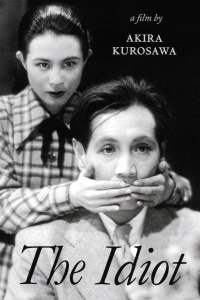 The Idiot is based on the book of the same name by Dostoevsky. Kurosawa originally made a film that was nearly 4 ½ hours long, but the studio balked at the running time and chopped it up to just under 3 hours. You can tell too, the editing is rough in spots, especially in the beginning, when we get voiceovers explaining background and character traits. But once we get into it, the viewer is rewarded with a rich and beautiful film; makes me want to read the book , and wish that the original film had survived (but sadly it seems lost to time). The eponymous idiot is a man suffering PTSD from the war, whose eyes have been opened and now only sees good in people around him. This trait makes women around him fall for his purity of heart and soul, and men act either jealous or callous, to use him to their own ends. The heart of the story is a love triangle (or more appropriately, quadrangle), but only through our hero’s insight can the characters discover who and what they really want. Hopefully, they figure it out before it leads to the downfall of everyone. A heart wrenching film, and I can see inspiration for some of the great art films that would come in the 60s and later.
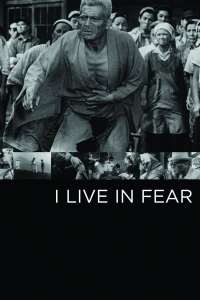 I Live in Fear is the the most direct as far as dealing with the effects of the war. It follows an old man, Kiichi Nakajima, who lives in profound fear of a new atomic attack on Japan. During thunderstorms, he even suffers from flashbacks of the day the bomb fell, seeing the sky light up and hearing the explosions. After first trying to build an underground bunker, he’s decided the only way to keep himself and his family safe is to move them all to Brazil. He wants to up and move everyone: his adult children and their spouses, his former mistresses and illegitimate kids, etc. His children have put pressure on their mom to petition for conservatorship, for fear that his actions would deplete the family savings and put them all in dire straits. While Kiichi just wants to protect his family, everyone else is purely selfish, worrying about him blowing all “their” money, or for the illegitimate children, even getting into the will at all. On the surface, the fear of the bomb is the focus, but underneath, it also becomes about the dynamic of a family with an aging patriarch, balancing his desires with what is best for him. With his hair grayed and cropped short, sporting thick glasses and a complete change of his mannerisms and movements to take on the part of the old man, Toshiro Mifune is almost completely unrecognizable as Kiichi. This is a gut wrenching film, about a man (and a society) trying to cope with the debilitating fear of losing not only life, but family and future descendants, after a horrendous tragedy nearly did just that.
 I’ve seen some of Kurosawa’s hits and loved them (Seven Samurai, High and Low, Yojimbo), and others I’ve yet to watch (Rashomon and Ran come to mind), but from what I’ve seen so far, Ikiru is the best, and a true masterpiece. It is about a man, Kanji, who’s worked in city hall for 30 years stamping approvals on public jobs, but in true bureaucratic fashion, nothing substantial ever gets done. His life is changed when he finds that he has progressive stomach cancer, with maybe 6 months to a year to live. Faced with this stunning news, he wants to live life to the fullest, but he doesn’t know how. After a first night out drinking, whoring, and contemplation, followed by a couple weeks of following after a young spunky girl who seems full of life, he finally finds a cause to which he can devote himself. The residents in a local municipality have been complaining about leaking sewage near their homes, so Kanji makes it his goal to have a park built there. At this turning point, with roughly 45 minutes left in the film, it jumps ahead 5 months, and we see Kanji has just died. The park has been built, and we see in flashbacks, from Kanji’s friends and coworkers at his memorial, how it came to happen. At first, the deputy mayor and chiefs of each department all stumble over themselves congratulating each other on the project, but they leave early, and the underlings compare notes to realize it was all Kanji that made it happen. It is only then, while sharing stories, that they realize Kanji knew his time was short; to this point, he had told no one (outside of a few strangers in the beginning) of his impending doom, not even his son. The film is about the tenacity to complete something really good and lasting before your time is up, but more than that, to simply live life to the fullest. The title Ikiru literally means “To Live.” This is a sad but beautiful film, but even with a heavy subject, Kurosawa manages to inject humor, preventing it from feeling like a dirge. I defy anyone to not be moved to tears as we see Kanji deteriorate physically, while his drive never diminishes.
