Though I have seen every James Bond film, I wouldn’t say I’m a huge fan, and certainly not an aficionado, but I do enjoy them. Even the bad ones! And No Time to Die is not one of the bad ones. It’s a solid film, showing a human side of 007 that you certainly didn’t see often in Daniel Craig’s predecessors. And it brings Craig’s run as Bond to a satisfying conclusion, as it has been well known that this will be his final tour.
In the beginning of the film, Bond is still with Madeleine Swan, who we met in Spectre. They’ve been living idyllically off the grid, and Bond is, for all intents and purposes, retired. However, someone has ratted on him, and he is attacked by Spectre agents, just narrowly surviving. James thinks Madeleine has given him up, and puts her on a train heading out of town, ostensibly never to see her again. But it’s a pretty girl in a Bond film, so you know she’ll be back, and she does, in a big way, before the end.
Five years later, an MI-6 lab is attacked and a scientist, Obruchev, is kidnapped. The project he was working on involves Project Heracles, a bioweapon that attacks discriminately; a gas let off in public will only be harmful to the DNA of its target, leaving innocent bystanders alive. But since the target DNA can be manipulated, it is a dangerous weapon, and MI-6 needs to get it back. Bond is approached by the CIA first, his longtime friend from the other side of the pond, Felix Leiter. And while Bond is able to get his hands on Obruchev, the mission goes sideways, and Obruchev is ferried away. Brought into MI-6 by M, Bond is lured out of retirement to try to see who is really pulling all the strings in this latest scheme.
Knowing from the beginning that this was Craig’s last go at the character, I couldn’t help but anticipate how he would exit. And the movie doesn’t disappoint, in a way that is a true first for the franchise. While the espionage aspects of this movie aren’t among the best you’ll find in the history of Bond in film, the action scenes are right up there, and there’s a lot of “gripping your chair and leaning in” moments, especially in the final act. Craig’s 5 Bond films were a bit uneven, but all were at least decent, and he ends on a high note. I look forward to who gets to be next 007, and where they go from here. ★★★½
The Perfect Candidate is a film from Saudi Arabia. It is one of those films with a good message, but unfortunately poorly executed. Maryam is a young woman doctor in a small town, fighting not only poor roads in her little community, but also the religious prejudice against women in her country. The road outside her clinic isn’t paved, so emergency vehicles struggle to even get patients in the door safely. And when they are inside, they don’t want to be treated by a woman. Maryam sets out to Dubai for a medical conference, but is refused entry onto the plane when she doesn’t have a male guardian’s permission (her father, a traveling musician, is on the road). Maryam rushes to get her uncle’s approval in time to catch her flight, and in order to see him (through a silly circumstance), ends up entering the ballot to run for the municipality’s council. She misses her flight, but goes through with the election, running on a platform of paving the road in front of the clinic. By running, Maryam hopes to also shed a light on the growing vocalization of a strong female population. This is the kind of movie that critics will gobble up, but honestly it’s not very good. It feels way too contrived and there’s a subplot involving Maryam’s father that is only present as filler in the movie. Unless something is lost in the translation, the whole thing feels hokey. ★½
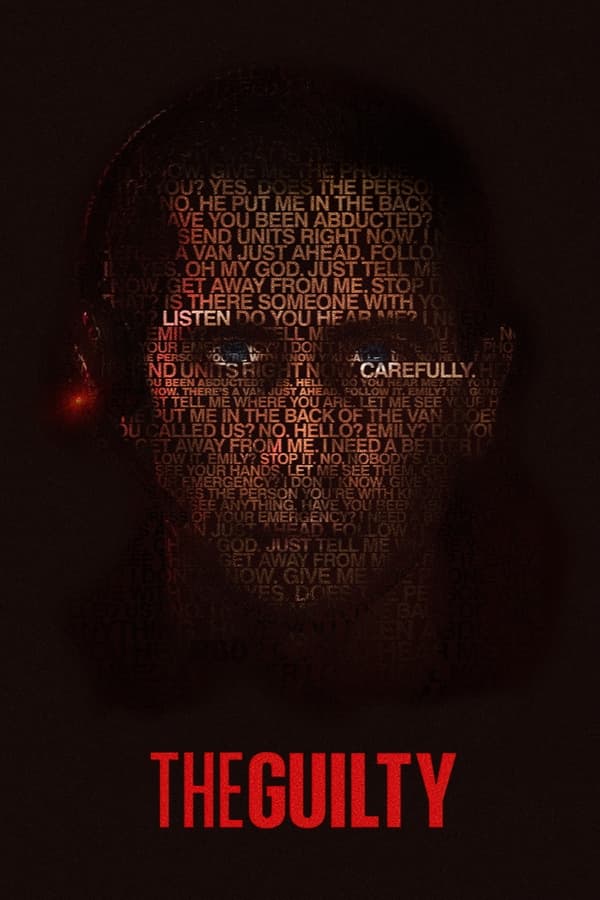
The Guilty is a film of two halves. The first half is fantastic. It follows a cop, Joe Baylor, who’s been on leave from the force while being investigated for some unknown transgression. In the meantime, he’s working at a 911 call center, and this evening, the night before his hearing to be reinstated as a police officer, he takes an unforgettable call. On the phone, Emily, in a scared, frantic voice, says she has been abducted, but doesn’t know where she is. Joe can hear a male voice in the background, but Emily is light on details. While Joe is frantically making phone calls to the highway patrol and local police, Emily’s situation gets more dire. With her cell signal bouncing around at different cell towers, Joe is unable to pin down Emily’s location for her to be rescued. It gets more frantic when Joe learns that she has kids at home alone, and he talks to her 6-year-old daughter, who is going crazy with worry. This part of the film is just as good as it sounds. It’s gripping, tension-filled, and I was on the edge of my seat the whole time. Then the big “reveal” hit with about 30 minutes to go, and while it was out of left field, it made the entire film feel gimmicky to me. All of a sudden, my interest level dropped to a level 2. It wrapped up OK I guess, and Jake Gyllenhaal is great in the lead, but the movie is nowhere near as good as it could have been. ★★
I’m bound to find a good movie out of this batch, but I’m still waiting. Echoes of Violence is the worst one yet. I don’t know why I keep watching these “B” movie thrillers, hoping to find a diamond in the rough. Too often disappointed. This one is about a man, Alex, who is a real estate agent getting ready to show a property in the middle of the desert when he hears a struggle off in the sand. He goes to investigate and sees a man standing over a girl. The girl is covered in blood, and cries for help. Alex is able to overcome the man and scares him off, then brings the girl back to the house. She’s been drugged, and as she comes to, she gives her name as Marakya and says she’s recently escaped a bad man who’s been running a sex trafficking ring for immigrants like her. Her attempted murderer was under this man’s employ, and there will be others trying to find her and silence her. Being an illegal, she doesn’t want Alex to call the police, but she wants to get a ride back to LA to exact her own revenge. The only thing going for this one is the pretty face, as Marakya is very easy on the eyes. The movie though is awful, with every bad gimmick, trope, and stereotype under the sun. ★
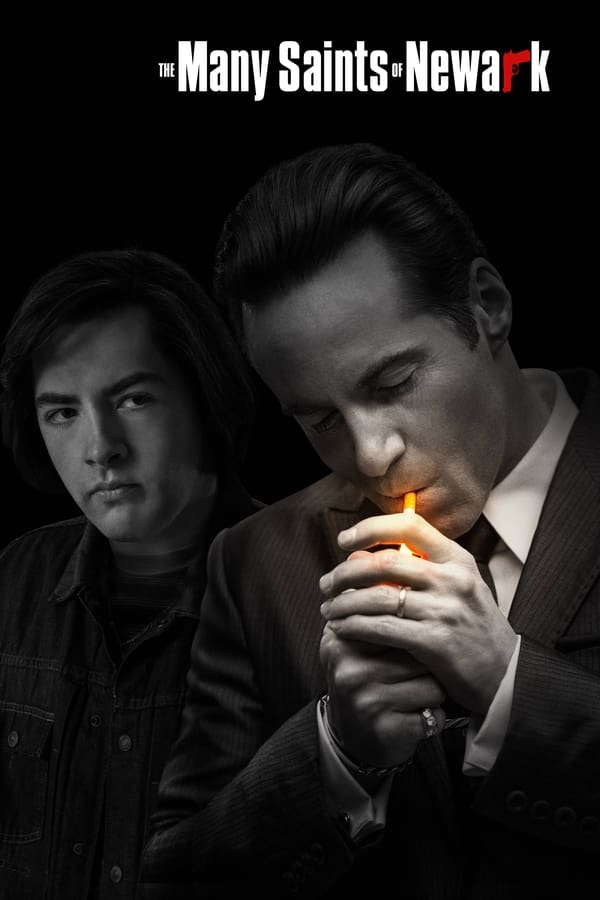
10-15 years ago, I would have been very excited for The Many Saints of Newark, a prequel to the popular Sopranos TV show. Unfortunately too much time has passed since the show ended in 2007 for me to get too worked about the new movie, but I still wanted to see it. Tony Soprano is a kid when it starts and a teenager when it ends, but he isn’t the focus. Most of the story follows Chris Moltisanti’s (Michael Imperioli from the show, who narrates this film from beyond the grave) dad, Dickie, who was a father figure and idol to Tony when Tony’s own father was in jail. It’s a turbulent time in Newark and in the states in general, with the race riots of the 60s being just one of the events in the backdrop of the film. Ultimately this movie is for Sopranos fans alone. There are lots of easter eggs for faithful viewers, and it is fun to see the “old crew” when they were young, like Uncle Junior, Paulie, Silvio, Pussy, and the rest, but that’s about all this movie is: a walk down memory lane for all the old characters. The plot is too loose to really get behind, and for a film following in the footsteps of the one of the great gangster shows of all time, it is awfully light on gangster material. More of a crime drama than anything else, and not a memorable one at that. Very average on its own merits. ★★½
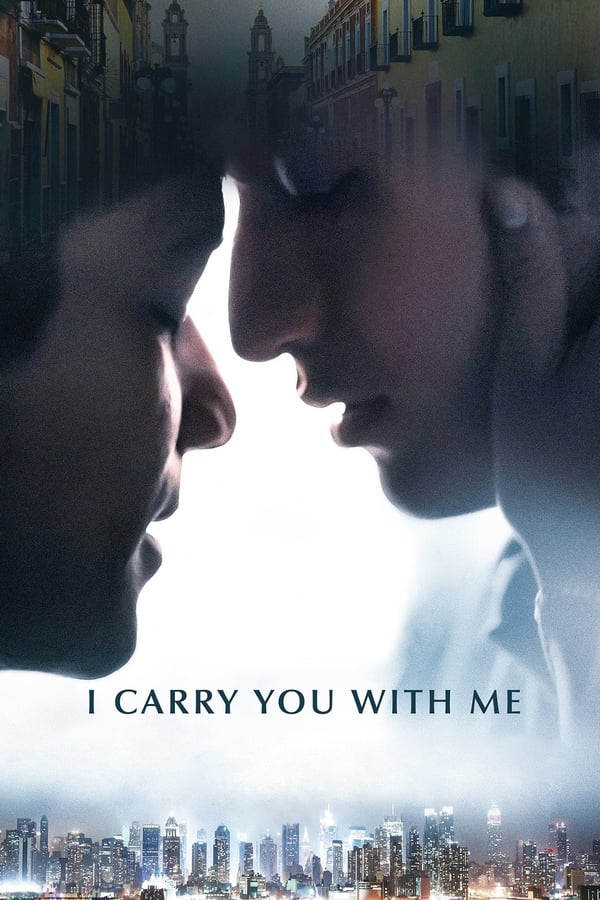
Based on a true story, I Carry You With Me is a Mexican film about two men, in love with each other, and their lives over a couple decades trying to balance their dreams with their relationship. It is told over a couple timelines: in the present day, where Iván and Gerardo play themselves in modern-day New York; a few flashbacks to when they were little kids dealing with the prejudice from others, even their own family, about being gay; and a large part of when they are young men in Mexico. It is this time period, the tale of their time together before Iván leaves to find his dream of being a chef in the USA, and his first year alone there, that showcases the best parts of the film. Iván has held the secret of his homosexuality, knowing the disappointment he’d face from his family. He’s even fathered a son, keeping his hidden life from everyone. Gerardo is openly gay and accepted by his mother, but ridiculed by his father. The actors portraying these two men, Armanda Espitia and Christian Vazquez, are fantastic. Unfortunately I wasn’t a big fan of the documentary-like approach to the modern day storyline. The movie loses its focus and goes all-in on hitting the hard obstacles illegal immigrants face in today’s America. The younger men storyline : 4 stars. The latter: 2 stars. Evens out to 3. Unfortunately, too many uneven films today. ★★★
TV series currently watching: Batwoman (season 2)
Book currently reading: Honeysuckle & Pain by Mark Danielewski
The newest Sony Marvel film, Venom: Let There Be Carnage, is the sequel to the surprise hit (at least financially) from 2019, and it is the latest in Sony’s attempt to carve out their own Marvel Universe. Tom Hardy returns as Eddie Brock, along with his symbiot Venom. The two share Eddie’s body, and while Venom wants to go around eating people’s heads, Eddie has talked him down to only eating chickens and chocolate.
To this fragile but stabile relationship, enter villain Cletus Kasady (Woody Harrelson). A serial killer behind bars, it is Brock’s work as a reporter that gets Kasady’s sentence changed to execution. Kasady’s last request is one final interview with Brock, and during it, Kasady bites Brock’s hand, infecting himself with some of Venom’s blood and creating Carnage, another big bad symbiot, with no such qualms about eating people. Kasady escapes, and goes on a rampage to free his long-lost girlfriend (who is every bit as crazy as he), and then go around hunting those that wronged them, including Brock. Brock and Venom have to set their differences aside again and try to take down Carnage before he destroys the entire city.
OK, lots to unwind there, and at a brisk 97 minutes, this movie flies by at breakneck speed. Don’t look for any character development; there isn’t any. It is mindless mayhem from start to finish. Outside of Venom’s crazy humor (like refusing to eat his pet chickens, Sonny and Cher, because their love is special), the movie was kind of a bore for me, until the climactic battle in the end, which I have to admit was pretty good. But it’s just too nuts. I feel like Sony’s Marvel films are having the same problems as the early DC Universe: they are throwing way too much at the wall and hoping something sticks. Honestly the best part of the movie was the wonderful end credits scene, building excitement for the future of the franchise. I hovered around the 2 star range, but am bumping it a bit in hopes that Sony can right this ship in the future. I love Tom Hardy, and while this film doesn’t properly showcase him, the next Sony Marvel flick (outside of Marvel-produced Spider Man 3) brings in another great actor, Jared Leto, in next year’s Morbius. Here’s hoping! ★★½
Today, I’m checking out a few films from influential Italian director Vittorio De Sica. He was a leader in Italian neorealism, a film movement focusing on the poor and working class (often with nonprofessional actors). Maybe not a household name outside of film circles, De Sica was hugely popular in his day. Two of the films below were awarded special honorary Oscars before there was a foreign language category, leading to the creation of the category in 1956 (and De Sica would win two of those as well!).
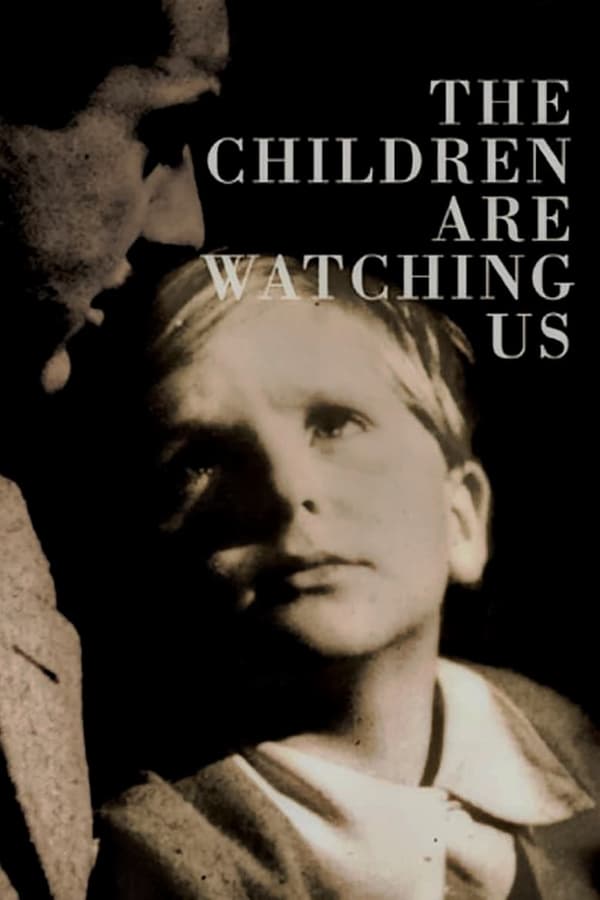
First up is 1943’s The Children Are Watching Us (Italian: I bambini ci guardano). The film revolves around a young boy, Pricò, caught up in a terrible moment in life: the falling apart of his parents’ marriage. Nina has been running around on her husband, Andrea, with a dashing young man named Roberto. Roberto has convinced Nina to finally leave her family for him, and she does, leaving Pricò devastated. He gets sick a few days later, and only then does Nina return. Andrea isn’t happy with her return, but he tries to make it work for Pricò’s sake, doing his best to forgive and move on. He proposes a beach vacation to liven everyone’s spirits, and they do seem to fall into a comfortable relationship with each other again. However, when Andrea has to leave a couple days early for work, and Roberto shows up at the beach, Nina can’t help herself but go back to her lover. When they return home, Nina sends Pricò up to their apartment from the cab, and leaves the family once again. But Pricò will get the final say in how his life will be lead before the end. It’s a very nice film, funny in the beginning and heart wrenching in the end, with better-than-expected acting from young Luciano De Ambrosis as Pricò. ★★★½
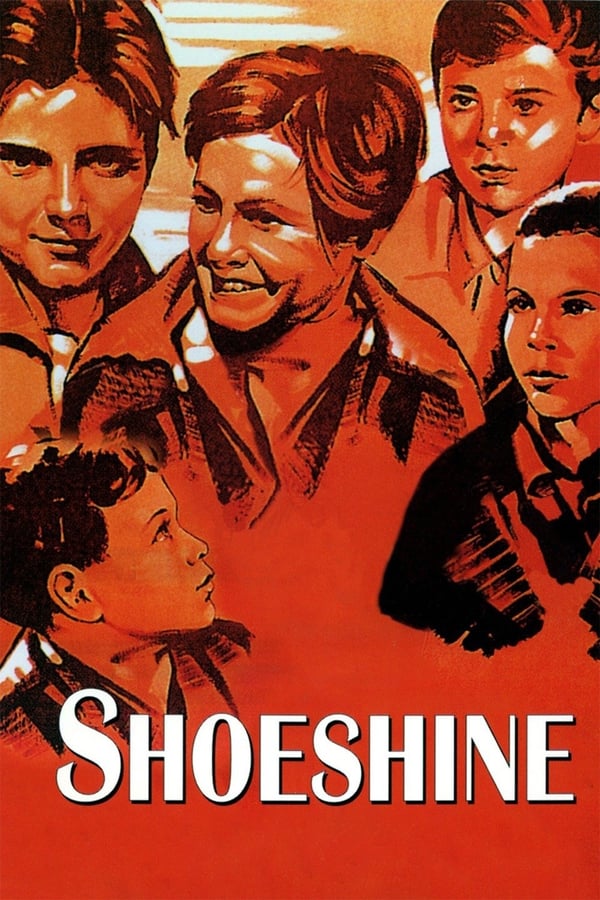
Shoeshine (Italian: Sciuscià) is a post-World War II film, again focusing on youth. Giuseppe and Pasquale are best friends working the streets as shoeshiners with a goal in mind: they want to buy a horse. Pasquale is an orphan living on the streets, and while Giuseppe has good, caring parents, they are poor. Unfortunately this duo are ripe targets for an older gang with a robbery in mind. Giuseppe’s older, no-good brother tasks them with selling blankets to a widow. When the blankets are delivered, the gang storms in pretending to be cops, and robs the widow when her attention is turned. When she goes to the real cops, they are able to round up Giuseppe and Pasquale and she ID’s them, thinking they are the thieves. The cops know how these things work, and know the boys aren’t the masterminds. But the boys aren’t squealing. They get sent to juvenile hall, and have to learn the ropes on the inside, even as the cops continue to turn the screws to find the real culprits. Don’t expect a happy ending in this one. De Sica does a fantastic job of painting the plight of the poor, who have little to stand on other than their honor and friendship. ★★★★
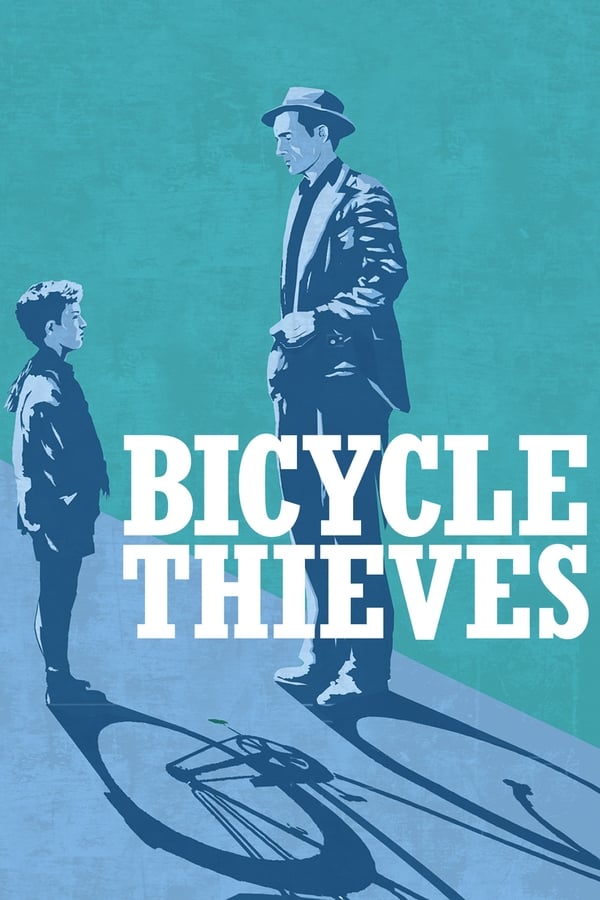
Bicycle Thieves (Italian: Ladri de biciclette) is just about the perfect film. It follows a man named Antonio Ricci who, like so many after World War II, is struggling to support his family in the poor economy. He wins the lottery, so to speak, when he is chosen for a job putting up posters around the city. It’s a menial job with not much pay, but he is thankful for it, as his wife and son, Bruno, are close to starving. Unfortunately, he is chosen for the job because he has a bicycle for transportation, and he’s just pawned it. His wife goes into action, gathering the sheets off the bed, cleaning them, and pawning the sheets to get the bike back, saying, “You don’t need sheets to sleep.” Antonio gets his bike out of hock and shows up for his first day of work. His good luck ends there. While up on a ladder, a thief steals his bike, and escapes before Antonio can chase him down. He goes to the police, but they do little more than record the serial number of the bike and tell him good luck. The next day, Antonio and his son Bruno head out to comb Rome, in vain search for the bike or the thief who stole it. This is not a feel-good story, but it is highly emotional and brutally honest in its portrayal of a down-and-out man who will do anything to keep his family alive. The views of a city on the losing side of the war, with an unhelpful police force and a multitude of citizens starving, is harsh to see. In that way, it presents also a wonderful time capsule, as Antonio wanders around Rome and all of its people. ★★★★★
If Bicycle Thieves leaves you feeling that there is no hope in the common man, Miracle in Milan (Italian: Miracolo a Milano) does the opposite. In this film, De Sica drops the realism and goes for the fantasy. Totò is abandoned as a baby, raised by a kind old woman for a few years until she dies, and then in an orphanage until he’s an adult. With his hard life, he should be jaded, but before she died, his adopted mother taught Totò to be an eternal optimist; not only did she literally not cry over spilt milk, she made a game out of it. So when Totò is out on his own, and finds himself in a shantytown, he makes the best of it. Totò goes around organizing his fellow homeless, and changing the area from a haphazard scattering of tents and lean-tos to a small self sufficient city made up of cast-off lumber and metal. Families now feel safe and people come together to help each other. Things are good, until oil is found under the land, and a wealthy entrepreneur wants to kick the homeless off the land. Totò’s salvation comes in the form of a magic dove, bequeathed to him by the ghost of his dead mother, which allows Totò to grant wishes to his fellows in need. At first, human greed takes over, and people wish for nice clothes, riches, etc., but eventually they come to see Totò’s outlook on life, and turn back to what made their self-built city so good in the first place. Wonderful story, a bit Fellini-esque at times, with a much different feel from the other De Sica films I’ve seen to this point. ★★★★½
The above films focused on younger people; even in Bicycle Thieves, the perspective of Antonio’s son plays a huge part. In Umberto D, the narrative switches to the older generation, whose struggles are just as real in the current economy. Umberto Domenico Ferrari worked in public works for 30 years, but is now long retired with nothing to his name but his trusty dog Flike. On his pension, he can barely pay his rent, and his landlady is just looking for an excuse to evict him. Outside of old coworkers he bumps into on the street from time to time, his only friend is Maria, the boarding house’s maid, but she has her own problems. She’s pregnant, but doesn’t know which soldier is the father. As the movie progresses, Umberto edges closer to homelessness. Less a movie about the loss of money and options, it is more about a man’s loss of dignity. It’s an age old question, and one with fewer answers today than in 1952. With an aging population that is living longer than ever, countries are going to continue to face problems on how to treat them well and support them in their twilight years. ★★★★
TV series currently watching: Black Lightning (season 4)
Book currently reading: Honeysuckle & Pain by Mark Danielewski
Setting out to see some of Richard Linklater’s films, having previously seen a handful, and I’m generally a fan (really liked School of Rock and Last Flag Flying, as well as Boyhood (even if it was kind of gimmicky), and who doesn’t like Dazed and Confused?!). I’m starting with one of his first films, Slacker. Filmed by Linklater (on just $23,000) and his buddies, as well as local musicians in the Austin scene in 1989 (such as Teresa Taylor, drummer for Butthole Surfers), this is a fascinating film/time capsule of the minds of 20-somethings at the time. The film begins with Linklater himself, playing a man arriving to Austin and hailing a cab. He engages in a one-way conversation with the driver about his thoughts on alternate realities, before getting out and witnessing a hit-and-run. While the woman lies on the pavement, we see the car, which had initially driven off, return to the street a block away, and find out that the driver was the woman’s own son. He goes inside their house as if nothing happened, lights some candles, before the cops show up to arrest him, based on eye-witness statements. The film goes on from there. Each new character is subtly introduced by the previous scene, and we get their new narrative. There’s a woman trying to find a buyer for a Madonna pap smear she’s acquired, a man obsessed with televisions and recordings (because you can’t rewind real life to see moments again), a handful of anarchists, a would-be terrorist, and a wannabe conspiracy theorist author. The common thread shared by most of them are young people with big ideas: heavy on plans but light on action. Is Linklater lamenting a generation with desire but no drive, or just a bunch of “slackers”? Though the constant shifting in stories started to wear on me by the end, it is still very entertaining and often very funny. ★★★
A Scanner Darkly is a cool film, based on a book by sci-fi legend Philip K Dick. Taking place in the near-future, it follows an undercover agent, called Fred around the office, but who’s real name is Bob Arctor. The world is fighting a losing war on drugs, with a new, potent drug named Substance D having taken over, with nearly 20% of the population addicted. To fight back, a super surveillance system is in place, recruiting people like Bob to get in deep with the users and dealers, trying to work their way up the food chain. Bob doesn’t know who he’s working for, and they don’t know him, thanks to futuristic suits they wear that blur their identity and voice when at the station. His undercover mission is put at risk when his superior, “Hank,” asks “Fred” to start watching Bob Arctor closely, not realizing that Fred is really Bob under his suit. At his home, Bob runs with a couple other addicts, including his girlfriend Donna, who is their dealer, and Barris, a conspiracy theorist who himself goes to the police station one day to try to rat on Bob. It’s not as convoluted as it sounds, and the whole thing seeps intrigue and mystery. I couldn’t help but wonder how Bob was going to pull this all off, and the ending blows it all out of the water anyway. To make it even more fascinating, the film is animated, but done with some kind of neat technique where the actors were digitally filmed, and then animators went to work coloring over the actors, scene by scene. So we see the actors in their natural acting (including Keanu Reeves, Winona Ryder, Robert Downey Jr, and Woody Harrelson), but in an animated setting with a very unique look. Fun film. ★★★★
My desire to see more Linklater films really grew from my desire to see his Before trilogy, an initially unplanned trio of films about the evolution of a relationship. They were filmed 9 years apart from each other and so, while I normally watch my film batches back-to-back, I took my time with these, setting them out weeks apart, so as to let them digest in my psyche and breathe on their own. The first is Before Sunrise. Jesse (Ethan Hawke) is an American on a train headed for Vienna, for a flight the next morning that will take him back to the USA. He has a chance encounter with Céline (Julie Delpy), a Parisian returning home after visiting family. The two have an instant chemistry, so when the train arrives in Vienna, Jesse boldly asks Céline if she’ll get off and spend the evening with him. He doesn’t want to leave a “what if” moment that they’d regret 30 years later. She agrees, and the two disembark to roam the streets of Vienna. Most of the film is dialogue, as they get to know each other, talking about life, love, future plans, past regrets, the whole gamut. There’s obviously something there, more than just a physical spark, and when the sun comes up, they have to make a decision: let this memorable night be what it is, or see if there’s the hope for something more. I absolutely adored this film, and the ending will leave you wanting more, in a good way. Only knock against it is Hawke, who I think has developed into a decent actor over the years, but in these early years, nuanced and subtle he is not. But it isn’t overly distracting, and Delpy is incredible, so they balance out. The story will leave you wanting to go to your loved one and give them a big hug. ★★★★★
I always try to avoid major spoilers in my reviews, but that’s obviously not possible when sequels are involved, so you are warned. Before Sunset was released, and takes place, nine afters after the first film. Despite their promise to meet in Vienna 6 months after their night of sublimity, Céline and Jesse never reconnected. Jesse is an author with a book out, a “semi-autobiographical” book about that night all those years ago. It’s a bestseller and he’s on a small European book signing tour, and his last stop takes him to Paris. Céline is at the book store there to see him, and they meet. Unlike the first film, where they had a whole night, now they only have an hour until Jesse needs to be at the airport. The film is shot in real-time (it is only 80 minutes long), and follows the duo as they walk the streets of Paris. Nine years older and maybe a bit more cynical, they discuss their lives and how things are different from what they had expected. Most importantly, they talk about why their second meeting never happened. If anything, it’s even better than the first. The young adults are now older and wiser, but each still hasn’t found that connection with another person in the intervening years. I noted above that Hawke couldn’t quite match Delpy in the first film, but he has grown a bunch by 2004 (remember, this is just a couple years removed from his breakout critical role in 2001’s Training Day). Together, the two weave a wonderfully romantic story of a couple fighting fate. ★★★★★
Before Midnight is the finale, another 9 years down the line. Jesse and Céline have stayed together all these years. They have twin girls of their own, and Jesse’s son from his first marriage, Hank, is a teenager. The film begins at the tale end of a vacation, where Hank has joined his dad and Céline in Greece for the summer, and is flying home to the USA, where he still lives with his mother. Jesse is reflecting how he’s stayed in Europe with Céline all these years and missed out on seeing Hank grow up, and it has led to some resentment between Jesse and Céline. He approaches her about moving to Chicago, but she is adamantly against it, since her life and career is in Paris. It leads to a huge fight, where each says things they’d probably regret later. The kinds of awful things you never want to say to a loved one. Can they come back together in the end? Whereas the first two films were very endearing, with smitten lovers getting to know each other, we now have a couple that know each other very well. They know how to push each other’s buttons and are comfortable enough to say anything, without any trepidation. As a hopeless romantic, I couldn’t help but like the first two films more. They definitely have a feel of hope and love. The finale is more bitter, but in a way, more “real.” Gone are the days of exciting, crazy young sex, replaced by the grind of a long relationship, which as we all know, is much harder to keep together. ★★★★½
TV series currently watching: The Sopranos (refresher episodes before the new movie)
Book currently reading: Crime and Punishment by Fyodor Dostoevsky
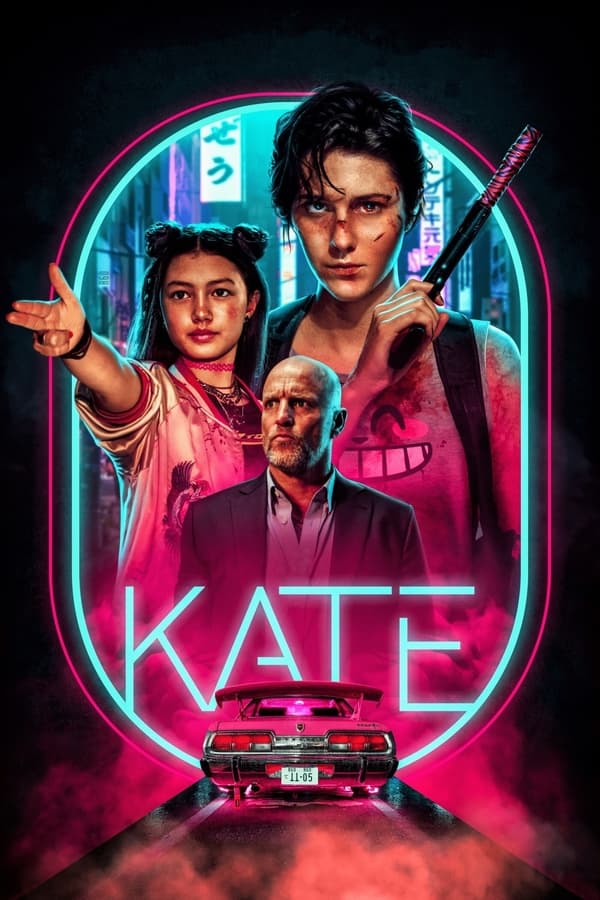
David Leitch has made a name for himself in the last decade. He co-directed and produced the first John Wick, directed Atomic Blonde, the Deadpool Sequel, and Hobbs & Shaw, and produced the surprise (or not-so-surprising?) hit Nobody. Unfortunately his latest production, Kate, directed by Cedric Nicolas-Troyan, doesn’t reach the heights of any of those previous films. It is very much in the same vein as John Wick, Atomic Blonde, and Nobody, with a badass assassin as the lead figure, this time helmed by the always arresting Mary Elizabeth Winstead. Kate is a sniper with a slew of martial arts skills to back up her gun. Her handler is Varrick (Woody Harrelson), who has trained her from a young orphan to be a killing machine. But her latest mission has gone sideways, and she misses her target for the first time in her career. Someone seems to have set her up, as she’s been given a lethal dose of radiation, which will kill her in 24 hours. Can she hunt down her own killer before her time runs out? This movie has all of the bad-ass-ery hand-to-hand fighting of the previously mentioned films, but none of the personality. By the time Keanu Reeves and Bob Odenkirk’s body counts started skyrocketing, we really cared for their characters and wanted to see them win out over their nefarious bad guys. Kate’s own story is just cobbled together and all of the characters in this film are paper-thin and not nearly as fleshed out. 4 stars for action, 1 star for story and direction, combines for a very average ★★½
Let’s get one thing straight about High Ground, a film taking place in Australia in the early 20th century: this may be one of the most beautifully shot films I’ve seen in a long time. The panoramic views of the Australian outback and its introspective-inducing vistas are as good as you’ll find. I had to look up the cinematographer to see who the hell this was (Andrew Commis btw, ever heard of him?). You’ll know what I mean from the very opening shot, and the rest of the film doesn’t disappoint either. The film covers skirmishes between Aboriginal people and Australian white men, soldiers fresh off fighting in World War I. Travis is a sniper, overseeing a meeting between his people and a local tribe from a high vantage point, when the meeting goes sideways. Someone shoots off a gun in surprise, leading to a massacre of the tribe. There are only two survivors: a young boy given the new Christian name of Thomas (“Tommy”) and later raised in a village by a priest, and Tommy’s uncle, Baywara, who is left for dead but survives. A decade later, Baywara has united various tribes and they are attacking white settlements, setting them on fire. A white woman is killed in one such raid, bringing down the wrath of the government. Travis is approached to try to bring Baywara in before things get worse, but he has to ask himself if he is on the right side of this conflict. The story is riddled with cliches, but that doesn’t make it a bad movie. There are some very powerful moments too, like a meeting between a tribe elder and an Australian dignitary. The white man talks about how a law has been broken (the murder), but the elder asks who’s law? The elder is living by the laws of his people, which have been on this land for far longer than the “interlopers.” The movie is good, in the 3 star range, but again, damn it is gorgeous, from beginning to end. That alone bumps it up to ★★★★
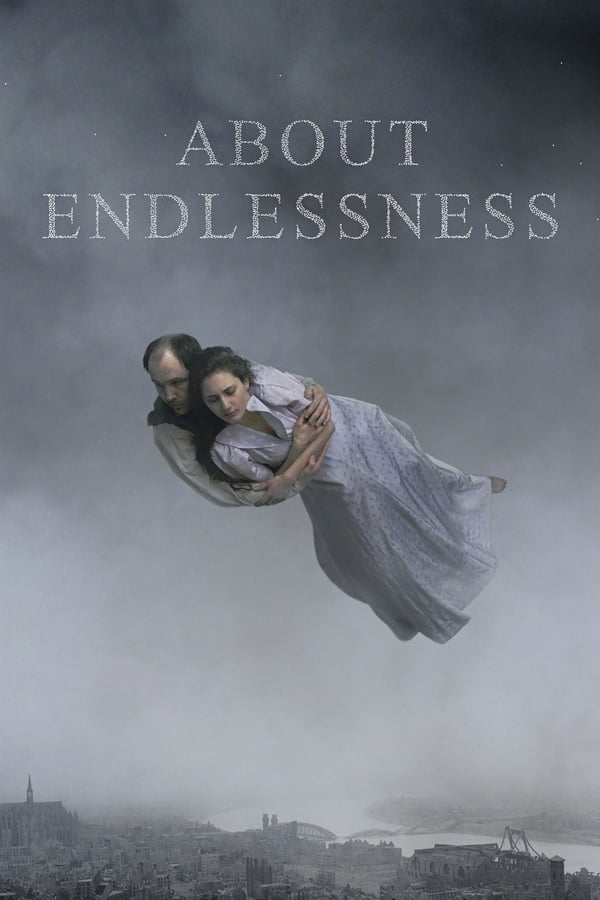
About Endlessness is an interesting movie. A Swedish film from celebrated director Roy Andersson (with whom I’m unfamiliar), it isn’t a narrative piece, and is instead made up of a bunch (a couple dozen) small vignettes, sometimes with voiceover, showing humanity in all of its forms: innocuous, hateful, loving, hurt, lost, and everything in between. The pieces are short, usually just a minute or two, and are mostly unrelated, though a few characters are shown more than once. For example, we see a legless man busking in a subway station, with a man watching on; an older couple visiting their dead son’s grave; a woman arriving by train to be greeted by her husband; a priest who has lost his faith and turned to drink; a father tying his daughter’s shoes in the pouring rain; and so on. There are tender moments of love and heartbreaking moments of pain. The one thing shared by them all is the absolutely gorgeous filming of them. Shown in muted colors, dominated by many various shades of grey, the film as a whole depicts sadness and grief, even during moments of hope. It is short at only 78 minutes, which is good as this kind of piece would get old if it were too long, but in this length, it works, and works well. ★★★★
The Mad Women’s Ball is wonderfully acted French film, directed by Mélanie Laurent, who also has one of the starring roles. The main character is Eugéne (Lou de Laâge), a young woman in the 1800’s who is having disturbing visions. Her family thinks she is going crazy, and stick her in an asylum for women. She’s not crazy though, she really is hearing voices from the dead, who only want to get messages to loved ones still living. In the asylum, she finds that most of the committed women don’t belong there. Most are just commoners who were sent there against their wishes, either for wronging a man, or being too willful, or just being poor with no other options in society. No matter what got them there, once inside, they have little hope of ever getting out, and are treated to terrible conditions and torture by the doctors. The only thing they can look forward to every year is the ball, an event held at the hospital where society comes to laugh at the unfortunates. The women don’t care, as it breaks up the monotony of their lives. Mélanie’s gifts are immediately targeted by the doctors, who call her insane and torture her relentlessly. However, she is able to convince the head nurse, Geneviève (Laurent), that her voices are real. In a time when women have little power compared to men, Geneviève is very limited in how she can help make Eugéne’s life any better. There’s some great moments, both thrilling and sometimes downright chilling, and the acting from de Laâge is especially impressive. I recognized her from another film I’d seen a few years ago, The Innocents, which is another worth checking out. Though the ending of this one isn’t as satisfying, it is definitely worthy of a look for the performances. ★★★½
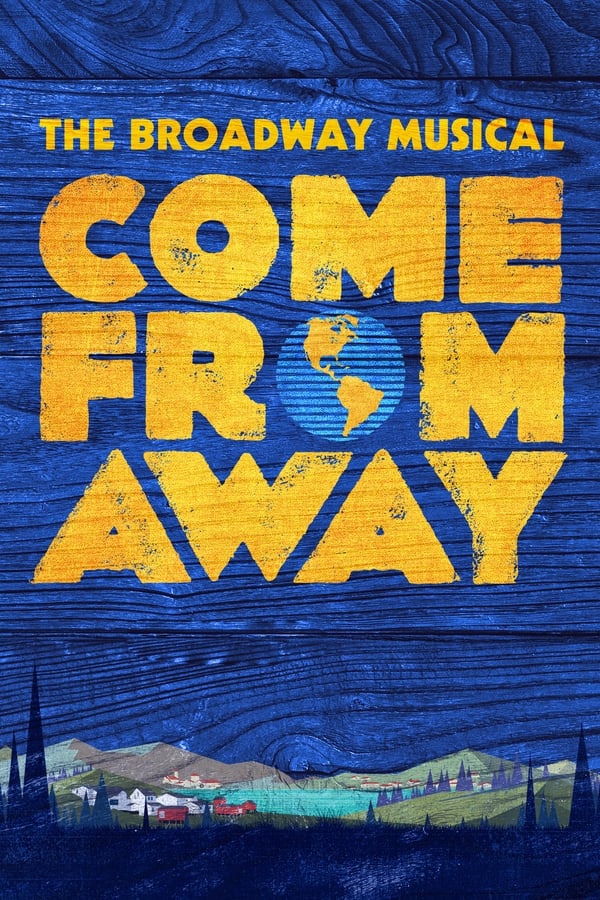
As a diehard musical fan, I could not help but watch Come From Away when it was released on Apple TV+. Based on a true story, it tells of the day, and following week, of September 11, 2001, not in New York, but in Gander, Newfoundland. The tiny Canadian town with a big airport, it saw 38 planes grounded, nearly doubling the population of their area, and having to care for all these people from all around the world, in the uncertainty of those first few days after the attacks. The show is short for a Broadway production, just 1 hour 40 with no intermission, and is shown on a single set, with a small cast of only 12 actors, each taking on multiple parts. In the musical, portrayals are made of the inhabitants of Gander and the nearly 7000 stranded passengers and crew of those 38 planes. It is nearly entirely sung through, and is a marvelous show. The talented cast switch roles in mid-song, often with just a few seconds to put on a hat or new shirt (while staying on stage), and pull it off seamlessly. It’s a brilliant production: it’s funny, sad, and with a heartwarming story, showing that, in the darkest of times, people can still reach out to help those in need. Restores a little faith in humanity. ★★★★½
TV series currently watching: Stranger Things (season 3)
Book currently reading: Crime and Punishment by Fyodor Dostoevsky
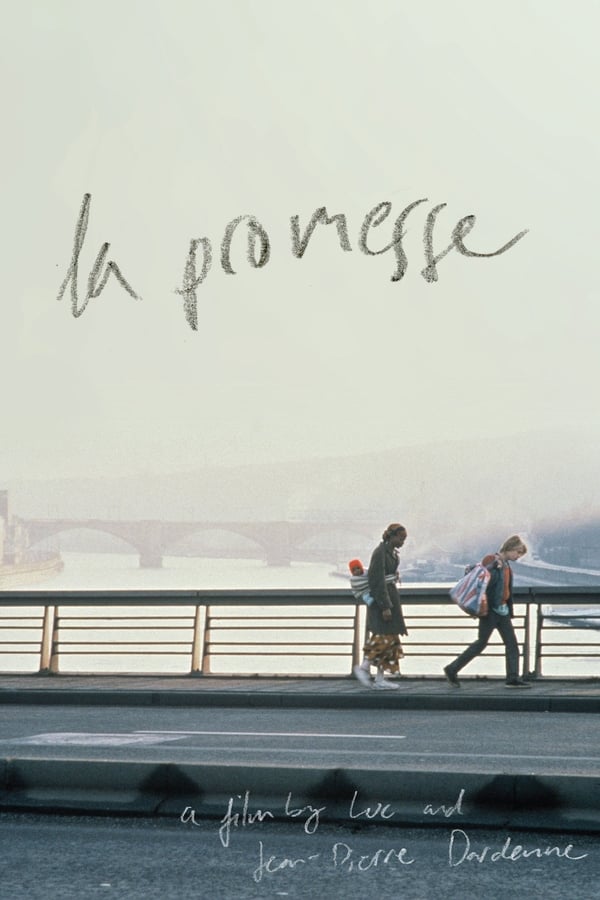
The Dardenne brothers, Jean-Pierre and Luc, are a Belgium filmmaking team, who have reached legendary status since their first feature film in 1996. They write, produce, and direct their films together. Somehow, I’ve never seen a single one, but no longer! Starting with their first, La Promesse (The Promise). Igor is a teenager but doesn’t attend school as he has an apprentice permit to be a mechanic, a trade he obviously enjoys. However, he is often called away from his work to labor for his dad, Roger, in a shady business. Roger traffics in illegal immigrants, bringing them across the border into Belgium, and then making fake work permits for them while they pay him rent to stay at his place. He then pays them to work on his adjacent fixer-upper, a large residence next door. One of the illegals who has been there awhile is Hamidou, but he’s stuck around waiting for his wife Assita and child to arrive. They finally do, and the family is hoping to settle somewhere, but Hamidou has wracked up some gambling debts to the other workers. One day, Hamidou falls from a scaffold and injures himself badly. Igor wants to take him to a hospital, but Roger refuses, afraid of facing trouble himself for their illegal deeds. Hamidou dies, and Roger coerces Igor to help bury him under cement. Assita assumes Hamidou has gone into hiding due to his debts, and Igor is wracked with guilt. Before dying, Hamidou made Igor promise to watch over his wife and child, and Igor is committed to do that, against his father’s wishes. This is a very human picture, rife with emotion and feeling, and it is hard to not feel for Assita’s (and people like her) plight. ★★★½
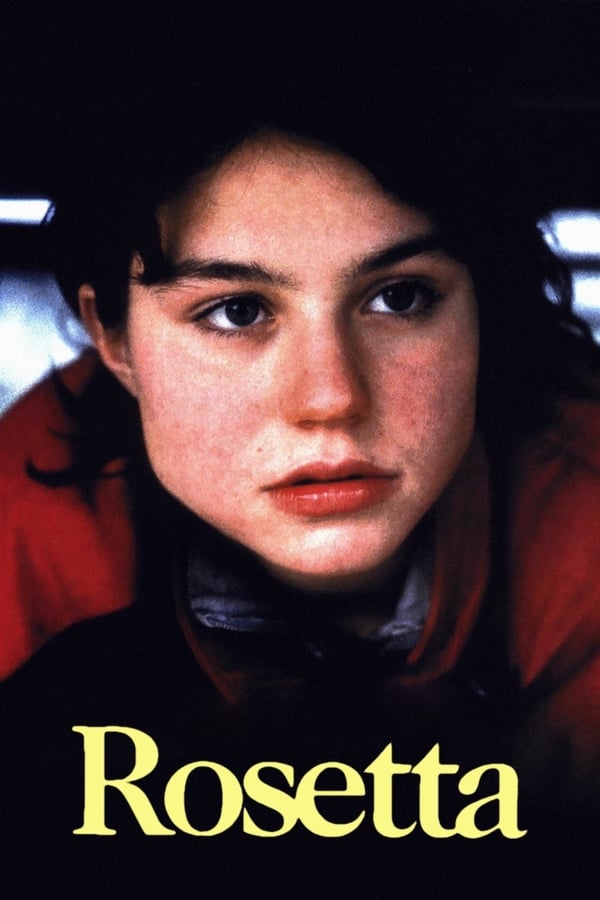
Rosetta is a teenager having to face problems that others her age shouldn’t have to worry about. She lives in a trailer with her alcoholic mother, who tries to escape the house at every opportunity to go prostitute herself for money, for booze. Rosetta can’t watch her every minute though, as she’s the only one bringing in any income. And due to her home situation, holding a steady job is tough. With little money coming in, she is literally living from meal to meal. Through all of these hardships, Rosetta remains resilient and unemotional, only showing anger when aroused, but keeping herself walled off from other feelings. That is, until someone reaches out and tries to befriend her. Riquet is just a bit older and only slightly better off, living in a small dingy apartment. But we don’t know if even he can break through Rosetta’s barriers. The Dardenne’s do an amazing job of putting the viewer in Rosetta’s shoes, aided by their decision to film most of the movie right behind her, looking over her shoulder as she goes about her day. We see what she sees, and ultimately, go through her pains with her. A startling picture, showing the depth of humanity, and dreams of finding hope where there is none. ★★★★★
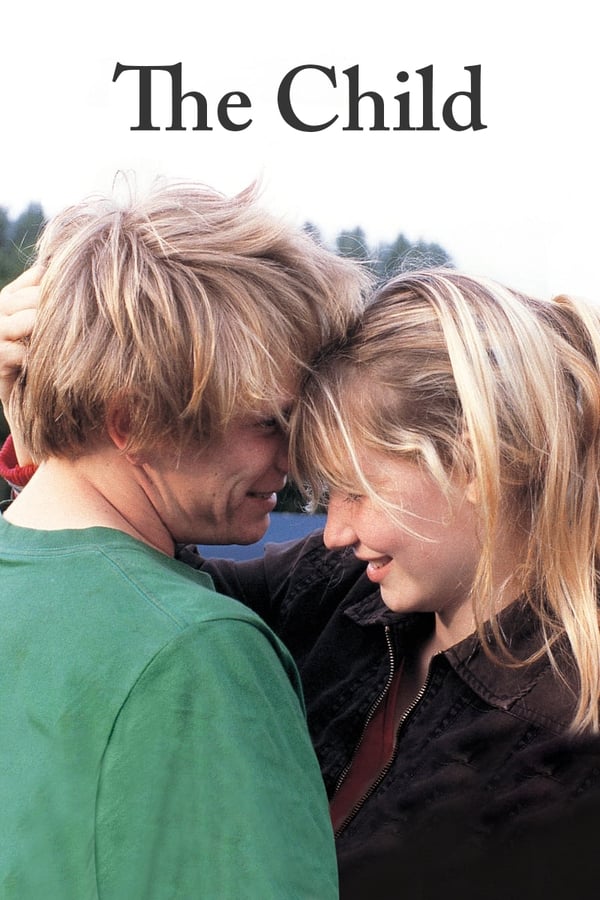
I wasn’t able to get my hands on their third film, so I’m skipping ahead to the Dardenne’s fourth, 2005’s L’Enfant (The Child). Jérémie Renier (Igor, from La Promesse) returns as Bruno, a 20-year-old who has yet to grow up, despite just having a child with his girlfriend Sonia. Sonia gave birth to Jimmy alone in the hospital, as Bruno was out on the street, up to no good as always. In fact, when Sonia returns to her apartment after leaving the hospital, she finds that Bruno has sublet it for a few days, and he’s nowhere around. When she hunts him down, he has only a cursory glance for his new son, but can’t wait to tell Sonia about his latest scheme. When she broaches that he should get a real job now, he retorts that, “Only fuckers get jobs.” Bruno is running a hustle with some local kids, paying them to steal gadgets that he fences for more money. Broke soon after his latest deal, Bruno decides to sell the one thing he has. When Sonia is away for the afternoon, Bruno sells Jimmy. He can’t believe it when Sonia isn’t overjoyed with their new riches, because “they can always have another baby.” Sonia faints from the shock of the news, and Bruno takes her to the hospital. Aware that she’ll get the cops involved when she wakes up, Bruno gets Jimmy back, but of course the bad guys he was dealing with stand to lose a whole lot more money than they initially paid for the kid, and now want that money back from Bruno. Desperate, and with Sonia now wanting nothing to do with him, Bruno’s bad decisions continue to derail his life. Outstanding film. Heartbreaking, emotional, and glaringly real in its texture. I especially liked how the ending is open to interpretation. ★★★★½
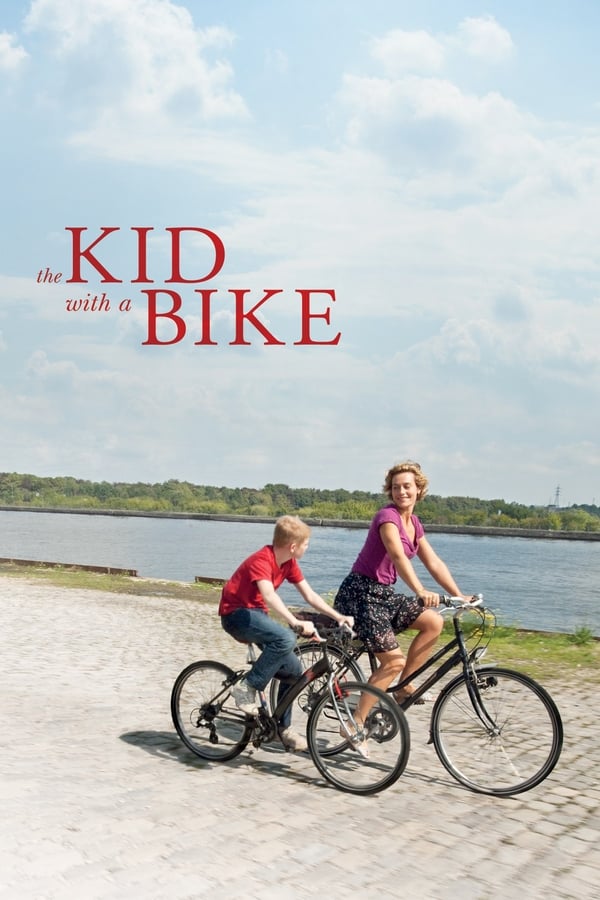
After watching The Kid with a Bike, I’m sensing a trend. Seems this team loves to focus on people from the lower middle class, in really tough situations. This time it’s Cyril, a 12-year-old who wants nothing more than to be with his deadbeat dad, who unfortunately wants nothing to do with him. When the film begins, Cyril is living in a home for children, where his father put him with promises to return for him in a month, a month that is long gone. Cyril tries calling his dad, but the number’s been disconnected. He runs away to his dad’s apartment, which is empty. He refuses to believe that his dad sold off his treasured bike, insisting instead that it was stolen. Cyril finally is given some hope when a kind woman, Samantha, agrees to let him stay with her on the weekends in a foster situation, but he still longs for some acceptance from his father. That need for a relationship leads Cyril down a dangerous path, as he falls in with a rough gang of teens near Samantha’s house. The Dardenne’s portray Cyril’s yearning and heartbreak with a sympathetic but unsentimental view. In Cyril’s situation as in most in life, the lasting love we find can sometimes come from the least looked-for places. ★★★★
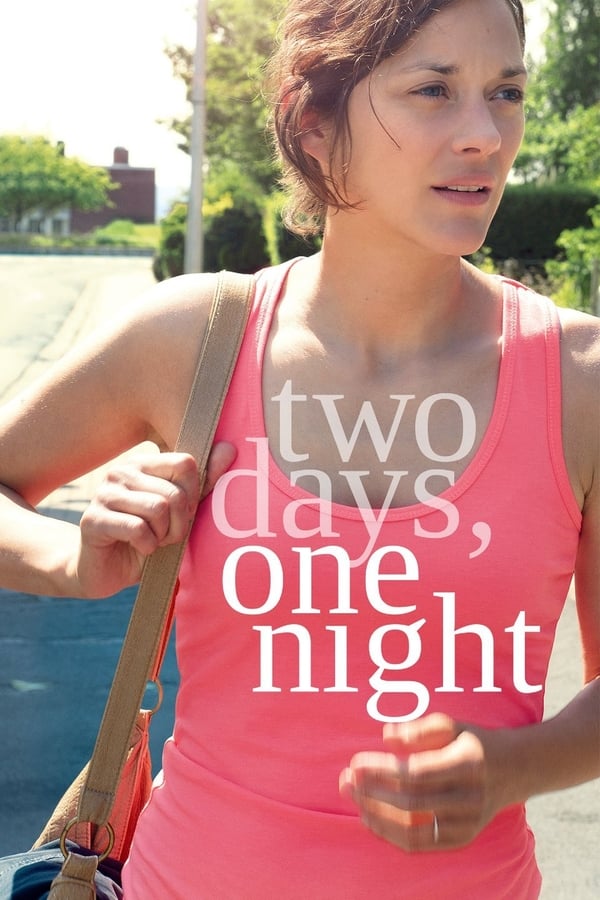
Two Days, One Night features a situation many of us can relate to on some level. Marion Cotillard gives a stunning performance as Sandra, a woman who has recently made the decision to return to work after a 4 month absence, dealing with severe depression. Unfortunately, her workplace has given the other 16 employees there an ultimatum: they must choose between welcoming Sandra back or receiving their yearly bonus, a not-insignificant sum to many of the working class families. The vote was taken on the Friday before she was to return to work, and overwhelmingly the workers voted for the bonus. With nudging from her coworker and best-friend Juliette, Sandra races to work just as the boss is leaving on Friday. Juliette tells the boss that the floor supervisor, Jean-Marc, threatened and intimidated the other workers to vote for the bonus, implying that if Sandra stayed on, someone else would be let go instead. The company boss confirms that was not the case, and that they can hold another secret ballot on Monday to re-vote. Sandra then spends the weekend going to her coworkers’ homes and asking for another chance. The reactions she gets run the gamut. Some obviously need that bonus, as they are barely making ends meet themselves, while others feel for her situation and are willing to vote to keep her. Through it all, Sandra is battling her own demons of depression and anxiety. Anyone who has lived with someone with severe depression, which is a big majority according to US statistics, can relate to both Sandra and her husband. The words used in the movie, and the emotions the family lives through, hit home in a way that made the film uncomfortable to watch at times. Cotillard is simply amazing in her subtlety and spot-on performance of a woman desperately trying to claw her way up to the surface from a sickness that doesn’t want to let her go. ★★★★★
TV series currently watching: The Flash (season 7)
Book currently reading: Crime and Punishment by Fyodor Dostoevsky
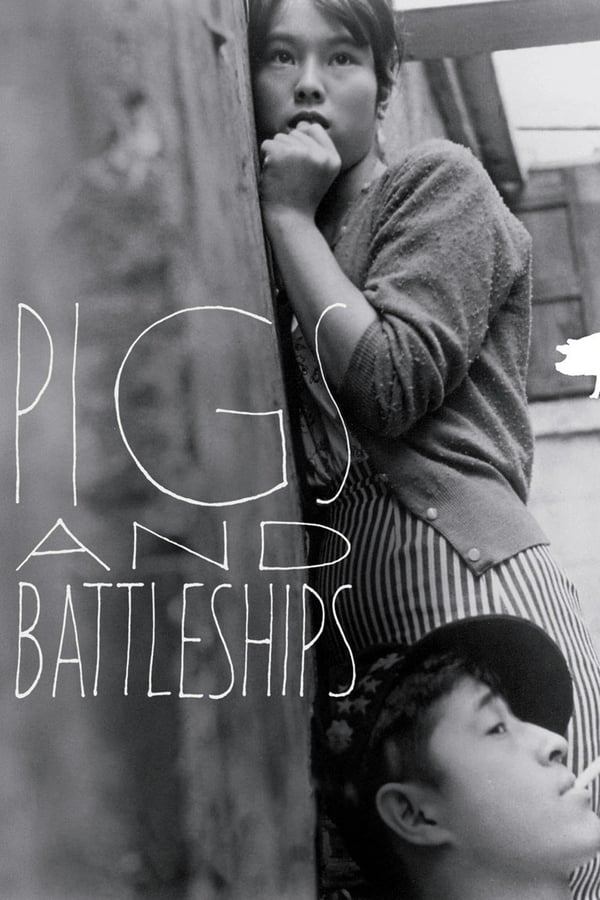
Shohei Imamura cut his teeth in the film industry as an assistant to Yasujiro Ozu, but when it came to making his own films, you couldn’t be more different. Whereas Ozu’s movies are quiet and contemplative, slow and serene, Imamura’s move at a frenetic pace. Coming up during the Japanese New Wave, Imamura wasn’t afraid to show true Japan, warts and all. Today’s first film is Pigs and Battleships, released in 1961. The film takes place in what was once a fishing village, but with a nearby port full of American soldiers looking for a little “something something,” a red light district has popped up to cater to those desires. Kinta is currently on the bottom rung of a gang but has dreams of working his way up the ranks. His girlfriend Haruko wants him to leave the gang and go straight. Each is facing an uphill battle in their lives. Haruko’s mother keeps pushing her to become a mistress to an American soldier, to bring money into the family, and Kinta’s superiors love making him the scapegoat, but never fulfill their promises of further riches. Kinta’s character comes off as a bit of bumbling, buffoonish idiot, and I had a hard time rooting for him, but I did keep hoping Haruko would find her way. She faces a ton of hardships, physical and mental, but her spirit stays strong. And there’s some dark humor/satire that is really brilliant, such as a scene where some Japanese folks are watching an American jet fighter air show, commenting on how their own self defense forces aren’t nearly as flashy. Didn’t they just get bombed by those planes 20 years prior? ★★★½
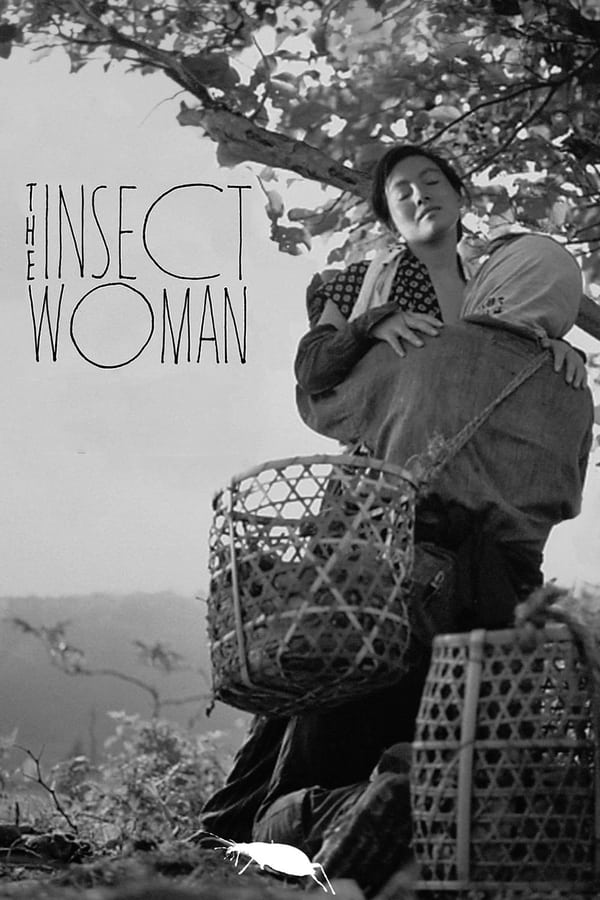
The brashness of Pigs and Battleships got Imamura sidelined by the studios for a couple years, but he returned even better with 1963’s The Insect Woman. Japanese cinema had historically been full of women who were submissive and passive, but not so with Tome. Born out of wedlock to a single mother from a poor farm family, Tome was going to do whatever it took to raise her family’s station, even if she wasn’t around to see the fruit of her labor. Throughout the film, which takes place over several decades, life hits her again and again. Whether she’s working as a maid or a prostitute, someone (and not always a man) always seems to get the better of her, but Tome is never broken. Her own daughter Nobuko, also born without a father, is left at the family farm so as to not expose her to what her mother has to do, but Tome always sends home what money she can. And in the end, just when it seems Nobuko may turn to her mother’s lifestyle when she too seems to be out of choices, you realize that all of Tome’s struggles over the years paid off. Fantastic film with tremendous acting from Sachiko Hidari as Tome. It’s not always an easy movie to watch, but it’s hard to find a better example of human perseverance. ★★★★
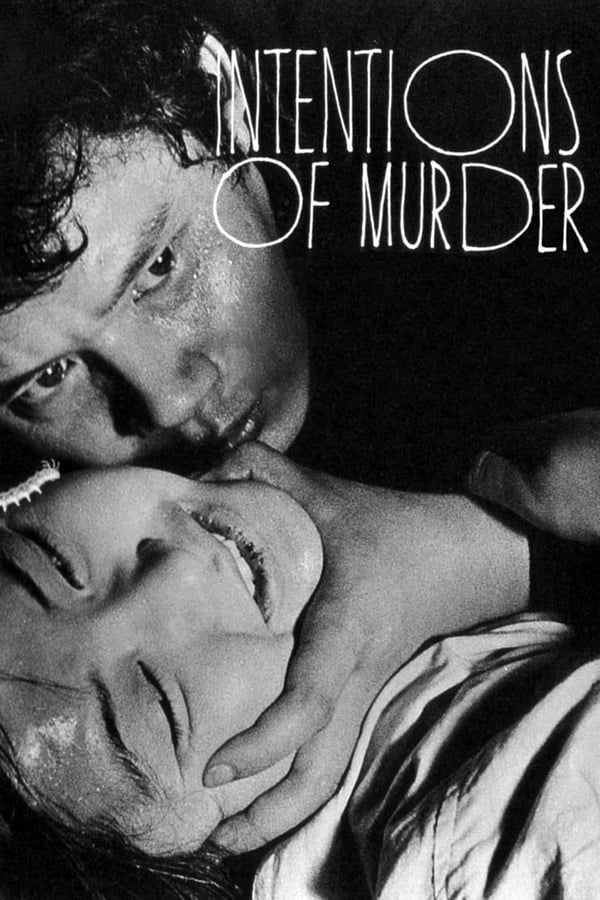
Unholy Desire (also known as Intentions of Murder) followed a year later. Again focusing on a woman in a bad plight, this movie follows housewife Sadako, who is treated more like a servant than a wife in her own household. Her husband Riichi berates her constantly and follows her finances like a hawk. Her mother-in-law is worse, constantly reminding Sadako of her poor background and sordid upbringing (her grandmother was a mistress who committed suicide, her mother was unmarried). While Riichi is having his own affair with a colleague, he hypocritically acusses Sadako of cheating on him. What he doesn’t know is Sadako has repeatedly been attacked and raped by Hiraoka. At first, Hiraoka just attacked Sadako while she was home alone one day, and his intent was only to rob. But afterwards, he developed a strange attraction and fascination with her, and has been stalking her ever since, attacking her whenever he found her alone. In a private moment, Hiraoka admits to Sadako that he has fallen in love with her, and wants her to leave her husband and run away with him. Having a man crave her has given Sadako a sense of power for the first time in her life, but can she translate that to her relationship with her husband? I think I like the intent of the movie more than the movie itself. It felt overly long, and the overarching plot elements of Sadako’s relationship with her husband and the brutality of Hiraoka are repeated so often that it started to get old. ★★½
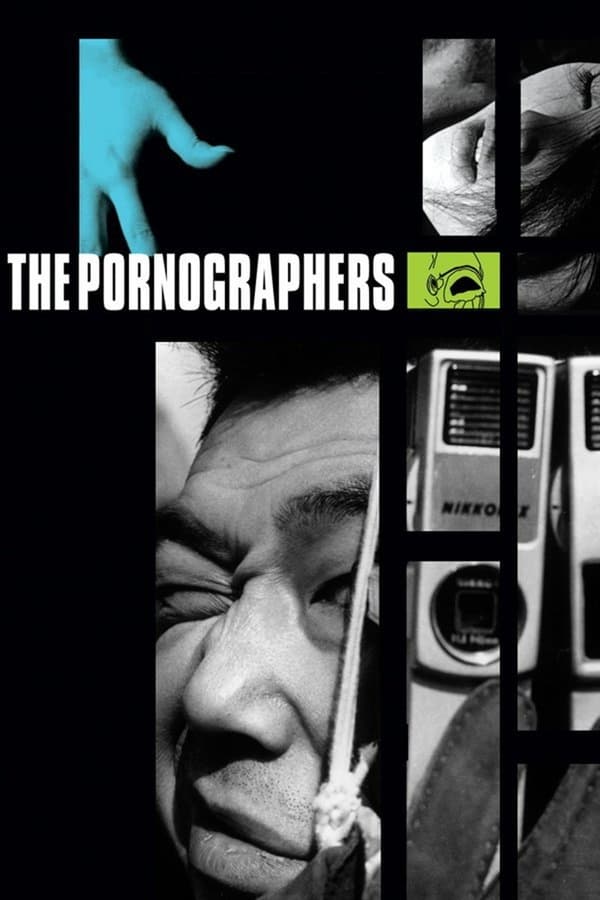
While 1966’s The Pornographers has an attention-grabbing name, the film is a bit of a slog. It’s as straight-forward a comedy as Imamura can make, and while there are plenty of humorous moments, the movie is overly long and honestly boring at times, to the point that I started to have to take breaks to get through the final hour or so. It’s not that It’s bad, it’s just way too chaotic, with divergences in plot that will make your head spin. The main character is Subu Ogata, a man who will make a buck off anything to do with sex. He films low budget porn films, dabbles in prostitution, and sells snake oil sexual enhancement herbs to gullible men. Ogata lives with a barber named Haru; at first he was her tenet, but now he’s her lover, and this despite Haru swearing that the large carp in the nearby fish tank is her reincarnated dead husband, and he does not approve of her new relationship. Ogata also pays for Haru’s high-school children’s schooling. The boy, Koichi, has an unhealthy love for his mom, and the girl, Keiko, is growing into a woman’s body, and is learning how to use it to get what she wants. Much of the film, and its humor, revolves around Ogata’s various money-making schemes, and how everyone wants a piece of the pie, thinking he is raking in big money when he isn’t. The end of the film devolved into weird sexual advances and satire on what is and what isn’t taboo. Some highlights here and there, but not enough to warrant serious thought. ★½
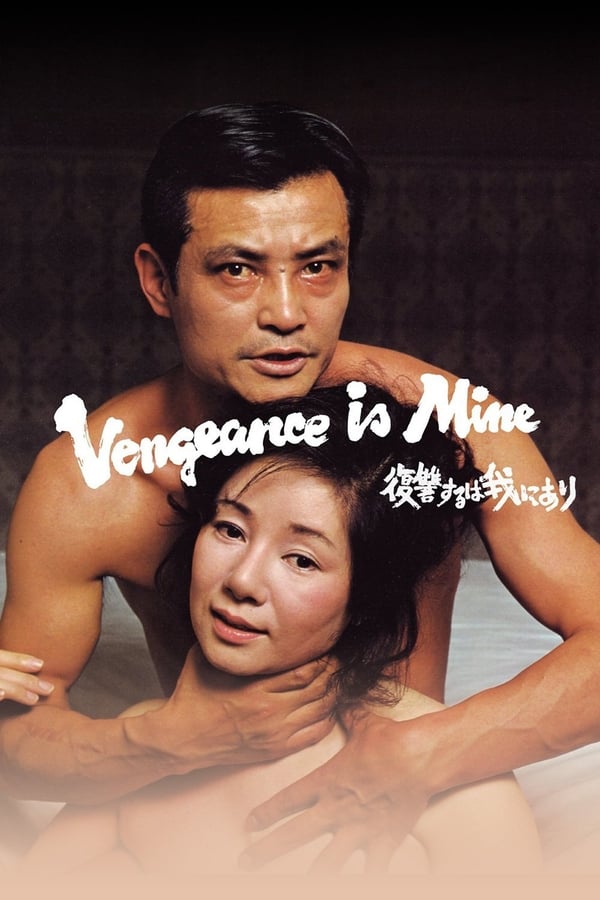
Jumping ahead a decade to the late 70s for Vengeance is Mine, which is based on the true story of a serial killer in Japan. The film begins at the end, with serial killer Iwao Enokizu arrested and questioned at the police station. It is next that we get the flashback, where Enokizu murders 2 men and takes their money. He afterwards goes on the run, staying one step ahead of the cops by defrauding unsuspecting people out of money in various schemes. But as the manhunt grows larger and the police paper Japan with wanted notices and even television commercials with Enokizu’s picture, he starts running out of places to go. There’s also a weird subplot involving his wife and his father, falling in love with each other. It ends up being somewhat important at the end of the movie, but mostly felt unnecessary, almost like Imamura just used it as a way to put his own personal stamp on the story. Like the previous movie, this one felt long (it wasn’t, it was 2 hours 20 min), and I would have liked to have seen it trimmed down somewhere for a more concise picture. ★★★
TV series currently watching: The Flash (season 7)
Book currently reading: Crime and Punishment by Fyodor Dostoevsky
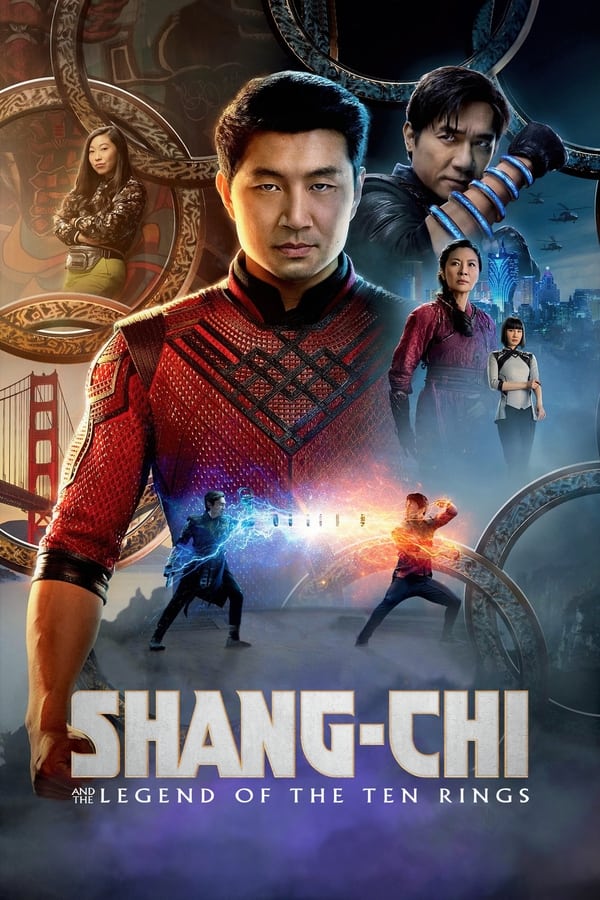
I haven’t done more than a quick-take on a single movie in quite some time, but I wanted to geek out a bit on the newest Marvel hit. I’m an admitted Marvel Universe nerd. I’ve seen every film multiple times, seen every show multiple times (even The Inhumans, and we all know about that train wreck), and look forward to every release with unmitigated excitement. The last couple films (Black Widow and Spider-Man Far From Home) were just all right in my book. While the newest shows (WandaVision, Loki, etc.) have been great, I’ve been waiting for a film to really rock my socks like Black Panther or Thor Ragnarok did. And Shang-Chi and the Legend of the Ten Rings did.
Most of the action of this film takes place not long after Endgame. The blip is over and the world’s population is burgeoning. Shaun works as a valet with his longtime best friend Katy. They seem to be average 20-somethings who care more about having a good time than planning for their futures. However, Shaun is attacked on a bus by a gang of thugs, and fights them off with impressive martial arts skills, which surprises the hell out of Katy. Afterwards, he has to admit to her that his real name is Shang-Chi, and the attackers were sent by his estranged father. Shang-Chi is now worried for his sister, who last lived in Macau, fearing that she will be their father’s next target. Despite all this news about her so-called BFF, Katy refuses to let Shang-Chi go alone, and tags along. In Macau they do find the missing sister, Xialing, but so does their father, Wenwu.
Wenwu has long had the power of the ten rings, a mystical set of artifacts that have prolonged his life for over a thousand years. Their power has let him topple kingdoms and build insurmountable wealth, but he gave it all up 20+ years ago when he met a woman and fell in love. That woman, Ying Li, became Shang-Chi and Xialing’s mother. When she died (when Shang-Chi was 7 and Xialing only about 4), Wenwu again took up the ten rings and began training Shang-Chi to be the best fighter/assassin the world has ever seen, in order to exact revenge upon Ying Li’s murderer. Running from this training is why Shang-Chi had been living in America for the past decade. Now, Wenwu and his assassins want to attack Ying Li’s homeland of Ta Lo, in a misguided attempt to bring her back. Shang-Chi, Xialing, Katy, and the people of Ta Lo must beat him back before he unleashes an even greater threat to the world.
For starters, the martial arts in this film is impressive. Even aided by computers and special effects, it looks fantastic, and is probably some of the best you’ll find on screen these days. To top off the action, the comedy, provided often by the talented Awkwafina as Katy, adds levity to the film in the perfect spots, preventing it from becoming too dark. Jumping in for a lot of laughs also is Ben Kingsley, returning as Trevor the actor from Iron Man 3, the “fake” Mandarin who is being held prisoner by Wenwu, for impersonating him. And the story is soaring. I was gripping my seat in the theater and even holding my breath during the climactic fight at the end. Great from beginning to end, and makes the whole series feel fresh again. ★★★★★
When I read through my 100 books list, it was lacking quite a few classics, because it only focused on 20th Century reads. In the last couple years since finishing that goal, I’ve gone on to read some of the great Russian classics by Dostoevsky and Tolstoy, including his War and Peace. Loved it, so of course I needed to find a film version. Many point to the Soviet era film series, directed by Sergei Bondarchuk, as the best of them. A 4 parter, totaling over 7 hours in length, it is considered one of the grandest epics ever produced, on a scale that could not be duplicated today (or ever). Filmed from 1961 – 1967, and aired between ’66-67, it even had the Soviet army offering over 10,000 soldiers as extras played in the battle scenes. At the height of the Cold War, they wanted to prove they could outdo Hollywood. So let’s get to this grandeur!
Obviously it was going to be hard to translate 1000 pages to film. The first thing I noticed is, while there is some voice over/narration to hear some thoughts from the characters, we don’t get to really see what makes each individual tick, like the book does. All well and good, as it still does its best to stay as faithful to the source as possible. The film opens by introducing the setting: Russia is getting ready to go to war in eastern Europe against Napolean. Some of the main players are introduced. Pierre, the illegitimate son of Count Bezuhkov, is partying it up, even as his father lies on his deathbed. When Pierre’s father dies and Pierre’s claim to his fortune is legitimized (a lengthy section of the book detailing others’ attempts to get that fortune is left out), he does not go to war. Pierre’s friend Andrei Bolkonsky does though, leaving behind his pregnant wife in the care of his stern father and loving sister. We see a couple huge battles involving Russia, Austria, and France, made all the more glorious since there are no (ahem.. Middle Earth style) CGI combatants to fill the screen: there are thousands of real people fighting across a sweeping landscape. Russia is losing the battle, but thanks to the bravery of a single detachment holding the line, the army is able to withdraw without being wiped out. Andrei is knocked out and feared dead, but he is able to make it home in time to see his wife die in childbirth. Meanwhile, Pierre is tricked into marrying the beautiful Hélène, who only wants him for his money, and proceeds to cheat on him right away with womanizer Fyodor Dolokhov. Pierre challenges Fyodor to a duel and wounds him. Pierre fights with Hélène, who says she will only divorce him if he leaves her a fortune; he yells at her to get out.
In part 2, 4 years later, the war has ended and Russia is at peace. This part focuses mostly on Natasha Rostova. Only a girl in the first part, she is now a beautiful young woman and looking to marry (the movie glosses over her clandestine childhood promise to marry her cousin). At her first ball, Pierre introduces her to Andrei and they fall instantly in love. After a short courtship, he proposes, but instantly regrets it, seeing that he loved the idea of her more than Natasha herself. He gives himself some time by proposing they postpone their nuptials by one year, giving her time to grow and see if she still loves him. They will even keep their engagement a secret from society. Over that year, Natasha is wooed by Hélèna’s brother Anatole, who is as rotten as she. He only sees Natasha privately, and makes promises to her that he cannot keep; unbeknownst to her and only whispered in private circles, Anatole is already married to a poor girl back west. On the night that Anatole and Natasha are supposed to elope, thankfully news gets out, and Pierre is able to swoop in and prevent her from making a huge mistake. He confesses to Natasha that he loves her too, and if not for his marriage, he would care for her. The episode ends with another outbreak of war, as Napolean’s army invades Russia.
The third part is the shortest at 80 minutes, and deals mostly with the Battle of Borodino in 1812. After a short introduction where we see Andrei’s father die, leaving his unmarried sister Maria as “head of house” in Andrei’s absence (unlike the book, the movie doesn’t delve into that weird relationship between Maria/Andrei/Prince Bolkonsky). Then we get to the battle. Pierre has had enough watching from the sidelines, and with the battle pitched so close to Moscow, he goes to see if he can help in some way. While the soldiers initially laugh at him in his dinner coat and top hat, he ends up buoying their spirits when the fighting gets tough. While Pierre finds himself at a redoubt holding the French at bay all day and night, Andrei’s unit, held in reserve throughout the day but never sent it, ends up wounded when an artillery shell hits nearby. In the medical tent, Andrei sees Anatole, and wonders why this man who seemed to have no honor is there fighting. Anatole ends up having a leg amputated. While both sides suffer terrible losses, the Russian army is forced to retreat, leaving Moscow unprotected, which is how part 4 opens up. If you have time, look up this battle, as it is a fascinating turn in Napolean’s empire, and one of the bloodiest, with over 100,000 troops on each side. It is a classic example of “winning the battle, but losing the war.” Napoleon never recovered from the losses in his Russian campaign. Combined with the stretching of his supply lines so far into Russia, and with winter approaching, it was the beginning of the end of Napoleon’s reign.
I’ll leave the final episode for you to view if you are interested to see how it all ends. What becomes of Pierre when he stays behind in Moscow while the French burn and pillage it, and afterwards, with the news of Hélène’s death? Does Andrei recover from his wounds, and what of Natasha? Inasmuch as a film, even a 7-hour-long one, can cover such a huge novel, this one does a very good job. On its own accord, it is fantastic cinema, with a monumental scope. Necessarily it focuses on the above mentioned characters, relegating a host of others (the book has one of the largest cast of any novel I’ve ever read) to periphery status, or not mentioned at all. The book still reigns supreme, but the movie is good on its own. ★★★★














 Jons Movie Takes