Quick takes on Guillermo del Toro’s Pinocchio and other films

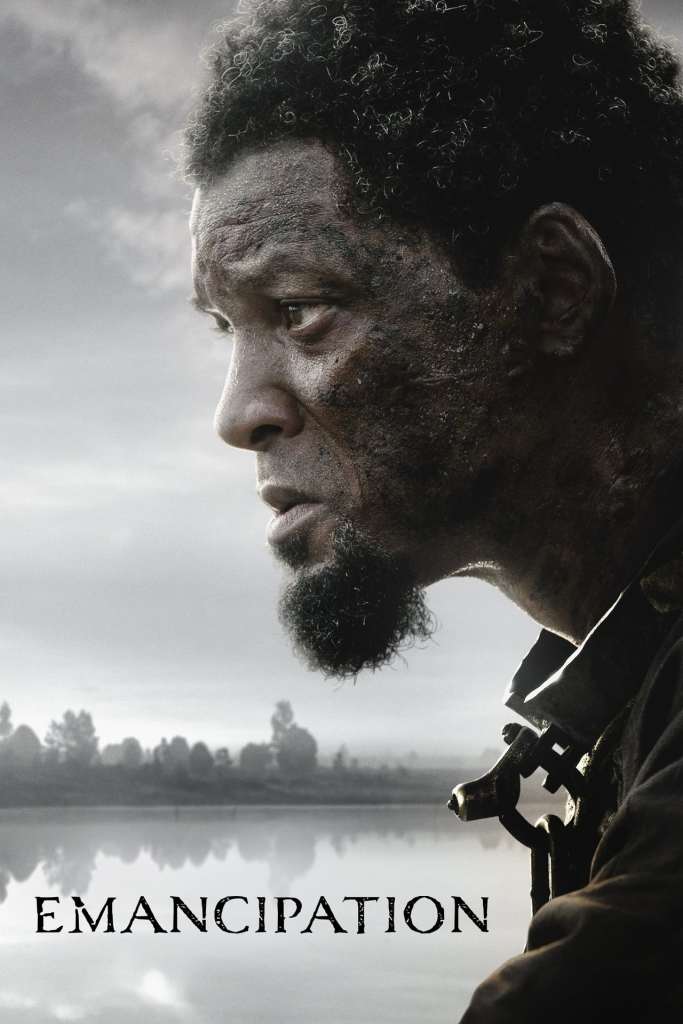
After being pushed back 6 or so months after Will Smith’s controversy at last season’s Oscars, Emancipation finally hit theaters and Apple TV+. It is based on the true story of a slave named Gordon (named changed to Peter in the film), a man whose picture depicting the criss-crossed scars resulting from life-long whippings and abuse stirred a nation and the world. In the beginning of the film, Peter is being removed from the plantation in Louisiana where he’s lived for many years, because the confederate army is conscripting slaves to work on a nearby railroad for the war. Peter is torn from his family, and we immediately see his defiant nature. Peter was not born a slave; he and his wife are from Haiti, and he’s never lost his spirit nor his desire to be free. Life at the confederate army camp is brutal, with slaves being worked literally until they die, if they aren’t killed sooner for not working fast enough. Some time later, a rumor comes through from a returned runaway that the north is freeing slaves, and that the northern army has gained a foothold at Baton Rouge, just 5 days journey away. Peter is willing to take this chance to get away. He and 3 other slaves make a run for it at the first opportunity, but a slave hunter (played devilishly by Ben Foster) sets out after them. Peter never learned to read or write, but he knows the swamps of Louisiana, and uses all of his cunning to evade the hunters. I’m sure director Antoine Fuqua wanted a deep, resonating film, but it comes off as more of an action flick. As far as war films go, the end result is more The Patriot than Glory, but that’s still not too bad (who doesn’t like The Patriot?!). It desperately wants to be more, but its contemplative moments seem more like small diversions from the action, rather than true moments of clarity. The director is still trying to match the critical success of his breakout Training Day 20 years ago; since then he’s had good movies, but nothing stellar, and several downright bad movies. For every Training Day and The Equalizer, there’s The Equalizer sequel or The Magnificent Seven (or, worse, Southpaw or The Guilty). ★★★½

Warriors of Future is a Hong Kong film that took a very long time to get made. Three years in development before production finally began in 2017, and then post-production and VFX taking forever (especially after COVID hit), the film finally saw release this year. It’s a sci-fi film in the vein of Space Sweepers, a movie I quite enjoyed. Don’t expect anything more than great special effects and you won’t be disappointed. Taking place just a couple decades in the future, the Earth is on the cusp of environmental collapse, pushed to the edge by pollution, global warming, and advanced warfare between nations. Cities are only surviving thanks to large biodome ceilings erected over them to protect their inhabitants. To make matters worse, a meteorite crashed in Hong Kong, carrying an alien plant species which grows at breakneck speed whenever it is exposed to moisture. However, a scientific breakthrough may solve both problems. A virus has been built which, when inserted into the alien plant, causes it to go dormant, stop growing, and also release air-purifying gases, lessening the pollutants that are endangering the planet. A team of military veterans must get to ground zero, where the plant’s center is, to insert the virus, and it must be done before a big rain storm comes in, which would trigger the plant to destroy all that’s left of the nation. Unfortunately, not everyone wants to see the plant destroyed, and the soldiers must battle the plant, it’s alien protectors, as well as super robots sent in by their own military commanders. Dialogue’s not great, the story is flimsy at best, but the film delivers heart-pounding action and (mostly) fantastic sci-fi effects. Turn your brain off for 90 minutes and sit back and enjoy. ★★★½

There’ve been a couple Pinocchio stories released over the last couple years, one great and one not-so-great. Guillermo del Toro’s Pinocchio is the latest. Another film which took a very long time to get made (the director first announced it way back in 2008), it is a stop-motion animated film, reimagining the original story to 1930s fascist Italy. During World War I, popular local carpenter Geppetto loses his son Carlo when bombers hit his city. 20 years later, Geppetto has never recovered; he never returned to working, and spends his days drinking at the site of his son’s grave, looked over by a tree planted in his memory. One night, in a drunken fit, Geppetto cuts down the tree and puts together a wooden boy in his grief. Over the night, a wood sprite visits the shop and gives Pinocchio life, and tasks a sentient cricket (Sebastian “J” Cricket, *ahem*) to look after the boy. The sprite promises Sebastian that if he does his job, the cricket will be granted one wish in the future. And so the story begins. This is definitely not your family Disney version. Geppetto doesn’t immediately embrace this strange wooden boy in his house, and Pinocchio isn’t imbued with the desire to be a “real boy” (and thus doesn’t even attempt to obey directions in the beginning); he only wants to explore and experience new things. The film is also very dark and even scary at times. However, the sense of magic permeates, and while parents of the youngest of children should stick to the cartoon, older (maybe 10-ish?) kids will be fine and probably really enjoy it, and adults may be reminded of plenty of lessons that should never be forgotten. A heart-warming story of love and sacrifice, gorgeously told. ★★★★★

OK, I couldn’t help myself. Had to watch Clerks III. I’ve been (mostly) a Kevin Smith fan since the very beginning, and even those films that most people love to hate, I still (mostly) enjoy. If you think you are going to find anything different in Clerks III, you’re kidding yourself. Much like Jay and Silent Bob Reboot was a rehash of their first road film, Clerks III is a rehash of the first Clerks picture from way back in ’94. They even tell some (many?) of the same jokes. Dante and Randall are now co-owners of the Quick Stop, with Jay and Silent Bob running a (legal) marijuana dispensary in the old video store next-door. In the beginning of the film, Randall has a near-fatal heart attack, causing him to second guess his life. He randomly decides to make a movie chronicling his life, the script of which is, of course, the script from the first Clerks movie. They bring all the (now much older) actors back to recreate their scenes, so it becomes a big walk down memory lane, even with some love for the universally-panned Clerks II, as well as easter eggs for all of Smith’s other films. The end of the film strays a bit too far into sentimentality for me, but I’ll allow it. Lots of cameos as we’ve come to expect from Smith, which are fun (and short). I think this film is really just for the fans though. If you are, you’ll find plenty to laugh and reminisce about. If you aren’t, you should save your time. ★★★½

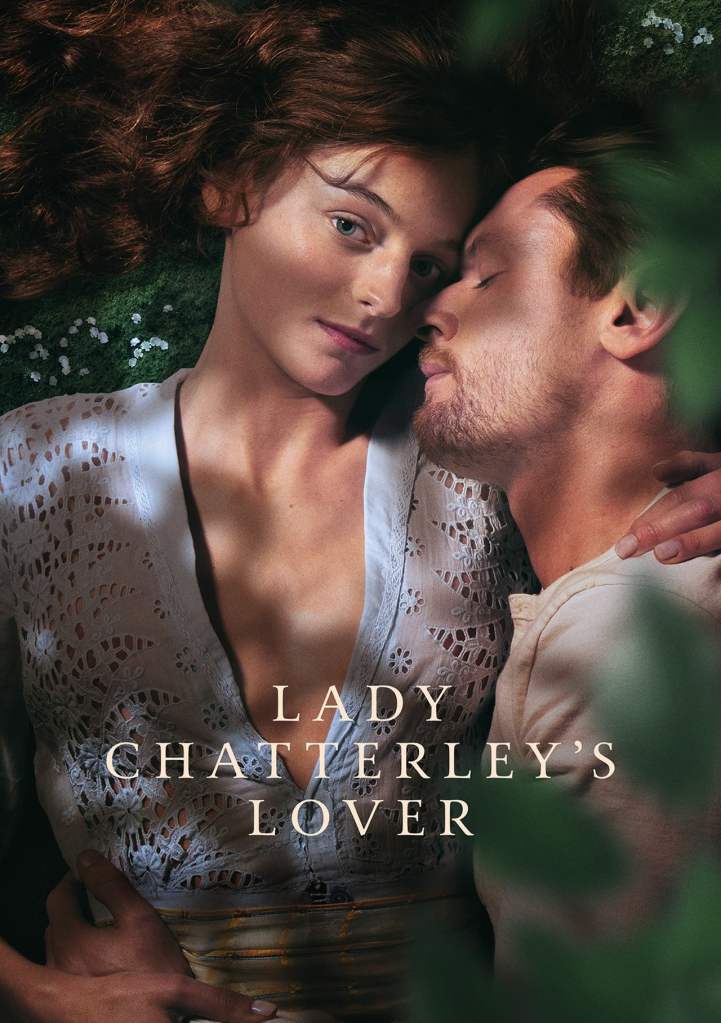
Lady Chatterley’s Lover is the newest film version of the once-banned book by oft-censored author D.H. Lawrence. The film begins with Connie’s marriage to the Lord Clifford Chatterley, just before he heads off to fight in the Great War. He returns a paraplegic, and becomes entirely dependent on his young wife for care. Initially, he refuses any other help, so Connie is at his side day and night, and everything in their life revolves around him; they even leave London, where Connie enjoys her family and friends, to go to his familial estate out in the country, where life is less hectic for Clifford. He seems a nice man, caring about his wife’s health and well being, even going so far as to suggest she seek male companionship elsewhere, since he no longer works “down there.” He hopes to get something out of her tryst too: an heir, to carry on his name, as long as no one else knows about the paternity. At first, Connie is aghast, but only until she starts hanging around the estate’s gamekeeper, Oliver. A strong everyman who is everything that Clifford is not, Connie is quickly swept off her feet, and once she insists that Clifford allow others to help care for him besides herself, she has even more time to run and be with Oliver. But Clifford has a dark side that has until now been mostly unknown: he doesn’t care that Connie finds a man to impregnate her, as long as the man is still of their station, and not “beneath them.” He will not take well to learning of her dalliance with the help. As a period drama, the film is just a notch above “ok.” Lots (and lots) of sex, just like the book, but I do feel the modern telling of it was easier to follow than the long-winded Lawrence novel, and the performances of Emma Corrin (from The Crown) and Jack O’Connell (from, well, everything) as Connie and Oliver are quite good. ★★★

  • TV series currently watching: Peaky Blinders (seasons 3+4)
  • Book currently reading: All the Light We Cannot See by Anthony Doerr

Quick takes on 5 American films of the 30s

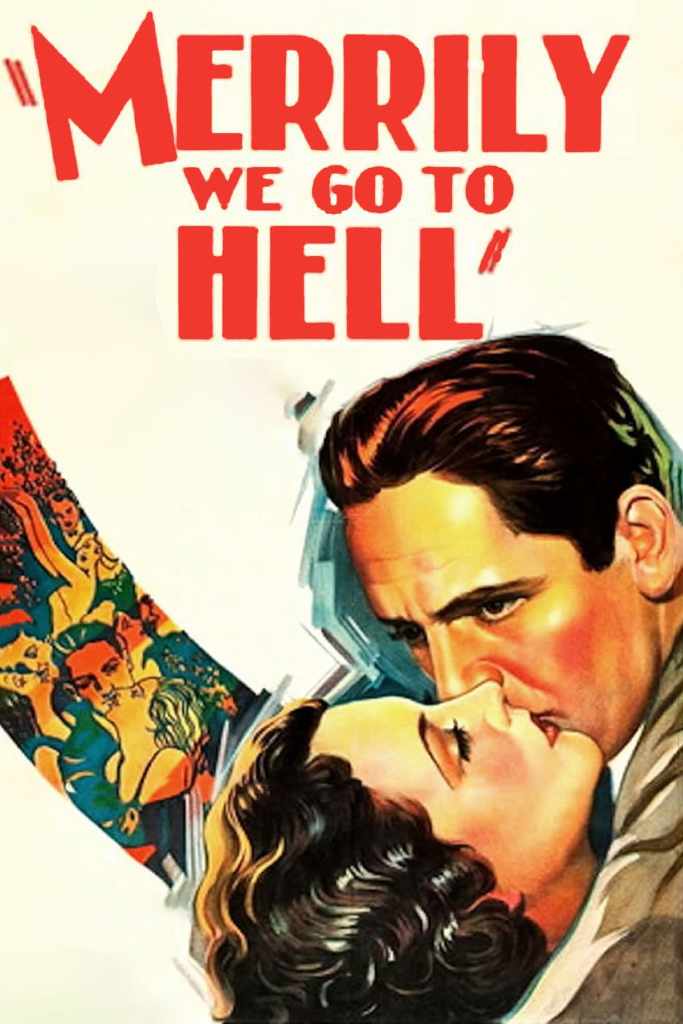
I’ve got an eclectic mix of 1930s American films today, including a couple pre-code movies and a couple musicals, including one with Fred Astaire and Ginger Rogers. We’ll begin with 1932’s Merrily We Go to Hell. Pre-code refers to a short window of movies made from 1929 (the introduction of sound in film) until 1934, when the “Hays Code” became standard, after which a whole lot of stuff couldn’t be shown (or even hinted at) on screen, because it wasn’t proper (i.e. went against our Christian values). Even the title of this film wouldn’t have passed, much less its content! Jerry Corbett is a Chicago reporter by day, an alcoholic by night, but he’s a “fun drunk,” and thus catches the eye of Joan Prentice, an heiress to a tin-can manufacturing company. Joan is swept off her feet by the dashing and good-natured Jerry, and while he stops drinking after their marriage, he begins again after awhile, which leads to problems. When Jerry reunites with an old flame, a stage actress who inspires Jerry to write a new play, the two begin an affair. Not to be outdone, Joan announces that if it’s good for the goose, it’s good for the gander, and she too begins going to parties and hanging around other men. This open marriage may be good with Jerry, always in his bottle anyway, but it’s a front that Joan can’t keep up, as she does truly love her husband. Portraying drunken partying and infidelity, this movie wouldn’t have been made a couple years later, but it’s a fun comedy with a serious side, made well ahead of its time. ★★★½

The above film may have been considered racy for its day, but it’s got nothing on 1933’s The Story of Temple Drake, based on the William Faulkner book Sanctuary. Temple (portrayed by Miriam Hopkins) is a partying woman and the current black sheep of the family, her grandfather being a prominent judge. The judge wants to see her settle down and marry her boyfriend, lawyer Stephen Benbow, but Temple isn’t ready to stop having a good time just yet. At a party, she leaves with another man, a drunk named Toddy Gowan, but the couple crash his car out in the boons, and stumble upon an old farmhouse, currently being run as a speakeasy. The place is full of surly types, and Temple is afraid for her life, but a kindly woman there tells her to sleep in the barn for safety, and sets a simple minded man, Tommy, to guard her sleep. Unfortunately for both, a gangster named Trigger will have his way; he shoots Tommy and then rapes Temple, taking her back to Chicago as his woman. It isn’t until her old boyfriend Stephen, investigating Tommy’s death (another man has been wrongly accused, but fears implicating Trigger to put his own life in danger), comes knocking that Temple is able to get away. But can she tell her story, knowing it will ruin her? A scandalous film upon its release, it is said that it spurred Will H Hays to hurry along his attempts to enforce the motion picture code that would stay in place until the 1950s. It’s a dark film to watch for sure, but well acted, and shows Temple coming through her ordeals as a strong woman, fighting her way out on her own. ★★★★

1936’s Show Boat, based on the musical of the same name and starring several of the original Broadway cast members in their roles, shows the interconnected lives of the performers on the eponymous boat, working its way up and down the Mississippi to delighted crowds along the way. With book and lyrics written by Oscar Hammerstein (and music by Jerome Kern), I thought I’d be in for a treat, but it doesn’t quite hit the mark, and unfortunately is extremely dated. It begins as the boat sets up shop at a small town in the south, and trouble is immediate. First, the boat owner’s daughter, Nola (Magnolia), falls for a no-good gambler named Gaylord. Nola’s mom wants to keep them apart, but after the show’s two stars, married couple Julie and Steve, have to quickly flee (it is revealed that Julie is “passing” for white, as she had one white parent and one black, and at the time, any ounce of “black” blood means you are black, and thus illegal to marry a white man), Nola and Gaylord are thrust onto the stage as the new stars. Eventually they get married and head off to Chicago to start a new life, but Nola finds it is not what was promised. Gaylord continues his ways, finally leaving Nola and their daughter Kim. Over the ensuing years, Nola carves a path for herself, becoming a famous stage singer and performer, as does Kim when she grows up. The whole story takes place over several decades obviously, which should leave the viewer feeling a sense of epic time and progression, but it was lost on me. The beginning is quite good, with the better songs too (including the show’s one big hit, Ol’ Man River, sung by Paul Robeson), but the second half is rushed and a bit of a mess. The film is chuck full of unfortunate racial stereotypes (including Julie in blackface in one performance; though obviously we later learn than she is multiracial, but still comes off poor). I’m not one to “cancel” a whole slew of films though, just because of when they were made. A film can acknowledge the racism of the day; doesn’t mean it is a racist film. And Show Boat does do a lot of things right: it was the first racially integrated musical, and had a whole black chorus for the first time, and the marriage between Julie and Steve shows a true interracial relationship, a rough notion to sell in 1936. From a personal note, I enjoyed seeing Hattie McDaniel and her bubbling personality, 3 years before her Oscar-winning performance in Gone With the Wind. ★★

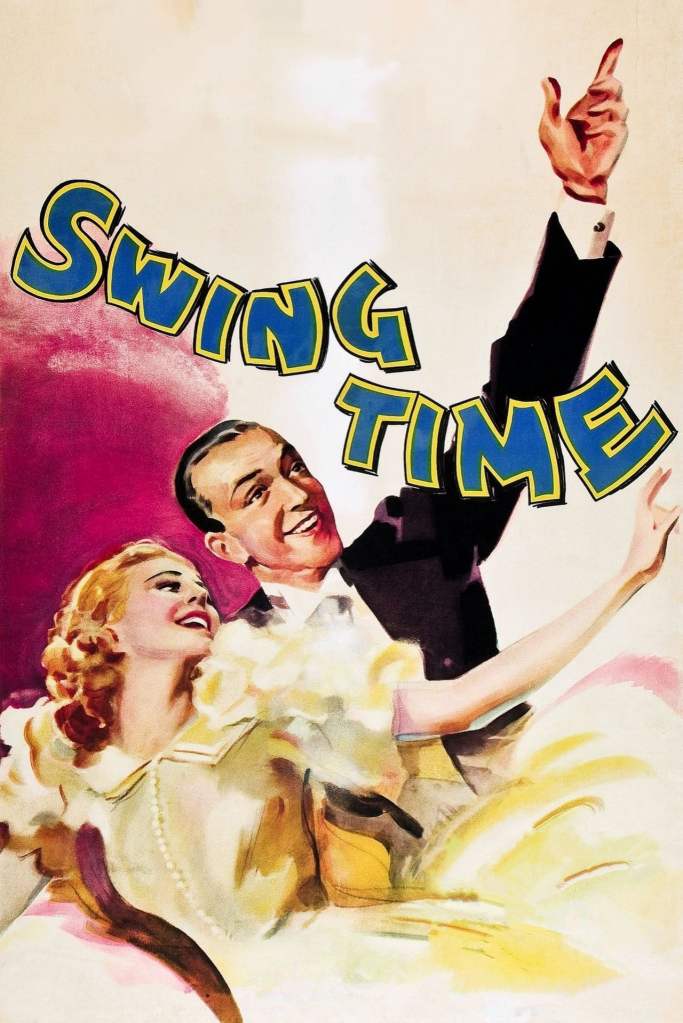
How can I watch some 30s American films without including one with Astaire and Rogers? In Swing Time, John “Lucky” Garnett is an established dancer with a penchant for gambling away every penny he makes (that is more true than you can guess, as we soon see). He even gambles away his marriage, as he loses track of time while betting with this friends and is late to his own wedding. The bride’s father says he will now only allow this marriage if John can show that he can save some money and be respectable. John and his sidekick Pop (along for the ride for his comedic value) head to New York with just John’s lucky quarter in his pocket, and upon landing, they run into Penelope “Penny” Carroll (“Lucky” and “Penny”…). Penny is a dance instructor, and John pretends to not know how to dance to get in with her. They develop a relationship, but John’s gambling problem may still come between them before the end, as may that fiancee he left back in his hometown. The story is solid, the comedy funny, and the dance numbers are absolutely incredible. One rough moment when Astaire comes out in blackface (again with the blackface) for a performance, though in the movie, he’s doing it out of respect to honor the famous Bojangles, or Bill Robinson. ★★★★½

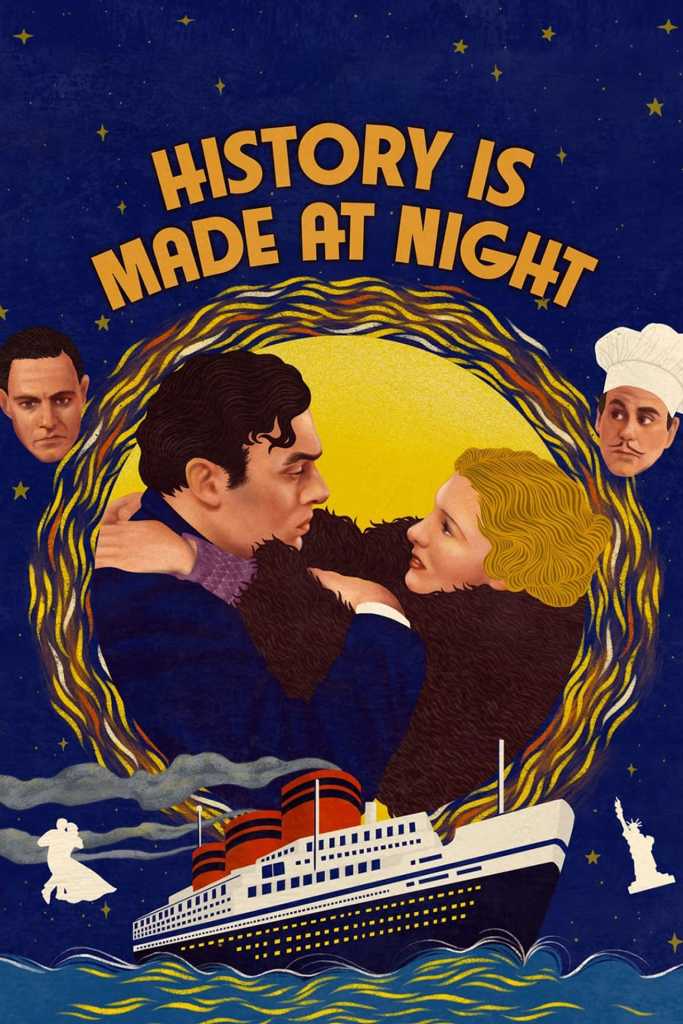
Finally, a romance/comedy/drama, the type that was hugely popular in this era. This one feels a bit different though. History is Made at Night stars Jean Arthur as Mrs Irene Vail, who desperately wants out of her marriage with controlling and jealous husband Bruce, a shipping magnate. Bruce has, for years, been falsely accusing Irene of infidelity, and she’s tired of it. While in Paris, Bruce even hires a man to pretend to be her boyfriend, in order to invalidate her intended divorce proceedings (some weird French law). While the man is in her apartment attacking her though, a passerby, a French head waiter named Paul Dumond (the dashing Charles Boyer), steps in and saves Irene by hitting the man over the head. When Bruce shows up, Paul pretends to be robbing Irene and then “kidnaps” her. When Bruce’s thug wakes up, Bruce kills the man, in order to tap Paul as the killer. After Irene and Paul’s one night out, in which they basically fall in love right away, Bruce finds her and bribes her to return to America with him, or he’ll get Paul arrested and executed for murder. Paul later learns the couple returned to America, but not knowing why, he follows her there, and concocts a plot to finally separate the couple and win Irene over for good. But Bruce, who obviously didn’t stop at murder, will do anything to get his wife back and keep her. The final act is a bit too sensational and jumps the shark a bit (err… an iceberg that is…), but the rest of the movie is near perfection. It’s just different enough from all the other “woman leaves a bad marriage for a better man” stories to stand out on its own. ★★★★½

  • TV series currently watching: Cobra Kai (season 5)
  • Book currently reading: All the Light We Cannot See by Anthony Doerr

Quick takes on The Wonder and other films

I sought out Emily the Criminal solely for its lead. I was late in appreciating Aubrey Plaza (never saw Parks and Rec; I first remember her in the criminally underrated show Legion). In this film, she plays a woman having a hard time getting any kind of solid job, due to a felony assault on her record. Her entry level, low paying job hardly covers day-to-day living, much less her massive student debt. One day, a coworker gives her a number to call, where she can make $200 in an hour. She follows up on it, and turns out it is a credit card fraud scheme, where people are sent into stores with stolen card numbers to buy goods (in her case, a big TV) for which she is paid for her time. $200 won’t help her situation much, so she goes back for more, this time $2000, but the danger goes up too. With a “black card” (unlimited credit) in hand, she is tasked to buy a car. Her handler, an immigrant from Lebanon named Youcef (played by Theo Rossi, Juice from Sons of Anarchy), tells her that with such a large purchase, the bank will definitely call the car seller to verify Emily is the legitimate card holder, so she’ll have 8 minutes to get out from the time the card is swiped. She almost doesn’t make it, getting assaulted by the car seller on her way out. But she does get out, and earns Youcef’s trust for future jobs. The life of an underground thief, who carries around a lot of cash, is dangerous though, and she’ll be in jeopardy many times before the end of the film. The movie bounces around a bit too much in the end, but the whole thing is undeniably thrilling. How you feel about Emily and her actions will greatly depend on your political leanings, but the movie taken at face value is very good. Plaza’s acting chops are in full force. ★★★½

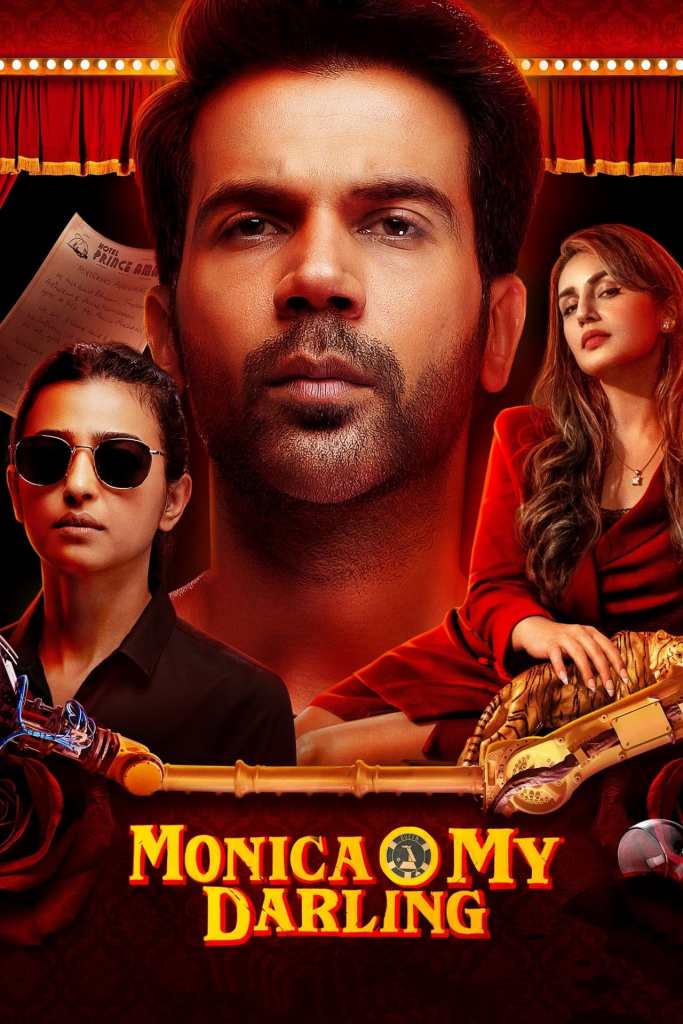
Monica, O My Darling is a Hindi language film from India. It is one of those quirky movies that defies labels: it is part comedy, part thriller, part crime film, all rolled into one. At a robotics company, 3 months after a man is killed by a robot (called an accident, but the viewer is led to believe differently), the man whose technology behind the robots, Jay Arkedkar, is promoted to the board of directors. His promotion is not taken so well by others in the company who were expecting that job themselves, including Nishi, the company’s owner’s son. However, Jay is dating Nishi’s sister, so nepotism seems to be skipping a son for a son-in-law. Jay though, has a woman on the side, Monica (who announces that she is pregnant), and shortly after his promotion, photos show up on his desk showing Monica and him together. A note tells Jay to come to a meeting or they will go public. When Jay goes there, he finds Nishi and Arvind, the company’s CFO. They don’t want to humiliate Jay, they want Jay’s help in murdering Monica. Turns out she’s been sleeping with each of them, and has told each that she is pregnant, and promises future blackmail. The trio decides to work together to kill her: Nishi is supposed to murder, Jay will transport the body, and Arvind will then get rid of it. When Jay picks up the truck left by Nishi, the body is indeed in the back, and after a quick adventure, the body is dumped. Imagine Jay’s and Arvind’s surprise the next day when Monica walks into work. Of course, shortly after, Nishi’s body is found to be the body they thought they were dumping. More murders come, and Jay is left wondering how Monica is doing it all. Suffice it to say, more surprises come before the end. In these kinds of movies, the suspense is supposed to ratchet up with the body count, but I found the opposite effect unfortunately. The movie is a lot more exciting (and funny) in the beginning, and loses luster in the second half. The end is way too predictable, though there are still chuckles along the way, especially from the over-the-top detectives tasked with the murder investigation. Still, not a bad film, and definitely worth your time on Netflix if you like off-beat international comedies. ★★★

Regulars readers of mine will know I love a good story. Three Thousand Years of Longing is made up of bunches of stories, each richly and beautifully told, so you know it’s going to be good for me. Tilda Swinton plays Alithea, a scholar interested in how today’s fables and legends grew from stories centuries ago. She doesn’t believe in magic, and knows that any fantastical story came from some logical explanation in the beginning. Imagine her surprise when, during a trip to Istanbul, she finds a djinn imprisoned in an antique glass bottle. The djinn, played by Idris Elba, tells Alithea his tale: his life and 3 imprisonments, sometimes for centuries at a time. Alithea is hesitant to make any wish when it comes time to do so, knowing the legends of djinns/genies, and how wishers often have their wishes turned against them. But as the movie goes along, we learn this djinn’s tragic story, and know he is not of that kind. When Alithea makes her wish, it takes the viewer by surprise, but that’s not yet the end of her story quite yet. The biggest surprise isn’t automatically revealed to the viewer, but through hints dropped throughout the movie. Not perfect, but damn close for my tastes. ★★★★½

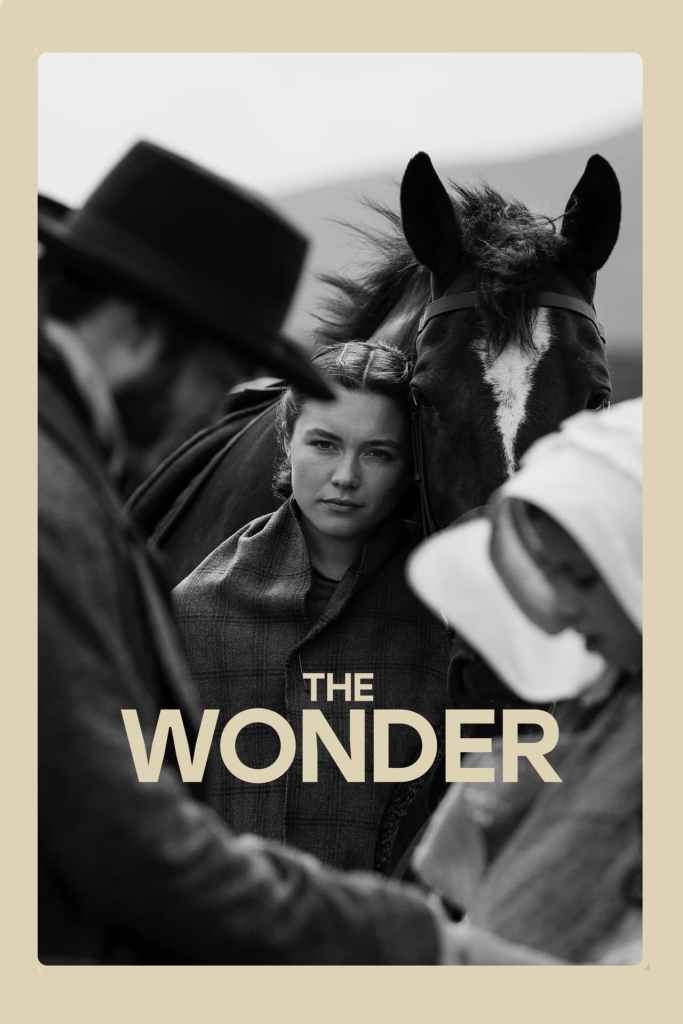
The Wonder is based on a book by Emma Donoghue, a book I read maybe 3-4 years ago. Really enjoyed the book, and thus have been looking forward to this movie, especially since it stars Florence Pugh, who never disappoints. She plays Liz Wright, an English nurse, who is hired to a rural Irish village to observe a girl for a period of 2 weeks. The girl, Anna, supposedly has not eaten in 4 months, and Liz and one other, a former nurse-turned-nun, will spend shifts with the girl continuously, to verify she is not eating (or expose her if she is). The church wants to believe it is a miracle. The local doctor wants to believe it is an advancement of science. Liz of course knows it is impossible, and she is determined to find out what’s going on. Anna’s family is extremely religious, and thus so is 9-year-old Anna, and no one is talking. Liz is smart though, and she will get to the bottom of this mystery, though the answers will shock you. The movie is a faithful adaptation (the screenplay was cowritten by the original novel’s author), so there were no surprises for me unfortunately, but it is gorgeously shot and Pugh delivers a commanding performance. ★★★★

I have nothing good to say about Silent River. I put it on my list because it was described as a David Lynch-ian style mystery about a man coming unraveled in a remote desert motel. Sounds great in theory, comes off terribly in practice. I got one hour into this 2 hour film before throwing my hands up and giving up. At the halfway point, I still had no idea what was going on (and honestly, not much was). The man would have one-sided phone conversations with some unknown person, would drive out in the desert and come back, and had started to see some mysterious woman who was staying in the adjacent room. But no hint of a plot yet, and my patience had run out. ½

  • TV series currently watching: Star Wars Tales of the Jedi & Zootopia+ (miniseries)
  • Book currently reading: All the Light We Cannot See by Anthony Doerr

Quick takes on 5 films from 1930s Japan

Today I’ve got 5 films from 1930’s Japan, 4 from director Hiroshi Shimizu. Despite a very prolific career (160 films!), Shimizu isn’t a household name today. He started in the silent era, and I’ll be starting with one of his silent films, though it was released well into the “talkie” era, in 1933. Japanese Girls at the Harbor is a beautiful film telling the lives of a two young ladies. Sunako and Dora are best friends in school when a man comes between them. Henry flirts with each before settling on Sunako; unfortunately he has another girl, Yoko, on the side, and when Sunako learns of this, she shoots Yoko in the chest. Fast forward a few years, and Sunako has left the area and is now a prostitute in another city when Henry spots her. Henry, having long since married Dora and expecting a child, can’t help himself, and starts hanging around Sunako again. After seeing what her previous actions have done to her life, she doesn’t want to ruin another, and urges Henry to return to his family. Following Sunako around is an itinerant painter who has feelings for her despite her profession, who happens to also be friends with Yoko, who Sunako doesn’t know survived the attack years ago. It’s an ever-tightening circle of connections, told as a story by a “narrator” through the intertiles, and a very compelling one. No newcomer by 1933, Shimizu knows how to set a scene, and the camera work is lovely. I wish I could see him work in a more modern film; his lush landscapes scream for a widescreen color shot. ★★★½

Mr Thank You, from 1936, has a couple introductory intertitles, but it is a sound film. An unnamed young bus driver is called “Mr Thank You” by everyone on his route, for his politeness in greeting every passerby. His route takes him through tiny mountain villages from rural Izu to Tokyo, and all the smalltown folks along the way know to look for Mr Thank You’s bus. Today, his travelers include a surly mustached man whom everyones loves to tease, some day workers, students, a girl mourning the death of her father, and, unfortunately, a woman with her 17-year-old daughter, a girl who is being sold in Tokyo to help the financially strapped family. The film presents a start look at depression era Japan and shows a practice that lasted for a very long time. Though the premise is great, the film ultimately becomes too predictable by the end, and though a short movie at 76 minutes, it even started to drag. Does have some heart-wrenching moments though. ★★½

The Masseurs and a Woman is a drama/comedy, and again, a very short picture at just 67 minutes long. It gets you right into the “action” with two blind friends walking up a mountain towards a spa town, where they work as masseurs. Toku and Fuku settle into work immediately, massaging hikers and a woman passing through from Tokyo. Toku is instantly smitten by the woman, as is another visiter in the area, a man traveling with his nephew. Before the woman can pursue either relationship, money is stolen from the hikers, and people start whispering that the woman was the only other person around that day. Toku wants to protect her as much as he can, but his fears may be ill placed. The movie is pretty ho-hum and not all that memorable, outside of its humor, and unfortunately not in a good way. In 1938 it may have been funny to make fun of a blind person by making noises or tickling their noses with a feather; if it was funny then, it isn’t now, and that’s about all I took away from this picture. ★½

Unfortunately these films just keep getting worse. Ornamental Hairpin again takes place in a mountain spa, and the setup is a group of “regulars” who keep getting annoyed by hikers and visitors who come in and make a big ruckus. One young man, Nanmura, hurts himself by stepping on the title hairpin while in the pool; it must be pretty bad because he spends the rest of the movie limping along. The man dreams that only a lovely young lady could leave such a piece behind, and there’s a big (i.e. very long) brouhaha over if the girl will be a beaut or a hag. When she hears that her missing hairpin caused harm, Emi returns to the spa to mend Nanmura along, befriending a couple young boys and the other regulars as well. Turns out, Emi is a kept woman in Tokyo, and she doesn’t want to return to her life there. The movie has so much hemming and hawing that, while the total runtime is just 80 minutes, it could easily have been halved if they just cut out all the repeated dialogue and stale jokes. Watching Nanmura take (long) trips over and over again on his bad foot, hobbling along while Emi and the boys root him on, happen too frequently in the final half. The very final scene is actually very nice, if you have the patience to get there, but by then, it was too little, too late. ★

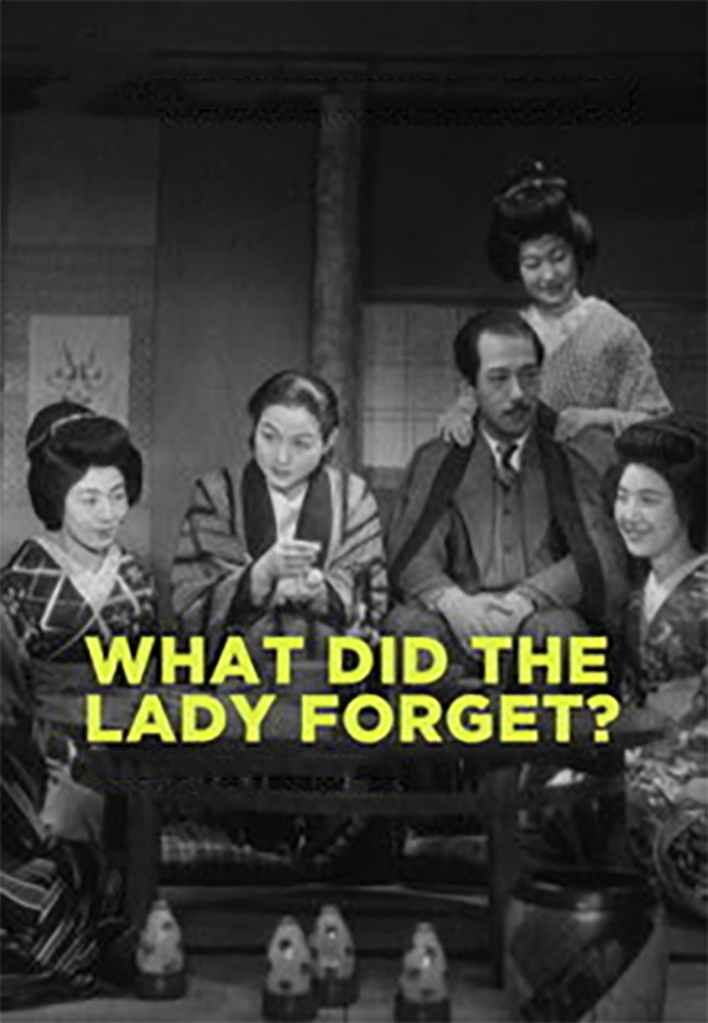
I was going to watch one more Shimizu film, but I can’t take it anymore, so to finish up, I went back to Yasujirö Ozu. I’ve seen a whole bunch of his films, and am rarely let down. This is What Did the Lady Forget?, a comedy from 1937. Right away, there’s a joke, and unlike my recent films from above, I actually laughed! Three friends, women, are talking and one tries out her “new laugh,” where she’s trying to laugh without scrunching up her eyes, because of her new wrinkles there. This, and the general banter between the women, is genuinely funny, and so typical Ozu. Anyway, onto the plot! It unravels as most Ozu films do: a quiet, simple family drama. One of the above women is Tokiko; she and her husband Komiya are hosting their niece Setsuko. Setsuko is a modern young woman: she smokes and drinks and likes to hang out late with friends. Tokiko is having none of that, and wants to clamp down hard on the girl’s free spirit. Komiya, however, clandestinely goes out with Setsuko and doesn’t discourage her from her habits. The viewer definitely gets the idea that he wants out of the house as a breather from his overbearing wife too. When he is caught in a life though, Tokiko starts to whirl on him, but Komiya is going to have to finally stand up to her. It’s a nice little film, with some very good laughs here and there, and Ozu’s style is easily seen. ★★★

  • TV series currently watching: Harley Quinn (season 3)
  • Book currently reading: Wuthering Heights by Emily Brontë

Quick takes on Don’t Worry Darling and other films

I don’t usually hit up documentaries, but something about the premise of Good Night Oppy tugged at my heartstrings, and I’m glad I watched it on Prime this weekend. It is the story of the twin Mars rovers, Spirit and Opportunity: their planning, launch, and long missions exploring our sister planet. The movie does a great job of making these little robots feel alive, with NASA and JPL staff, those who built the robots and operated them, openly talking about how they felt like parents to these little engines that could. Shot into space 3 weeks apart in 2003, at a time when 75% of previous missions to Mars had ended in failure, there’s jubilation that the rovers even made it there and landed successfully. Spirit, who even during testing on Earth was always a bit more troublesome, proved just as finicky on Mars, but “Oppy” always just chugged along. The mission was supposed to last 90 days, that was the “warranty” on these machines, at which time the engineers suspected that they wouldn’t have enough power to keep going. Spirit ended up going over 6 years (Earth time), and Oppy went over 14 years before finally not waking up after a 6 month dust storm. The film is at times exhilarating and heart aching, and ultimately you come away with profound respect for these tiny, plucky robots who explored a planet alone, teaching us a lot about our closest neighbor, and giving hints about possible life outside of our planet. ★★★★★

The Guardians of the Galaxy Holiday Special is the second Marvel special available via streaming on Disney+. As the title says, it brings the popular Guardians in for a Christmas movie. After the death of Gamora in Avengers Infinity War, Drax the Destroyer and Mantis want to bring some joy to Quill, and they get the idea to bring a piece of home (Earth) to him. The two make the trip to Earth at Christmas time and go to kidnap one of Quill’s childhood heroes, Kevin Bacon, and take him back to Nowhere as a gift. Hijinks ensue. Like the other Marvel Special, it’s a short film at 44 minutes, and it is a typical holiday film, i.e., lots of fluff (albeit in the Marvel setting), but that doesn’t mean it isn’t fun. Drax is always funny, and the whole team makes at least a cameo too, including Nebula, Rocket, and Groot. Disney doesn’t mind paying out checks to bring the stars back, even for a short like this, I guess. For those that say the Marvel films are feeling stale with formulaic plots, these Specials have really set a standard for something different, and both have been fantastic so far. I can’t wait to see what else Marvel cooks up in the future for this platform. ★★★★

Murina takes place off the coast of Croatia and focuses on Julija, a 17-year-old girl living with her parents on a remote island there. Despite the idyllic setting, Julija dreams of other places, and is fascinated by a sailboat docked close by, full of college kids partying day and night. Her dad Ante is domineering and often verbally abusive; Julija doesn’t know why her mom Nela, a local beauty, takes it. The family is visited one weekend by Javier, a wealthy investor who once employed Ante and dated Nela. Ante is attempting to sell his land to Javier with the intent to have it developed into a resort. As the weekend progresses, we learn more about the past relationships between the adults, all while Julija succumbs to Javier’s charms. Javier drops hints that his kids go to the best private school in Switzerland, and that if Julija were his daughter, she’d realize her dream of going to Harvard. Julija believes that when he leaves, he will take her with him so that she can finally escape this tiny island where nothing ever happens. Ante warns Julija that Javier is a typical rich playboy, and that he’ll use any resource presented to him but cast it (her) aside as soon as he grows bored. The film does a fantastic job of showing there is no clear black or white, good guy or bad guy, but instead varying shades of grey (though Ante’s behavior, especially towards his daughter a the film goes along, makes it hard to root for him in particular). Strong acting from the 3 elder actors, all experienced (including Cliff Curtis as Javier), but unfortunately the lead, Gracija Filipović as Julija, is not a star yet. She often delivers her lines emotionlessly, with dead eyes that star off to nowhere, and with the camera focused squarely on her so there’s no place to hide. It’s the sole weakness (and a glaring one) in an otherwise gripping international indie film. ★★★

Don’t Worry Darling looked so, so good in the previews, and I was excited to see it from day 1. Unfortunately upon release, reviews were rough, so I shelved it until it hit streaming. Now having seen it, it does have its problems (a real lack of originality being the biggest), but it’s not all that bad. It helps that you have Florence Pugh, a powerhouse young actress, in the lead. In the film, her character, Alice, is living in a quaint 50s small rural town with her husband, Jack (Harry Styles). Jack and all of the men in the town are employed by a company called Victory, located outside of town in the middle of the desert. Only the men are allowed there, the women cannot leave the town, and spend the day cleaning and shopping, à la stereotypical 1950s. But there’s something very wrong here. One wife, Margaret, starts having problems. She went into the desert with her son one day, and returned without him; the story is the boy died, but Margaret says he was taken as punishment for leaving the town. At a neighborhood party, Alice witnesses Margaret kill herself, but the official story later states that it was an accident. After awhile, Alice too begins having troubling visions, and begins to suspect a larger menace. When she tries to ask Jack what it is that he and the men do all day, he gives the company answer that they can’t talk about it. All of this is leading to the big reveal, which I’m not going to spoil. Unfortunately it isn’t as surprising as you’d hope, borrowing heavily from other sci-fi films (and some iconic ones at that), but while the ending is a bit of a letdown, the journey there is pretty fun. Pugh is fantastic as a woman losing her grip on the reality around her, though director Olivia Wilde did better with a small comedy than with a bigger budget. ★★★

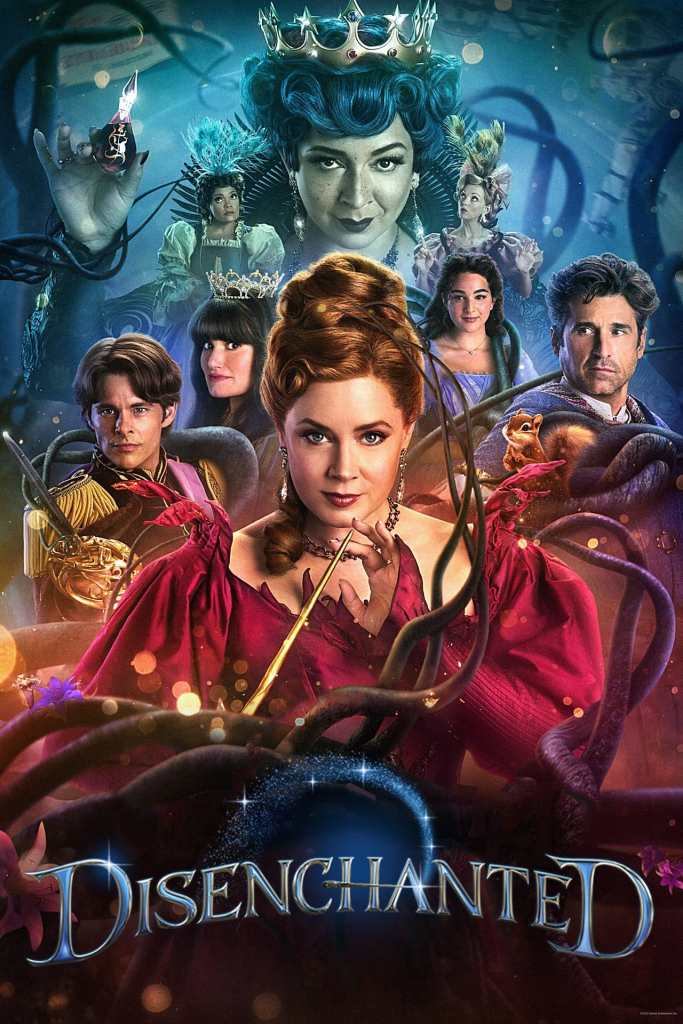
Disenchanted, the followup to the massive (and surprising) hit Enchanted, picks up 10 years after the first film. Giselle (Amy Adams) and husband Robert (Patrick Dempsey) are moving from New York out to the suburbs, to find a quieter spot for their happily ever after. After the move, they are visited from Andalasia by King Edward and Queen Nancy, who bestow Giselle’s and Robert’s baby daughter with a gift: a magic wish-granting wand. The rules states only a true son or daughter from Andalasia can use it, so just Giselle and the baby. Initially, Morgan (Robert’s daughter from the first film, now a teenager) has problems at her new school, and overwhelmed with problems settling in, Giselle picks up the wand and wishes that life could be easy like a fairy tale village. That’s what she gets, with Monroeville becoming Monrolasia overnight, unfortunately it isn’t what she expected. The town’s “queen,” Malvina (Maya Rudolph), becomes its evil queen, and Giselle herself, a stepmother to Morgan, starts showing “cruel stepmother” traits. She has until the stroke of midnight to undo the wish, but the wand has been stolen by Malvina’s minions, though she herself can’t use it since she’s not from Andalasia. As Giselle becomes more wicked with each progressing hour, it falls upon Morgan to fix the problem. The movie starts slow, but definitely picks up in the final half. Though it lacks some of the wonder of the first film (which I absolutely loved), and the songs aren’t quite as lasting, this one is still an entertaining trip full of magic. ★★★½

  • TV series currently watching: Peaky Blinders (seasons 1+2)
  • Book currently reading: Wuthering Heights by Emily Brontë

Quick takes on Confess Fletch and other films

Sometimes all you want is a simple, heartfelt film with no fluff, and if that’s your mood, check out A Love Song from first-time director Max Walker-Silverman. To tell his story, he got two longtime professionals in Dale Dickey and Wes Studi. Dickey plays Faye, an older retired woman whose husband died several years ago. The setting is her camper next to an idyllic lake somewhere in the west. She’s alone but seemingly content in the beginning, and is awaiting a meeting from a friend from long ago: Lito (Studi). Lito is slow in showing up, allowing Faye to have encounters with a family wanting to dig up their dad (buried awhile back under where her camper now sits) and a lesbian couple at the next campsite over (where one wants marriage and the other is hesitating), but when he does, the two old friends settle into an immediate camaraderie. Lito too lost his wife awhile back, so the only uncomfortable moments between the two is the idea hanging thick in the air between them: will they pursue each other now or stay alone. That’s the whole movie in a nutshell, but the telling of it is a joyous ride of emotion. There’s a moment where Faye, seemingly left alone at a time when she is craving companionship, is front-and-center with the camera trained on her face, and you see the tide of emotion sweep over her and can practically hear her thoughts of loneliness. You just hope in the end that she will be OK, and let me tell you, getting to the end is a wonderful ride. Very sweet film. ★★★★

Boy, did Givers of Death let me down. I’m a junky for post-apocalyptic movies, but some movies are so bad that even my love for the genre isn’t enough. This film takes place after a fatal virus, which causes large oozing sores on the body, has wiped out a third of the world’s population. With no cure in sight, a business has popped up offering relief to those infected: for people who are unable to end their own pain, professionals can be hired to come in and kill you painlessly. “Fog” is one such professional, working for a childhood friend who opened this business when he saw the opportunity. Fog is haunted by images of the family he lost to the virus, while at the same time is pursued by a detective out to stop these vigilantes. Despite most cops in the city of Buffalo having long ago thrown their arms up at the rampant lawlessness, Schmidt still wants law and order (which is hilarious, because he isn’t above shooting down a suspect here and there). This is a Rough (capital “R”) ultra-low budget film, which doesn’t necessarily warrant automatically being bad, but the dialogue is laughably awful, and the acting, for the most part, is worse. Newcomer Addison Henderson isn’t horrible in the lead as Fog, but he can’t do it all himself, and the story doesn’t give him any help. ★

I don’t know why I keep drinking from a dry well; I always expect to be blown away by a Claire Denis film and it seems I’m always let down. Both Sides of the Blade stars one of France’s best, Juliette Binoche, as a Sara. She’s been in a relationship with Jean for 10 years, but when she spots an old flame, François, Sara is overcome with emotion. Turns out François and Jean were once business partners, but had a falling out when Sara and François broke up and she started dating Jean. Now the two men are starting a new business together after all these years, and Sara starts sneaking around to see her old flame. There’s also a subplot about Jean, pretty much a deadbeat father, and his failed relationship with his teenage son from a previous relationship, who is being raised by Jean’s mother. The story is slow but not bad, but what kills me about this film is the completely childish dialogue. Jean and Sara’s arguments are the kind you’d hear from a couple lovesick teenagers; no adults I know talk like this. And there’s so much fluff in the dialogue that I felt it could be trimmed back quite a bit and you could complete this film in about an hour. The whole “you said this,” “no, I said this,” and “do you really love me?” bullshit wore on me to no end. ★½

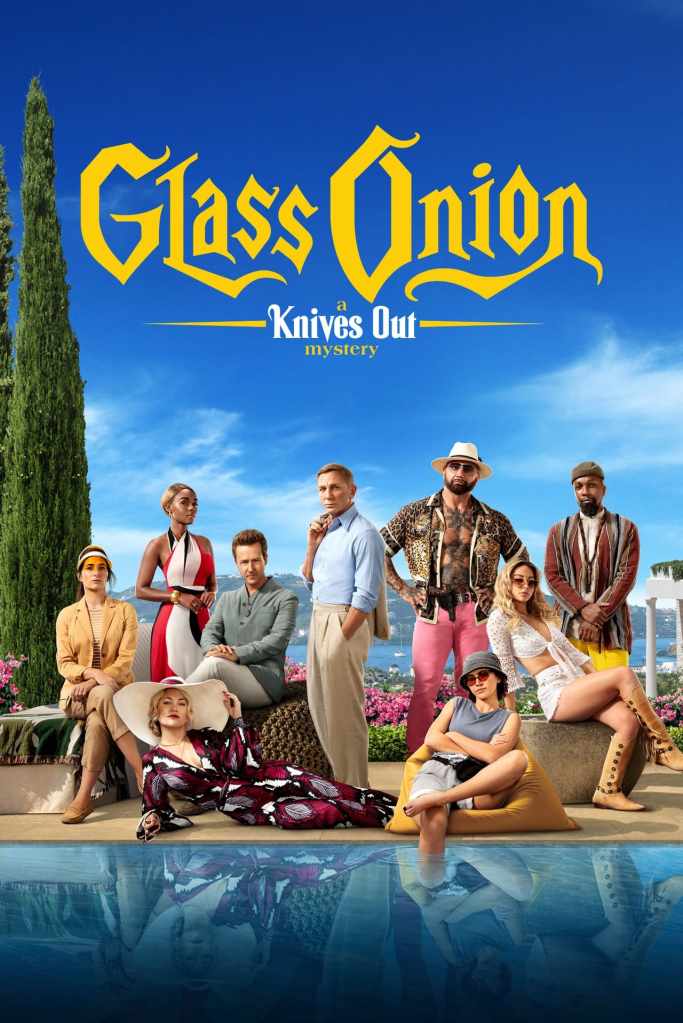
Confess, Fletch is a reboot/revival of the Fletch character, originated from a series of books by author Gregory Mcdonald, and last seen on screen in the 80s with Chevy Chase as I.M. Fletcher. In this new go-around, we get Jon Hamm as Fletch, a sometimes-bumbling idiot but who always seems to solve the case. Fletch is trying to help his girlfriend, Italian heiress Angela de Grassi, hunt down some valuable paintings stolen from her father. Her dad has gone missing, apparently kidnapped, and the kidnappers are demanding one of the stolen paintings as ransom. An art dealer in Boston has recently sold 2 of the stolen paintings, so Fletch is there to dig into that guy, when Fletch runs into some unexpected trouble. A murder takes place in the house he is renting (from a wealthy playboy), and the police point at Fletch as the number one suspect. Now Fletch has to keep the fuzz at bay (thankfully, they can’t walk but for stepping on their own feet, worse than Fletch) while he tries to get to the bottom of the art theft, and wonder why he is being set up in the murder. When the film started, I had a hard time disassociating Hamm from Chase as Fletch; Chase played the role in such an iconic way, but Hamm is very funny and it wasn’t too long before I was able to settle in to the flow of the picture. The movie is very funny and they are able to hold the mystery of the murder, with a host of suspects in true whodunit fashion, until the very end. If another sequel comes, I’ll be lined up for it. ★★★½

See How They Run is a true whodunit comedy crime film in the classic Agatha Christie style (it pays homage to her and she plays a central figurehead in the movie throughout). In 1953 London, a narrator introduces us to the film, explaining how murder mysteries are old and played out, laying out the classic tropes by using the example of a stage play currently playing at the West End, Christie’s The Mousetrap. Humorously, the narrator, an American director hired to make a film adaptation of this play, shortly thereafter is killed, on the night of the 100th performance of the play. The detective brought in to solve the murder, Inspector Stoppard, revives the tropes just introduced, by making sure we know all the characters involved, and with his unwanted sidekick, young and enthusiastic Constable Stalker, spends the rest of the film identifying motives by each person involved in the play/movie and ruling them out as needed, until the finale, when all are brought together in one room for the classic unmasking of the killer. Yes, it’s been done a million times, but they try to keep this one fresh by telling the viewer what’s coming before it actually does (“This is how you make a whodunit,” and then following through). There’s a fantastic cast, including Sam Rockwell and Saoirse Ronan as the cops, and the rest filled out with Adrien Brody, Ruth Wilson, Harris Dickinson (who is on a roll lately), David Oyelowo, and others. There are some very funny moments, but also whole sections of the film where the comedy disappeared unfortunately, and the mystery wasn’t as deep or intriguing as the above Fletch film. Still, not bad, and certainly a fun way to spend 90 minutes. ★★★

  • TV series currently watching: Andor (season 1)
  • Book currently reading: Wuthering Heights by Emily Brontë

Quick takes on 5 French films of the 1930s

Zéro de conduite (Eng: Zero for Conduct) hails from 1933 by director Jean Vigo. I’ve been wanting to see a couple films by this director, whom several French directors of the New Wave pointed towards as inspiration. This short film (about 40 minutes) is a fly-by-the-seat-of-your-pants trip about 4 boys’ experiences in a totalitarian boarding school. They are rambunctious boys, and thus are always getting in trouble, often getting the “zero for conduct” grade and being punished with detention on Sundays. They have rebellion on the mind though: a planned disruption of the upcoming commemoration celebration, an annual event that draws dignitaries. The film paints the school in a poor light: teachers either don’t care to educate the youth, or lord over them unbendingly, or, even worse, prey on them, as one does to one of the more effeminate looking boys (an act which the headmaster addresses by asking the boy to be more careful, not by admonishing the teacher). I can definitely see muse here for the New Wave, as the lively nature of the boys is more important than a narrative story, but it’s a bit too rough for my tastes. ★★

Having seen (literally) thousands of movies over the last 10 years, I’m a little weary when I read that so-and-so movie is considered one of the best of all time. Vigo’s L’Atalante is one such, and while I can’t agree with that lavish assessment, it is a fine movie. River barge skipper Jean has just married small-town girl Juliette (the ominous looks of the villagers as the couple leave on the barge, refusing to waive goodbye, is as funny as it gets). Their honeymoon is on the barge, as Jean continues his work with first mate Père Jules and a young unnamed cabin boy. Jean promises Juliette that he’ll take her to Paris and all the other exciting cities along the way, places that Juliette has never seen, but plans go awry. First, Juliette visits Jules in his cabin; he’s definitely trying to charm Juliette but you get the impression it is just because he isn’t around women very often, and Jean mistakes their meeting as something sinister. Then, when they finally put in to Paris, Jules and the cabin boy head out immediately, leaving Jean to watch the boat and delay his date with Juliette. When the couple get off the boat the next day, Juliette is swept off her feat by a street peddler, a man who talks a big game, sending Jean into another fit of jealousy. When Juliette sneaks off the boat to see Paris without him, Jean has had enough, and sets the boat out onto the river without her. Neither are happy without each other, but you aren’t sure if they’ll reunite or not. It’s fun enough, with a sterling turn by Rita Parlo as the blonde bombshell Juliette, but I do not get the heaps of praise the film gets. It’s not all that memorable and probably not one I’d watch again. Shortly after its release, Jean Vigo died, at the age of 29 from tuberculosis, having completed just 4 films. ★★★

Mayerling is, unfortunately, a forgettable film from 1936, which has been remade into better versions from what I understand (including a 1968 version with some star power, if you care to look it up). The film’s main character is Prince Rudolf, heir to the Austrian throne. Under pressure from his father the emperor, he marries, but Rudolf makes it known that he is only doing so to produce an heir; he is no intention to quit his philandering ways. He does quip on his wedding day that, “God grant that I never meet the love of my life.” Famous last words. Five years later, he does indeed meet the girl, a 16-year-old baroness named Marie. For both, it is love at first sight, and the rest of the film is their burgeoning relationship, and the lengths they’ll go to to stay together despite outside pressure. Giving away the ending a little (it is somewhat based on a true story after all), it ends with a Romeo and Juliet moment, and in real life, Rudolf’s death led to the succession of the empire passing to his cousin, Franz Ferdinand, whose assassination obviously led to World War I (for you history buffs out there). The film is just OK, nothing spectacular, and there’s some glowing plot holes, like how the prince complains that no one ever wants his attention except to get something in return due to his position; though this may be true, his own best friend is a republican named Szeps, who openly challenges the monarchy, yet Rudolf has no problem with Szeps (who obviously gains much from their friendship). I will say one thing about this movie: it introduced me to director Anatole Litvak. How have I never heard of this guy before?! His filmography reads as a who’s-who of stars from Hollywood and around the world. He also headed up the photography division that documented the D-Day landings in Normandy. ★★

I recently watched the new film version of All Quiet on the Western Front and loved it, so I thought I’d take in a film in a similar vein. Wooden Crosses (French: Les Croix de Bois), from director Raymond Bernard, has been called France’s take on that German novel (Western having been based on a German soldier’s viewpoint, and Crosses from a Frenchman’s). Unfortunately, while it was very well received upon its release in 1932, it has not held up well. Much like its German counterpart, it follows a young man, in this case a student named Gilbert Demachy, who excitedly enlists for the war early in the going, with dreams of defending his country and becoming a hero. He soon finds that war is nothing like what he expected. He and his troop face death soon and often, in a series of battles. While the battle scenes are very good for 1932 and still are passable by today’s standards, there’s some serious problems with the movie. When there is down time, the soldiers are often a bit too happy-go-lucky, and while I’ve never been a soldier, I have to imagine the constant fear of death hanging over your head would preclude hearty laughs and gayety. And while I know acting has changed in 90 years, it is still laughable for me when I see a character shot dead, but not before throwing both arms up in the air and doing the slow fall down to the ground. ★½

I always like to finish sets out with epics whenever possible, and what better than the classic Les Misérables. This version comes from Raymond Bernard again, released in 3 parts over a couple weeks in 1934, total run length approaching 5 hours. Due to being longer than the other films, it has a much greater character development, and while I’ve never read the book, I understand it to be a very faithful adaptation. At this point, you’ve probably seen the musical, one of the myriad films or TV series, or even read the book, if you are at all interested, so I won’t rehash it with a synopsis. Suffice it to say, it’s a great film, especially if you, like me, are a fan of epics. There’s really only one section that lost my attention, and unfortunately it’s one where it should have been most exciting. The first half of part 3, a full 45 minutes or more, shows the 1832 June Rebellion in Paris, but during this section, Jean Valjean mostly disappears and isn’t shown much, while events greater than him are taking place. Harry Baur gives a riveting performance as the redeemed ex-convict, and when he’s not there for a long stretch of film, the movie suffers. A minor quibble for what is otherwise a tremendous film, and despite its long length, I’m down to watch this one again one day. ★★★★½

  • TV series currently watching: The Walking Dead (season 11.3)
  • Book currently reading: Wuthering Heights by Emily Brontë

Quick takes on Marketa Lazarová and other Czech films

Today I’ve got a series of films from Czech directors, and I’ve had good luck from this country. First is a trio of pictures from director Karel Zeman, starting with 1955’s Journey to the Beginning of Time. This movie is only loosely a narrative picture, and really comes off more as a documentary, or even an informative film for children. The loose story involves four children who, inspired by the writings of Jules Verne, canoe inside a river cave looking to go back in time, à la Journey to the Center of the Earth. They succeed: on the other side of the cave, they first encounter the barren ice age, but as they progress further, they go further and further back in time. One of the boys is a brainy know-it-all, and he relates to his fellows (and us viewers) the different kinds of dinosaurs and mammals encountered, as well as how they lived, what they ate, etc. There’s trouble here and there, like giant snakes in prehistoric swamps, but for the most part the boys come out unfazed, and are able to make it back to the very earliest signs of life on our planet. Zeman used both 2D and 3D models to create his animals and landscapes, and for 1955, it all looks quite good. But I enjoy more of a story, and this film has almost none. ★½

Invention for Destruction is more dazzling, and maybe that’s just because the technology used in its making isn’t used anymore, and really stands out today, in an almost whimsical way. The story revolves around a scientist who is kidnapped by an evil count, Artigas, who has plans on using the researcher’s knowledge to create an ultimate weapon. The scientist doesn’t know Artigas is so dastardly, and thinks he is just furthering scientific knowledge. The scientist’s apprentice, Simon Hart, has also been kidnapped, but is being held separately, because he does know Artigas’s ambitions, as well as the evil man’s use of a state-of-the-art submarine which has been terrorizing the open seas, destroying merchant ships for their valuable cargo, and leaving no survivors. Simon tries to send his boss a message to warn him away from completing his project, and when that doesn’t work, attaches a message to a balloon in hopes that it reaches the city and finds help. It’s an old school fairy tale sort of story, complete with a damsel in distress (a woman also being held by Artigas), and to create the feel of a story behind told, the sets look hand drawn, purposefully so. To show characters from a distance (like people standing on a castle’s ramparts or flying in an airship), paper cut-outs and stop motion is put to affect. The entirety of it all makes it seem like you are reading an old story book with wonderful illustrations. A unique viewing experience. ★★★★

Zeman’s followup was 1962’s The Fabulous Baron Munchausen, and this time, he pulled out all the stops, using every animation technique under the sun to create another tale, this one based on an 18th century fictional German nobleman. Again going back to the writings of Jules Verne (referenced in all 3 of these movies), the movie begins with a man landing his spacecraft on the moon. He exits the craft and finds something he does not expect: a group of old friends, sans spacesuits, having tea. The men from Verne’s From the Earth to the Moon are there, as is Cyrano de Bergerac and the aforementioned Baron Munchausen. The Baron takes the spaceman, Tonik, as a “moon man,” not believing that he is from Earth, since Tonik talks about science and math that wasn’t around when the Baron was living in the 18th Century. The Baron wants to take Tonik on a field trip to Earth, and they end up in the 18th Century Ottoman Empire. What follows is a fantastical adventure, with Tonik and the (often oblivious) Baron on the run from the Sultan and his armies. The Baron always seems to flirt disaster and land on his feet, often in remarkable ways. I probably shouldn’t have watched this one just after finishing Invention for Destruction, because the combination of live action and animation that was done in that movie didn’t feel as fresh the second time (though Zeman does have new tricks up his sleeve this time, including tinting the film in various colors to set the stage). Still, a very fun story. ★★★

The Cremator gets my nomination for one of the stranger films I’ve seen in awhile. From director Juraj Herz, it takes place in 1930s Prague, at a time when the country is seeing a lot of Nazi Germany influence. The main character is Karel Kopfrkingl, an undertaker who works at the city’s crematory. He’s a strange guy with a dark side; he’s obsessed with the idea of reincarnation, and, as the movie progresses, becomes more and more fascinated with the idea that those who die are seeing their souls freed from the suffering of the world. At the same time, Karel, who may be one of the most impressionable people you ever see, is taken by the rising German party in the area. He starts to believe that he may have a drop of German blood in his ancestry somewhere, and grows to see problems with Jews in his life, even those who were once good friends to him. But when a German operative suggests that Karel’s wife may have Jewish blood, based solely on the fact that she prepared their Christmas dinner “in a Jewish way,” how far will Karel go to see his wife and kids’ souls “find freedom?” Karel is delightfully evil, his every little movement coming off as perverse, like his penchant for combing a corpse’s hair at work, and then immediately combing his own with the same instrument. There’s lots of dark humor here too, but in a way that made me uncomfortable. I loved the sinister feel of the movie, and though it takes a very long time to build, the grotesque ending will stick with you. ★★★½

And finally, the big prize today, František Vláčil’s Marketa Lazarová, considered by some to be the best Czech movie of all time. Taking place in the harsh middle ages, it revolves around an area where 3 groups are eking out a living: the king’s representative Captain Pivo, who controls the army there; Lazar, who lords over a tiny settlement; and Kozlik, a raider with his own settlement called Roháček, who has a large family who works to attack travelers on the road. Most of the film follows the Kozlik clan, and specifically his sons Mikoláš and Adam, who has one arm. On a raid, the sons attack and plunder a Count’s carriage. Rather than kill the Count’s son Christian, they take him back as prisoner to Roháček. There, Christian catches the eye of a woman, Alexandra, much to the consternation of former lover Adam. The Count goes to Captain Pivo for help in retrieving Christian. At the same time, Kozlik is butting heads with Lazar, who was found scavenging from the Count’s carriage before the Kozlik boys could get back to it. When Mikoláš visits Lazar to ask for help in keeping Captain Pivo at bay, Lazar responds by beating Mikoláš up; in retribution, the Kozlik clan returns and kills Lazar’s mentally challenged son, and abscond with daughter Marketa (who is a virgin, promised to the church), who Mikoláš later rapes. And all that in the first half of this nearly 3 hour epic! There’s some crazy revelations in the second part, which include the fact that Alexandra and Adam are siblings, and it was retribution for their earlier incestuous affair that took Adam’s arm. And the part where Marketa gets Stockholm syndrome and starts a relationship with Mikoláš. Or a roving priest named Bernard, who seems to carry on relationships with sheep, and is in constant fear of bands of wolves taking “his love.” I can’t pretend to understand all the imagery. While it is often called an avant-garde or experimental film, it still retains a strong linear plot (thankfully, because I typically do not care for experimental stuff). The whole thing is made up of lots of little vignettes, which still follow a linear whole story, but each may focus on a particular character. Sometimes the segment will start in the middle somewhere, and then backtrack to say how we got there. It can be a little tough to follow at first, until you get the hang of it. The director is often lumped in with fellow Czech New Wave artists, but this film stands apart. When I think of the New Wave, I think of the vitality and exuberance of youth; this film, while it shares stylistic elements of New Wave pictures, smashes the gayety and presents a dark and unknown path for the young, perfectly joining style and substance as few films can. The ending, with Marketa realizing her destiny after the fateful battle between Klozlik’s family and basically everybody else, is perfect. ★★★★★

  • TV series currently watching: Interview With the Vampire (season 1)
  • Book currently reading: War of the Twins by Weis & Hickman
The new Black Panther’s claws hit a snag in Wakanda Forever

The Marvel Cinematic Universe was left with a gaping hole with the sudden passing of Chadwick Boseman in 2020. As T’Challa the Black Panther, he was charismatic, compelling, and exciting to watch, and inspired viewers with his portrayal. I’m sure Marvel had high hopes to make him a centerpiece of future films à la Thor or Iron Man. With his death, Marvel had to go back to the drawing board, and the resulting sequel is Black Panther: Wakanda Forever.

I had high hopes for this film. Marvel returned director Ryan Coogler, most of the same production team, and all of the remaining actors are back as well. The story begins with other countries, notably USA and France, who are hunting for vibranium to use for their own weapons and research. Wakanda has always thought they were the only source for the rare otherworldly metal, but some is located deep in the Atlantic Ocean. On a retrieval mission headed by the CIA, the ship is attacked by a mysterious underwater people. No one survives, so the higher-ups in the country think that Wakanda is behind the attack, in order to keep vibranium to themselves. Unfortunately Wakanda doesn’t know who the blue water-breathers are either, until their leader, Namor, comes to Wakanda with a proposition: find and turn over to them the scientist who built the vibranium-finding machine, or the water people will attack Wakanda. And they have vibranium too, so it would be a bloody battle on both sides.


T’Challa’s surviving sister, Shuri, who has been trying to recreate the herb that granted Black Panther powers after Killmonger destroyed it all in the first film, heads to the USA to find the scientist, who turns out to be a 19-year-old prodigy named Riri. Before they can return to Wakanda, they are attacked by Namor’s warriors, who kidnap them down under the sea. Namor shows Shuri why he needs vibranium-hunting machines silenced: their entire underwater city is built on the technology, so any such machine will lead other nations straight to them. They’ve been hiding underwater for hundreds of years, and Namor isn’t about to let his people become enslaved. With veiled threats, Namor tells Shuri that Wakanda can either be for or against his people. This is all leading to Shuri picking up the Black Panther mantle, and ultimately a big battle between her people and Namor’s.

As I said in the beginning: high hopes. While the film does delivery some exciting moments, there are plenty of rough spots that hold it back. For one, the camera work is choppy and stilted almost entirely throughout. Coogler hardly ever lets a scene breathe, preferring instead to bounce around from closeup to closeup. Far be it from me to criticize a professional, but it had an amateurish feel to it. And while the film has a decent story, it doesn’t feature great storytelling. Really dumb dialogue at times, full of clichés (“We’ll fight until we can’t fight anymore”), and plot holes abound. The big climactic fight should be the height of the film, but it had long since fizzled before we got there. And, while I understand it is a comic book world, why is that we have Iron Man and War Machine, 2 supposedly unique mech-warriors, and suddenly in the end of this film we get 4 more supersuits seemingly out of nowhere. C’mon Marvel, you can do better than this. I liked the movie, but felt let down. ★★★½

Quick takes on the Weird Al movie and other films

The Good Nurse, (loosely) based on a true story, is about a nurse, Charlie, who was a serial killer for a number of years, able to quietly kill patients at various hospitals where he worked. The hospitals, always afraid of a lawsuit, never dug too deep into the suspicious deaths, but would just fire him, allowing him to move on to another place. The film follows Amy, a respected nurse working the night shift ICU at Parkfield Memorial Hospital, who gets to know Charlie, the new hire. She likes him pretty quickly, as he covers for her when she needs help, and even gets to know her kids, with whom he plays well. However, a sudden death in the ICU, a patient who seemed to be recovering, leads to questions. The deceased family contacts the police to look into it, but 7 weeks have since passed, and the body was cremated, so the police have no body and no evidence. That doesn’t stop them from digging, even though the hospital management hampers their search at every turn. Finally, the hospital has done enough investigating on their own, and fire Charlie over a technicality. They consider the matter closed, but the cops don’t, and they reach out to Amy to try to dig up more clues against Charlie, and even enlist her help in trying to get a confession. The movie by itself is very average, with cringe-worthy dialogue and some outlandish plot elements (Amy sitting in on police procedures, them enlisting her to do cop stuff, and plenty more), but the film stands on the performances of its two leads: Jessica Chastain and Eddie Redmayne, who shows that, while he hasn’t been active in the dramatic circuit since his acclaimed roles 5+ years ago, he hasn’t lost an ounce of ability. Both are gripping in this picture, and it’s too bad the writing lets them down. ★★½

My Name is Sara, (mostly accurately) based on a true story, takes us back to World War II. In 1941, Ukrainian Jewish siblings Sara and her brother are on the run from Germans. Their parents basically kicked them out of the house, knowing death awaited them if they did nothing, and told them to survive. Sara’s brother knows he is instantly recognizable as Jewish, so Sara would have a better chance on her own, so they split up. Sara ends up on a farm, where she pretends to be a Christian girl with no surviving family, and the farmer (very reluctantly) takes her in as a nanny to his kids. The farmer, Pavlo, and his wife, Nadya, are very suspicious of Sara, who has given them a fake name, and grill her continuously to make sure she is not Jewish. Thankfully, Sara had a Christian friend as a child, and she knows the prayers and how to do the sign of the cross; she is able to bluff her way through it until the family warms up to her. Unfortunately, they aren’t the only problems. The farm is raided by Germans during the day, and Partisans at night, and neither group cares for the well being of the family. When they go to market on the weekends to sell goods, Sara is in constant fear of discovery by the German soldiers, or random encounters where she may be recognized. To add to the suspense, Sara becomes aware that Nadya is having an affair, which she must keep secret from her husband, and Pavlo slowly begins to show affection for Sara (apparently what got the last nanny fired). Sara is caught in the middle of all of it, living the next couple years on the edge of a knife. But the years do go on, and as a viewer, when we see 1943, and then 1944, we know the end of the nightmare is coming, if Sara can just survive to see it. This movie is much the opposite of the above film. It doesn’t have stellar acting (the newcomer actress playing Sara is very wooden, maybe purposefully so due to her fear and whatnot, but it didn’t always feel genuine), but the story and pace of the film is fantastic. Not always easy to build such intensity from a slow dramatic film, but they pull it off in this one. And for those averse to subtitles, only spoken German and Yiddish get the subtitle treatment; for most of the film, the Ukraine tongue is substituted with English. ★★★½

The Tale of King Crab starts in present day Italy and shows a group of friends getting together for a good time, and start swapping stories. One that they settle on supposedly took place in their own little corner of the world, and the rest of the film takes place in late 18th century Italy, and follows a man named Luciano. Once popular in his little town, he’s become the town drunk. Luciano has crossed paths with 2 people in the area: the town’s prince, who Luciano blames for keeping an old gate locked through which the town has traversed for decades, and Severino, a merchant who doesn’t like the romance blossoming between his daughter Emma and Luciano. The prince also has eyes for Emma, and when Luciano goes on a drunken fit one night, he angers everyone, and gets himself banished from Italy and sent to (at the time) the farthest corner of the world where the prince could send him: Patagonia in lower Argentina. There, Luciano takes the guise of a priest, and the story picks up where he’s already made companions of treasure seekers who are hunting for hidden riches that legends state are in the area. The gold hunters want to be rich, but Luciano only wants a way to return home. On the surface it sounds like the kind of throwback foreign drama that I’d be all about, but man this film is tough to get through. Besides the pace (which is extremely slow), it just seems to wander along without ever getting anywhere, and tries too hard to be artsy and deep, when it really isn’t. The only redeeming grace is the cinematography, which is stunning from the opening moment to the final one. Every scene is gorgeous to see, every minute detail intricately perfect. The film’s story? Maybe 1 star. But I’m bumping it up just for the beauty of the picture alone. ★★

I was kind of excited to catch Weird: The Al Yankovic Story, which has garnered solid reviews, plus I was a somewhat fan back in my younger days. It really let me down though. You can tell from the beginning that the movie takes a lot of licenses with the facts. That doesn’t really bother me, but it just crosses over into the downright silly before long. Lines like young Al’s mother telling him that “your dad and I had a long talk, and we agreed it would be best for all of us if stop being who you are doing the things you love,” is downright funny, but later when Al goes to Colombia to rescue his girlfriend Madonna from the clutches of his biggest fan, Pablo Escobar…. Yeah, I was done. I did watch through to the end of the movie, because there were some good laughs here and there, but for my tastes (which always gear more towards drama than comedy), it’s too much. It felt like an overly long SNL skit, maybe a season opener where they have lots of cameos (because it certainly does have that). His music is off the wall, so diehard Weird Al fans will probably eat it up, but for those who laughed as a teen but whose tastes changed with age, you can skip this one. ★½

The Good Boss, a Spanish film staring Javier Bardem, is about a week in the life of Julio Blanco, owner of a small business which makes commercial scales. Blanco Scales was founded by Julio’s father, and while he likes to extol that this is still a family business and all the workers are “his family,” he definitely runs it as he sees fit. This is a busy week for Julio: his company is up for a local award; he has a new batch of (women) interns starting (and he has a bit of a habit with them, if you catch my drift); he has a former employee setting up camp across the street to protest his firing; and his floor manager, and childhood friend, has been messing up orders due to strife in his home life. Everything explodes on Julio in the final days of the week, just when the awards committee is supposed to visit the company for their review. The film is marketed as a comedy-drama, and while the comedy is strong, it’s more of the biting satire kind than anything that will get you belly laughing. The movie as a whole is more of a vehicle for Bardem, who is on his game as the charming jefe, the person who likes to be the guy everyone likes, but who has no problem getting his hands dirty to get what he wants. ★★★

  • TV series currently watching: Star Trek Prodigy (season 1.0)
  • Book currently reading: War of the Twins by Weis & Hickman