
Hamnet is a dramatization of a part of the life of William Shakespeare, beginning with him as a young man in Stratford. A smart man, he is tutoring a local family to help pay his father’s debts when he becomes smitten by a woman, Agnes. Agnes is rumored to be a witch, as she spends a lot of time in the forest and was taught herbal medicines and whatnot by her mother. William gets Agnes pregnant, forcing a marriage, and while he loves her, he is depressed. Agnes knows William needs the hustle and bustle of a big city to get his creative juices flowing, so she tells him to go to London while she remains in Stratford to raise their daughter Susanna. Over the ensuing years, Williams spends much of his time in London, returning home between theater seasons to see Agnes and their kids, with twins Judith and Hamnet soon following Susanna. Unfortunately, William is in London when Judith contracts the bubonic plague, and though she recovers, Hamnet catches it from her and does not. William arrives to see their dead son lying in wake and is distraught, further so when Agnes blames him for not being home. Until now in the film, I was wondering what all the fuss about this movie was about. It has a high critic’s score, which is expected based on the subject matter (and it is beautifully shot and well acted, especially by Jessie Buckley as Agnes), but the 92%+ audience score had me baffled. And then the finale came, as William returned to London to perform his newest play, Hamlet, in a break from his previous output of comedies and now into tragedies. Agnes and her brother secretly go to the opening performance, and see the effect her son’s death had on William. Not ashamed to admit I was ugly sobbing by the end. ★★★★★
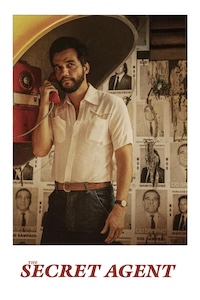
The Secret Agent is, in my opinion, a misleading title, because while it is billed as a political thriller, we’re not talking about spies or anything. Taking place in the late 70s during a military dictatorship in Brazil, it follows a man, Armando, trying to get out of the country with his young son. Armando has a history of speaking out against some politically powerful men. Those men have hired a couple contract killers to take Armando out, so he is in hiding, under a new name, while some sympathizers are working on getting him fake papers to get clear of the country. That’s the movie in a nutshell, and while it has some highlights and some tense moments in the final act, it’s pretty ho-hum in general. It was a dark time in Brazil’s history, but doesn’t translate to a tremendous picture. Did have an Udo Kier sighting as a German Jew trying to quietly live out his final years after surviving World War II; it was Kier’s final role before his death. ★★½
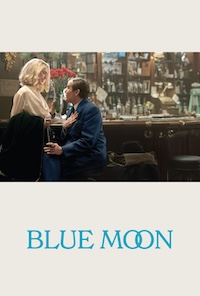
Oklahoma!, South Pacific, The King and I, and The Sound of Music. Even if you’ve never seen a single musical, you’ve probably heard of those four towering successes from the team of Rodgers and Hammerstein. Blue Moon isn’t about them, but it is about Lorenz Hart, the lyricist who worked with Richard Rodgers before Oscar Hammerstein II. The team of Rodgers and Hart wrote some popular musicals in their day, including some lasting songs that have stuck around (like the eponymous movie title), but their output hasn’t stood the test of time like the musicals Rodgers did with his second partner. The film takes place on opening night of Oklahoma!, as Hart (portrayed incredibly by Ethan Hawke) drowns his sorrows at a local bar. He’s just seen his former partner’s new show, and while he recognizes it will be a tremendous success, he bemoans Hammerstein’s too-family-friendly lyrics and the musical’s overall lack of artistry and subtlety (“Did you hear the line about the corn as high as an elephant’s eye? Have you ever seen an elephant in Oklahoma? That may be the dumbest lyric ever written in a musical.”) Hart regales the bar with stories of the past, and it is evident that his boisterous flare is popular amongst the regulars and non-regulars (he befriends author E.B. White who was sitting by himself at a table in the corner), but becomes sullen when Rodgers and Hammerstein arrive to great applause. Hart nearly begs Rodgers to work with him again, but Rodgers is hesitant due to past arguments and Hart’s often debilitating alcoholism. Supremely entertaining, very funny in a mature way (no visual gags here, all laughs come from wordplay), and with lots of heart too. Director Richard Linklater released two films in 2025. Nouvelle Vague is tremendous, and so is Blue Moon. ★★★★½
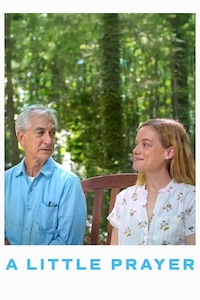
A Little Prayer is a quiet, subtle indie film starring David Strathaim as Bill, owner of a metal factory with a full house at home, despite being up there in years. His son and successor David and his wife Tammy live in a second house on Bill’s property, so they often share meals all together, and Bill’s and his wife Venida’s daughter Patti is recently returned to home (with her young daughter too) after leaving her husband. Just when Bill and Venida are probably eyeing things winding down, the house is bustling. Bill learns that David is cheating on his wife with a woman from work, and does not approve, but when he approaches David about it, David tells him to mind his own business. It’s a tricky situation, since Bill sees Tammy every day, and knows that Tammy is struggling with not having children, a forefront thought now that Patti’s daughter is now around the house too. Things get worse before they get better, as Bill learns that Patti left her husband because he’s addicted to drugs (though she might return to him anyway), and David has more evils in his closet too. Bill, a genuinely good person who wants the best for his loved ones, doesn’t know what to do. Not a complex movie, but full of complex emotions. ★★★½
Videoheaven is a documentary for film lovers who lived in the 80s and 90s, so early Millennials and older, and thus right up my alley. That’s because it is all about the rise and fall of the video store, and is great nostalgia for anyone with fond memories of renting VHS tapes from your local store. Narrated by Maya Hawke, it dives deep into how video stores came to be, how they thrived for a couple decades, going from small independent havens to sprawling chains, to their decline and complete disappearance. I’ve seen a lot of movies, more than most people, I think, but there are tons of clips in this film from movies and shows that I’ve never seen (or even heard of), showcasing actors together that you never knew did a movie together, or others in very early roles “before they were famous,” all taking place in the confines of a video store. Also goes into how those video stores themselves were depicted on screen, from famous scenes in Seinfeld and Clerks to subtle clips of video stores in the background of big blockbuster action flicks. Sometimes it gets a little too deep, focusing on certain movies longer than it should, but there’s lots of good stuff here. It does bring back the nostalgia, making me remember running into classmates at the local video chain, renting a movie from the grocery store (remember when that was a thing?!), and interactions with clerks asking for recommendations. A time that is gone, never to return, but which holds plenty of memories for those of us in the 40+ age group. ★★★½
- TV series recently watched: Stumble (season 1), Starfleet Academy (season 1), ST Deep Space 9 (season 7)
- Book currently reading: Paul of Dune by Herbert & Anderson

 Jons Movie Takes