
Nouvelle Vague, the newest from director Richard Linklater, tells the story of the making of the film Breathless. In 1959, self-professed film genius Jean-Luc Godard has yet to make his first film, even as his contemporaries at the Cahiers du Cinéma have already begun, to rave reviews (such as François Truffault’s The 400 Blows, a darling at Cannes). Godard feels the pressure to produce a masterpiece, but he has a vision to make this first film in his own way. He secures a small budget, and even a promising young actress (American Jean Seberg) in the lead role, and is given 20 days by his producer to get the film done. So begins a fly-by-your-seat production, in which Godard is often writing scenes in the morning just to shoot them that afternoon, with little-to-no rehearsals for the actors, all of whom are as in the dark as everyone else about what kind of movie they are making. Jean-Paul Belmondo goes with the punches and trusts Godard’s vision (even if his agent tells him it is a mistake and he’ll never work in the industry again), but Seberg becomes increasingly frustrated with Godard’s style and antics. Obviously, we all know how this ultimately turns out though. This is not a film for the masses. Unless you are a cinephile, the names Truffaut, Chabrol, Varda, Demy, and Rivette probably mean nothing to you (actors playing them, and many more from this era, turn up) but if you love film as much as I do, and cherish the groundbreaking French New Wave for how it changed the trajectory of motion pictures, this is a wonderful view behind the scenes at making one of the most influential films of all time. Linklater nails the style and in true Godard fashion, put together a cast of almost entirely new faces; with the exception of Seberg (Zoey Deutch), I didn’t recognize a single person. For the majority of them, this was either their first acting role, or their first major motion picture. New wave resurrected, indeed. ★★★★★
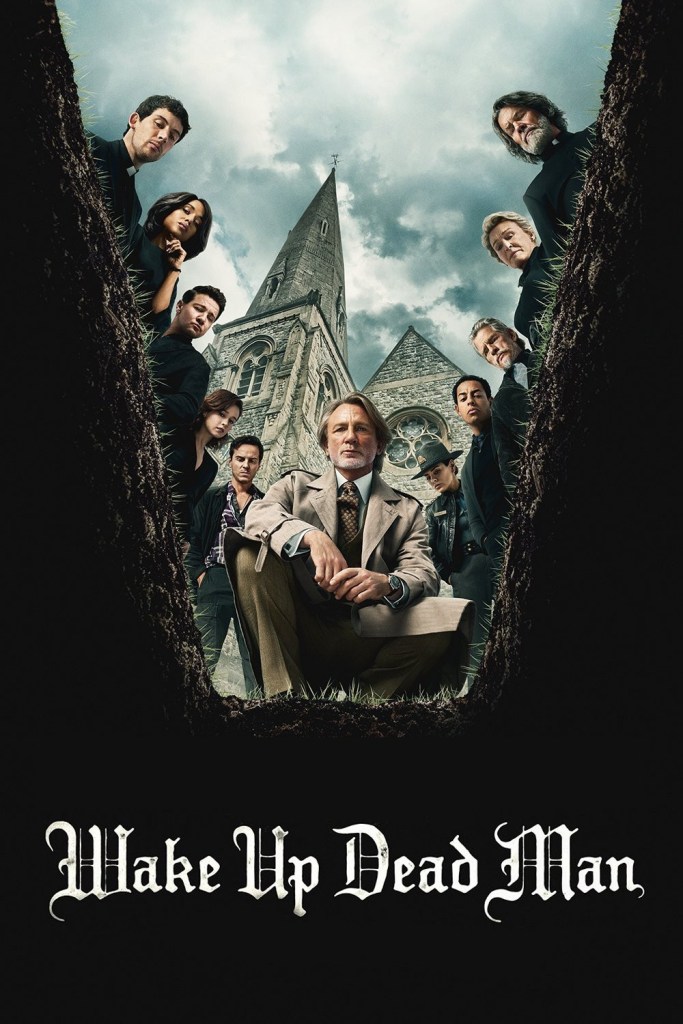
The Knives Out films series continues with Wake Up Dead Man, bringing back detective Benoit Blanc (Daniel Craig) to solve a new murder case. The accused is Jud Duplenticy (Josh O’Connor, in a star-making turn), a young idealistic priest who seems to have murdered the senior priest at their church. Monsignor Jefferson Wicks (Josh Brolin) was a charismatic priest but he chose to use the power of his words to alienate and manipulate his parishioners, pushing away most until only a small group of regulars remain in the flock. Jud declares his innocence, and Benoit believes him, but he’ll need to find out which of those church regulars is the real killer. A fantastic murder mystery with plenty of twists and turns, some truly gasp-inducing moments, it will keep you on your toes and make you think, time and again, that you have it all figured out, until of course, it shows you that you didn’t. Excellent cast too, including Glenn Close, Jeremy Renner, Kerry Washington, Mila Kunis, Jeffrey Wright, and Andrew Scott, who always seems to nail every role he’s in. ★★★★★
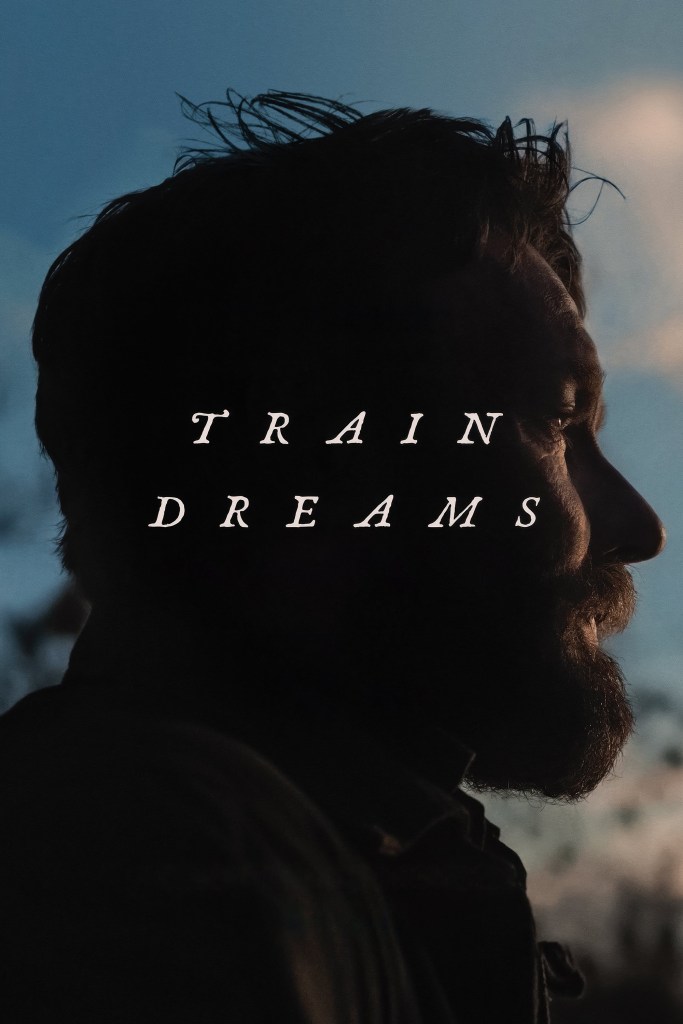
Train Dreams is one of those movies, as soon as the music starts up, you know they are going for deep, introspective, and meaningful. I’m not sure it hits on all three, but I’ll give it an A for effort. It stars Joel Edgerton as Robert, made an orphan at a young age in the late 19th century, and who never had anything easy in life. From fighting for scraps as a kid, to working the railroad as an adult, life was always a struggle. Robert does find happiness for a time, when he marries and has a little girl, but the hard life of a lumberjack never offers guarantees: people are killed on the dangerous job, or sometimes outright murdered for one reason or another, and no one bats an eye. Robert lives in constant fear that his family will lose him. As (bad) luck would have it, the reverse comes true, and a wildfire striking the area while he is away at work kills his wife and child. Robert spends the rest of his days alone, hoping that his missing wife and little girl will miraculously come back to him. The movie has its bright spots. William H Macy has a small, short role as a curmudgeony lumber lifer who regales coworkers about how easy it is for them compared to how it used to be. There’s plenty of deep moments too, like an early scene, a “flash forward” so to speak, when an older Robert is riding the train across a bridge that he helped build decades ago, only to look across the gorge at a modern “concrete and steel contraption” with cars zooming by on it. In the end, Robert lives long enough to see a man on the moon, but he cares nothing for it, only looking back at a long, hard life with little happiness. A real downer, and one that doesn’t reach the heights to which it aspires. ★★½
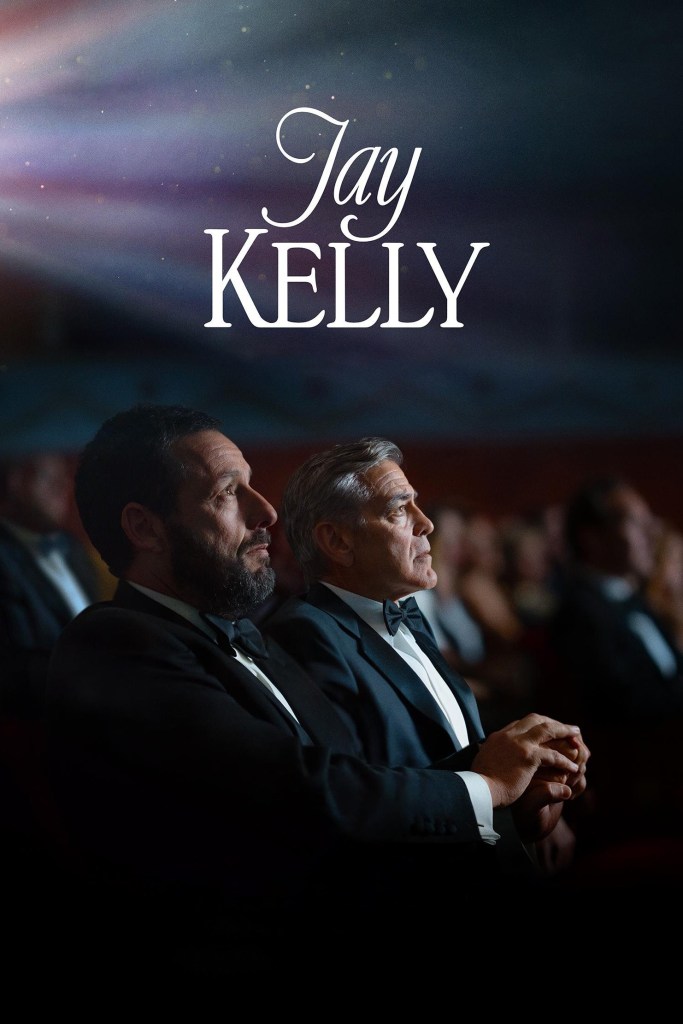
Jay Kelly, from director Noah Baumbach (small rant on how really great directors sign deals with Netflix, ugh), stars George Clooney as, well, himself. Jay Kelly is an instantly recognizable movie star with decades of films in his past, the kind of person who can’t go on a train without being identified by every person there, as we see later in the film. While he’s faced the criticism that he always “plays himself” (as Clooney has also been charged), he is beloved by the people. He has sacrificed much to be an actor though, with one alienated daughter and a second on the way there too. Knowing he screwed up the first and wanting to not follow the same mistake, Jay does all he can to convince the youngest girl to spend her last summer before college with him. She, of course, just wants to go hang out with friends in Europe, so Jay gives chase. He is followed by his “team” as it is known in the business, his always-by-his-side manager Ron (Adam Sandler), his publicist Liz (Laura Dern), and a big burly security detail. Part of what is giving Jay his moment of reflection is the recent death of Peter Schneider, a film director who gave Jay his first job in the business, and a long-time mentor. At the funeral, Jay runs into Timothy (Billy Crudup) who was Jay’s best friend in acting school, and while the two initially talk old times as buddies, eventually the truth comes out. Timothy was always the better actor, but was nervous at auditions, and when he clammed up in front of Peter Schneider all those years ago, the part went to Jay, and a star was born. Timothy accuses Jay of stealing his life, and what’s worse, Jay (deep down) believes it. He thus wants to make one thing right in his life, and that is his relationship with his daughter. Clooney has been quick to point out that, despite similarities, this is just a movie and that he is happy with the relationships and the way his life has gone, but still it’s a great “peak behind the curtain” at a successful actor’s life, not just from Jay, but from his team too, who often see themselves as babysitters for their star. Jay wasn’t a “bad” father, in that he didn’t abuse his kids or anything like that, but he just was never there. Something we can all take lessons from. While director Baumbach co-wrote Barbie with his wife Greta Gerwig, this is his first film since White Noise, which, in an amazing coincidence, I saw the same week as the last Knives Out movie and they showed up in the same blog then too. ★★★½

Bugonia is the latest from director Yorgos Lanthimos (lots of great directors in today’s blog!), and I really liked his last movie, even if it wasn’t for everyone. This one is a remake a popular 2004 Korean film, and begins by introducing us to Michelle Fuller (Emma Stone), a successful CEO of a pharmaceutical company. Michelle has become the target and obsession of conspiracy theorist Teddy Gatz (Jesse Plemons). Teddy and his autistic cousin Don (Aidan Delbis) kidnap Michelle and bring her to Teddy’s house, chaining her up in the basement. Rape? Ransom? No, the men kidnapped her because Teddy is convinced that Michelle is an alien sent to Earth to force humans into subservience, and they want her to grant an audience for Teddy with the alien’s supreme emperor, to negotiate the future of humanity. Over the course of a couple days, Teddy tortures Michelle until she is willing to admit to anything they ask. The whole time, Michelle is wondering why she was targeted, until she realizes Teddy is the son of a woman that her company used an experimental drug on. It’s a dark film, marketed as a black comedy (and there’s plenty of black) but with Lanthimos’s trademark off-the-wall crazy comedy as well. Shines a frightening look at the depths the internet can take us. The ending takes a hard left (though if you’ve seen films from this director before, it’s not unforeseen), but I really enjoyed it. ★★★★

 Jons Movie Takes
2 thoughts on “Quick takes on Bugonia and other films”