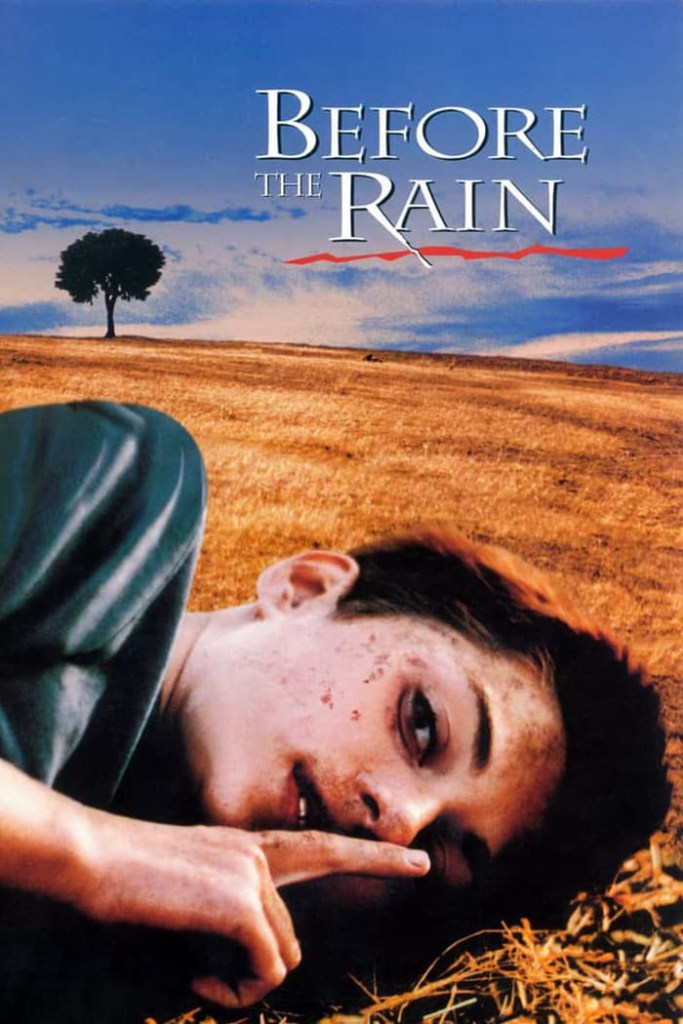
As a teenager in the early- to mid-90s, I was aware of the Bosnian War but didn’t really know why they were fighting. I’d suspect even a lot of adults didn’t; in the time before household internet access was a thing, if it didn’t affect you, it was often “out of sight, out of mind.” Before the Rain shone a light on the region, and showed the animosity the peoples of 2 distinct cultures had for each, while being forced to share a space. A film told in 3 parts, it begins in Macedonia. A young monk, 2 years into a vow of silence, hides away a runaway woman hunted by the Macedonians. The woman, of Albanian Muslim decent, is wanted for murder, and the Christian Macedonians want blood. After the brutal conclusion to their story, part 2 of the film moves to New York, where a photographer (who photoed the above story) has come to visit his editor. The two are having an affair, and the editor has decided to finally tell her boyfriend. In the final act, the photographer, who turns out is from the same village where the movie started, returns there. He is purportedly there to visit family, but his ulterior motive is to see Hana, an Albanian woman with whom he was once very close when they were children. With the tensions in the area, what should be a nice reunion turns into threats of death. In a Finnegan’s Wake sort of way, the film ends where it begins, and this cyclical story won’t be for everyone, but I loved it. ★★★★½
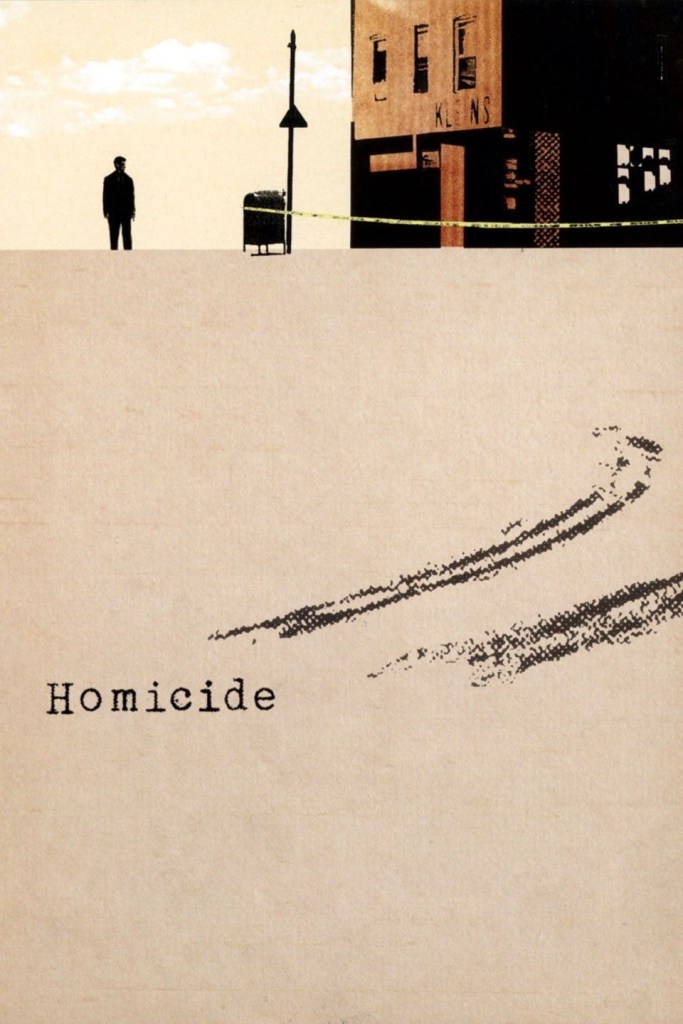
Homicide is a lesser known film from celebrated playwright, writer, and director David Mamet. It stars Mamet regular Joe Mantegna (longtime actor in Criminal Minds) as Bobby Gold and William H Macy as Tim Sullivan, two homicide detectives in New York*. They are on the cusp of wrapping up a case, barely keeping the shootout-happy FBI at bay, when Bobby stumbles upon a crime scene on his way to a meeting one morning. An elderly Jewish woman has been murdered in her bodega in a rough part of town. Bobby wants to stay on his own case, but once the Jewish community hears that Bobby is of Jewish descent (though he is non-practicing), they pull some influence and get him reassigned to this new murder. Bobby was so close to finishing his last case that he is initially very reluctant to help, thinking it was just a case of a woman killed because of the rumors that ‘the old Jew had a hoard of treasure in the basement.” However, as he starts digging into the clues, he finds a whole world of conflict going on under the surface between antisemites in the area and a Jewish community willing to fight back. Bobby will have to pick a side, between a police force which has always shown a bit of bias towards him for his ethnicity, and “his own people” who are willing to break the law to protect themselves. Really good movie, with lots of 90s “cop dialogue,” some action, and even some thought-provoking moments in the end. An early-career Ving Rhames plays the bad guy the cops are hunting throughout. ★★★★½
*I later learned that the city is never given: I just assumed it was NY based on the gritty feel and the very “New York-ish” fast talking of the cops.
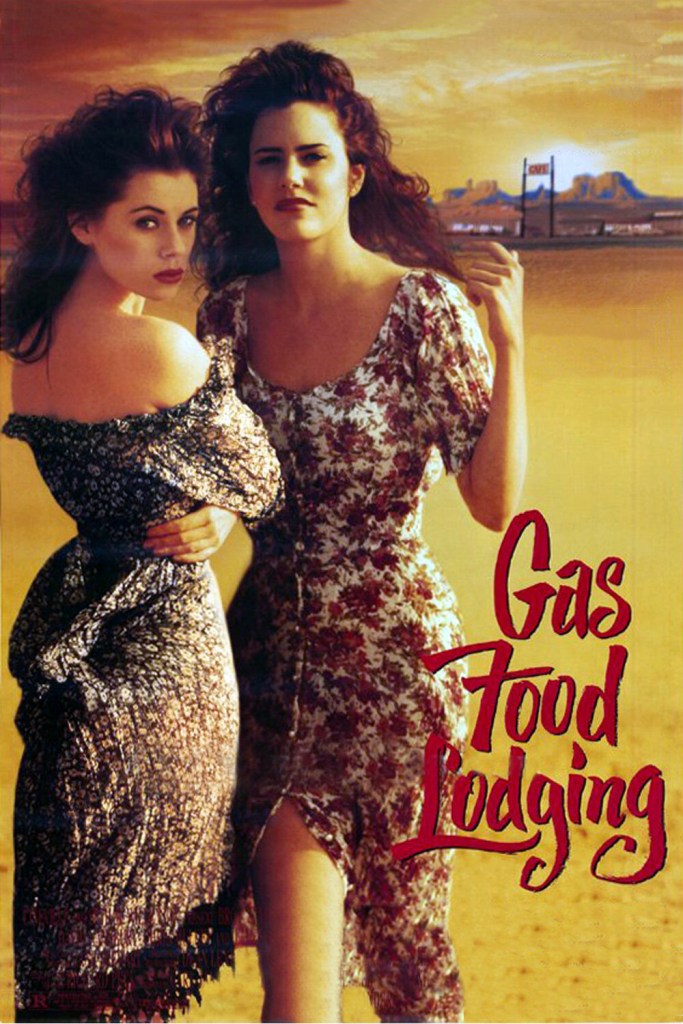
Gas Food Lodging was a critic’s darling upon release in 1992 and triumphed on the indie circuit. It is narrated by teenager Shade, who introduces us to her family in the tiny desert border town of Laramie, New Mexico. The family lives in a trailer park, with single mom Nora barely paying the bills as a waitress, while Shade’s older sister Trudi is more interested in boys than contributing to the family. Trudi and Nora butt heads constantly over Trudi’s late night antics, with Nora finally laying down the ultimatum of “get a job or move out” after Trudi is expelled from school. Shade could work too, but spends her days going to the matinee in town and devouring film after film, especially foreign films featuring her favorite Spanish actress. The movie ambles along like this for awhile, while Shade tries to find a man for her mom and Trudi ends up pregnant, but just when I thought this film was going nowhere, it all comes together, in grand fashion. It surprised me too: at first, I thought the movie would focus on Nora (Shade tells us so in the beginning, and like a sucker, I believed her), and then I thought Trudi would be the glue in the picture (her troubles play a big part in the middle act of the film), but ultimately, of course, the film is more about Shade than anyone. Shouldn’t be a surprise, but it was, and I loved how it coalesced in the end. ★★★½
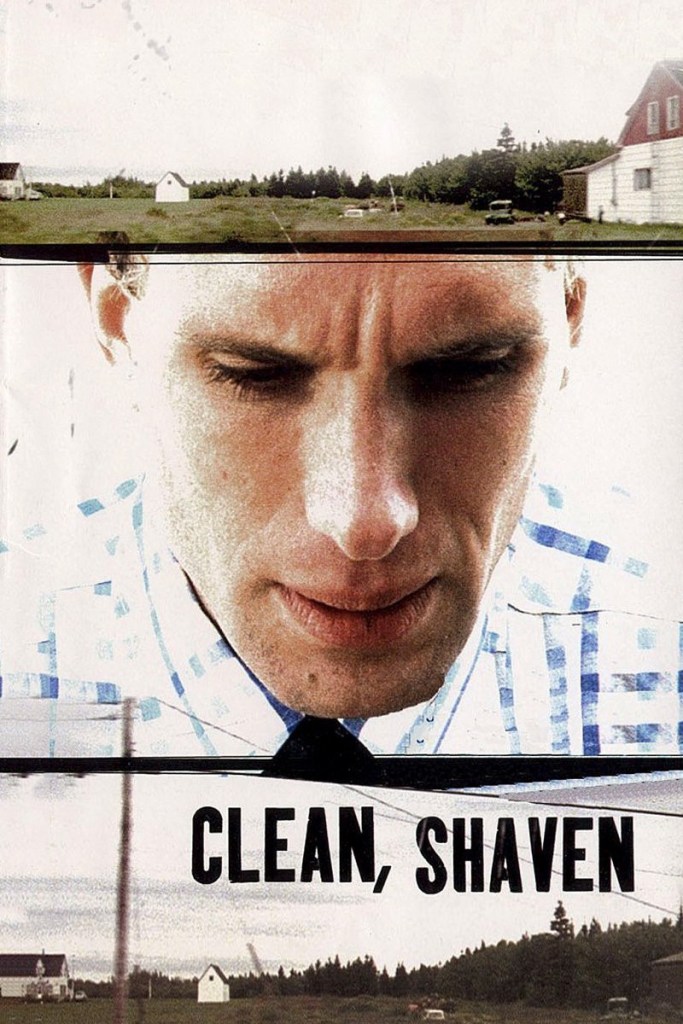
Clean, Shaven attempts to put the viewer inside the head of a man suffering from schizophrenia. Peter has recently been released from a metal hospital and is immediately struggling with his condition. He constantly hears bits of conversations and static, like what you’d hear if you were scrolling through the radio (for those of us who remember knobs on the radio). This continuous noise permeates the film, so that even we as viewers grow used to it after awhile. Peter wants to get in touch with his daughter, but no one seems to want this to happen. He’s living with his elderly mother, who urges him to get a job, but it is obvious that he can barely function, much less hold down employment. Peter covers up every glass/window he sees with newspaper (so “they” can’t see him?), and in a gruesome scene, goes at his scalp with a pair of scissors in an attempt to “cut out the transmitter” that is buried in there. He’s also been carrying around a bundle in his trunk, which we are lead to believe is the dead body of a girl he confronted early in the film, and is caught up in a police investigation for a separate murder. What’s crazy is we, just like Peter, never know what is real and what isn’t. When Peter is driving down the road one day and is hearing police sirens, he sees no one in his rearview. Was anyone ever there, or did he elude them? It’s a very interesting movie to watch, but not sure it moved me one way or the other, other than to acknowledge how much it would suck to live with this condition. ★★½

How did I ever miss Trainspotting?! I was always aware of the film, but someone never sat down to watch it. Directed by Danny Boyle and starring a young (pre-Star Wars) Ewan McGregor, the film follows Mark Renton and his gang of friends in Scotland, most of whom are addicted to heroine. There’s almost too much plot to get into; despite only being about 90 minutes long, so much happens at breakneck speed that it will make your head spin. Basically, throughout the film, Mark makes several attempts to get off the drug, always to come back, and the film follows his exploits and those of his buds. They each do different things to amuse themselves or to make some cash, but ultimately it always comes back to how to score their next hit, and when they are high, they don’t care about anything else. The movie does a good job of not condemning them as people, and presents very matter-of-factly the pitfalls that await them if they can’t turn it around, but I couldn’t help but feel sorry for Mark, who seems like a good guy, a smart guy, with good parents who care for him, but he’s never going to free himself of the monkey. Boyle does an amazing job of conveying life on and off the drug: when Mark is clean, the picture is crisper, slower, more defined, and makes sense. When he’s high, nothing makes sense, but just like for Mark, it certainly seems like a good time. ★★★★
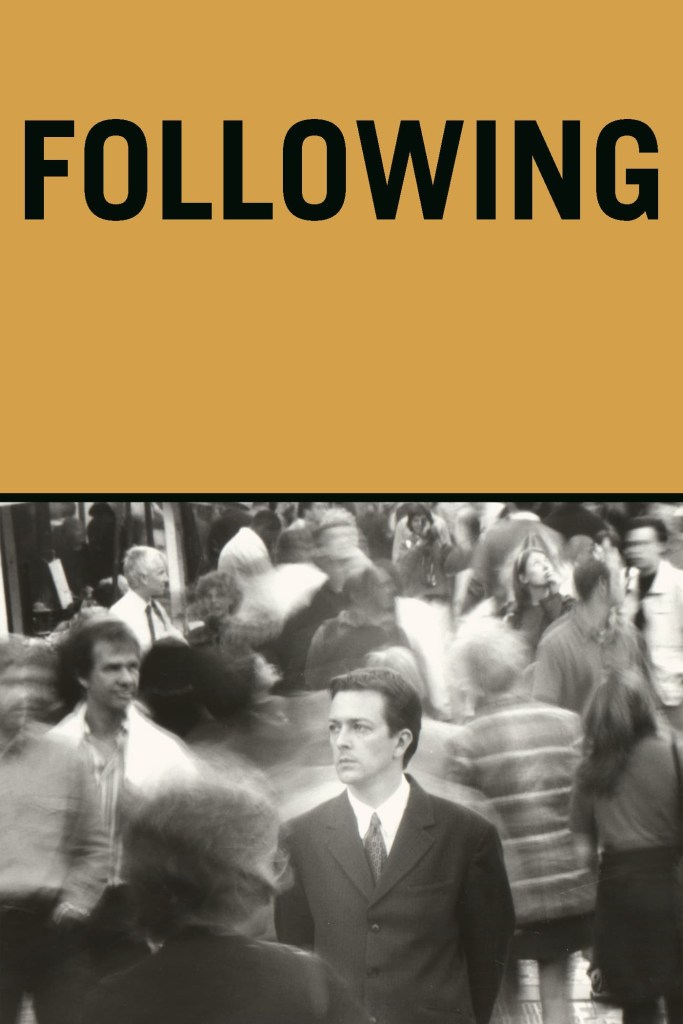
Just about everyone knows Christopher Nolan’s big hits (the Batman trilogy, Inception, Interstellar, Oppenheimer) and many are fans of his less “grandiose” films (The Prestige, Memento), but 2 years before Memento, Nolan’s first film was Following, made on a shoestring budget and released in 1998. You can see the budget constraints from the get-go, with its handheld (often shaky) black-and-white 16mm camera, but the story gets going quickly, and I was immersed. The film follows an unnamed writer with severe block, who narrates that he has taken to following random strangers out of curiosity, just to see where they go. He breaks his own rule about never following the same person twice, and admits it immediately gets him into trouble. The person he has been following confronts him. He introduces himself as Cobb, and gets the writer to tag along for some hi jinx. Turns out Cobb is a thief, breaking into apartments, not really for money, but just because he too has a curiosity for people. Right about here, the film starts jumping around in a very Memento-like way. We see a few times in the future, where the writer has changed his appearance and is going under an assumed name, Daniel. He’s started dating one of the women he had previously followed, and he’s in deep with Cobb now. The woman he’s dating starts talking about being in fear of her ex-boyfriend, a gangster of some kind. There’s also some other unknown future time when Daniel is walking around with a cut nose and black eye, having been worked over pretty good by someone. There’s a lot going on here, and while it leaves you wondering how it all fits together, it does meet at the end. Very good film, and you can see how even a young Nolan would excel at storytelling in future films, and his style, while developing, is there. ★★★½
- TV series recently watched: The Punisher (season 1), ST Voyager (season 1), Its Always Sunny in Philadelphia (season 17)
- Book currently reading: Amber and Iron by Margaret Weis

 Jons Movie Takes