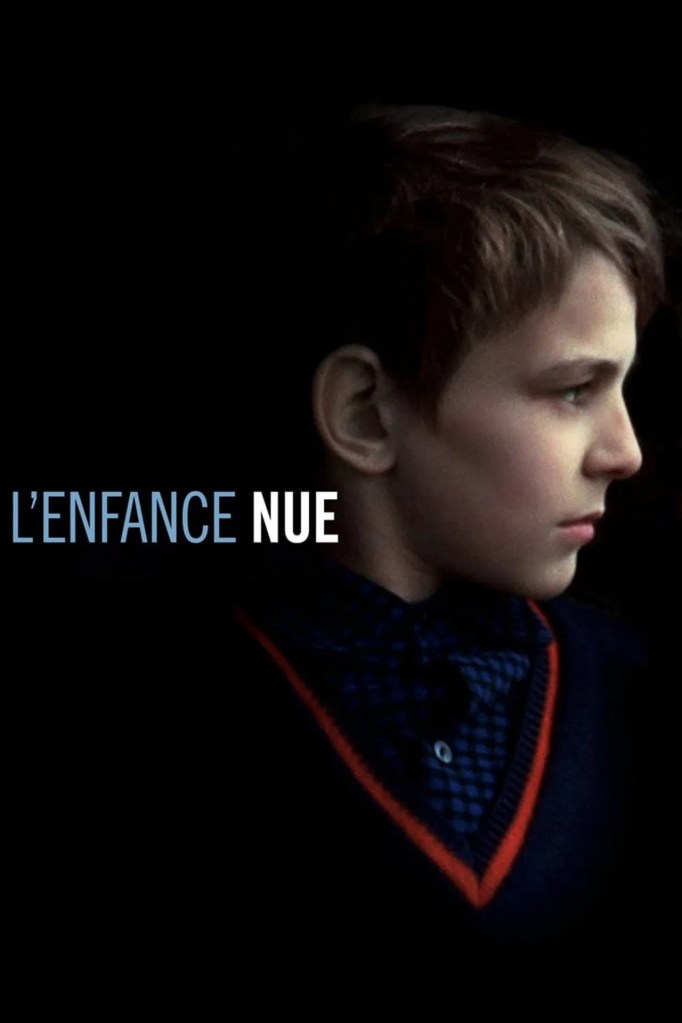
L’enfance Nue (“Naked Childhood”) comes from director Maurice Pialat, his first film, and was released in 1968. It follows 10-year-old François as he is continually kicked around France’s foster system. Some of it is of his own doing: like a lot of foster kids, he holds a lot of anger inside from a feeling of being unwanted, and he is always lashing out. In his latest family, they aren’t making it easy on him, having him sleep in a hallway with little attempt to decorate it or make it welcoming. When the parents’ girl makes one-too-many snide remarks at him, François throws her cat down the stairs, leading the family to call the foster system to take him back. The mom maybe realizes a little too late that he’s a good boy underneath and they didn’t give him a fair shake, but the damage is done. François next ends up with an older couple, who have become lonely since their child grew up and moved out, and have a couple foster children now. The adults have a lifetime of experience and are better equipped to deal with François’ antics, and he slowly starts to settle in. I wanted to like this film, but man oh man was it boring. I’m giving it one and a half stars because it kept my attention just enough to the end, mostly because I wanted to see how François turned out. ★½

15 years later, director Maurice Pialat had learned a lot and his sixth film, À nos amours (“To Our Loves”) is much better. Suzanne is a 16-year-old on the cusp of womanhood. She has a woman’s body and knows how to use it, flaunting in front of any man who walks across her path. After breaking up with her boyfriend, she loses her virginity to an American tourist, and then sets out to sleep with practically any man she meets. She does seem to have a type though: she steers clear of people like her ex, who she may be emotionally attached to, and only goes for fleeting men who are physically attracted to her. As all of this is going on, her home life is a breaking up. Her father, who berates her for her increasingly promiscuous lifestyle, finds a girlfriend and moves out of the house, deserting Suzanne, her other brother Robert, and their mom. The mom starts drinking heavily and becomes an emotional wreck, and Robert, who takes his “man of the house” role a bit too seriously, starts beating Suzanne in a (seemingly, though there’s more going on there) attempt to get her to “straighten out.” Seems that even her own brother has sexual feelings towards Suzanne, which he masks through his anger. The whole family is a mess, but the one person who really knows everyone’s motives is the departed father, who (thankfully) drops his knowledge on Suzanne and us viewers in the end. Honestly I didn’t know what was all going on until that very end, but it all comes together like the clouds departed, and made for a very good film. ★★★½

Has it really been 5+ years since I last watched some Jean-Luc Godard films (and more (and more) before then)? Made in USA even has his early muse, Anna Karina, so I have no idea how this one slipped past me. She plays Paula Nelson, who’s boyfriend Richard P (the film has a funny way of always hiding his last name, through car honks, planes flying over, etc) has recently been murdered. Paula, a journalist, decides to hunt down the killer, in French New Wave style. In her hunt, she is either aided or obstructed by friends of Richard P, a local police inspector, the inspector’s assistant (a Jean-Pierre Léaud sighting!), and Richard P’s nephew. The plot gets a little convoluted, involving Richard P’s involvement in the communist movement and either being killed or being set up by officials targeting that movement, but like many French New Wave films, the devil is most definitely not in the details. This film oozes style in its bold, vibrant colors, and I could watch Karina read the phone book and be mesmerized. Not ground breaking, but a wonderful throwback to the 60s. ★★★½
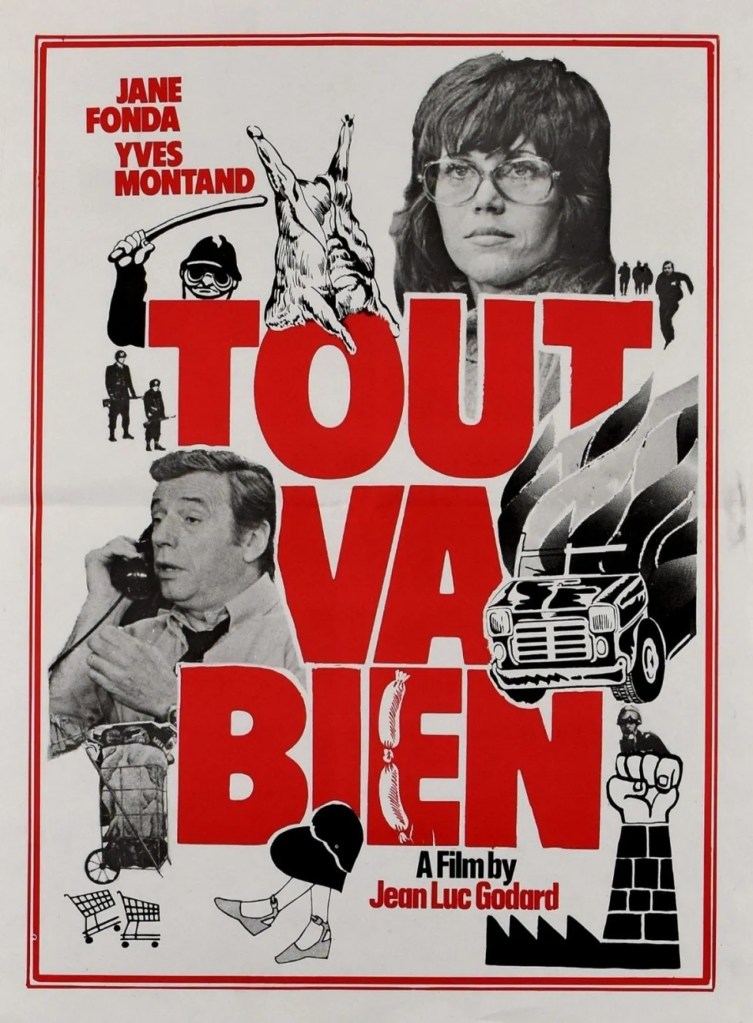
I kinda knew I wouldn’t like Tout va bien (“Everything’s All Right”) going into it. Never shy to express his left-leaning views, Jean-Luc Godard teamed up with writer/director Jean-Pierre Gorin in the late 60s/early 70s and made a serious of political films, later dubbed his “radical period.” This movie was made during that time, and stars Jane Fonda as an American journalist married to a French TV director (Yves Montand), and their experiences during a factory strike in 1972. There’s not much of a story here (the narrator even tells us so at the beginning of the picture, saying “What is needed for a film? A couple actors and a stage? OK, here you go,” after which Godard proceeds to ignore most of that) and instead the movie is just giving us Godard’s and Gorin’s views on labor, the bourgeois, owners/management, etc. No target is safe, from consumerism, capitalism, and even those on the left who may espouse Godard’s general ideas: the workers who are striking and causing a big hullabaloo seem to just want an excuse to sit around and not work, ridiculously demanding a utopian workplace. Too often, actors just turn towards the camera, breaking the 4th wall, to criticize the evils of the other side’s arguments. It’s just a political statement made to look like a narrative film, and I can do without that for my entertainment. ½
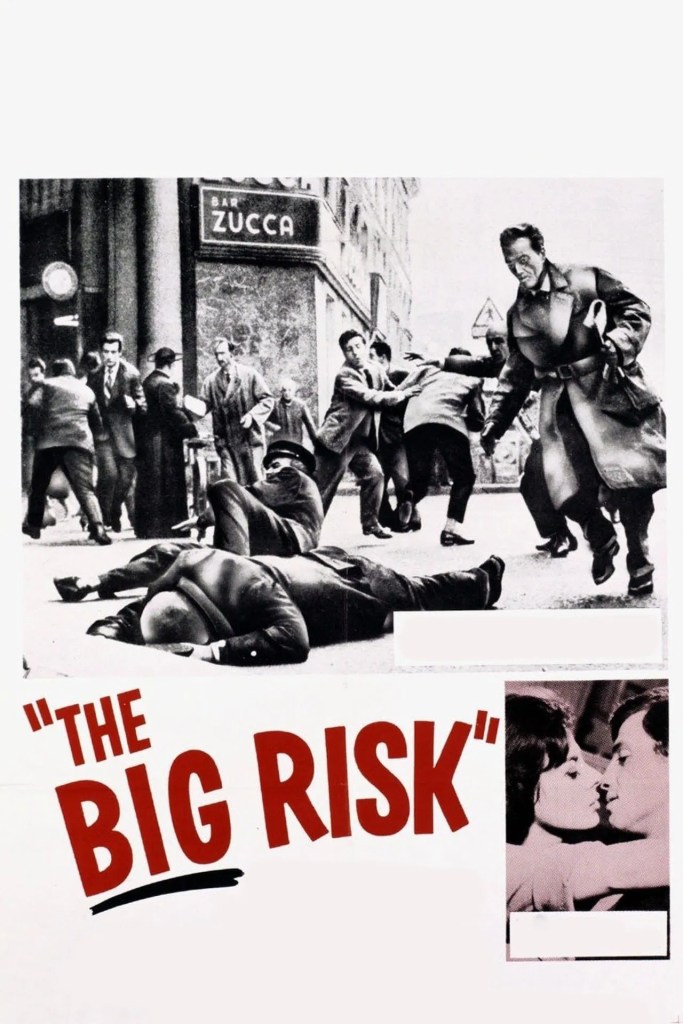
Classe tous risques (literally “All-Risk Class,” but released in the US as “The Big Risk”) comes from director Claude Sautet and was a good change of pace. It is an old school gangster film. Abel Davos (Lino Ventura, who was a huge leading man in France in the 60s and 70s) is a career criminal and long been on the run with his wife and two children in Italy. The heat is getting close, so he and his partner Raymond decide it is time to go home to Paris, where hopefully enough time has passed that they can be safe. The trip isn’t a sure thing from the very beginning, involving shootouts and fleeing road blocks, and even when they think they’ve found a safe route, police intercept the group, leading to the deaths of Raymond and Abel’s wife. Now with 2 boys to look after on his own, Abel makes it to Nice but is stranded there with no hope of finishing the trek to Paris. Police are everywhere and know he is close by, so Abel calls ahead to Paris seeking help from his former crew, who, for the most part, have done well without (and because of) Abel. In the past, Abel helped get one of them out of prison, and financed another one’s business, which is now doing well. Despite their long friendships and the help he’s provided before, they are unable or unwilling to reciprocate, and only begrudgingly hire a smalltime crook, Eric (a Jean-Paul Belmondo sighting!) to travel to Nice under the guise of an ambulance driver to bring Abel through. And all of that is only the first half or so of this film. It does seem to lose traction in the second half, as Abel finds that his friends will never come around to help him get his feet settled, and only Eric seems to be willing to help as Abel dives back into the underworld, but still it’s an entertaining flick with lots of twists and turns. ★★★
- TV series recently watched: Untamed (season 1), ST Deep Space 9 (season 3)
- Book currently reading: Tess of the d’Urbervilles by Thomas Hardy

 Jons Movie Takes