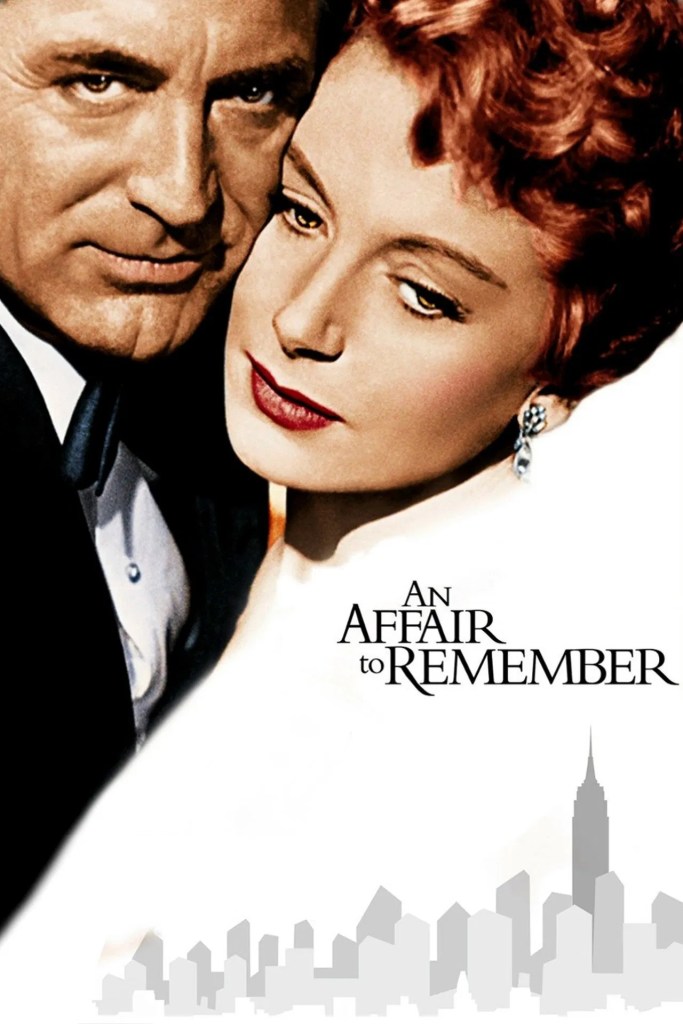
An Affair to Remember is a remake from the same director (Leo McCarey) of his 1939 film Love Affair. Loved that one, so immediately put this one on the watch list. This “newer” version follows the original nearly scene-for-scene, with just new actors. Replacing Charles Boyer is Cary Grant, and in for Irene Dunne: Deborah Kerr. I don’t have much to say about this film, just go read what I wrote about the other, since the story is the same. I will say I liked the original better (as is so often the case). I like Cary Grant as much as the next film lover, but there’s something about Boyer that really excelled in this role, and overall the original had a bit more of a “natural” feeling to it; less Hollywood and more artistic. An Affair to Remember is really good, but not as good as the original. Since I rated Love Affair 4 stars, this one gets a ★★★½
The Big Knife, from director Robert Aldrich, stars Jack Palance as Charlie Castle, a Hollywood star who is tired of the limelight and what being a star has done to him: hurt his marriage, made him a heavy drinker, and turned him into all of the things he used to despise. He wants out, but the movie studio boss who is pressuring Charlie to sign a new 7 year contract has some dirt on him that could not only ruin his career, but send him to jail. While he struggles with a way forward, the studio head looks for new ways to apply pressure, Charlie’s estranged wife starts seeing his best friend, and Charlie continues down a path of self destruction. It should be a neat early film about the darker side of Hollywood, but it has several shortcomings. First, it was based on a play, and while there are some phenomenal film adaptations of plays, I couldn’t shake the feeling that this would come off much stronger on a stage; it loses something, some of its personal connection, on screen. And it probably hit much harder in 1955 than it does today, where we are used to the shortcomings of the “glamorous life.” ★★
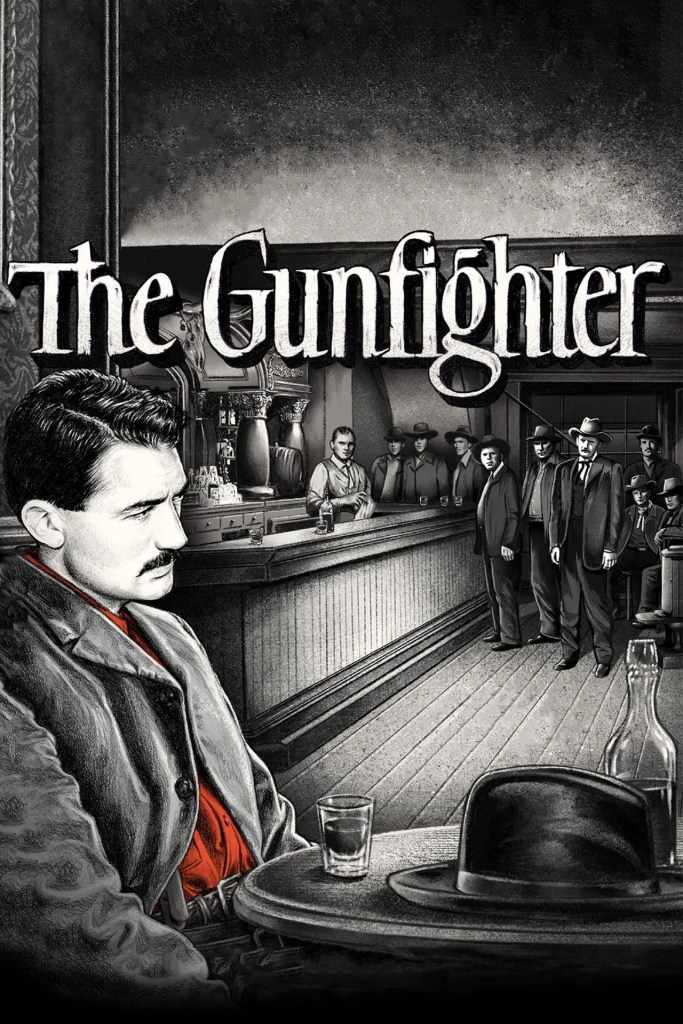
Gregory Peck was one of the greats, yet I’ve surprisingly seen few of his films. He is the lead in 1950’s The Gunfighter, where he plays Jimmy Ringo, a well-known gunman with a reputation that gets him into more trouble than he cares for. In fact, it seems all Jimmy wants to do is settle down, but every bar he walks in to, as soon as his name is whispered, some young man with dreams of stardom tries to pick a fight, to be the “one who killed Jimmy Ringo.” Ringo knows he has only killed 11 men (12 after a young man in the beginning of the film tries make a name for himself), but the legends have his number over 50. While on the run from a trio of men hunting him for killing their younger brother, Jimmy heads for the town of Cayenne, where his old girlfriend lives, raising their unknowing son. The boy has no idea Jimmy is his dad, and his mom would prefer to keep it that way. In Cayenne, Jimmy’s presence gets the whole town aflutter, with school letting out just so the boys can gather outside the saloon in hopes of catching a glimpse of the legend, women begging the sheriff to haul him into jail or outta town (which falls on deaf ears, as the sheriff used to be gunfighter alongside Jimmy before “retiring” from that life), and yet more would-be-heroes set their gun sights on Jimmy, as is always the case. All Jimmy wants to do is see his son for a few minutes before moving on, but it seems everything and everyone is trying to prevent just that. In every seen, Jimmy looks tired; tired of killing, tired of being a legend, tired of being the center of everyone’s attention. When some young gun tries to pick a fight, we see Jimmy heave a giant sigh before standing up to do what knows he will do, because he’s done it 12 times so far. ★★★★½
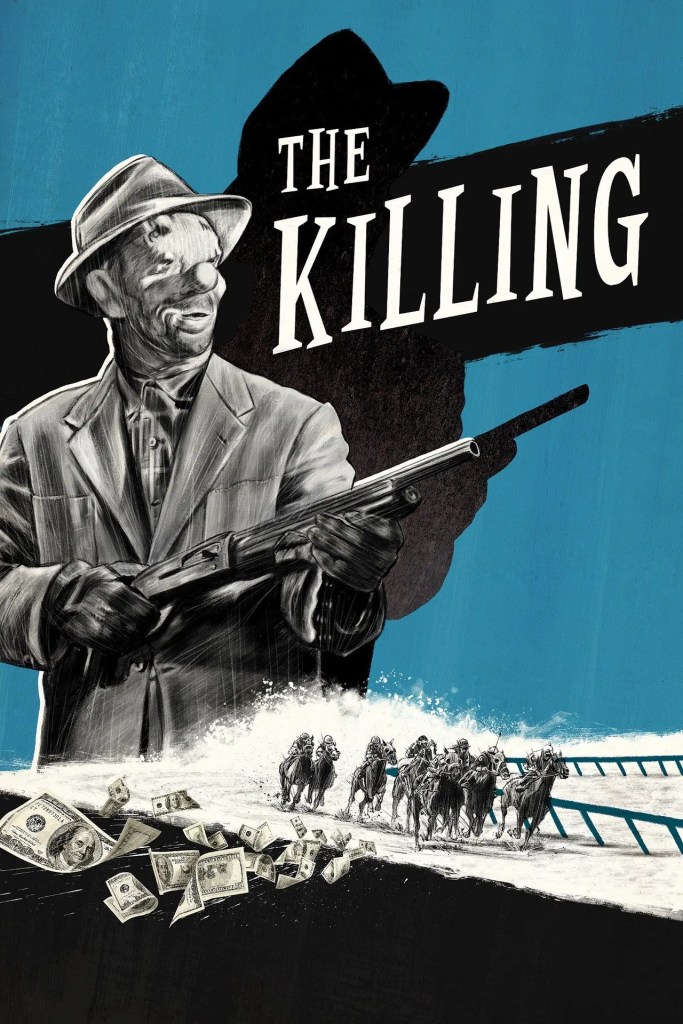
Stanley Kubrick is obviously one of the best directors of all time, but in his first feature Hollywood film, 1956’s The Killing, he’s still learning the ropes. It’s an old school film noir, about a group of criminals and their plan to rob a horse racetrack for an expected haul of $2 million. The brains of the heist is Johnny Clay, a lifetime criminal recently out of prison. He has teamed up with workers at the racetrack (a bartender and a cashier) as well as a wealthy financial backer for logistics and a corrupt cop. He even has a sniper hired with the sole job of shooting down a horse during a race to provide the needed distraction. What’s great about the movie is the story itself, which is laid out in great detail, with voiceover narrating parts here and there, which really draws you into the crime and makes you feel like one of the gang. However, it has almost too much detail, and you can easily get bogged down in the minutia. The always-in-control Kubrick obviously ran away with this one, but he would learn later that less is sometimes more. If it sounds like I’m ragging on it, I’m not, I still enjoyed it, but I’m a huge Kubrick fan and this film doesn’t hold up to his later films. Still, you can easily see Kubrick’s style in every shot. Supposedly he had every shot planned to the smallest detail before filming ever began; they breezed through production and finished in 22 days. ★★★
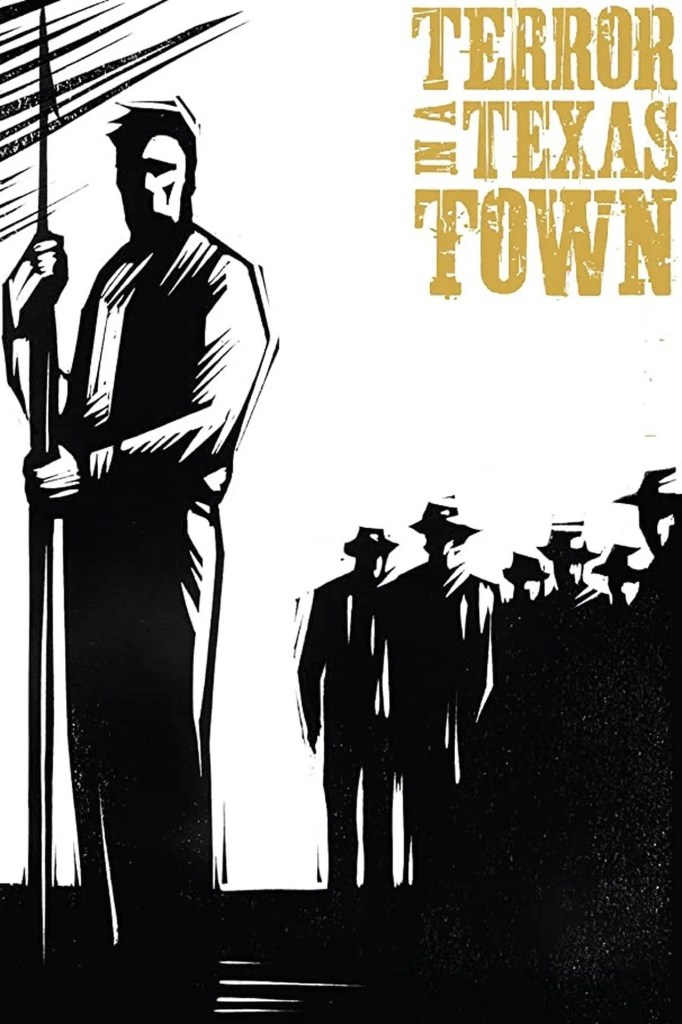
I went into Terror in a Texas Town with no expectations and as it started, got a feeling of a low budget western that probably didn’t offer much. Boy was I wrong (more on that in the end). In a little town in Texas, a rich man has been buying up land from farmers, or having them killed if they refuse to sell. We find out later than there’s a mountain of oil in the ground that no one but the rich guy knows about. His hired killer is Johnny Crale, who has lost one hand in a gunfight awhile back, but the other is still as fast as ever. The devilish Johnny, clad all in black, is sent to kill a Swedish farmer named Sven Hansen, after Sven refused to move. The murder is witnessed by Sven’s neighbor, Mexican immigrant Jose Miranda, but Jose keeps quiet for fear of his own life. 3 days later, Sven’s adult son George comes to the town after 19 years off whaling around the world. His dreams of joining his father on the farm are dashed when he learns of the death, and the town’s sheriff, obviously under the payroll of the rich investor, is no help. George sets out to unmask his father’s killer, and if the law won’t help, he’ll seek vengeance himself. This movie is fantastic, gripping from the very beginning (it opens near the end of the movie, with George and Johnny facing off in the street, before flashing back to whole story), and tensions continue to build throughout. If I had bothered to look at the team behind the camera before watching, I would have known it would be good. Directed by Joseph H Lewis in his last Hollywood project before retirement, he didn’t shy away from working with McCarthy’s blacklisted entertainers, including writer Dalton Trumbo. And while it is easily recognized as a low budget flick (filmed on a backlot in just 10 days), it’s a great film. ★★★★
- TV series recently watched: Dept Q (season 1), Breaking Bad (season 1), Eyes of Wakanda (series), Adaptive (series)
- Book currently reading: Tess of the d’Urbervilles by Thomas Hardy

 Jons Movie Takes