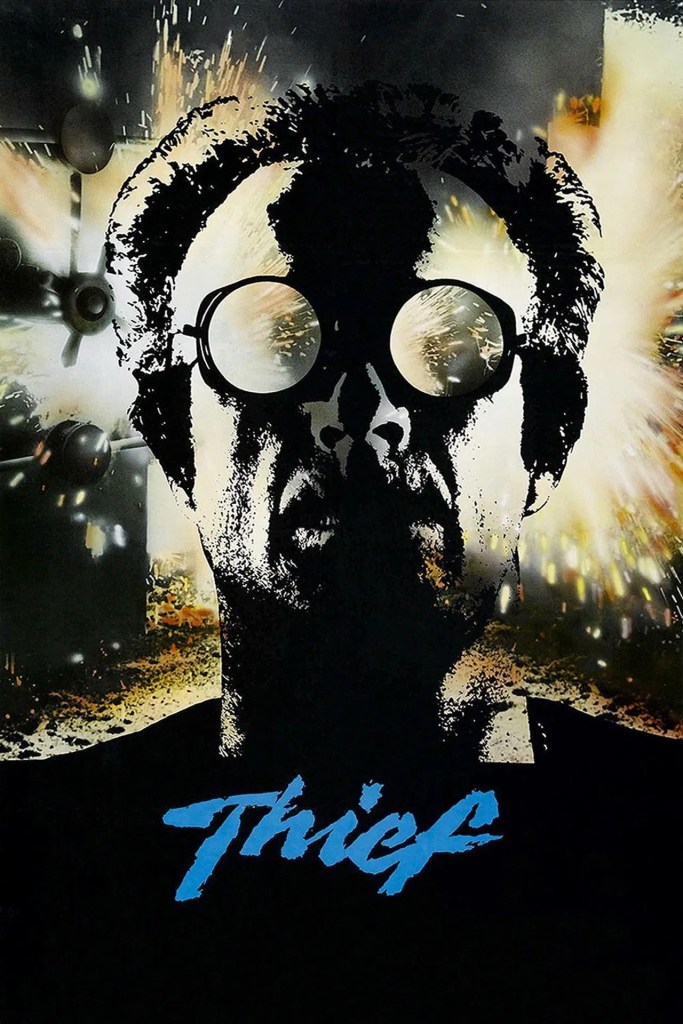
Long before The Last of the Mohicans and Heat, writer/director Michael Mann’s first film came out in 1981, though he had a strong, recognizable face in James Caan as the lead. In Thief, he plays Frank, a high-end jewelry thief looking for an avenue out of this way of life. He wants to marry his girlfriend Jessie and settle down, but needs serious cash to set himself up to do so. His latest heist goes sideways when his fence his murdered with the goods and the cash, and turns out the hit was done by crooks who were also working with the fence. Frank goes to them, and gets an offer that he can’t refuse. They have a lead on a new job, high risk/high reward, that could net Frank $800k+ if he can pull it off. He agrees, on the caveat that it is his final job after which he can walk away, and the group agrees. But as we all know, there is no honor among thieves. The end of the film went weird for me, turning what was a good, tense drama and heist film into an amateurish coda of pure violence. Director Mann was definitely still learning on the job. It was good I guess, the ending just felt really out of character for my tastes. ★★★

Jo Jo Dancer, Your Life is Calling is a biographical film from Richard Pryor, in my opinion one of the best comedians of all time. In the 80s, while he was settling in to more “tame” movie roles (compared to his very un-family-friendly standup routine) like Superman III, Brewster’s Millions, and See No Evil Hear No Evil, he took the time to write, direct, and star in Jo Jo Dancer. It begins with the infamous moment in his life when he set himself on fire during a cocaine freebasing incident and ran down the street bathed in flame, and nearly died from his second- and third-degree burns covering over half his body. As he is lying on the hospital bed fighting to survive, “Jo Jo” has an out of body experience, and his spirit goes back in time to see the events in his life that shaped the man he became. From a young boy growing up in a brothel (his mother was a prostitute) to being kicked out of the house by his abusive father as a teen to his rise as a star comedian, we see it all. I’m sure it was a very cathartic film to write and release, and Pryor never shied away from that low point in his life, cracking jokes about it as soon as he returned to the stage (his most famous: Lighting a match, waving it around, and asking the audience, “What’s that? It’s me running down the street.”). Still, I didn’t laugh as much as I expected to. Sometimes a person needs to get it all out, and its good for them, but not always great for the person watching them do it. ★★½

Matewan is a historical film about the 1920 Battle of Matewan, a bloody shootout between pro-union coal miners and detectives hired by the mine owners. Joe Kenehan (Chris Cooper) is a socialist who has worked with getting unions started across the country, and he’s lately come to the town of Matewan in West Virginia to help its people get organized. The miners there, most of whom are 2nd and 3rd generation, slave away in the mines with no safety protocols and little help from the owners. They’ve been trying to unionize for awhile in hopes of getting better wages and safer conditions, but have been thwarted thus far. Joe provides a small glimmer of hope. When the owners bring in scabs to work the mines, including Italian immigrants and black laborers, led by the big burly “Few Clothes” Johnson (James Earl Jones), Joe convinces the West Virginians to bring the newcomers over to their side; the Italians and black men end up not doing a single day’s work in the mines, much to the chagrin of the owners. Tensions continue to mount on both sides, until the expected gunfight ensues in the finale. When the film came out in 1987, James Earl Jones was the only recognizable face/name; the rest of the cast is chuck full of actors who would go on to iconic roles in the coming years, including future Oscar winner Chris Cooper (this was his very first acting role), Mary McDonnell (3 years before Dances With Wolves), Bob Gunton (the warden in ’94’s The Shawshank Redemption), and longtime character actors David Strathairn and Kevin Tighe. ★★★★½
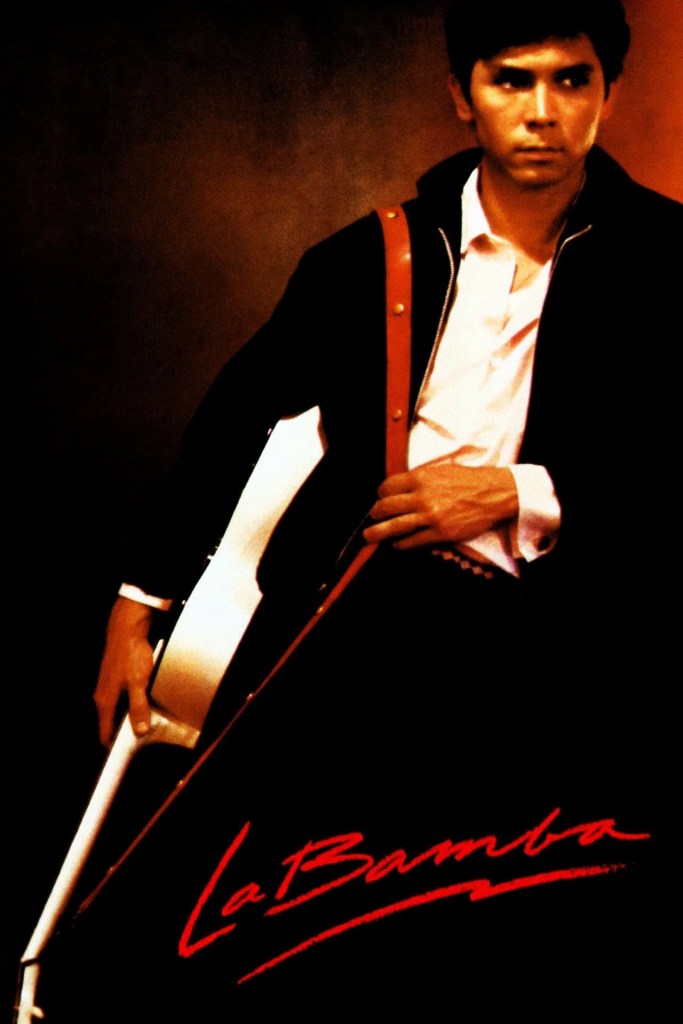
La Bamba is the 1987 film detailing the life and tragic death of Ritchie Valens. The film picks up when Richard Valenzuela is 16 and living with his mother and siblings in southern California. Very poor, his mom Connie picks fruit at a farm by day, and Richie works too after work, but he has big dreams. A lover of rock and roll, he carries his used guitar around with him everywhere, and hopes to make it as a rockstar. Recently released from jail, Richie’s older brother Bob joins the family, and they all soon after move to a quieter neighborhood where Richie can attend a nice school. There, Richie falls for a girl named Donna (the muse for Valens’ hit song “Donna” later that year), and while Richie starts playing gigs in the area and catches the eye of a record producer, Bob continues to go offtrack. He struggles with feelings of being the black sheep in the family, which leads him to alcoholism, and he fails to be a good partner to his pregnant girlfriend Rosie. With “Donna” and his follow-up hit “La Bamba,” Valens starts touring nationwide, but his star shines bright and is snuffed fast, when he is killed in the crashed flight that also took Buddy Holly (the inspiration for Don McLean’s “American Pie”). A fantastic film with highs, lows, and a rocking soundtrack to sing along to, with superb acting from Lou Diamond Phillips (Valens) and Esai Morales (Bob). ★★★★★
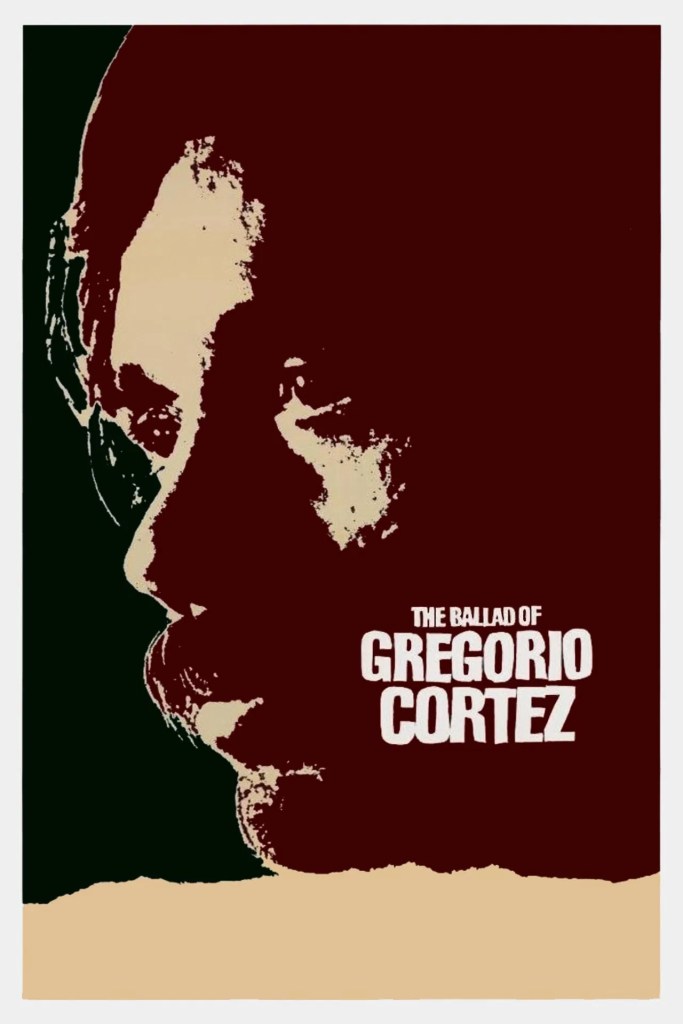
Well, we had Battlestar Galactica’s President Roslin earlier (Mary McDonnell, in Matewan), so now let’s get Admiral Adama in here too. Edward James Olmos stars as the title character in 1982’s The Ballad of Gregorio Cortez, based on a book which itself is based on the legendary Chicano figure. In central Texas in 1901, the state is still reeling from a few decades of turmoil, having gone from a Mexican state to an independent nation to a US state. This left a lot of racism in the area, and it plays out over the course of this movie. In the beginning, a sheriff is investigating a stolen horse when he and a translator come to the home of Gregorio and his family. Gregorio doesn’t speak a lick of English, so when he is asked if he traded for his horse, he replies in Spanish that, no, it is a mare (female horse). If you’ve ever taken Spanish or French in school, you know a big difference in those languages vs English is the masculine and feminine words. Anyway, his reply in the negative isn’t translated properly, so the sheriff comes down to arrest him. Texas law at the time stated a man could defend his own property with lethal force, so Gregorio lawfully resists. This gets Gregorio’s brother shot, and Gregorio returns fire, killing the sheriff. So sets off two weeks of being on the run, where Gregorio is hunted by sheriffs and Texas Rangers in what would become the largest manhunt in the history of the US. When he is arrested (someone gave him up for the $1000 reward, in 1901 money!), he is tried and quickly sentenced to 50 years in prison. Though that conviction was later overturned, we learn in final credits that he would go on to face 6 more trials (government really wanted to nail him) before finally being pardoned by the governor of Texas, shortly before his death. Crazy story, made all the more so because all of it is true. The legend of Gregorio Cortez grew, as he became a folk hero and anti-persecution symbol for Mexican-Americans living along the border. A very strong story, even if the movie is a bit uneven at times. Still, it’s a solid revisionist western. ★★★½
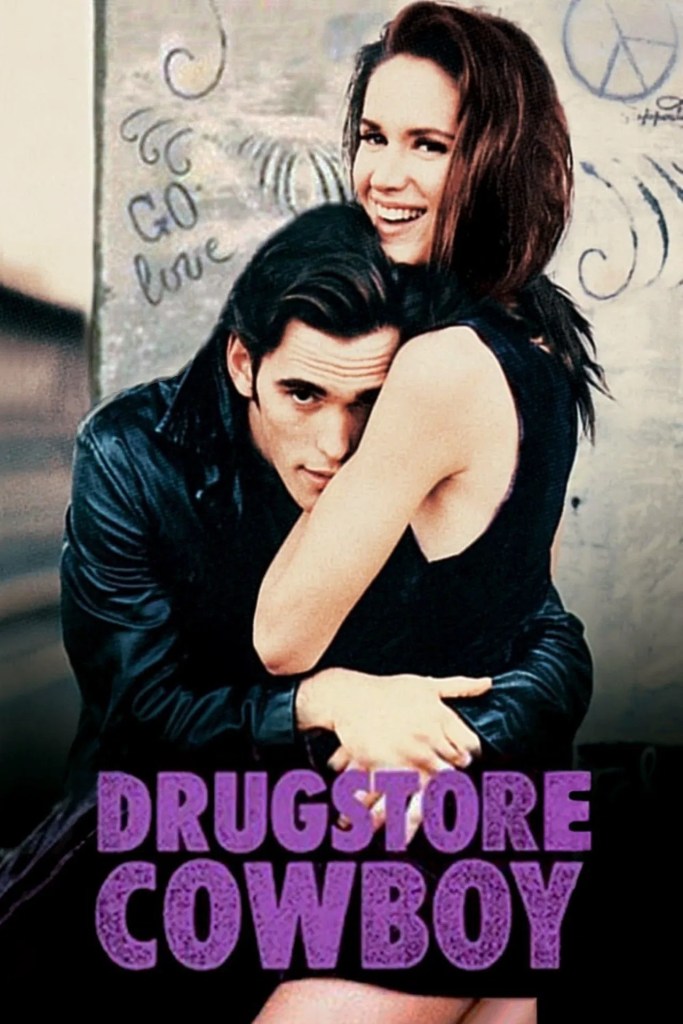
I haven’t seen a lot of Gus Van Sant films, but I love My Own Private Idaho and Good Will Hunting, and yet anytime his name is brought up, so is Drugstore Cowboy, so let’s sneak in a 6th film today. Released in 1989, it was his second film (after Mala Noche). It stars Matt Dillon, Kelly Lynch, James LeGros, and Heather Graham as a quartet of dopers who get their fixes by stealing behind-the-counter drugs at pharmacies. Bob is the ringleader, and he’s a pretty smart guy, even when high as a kite. Dianne has been his sweetheart since they were kids, and he admits in the opening narration that, unlike him, she’d do anything for a fix and would never give it up (foreshadowing?). Rounding out the group is Rick, Bob’s best friend, and Nadine, Rick’s girlfriend. Bob doesn’t think much of Nadine, calling her “just a pretty face,” and uses her thusly, as a distraction when they do the crimes, and only giving her half doses of drugs afterwards. The friends are on a good run lately until their luck runs out, and Bob is a big believer in luck. You might say it’s the only thing he believes in. A pesky detective keeps harassing them, so they try to hightail it out of town for some new scenery, and three of them (leaving Nadine at home) attempt to break into and rob a hospital’s drug stash, only for the heist to go sideways. Back at the motel, they find Nadine dead from an overdose, but not before she put a hat on the bed, a huge no-no for the superstitious Bob. Perhaps finally seeing the error of his ways, Bob makes a deal with God or whoever is listening that if he can make it out of this jam, he’ll enter rehab and turn his life around. This is a great, gritty film where you really despise a person in the beginning and then do a 180 on him by the end, and is about finding hope in a hopeless situation. ★★★★½

 Jons Movie Takes