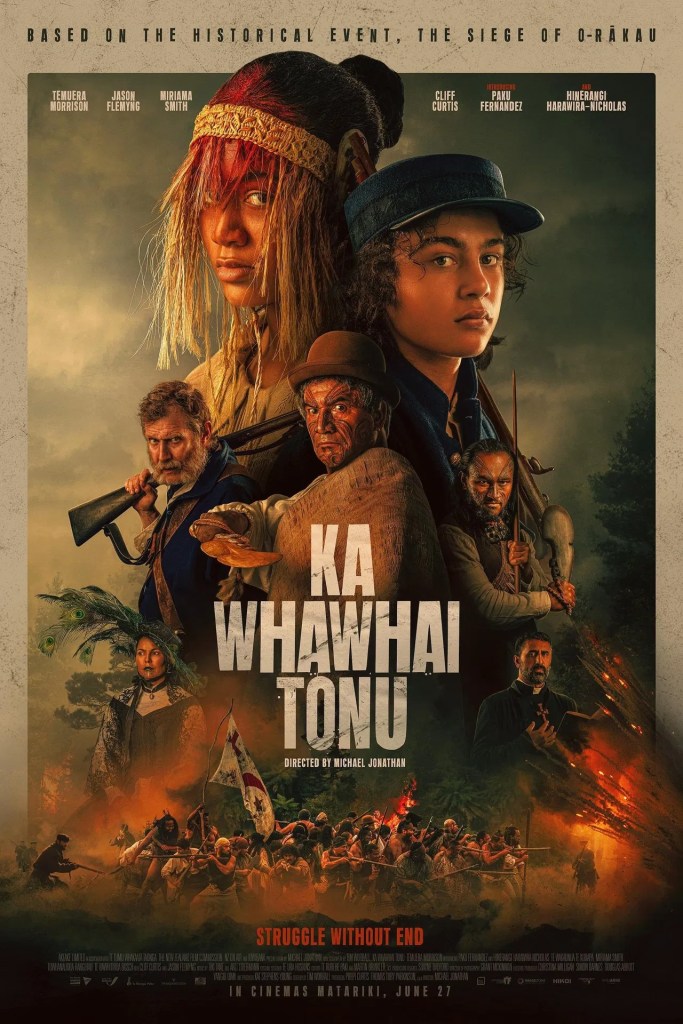
In the Fire of War, or Ka Whawhai Tonu as it was released in the Māori language (which is celebrated throughout the film, for good reason), takes place in New Zealand and is based on the true story of the land wars in that country in the 1860s. While our country was going through a civil war, New Zealand’s indigenous Māori people were very nearly seeing the end of their culture. British colonizers have been in the area for some time already and there’s been an uncertain truce, but the Brits have increasingly been encroaching inland, and now have sent a full army down to take care of the local resistance. A few of the Māori tribes have come together to decide if they will try to make a new deal with the English or to fight back. One chieftain, who has perhaps had more dealings with the British (he prays to Jesus and practices the “white man’s religion”) councils peace, knowing the English’s superior numbers and weaponry will overwhelm them, but he goes along with the others when he is outvoted. So sets up a climactic battle at Gate Pā, in which a small contingent of Māori were able to fight against a vastly larger British force. The battles take place around the lives of the two leads in the film, one a young woman who is the avatar of her tribe’s God of War, and a young man with a conflicted past, the son of a white British settler and a Māori woman, who isn’t accepted by either group. For the Māori, it seems their whole world is ending, and while they were very nearly wiped out (the film states only around 40,000 survived the land wars), they were able to survive and their numbers have grown over the last century. A brutal film about the effects of war. ★★★★
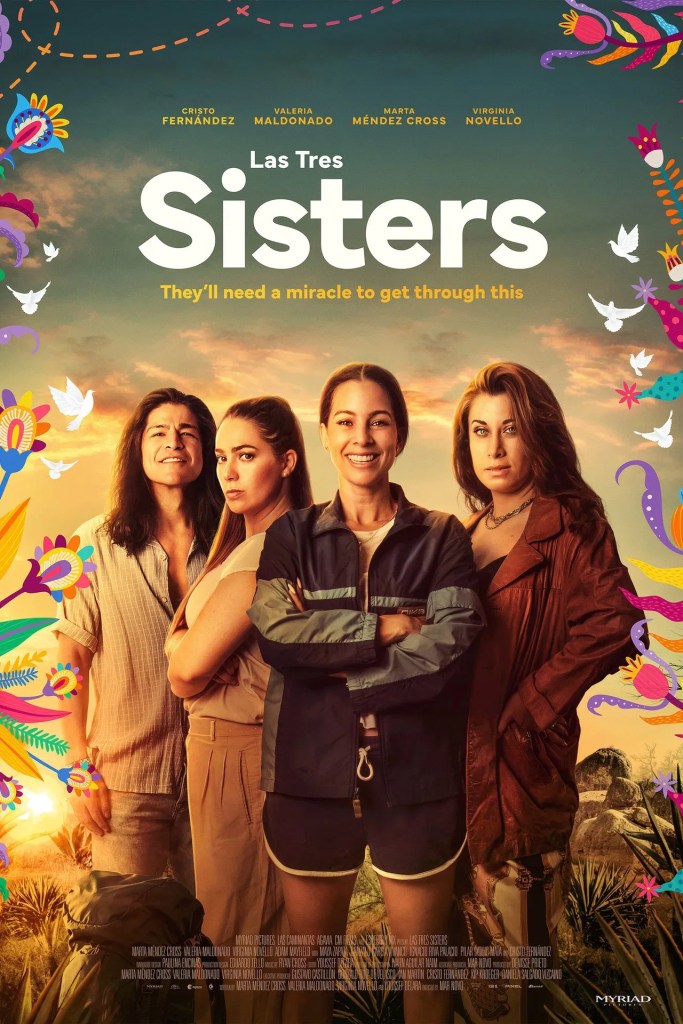
The online summary of Las Tres Sisters states, “Following in the footsteps of their beloved grandmother, three Mexican-American sisters take an adventure through Mexico to complete a traditional pilgrimage and repair their relationship.” I went into the film expecting some heavy drama with a side of laughter, but unfortunately there was far too much of the latter for my tastes, and most of it asinine. One of the sisters has recently been diagnosed with cancer and wants to take the pilgrimage from which legend states miracles can happen, but she doesn’t tell her sisters that this is the reason for the trip. In fact, she doesn’t even tell her two sisters that the other is coming, because they’ve been estranged from each other for years. One is very nearly penniless and has led a carefree life, the other is a strict Type A personality who cares for their ailing mother. The reason for their long feud comes out later, and while that side of the story is (somewhat) powerful, the message is lost in the silly, goofy comedy that is far-too-prevalent throughout this movie. No one talks like these ladies, and while I like a good Dad joke as much as the next 40-something, I couldn’t even laugh at the hokey gags. ★★
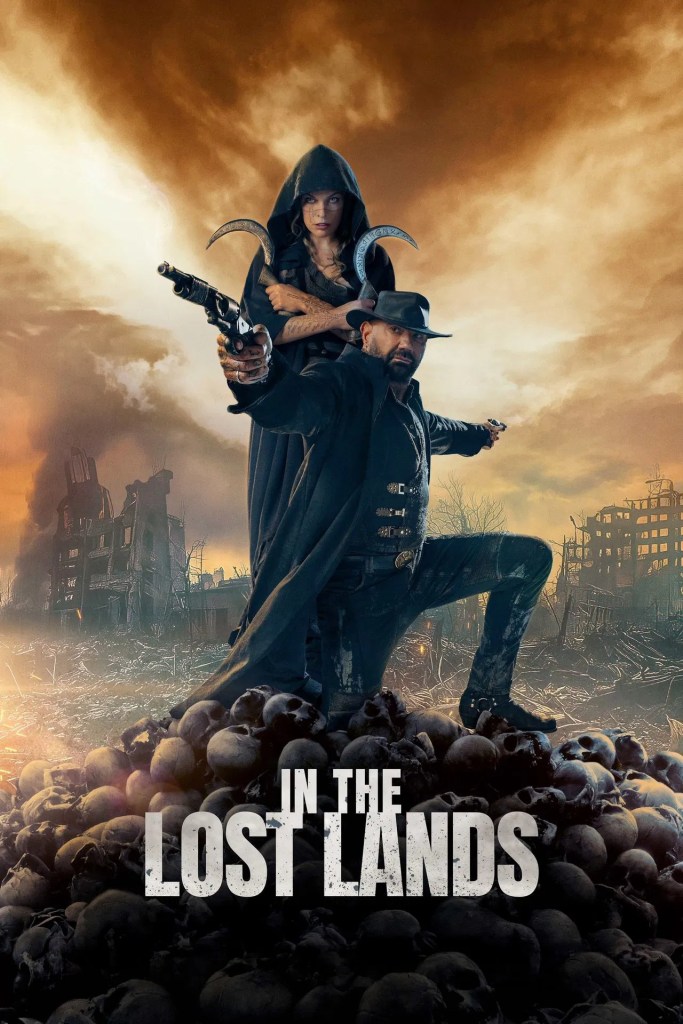
I think my reaction to In the Lost Lands is simply one of going into a movie with low expectations and then finding that the movie wasn’t as awful as I was expecting. Certainly not a great movie, but not horrendous either, and when you have low expectations, it doesn’t take much to impress. It’s sort of Resident Evil meets 300 meets Mad Max, which makes sense as it is from director Paul WS Anderson (who directed the former film series), has cinematography that at least “borrows” from 300, and takes place in a Mad Max-ian dystopian future. The movie stars Anderson’s wife Milla Jovovich (who still looks pretty good as she nears 50) as Gray Alys, a witch with the power to compel others with whom she makes eye contact. In the beginning of the film, she is about to be hanged by the Church, the ultimate power in this destroyed world, when she takes control of a watcher who then helps her escape. Pursued by the Church’s zealots, Gray Alys is then tasked by the Queen to find a way to make her into a shape changer. To do that, Gray Alys must kill a shape changer in their own lair during the full moon, just one week hence. Gray Alys flees the city with the Church on her heels, and teems up a warrior/survivor named Boyce (Dave Bautista), who also happens to be the Queen’s secret lover, to get through the wastelands to the shape changer’s country. Yes, I know the film sounds like a hot mess, and some of it is, but damn if I wasn’t entertained. I’m a sucker for dystopian films, even ones like this that aren’t all that original, and while the story is staid, the action and adventure is anything but. It throws every cliche in the book at the viewer, and some of them actually stick! ★★★½
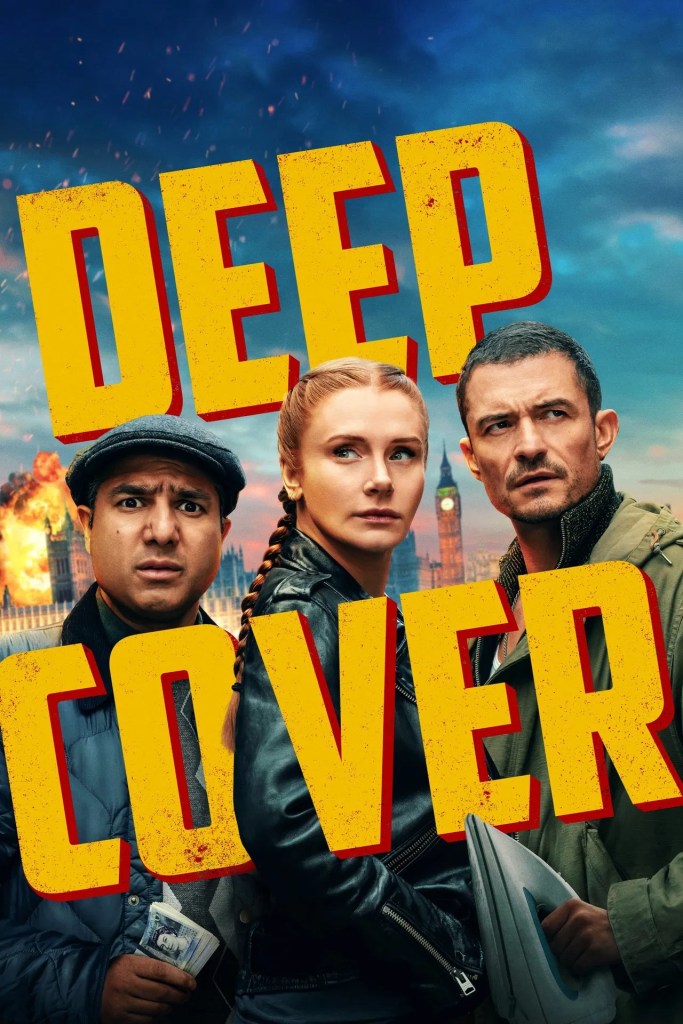
Deep Cover is a very funny comedy (and I generally don’t do comedies) with a bizarre premise. Kat (Bryce Dallas Howard) is a stuck-in-the-rut comedian living in London and teaching improv classes at a local bar when she is approached by an undercover police officer (Sean Bean) with an intriguing proposition. For a nice payday, he wants Kat to pretend to be a buyer for counterfeit cigarettes to take down an entry-level crook. The cop says improv comedians are best for this kind of low-level work because they think and react fast, and he wants Kat to take along 2 of her comedy troupe as backup. Her only options are Hugh (Nick Mohammed), an unfunny IT tech, and Marlon (Orlando Bloom), a “serious actor” who has only been able to land cheesy TV ads. The ragtag trio are ill prepared for the trouble they get into. During the cigarette buy, Marlon gets too into character and Hugh takes the improv lesson of “always say yes and…” too seriously, leading to them quickly moving up the food chain and going from entry-level to mid-level, meeting a serious, much more dangerous criminal named Fly (Paddy Considine). The cop who started it all is ecstatic, as his makeshift undercover agents are further along in one day than his precinct has been able to get in months, but as the team gets deeper, the risk level gets higher. Way past fake cigarettes and small-time money transactions, they are now dealing with heavy drug deals and murder, and it gets even worse when they meet Fly’s boss, underworld crime lord Metcalfe (Ian McShane). Great film with some mild action and a whole lot of laughs, as the ridiculous, completely unprepared comedians have to fake their way through situation after situation. ★★★★
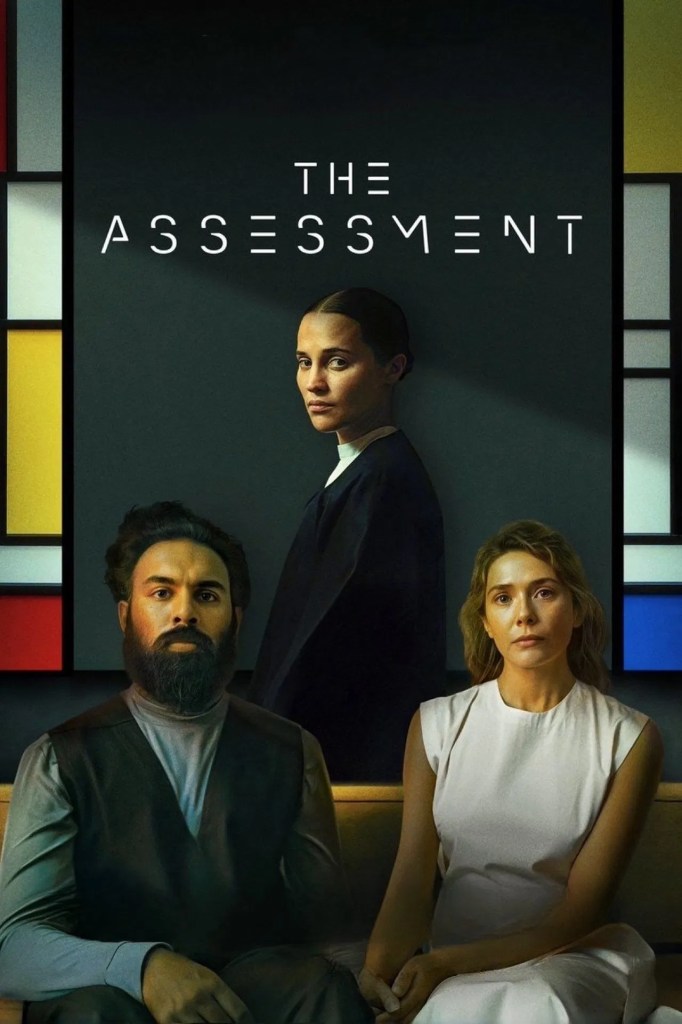
The Assessment is a psychological thriller taking place in the future (how far in the future is undetermined, though much of the technology shown isn’t far-fetched from where we are heading today). In this future though, some kind of global calamity has forced the government of “The New World” to outlaw pregnancies in an attempt to control the population and the world’s finite resources. Women no longer conceive, but when they want to have a child, they petition the government for the right to have a child conceived in vitro and grown in a lab, at which time the newborn is handed off to its new parents. Before they get there, couples must past the assessor, a woman sent to would-be parents to live with them for 7 days, to determine if they are suitable. Mia and Aaryan (Elizabeth Olsen and Himesh Patel) are the latest parent hopefuls, and so at the beginning of the film they welcome their assessor Virginia (Alicia Vikander) into their home. After cold and awkward introductions, Virginia begins play-acting as a child, obviously in order to gauge Mia’s and Aaryan’s reactions. The couple was not expecting this; no one talks about what it is like to have an assessment or what to expect, by government order. Thus, there’s a learning curve for the first day, whenever Virginia throws a temper tantrum or is expected to be coddled, in sometimes very uncomfortable ways when it’s one adult trying to “take care of” another adult, and a stranger at that. Over the course of the 7 days, Virginia’s tests progress from the absurd to the socially forbidden, such as making advances on Aaryan, leaving the married couple wondering what is part of the test and what isn’t. When the truth of assessments comes out, it hits hard. Excellent acting and a tight story, even if it goes from 1 to 11 a little too fast for my tastes. I would have preferred a more slow burn, but ultimately it comes off well in the end. ★★★½

 Jons Movie Takes