
Eureka is a slow-paced, introspective film told in 3 seemingly unrelated sections, to varying degrees of success. The first part stars Viggo Mortensen (the only recognizable face in the film) as a cowboy in the old west. He approaches a lawless town with murder in his eyes, and kills a few people before we even really know why he is there. The second part takes place in modern day on a Native American reservation, and follows a police officer of their descent on her overnight shift, patrolling the reservation and dealing with the (mostly very poor) inhabitants. The third section cuts to some time in the recent past (80s maybe?) in South America, where a teen-ish native boy attacks another, jealous over the affections of a young woman in their tribe, and then runs away. The stories are only related in that they collectively look at various interactions between indigenous groups and white colonialism, and there’s a metaphysical tie-in that becomes apparent by the end too. Really slow movie, but honestly that didn’t deter me at all, as sometimes I’m in for movies like this. The first two sections are good, particularly the middle which is full of tension (I kept waiting for something bad to happen to the police officer, and the fact that when it does it is off-camera didn’t bother me at all!). The third section was a bit over my head, but I still enjoyed it. ★★★½

Wikipedia calls Memoir of a Snail an “adult stop-motion animated tragicomedy,” and that’s as accurate as it gets. It’s amazing how a stop-motion film that looks like it is for kids (it most definitely is not! It received an R rating which is probably a bit harsh, but they want to make sure you do not let the kiddies watch it) can be so full of emotion, but this movie is chuck full of laughs and tears in equal measure. The movie follows the life of Grace, growing up in Australia in the 1970s. Her mother dies giving birth to her and her twin brother Gilbert, and they are raised by their paraplegic and alcoholic father, until he dies suddenly when the two are still children. Unfortunately no one will take two kids in, so they are separated: Grace goes to live with a couple of swingers (who are nice to her), while Gilbert is sent to the other side of the country to be raised by a crackpot religious nut and his family of cultists. Since Grace’s foster parents are always off at a nudist beach or nudist cruise, she is often alone and usually sad, teased at school, and so she turns to raising and collecting snails. Her only friend is Pinky, an 80-year-old woman who has lived an eventful life and calls things as she sees it (her constant yell of “Dickhead!” to anyone who cuts her off is particularly amusing). If Grace’s life is sad, at least she is safe, which can’t be said of Gilbert, whose life on his foster parent’s apple farm is quite miserable, where he is subjected to torture whenever he doesn’t pray loud enough or follow some doctrine. There are lots of low moments in the film where you want to scream at the cruelty of it all, but there’s plenty of humor to keep you from getting too depressed, and ultimately, there’s hope at the end. Absolutely wonderful movie, I liked it way more than I thought I would going in. ★★★★★

Red Rooms is a French Canadian film, with subject material not for the faint of heart, but it is profoundly moving. In Montreal, Ludovic Chevalier is on trial for the torture and murder of 3 teenage girls. His arrest has been a media circus and his pending trial is looking to be more of the same. Successful model Kelly-Anne is completely absorbed in the trial, though for a long time we aren’t sure why. Every day she leaves her high-rise apartment and goes to sleep like a homeless person out near the courthouse, just so she can line up early and make sure to get a limited seat in the courtroom. One day she meets Clementine, a “fan” of Ludovic, who believes he has been set up and that all of the evidence against him is either fake or circumstantial (typical conspiracy theorist, the kind which is rife in today’s believers against “fake news”). At first we think Kelly-Anne is maybe a fan too, which would explain her being so caught up in the trial, but when Clementine starts spewing her theories, Kelly-Anne shoots them down, so we know that’s not the reason for her attention. What Kelly-Anne does have is an interest in the dark web, where she seems to be looking for the final snuff film Ludovic created. He killed 3 girls, and all of their bodies were found, and he sold the videos of himself doing the torturing and murdering on the dark web. However, only 2 videos were released; the third victim’s video was never out there, and Kelly-Anne is desperately trying to find it. This movie is gross; while nothing is ever shown on screen, the descriptions of Ludovic’s killings in the courtroom sent shivers up my spine, and when they played the videos, the sounds of his instruments and screams of his victims made me cry out. If you can stomach it, the ending, with Kelly-Anne’s big reveal, is well worth it. ★★★★½

Bunch of good movies in a row, until my luck ran out. The above movie took questionable material and turned it into an enthralling movie; Palm Trees and Power Lines can’t do the same. It follows a 17-year-old named Lea who falls for an adult, 34-year-old Tom, who spends the first part of the film grooming her until she has abandoned her family and friends, and the second part of the film exploiting her. It’s just gross all around, with the only bright spot being the performance of Lily McInerny as Lea, who is quite good. I couldn’t get past the icky feeling of it all, and honestly I don’t want to. ★½
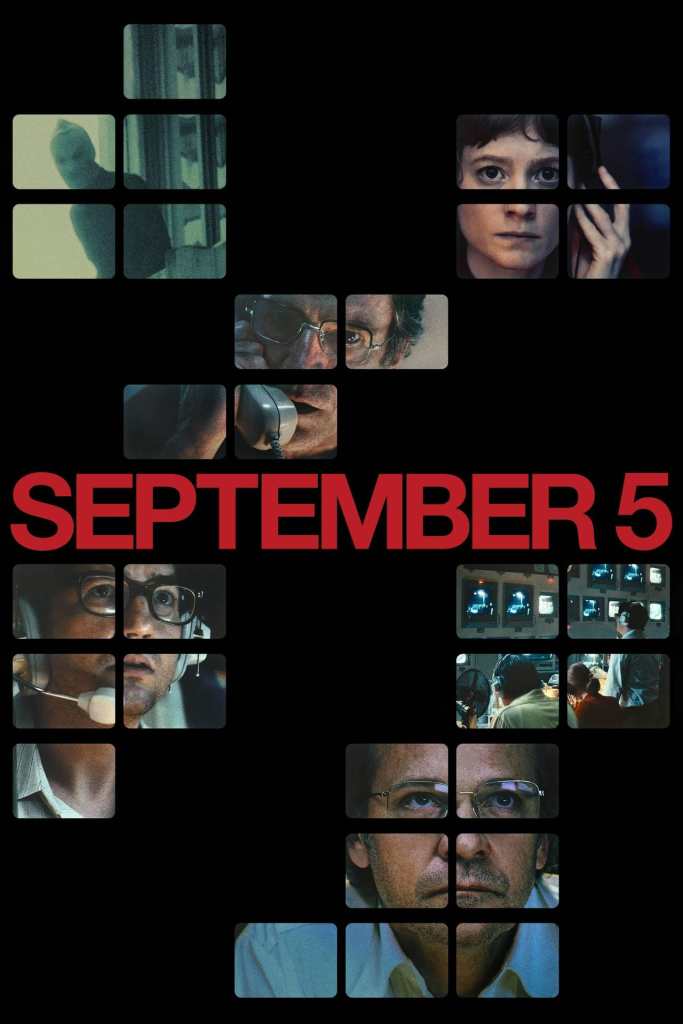
September 5 got a whole lot of buzz but I really could not get into this one. It tells the behind-the-scenes story of an ABC news outlet covering the 1972 Olympics in Munich, as the Munich massacre was playing out, when a militant Palestinian group stormed the Olympic village and killed/took hostage members of the Israeli team. It was a dark day in the history of sports, and one that is worthy of a movie being made about it. However, a movie like this, where there’s no real action and most of it is news people making phone calls and trying to figure out what is going on so that they can get it on TV (and boost their ratings, which is really all anyone seems worried about) is akin to hearing about the coolest house ever built, but then seeing a close up of a wall inside said house and watching its paint dry. There’s no “action” anywhere, and it really turned me off that only rarely does someone ask how the hostages are doing. They are more worried about getting a camera in the right spot. I gave up about 45 minutes into the film, as I just couldn’t take any more. Instead, go watch Spielberg’s movie Munich from 20 years ago, which dealt more with the aftermath of this terrible event, but it is way more exciting. ★
- Books recently read: Shakespeare’s The Tempest, The Two Gentlemen of Verona

 Jons Movie Takes