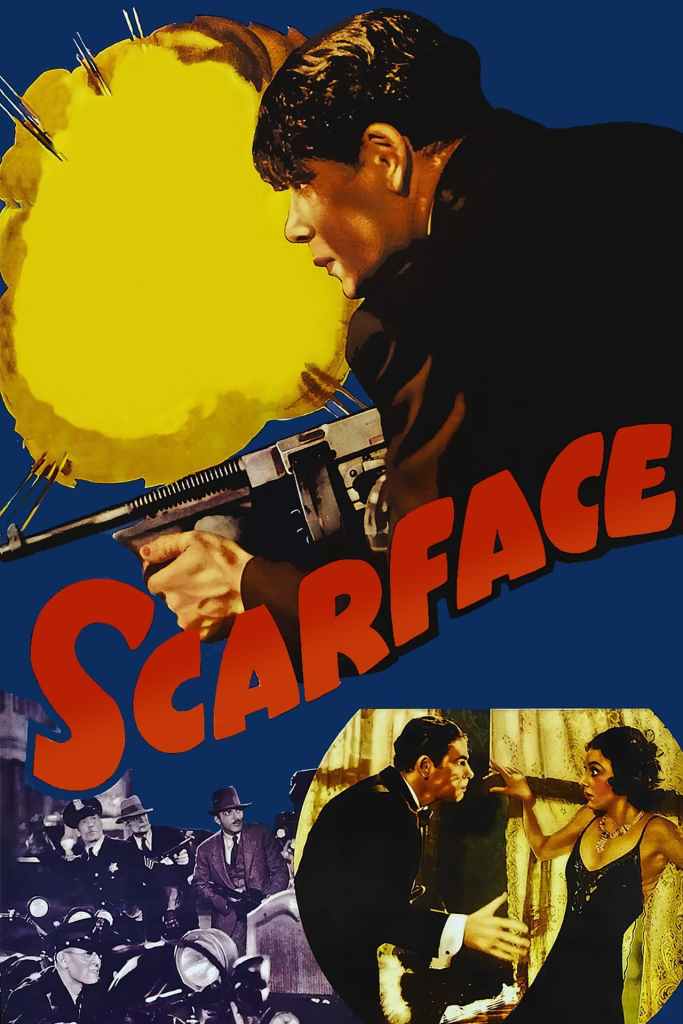
I was really excited for Scarface (not the Pacino version!) because of the legend it grew into, but unfortunately it didn’t live up to my expectations. A pre-code film released in 1932, it has a whole lot more violence and sexual references than what you’d see just a couple years later once the Hays Code was enforced. It tells the story of the rise and fall of Tony “Scarface” Camonte in crime-ridden Chicago in the 1920s. Scarface comes in as a henchmen, but has designs very quickly for taking out rivals and superiors, inching himself up the food chain, until he sits alone on top. Of course, this makes him the most wanted by the police too, so just when he thought he’d be safe, Scarface may face his biggest obstacle. The movie was heavily censored upon its release, for its severe depictions of gun violence, pushing the boundaries past anything that came before it. And yes, the Al Pacino film of the 80s is based on this one (though this 30s version lacks his famous line, “Say hello to my little friend!”). This movie may have been groundbreaking, but honestly I thought the acting was rough, even though it is full of names from this era, including Boris Karloff as one of Scarface’s rivals. Director was Howard Hawks, who also produced along with Howard Hughes. Great team, but just didn’t do it for me. ★★½
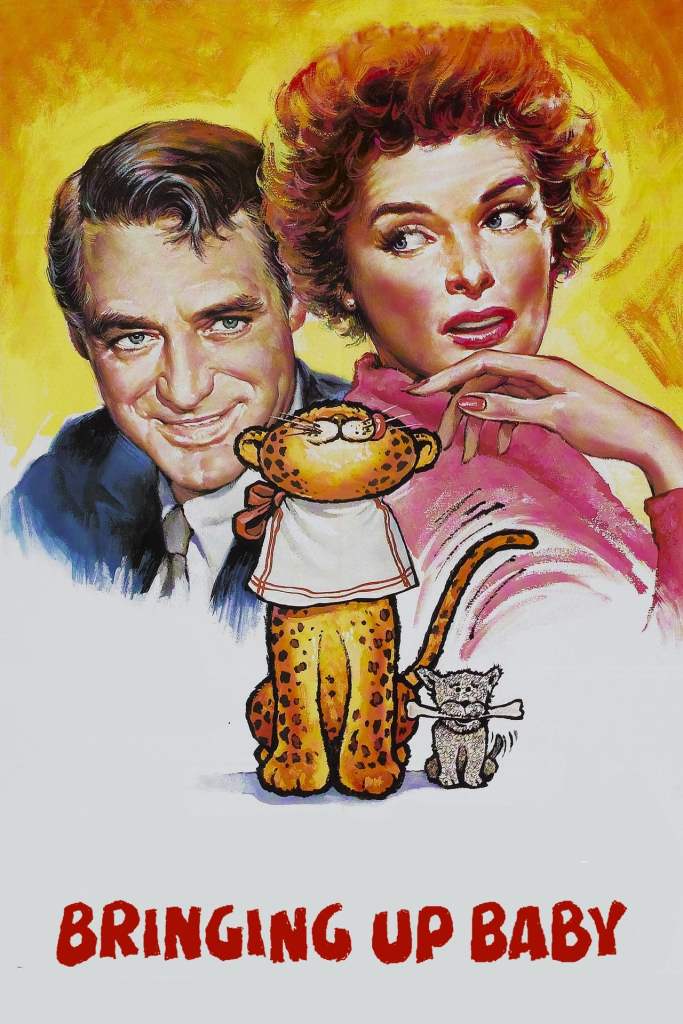
Another great cast and crew for 1938’s Bringing Up Baby, with director Hawks back in it, and starring Katharine Hepburn and Cary Grant. This time the result is a lot better than the above film, even if it is often a bit too much for my tastes (it is a screwball comedy after all). Grant is cast against type as a soft spoken, self-unassured paleontologist named David, who needs to find funding for his latest museum project. A wealthy heiress is considering donating a million dollars to his cause, so David leaves his assistant (and fiancee) Alice to go shore up that deal. Playing golf with the heiress’s accountant, David goes to hunt for his ball only to see another woman hit it before he can get there. The woman (Hepburn) is Susan, who is everything that David is not: loud, unapologetic, in-your-face, and (often) obnoxious. The jokes fly fast and free from here on out, often at David’s expense, as he can’t get a word in edgewise. The eponymous “Baby” is a tame leopard sent by Susan’s brother as a pet, to be given as a gift to their aunt, who is, you guessed it, the heiress that David needs. Enter in a traveling circus with a leopard of their own (one not so tame), and the jokes get turned up a notch. Some crazy stuff going on here, and I did laugh plenty, but it is so over-the-top that I don’t know that I could ever watch it again. ★★★½
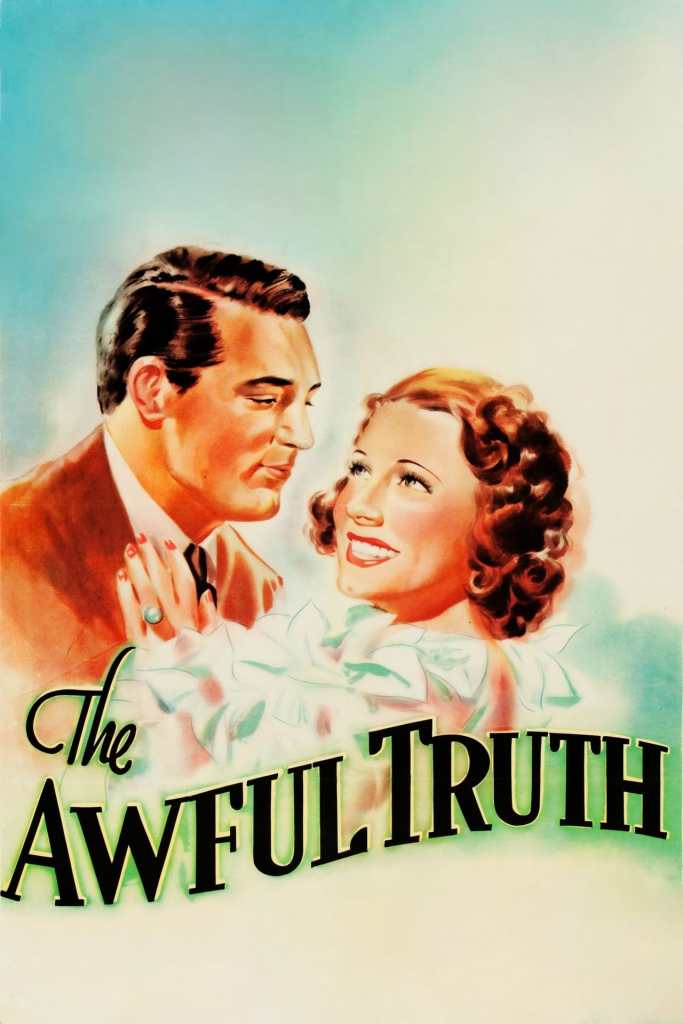
The Awful Truth is also labeled a screwball comedy, but it is gentle in comparison to the above film, and also has a lot more emotion and, thus, much more to my liking. Jerry (Cary Grant) is returning to his wife Lucy (Irene Dunne) after a week away. He told her that he went to Florida for work, but in reality he spent the week at his sports club hanging out with his buds. She finds out the truth of it quickly, but thinks that he was off having a fling with someone. Jerry gets to anger first though, because when he returns home with friends, expecting to find Lucy waiting for him, the house is empty and 2 days worth of mail unread; Lucy herself is just returning home with another man, her “voice coach.” She claims innocence, saying their car broke down out in the country the evening before and they stayed (separately) at an inn for the night. Just as Lucy doesn’t believe him, Jerry doesn’t believe her, and they both can’t say the word “divorce” fast enough. The judge decrees a divorce is warranted, but gives them 3 months until it is finalized, in case either changes their mind (remember, this is the 30s). Over those 3 months, each person tries relationships with others, but their new partners are hilariously not right for them. For her, an oil magnate and country bumpkin from Oklahoma who wants to take her away from the city life that she loves, and for him, a club singer with a scandalous act (to which Lucy quips, “If she hadn’t changed her name, her family would have had to change theirs”). Along the way, Jerry and Lucy continually attempt to thwart each others’ new relationships, obviously still having feelings for each other that they can’t own up to. Very funny movie with a lot of heart too, and a hell of a good time. ★★★★½
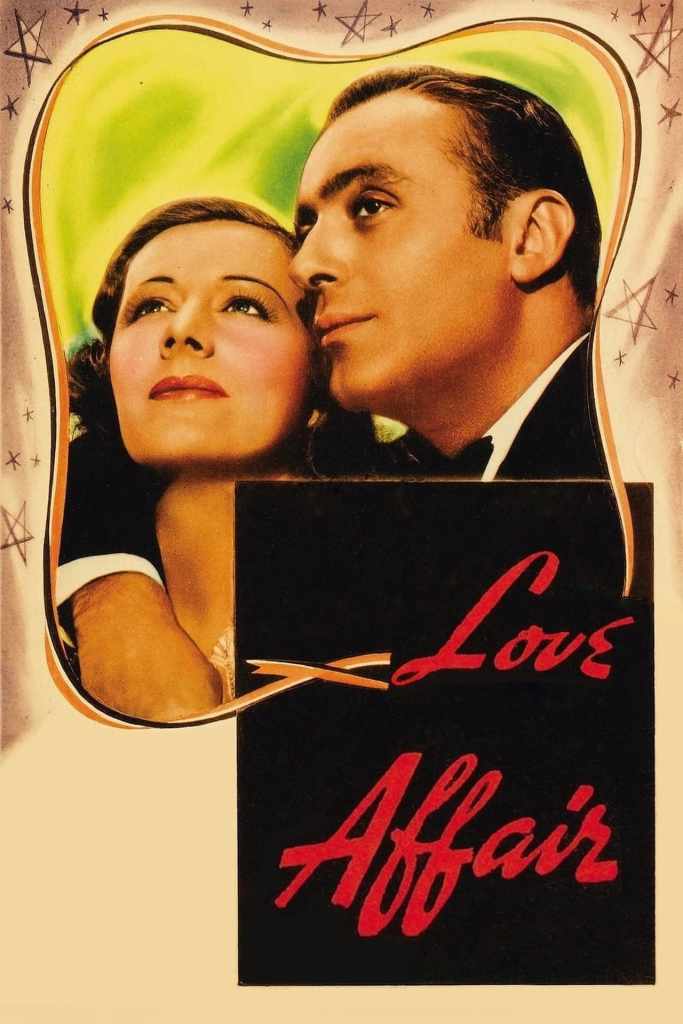
After liking The Awful Truth so much, I went back to the director (Leo McCarey) for another, 1939’s Love Affair. Irene Dunne is back too, this time as Terry McKay, an American traversing the Atlantic from Europe back to the USA aboard an ocean liner. On the way, she meets Michel Marnet (the instantly recognizable Charles Boyer), a wealthy French socialite and noted womanizer. Both Michel and Terry are going to meet their future spouses in New York, but are instantly attracted to each other. They must tread carefully though, knowing that whispers will start if they are together too much during the voyage, with people on board knowing Michel’s reputation. Still, they are unable to stay away from each other, and during a visit to the island of Madeira, Michel takes Terry along to meet his grandmother who lives alone on the island. Terry is a hit with grandma too, who would like to see Michel settle down with a woman like her. With New York getting close, the duo agrees to go their own ways to see if their feelings hold, but to meet atop the Empire State Building in 6 months should they decide to pursue a relationship. Shortly after, Terry reads in the papers that Michel has called off his wedding, and she does the same. However, when it comes time to meet him, Terry is hit by a car on the way to the Empire. When she comes to, the doctors tell her she may not walk again. Michel, who waited all day and night at the meeting spot, is unaware, and Terry doesn’t want him to find out, for fear that she would be a burden. Six more months go by until the two run into each other, but each is afraid to open up about their feelings. A very moving movie, I’m unashamed to admit I teared up at scene where they visit his grandmother, which is so sad and full of emotion. This was a popular movie upon its release and for years after, and McCarey himself would remake it in the 50s as An Affair to Remember, starring Cary Grant and Deborah Kerr. That version is probably more popular today (though I’ve yet to see it; put it on my list!). ★★★★
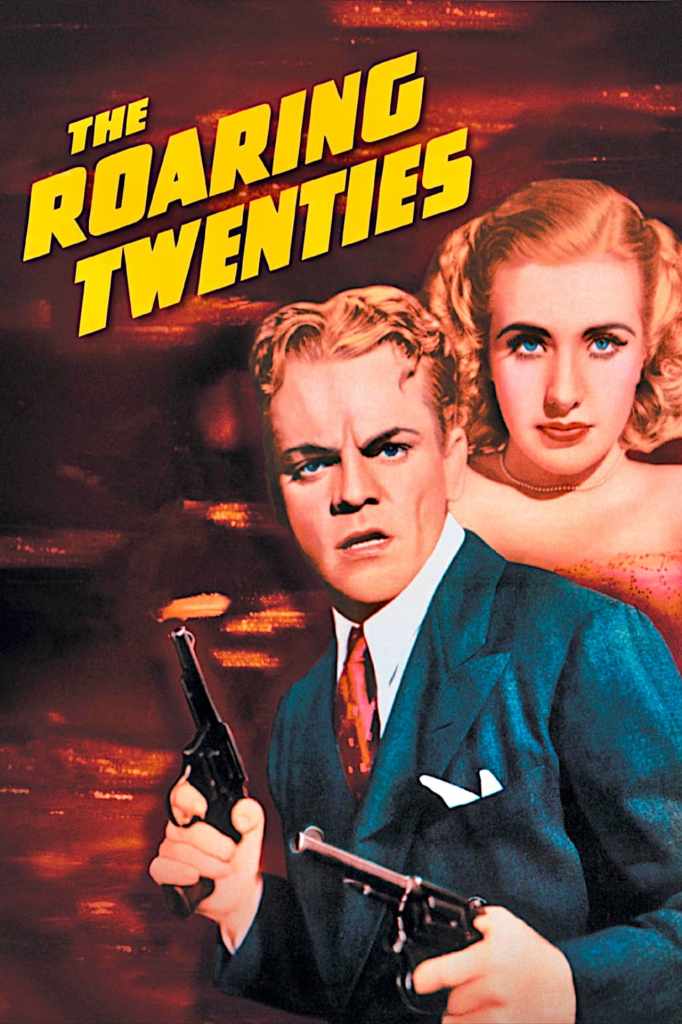
Ready for something a bit different, I went with the crime drama The Roaring Twenties, starring James Cagney, Priscilla Lane, and Humphrey Bogart (who did not get top billing; released in 1939, two years before his breakout in High Sierra and The Maltese Falcon, Bogart was still an unknown). The movie begins during the Great War, where Eddie (Cagney), George (Bogart), and Lloyd (Jeffrey Lynn) meet while sheltering in a foxhole. After the war, they return home but soon face an America going through the pains of an unsettled economy. Lloyd becomes a lawyer and Eddie becomes a cab driver, but with prohibition settling in in 1920, he gets swept up in bootlegging. Eddie uses his cab business to run liquor, and starts a nightclub with like-minded Panama Smith (Gladys George). Panama immediately sees that she and Eddie are cut from the same cloth, but he only has eyes for the pretty young singer Jean Sherman (Lane). While their uneven love affair is going on, Eddie is digging in further into the criminal underworld, where he reunites with George, who has been working for crime boss and rival bootlegger Nick Brown. So starts a gang war, riddling the streets with bullets and bodies. When prohibition ends, so does Eddie’s fortunes, so that when we see him again in the late 30s, he’s back to driving a cab and living at the bottom of a bottle. However, Panama has stuck by his side, and when she discovers that Lloyd, now a district attorney, is building a case against George (still living a life of crime), and that Eddie is planning on having Lloyd murdered for it, she appeals to Eddie to do something about it. There’s a startling ending waiting for you. Great film, even if it feels a bit dated with a voiceover filling in some of the blanks when the story advances a few years at a time, here and there. Bonus fun fact I discovered: Priscilla Lane had 3 sisters (the Lane sisters), all of whom went into showbiz, together as an act and separately in film and stage. Superman creator Jerry Siegel used Priscilla’s older sister Lola Lane’s name as inspiration for Lois Lane. ★★★½
- TV series recently watched: Your Friendly Neighborhood Spider-Man (season 1)
- Book currently reading: Redemption by Jean Rabe

 Jons Movie Takes
One thought on “Quick takes on 5 classic American films of the 30s”