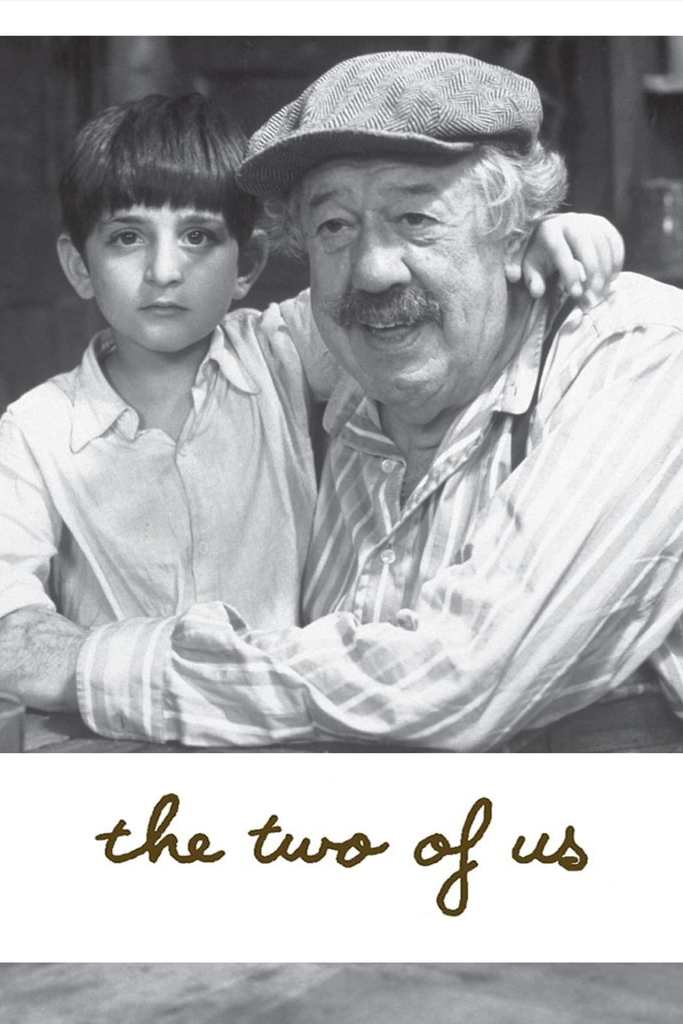
I’ve got a set of old films out of France today, starting with 1967’s The Two of Us, from director Claude Berri. It takes place during World War II, where 8-year-old Claude’s parents are worried about being rounded up in Nazi occupied Paris. To keep Claude safe, they send him off to live on a farm in rural France with a friend-of-the-family’s older parents. The old man, whose children never gave him grandkids, asks to be called Pépé (grandpa), and Claude happily does so. Pépé is an old codger, with a faux tough exterior but a soft spot for Claude. What Pépé doesn’t know is that Claude is Jewish, he just assumes he’s been sent since Paris is so dangerous at the moment. Not knowing Claude’s religion, he extolls the world’s problems to anyone who will listen, and blames most of its issues on the English, Jews, Communists, and Freemasons (in that order), and praises Marshal Pétain, France’s puppet ruler under German rule. Claude, who has been taught the Lord’s Prayer and sworn to never wash in front of others, keeps up his disguise as a good young Catholic, and peppers Pépé questions as to how to recognize a Jew and all that silly stuff, going along with the ruse to perfection. It’s a delightfully funny and endearing film about breaking down prejudices. I wish some people in today’s America would watch an old movie like this. Reminds you that all a government needs is a good enemy to unite their people, whether they are Jews or immigrants, but if you take a chance to get to know those “enemies,” you might just change your mind. ★★★★
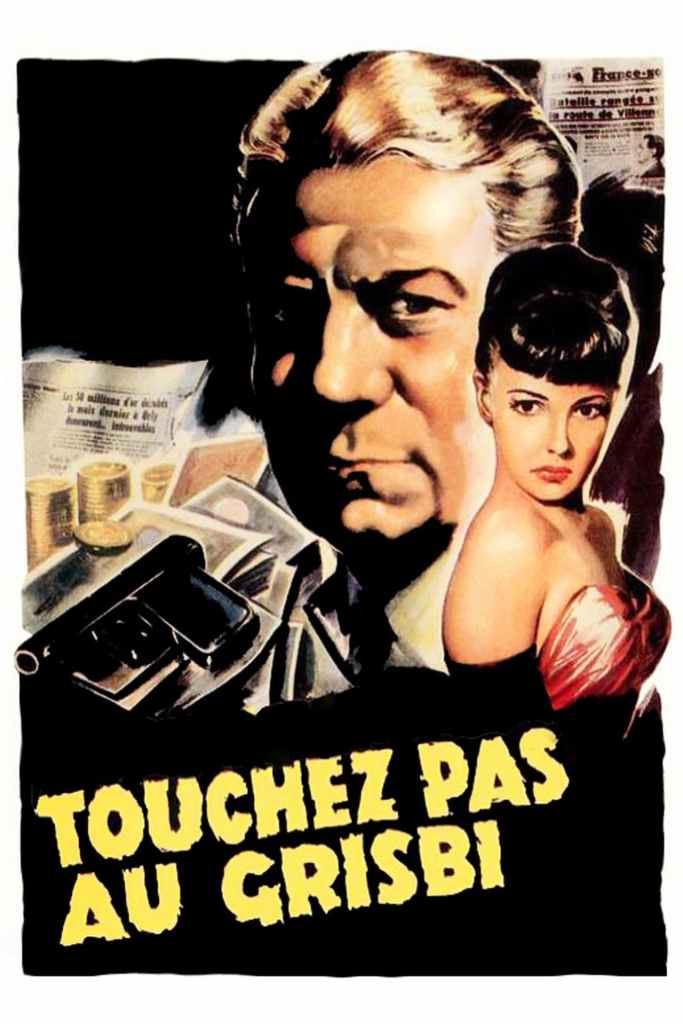
Touchez pas au grisbi (“Don’t touch the loot”), from 1954 and directed by the great Jacques Becker, stars all-time leading man Jean Gabin as Max. In the beginning of the movie, we quickly learn that Max lives in Paris’s underbelly, but don’t get the extent until a little while in. He and his friend Riton are dating a couple dancers at a night club, the owners of which are also involved in shady dealings. Turns out Max and Riton are professionals thieves, having recently stolen 8 gold bars worth about 50 million (in 1954!), and Max is looking to cash out of the business and retire. Unfortunately for him, Riton has spilled the news to his girlfriend Josy (a young Jeanne Moreau, a few years before her breakout), and she has been wanting out of the relationship for awhile. She tells fellow gangster Angelo, and you know the phrase, “No loyalty among thieves.” Angelo quickly hatches a plot to get that loot, kidnapping Riton as ransom against Max. Max is a hard man but he has a soft spot for those he truly cares for, and will go to the ends of the earth for a select few, Riton being one, which leads to a classic gun fight before the end. Some parts of the movie are really great, such as the build-up and gangster infighting, but others a bit too cliche, even for 1954. ★★★
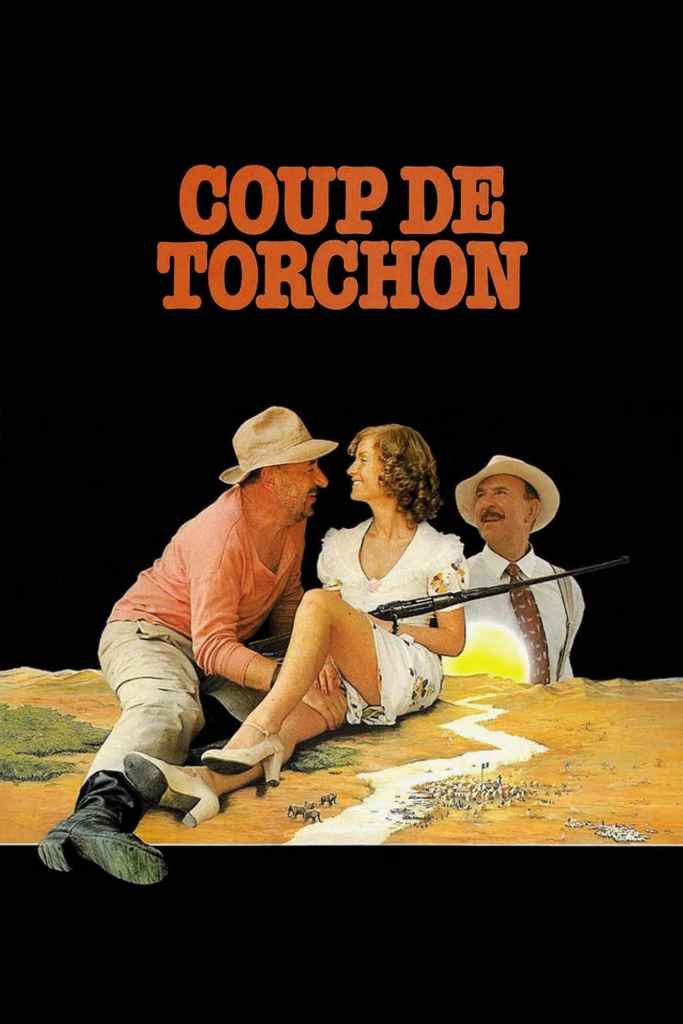
Coup de torchon has a bit of everything and was a very entertaining watch. It takes place in the mid-1930s is a small (population 1200) French colonial town in western Africa. Lucien is the only policeman in town, yet no one has any respect for him. That includes his wife Huguette, who is sleeping with a man, Nono, right under his nose, under the pretense that Nono is her brother (something that no one in town believes). Lucien doesn’t much care, as he has eyes for Rose, a pretty young thing, but she is stuck in an abusive relationship and is constantly beaten by her husband. Lucien is also mocked by a couple pimps who flout his authority. When Lucien goes to visit his bosses in the bigger city nearby, he gets an idea to right all of these wrongs. Returning to his town, Lucien kills the pimps and sets it up for his superiors to take the rap, then kills Rose’s husband and hides the body. Throughout it all, Lucien keeps up the act of a bumbling buffoon, but every now and then he drops a nugget of intelligence that reminds us that it is all an act. All of his carefully laid plans may come to naught when a smart, sweet teacher comes to town and Lucien realizes he may have hitched his wagon to the wrong horse. The movie is funny but also surprisingly intense at moments. I really liked Philippe Noiret in the lead role; certainly not a household name but I’ve seen him in a few movies over the years (including popping up in the next movie down). Rose is also played by a so-young-she’s-almost-unrecognizable Isabelle Huppert, in an early role. ★★★½
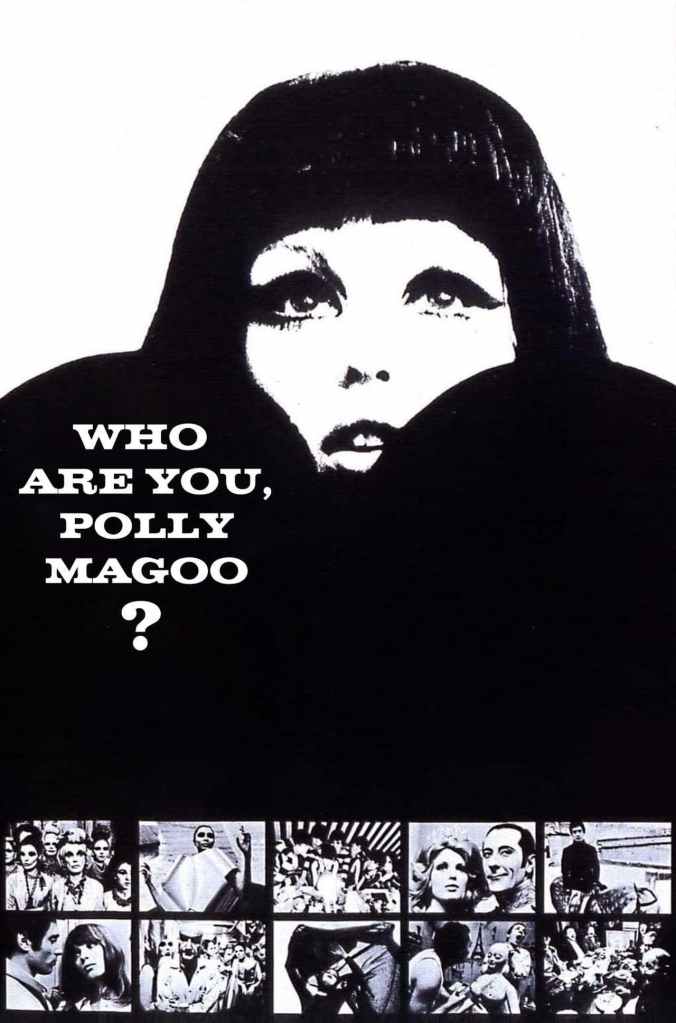
Who Are You, Polly Maggoo? is one of three films directed by celebrated photographer William Klein, and in it, he targets an industry he knew well: fashion. Told in a mockumentary way, it opens at a fashion show, where a designer is putting on a ridiculous runway show, dressing his models in sheets of metal. Of course, the attendees eat it up, proclaiming the fashion industry is upended with this “new and exciting” direction. One of the models is American Polly Maggoo, who becomes a sensation in France. A prince in a neighboring region falls in love with her and sends some of his henchmen to Paris to abscond her, with the intent to bring her back to him to marry. This little plot is really secondary to the film though, as Klein presents an all-out-assault on the absurdity of the industry. It comes off as an almost SNL-like series of sketches, some more outlandish than others. There were some funny moments for sure, but just like SNL, it was very uneven. Some landed, others did not, and as a whole, without a really good story, I couldn’t get into it. ★★
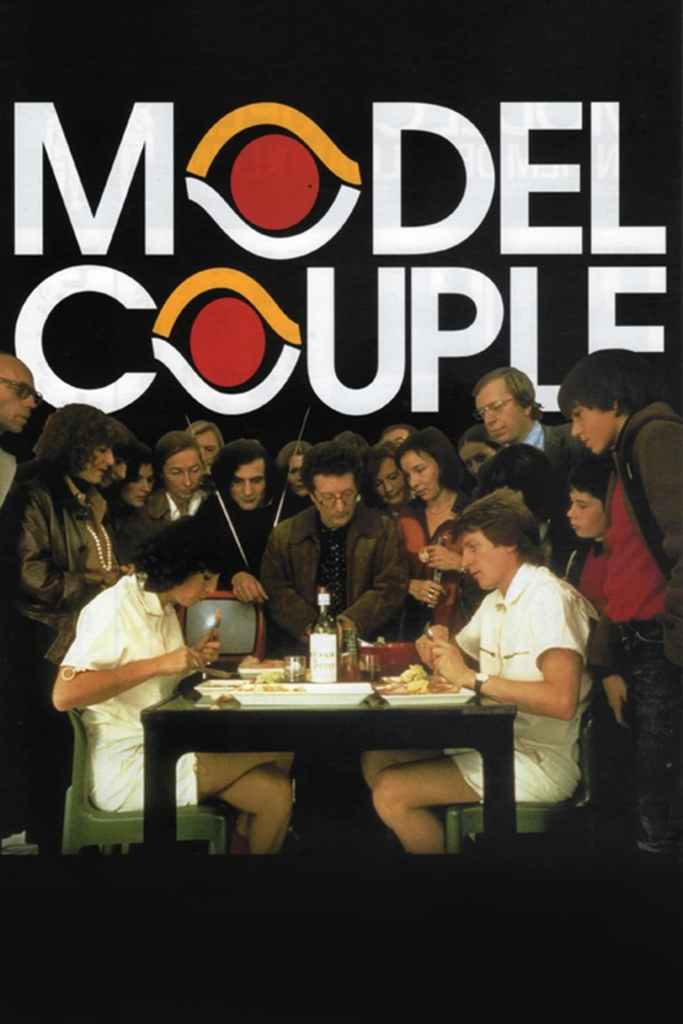
From the same director comes 1977’s The Model Couple, and I loved this movie a lot more than I expected (maybe low expectations after the above picture). For one, it is so prescient, but for two, it’s just entertaining. In France, a very “average” couple, Jean-Michel and Claudine, are selected to participate in a study, to be filmed and aired live on TV to viewers at home. Their little apartment is outfitted with the latest in (late 70s) technology, sort of as a “home of tomorrow,” and the couple is routinely asked to try out various new gadgets (shaving razors, blenders, etc) while going about their lives. They are also interviewed exhaustively by two sociologists, who want to know how their lovemaking was last night, how they feel today, and a host of other (often inane) questions. It doesn’t take long before JM and CL (as their shirts are initialed) sees their patience wear thin, and the formerly happy couple starts bickering with each other and lashing out at those running the study, even as their popularity in the country explodes from those watching them all day every day. It’s a startling look at the whole reality TV star-making phenomena, decades before that became a real thing. The movie loses steam near the end, when the couple is taken hostage by some revolutionary children, but until then, it was captivating. ★★★★
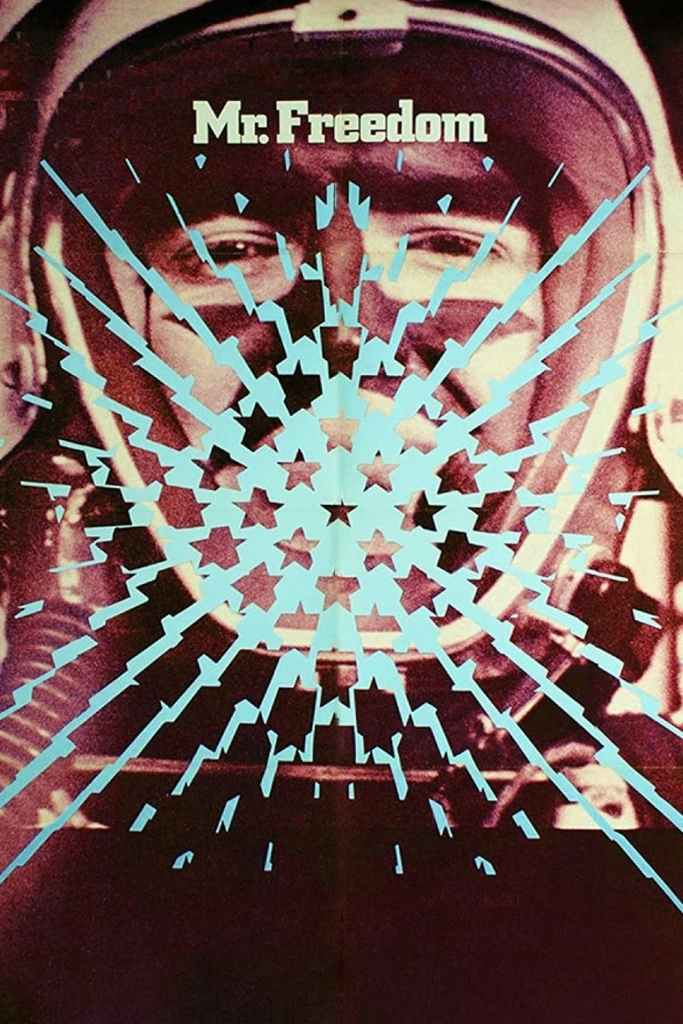
After The Model Couple, I decided to go back to director Klein one more time, for his film Mr Freedom. Should have quit when I was ahead. Like his other films, it’s satire, but not even funny satire this time. The film is in English this time and follows a “superhero” named Mr Freedom, who stands for democracy, capitalism, colonialism, and everything that good ol’ ‘Merica should stand for. Mr Freedom is sent to France, to combat growing Communist sentiment there. After checking in at the American Embassy (which is a supermarket…), Mr Freedom attempts to befriend Super French Man, only to find he leans too Communist. He then picks a fight with Moujik Man and Red China Man, before having a crisis of faith about his country’s goals. When he comes to his senses, Mr Freedom gathers up some followers, only to be thwarted by the sinister French Anti-Freedom league (the FAF). If it sounds ridiculous, it is supposed to. Credit to the movie, I did watch all the way through, because as silly as it all is, there are some funny moments, precisely because it is so far fetched. Wonder if Klein thought it was far fetched, or if he just had a bone to pick. ★½

 Jons Movie Takes