
I wasn’t going to watch The Substance, because the whole body horror genre creeps me out, but it has received some great reviews and lead actress Demi Moore just won a Golden Globe for it, so I gave it a whirl. I should have trusted my instincts, because definitely not my cup of tea. Elisabeth Sparkle (Moore) is a once-popular actress who is still clinging to her exercise TV program, but the writing is on the wall that the network is looking to replace her with someone younger. At just the right time, Elisabeth learns about the substance, a drug that promises to make her a younger, better version of herself. Desperate for anything to help, Elisabeth signs up and gets her care package. The instructions are lengthy and grotesque, saying that the two versions of herself cannot exist at the same time; each will be awake and aware for 1 week while the other version sleeps, but then they must swap, and that the “new” version of her must continue to feed herself spinal fluid drawn from her “older” self in order to survive. Even with all the directions, Elisabeth is not ready for what happens. After injecting herself with this stuff, her body splits open at the back, and a younger version erupts out. This “new” Elisabeth calls herself Sue (played by Margaret Qualley), and she lands the job as Elisabeth’s replacement. Unfortunately she also has the impetuousness of youth, and when Sue’s week is up, she steals another day’s worth of spinal fluid from Elisabeth’s comatose body to eke out another 24 hours to party it up. When the two finally swap, Elisabeth finds that her pinky finger has withered away and looks like an old lady’s. Turns out, anytime Sue steals time, she steals vitality from Elisabeth. Imagine what happens when Sue’s career takes off and she decides to stay out for months at a time, not wanting to be knocked out for a week or more. The soundtrack (and much of the camera work) is right out of a bad B movie, so at least they know their audience… It does deal with themes of aging (gracefully or not) in a culture where young and sexy sells, so I guess it has that going for it. Demi Moore is incredible as a woman who becomes unhinged as her body falls apart, all while her younger self becomes more popular. But man, what a gross film, and the ending is pure pulp. ★½

Radical, a film out of Mexico and based on a true story, is about a teacher trying to inspire kids at a poor school. In Mexico, schooling is free of charge and obligatory through sixth grade, and in this particular rough-and-tumble area, most 6th graders are already planning the next year, whether it be join the local gang, start working full time to help support the family, or face the reality of a life in poverty like their parents, all of which we see from various students in this school, where shootings are so close that you can hear them from the classroom and so common that no one bats an eye. Sergio is a new teacher at the school, and he is coming in with eyes wide open to the hardships these kids face, and he wants to do something about it. He knows the only way to get them to want to continue their eduction is to be excited about it, so on the first day, he tosses the textbooks and just sits with the kids, asking them what they are interested in, and slowly gleaning what they’d like to learn. It doesn’t work at first, as the kids are distrustful from a (short) lifetime of continually being let down, but Sergio is persistent, to the point that even the toughest ones eventually open up. When it comes down to it, kids want to learn, and Sergio is able to tap into that. There is heartache before the end of the film, as they can’t escape the area they live in, but there’s hope there too. ★★★★

A Real Pain is a getting some traction this awards’ season and is certainly beloved by the critics, but man, I could not get into this one, and mostly because of my dislike for Kieran Culkin’s character, Benji. The film follows cousins Benji and David (Jesse Eisenberg, who also wrote and directed) who are going to Poland together, in honor of their recently passed grandmother. Grandma was a Holocaust survivor, so to learn more about those events in her life, the cousins have joined a tour group through Poland that visits historical sites involving the Holocaust. The two men were once extremely close, despite having polar opposite personalities (David lives a structured life and plans everything; Benji flies by the seat of his pants and is outgoing to a fault), but something happened recently that has driven a wedge between them. David is hoping to reconnect on this trip, if he can find a way to deal with Benji’s asinine behavior. Many of the jokes deal with this, how Benji talks without thinking and engages any tom dick or harry they pass, but those jokes fell flat on me, because Benji just makes me (with a personality very similar to David) very uncomfortable. The kind of humor that other might laugh at just made me cringe. Obviously the moral of the story is Benji has some buried pain, which is what led to his and David’s estrangement, but I can’t forgive some his antics. Made for a squeamy viewing experience for my tastes. ★½

When I heard Victor Erice had emerged to make a new film, his first narrative picture in 40 years, I was in. Erice’s The Spirit of the Beehive is regarded as one of the finest films to ever come out of Spain, though I actually liked his El Sur even more. Close Your Eyes goes for nearly 3 hours at a leisurely pace, but has a mystery at its center that keeps your attention throughout. It seemingly begins in 1947, at an estate where a wealthy, dying Jewish man is hiring an investigator to find his daughter and bring her to him before he dies. After the scene, we learn that this was in fact the opening scene of a film by director Miguel Garay, but the film was never finished because the investigator, actor Julio Arenas, disappeared the day after filming that scene. Filmed in the 90s, that was 20 years ago, and we’re now in 2012. A 20-20 style news program is doing a piece on the disappearance of Arenas, a very popular actor at the time, and invites Garay in for an interview. Garay never finished that film and never made another one. In the present day, he’s a sad man, living in a mobile home, doing a thankless job reviewing books. His career as either a film director or a novelist never went anywhere and his life has definitely not turned out how he once imagined. Now he has these old memories being dragged up from the past, and he finally has a new purpose in life. Garay reaches out to Arenas’s surviving daughter, as well as an old girlfriend whom he and Arenas once shared, seeing if he can piece together any clues as to what may have happened to Arenas, who was not only a colleague but also a friend. In a lot of Hollywood movies, we are told all the answers before the end; this is not a Hollywood film, so do not expect everything to come wrapped up in a pretty bow for you by the end. However, it is a beautifully told story about finding yourself, and maybe more importantly, the stories we tell ourselves in order to survive this messed up thing we call life. ★★★★½
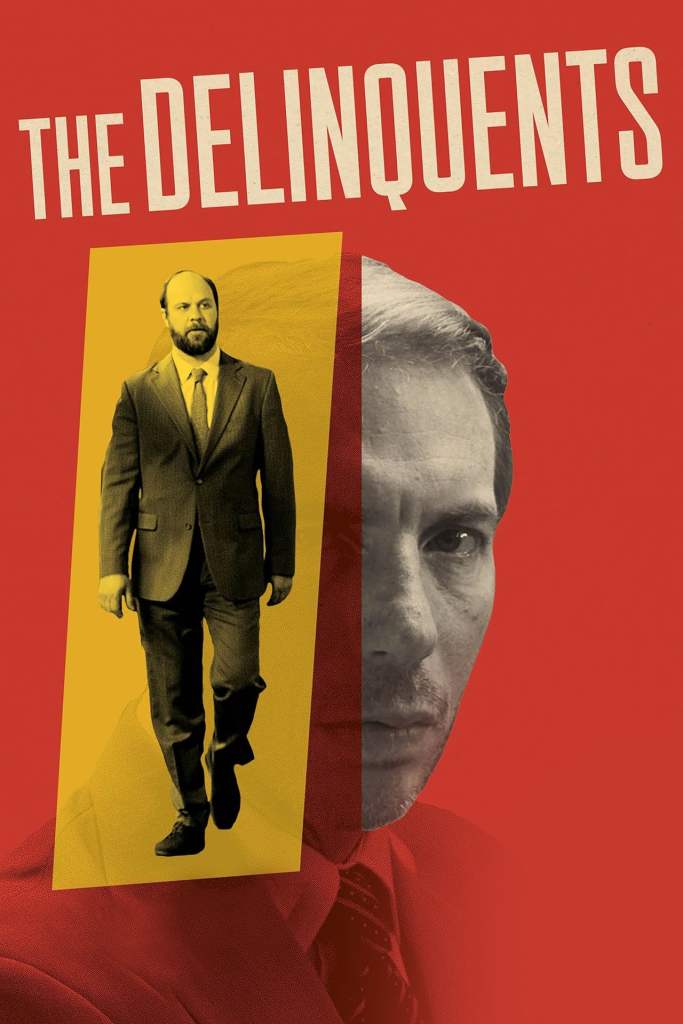
The Delinquents, out of Argentina, is essentially a tale of two films. The first half of this (again, 3 hour long) movie is fantastic. Morán works at a bank and seems pretty harmless to everyone around, including his coworkers. Seemingly on a whim, one day he walks into the vault, takes a bagful of cash (but doesn’t clear the place out), and walks out of the bank. Turns out it wasn’t on a whim, and Morán had it calculated down to the smallest detail. He took just enough money that would cover him not having to work for the rest of life (basically what the bank would pay him if he worked the next 12 years until retirement), plus some to cover the help he’ll need to pull off the heist. The help comes in the form of coworker Román, who didn’t know he was going to be part of this plan. The plan: Morán is going to have Román hold the money for 3 1/2 years, the time Morán figures he’ll spend in jail for his crime (with good behavior), after which he’ll get out, get his money from Román, and live the rest of his life. Román will get a couple hundred thousand for his efforts. All seems to go according to plan, and part one ends with Román hiding the money out in the countryside. In part two, the film goes off the rails. Román meets a woman relaxing just down the hill from where he hid the money, and they fall in love. There’s some long scenes involving them hanging out, and eventually we learn, in flashbacks, that Morán met her too, before going to jail 6 months ago, and they too had a relationship. Morán is planning on rekindling when he gets out, so Román may be left out in the cold. It sounds a lot more exciting than it is. All of the excitement and tension of the first half of the film completely disappears, and eventually I was only continuing to watch to see how it all ended. Never a good thing when you keep checking how much longer the movie is. ★★
- TV series recently watched: What If (season 3)
- Book currently reading: Aftermath: Life Debt by Chuck Wendig

 Jons Movie Takes