
Purely by coincidence, Miss Julie, in a way, foreshadows the next film up, as it deals with the battle of the sexes as well as upper vs lower classes. The film, released in 1951 and directed by Alf Sjöberg, takes place over one day, Midsummer’s Eve, as the people of a local community are enjoying the festivities. On the estate of Count Carl, his only child, Julie, is a stuck up you-know-what. She has recently broken up with her fiancé, and is flirting with “the help,” servant Jean. Jean is a good looking guy and could have his pick of any of the common women around, but he chooses to have a little toying of his own with Julie. As the film progresses, we learn of Jean’s growing up in poverty under the Count’s thumb, but just when you think Julie and her family are deserving of any jests Jean can throw her way, she comes clean about her own upbringing. Though privileged for sure, she has plenty of heartache, from a feminist mother who dressed her as a boy (against her wishes) and tormented her father, the Count. I can see how the film was popular in its day, with some humor and playful (and not-so-playful) banter between the leads, in a Pygmalion sort of way, but I thought the whole was pretty average. Probably works better as a play (on which this film was based) than as a movie. There is a cool, small role for future star Max von Sydow, in just his second film. Sjöberg was popular in Sweden and abroad in the 40s and 50s but was obviously eclipsed by Ingmar Bergman by the 60s, and today is probably most remembered for his film Torment, and only that because it was Bergman’s first film (as assistant director and screenwriter). ★★½

The I Am Curious films (2 intertwined pictures) were very controversial, having been banned, censored, and fought over in court after their release in the late 60s (for lots of nudity and some pretty intimate scenes). From the start of I Am Curious (Yellow), the film blurs the lines between a fictional movie and a documentary. Lena (played by Lena Nyman) is a young 20-something idealistic socialist who walks the streets of Stockholm interviewing people to get their views on social classes, the Franco regime in Spain, USA’s involvement in Vietnam, and a host of other topics. To be honest, for awhile I was getting bored, because Lena comes off as your typical doe-eyed, bleeding heart idealist, whose heart is in the right place but who doesn’t know how the real world works. But stick around, because there’s a method to the madness. Lena is in a relationship with Börje, but learns after awhile that he has another woman and even a child on the side. At the same time, we see snippets here and there of Vilgot (director Vilgot Sjöman) with a camera crew off to the side, and it becomes apparent that we have a movie-within-a-movie (-within-another-movie?) scenario going on here. It becomes this fascinating love triangle, as Lena and Börje’s fights get violent, and the viewer doesn’t know what is acted and what is real. There’s a fascinating scene where Lena, usually coming off as so self-assured, has a vulnerable moment with Börje where she admits being self-conscious of being overweight, saggy boobs, etc, and you get the feeling that she’s never told another soul, including her “real” boyfriend, Vilgot. As the layers develop, I was drawn into this film to the point that I was hanging on every scene. I want to go back and rewatch it and see what I could have missed in the beginning! But first, there’s the companion film below… Brilliant filmmaking on this one, even if there was too much sex (going at it like rabbits here, which didn’t didn’t really add to the film) for my tastes. ★★★★

I Am Curious (Blue) is, for my tastes, a film that didn’t need to be made. In fact, I would guess that it was only made because the director had so much extra footage left over after editing the first one, that he cobbled this one together. Blue basically adds to the storyline subtly, by changing your perspective on things. Gives you new ideas on Börje’s relationship with Lena, and some behind-the-scenes moments involving everyone in the first film. There’s a lot more of Lena going around interviewing people, continuing on the subject of class society, but also going after the church hardcore and also the prison welfare system. But on the whole, doesn’t add much to the overall story, and is a much weaker partner to Yellow. ★★
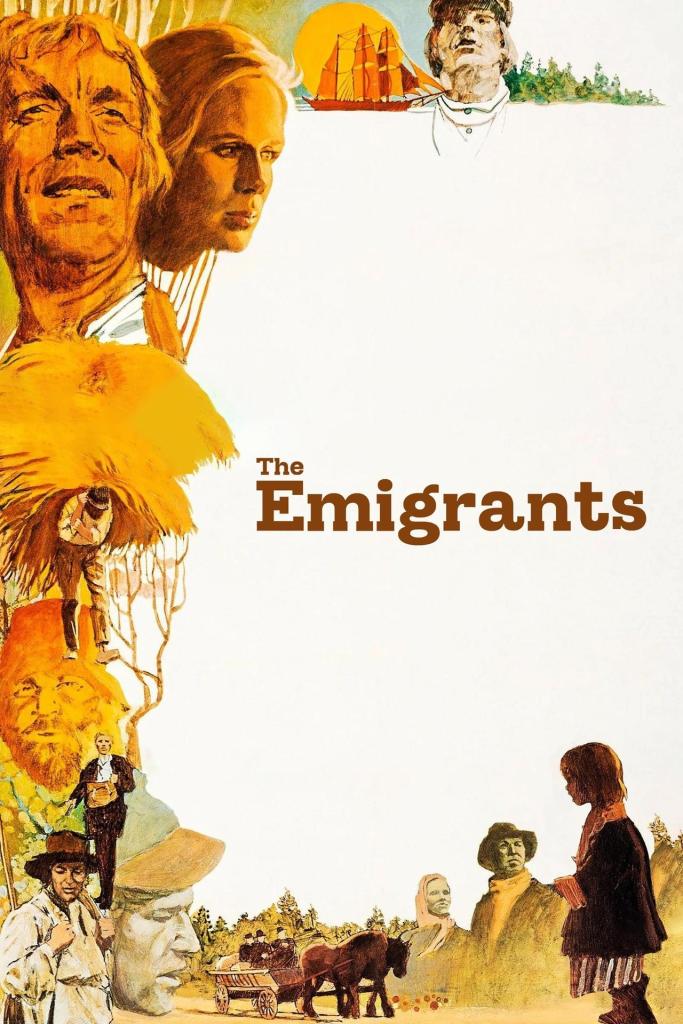
The Emigrants is a slow burn, but rewarding for those with patience and an eye for the little moments in life that become profound upon reflection. Released in 1971 and directed by Jan Troell, it brings together 2 of the biggest Swedish film stars of all time: Max von Sydow and Liv Ullmann (actually Norwegian, but famous for all those Swedish films with director Ingmar Bergman). The film follows the Nilsson family in a tiny farming village in Sweden in the mid-19th century. Life on the farm is hard, where you never know if a season will be too wet, too cold, or too dry, always threatening to send the family into debt or into the grave. Taking place over a decade or so, we see eldest son Karl Oskar (von Sydow) marry Kristina (Ullmann) and start to build a family. Karl Oskar’s younger brother Robert gets into trouble a lot, partly from having to be an indentured worker on a neighbor’s farm, to both keep himself fed and to be one less mouth to feed at Karl Oskar’s table. Robert is smart though, and begins to dream of a better life in America, where he hears the land is fruitful and no one goes hungry. When one of Karl Oskar’s and Kristina’s children dies from eating uncooked porridge, the family makes the decision that it is time to start anew in America. They are joined on the long voyage across the ocean by a religious man, Danjel (Kristina’s uncle), who is persecuted in the village for teaching the Bible while not being an ordained minister, as well as Danjel’s followers. Not all survive the harrowing 10 week voyage across the Atlantic, and when they finally do set foot on New York, they still have a long ways to go to where they want to settle in the Minnesota Territory. This is not a movie if you want action and adventure, but if you are in the mood for a leisurely paced (over 3 hours long), family-in-peril human film, it doesn’t get much better. It does an outstanding job of showing what emigrants faced before TV or reliable news, as Robert and the Nilsson family are completely taken-in by rumors of what America is supposedly offering. And even learned men like Danjel are prone to superstition; he continually tells Robert that he doesn’t need to study English on the boat, as God will give him the power to understand and be understood when he gets there. Was nominated for 5 Oscars, including Best Foreign Language Film, Best Picture, Best Director, and Best Actress for Ullmann, who did win a Golden Globe for the role. And the sequel, filmed at the same time, was released the next year. ★★★★★
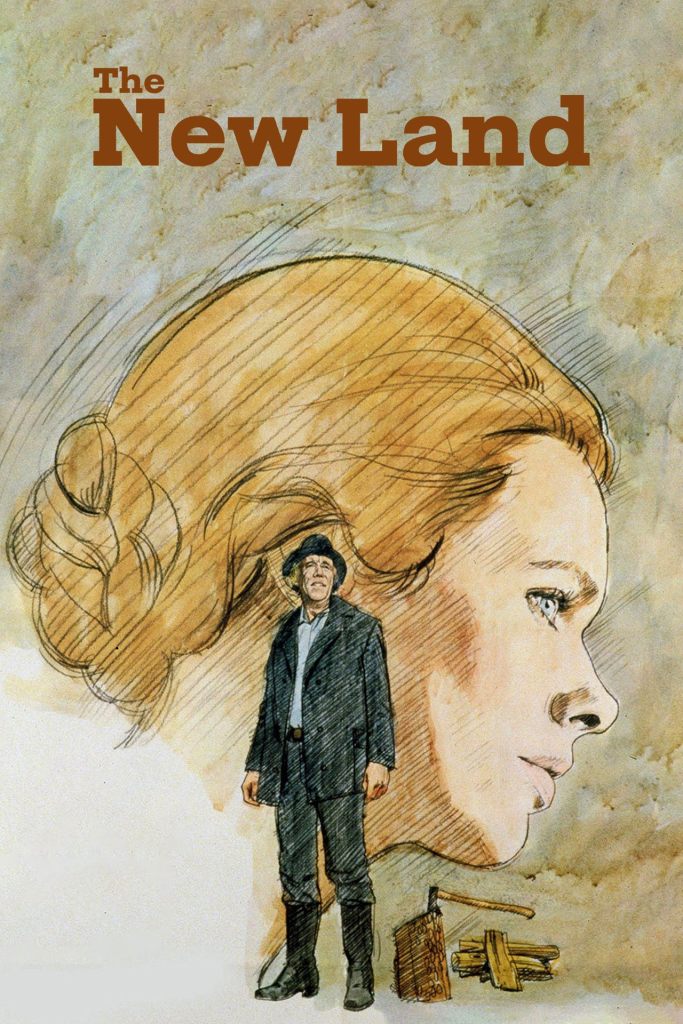
The New Land picks up right where the first ended (and in many ways, this feels like one long movie, if you’ve got 6+ hours to watch it!). Karl Oskar has picked his idyllic lakeside location to start a farm in Minnesota, and has brought Kristina and the kids there. Over the first couple years, things go (mostly) well, though it is hard work. Karl Oskar builds them a house, and then later, a bigger house and a barn. Though initially broke, he tills the land and starts growing things in the fertile soil, something that was so difficult to do in the rocky land of his homeland. The couple’s first child born in America comes the first winter they are there, and more children continue to follow. Much of this second picture focuses on Robert and his friend Arvid who, after a couple years helping on the new farm, decide to head to California to test their mettle in mining gold. Robert returns, alone, 3 years later, and when Karl Oskar chastises him for continuing to follow foolish notions that yield no results, Robert hands over a bagful of cash. A good portion of the film deals in flashbacks showing Robert’s and Arvid’s trials and tribulations out west, where the smart-yet-gullible Robert had a lot of growing up to do, and we learn what happened to Arvid. When the American Civil War breaks out, Karl Oskar tries to go off to serve the country that is giving his family a second chance on life, but is turned away due to a bag leg, much to Kristina’s relief. The film ends after the Dakota War (of 1862) where the Sioux rose up against the government for their mistreatment, and how that affected the Nilsson family. Another tremendous film, like the first, where you feel the joys and despairs of the family, living with them as they try to build something from nothing, through hard work in the land of opportunity. Certainly eye-opening about the struggles that many of our ancestors went through (including mine, who came to “the new world” in the mid-17th century). ★★★★★
- TV series recently watched: One Hundred Years of Solitude (season 1), Creature Commandos (season 1), Cheers (seasons 3-4), The Wonder Years (seasons 1-2), Interior Chinatown (series), Star Trek Lower Decks (season 5)
- Book currently reading: Aftermath: Life Debt by Chuck Wendig

 Jons Movie Takes