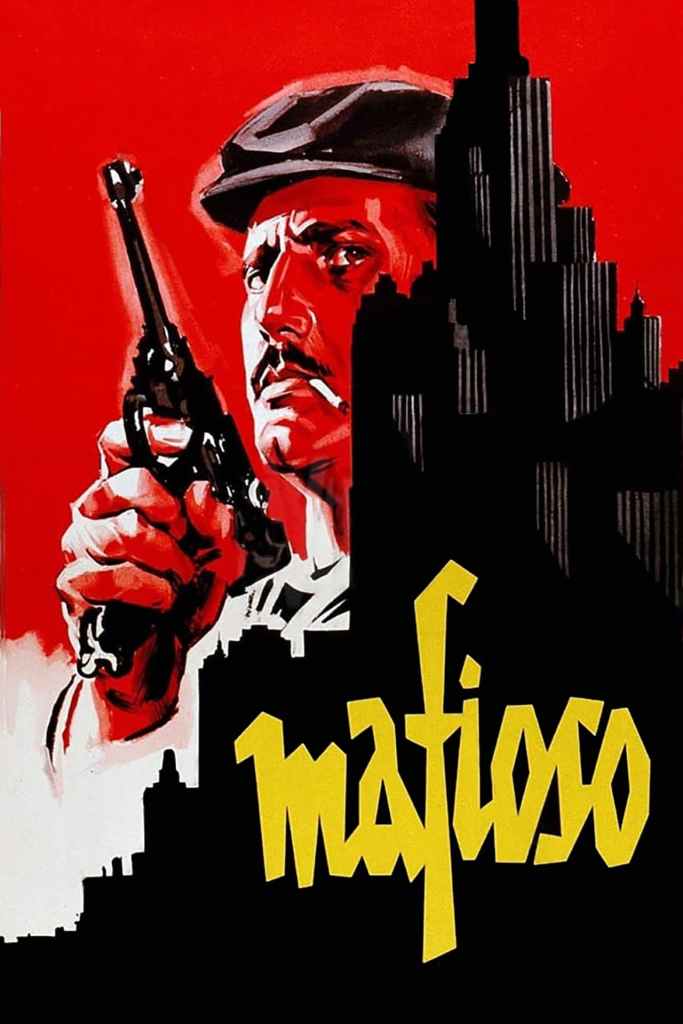
Up today is a set of films out of Italy (thought not all in the Italian language, as you’ll see). First is 1962’s Mafioso, which is a very entertaining gangster film disguised as a family drama. Antonio is a successful overseer at a car factory in Milan (northern Italy for us less-traveled). He works hard and hasn’t taken a vacation in years, so he asks his boss for over 2 weeks so he can go home to Sicily, to show his wife and kids where he grew up. When finding out what village Antonio is from, the boss asks if he knows Don Vincenzo, to which Antonio replies, “Who doesn’t know Don Vincenzo?!” The uptight Antonio, who keeps every record straight and plans leaving for Sicily down to the minute, is a completely different person when he gets around his family in Sicily. Warm and boisterous, he quickly is at home with the southern Italians, talking about his old friends (who’s in jail? who’s dead?) and laughing when his wife says she’s full from all the food, and Antonio quips that those were just the appetizers. But Nino, as he is called in the village, knows the pecking order, and makes a point to take his family to Don Vincenzo the same day they arrive, to make introductions and pay his respects. The Don welcomes Nino home, and has a plan of how to make use of Nino while he is available. Antonio may not like what he is called to do. Tremendous film, lots of laughs regarding the stereotypical Italian (large) family, but the film provides plenty of tension too in the finale. ★★★★
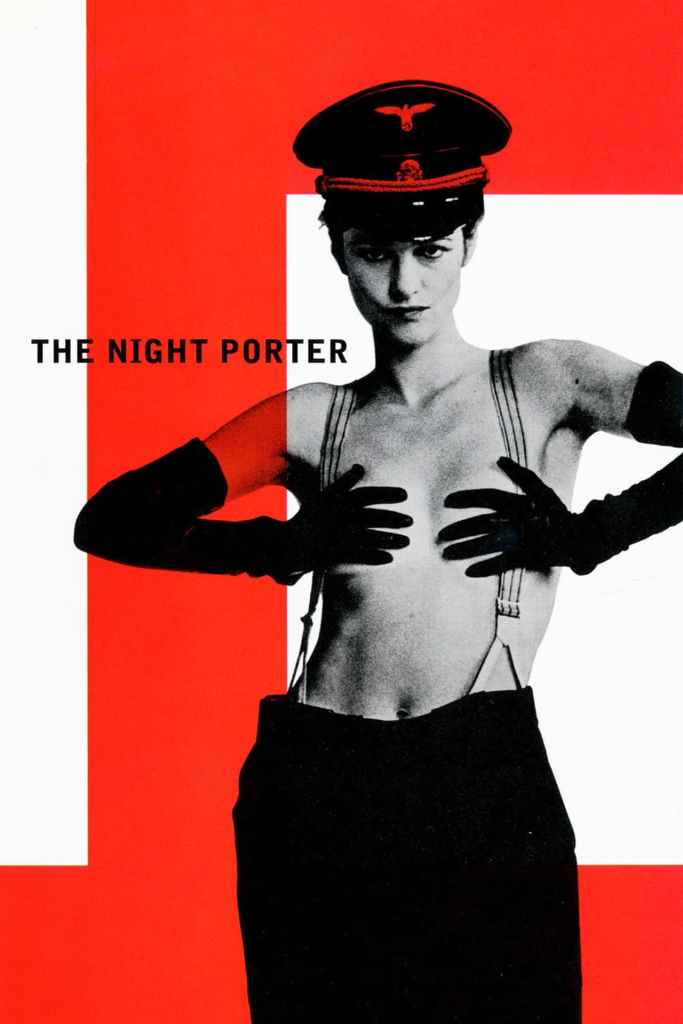
The Night Porter was filmed in Italy and directed by Italian Liliana Cavani, but it gave my subtitled-eyes a break, as it is in English. In Vienna in 1957, Lucia (a young Charlotte Rampling) checks into a posh hotel with her symphony conductor husband. She and the hotel night porter, Max, immediately recognize each other but don’t say a word, and go each other’s ways, though each is visibly shaken. In flashbacks, we learn that Lucia was held in a concentration camp during the war, and Max was a German guard there. As the film progresses, we see further flashbacks in which Max was, at first, a torturer, and later, Lucia’s lover, in a sadistic way. Whether from Munchausen’s or another reason, Lucia cannot get Max out of her head in the present, and when her husband moves on to the next orchestra to conduct, Lucia stays behind and begins an affair with Max. While this is going on, Max’s old German buddies have been running mock trials against each other, in which they gather evidence of their war crimes, present it in front of a fake “judge,” and then burn it all, as sort of a cleansing/letting it all go. They see Lucia as a threat, someone who could really point the finger at them in court, but Max will not see her come to harm. The movie is at times either fascinating or grotesque, but all in all it doesn’t make a whole lot of sense. Lucia is pretty well abused during her time in the camp, and why she would run back to Max, submitting herself to further humiliations, is beyond me. Weird movie. ★½

From one film dealing with Nazi Germany to another. Released in 1959, Kapò was one of the first films to dramatize events of the Holocaust, and it took a lot of backlash at the time because of it. Edith is a young teenager in Paris when she and her Jewish family are rounded up and sent to a concentration camp. Edith is separated from her parents and witnesses them being led to their deaths, but can do nothing to stop it. She becomes nearly catatonic, but a kind fellow prisoner saves her life. With the help of a Jewish doctor, they give Edith a new name, Nicole, and new prisoner garbs labeling her as a criminal and not a Jew. They get her on the next train to a new camp, where no one will recognize her. “Nicole” is now as safe as you can be in such a place, and slowly comes out of her stupor. However, rather than doing good for others as she was shown, she vows to herself to do whatever it takes to improve her situation. She begins stealing food from other prisoners, and starts sleeping with German guards for food and niceties. A couple years later, she has moved up to a kapò, a prisoner still, but one who is in charge. She lords her power over the others, including the women who helped her early on. It is only when she starts to fall in love with a Russian prisoner, Sascha, and he shows her that there is still hope in the world, does Nicole think she can redeem herself. Strong acting from Susan Strasberg in the lead, but the film is a bit unbelievable at times. I’ll forgive it, since it is such an early example of Holocaust films, and on the whole I found it an above-average flick. ★★★

To be honest, I watched Kapò because I wanted to see an earlier film from director Gillo Pontecorvo, before I watched his breakout, 1966’s The Battle of Algiers, a film that received acclaim and is still talked about in film circles. Filmed in a documentary style (and actually looks and feels like a documentary many times throughout the movie), it follows a group of men, particularly Ali La Pointe, as they fight for the independence of Algeria from France in the late 50s. At the start of the conflict, the freedom fighters initially target French police officers, killing them out in the open to create fear and try to get them to leave. However, the police retaliate by setting off a bomb in the Muslim quarters of the Casbah, killing innocent civilians. The FLN (National Liberation Front) then step up their tactics to targeting innocents as well, placing bombs at hangouts frequented by French citizens (cafés, airports, horse-racing venues, etc). Each side keeps moving the goalposts, to further and further atrocities. Eventually, the French bring in a trained paratrooper unit to deal with the insurgency, led by Lieutenant Colonel Mathieu, who starts a serious crackdown, hunting leaders and torturing them for information. He justifies his actions by saying he was brought in because people believed that France should still be in Algeria, and if you believe that, then let him do his job. I got the impression that he doesn’t believe it himself, but he’s a soldier there to do what he’s been ordered to do, and he’s very good at his job. It’s a gut-busting film to watch, as you don’t know who exactly you’re supposed to be rooting for. Obviously in this day and age we can agree that colonialism is generally a bad thing, but in this movie (and the facts on which it is based), both sides are doing terrible things. This is the kind of movie that sticks with you for a long time. ★★★★★
For the last film, I returned to director Michelangelo Antonioni, someone who I really enjoyed when I watched some of his stuff a few years ago (5 years already, time flies!). Identification of a Woman was a later-career film from the director, released in 1982, and it unfortunately does not reach the heights that his earlier films attained. It follows a film director named Niccolò who has plenty of professional success but who has been unable to match that level in his private life. Already divorced, he becomes infatuated by a young hot socialite named Mavi. She comes from money and runs in circles Niccolò has never considered, and he doesn’t quite like it. However, he is head over heels for Mavi, and it becomes an unhealthy situation for her. While their lovemaking is incredible, Niccolò becomes controlling, and after a big blow-out fight at a weekend getaway, Mavi disappears the next morning. Unable to locate her, Niccolò eventually tries to move on with a new girl, Ida, but he continues to obsess over Mavi. The film just meanders along with no big, thought-provoking moment, and it lacks the style of Antonioni’s earlier films, so that it ultimately just comes off as a subpar 80s film lacking any memorable moments. A couple stars for strong acting, but that’s it. ★★
- TV series recently watched: Yellowstone (season 5.2), The Rings of Power (season 2), Static Shock (seasons 3-4)
- Book currently reading: The Battle of Corrin by Herbert & Anderson

 Jons Movie Takes