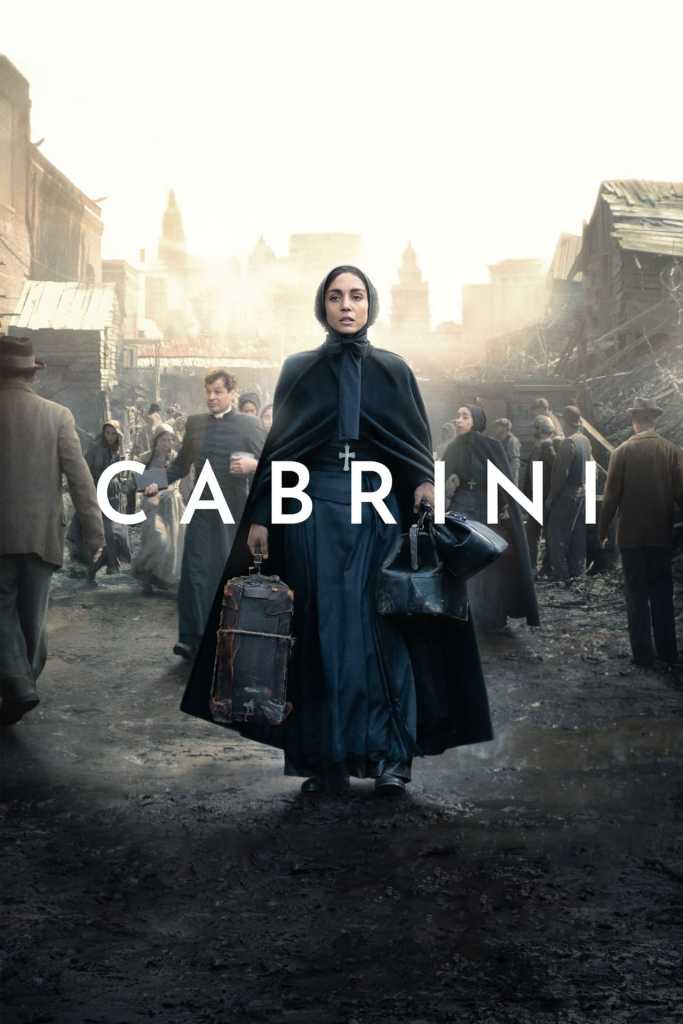
Cabrini is a bio film about Frances Xavier Cabrini, an Italian Catholic nun who lived in the late 19th/early 20th centuries. She made it her life’s work to care for orphans, and when the film opens, she’s already started a successful one in her home area of Lombardy. She wants to do more though, and makes entreaties up the food chain all the way to the Pope in hopes of being sent on a mission to China to do the same there. After much hemming and hawing over the fact that she’s a woman, the Pope grants her request but tasks her to start in America instead of China. Italian immigrants in New York are having an exceedingly hard time, with public opinion against all immigrants in general and Italians specifically at an all-time low. Cabrini goes there with a half dozen of her sisters, and they begin the long hard work to build, at first, an orphanage for the many children whose parents have died in hard labor in the USA and, later, a hospital and other facilities to care for them. At every turn, Cabrini and her crew face adversity, to the point that it got ridiculous after awhile. The movie is more than a bit heavy handed, in fact it hits you over the head (repeatedly) with how cruel all the Americans are to the Italians at every turn. It never lets up. Continuing to hammer it home leads to diminishing returns; it is one step forward, two steps back over and over (and over) again. I can be reminded that Cabrini is a woman living in a man’s world only so many times. Even if it’s a completely true story (I don’t know the answer to that), it gets old, and some creative license could have been used to make for a more interesting telling. One thing that didn’t get old though is the sets and costumes, which should net someone some recognition, as everything looks great. ★★

My Old Ass looked like dumb Gen-Z bullshit, but I gave it a shot based on some great reviews. I should have trusted my gut on this one, it is a total waste of time for anyone over the age of 20. Elliott (a perfect name for the genderfluid generation) is turning 18 and starting to envision a life away from the lake home where she’s always lived with her family. But first, she’s going to spend her last summer sleeping with her girlfriend and getting high on mushrooms with her friends. On one such bender, she starts hallucinating and meets her “older self.” Older Elliot gives her some life advice, which young Elliot doesn’t really want to hear at 18, but one thing the older self insists on is to stay away from Chad. Young Elliot doesn’t even know a Chad, but that changes the next day, when a new guy shows up in the area. Suddenly Elliot starts liking guys for the first time in her life, and questions what it is about this guy that her older self is warning her away from. It doesn’t get any better from there. The ending is wholly predictable and not worth sticking through the entire movie just to see. ★½

I’m striking out across the board today, as my next film isn’t much better, despite coming from a heralded directed (Steve McQueen) and starring A-lister Saoirse Ronan. It takes place in London during World War II, when the city was being heavily bombarded by German air raids. Single mother Rita cares for her young biracial son George, who is ridiculed by others for his mixed ethnicity at a time when that was unheard of. They live in a terraced house with Rita’s father, and have to regularly find shelter during the constant nightly bombings. During the war effort, Rita and most of her fellow women are supporting the war effort by working in factories, meaning she can’t be looking after George during the day. To keep him safe, Rita makes the hard decision to send him off (with many other children) to an evacuation center out in the countryside. At the train station, Rita and George get into a fight, and overcome with guilt, George jumps off the train before it gets too far away. Still, it’s far enough for a young boy to try to get back, so most of the film is George’s perilous journey back to the city. He comes across fellow runaways, bullying (and some friendly) soldiers, and even thieves who try to make use of George’s small size in their nefarious plans. He’ll see a lot of things that kids shouldn’t see, and live through things that no one of any age should have to endure. It should be a really great movie, but I could not connect with it at all. Somehow it never really felt “real.” Maybe a bit too much shock factor and too many leaps of faith that it wants us to buy into. Like Cabrini, it looks great, but it’s just a shiny veneer without substance underneath. ★★

Finally a good film, and in a genre that I often don’t bother with! I give huge props to Strange Darling, because it is sort of a low budget thriller, which I’m usually not into, but it does it well enough that I was really liking it for a long time. In fact, I’m going to guess that it becomes a long-lasting cult film, and that fans of this genre will absolutely love it. The movie is told in 6 chapters, but the chapters are out of order, which is on purpose. The movie starts in the middle, where a woman is fleeing in a car, bleeding heavily from the side of her head, while being pursued by a crazed killer with a long rifle. He causes her to wreck the car and she runs off into the woods. The man continues to give chase, and the woman comes across an older couple’s house and seeks refuge there. But the man will not give up easily. That’s all I can say, and that’s only about the first third of the film. A big surprise hits around this point during a flashback (to the first couple chapters), and while I started to suspect the surprise before it was delivered. It is no less satisfying. The film honestly petered out a bit before the end, but it was still a crazy, wild ride. If you like hack-and-slash thrillers with a high level of gore, this movie is right up your alley. Truly great acting by the lead (Willa Fitzgerald, someone I can’t remember seeing before). A little fun fact: the movie was filmed by actor Giovanni Ribisi, his first film as cinematographer. ★★★½
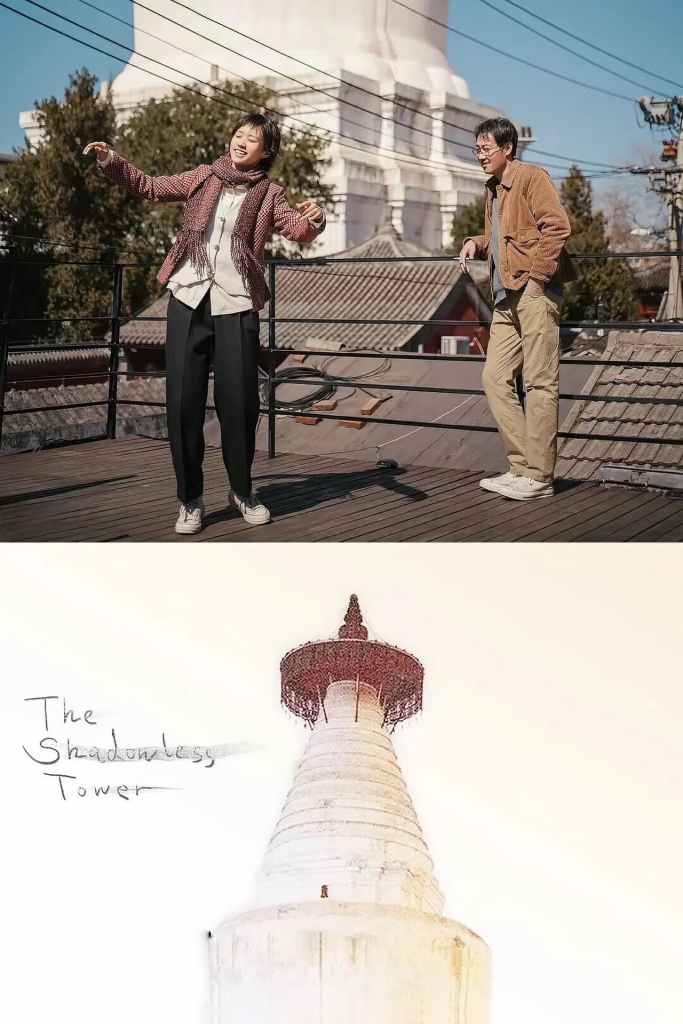
You know you are in for a leisurely paced movie when it doesn’t drop the title card on you until 32 minutes in. That’s the case for The Shadowless Tower, and for viewers like me who love a good introspective Chinese film, it doesn’t get much better. The film follows Gu, a middle-aged man who, despite being a popular food critic, leads a fairly aimless life. When we meet him in the beginning, he is with a group of people at the funeral for his mother. He’s there with his sister, her husband, and their child, Smiley, though you quickly learn that Smiley is actually Gu’s daughter, but she is being raised by Gu’s sister. Much later we learn this is because Gu is divorced, with no mom in the picture, and he knows he isn’t reliable enough to watch over his own daughter; when he does visit her (often late), he is sometimes drunk. At that funeral in the beginning, Gu’s brother-in-law hands him a slip of paper saying there’s the phone number for Gu’s and his sister’s father, a relationship that is obviously strained all around, and tells Gu not to let his sister know about it. The reason for the estrangement doesn’t come until much later in the movie, and the revelation of which explains a lot about Gu’s life and why he feels like he does, so I’m not going to ruin the surprise. Gu spends much of the film obsessing over whether he should call his dad (he dials several times, only to listen to the voice on the other side without saying a word), and spending time with young 20-something Ouyang. She’s a photographer and a free spirit, making playful flirtations with Gu, but we don’t know whether because she likes him or because she’s bored (she alternately introduces him as her boyfriend and her father to other people). This is the kind of movie that doesn’t have any action, and many questions are not answered by the end, it’s just a snapshot of a time in life of a tormented man trying to come to peace with himself. And I loved it all. ★★★★½

 Jons Movie Takes