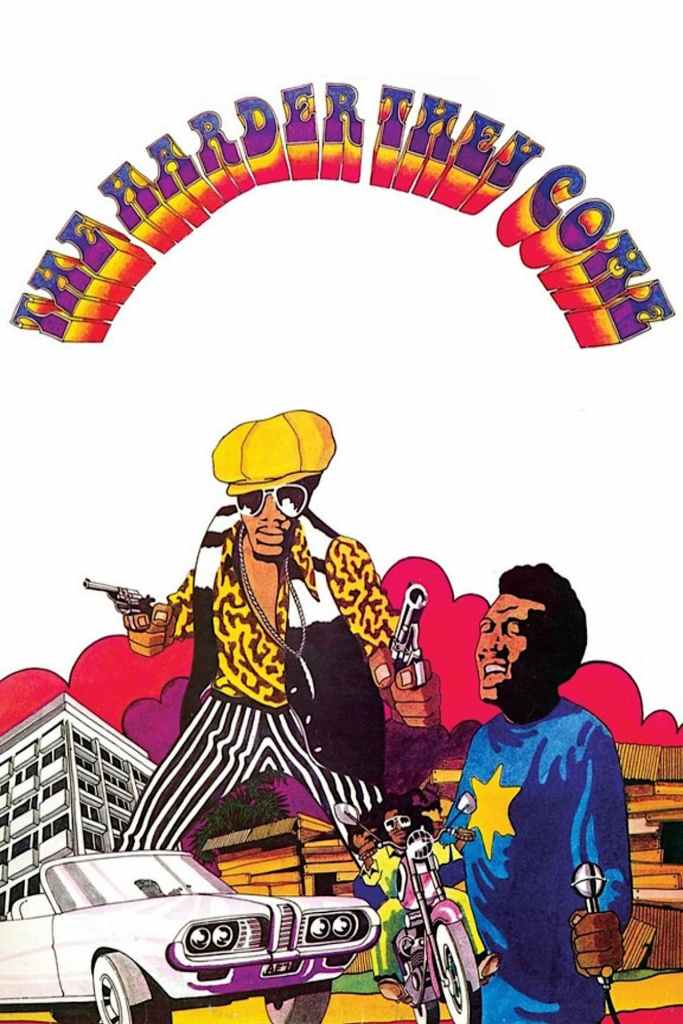
Up today are 5 classic films, some old, some not-so-old. It was going to be a set of American films, but the first one I picked ended up being out of Jamaica, so blew that right off the bat. Well worth it though, because it’s a good one! The Harder They Come (1972) stars music legend Jimmy Cliff as down-and-out Ivan, who has recently returned to Kingston. He’d been living in the countryside with his grandmother but she died, so he’s back to his mother’s house, and finding life in the city to be harder than expected. Ivan can’t find work anywhere, and his dreams of being a star singer are dashed because the local record producer reigns over the music scene with an iron fist. Everything Ivan touches goes to shit. All of his goods are stolen upon landing in Kingston. He starts running drugs, but even in a deadly business like that, he is paid peanuts compared to the worth of the goods he is moving. Even at church, the woman he eyes has been hand picked by the preacher as his next partner. When Ivan tries to get his bike fixed, the repairer claims it as his own. Literally, nothing goes right. When he does finally get a song recorded, the record producer realizes it will be a hit, but gives Ivan a take-it-or-leave it offer of $20 for the track. In the end, Ivan gets tangled up in some bad people related to those drug deals, but when the police descend on him, he realizes he has finally found the acclaim he’d been seeking. A great film dealing with the socially downtrodden and the plight of the poor, with a killer soundtrack provided by Cliff and other reggae and rocksteady groups of the day. Extremely popular in Jamaica, it’s fame in the USA helped explode reggae music in the early 70s. ★★★★
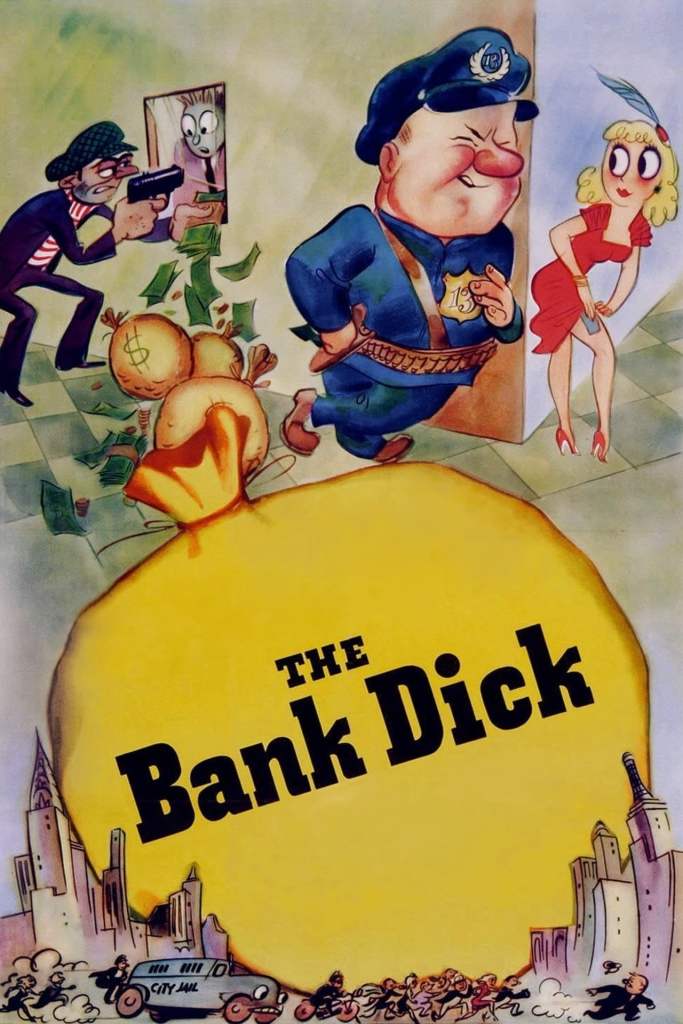
I’ve seen a couple films from “comedic legend” W.C. Fields, but have been very underwhelmed, and this coming from a guy who tends to like old-timey humor. Unfortunately 1940’s The Bank Dick continues that trend; it’s just not funny. Fields plays Egbert Sousé (note the accent mark, but without it, the viewer realizes Egbert is definitely a souse, or drunk), a man whose own family can’t stand him. He spends his days drinking and smoking at the local bar (tended by Shemp Howard of all people, made during his hiatus from the Three Stooges!) and generally not doing anything to contribute to society. That is, until he “accidentally” foils a robbery at the bank. The bank manager offers him a security job on the spot, and Egbert the drunk becomes Egbert the guard. Nothing changes about his life though. The finale deals with Egbert trying to waylay the bank examiner while some funds are missing in a scheme of Egbert’s, just as the bank is getting robbed again. There’s a lot of verbal gags (Fields’ bread and butter) but they have not held up. I can’t say I even chuckled more than a time or two. I laugh hard at the classic Charlie Chaplin films, but this movie is as dry as Egbert is wet. ★½

Unfaithfully Yours is a delightful dark comedy (and by dark, I mean pitch black, with pretty frank depictions of murder) from director Preston Sturges and released in 1948. Rex Harrison plays Alfred, a world-renowned symphony conductor with a young wife, Daphne (Linda Darnell). As many men can be with a beautiful younger wife, Alfred is a bit jealous, and this explodes when he returns from conducting overseas. While away, his brother-in-law August (the great Rudy Vallée) promised to “look after her” in Alfred’s absence, which in August’s terms, means hiring a private investigator to follow her around. The P.I. detailed that Daphne went to Alfred’s secretary Anthony’s hotel room one night, wearing only a nightgown, and was there for 38 minutes. That night, while conducting the orchestra, Alfred fantasizes about 3 scenarios regarding his wife. During the first musical number, a mischievous flighty tune, Alfred envisions the perfect crime, where he murders Daphne but sets it up to look like Anthony did it. In the second, a slower more thought-provoking musical number, Alfred writes Daphne a big check to go live her life without him. In the third, a fiery, tempestuous Tchaikovsky piece, Alfred imagines playing Russian roulette with the two lovers, but ultimately comes out on the bottom. Alfred tries to go with door # 1, but finds that in real life, a murder is a whole lot harder to pull off, to great comedic effect. It’s a rip-roaring, hilarious good time throughout. ★★★★½
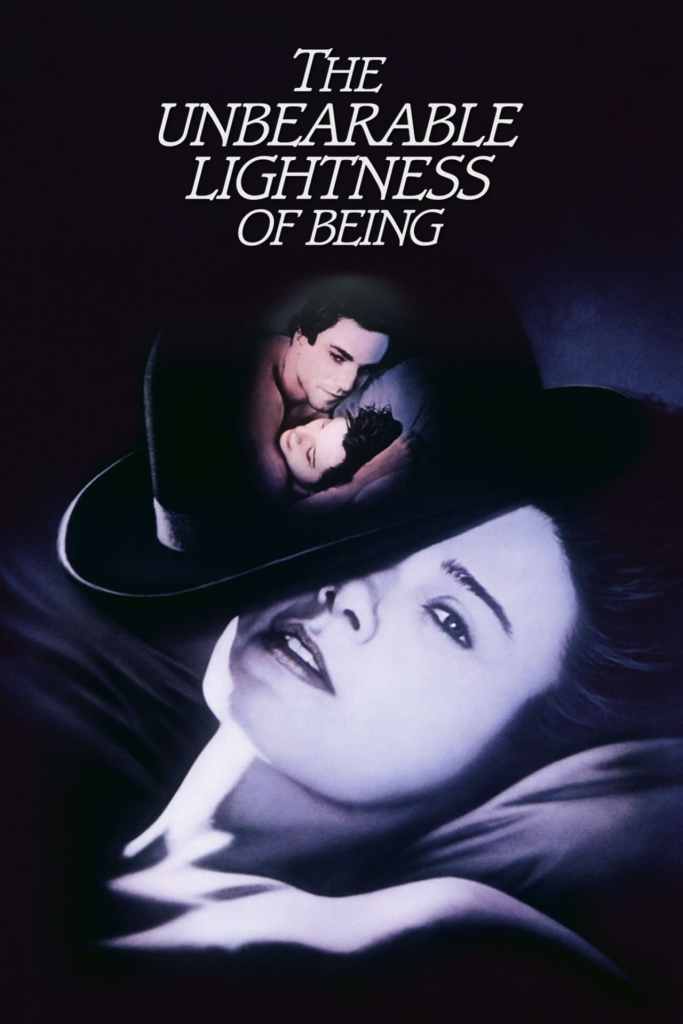
I really want to like The Unbearable Lightness of Being more. It’s good, but I didn’t get “stellar” vibes from it, despite a great cast including younger versions of Juliette Binoche and Daniel Day-Lewis. Released in 1988 and taking place 20 years earlier in Prague, surgeon Tomas is a huge womanizer. Somehow his trademark opening line of “Take your clothes off,” seems to work with just about every woman. He always returns to Sabina though, an artist who seems to “get him” as he puts it. She has an eye for more than just art, and really seems to see Tomas as more than just a philanderer. Tomas may have to find room for another girl though, because he gets swept off his feet one day by the young and beautiful Tereza. A whirlwind relationship leads to marriage, but putting a ring on his finger won’t settle Tomas’s wandering eye. He continues to see Sabina, which initially upsets Tereza until she gets to know the mistress better, and eventually the two become good friends. However, their world is about to crash down. In the dark of night one evening in 1968, Soviet Russia invades Czechoslovakia. Tomas, being a well known surgeon with a highly valued opinion, has been critical of the communist government to this point, so for safety, he and Tereza flee to Switzerland. If Tereza thinks this will be a fresh start, those hopes are dashed when Tomas starts his tomcat ways again. She leaves him, returning to Prague despite knowing the restrictions she’ll face there. Tomas, despite his womanizing ways, truly does love Tereza, and follows her there, knowing the repercussions he could face. There’s a lot going on here and much of it is really good, but the film is hurt by long, seemingly unneeded erotic scenes between Tereza and Sabina, Sabina and her short-time boyfriend, etc. I don’t see how any of it adds to the plot, and the film could have been better served by cutting down on its long (3 hour) runtime. ★★★
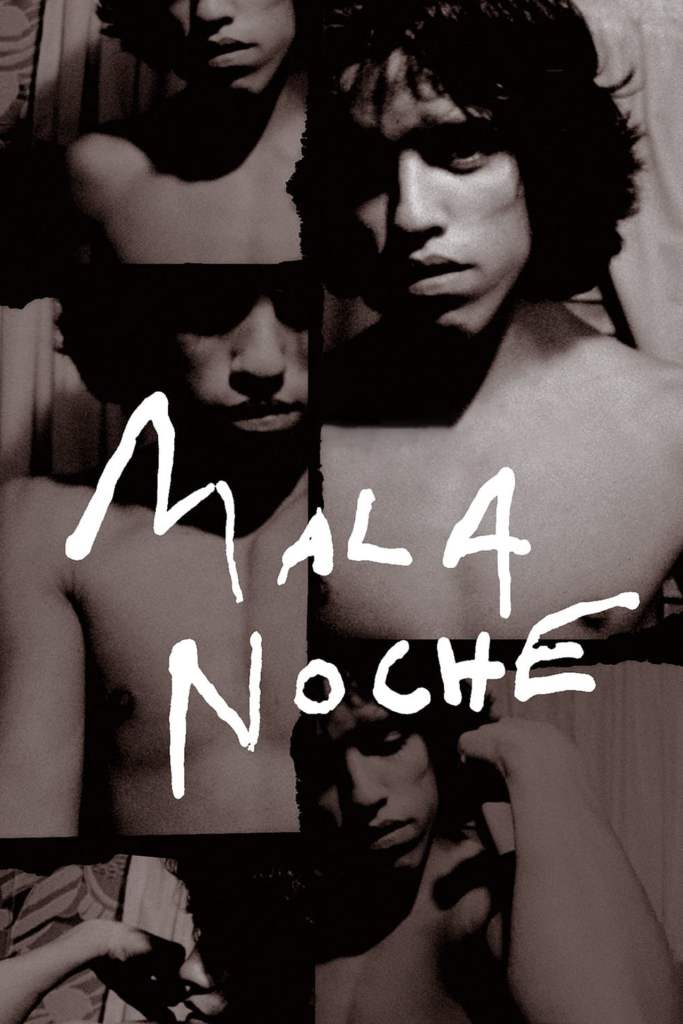
Director Gus Van Sant is best known for Drugstore Cowboy, My Own Private Idaho, and my personal favorite, Good Will Hunting, but before all those hits came his first film, 1988’s Mala Noche. I’ve seen a lot of “first films” and they often aren’t great. Usually low budget affairs with no-name actors (and this film has both measuring sticks), a director’s first movie is usually just a stepping stone. This movie, though, is quite good, and I was surprised how engrossed into it I was by the end. The protagonist is a gay convenience store clerk named Walt. Walt is completely enamored by teenage Mexican immigrant Johnny, but Johnny isn’t having it. Walt tries every trick in the book, and admits to the viewer via narration that he is aware that he has all the power as a privileged white man trying to woo an illegal immigrant who has no money and a real fear of being deported if apprehended, but Walt continues to try to beguile, threaten, or cajole Johnny into sleeping with him. Johnny continually rebuffs him, leaving Walt “no other option” but to sleep with Johnny’s friend Roberto instead, theorizing it is “as close as he’s going to get.” Roberto doesn’t really come off as gay (neither is Johnny, but Walt doesn’t care), always wanting to be “on top” and sleep with the lights off, but he’ll take Walt’s money and a place to sleep at night. While Walt and Roberto are in this relationship, Walt is still trying to woo Johnny, until one day Johnny goes missing. Rumors abound that he went on vacation or was arrested and deported, but no one knows. The film leads to an explosive ending. When the movie started I didn’t think I’d get into it, as it gives off creepster vibes with the older Walt preying on teenage immigrants, but Walt convinces himself (and in a way, us too) that he is aware how the situation looks, but insists it is anything but. Walt is really in love with Johnny, or at least in lust, and cannot think about anything else. And Roberto is exploiting Walt as much as Walt is trying to exploit Johnny. Shot on a shoestring budget ($25k) it has the feel of a film from an established director who knows what he wants to show, not from a newcomer. ★★★★
- TV series recently watched: Kite Man (season 1), The Walking Dead: Daryl Dixon (season 2), Only Murders in the Building (season 4)
- Book currently reading: Downfall by Jean Rabe

 Jons Movie Takes
One thought on “Quick takes on 5 classic films”