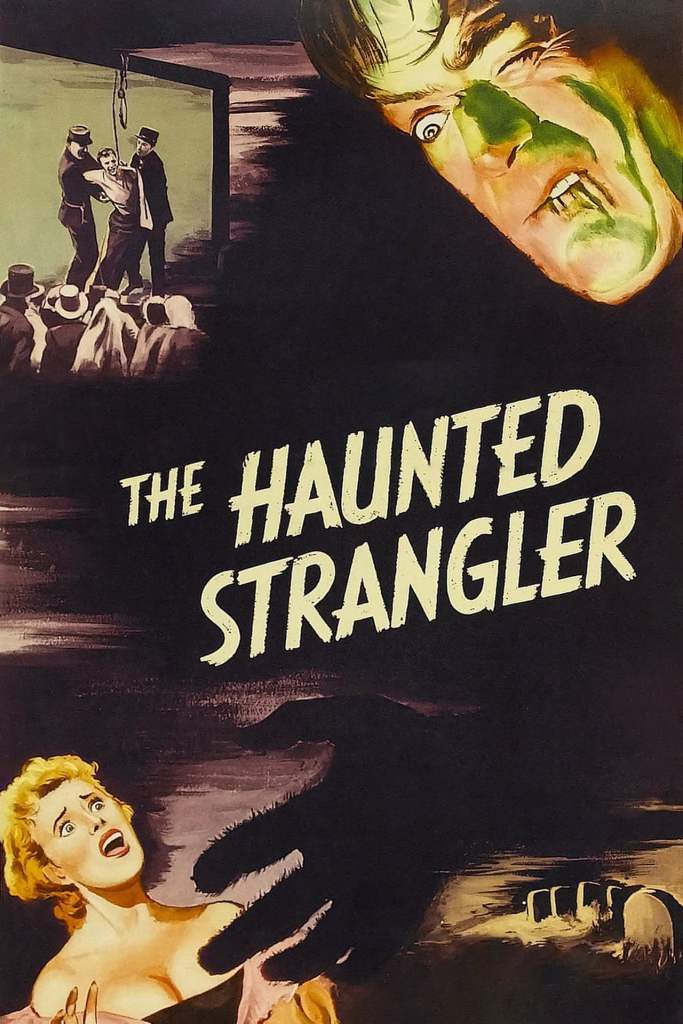
In honor of Halloween, I’ve got a series of classic horror and/or sci-fi films, starting with 4 from a British film producer known for his contributions to the genre, Richard Gordon, plus one from his brother Alex. These first 5 are all shorter films, most not much more than an hour and none reaching 90 minutes, and they were all cranked out between 1958-1959. First up is The Haunted Strangler, starring Boris Karloff and directed by Robert Day. Based on a screenplay written specifically for Karloff, it begins in 1860 as a man, Edward Styles, is marched to the gallows. He is being hanged for the murder of 5 women who were partially strangled and stabbed to death. Edward, who lacks control of one arm, is the obviously guilty party, but he dies professing his innocence. Twenty years later, a novelist, James Rankin (Karloff) is looking into the old case and has become convinced that Edward was innocent, and James is hunting the real killer. His prime suspect becomes Tennant, a doctor who frequented the local cabaret/bar where the women were targeted. Tennant also performed the autopsy on Edward after the man’s hanging, and when Rankin exhumes Edward’s body, sure enough they find the murder weapon, a surgeon’s knife used in the autopsy. But the trail of Tennant turns cold, as he was admitted to a local insane asylum, before running off with a nurse, purportedly to Australia. However, there’s more to this story that meets the eye, and the big twist that comes in the final third of the film is fantastic. Great story with some grisly thrills for its day. ★★★★
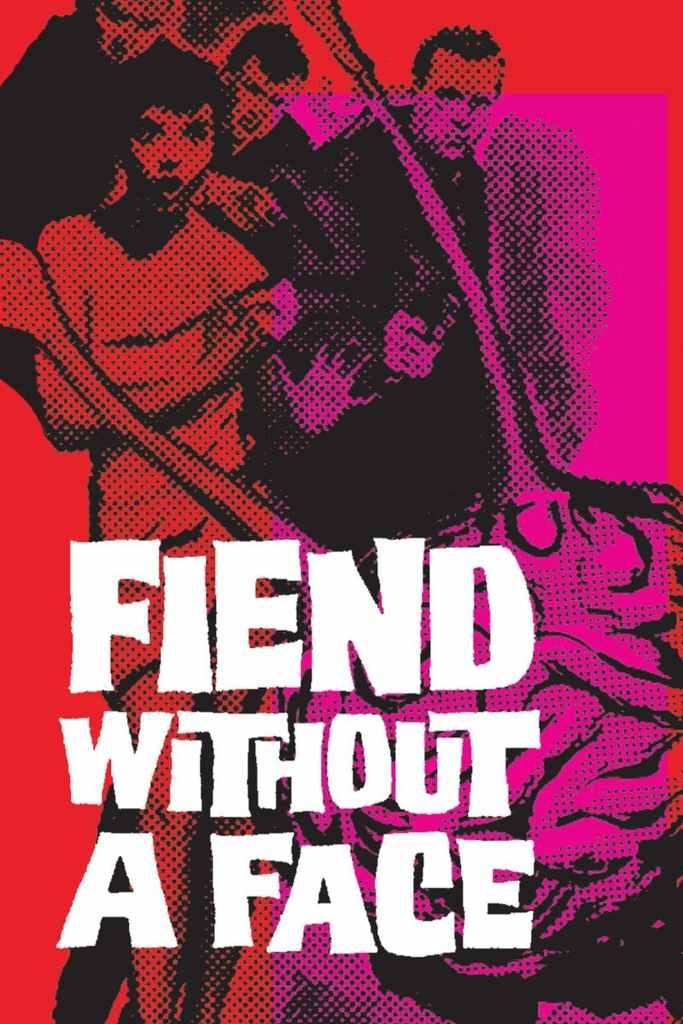
Fiend Without a Face was released with the above film as a double feature by MGM. As many sci-fi films of this era turned, it looked to nuclear power as an inspiration for bad stuff, at least, when left in the hands of bad people. At a US air force base in Canada, new nuclear power is running a radar installation, but something is amiss. A couple local people are found dead, with their brains and spinal cords sucked out. Major Jeff Cummings is looking into it, and his investigation has a lot of false starts until finally landing on scientist R.E. Walgate. Walgate wrote some books dealing with moving objects with his mind, and turns out he has been siphoning off some of that nuclear power to further his tests, which ultimately went awry. He created invisible beings who draw their own nuclear power, and they hunger for brains for growth and reproduction. It isn’t until the end of the movie when the nuclear juice is turned up enough that we can finally see these gruesome fiends, and they are terrifying (by 1958 standards). Lots of bloody gore abounds once the military turns their guns on the floating brains, which spew blood in fountains when shot. Not a great film, and some rough acting (several times actors get caught looking at the camera) but it is good pulp for fans of the genre. ★★½
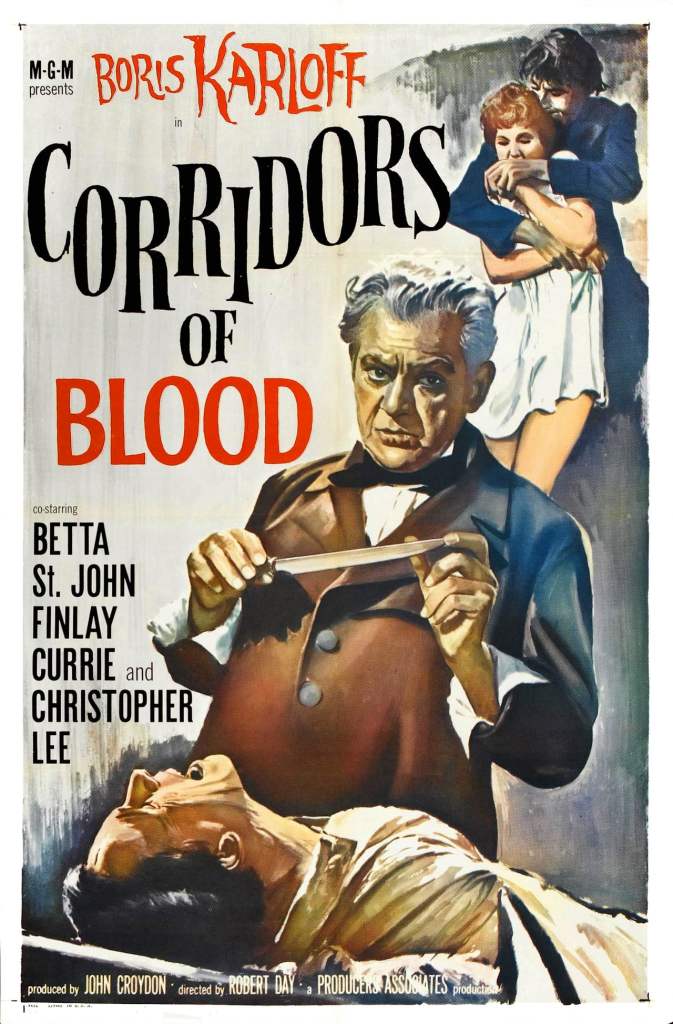
Director Robert Day and actor Boris Karloff returned together for Corridors of Blood, dealing with a doctor, Thomas Bolton (Karloff) trying to find a way to perform surgery without causing pain. In a time before anesthesia, patients would have to be strapped down during surgery, and everything from minor procedures to amputations were done while the patient was awake and aware. Bolton is trying to find a solution. When he finally finds the right mix of nitrous oxide and sets up a display on a patient to show off his new tactics, his picked subject dies of a sudden stroke just before the surgery. In a panic, Bolton picks a new patient, but the new guy is a much bigger male. Obviously today we know bigger dudes will need stronger meds, but Bolton is unaware and goes through with it, leading to the guy waking up in the middle of the procedure. This gets Bolton laughed out of the room by the other doctors and his license to practice revoked. He continues his experiments at home, but in the meantime, has become addicted to his own medicines, including opium. No longer in the lab and cut off from getting ingredients, Bolton turns to the black market, and becomes the subject of blackmail by some ne’er-do-wells (led by a young Christopher Lee of all people, Saruman the White!), using him to sign off of fake death certificates to cover up their nefarious dealings. It’s a cool psychological thriller, with grisly (for its day) showings of surgeries and bloody aftermaths. ★★★
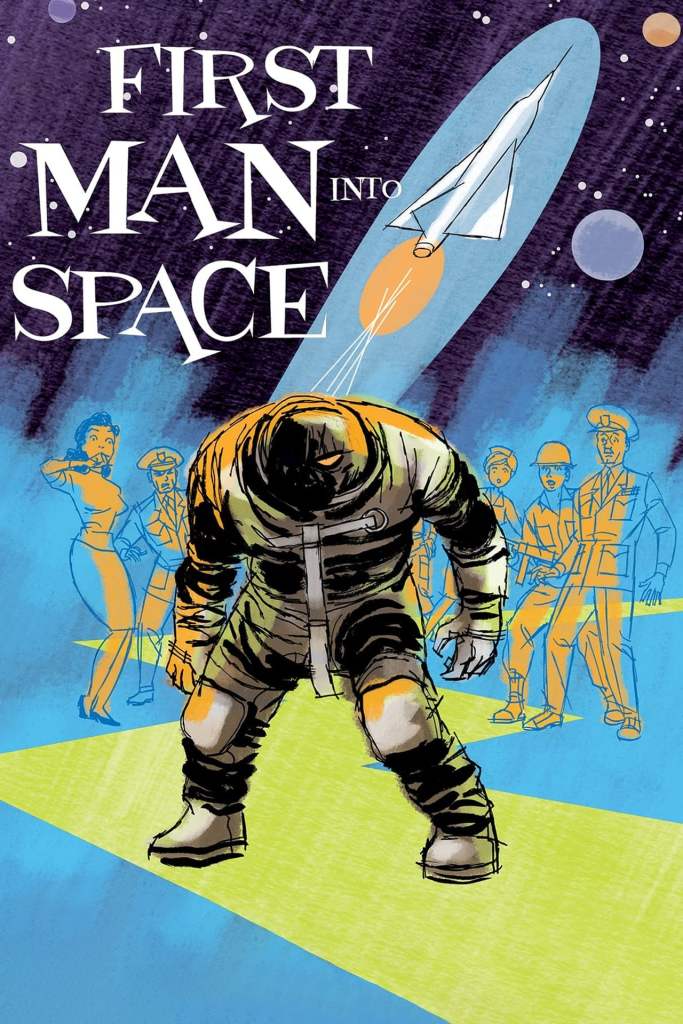
First Man Into Space plays on the fears about the effects space flight would have on man. Released in 1959, 2 years before the first manned craft cleared our atmosphere, the film shows the US Navy performing tests with sending a person right up to the edge of space (“100 miles,” obviously a lot further than we now know). One of the heads of the team is Chuck Prescott, whose brother Dan is the pilot. On the first test, Dan is thrilled to be so close to open space, and tells his girlfriend that he dreams of being the first person to cross that threshold. On the second test, instead of turning around when told, Dan punches the throttle and goes “250 miles” up into space. Chuck and those on the ground lose contact with him, but shortly afterwards his parachute is picked up coming back to Earth. Chuck goes to the site and finds space dust covering the spacecraft, but no sign of Dan. However, cattle in the area start turning up dead, and we soon learn that space dust has turned Dan into a disfigured monster. Chuck needs to find a way to stop his brother, or kill him if need be. It’s a silly movie when looked through a modern lens, but it goes to show how little we knew back then. ★★
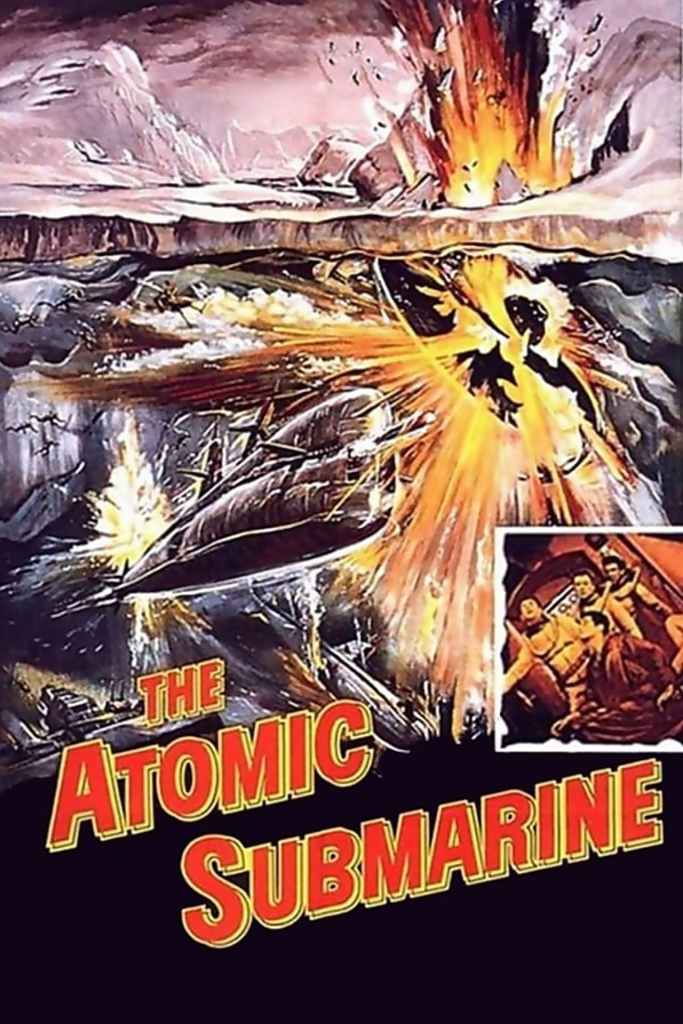
The Atomic Submarine is another “what if” movie that hasn’t held up under modern scrutiny. It imagines a time when the military and commercial passenger boats and submarines would traverse the Northern Passage as a quick way of getting around. A few boats have recently gone missing though, including a passenger submarine carrying many civilians. The US military sends a state-of-the-art nuclear sub named Tigershark up to investigate. What they find is unexpected, and yet somehow the crew doesn’t bat an eye. It’s an alien UFO, traversing the underwater byways, sinking ships. The men on the Tigershark are able to map out its path, noticing that it always returns to the North Pole to re-energize. Thus, they stake out a place and wait for it. However, even surprise doesn’t give them the upper hand, as missiles have no effect, and when they ram it in a possible suicide mission, all they seem to do is wound it temporarily. They’ll need to resort to drastic measures before the creature can leave the Earth and gather its alien friends to come do more harm. This film is pure cheese with every 50’s cliche in the book, with nonsensical dialogue and even worse acting. Why does everyone on a nuclear sub in the middle of nowhere carry a gun? Is it really “our last best hope” when the movie still has 30 minutes to go? ★
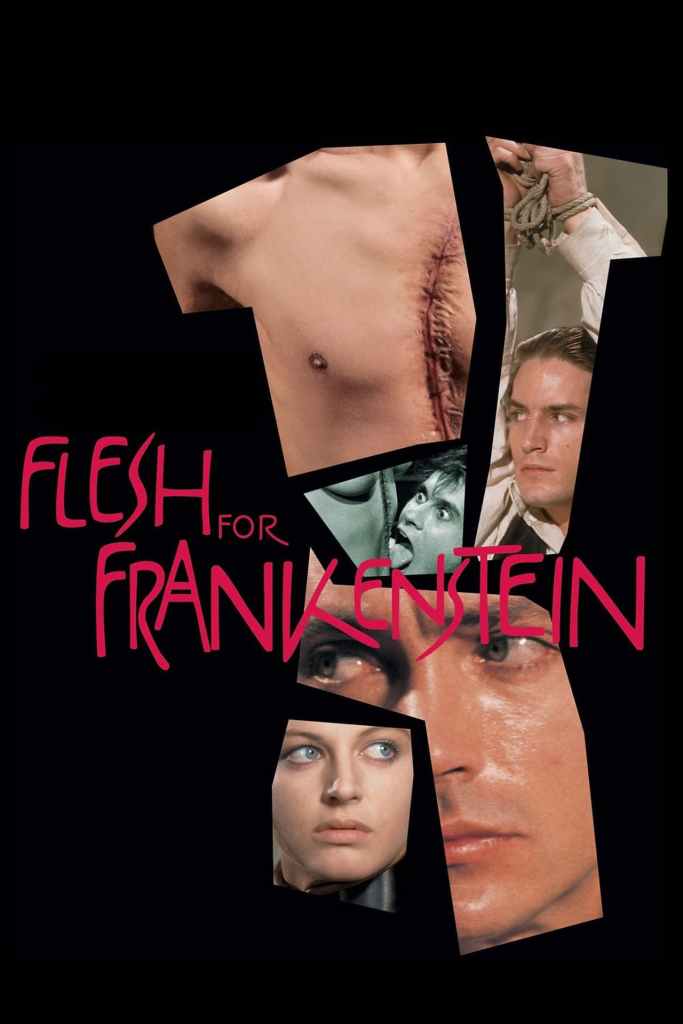
Flesh for Frankenstein (released in 1973 in the USA as Andy Warhol’s Frankenstein) was directed by Warhol collaborator Paul Morrissey and stars Joe Dallesandro and a young 20-something Udo Kier. Kier plays Baron von Frankenstein, who has been looking to create a race of zombies who will obey his every command. He wants to create the perfect man and woman, who will mate to produce offspring who see him as god, but has been having a hard time finding the perfect male “head” from a man with strong sexual energy. In his pursuits, he has been ignoring his wife the Baroness and their 2 kids, whom the Baron sees as weak and unworthy of his legacy. When the Baron finally picks the male target, a man coming out of a brothel, he accidentally picks the wrong guy (an effeminate man who was only visiting with his friend). The guy he really wants for his experiments is Nicholas (Dallesandro), who sleeps with any girl that comes across his path, including the Baron’s sexually frustrated wife. The Baron realizes his mistake too late, leading to a gross correction later. The film is not great, but very entertaining if you can stomach it. It was rated X for sex, nudity, and violence, and there’s lots of disturbing stuff, including the revelation later in the film that the Baron and Baroness are siblings as well as married, and a scene of necrophilia. The director was definitely going for shock value all over the place, and the acting is over-the-top in a B movie kind of way, but there’s some interesting themes involving power and exploitation. Should I hate myself if I liked the film more than I should? ★★★½
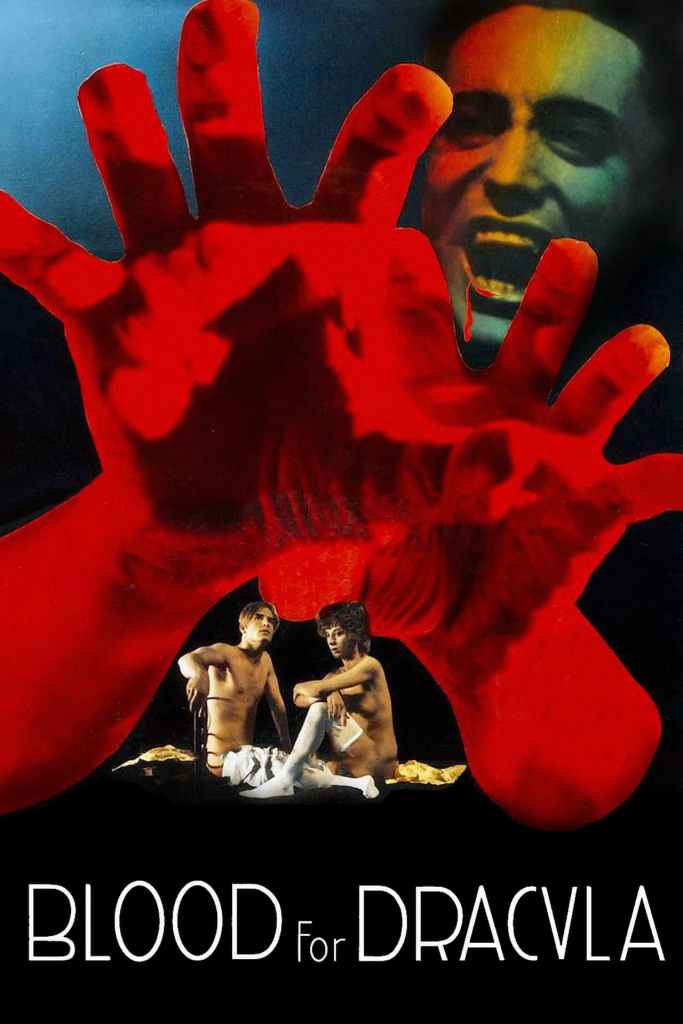
Morrissey followed up the next year with Blood for Dracula (“Andy Warhol’s Dracula” in USA) with the same 2 leads. Didn’t get into this one nearly as much, and it comes off as just kind of silly, and maybe the last one was supposed to be silly too, and I didn’t catch it. Very noticeable this time though. Dracula (Kier) is needing fresh virgin blood to stay “alive,” but in Romania, the townsfolk have learned to stay away. His servant proposes going to Italy, where fear of the church may keep more virgins around. They end up at the estate of the di Fiore family (and lo! Celebrated Italian director Vittorio de Sica is spotted as the patriarch of the di Fiore family; there’s also a blink-or-you’ll miss it cameo by director Roman Polanski in a tavern), who has 4 daughters. For the rest of the film, Dracula seduces the young women one by one, but unfortunately for him, his first two victims are the middle daughters, and they’ve been banging the stableboy (Dallesandro). Drinking their blood makes Dracula sick and weaker, and so he continues his search, but the stableboy will be onto him before too long. This film is really a hot mess, and the whole Dracula tale just seems to be a venue in order to show lots of women taking their clothes off for him. Completely forgettable and not worth wasting your time on. ★

 Jons Movie Takes
One thought on “Quick takes on 7 classic horror films”