
As a self professed movie lover, I’m ashamed to admit there was a gaping hole in my viewing history, and it’s time to rectify that. I’ve seen a lot of Martin Scorsese’s films, especially his “newer” stuff from the last 25-30 years, but I’d only seen a handful of his earlier stuff. We’re starting with 1973’s Mean Streets, his breakout, and third film overall. Harvey Keitel plays Charlie, a man in New York trying to get into business with his mafia uncle Giovanni. Charlie has a soft spot for Johnny Boy (Robert De Niro), a young man with a crazy streak who owes money to every loan shark in the area. Charlie keeps bailing him out, but that leash is getting long. For a long time in the movie, that’s all we know as a viewer; for the most part, the film is light on plot but heavy on substance, and if the substance wasn’t so damn good, it wouldn’t be a great film, but damn, the movie is still extremely entertaining. We see Charlie and his friends busting heads around town and doing all kinds of shady stuff. When the plot finally gets going, we learn that part of Charlie’s care of Johnny Boy comes from Charlie’s relationship with Johnny’s cousin Teresa, a relationship that Giovanni does not approve of. The overarching theme though deals with Charlie’s faith. He is devoutly Catholic, and thinks he may be able to avoid hell in the afterlife if he can save Johnny. But those loan sharks will eventually get tired of getting put off. Great film that oozes a dark, seedy feel throughout. ★★★★½
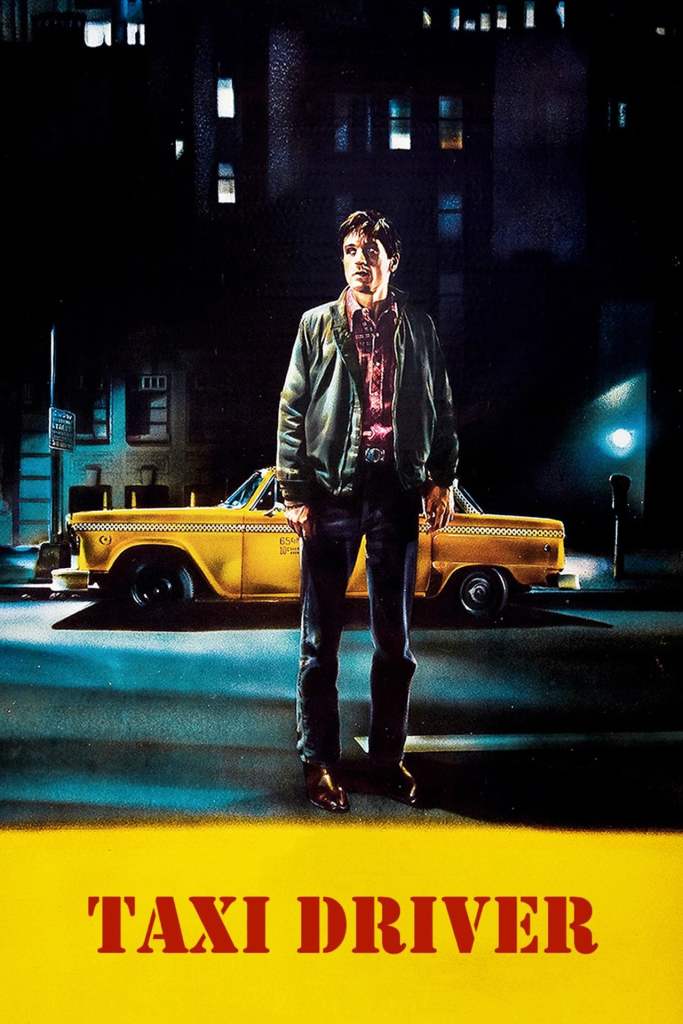
Mean Streets got a lot of buzz, but it was Taxi Driver that made Scorsese (and De Niro) a star. De Niro plays Travis Bickle, a man with severe insomnia. Since he’s not sleeping at night, he decides to start driving a taxi, as he’s up anyway, “so might as well get paid for it.” The people he comes across in the middle of the night are a wide range of people, from business people to pimps and prostitutes and everyone in between. From the beginning, Travis shows a disdain for the “scum of the earth” and as the film goes along, grows increasingly disgusted by the dregs of society. First, Travis falls for a woman named Betsy (Cybill Shepherd), but when he takes her to a dirty movie, she gets pissed and storms out, and doesn’t see him again. For a time, Travis stalks her and hatches a plan to assassinate the presidential nominee whose campaign Betsy works for, but when that falls through, Travis sets himself a new goal. He knows of a 12-year-old prostitute (played by a young Jodie Foster) and decides to save her from her pimp. The whole thing is a grisly and at times disturbing journey as Travis descends into madness from sleep deprivation, and De Niro plays it to a T. For you younger kids, this film had lots of notoriety a couple years after release when John Hinckley Jr attempted to assassinate President Reagan, because he (John) was obsessed with Jodie Foster and decided to reenact Travis in the movie to get her attention. ★★★★
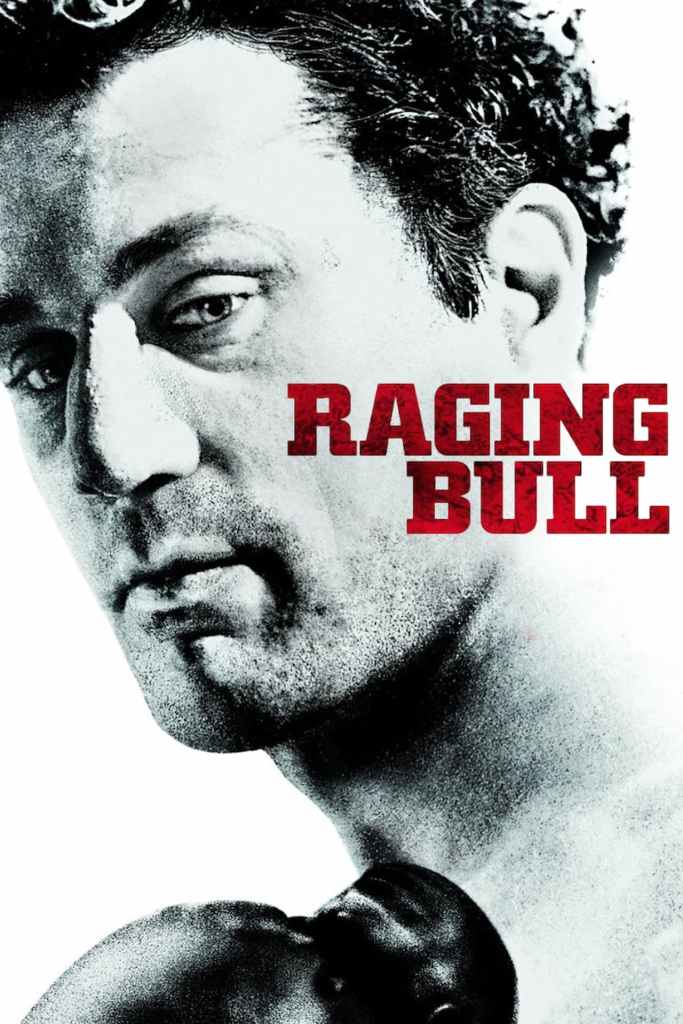
Raging Bull, released in 1980, is considered one of the greatest sports movies of all time. Despite a lukewarm reception when it came out, it has risen in esteem in the ensuing decades, so I’ve been excited to see if it lived up to the reputation. Based on the life of boxer Jake LaMotta, it starts in his early career in the early 1940s. Jake (De Niro) is a fantastic middleweight boxer, but he refuses to take money from the mafia, despite the wishes of his brother and trainer Joey LaMotta (Joe Pesci, in his first big role). Without the mafia’s influence, Jake is never given a chance at a title bout, despite some great wins, including against previously undefeated Sugar Ray Robinson in 1943. Despite his success in the ring, Jake’s personal life is a mess. He leaves his first wife for 15-year-old Vikki (marrying her after she becomes pregnant at 16), and then goes on to rule his house with an iron fist. A jealous man with a mean streak, Jake slaps Vikki around whenever he thinks men are paying too much attention to her. As his personal life breaks down, so does his professional, so that the final 20 minutes of the film, the coda as it comes off, shows where Jake’s life has taken him 10-15 years later: an overweight has-been holding on to a legacy that seems hell bent on forgetting him. It’s a violent film, and not just inside the ring (which is, by itself, extremely violent, much harsher looking than the Rocky movies, for example). The story has more narrative than the first 2 films above, maybe because it is based on a real person who lived larger-than-life. To date, Robert De Niro’s only Oscar win for a leading role. ★★★★★
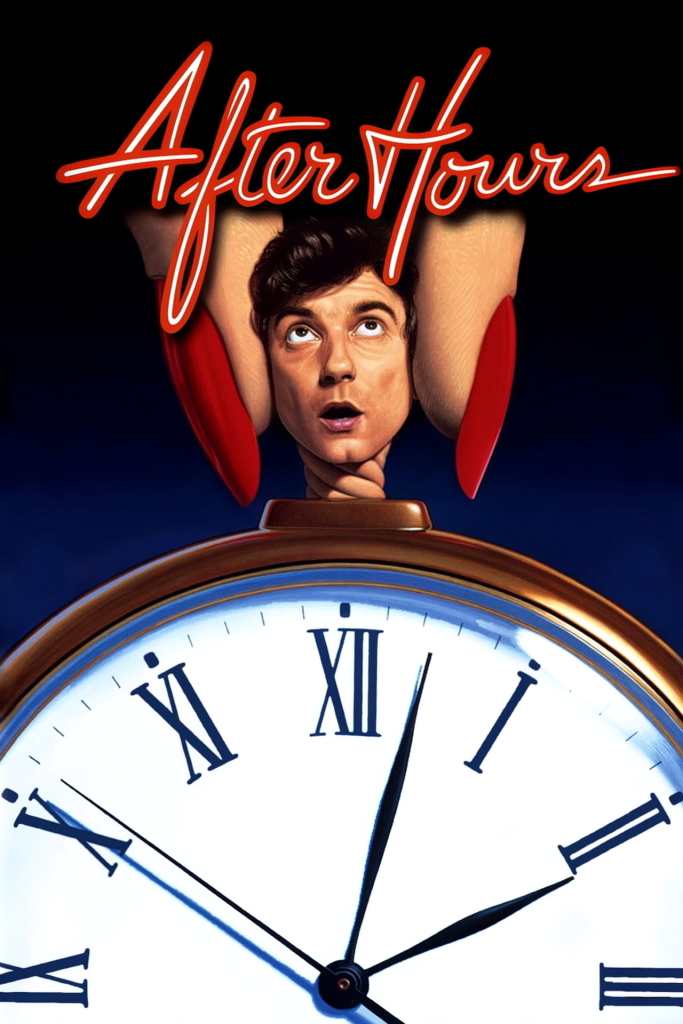
After Hours is a completely different film from those above. No strong alpha male character; in fact, the main character Paul (Griffin Dunne) can’t seem to accomplish anything on his own. Paul works in a mind-numbingly boring job but gets excitement one night when he meets Marcy in a cafe. He is reading a copy of Henry Miller’s Tropic of Cancer (not a great book in my opinion) when they meet, and it is fitting, because what follows over 1 long night for Paul is an almost surreal sequence of events, including lots of crazy stuff that could come right out of a Henry Miller novel. On a night that Paul will never forget (if he survives), he will witness suicides and murders, go to a mohawk nightclub, fight with a taxi driver with a vendetta, become the object of a desire of two unhinged women (including a lonely waitress with relationship issues), and is mistaken for both a burglar and as a john picking up a gay prostitute. And all that’s just the tip of the iceberg! But unlike Miller’s book, I loved this film. It is crazy, zany, thrilling, funny, and edited brilliantly so that I was literally sitting on the edge of my seat through most of the film. The breakneck pace unfortunately can’t hold forever, and the film does peter out before the end credits roll, but otherwise it is a near-perfect film. ★★★★½
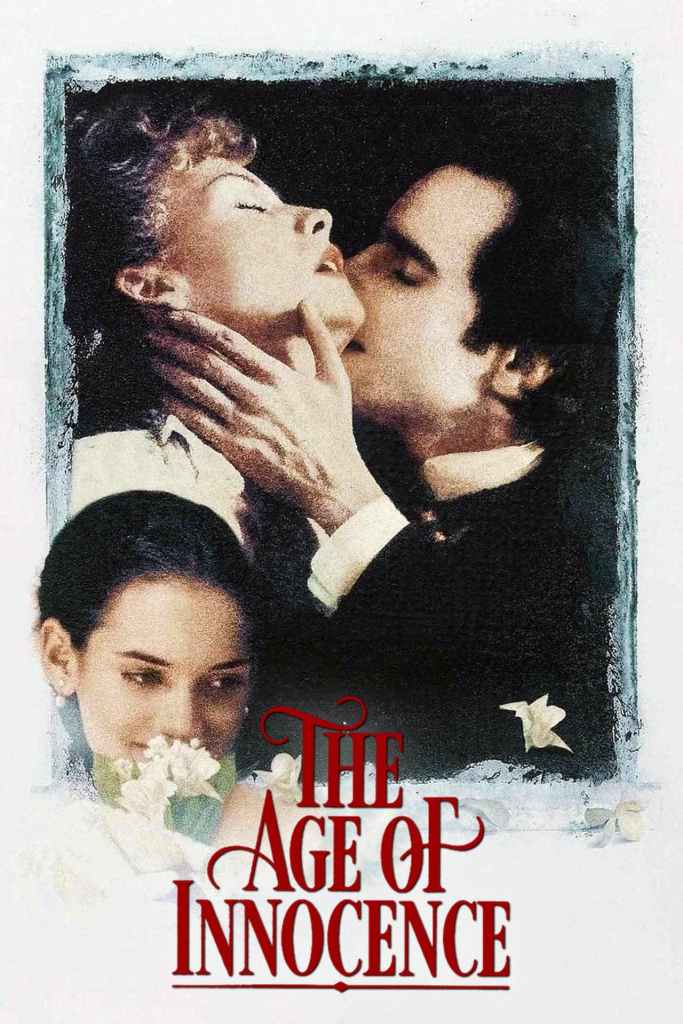
If the above film seems to draw inspiration from a book I didn’t like, this one is straight-up based on a book I did. The Age of Innocence is a faithful adaptation of the Pulitzer Prize winning novel by Edith Wharton, starring Daniel Day-Lewis, Michelle Pfeiffer, and Winona Ryder. In the later 19th century New York, society and your place in it is everything. Newland is a respectable young lawyer and is ready to announce his engagement to the demure and respectable May Welland, when her cousin, the Countess Ellen Olenska, returns to the city. There are whispers that Ellen does not belong in polite society, as she is fleeing a marriage in Europe. It doesn’t matter that she has good reason to do so (her husband slept with anything that moved); divorce is legally allowed but will still get you shunned by your neighbors. Newland is almost immediately swept off his feet by the free-thinking and devil-may-care attitude that Ellen displays, and begins to secretly court her even as his engagement to May is announced. The book plays out with this sort-of torrid affair, where Newland and Ellen go right up to the edge of scandal, but never quite cross over it, whether because of his values or her fear of hurting her cousin May. There’s lots of talk about what is and what is not allowed in society, with Newland continuing to test those limits. The film captures the feel of the book, which is completely opposite of the frenetic pace of the above Scorsese films. Still, I enjoyed the book a lot more, though the film is visually captivating and extremely well acted. ★★★½
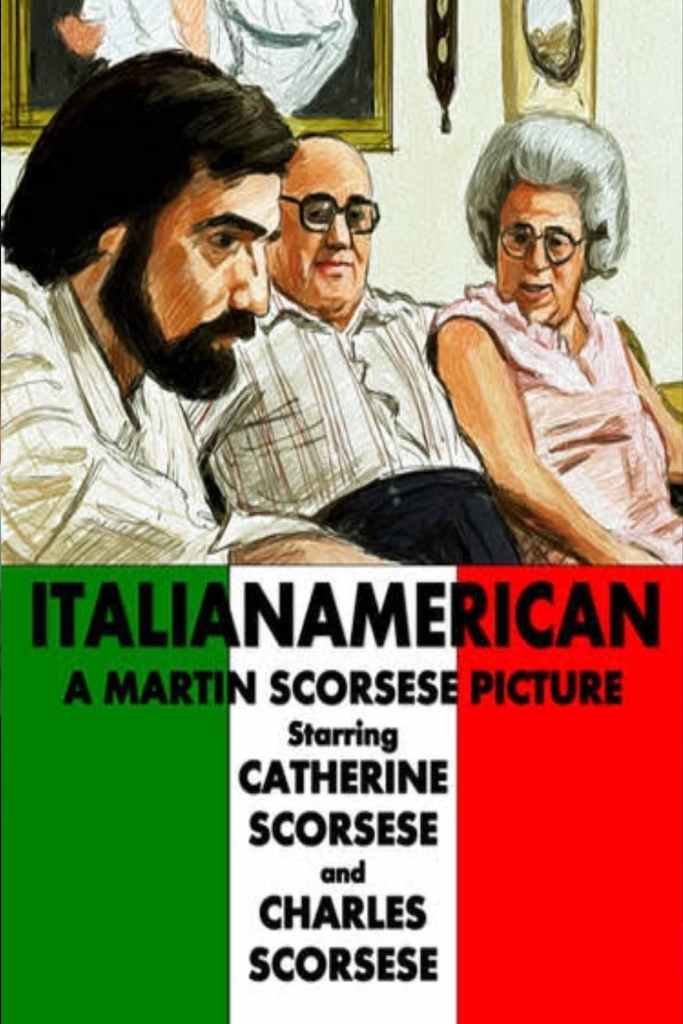
Bonus film: Italianamerican, a 1974 doc made after Scorsese’s first big hit in Mean Streets. Just about 45 minutes, it is Martin sitting down and interviewing his parents Charlie and Catherine Scorsese, talking about their experiences growing up in a first- and second-generation Italian neighborhood in New York, the sense of camaraderie, the struggles, all of it. It’s a heart-warming take and reminds you how little you may know about your own parents’ lives before you came along. And it’s funny, with the banter between the 40-year-married couple and their admonishments to their 30-something son (“this better not end up in the film!”). The camera doesn’t stop, even when Catherine has to get up every once in awhile to check on her sauce on the stove in the kitchen (the recipe for which rolls with the credits at the end!). I saw a lot of my own parents in it, the sense of storytelling, growing up with a ton of people in a small house, all of those things that are part of a bygone America. Great little film worth checking out.
- TV series recently watched: Presumed Innocent (season 1), Slow Horses (season 4)
- Book currently reading: The Path of Daggers by Robert Jordan

 Jons Movie Takes