Italian director Pier Paolo Pasolini was a complicated guy. His movies are often critically acclaimed but many faced a lot of censorship, and his outspoken views rankled many, probably what led to his abduction, torture, and murder in 1975 at the age of 53. I’ve seen a number of his movies but recently picked up the excellent Criterion box set, so I’ve got 7 films from him today, all dating from the 1960s.
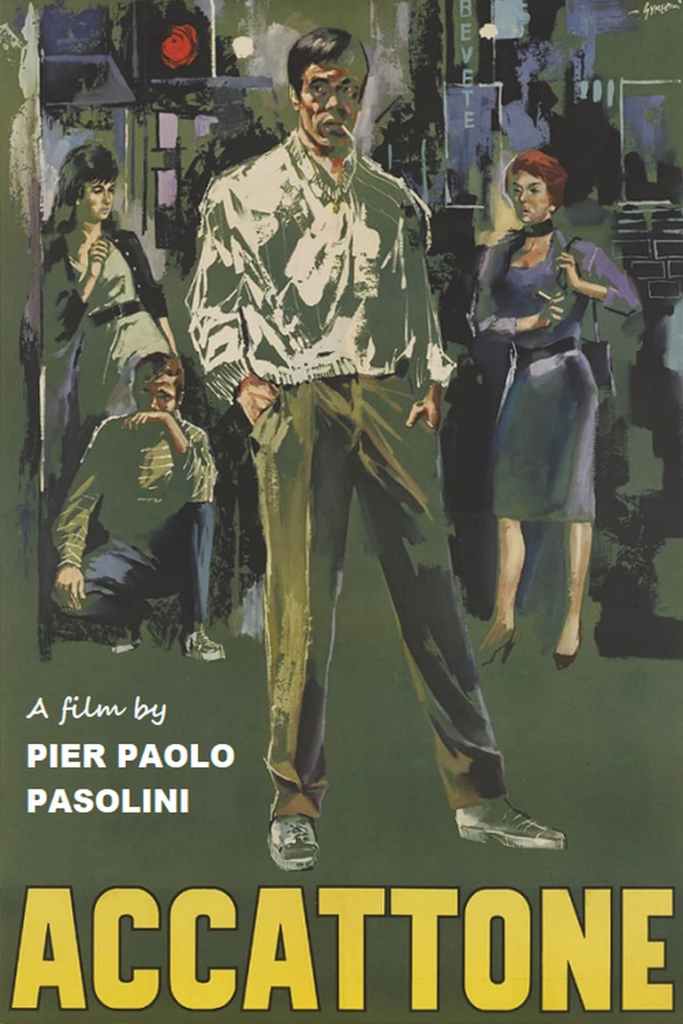
Pasolini was credited as writer on a handful of films in the ‘50s, but Accattone was his directorial debut in 1961. Accattone is the nickname of Vittorio, a street level pimp in Rome. He and his buddies are always up to no good, refusing to work and even belittling Accattone’s little brother for holding a job. Thus, they are always looking for the latest scam, but never really getting anywhere in doing so. Accattone’s income is mostly from pimping out a young woman, Maddalena, but after she is attacked one evening by some potential customers, it is she who is jailed for false testimony after her attackers are able to come up with some fake alibis. This takes away Accattone’s source of income, and leaves him broke. After trying to weasel money out of his abandoned wife, who lives in a slum with her father and her and Accattone’s small son, Accattone decides to find himself a new prostitute to bankroll him. His target is Stella, a pretty, young, innocent woman, but unfortunately for Accattone, he falls in love with her himself. Things don’t get any better for our anti-hero, leading to his downfall in the end. It’s hard to root for a scumbag but Pasolini makes it easy, as Accattone is so darn likable, even as he commits heinous acts. The director’s views are clear throughout, being very anti-capitalist and pro-humanism, and he delivers a starkly bleak film about those on the fringes of society. ★★★★½
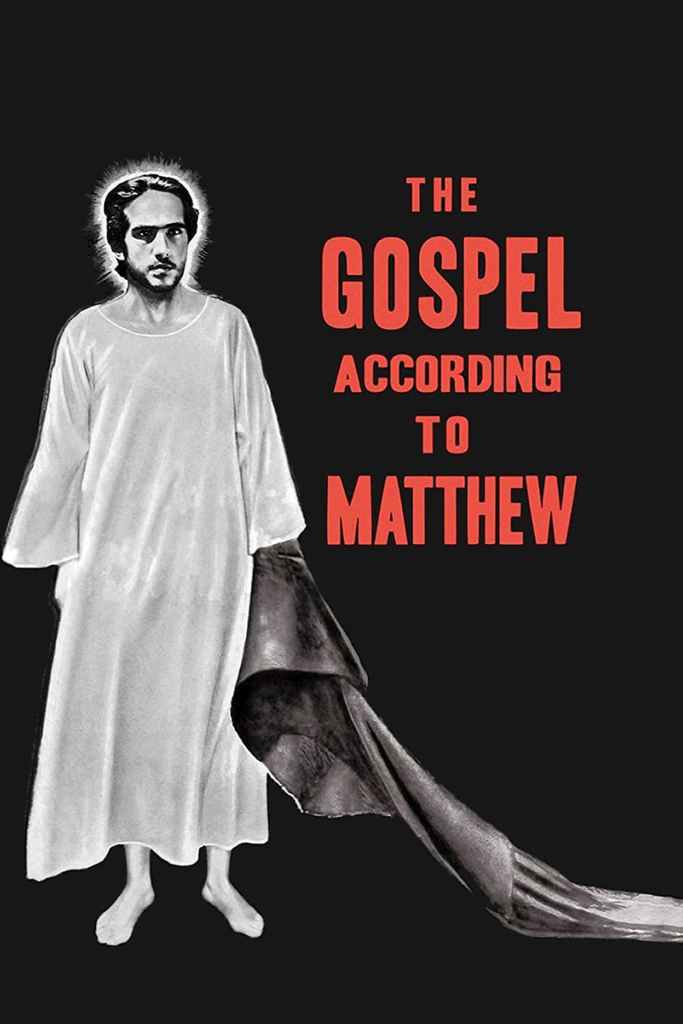
As I said in the beginning, Pasolini was complicated. I think the stereotypical Marxist thinks little of religion except as a tool to exploit the poor, but while Pasolini was an atheist as an adult, he was raised Catholic and many of his films have religious undertones (even many references in the above Accattone). His 1964 film The Gospel According to Matthew may be one of the most biblically accurate films ever made. He picked this book because “John was too mystical, Mark too vulgar, and Luke too sentimental,” and it is a faithful adaptation. The dialogue is lifted straight from the Bible with nothing else thrown in, and the film follows along the Gospel from Jesus’s birth to death to, yes, resurrection (though I expected the director to cut it short before he rose, Jesus does indeed come out of the tomb in the end). If you think about it, Jesus’s story can be painted as a strong parallel by a young Marxist director wanting to tell a story about lifting up your common man and calling out hypocrisies of the ruling class. But the film, on its own merit, is extremely well told. Filmed in the countryside of rural Italy to look like the Middle East, with many non-professional actors and locals to fill out the large cast, it has an authentic feel, and features lasting, memorable scenes throughout. ★★★★
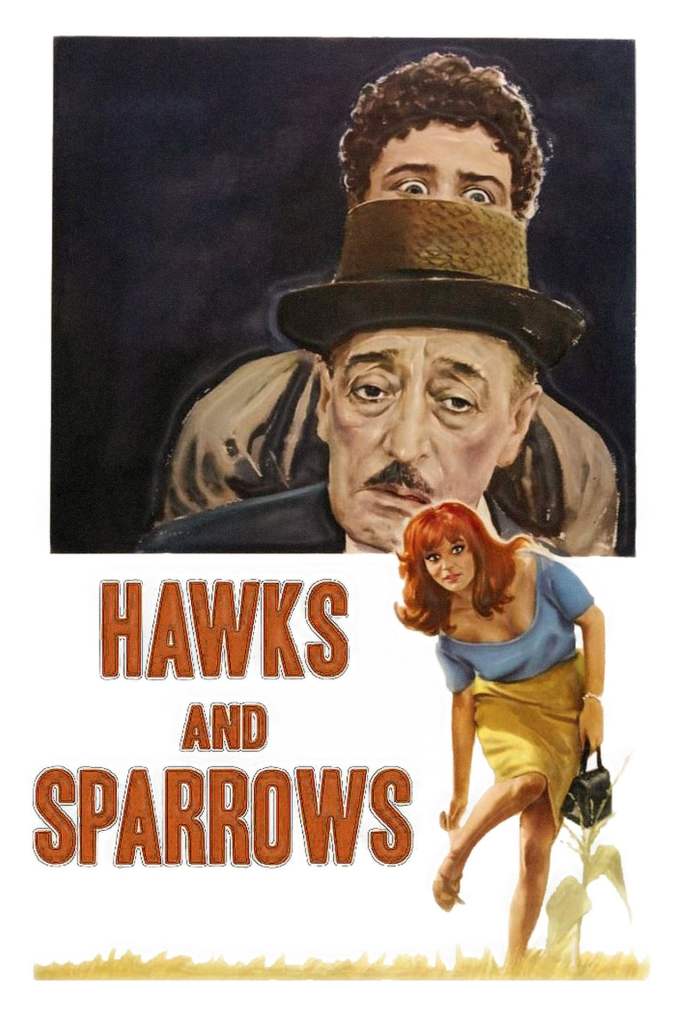
The Hawks and the Sparrows is a rare comedy from this director. In the film, a father and his adult son, Toto and Ninetto, roam the countryside of Italy and see some strange sights, one of which is a talking crow, described to the viewer as a “left wing intellectual.” The crow relates a tale of hawks and sparrows. The same actors play two friars who have been tasked with teaching the Gospel to birds. Obviously to do so, they must first learn the language. The elder plants his feet in the dirt and doesn’t move for a year, in observance and meditation, until he is able to communicate with the hawks. He teaches them of God and love, and then spends a year learning to converse with sparrows, so he can teach them too. Almost immediately afterwards, he and the younger friar are walking through a field when they see a hawk attack and kill a sparrow. The men are aghast at the hawk’s brutality after the sermon, but the hawk can only explain that it is what it is. The friar’s leader gives a very Marxist point of view, that the powerful hawks will always lord their power over the weaker sparrow, which will always struggle in life. From there we return to Toto and Ninetto, who have more adventures along the way. There’s lots of humor in this film, but most is delivered in a heavy handed way. Pasolini can’t help himself but to make every scenario political. Entertaining if you can wade through the proselytism. ★★★
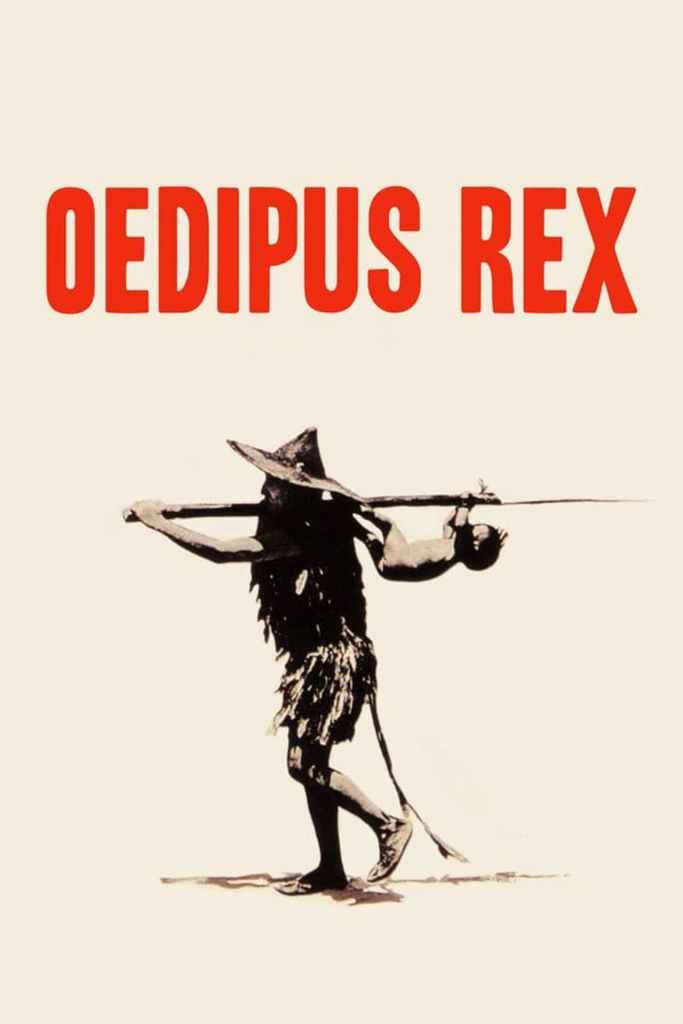
Oedipus Rex is an adaptation of the famous Greek play, and one of my favorite Pasolini films to date. It begins in close-to modern day Italy, where a boy is born but who’s father becomes jealous of the attention the baby gets from the mother/wife. The father has the baby taken out to the desert to be killed, and here the film’s setting changes to ancient Greece (actually filmed in Morroco, so very desolate). The baby is rescued and given to barren parents Polybus and Merope, King and Queen of Corinth, who name him Oedipus and raise him as their own. But as a young man, Oedipus finally hears the rumors that he was a founding, and he sets out on a journey to the Oracle of Delphi to learn who he really is. The Oracle gives him the famous prophecy, that Oedipus will kill his father and bed his mother. Afterwards, Oedipus wanders the desert, coming upon a troupe of soldiers protecting a man. Oedipus antagonizes them, eventually killing all of the guards and the man they were guarding, with only a servant getting away. Oedipus then finds himself in Thebes, where he kills the Sphinx and wins the marriage of the Queen, Jocasta. Of course, we know that Queen will turn out to be his mother, and the murdered man in the desert his father. This is just about the perfect film. It is gorgeously shot in 1.85:1 widescreen color and Pasolini makes use of it, showcasing a starkly beautiful country and people, with fantastic acting by all, especially Franco Citti in the lead. Certainly lives up to its reputation as one of the all-time great Greek tragedies. ★★★★★
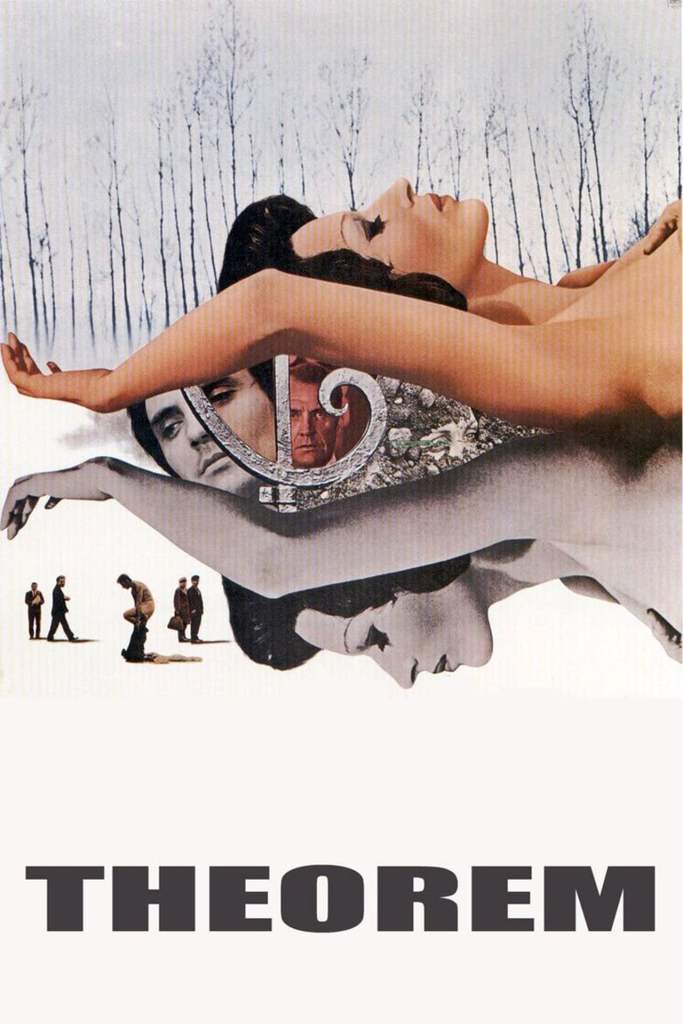
Pasolini gets into surrealism with 1968’s Teorema. This is a weird one, and I’m not exactly sure what it is all about, but it is very interesting. At a bourgeois estate in Italy, a family is visited by an unnamed man who just sort of moves in and hangs around. No one seems to mind him, but he begins an intimated relationship with every person in the house. He sleeps with the devoutly religious maid, then the timid and unsure college-aged son, then the sexually repressed wife. He doesn’t sleep with the dad, but does give him intimate massages to help alleviate his stress and daily pain. He doesn’t sleep with the daughter either, but does become a confidant, guiding her through a tough time. Then suddenly, the visitor leaves, and his abrupt disappearance throws each family member into chaos. Each person has to face those things that they were previously unaware of, and it doesn’t go well for any of them. For example, the maid leaves the house and returns to her remote village. She begins to perform miracles, but is consumed by sadness for the hole in her life. The daughter becomes catatonic and is sent to an institution. The others, I will leave for you to enjoy, should you watch the film. It’s a very good film. I don’t get it, but I so desperately want to get it, if that makes sense. As some reviewers have said, was the visitor an angel, there to guide them through tough times, and the family can’t live without him, or was he the devil, starting them down the road to hell? Great stuff, and the more I think about the film, the more I like it. ★★★★½
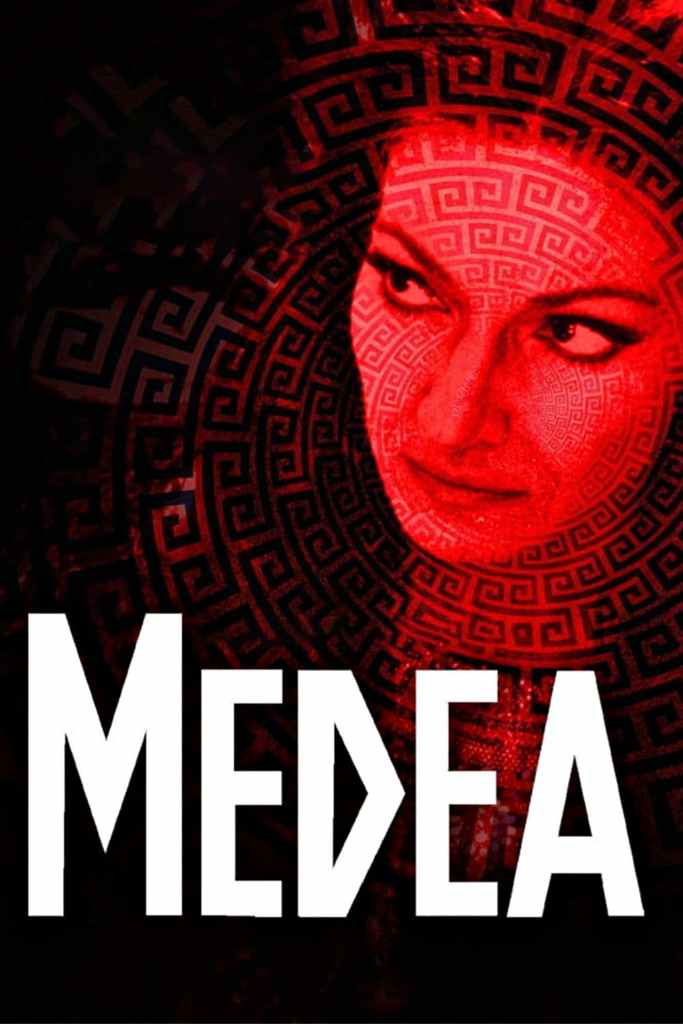
Medea is based on another Greek play, and as much as I loved the first, I was excited to get into this one too. It’s not as good, but still decent, telling the tale of Medea, but starting at the beginning with Jason. Jason was rightful heir to the city-state of Iolcus, but his father was removed from power by brother Pelias, and baby Jason was taken into hiding, raised from a child by a centaur. Years later as an adult, Jason sets out to reclaim his throne, but his uncle Pelias will only give it up if Jason retrieves the golden fleece. Jason teams up with the Argonauts and heads to Colchis, where the fleece resides, and there is aided by Medea. Media is queen of Colchis, and has mystical or sorcerous powers. She falls in love with Jason and flees Colchis with him. Jason brings the fleece back to Pelias, but the king reneges. Jason replies he no longer wants the tiny kingdom, as he has discovered a greater world out there. He and Medea settle in Corinth, and have a couple children together, but before the end, Jason decides to marry a Corinth princess, Glauce, in order to further his ambition. The jealous Medea will not let this go down, leading to an explosive finale. Another great Greek tragedy, but it’s honestly a bit hard to follow. There’s dream sequences that you don’t know are dreams until they are over, and a lot of the finer points of the plot/story are left for you to figure out as it goes along. Still, who doesn’t love these old Greek stories? ★★★
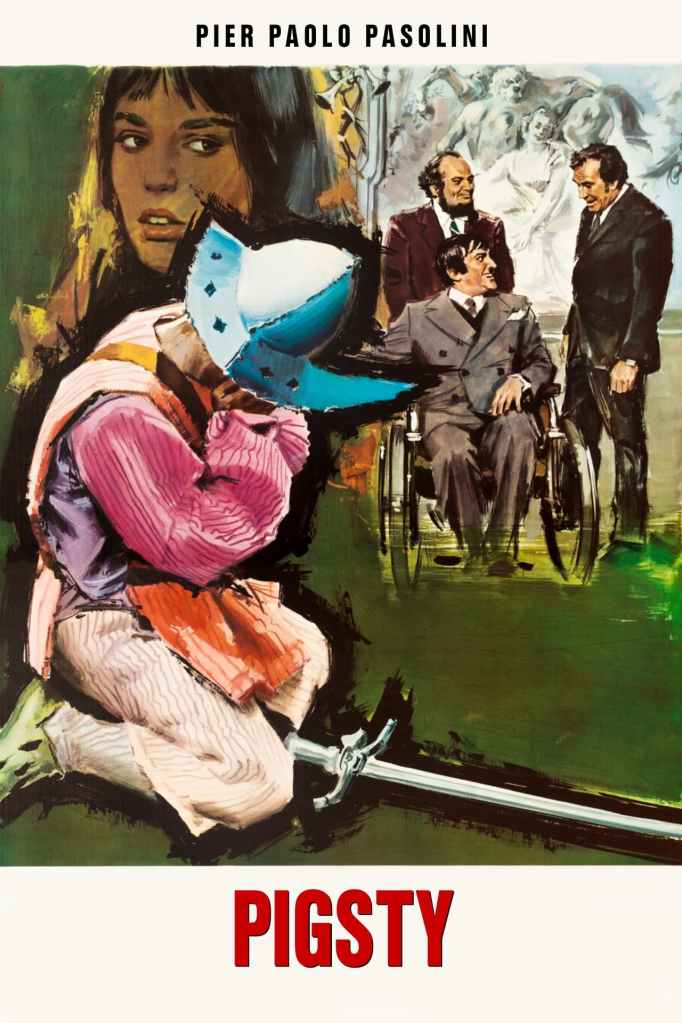
Lots of good movies today, but unfortunately finishing on a dud. Pigsty follows two narratives, one in the middle ages in a barren countryside in Italy, and the second in a bourgeois estate in Germany in the 1960s. In the first, a loner wanders the hills eating bugs, but advances later to cannibalism, picking off people here and there. He is joined by others who grow to have the same morbid appetites, allowing his growing group to attack larger parties. That is, until the nearby town has had enough, and put together a posse to put a stop to the man and his followers. In the second story, Julian is the son of a former Nazi officer who has escaped prosecution and is living well. The dad is a businessman, but Julian seems content living an aimless life, much to the chagrin of his girlfriend who wants him to show some ambition. Like the man in the first story, Julian has a dark secret too, going into pigpens in the evenings for a little animal loving. In both stories, the degenerates do not come to good ends. A disturbing movie, I’m not sure there was much of a point other than the debauchery of man. ★
- TV series recently watched: Star Trek Animated Series (seasons 1-2), Hit Monkey (season 2)
- Book currently reading: Pride and Prejudice by Jane Austen

 Jons Movie Takes