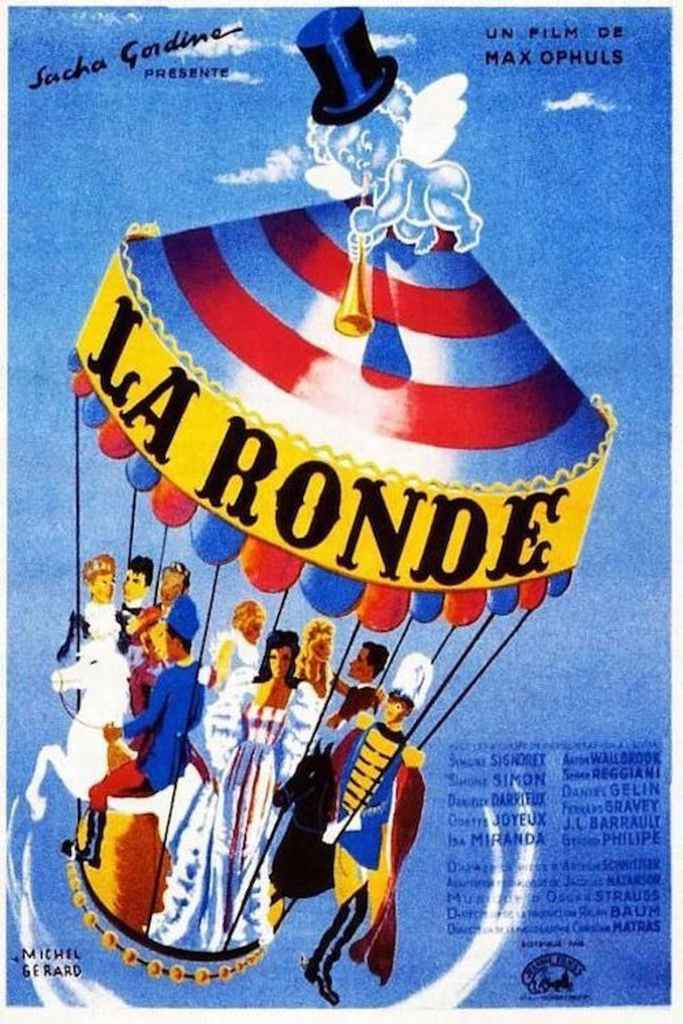
Max Ophüls was a German director who made films all around the world during his life, but today I’ll be looking at his last 4 films, made mostly in France. La ronde (“Roundabout”) is a funny little film with some racy moments, enough so that it was classified as immoral in the USA when it was released in 1950, and it took an appeal to the Supreme Court a couple years later before it was shown here. The film opens on our narrator/emcee. He will hold our hand over the course of the film, weaving a tale of lust and debauchery, but also playing a part in it himself at times (as a carriage driver, or passerby in the street giving advice to a character, or whatever the case may be). He promises a circling tale around the merry-go-round, and we’ll soon see what he means. In the beginning, a young soldier is being propositioned by a prostitute. The man tries to duck out for lack of funds, but gives in when she says she doesn’t charge for the military. What red blooded man is going to turn away a romp for free? No sooner is the deed done though that the man heads out and goes to a party, in an attempt to pick up a new girl. His target, a chambermaid, eventually gives in to his wares. But she isn’t sitting around pining away for him afterwards; she too moves on to the next bed-partner. And so on and so forth. Each subsequent partner becomes the central character and hunter for a new partner afterwards, until, of course, we make it back to the prostitute. There’s lots of very funny moments, often provided by the narrator breaking the fourth wall to us viewers (like when one man tries to go again too soon after his previous foray, leading to a scene where the merry-go-round has broke down and the narrator has to bang on it with a wrench to get it going again). I’m sure it caused quite the scandal in its day, and is still a lot of fun today. ★★★½

Le plaisir adapts three 19th century short stories into a film of vignettes. The first and third are short (around 20 minutes) but good, but the middle, longer story is the star. The first is “Le masque” and tells about an old man who dons a mask to frolic with younger women at public dances, much to the consternation of his wife. The third, “Le modele,” is about an artist who falls head-over-heels for a woman, only to find that a relationship with her is not the same as a dalliance. The middle story, “La maison tellier,” is full of humor but also introspection for the characters. It begins in Paris, where a madame runs a “house of women,” as the narrator tries to delicately tell us. There’s a lot of laughs about how the men around town congregate there every night, and who is their favorite, but it is mostly a way to introduce us to the girls. One day, the madame suddenly closes with no notice (much to the dismay of the men!), but she has a reason: her niece out in the country is having her first communion, and the madame is taking all of her girls to visit her family and witness the big day for the young girl. More jokes on the train ride over, as the women are mistaken for high society by a country couple, and exposed for what they are by a traveling salesman, but the film turns more serious when they reach their destination. The madame’s brother (played by Jean Gabin, one of France’s all-time most popular leading men) becomes smitten by the beautiful young Rosa, and is willing to drop everything and move to the city, but of course, he has a life there in the country. There’s also a heart-warming moment at the niece’s ceremony at church, when Rosa and the other women are moved by this peaceful, religious moment, so different from their everyday lives. All good things come to an end though, and the women pack up that night to return to Paris, where “men may forgive one night closed, but would never forgive two.” Very moving film. ★★★★½
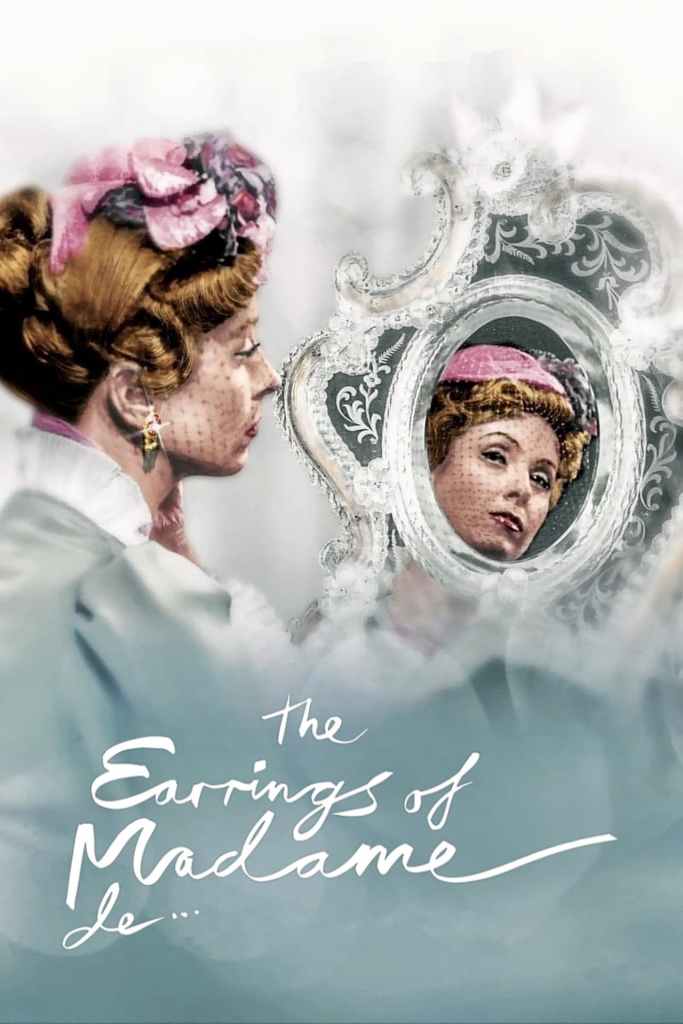
The Earrings of Madame de… has been called by some critics, “The most perfect film ever made.” Lofty praise, and I have to say after one viewing, it is indeed a great one. At the start of the movie, the titled madame, Louise (her last name is always carefully hidden through camera or sound tricks), is selling a pair of diamond earrings to a jeweler. The earrings were a wedding gift from her husband André, a count and general in the French army, but it has from the beginning been a marriage of convenience, and Louise could use the money to pay for her extravagant lifestyle more than she needs the memories of the wedding day. The jeweler, thinking the earrings are more emotionally significant than they are, contacts André and sells them back to him. To avoid a messy confrontation with his wife, André instead gifts them to his mistress, who is heading out of town to Constantinople, where she loses them in gambling, and they are later purchased by the Baron Donati. In a twist of fate, Donati crosses paths with Louise and becomes smitten, eventually gifting her the earrings. She recognizes them, but then must hatch a plan as to how she got them back (as far as she believes André knows, they were stolen and never recovered). The twists keep going from there. On face value, it’s a charming film full of humor and unexpected fate, a love story with twists and turns to keep you on your toes. But for those who look deeper, it is a movie about class/social status, love, and honor, with gorgeous sets and meticulous camera work. Maybe not the best film ever made, but certainly one you’ll want to watch again and again. ★★★★★
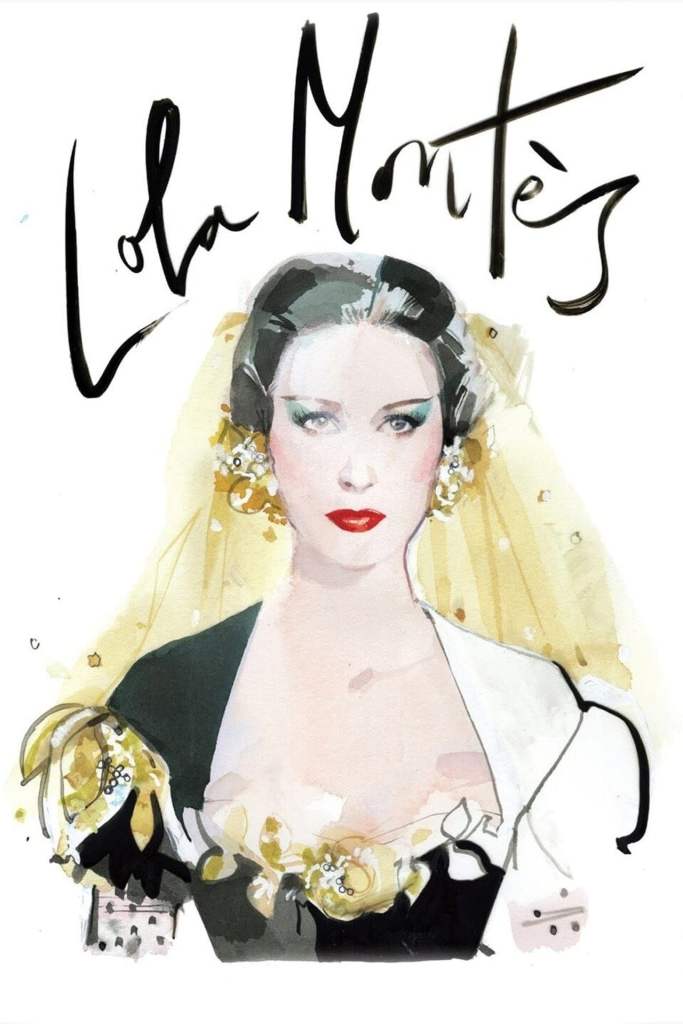
Lola Montès is the one stinker out of this batch, and that’s unfortunate because the subject material is fascinating. Lola Montez was a wannabe dancer in the mid-19th century who used her body to try to advance her career. Unfortunately for her, she wasn’t a good enough dancer, even by giving away her “wares,” and she never amounted to much on stage. At the start of the movie, she’s in a two-bit circus in New Orleans, USA, with a ringleader telling her tale to the audience as Lola acts out parts of it. In flashbacks, we learn of her history. After a short flashback to 1844 when Lola had a brief affair with composer Franz Liszt (the ringleader expounds that he wasn’t the only famous composer to be Lola’s lover, with others including Chopin and Wagner), we go back to her childhood. Born in Ireland, first her mom tries to marry her off to a wealthy (but very old) baron, but Lola instead flees and marries her mom’s boyfriend instead, at the time, her only way out of the situation. The marriage doesn’t last, so next, she ends up traveling in Germany, eventually becoming the main mistress to King Ludwig I. In fact, it is her ministrations that lead to an uprising in Bavaria and King Ludwig stepping down, after policies he enacts at Lola’s urging. Lola fleeing an angry mob is what ultimately lands her in America, trying to recapture some of the influence she once had. Amazing life, right? The movie however is a bore, and doesn’t do anything for this exciting person. I think it would have worked better if they’d just ditch the circus act/ringleader narration and told her story in a more straightforward way (something the studio tried to do in later re-edits, when the movie initially bombed upon release). Do yourself a favor and just read about the real Lola Montez. ★★

 Jons Movie Takes