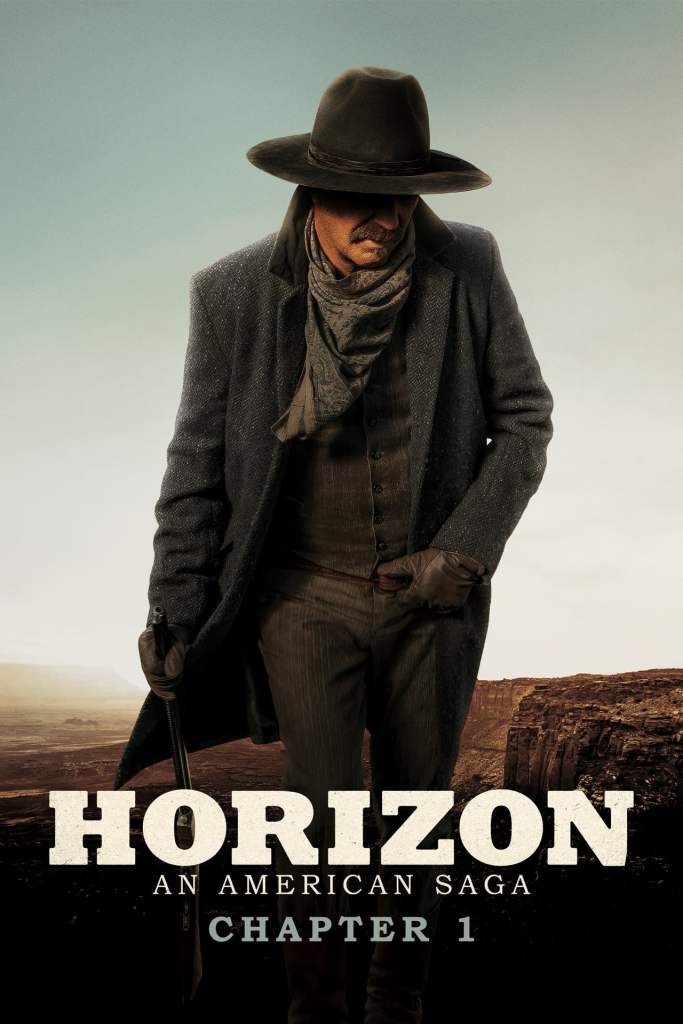
Horizon: An American Saga falls short of that glorious title in some ways, but gives me enough hope that the ship can still be righted in future films. This was the first in a planned series of four films (the second will be released in August), and is the pet project of writer/director and star Kevin Costner, who has been working on getting this film made since the 80s. The film follows a whole bunch of different characters across a whole bunch of the American Old West. There’s a woman on the run with her son, after having killed her abusive husband in the Montana territory, fleeing to a settlement in the Wyoming territory before being found by the man’s family. There’s a wagon train heading out from Kansas on the Santa Fe trail, with all of the perils and politics that come from a such a dangerous trip. And then there is Horizon itself, a new settlement in San Pedro Valley, which has been continually beset by Apache, with settlers killed or driven off, yet somehow fliers are circulating all over the west promising rich, fertile lands if you can make it there. There’s a lot of “main” characters in this film; we don’t even see Kevin Costner until the film is an hour in, and they are still introducing story lines nearly two hours in, which (I assume) won’t be fleshed out until future movies. With so much going on, so many cuts bouncing around all over the place, and some (small but important) time jumps, it all felt like a jumbled mess. Having said all that, I’m a sucker for grand, epic stories, and there’s enough here to get me excited for the sequel. I just hope that all of this is leading somewhere. ★★★
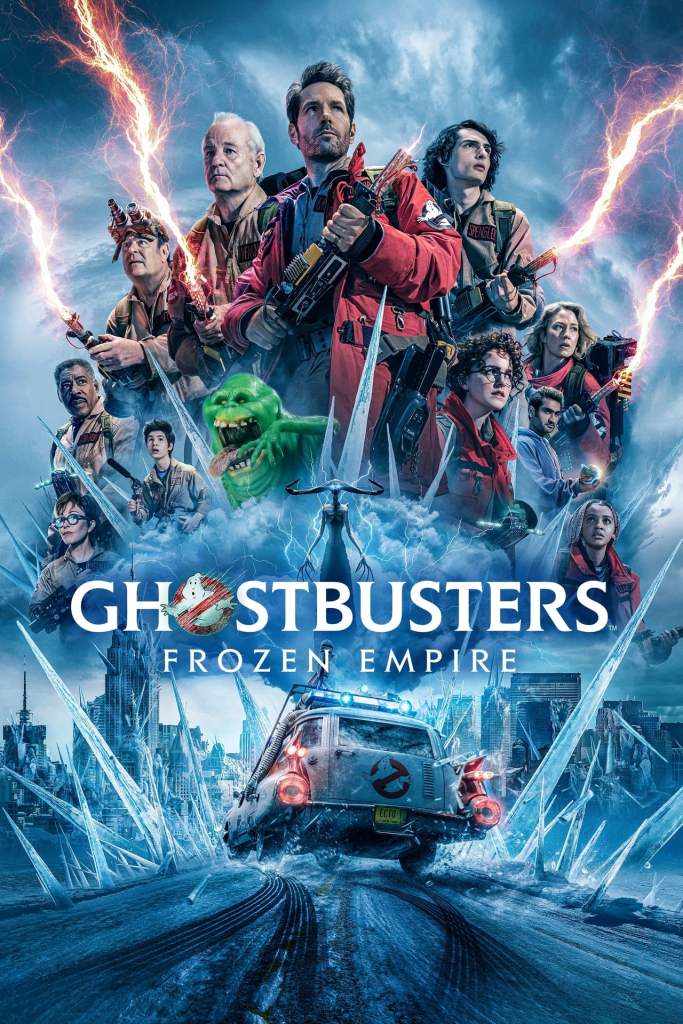
I stayed away from Ghostbusters: Frozen Empire because, despite what others may say, I thought Afterlife was a bore, and wasn’t too excited to see more kid-friendly ‘busters. And unfortunately, this film is more of the same. Three years after the last film, Calle Spengler and her kids Phoebe and Trevor are the new Ghostbusters with Callie’s boyfriend Gary, suiting up to fight ghosts around New York. Ray Stantz runs a shop dealing in cursed objects, and the wealthy Winston Zeddemore finances scientific projects and advancements in paranormal studies. Like what often happens in these movies, there’s a new evil demigod looking to wreak havoc on our world, this time it is Garraka, who has been imprisoned for 4000 years in a brass orb. If Garraka can escape, it has the power to control other ghosts, and since the Ghostbuster trap in their converted firehouse has never been emptied, it houses a venerable army ripe for Garraka’s taking. Garraka also controls the cold, and has the ability to freeze people to death. Its one weakness is fire, so just as the first film had a gatekeeper and a keymaster, now we have a firemaster, Nadeem, who needs to be quickly trained up on how to control his powers. Like the last film, this movie has a couple exciting moments, but it doesn’t cover up all of its faults. It’s way too cutesy. What made the original film so great is, it wasn’t really a kids film, though kids liked it because of the whole ghostbusting factor. I like Paul Rudd as much as the next guy, but his goofy antics ruin every scene he’s in, and the jokes seem to be aiming for the lowest age group watching. I’d rather they stop making these movies, but you know Sony’s never going to end this cash cow, so all I can hope for is to scrap this team and start fresh. ★½
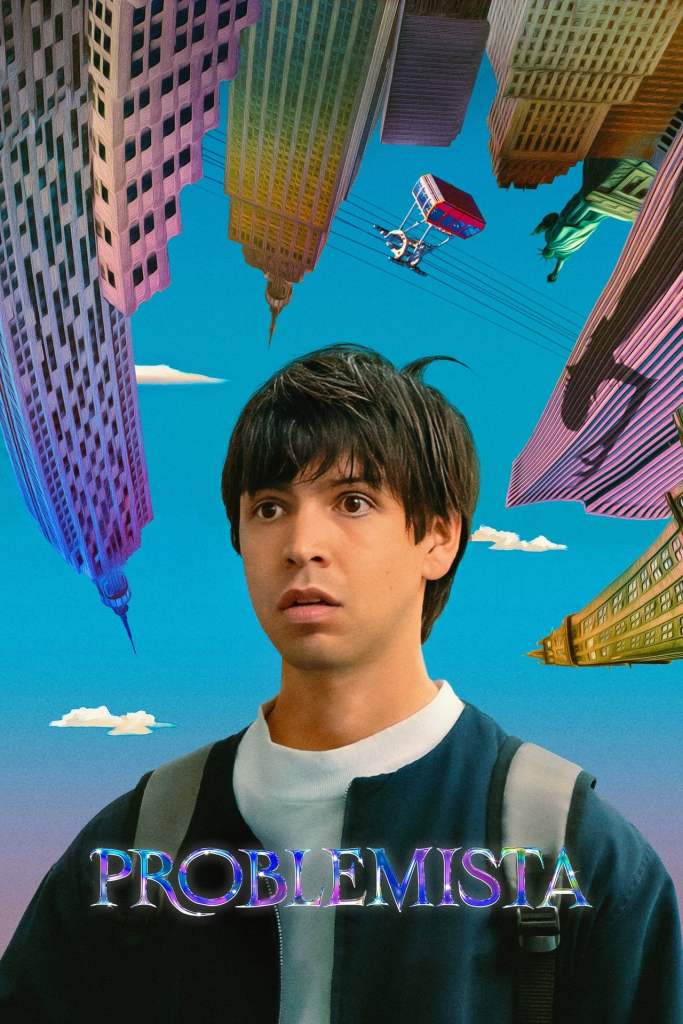
I was excited for Problemista, but man was this a letdown. Written and directed by Julio Torres, who is also the main character, it follows a man named Alejandro who is in New York trying to get a job at Hasbro. He has outside-the-box ideas for new toys, but can’t even get an interview, and unfortunately he loses his current job at FreezeCorp, a company that cryo freezes people for future thawing. He needs employment, as he is an immigrant from El Salvador and needs a work visa and sponsorship to stay in the USA. On his way out the door from FreezeCorp, he meets the eccentric Elizabeth (Tilda Swinton), whose husband Bobby is currently frozen at FreezeCorp. Elizabeth is a hot mess, one of those rich types who expects everyone to jump and be at her beck and call. Without any other prospects, Alejandro agrees to help her on her current project in hopes that she will sponsor him, allowing him to stay in the country while trying to get on at Hasbro. Elizabeth wants to do an art expo on Bobby’s paintings (he only painted pictures of eggs…) and tasks Alejandro with gathering all the paintings and setting everything up. It’s all super weird, sometimes uncomfortable to watch (Elizabeth treats everyone like the gum under her shoe) and gives a bad message in the end that, if you behave like that, you end up getting what you want in life. Left a poor taste and had no redeeming qualities for me. ½

The Monk and the Gun, however, is the polar opposite. A fictional film taking place in Bhutan, when that country was starting it’s journey to modernization in 2006, it mostly follows a younger monk named Tashi. In the rural town of Ura, Tashi has been tasked by the elder lama with finding two guns before the full moon in 4 days. The lama doesn’t say why he needs the guns, just that he does, and Tashi has no idea where to start, in a town where neighbors are very religious and genuinely care for one another. There is no violence or even violent thoughts, due to everyones strong faith in Buddhism, and no one certainly has a gun. Tashi is able to locate one firearm, an ancient rifle that the owner claims was used in the Tibetan wars hundreds of years ago, but in reality it is an American rife from the Civil War. We know this because an American collector is also in the area to buy the same weapon, and while he offers the gun owner $85k to purchase it (talked down to $35k, because the owner says, “$85k is simply too much”), the owner instead gives it freely to Tashi, knowing that giving it the lama will earn him more credits in this life. The American then has a dilemma on his hands, trying to get the gun from a person who sees no value in money or materialist gains. All of this is against the backdrop of the country taking its first steps to modernize. The king of Bhutan has announced that he will be relinquishing his power and wants to hold elections for the first time in the country’s history (“Elections? What is that? Is that a new pig disease?”). The citizens of Ura are buying their first televisions and are mesmerized by James Bond and MTV. And to prepare for the real elections, officials are holding mock elections in Ura to show citizens how it is done, and their reactions are pretty funny (“Can’t we just vote for the king? I love the king”). Wonderful movie that delves into the western idea that people are better if they elect people to govern them, and makes you really think about if that is always the best way. In the film, these people have to be told to argue with each other if they are voting on opposite sides of an imaginary line. We in the west aren’t always right. ★★★★★

Memory is a very well acted film (from powerhouse star Jessica Chastain, who would expect any less?) and has a dual meaning. On the surface, the title seems to be about Saul (Peter Sarsgaard). At a high school reunion one night, Saul follows Sylvia (Chastain) home, creeping her out. Saul ends up sleeping on the street in front of her apartment, and the next morning, Sylvia contacts Saul’s brother Isaac, who comes and picks him up. Turns out Saul is suffering from a form of dementia that hampers new memories; he remembers everything before a few years ago just fine, but recent memories don’t stick. Sylvia has a reason for being scared of Saul, and she tells him a couple days later in a confrontation: in high school, Saul and his buddy raped her. Saul denies it, because his memory from back then is still pretty good, but doubts himself. Sylvia later learns she was mistaken. Saul started school there the year she transferred out; she had confused him with someone else. Sylvia, a worker at an adult daycare facility, has experience with helping people that need it, and to make amends for her accusation, starts being Saul’s daytime caregiver while Isaac works. The two start to develop a relationship. While this is going on, Sylvia’s daughter Sara has been hanging out with her aunt (Sylvia’s younger sister) Olivia, and unbeknownst to Sylvia, their mother Samantha has been coming around Olivia’s place and getting to know Sara. Sara has always been forbidden to be around her grandmother Samantha, due to Samantha’s and Sylvia’s estrangement. The secret cause of that long-ago hurt, that “memory,” is ultimately what the film is about, and it falls like a lead weight when it comes out. I loved this movie throughout. It moves slowly allowing scenes to develop naturally, with nothing forced. Its pace will turn some viewers off, but it is a powerful and heart-wrenching film about two flawed adults, through no fault of their own, finding solace and healing in each other. ★★★★

 Jons Movie Takes