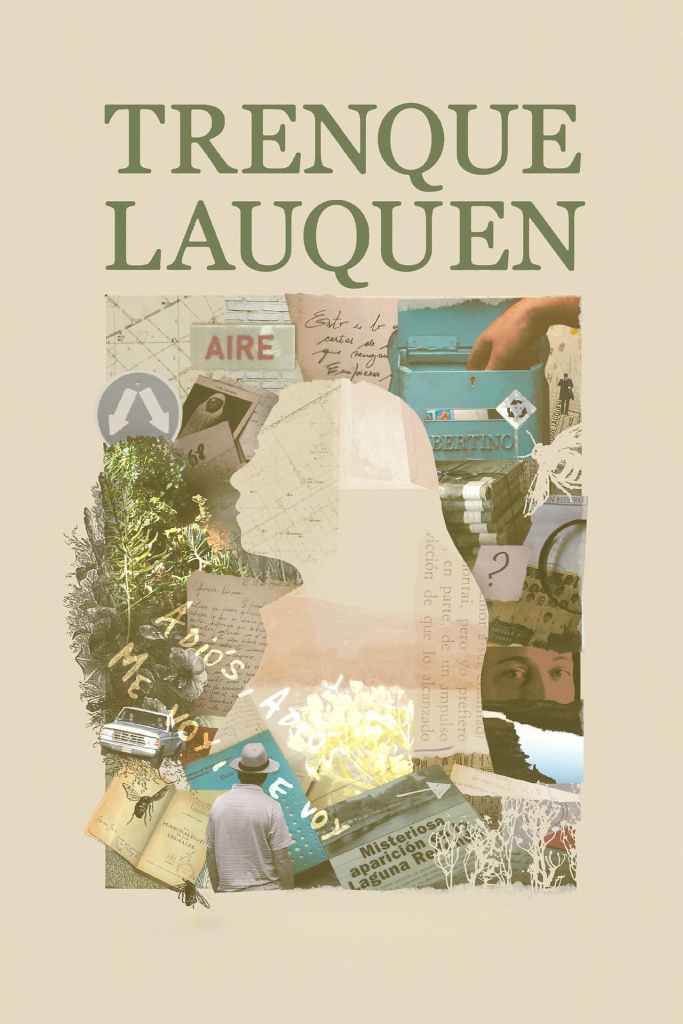
Trenque Lauquen is a film of two halves, and not just because it was presented theatrically in two parts to help offset its 4 hour runtime. The first half is absolutely incredible, and at the halfway mark, I was ready to proclaim it one of the best films I’ve seen this year. Unfortunately I can’t say much about it without ruining the magic. The film begins on Rafael and Chico, two men driving together looking for a missing woman named Laura. Rafael is Laura’s longtime boyfriend, and the two were getting ready to move in together, and Chico is along for the ride because Laura stole his car when she went missing. We quickly learn that Chico is more involved than just because of his car, and that’s when the mystery starts to build. Laura was in the city of Trenque Lauquen, a city about 280 miles from Buenos Aires, cataloging local flora for her college degree. Chico is native to the area and was her driver to various sites. One evening after working, Laura shares with Chico a mystery that she is trying to solve. At the Trenque Lauquen library one day researching, she discovered a letter hidden in the pages, from a man named Paulo to a woman Carmen, written 60 years ago. The letter referenced other books in the library, each with a hidden letter, and Laura has become obsessed with following the trail of who Carmen was, what drove her to leave her boyfriend Paulo (a married man) and ultimately what happened to her. Chico, with his knowledge of the area, is able to help Laura on her chase, and as the two work together, they begin to grow closer. When the first half of the film ends, we have a pretty good idea of Carmen’s story up to a point, and maybe what drove Laura to run, but all of the answers have to wait for the second half of the film, and believe me, you will want to know! Unfortunately those answers never come; the second half instead delivers more mystery, completely unrelated to the first half, and the director/writer seems intent to not answer any of the questions the viewer might (and will!) have. I was so utterly disappointed; despite how well the story is told (and believe me, it is, full of adventure and longing, mystery and even some supernatural elements) you end up with nothing in the end to justify the last 4 hours. Big bummer. ★★
A Prince is the sort of high-brow international art film that, I think, believes it is deeper than it really is, which isn’t to say it is a bad film, but it definitely exudes self importance. Maybe part of that is my own perception, because honestly I was a bit lost in the beginning, and it took me awhile to settle in. For starters, the film is almost entirely narrated, with little actual dialogue between the characters, and there are 3 distinct storytellers, 2 of which are older men. It’s perhaps not surprising how much we rely on faces to connect with a character (or even to identify the character!) so that when you take away the face, it becomes hard to keep up, especially when you are reading subtitles and the language is not your native. Hard harder here, because often the screen is showing something unrelated to what the narrator is talking about. Anyway, despite the opening lines stating that the story begins when Kutta arrived (we actually don’t see or meet Kutta until the final 20-ish minutes of the film), the movie follows a young man named Pierre-Joseph, one of the narrators who is looking back from decades later. Pierre-Joseph’s parents fight a lot (it is implied that his father was a closet homosexual, leading to an embittered home life), and Pierre-Joseph finds refuge in school, particularly a horticulture school. The men of the school get together for more than just plants, and Pierre-Joseph finds himself drawn to a couple of the older men. The three of them start an open sexual relationship together, and after a flash forward to where Pierre-Joseph is an older man himself, we get the climactic meeting between him and the aforementioned Kutta, setting up a bizarre final act that honestly makes the film run off its rails (what rails there were, until then). The film has is not shy about describing sex acts, which I think is just there for shock value, and while the movie is presented well (if obtuse, for the reasons stated above), it didn’t leave a lasting impression. ★★½

Freedom’s Path is a historical drama taking place during the American civil war, and follows a young idealistic northern soldier named William. He’s enlisted in the army with his friend but doesn’t really know what he’s fighting for, even cracking jokes with his buddy when they hear that black men are signing up to fight alongside. In his first battle, William sees the horrors of war, when his friend is killed and he himself deserts, running to hide in the woods. He is later found by a quartet of black men who are going off to fight, one of whom is a young man about William’s age named Kitch (RJ Cyler, whom I remembered from one of his brilliant earlier films Me and Earl and the Dying Girl). Shortly after though, the party is attacked by runaway slave hunters, and only Kitch and William survive. Despite similar ages, Kitch’s past as a slave has given him an adult outlook on life and real-world experiences that William has lacked, and he takes William under his wing. Through Kitch, William learns about the Underground Railroad and starts to pitch in where he can to help the effort. As the movie progresses, those slave hunters, led by Silas (Ewen Bremner, of Trainspotting), continually show up, and their cruelty has no bounds. The movie doesn’t break new ground and in the early going I didn’t think much of it (the young actor who plays William, Gerran Howell, wasn’t my favorite) but Cyler and Bremner excel as Kitch and Silas, really pulling you into Kitch’s plight and giving you someone to root for. I was fully engaged by the end. ★★★½

I don’t do many docs on by blog (and don’t watch many either, not my thing), but I couldn’t escape MoviePass, MovieCrash. I loved MoviePass “back in the day” (which was long before it exploded in 2017 and later fell apart in 2018/19); in fact, when I was a member in 2013 and ’14, it was what caused me to start this blog. I cancelled after 2014 when I started a new goal, but have many fond memories of going to the theater all the time. I followed MoviePass’s trajectory after I left, and was actually very saddened when they went bankrupt. So while I knew the basics of what caused the fall, I had to watch this movie. It tells of its startup in 2011, it’s slow rise for a few years, and then its rocket climb after a new CEO and investor were brought on board in 2017, with an unsustainable promise of “as many movies as you can watch on a $9.95 monthly subscription.” I remember when they made that promise and at the time, even I knew it was too good to be true; I had paid $30/month in 2014 and knew that even then, I was costing the company money. It’s a fascinating doc, maybe only to people like me who were around for some of it, but it ends on a high note too. The original CEO, Stacy Spikes, was able to buy the company at auction last year and has started it up again, on what appears to be a more realistic foundation. For my 2 cents, I hope he succeeds. In the day of streaming, there’s something special about going to the theater, sitting back in a comfy chair with a big screen and amazing sound, and losing yourself for 2 hours in a shared experience with others. ★★★★★
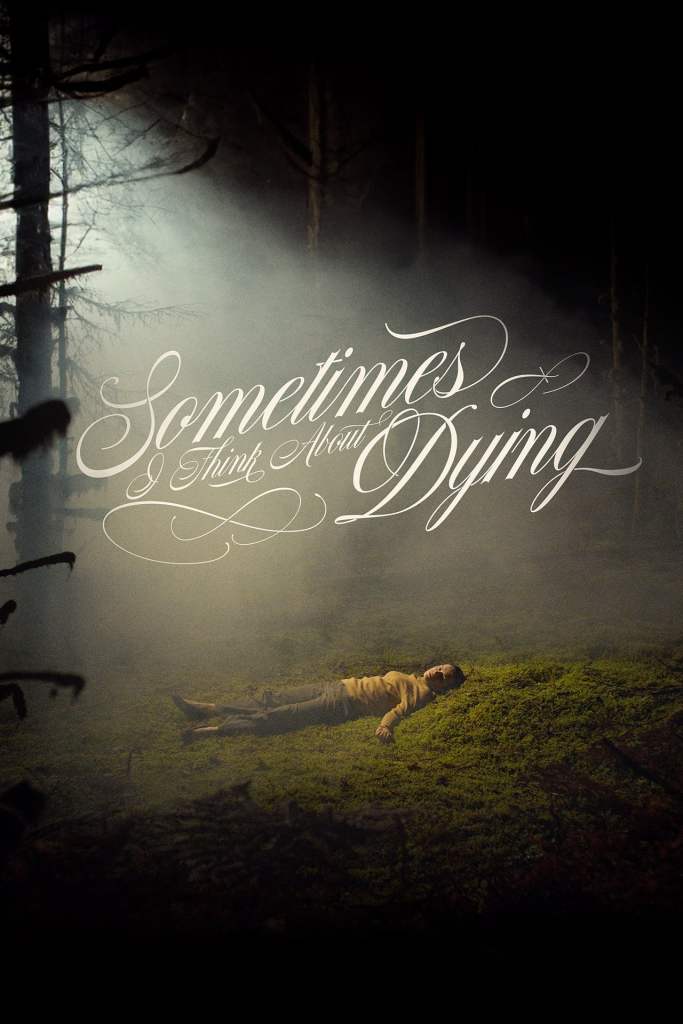
Sometimes I Think About Dying is a very nice, understated film staring Daisy Ridley (of Star Wars fame) and Dave Merheje. Fran is a very quiet employee at the Port Authority in Oregon. She works alone behind her desk and barely engages in the office parties, preferring to spend her time alone and fantasize about various ways she would die. Her coworkers are nice but don’t go out of their way to include her, but things change when a new hire, Robert, comes on the scene. Robert is also a bit socially awkward, but unlike Fran, he makes attempts to get to know people, and Fran is drawn to him as a bit of a kindred spirit. They go on a couple dates, but when things start to get serious, Fran, with her complete lack of experience in romantic relationships, doesn’t know how to handle it. It’s the sort of wonderful indie film that will please some fans and turn off others, but I really liked it. For one, the office comedy is pure gold, with the stereotypical office manager who makes everyone cringe which is right out of Office Space. There’s a party scene that seemed to go on too long, which I forgave because the movie as a whole is short at around 90 minutes, and I liked the film as a whole. ★★★½

 Jons Movie Takes