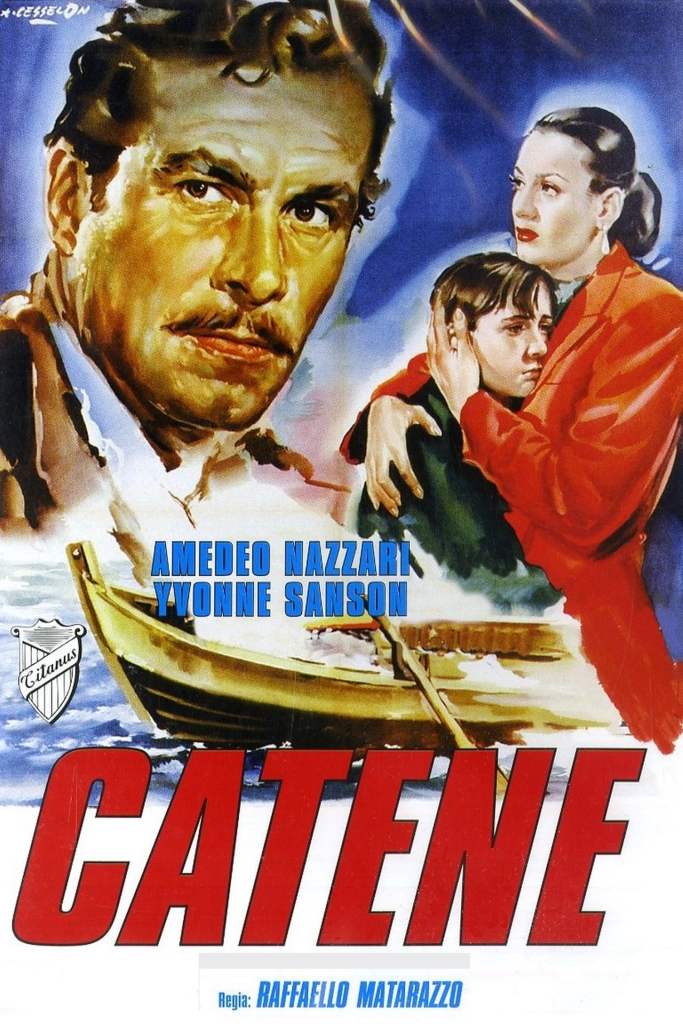
Here’s a quartet of films from Italian director Raffaello Matarazzo, who was very popular with audiences in Italy in the 40s and 50s, but whose films never really impressed the critics, and he’s largely unknown today. But I’ve (mostly) enjoyed these 4. Chains was released in 1949 and stars Yvonne Sanson as Rosa, the unassuming wife of a mechanic (Amedeo Nazzari’s Guglielmo). (Both of these actors will continue in all of these movies; if it ain’t broke, don’t fix it.) She is content with her life, but an ex-boyfriend shows up that will not let her go. The ex, a criminal named Emilio (Aido Nicodemi) starts stalking her and threatens to make their prior relationship known to Guglielmo. Not sure why she fears this so much, because everything Emilio says is a lie, but to keep the drama level high, just go with it. Eventually, Guglielmo hears of the past relationship and when he goes to confront Emilio, he finds Rosa there too, who had gone to tell him she’s done with his blackmail. Guglielmo gets the wrong idea and kills Emilio, and then has to flee to America to avoid arrest. It’s melodrama at its finest, and would fit in with any Lifetime movie-of-the-week today. Easy to see why it was popular with moviegoers in its day. It doesn’t tax you or ask for any high level thinking, just easy entertainment with some fine performances by a couple good-looking leads. ★★★½
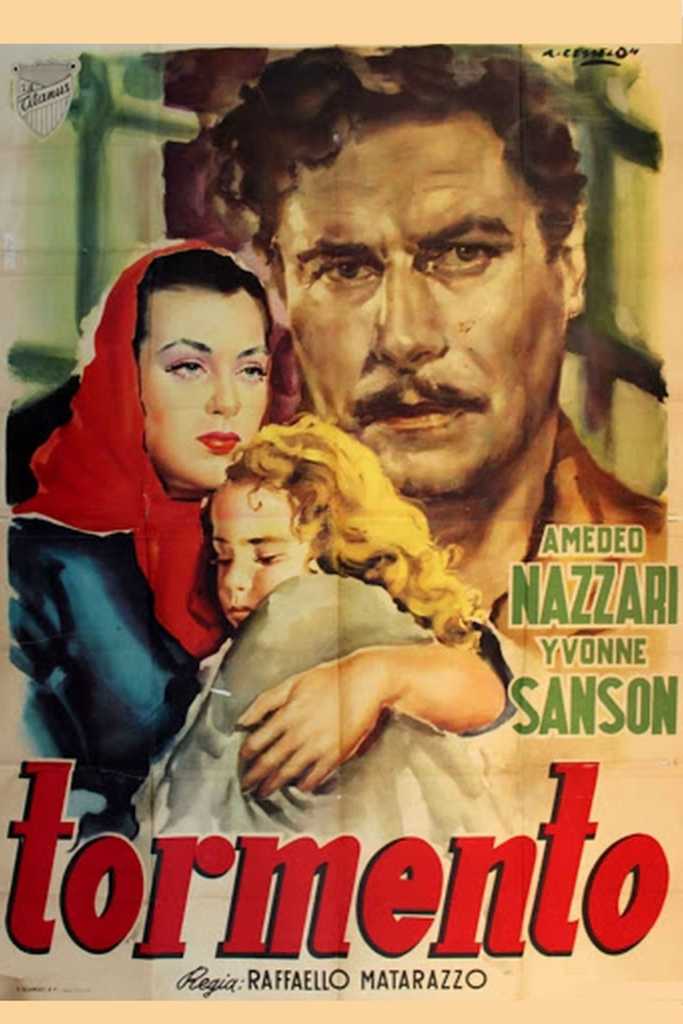
Matarazzo followed up the next year with Torment. Anna has long been persecuted in her home by her evil stepmother Matilde, who treats Anna as a Cinderella-type servant. Anna’s dream is to leave and start a life with her boyfriend Carlo, but he has been pinning his future plans on a business venture that turns south. When his business partner turns up dead, just after Carlo was seen publicly arguing with him, Carlo is suspect number one and is arrested in the murder. By now, Anna is pregnant, so the couple is married behind bars, and only get to say “I do” before Carlo is hauled away. For a time, Anna is able to raise their daughter on odd jobs, but when the girl becomes sick and Anna doesn’t have enough money to provide proper care, she is forced to return to Matilde and plead for help. Matilde takes in the child on the condition that Anna go to a home for “wayward women,” to which Anna reluctantly agrees. If she had dreams of her girl having security, those were obviously misplaced, and Matilde treats the girl as a new servant. With Carlo in jail, Anna at the convent, and their child living in a hellishly strict home, you start to wonder if everything will turn out OK, but this being an Italian drama, you know it will. Just as entertaining as the first film, though seriously depressing for a stretch there. ★★★½
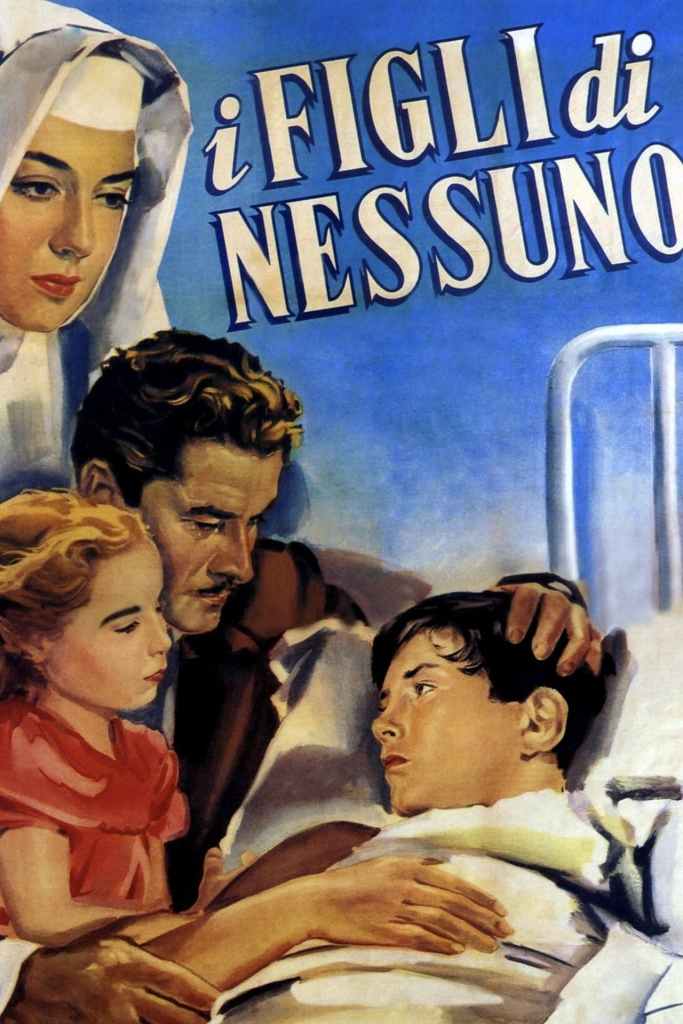
Nobody’s Children takes place in and around a mine in Italy, run by an aging countess and her son Guido. Countess Canali entrusts the running of the mine to her foreman Anselmo, but he is cruel and unfair to the laborers, which gets Guido riled up. Guido is in love with Luisa, the mine’s guard’s daughter, but his mother does not approve of him marrying someone so far beneath their station. She connives to get Guido sent to London to build up business, while getting Anselmo to kick Luisa out of her home. Well, turns out Luisa is pregnant, and she hides in a house just outside the mine, and is presumed dead. Guido rushes home and is in anguish. Gets even worse when Anselmo discovers Luisa’s hiding spot a year later, kidnaps the baby, and sets the house on fire. Luisa is distraught over the “death” of her baby and becomes a nun. Guido finds her there, but with their child gone, Luisa is unwilling to reconcile and has devoted her life to God. Fast forward a dozen years, and the child, now a boy named Bruno, has been raised in a boarding home paid secretly by the contessa, from a sense of obligation for her grandchild. Bruno runs away though, to try to find out who is parents are, and in a twist of fate ends up working at the mine. Guido has since married and had a daughter, and the contessa is about to die of old age. Everyone expects Guido to inherit everything as the only heir, but his mother has made a will to leave a large portion of her estate to Bruno, to make amends for her cruel past. Unfortunately, Guido’s wife intercepts the will. Just when you think no one will ever learn the truth, it all comes together before the end. Lots of tragedy, lots of drama, and while the film is still engaging, there’s some completely outlandish plot elements where you have to suspend belief to get through. It was very popular in its day though, warranting a sequel. ★★★
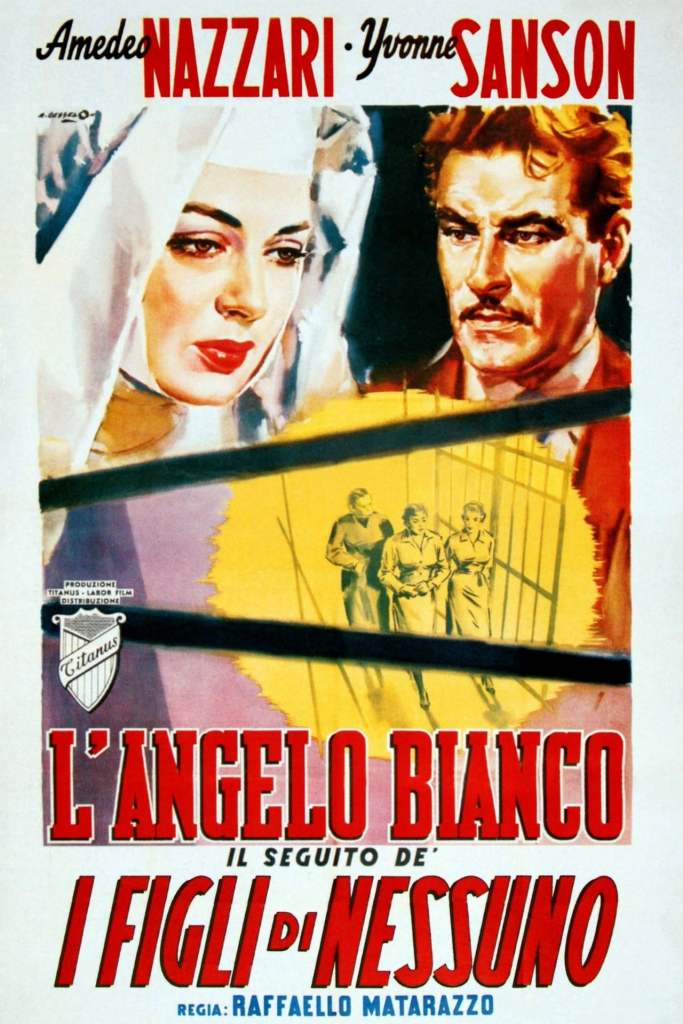
A couple years later, the sequel came out (will be spoilers here to the above film). The White Angel refers to Luisa, who her son Bruno saw as an angel on his death bed upon reuniting with her and his father Guido at the end of Nobody’s Children. Guido has never forgiven his wife for her part in keeping Bruno and he separated, and the couple is estranged. Guido asks for a divorce, and in his lonely wanderings around town, comes across a performer/sometimes prostitute, Lina. Lina is the spitting image of Luisa (same actress in Yvonne Sanson), and Guido is smitten, while at the same timer repulsed that this image of Luisa that he has created in his head is demeaned in the body of a lowly woman like Lina. He tries to stay away from her, but is always drawn back like moth to flame, and the two eventually sleep together. Shortly after, Lina is arrested for her part in a friend’s counterfeit money scheme, and she becomes very ill in jail. Luisa hears of it, learns the story, and begs Guido to be a father to this child as he never was to their Bruno. A jail maternity ward, lookalikes, and even a big prison escape in the end with a police standoff: it couldn’t get any more wild. Definitely seems like filmmaker was throwing everything at the board to see what would stick, and not much does. As opposed to the above films, the director sacrificed personal stories for shock value, and a lesser film is the result. ★★
- TV series recently watched: Superman: The Animated Series (season 3)
- Book currently reading: A Crown of Swords by Robert Jordan

 Jons Movie Takes
One thought on “Quick takes on 4 classic Italian films”