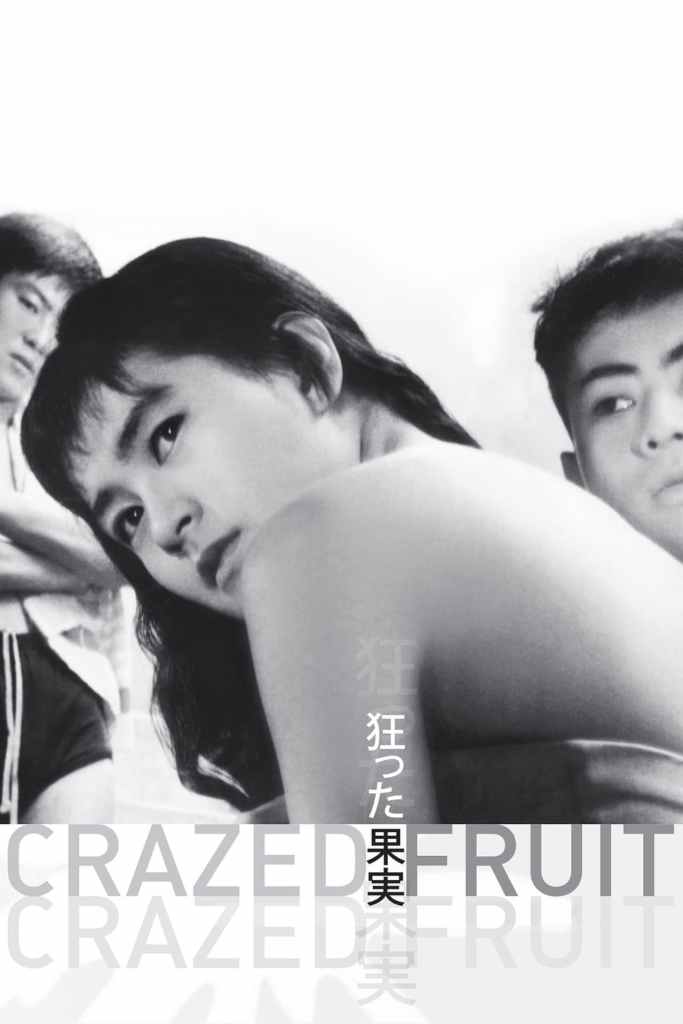
I’ve got a set of Japanese films up today, some older, and a couple newer, starting with 1956’s Crazed Fruit, directed by Kô Nakahira. The film follows a young straight-laced man named Haruji, who, for the summer, is hanging out with his older brother Natsu and Natsu’s friends. The crowd tends to hover around an “ultra cool guy” named Frank; he has American looks to go with this American name, though his parentage is never given, and in general, they are a bunch of teens with raging hormones out looking for love. Haruji, being a bit more staid, doesn’t care for the group much, but he is attracted to a young woman in the area named Eri, so he tags along as a way to see her. Eri and Haruji start dating and he falls head over heels, but she’s got a secret: she’s married to an older American. Natsu finds out, and uses the threat of exposing her to get Eri to sleep with him. Just wait until Haruji finds out! The movie starts slow but really gets going in the second half. It reminded me a bit of the classic 80s teen movies à la John Hughes, but was obviously very risqué for its depiction of a post-war teen society in Japan, an upcoming generation who didn’t care for the traditions that previous generations held so dear, and who saw the free-wheeling, caution-to-the-wind American culture as the wave of the future. ★★★½
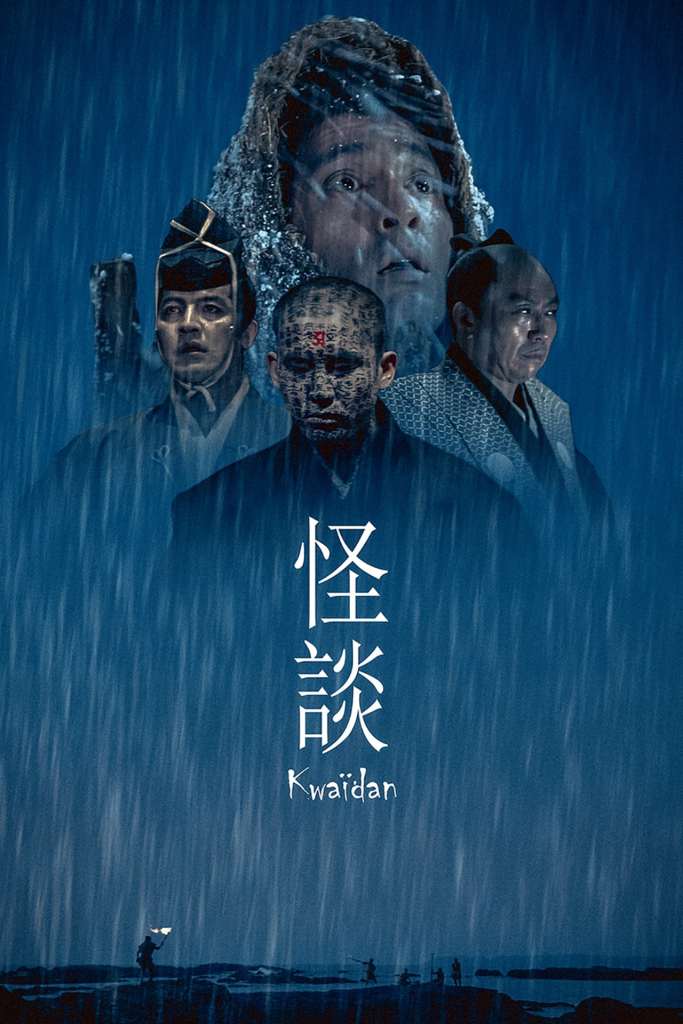
After recently watching a very good (and long) film from director Masaki Kobayashi, I found a couple more. Kwaidan is an semi-horror anthology film of 4 segments, each dealing with ghosts or spirits. In The Black Hair, a samurai leaves his loving wife to marry another, in order to advance his position, but his new marriage is unloving, and he longs to return to his original wife. When he is finally able to, many years later, he finds the house dilapidated, except for his wife’s room where she is still waiting for him. But she may be as dead as the house… In The Woman of the Snow, two men are caught out in the snow, where a snow spirit kills one but spares the second. She does make him promise to never tell a soul about her, a secret he keeps for many years, while he gets married and has kids, but a slip-up one day ruins his idyllic life. Hoichi the Earless tells of a blind musician who unknowingly is brought to a ghostly hall every night to serenade the long-dead spirits of a long-ago war. When the priests try to protect him from the dead, they end up doing more harm. The last segment, In a Cup of Tea, is the purposefully-unfinished story of a tale-within-a-tale, a writer chronicling a samurai haunted by a malevolent spirit inside a tea cup, which may come to haunt the writer too. Each one of these tales is entirely gripping, with gorgeous hand-painted sets (apparently filmed inside a plane hangar, the largest space they could find to accommodate the big sets). Coming off some big hits, Kobayashi was newly signed to studio Toho and they invested in the film heavily; it was the most expensive film ever produced in Japan at the time. And it is a lovely, scary, tense journey from beginning to end, a true masterpiece. It won a prize at Cannes in 1965, and was nominated for an Oscar here in the states. ★★★★★
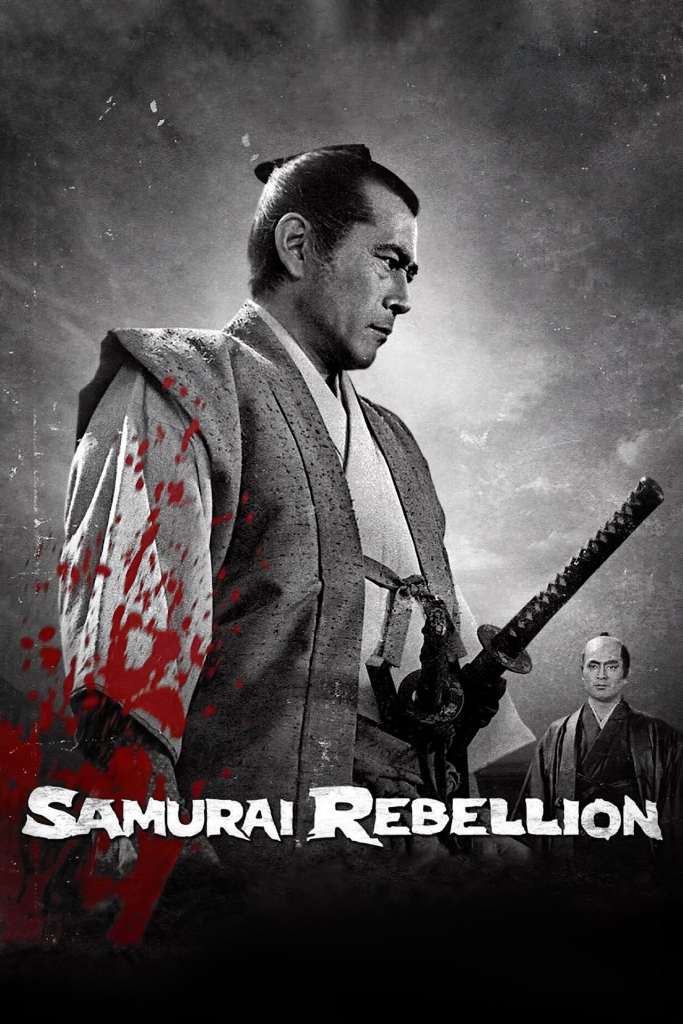
Kobayashi followed up in 1967 with Samurai Rebellion, its attention-grabbing English name since samurai films played well here, though in Japan its original title was more akin to Rebellion: Receive the Wife. The original title better conveys what the film is, not really an action film (though there is plenty of that before the end), and more of a family drama, and a taut one at that. In Edo Japan, Isaburo Sasahara (the incomparable Toshiro Mifune) is head-of-household and one of the Aizu clan’s premier swordsman. Isaburo follows his lord in all things, but fights back a bit when the lord commands Isaburo’s son Yogoro to marry the woman Ichi. Ichi is the former lord’s mistress and even bore him a son, but she fought back against him one day and he now wants her gone. Isaburo has long been in a loveless marriage himself, and doesn’t want to see his son follow suit, so they give some pushback but ultimately agree, in order to keep the peace. Thankfully, Ichi is nothing like what her reputation told, and is a loving wife who gives Yogoro a daughter, Tomi. Turns out Ichi only made a scene at court when the lord’s eye wandered to another, and she didn’t want to be with him anyway. All seems settled until the lord’s eldest son gets sick and dies, setting up Ichi’s son to be the new heir. It would not be proper for the heir’s mother to be married to a vassal, so she is called back to court. Yogoro will not see her go, and this time, Isaburo will not just acquiesce to the lord, setting up a standoff. Really great film, and I’d like to rate it higher, but unfortunately it does really drag at times, with characters constantly repeating themselves (over and over again) so that some 5 minute scenes turn into 15, for really no reason at all that I can tell. Still, a very enjoyable film about standing up to the abuses of power. ★★★½
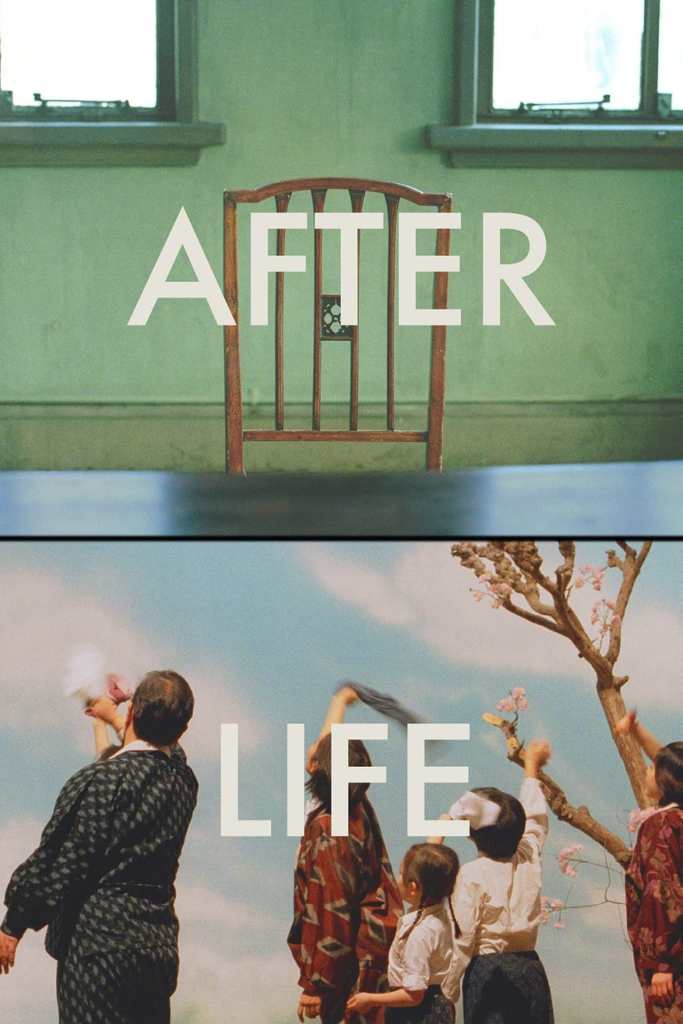
After a few classics, thought I’d turn to more modern films, so finishing with a couple from director Hirokazu Kore-eda. I’ve seen a trio of his more recent films and liked them all (especially Shoplifters and Broker, but also his French film The Truth), so today I’m going back to some earlier films, starting with 1998’s After Life. If you tend to cry at movies, bring a handkerchief to this one. It opens at a school-like building, with counselors wrapping up last week’s visitors (having sent all 18 “on their way”) and discussing this week’s 22 newcomers, assigning a third of them to each of 3 caseworkers. As the new people are being interviewed, we learn that this place is a sort of way station for the newly dead. Over the course of the week, each person has to choose one memory from their life, the only memory that each will retain, to relive for all of eternity. The counselors are there to guide them to this moment in life, and by the end of the week, the crew and actors will reenact that moment on a film stage for the newly departed. After the person sees this newly created moment based on their memory, they are able to move on. The memories the people choose are as varied as humans are from one another: an old lady picks an early memory of cherry blossoms raining from trees when she was 9, a child who died at 1 recalls warm sunlight through the window while their mother was nearby, a middle-aged woman recalls a dance she did as a little girl, etc. Some have a hard time picking one out of so many good memories, while others have difficulty finding one good memory out of a lifetime of mundane moments. One young man flat out refuses to choose a memory, and hints that he didn’t lead a good life and is just thankful that there isn’t a hell waiting for him. Told almost as a documentary as the counselors interview and get to know these people waiting to move on, the viewer takes a trip through those cherished moments in lives, some of which may seem insignificant at the time, but which leave lasting impressions. And what of those counselors themselves? By the end we learn their stories and why they have not advanced to what is next. As touching a film as you will find, if you are loves movies (and don’t mind subtitles), it doesn’t get any better. ★★★★★
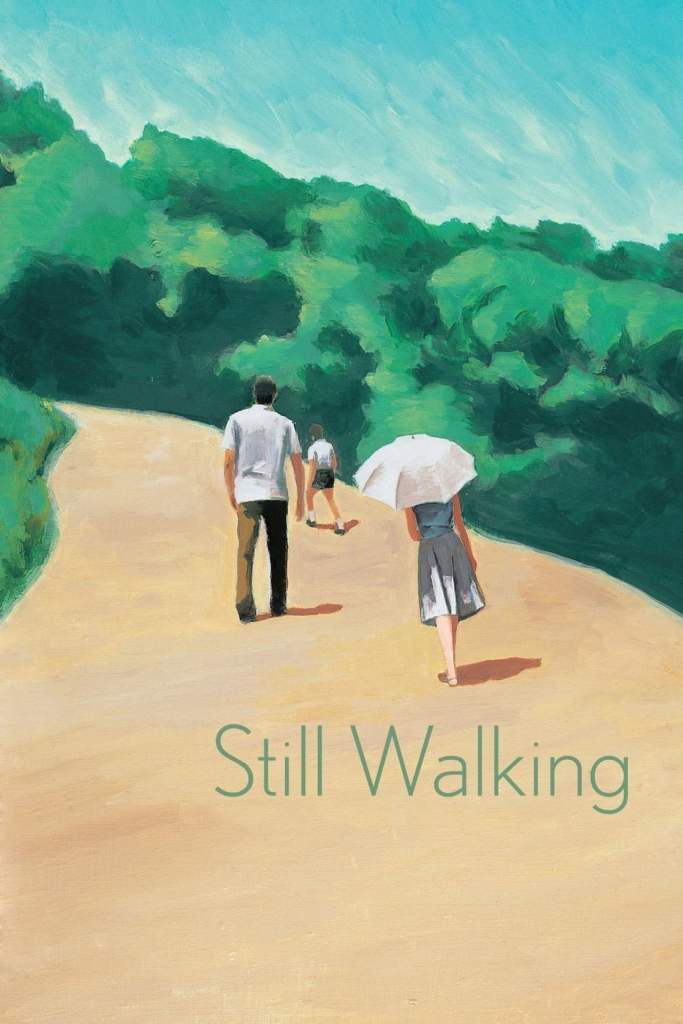
Finished a string of really good movies with Kore-eda’s Still Walking. This is a quiet, subtle family drama, with an almost Ozu-like feel. It takes place (mostly) over one day, on the 12-year anniversary of the death of Junpei Yokoyama. The family gets together every year on this day to remember his life cut short in a drowning while saving a friend. The father, a retired doctor named Kyohei, wanted someone to take over his family medical clinic, and while the popular Junpei was headed in that direction before his death, surviving son Ryota went in a different direction. Ryota is a disappointment in his father’s eyes in more ways that one, going into an unpredictable field (art restoration) and marrying a widow with a child (historically a no-no in Japan). Also at the house for the day is Ryoto’s sister Chinami and her unassuming husband and kids. The glue in the family, as is the case for most families, is their mother and Kyohei’s wife Toshiko, whom everyone acquiesces to. Ryota feels the weight of lost dreams, walking with a hunch around the house though straightening when he is outside, and the family constantly tells fond stories of Junpei, even when memories are wrong and it was actually Ryoto who did some of the deeds now credited to Junpei. And whereas Ryoto’s old room has become storage, Junpei’s remains much as it did all those years ago. Some family drama comes to light throughout the film, but there are no significant revelations or “gotcha” moments ever; it stays strictly a realistic film about how a sudden death can change the course of an entire family. Outstanding, understated movie that won’t necessarily move you while you are watching it, but one that will leave an impression long after it ends. ★★★★
- TV series recently watched: Mr Robot (season 4), Mindhunter (season 2), The Completely Made-up Adventures of Dick Turpin (season 1), The Brothers Sun (series), The Walking Dead: The Ones Who Live (series)
- Book currently reading: North and South by Elizabeth Gaskell

 Jons Movie Takes
2 thoughts on “Quick takes on Kwaidan and other Japanese films”