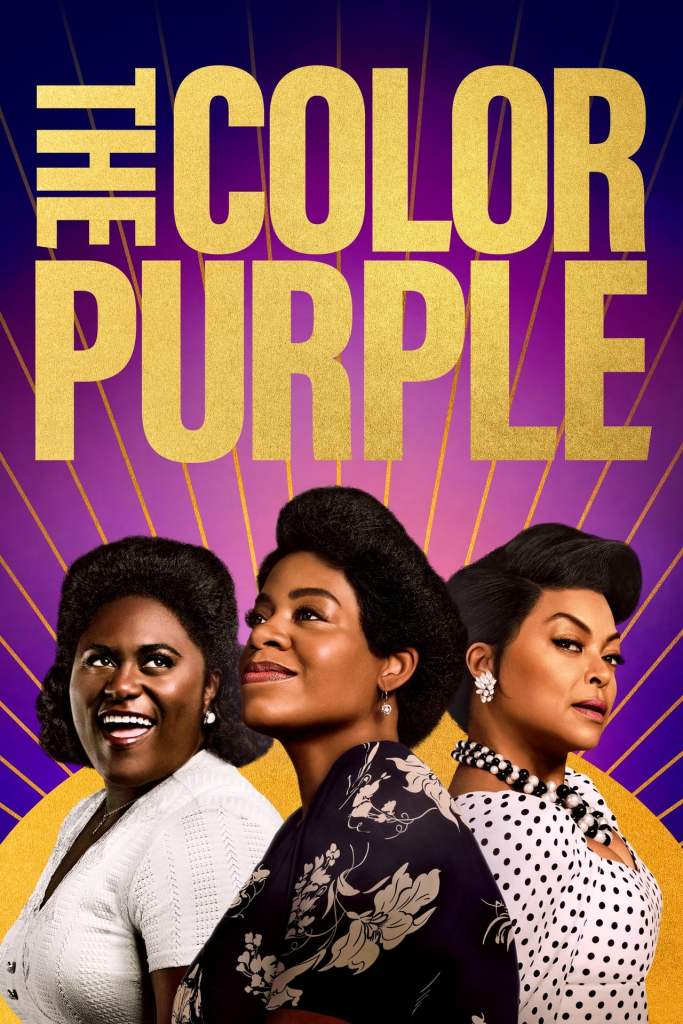
The Color Purple is a movie based on a musical which is itself based on a book, which I read just a few years ago. If you’d like to get the gist of the story, you can read my blurb on the book here. This film is fantastic, and a fairly faithful adaptation, though events are a bit out of order here and there (at least, from the book; I have not seen the musical). But the important message is the same: Celie is born into a hopeless situation and finds nothing but adversity throughout much of her life, but is able to persevere and find happiness in the end. The movie is dark at times but not nearly as dark as the book, leaving out much of the constant beating Celie received from her husband for all those years, and only touching on other dark moments in her life; I think they would have been hit with a hard R rating if they’d kept some of those elements. It also plays a bit better in book form, where it reads as letters written instead of a narrative story, but still, this is a very good interpretation and is as moving a story as you will find. ★★★★
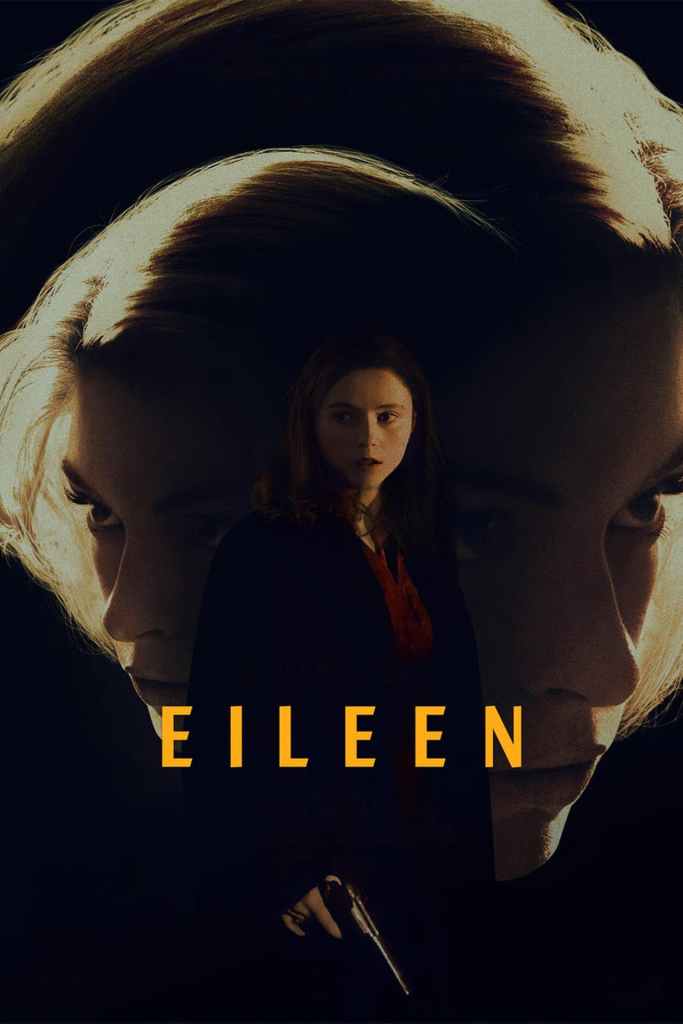
Eileen is a story of two halves. The first is in getting to know Eileen, a young woman in the 1960s who works at the local teenage prison/correction facility. Everyone knows who Eileen is because her father is Jim, former chief of police in the small town, who lost his edge on life when his wife died. Jim is now an alcoholic and is emotionally abusive towards Eileen, something that grants her the sympathy of the townspeople. At work, Eileen daydreams about sleeping with the handsome guards, and at home, daydreams about killing herself or her father (or both). It’s a dreary existence, but excitement comes in the person of Rebecca, a newly arrived psychologist brought in to talk to new inmate Lee Polk, a teen charged with brutally killing his police officer father. Rebecca is everything that Eileen is not: outgoing, sexy, self-assured, and the eye-catcher for every man she walks by. When the hint of a love affair sparks between Eileen and Rebecca, I thought this film was really going somewhere. And then the shoe fell off. The movie takes a very strange, out-of-character turn, and it never finds its way back to the path (Spoiler ahead). Rebecca invites Eileen over to her house, but when Eileen gets there, Rebecca is a nervous wreck, and eventually admits it isn’t her house. It is Lee’s parent’s home, and in the basement, Rebecca has tied up Lee’s mom in order to extract a confession that Lee’s dad was abusing him, to help in Lee’s defense. It’s so out of left field that I couldn’t settle in after this, even though ultimately the film tries to show more of Eileen’s character than Rebecca’s. Anne Hathaway is Rebecca, and she was OK if a bit stereotypical, but Thomas McKenzie is spectacular as Eileen. Since I saw her first as a teen in Leave No Trace, she’s continued to surprise me. ★★½

If Tilda Swinton is in it, more times than not I’m going to like the film; she just seems to have a good eye for scripts. In The Eternal Daughter, she reunites with director Joanna Hogg (I loved her film The Souvenir, its sequel… not so much). In this film, Swinton has two roles: a middle-aged woman named Julie and her mother, Rosalind. The two are checking into a large house that has been converted into a hotel, and get flack immediately from the front desk clerk. She doesn’t want to meet their requests for a certain room or accommodations, despite the hotel seeming empty with no other guests (in her defense, Julie is pretty overbearing and exacting). The movie gets into the “action” pretty quick, which is the eeriness of the hotel. Julie will take a long look at a window, like you would do if you think you see something, but we the viewers never see what she is seeing, so we don’t know if there’s something there or if Julie’s just seeing things. And there’s strange noises at night, which gives the viewer the creeps for sure, but they could easily be explained by Julie’s sleep deprivation and the fact that it is an old house (I live in a 100 year old house, and all kinds of things “go bump in the night”). The reason for Julie’s and Rosalind’s choice of this location eventually becomes clear: it was once owned by Rosalind’s family and she had some happy (and some very sad) memories of the place. Julie is a filmmaker, and she’s trying to write a story about her mom’s life while she is still alive, but severe writer’s block is keeping her from even getting started. The tension builds to a big surprise (which wasn’t really a surprise to this tired old critic who has seen it all) but the climax isn’t really what this movie is all about. It’s about Julie coming to terms with her mom and how she has put much of her life on hold to care for her. Fantastic acting by Swinton and a sure hand by Hogg, but the slow pace will test some people’s patience. Not mine. ★★★★
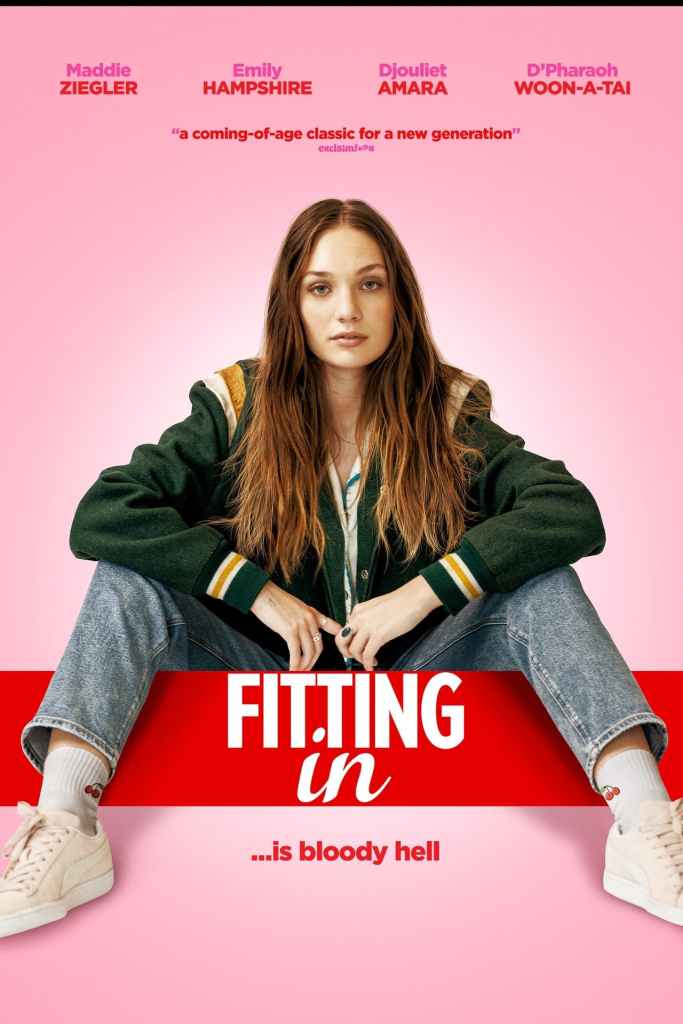
Fitting In is an outstanding coming-of-age indie film out of Canada. Lindy is 16 years old, new at school with just a single friend, and her life is about to come crashing down. She likes a boy at school and her friend urges her to get on birth control before Lindy starts having sex, so she goes to a doctor for an exam to get on the pill. Despite being 16, Lindy has not had her period, something that she never really thought too much of, since her mom too was nearly 17 before she started menstruating, and Lindy and her mom just figured late blooming ran in the family. However, when Lindy tells this to the doctor, he takes one look at her well developed body and knows something is up. A vaginal exam confirms it: Lindy has a rare disorder called MRKH syndrome. She was born with ovaries but no uterus and only an inch of underdeveloped vagina, something not discovered previously since she looks completely normal on the outside. Not only can she not sleep with her boyfriend, but she can never birth children. The doctor sends her home with various sized dildos in order to stretch out her vagina over the next “3 to 18 months, however long it takes” so that she can have sexual intercourse one day, but that’s not the kind of thing a 16-year-old wants to hear. If we can all remember what life was like trying to survive high school without something hanging over your head, try to imagine what Lindy starts thinking about. Maddie Ziegler’s performance as Lindy is a revelation, and while the film delves down into too many clichés, it lands on its feet by the end, and is able to visit several modern-day issues teens face (whether parents want to hear about it or not). ★★★½

I.S.S. brings together a decent cast of recognizable faces for some space adventure, but unfortunately it doesn’t all come together. Aboard the International Space Station, Americans and Russians have always been able to work together, no matter what political turmoils are going on down on Earth. However, one morning, the astronauts glance out the window and see flashes of light from the surface of the planet, which immediately seem to be the detonations of large, possibly nuclear, bombs. Communications are down for awhile, but when they come back up, the Americans receive a message that they are to take command of the I.S.S., by any means necessary. Guessing that the Russian cosmonauts have received the same message from their country, tension on the station ratchets up, with everyone playing dumb and saying they’ve received no new messages from the planet. It isn’t long before someone makes a move though, and out in the space, there’s really no where to hide. That could have been a good tagline. Anyway, the whole thing isn’t as suspenseful as the filmmakers would have hoped, and the talented cast is wasted on this gussied-up B movie with some neat effects. ★★

 Jons Movie Takes
Definitely on target on The Color Purple … I think I have seen something like ISS, if not that movie, wasn’t impressed
LikeLike