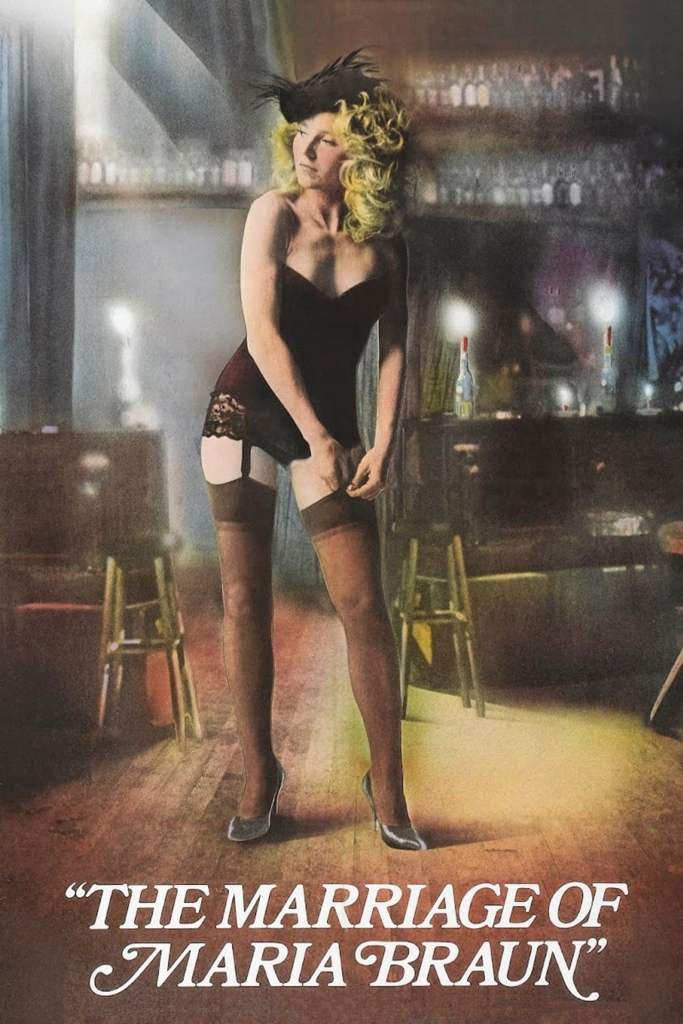
Been awhile since I visited Rainer Werner Fassbinder, one of Germany’s best all-time directors. First I loved him, then I didn’t (granted, these were his earlier films), and then I did again. First up today is 3 films that make up his BRD trilogy, starting with The Marriage of Maria Braun from 1978, which stars longtime Fassbinder collaborator Hanna Schygulla in the title role. The film opens with Maria’s marriage to Nazi German officer Hermann, even as bombs rain down from the approaching US military. When we see Maria again, Hermann is missing and presumed dead. Maria holds out hope for his return for a long time, but as the only breadwinner in a house with her mom and grandpa, Maria finally turns to prostitution to make ends meet. She takes up with American soldier Bill, but when Hermann arrives home alive one day, Maria kills her lover. Hermann doesn’t want to see his wife in jail, so he takes the rap for the murder and is sentenced to prison. Maria makes the decision to never be on the losing side of life again, and she spends the rest of the movie manipulating people to improve her situation. This includes seducing her boss Oswald, before he can do the same to her, so that she is in the power position. What’s worse, she brazenly tells her jailed husband about her exploits, all in the guise that she is doing it for him, in order to save up money for when he gets out. A powerful film about greed and cruelty and the lengths someone will go to for a comfortable life. ★★★½

Lola is a fantastic film and similar to Sternberg’s German film The Blue Angel (both films were based on the same book). In a town in West Germany, all of the men frequent the local brothel, whose star is Lola. The newcomer in town is von Bohm, the new building commissioner. Cultured and refined, he doesn’t drink to excess and seems to be a fine, upstanding man; everyone becomes enamored with him. He has only good thoughts for the men around town, not knowing about their activities in the evenings. Lola’s patron, brothel owner (and property developer) Schuckert, bets Lola that von Bohm wouldn’t even kiss her hand, so she sets out to prove everyone wrong. Not letting on to her real life, she goes to von Bohm disguised as a refined woman; she and he start to date. A musician at the brothel who has a thing for Lola, Esslin, wants to crush von Bohm’s lofty ideals and brings him to the club one night. When von Bohm sees his fellows carousing and, worse, Lola up on stage strutting, his romanticism is smashed. On the surface, seems like a pretty simple film, but there’s a lot going on here. Barbara Sukowa is fantastic as Lola, a woman who I first thought hated herself and her life, but later realized that all she craves is to be a member of the “boys club” which keeps people like her in their place. ★★★★
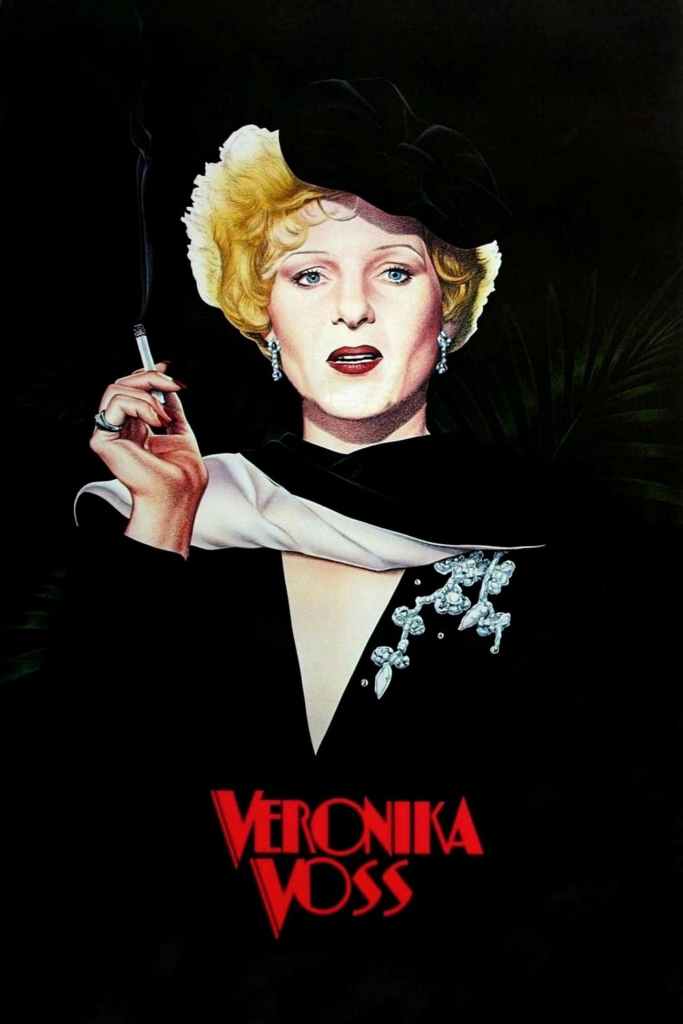
Veronika Voss is a pretty straight forward film, but for a guy like me who likes a good story, it doesn’t get any better. The eponymous Veronika was once a film star, but that was 15+ years ago, and now she is only recognized by the older crowd, who still clamor for an autograph even when most people don’t even recognize her. In her head though, Veronika is still a star, one film away from taking back her spotlight. But she’s got demons. A chance meeting with a reporter, Robert Krohn, gets him digging in to what happened to Veronika. Her house is mostly empty, her estranged husband is not to be found, and Veronika seems to live at her psychiatrist’s office, in beds the doc keeps for mental patients. The doctor, Marianne Katz, tells Krohn that Veronika is a disturbed woman who can’t let go of the past, and that seems to be the case, but Krohn suspects there is more to the story. Veronika is charming and beautiful most of the time, but is prone to neurotic episodes. Even so, Krohn falls in love with her, and his girlfriend Henriette is helpless to only watch it happen. Krohn finally learns that Veronika’s doctor has her hooked on morphine, and has been draining her wealth for years. It all leads to an explosive and emotional ending. For a director most widely labeled as part of the New German Cinema movement, this may be the most traditional, straight-ahead, story-driven Fassbinder film I’ve seen. And I loved it all. ★★★★★
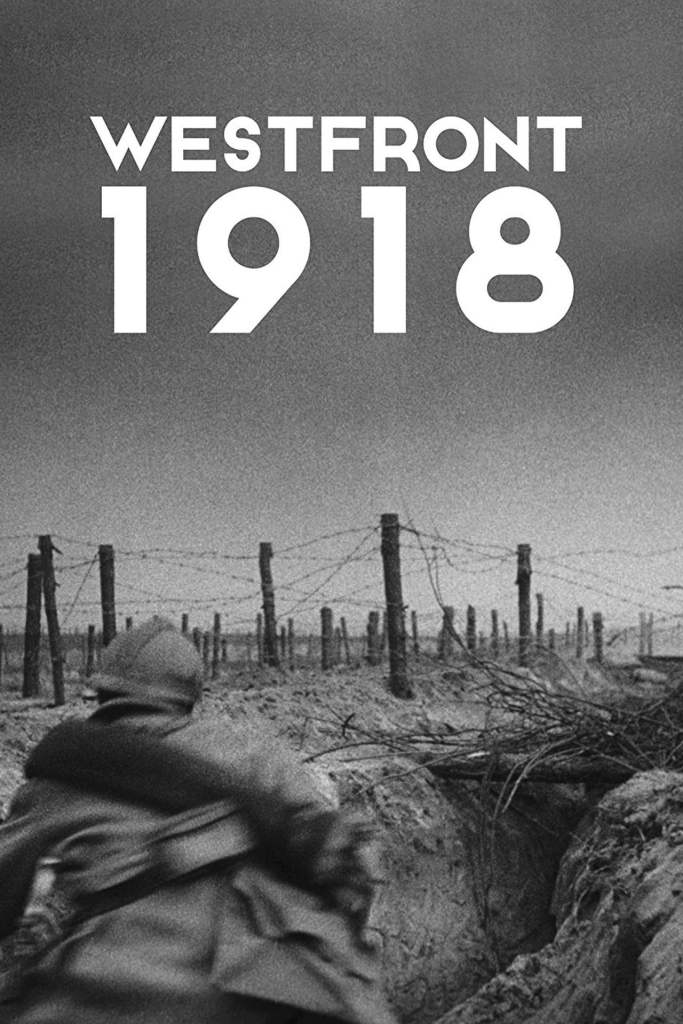
Three Fassbinder films, and now three films from director G.W. Pabst, from an entirely different era. Pabst’s career straddled the silent era (I’ve seen his Pandora’s Box, one of his most famous pictures) and then talkies, but today I’ve watched 3 early sound films, starting with 1930’s Westfront 1918. At first I thought this was going to be one of those faceless (no strong character building) war films that is heavy on technical aspects but light on heart, but I was proven wrong. It takes place on the German front during World War I. It features 2 main characters, Karl and “the student,” who is never named. After a very unsettling beginning (I doubt the French farm women were so enamored with their German captors as this film depicts), the movie settles in. This particular regiment is right on the front and is constantly under fire, if not from the French then from their own artillery as friendly fire. People are dying constantly, and when reinforcements arrive, you can’t believe that these bright-eyed boys will be fighting on the front soon. Home life is not much better; when on leave, Karl goes home to find his mother waiting in long lines for basic goods and his wife in bed with another man. The movie looks and sounds great, so much so that I can’t believe it was made in 1930, and the final scenes are powerful, but the film as a whole felt pretty average. In its time, it was probably spectacular. ★★★
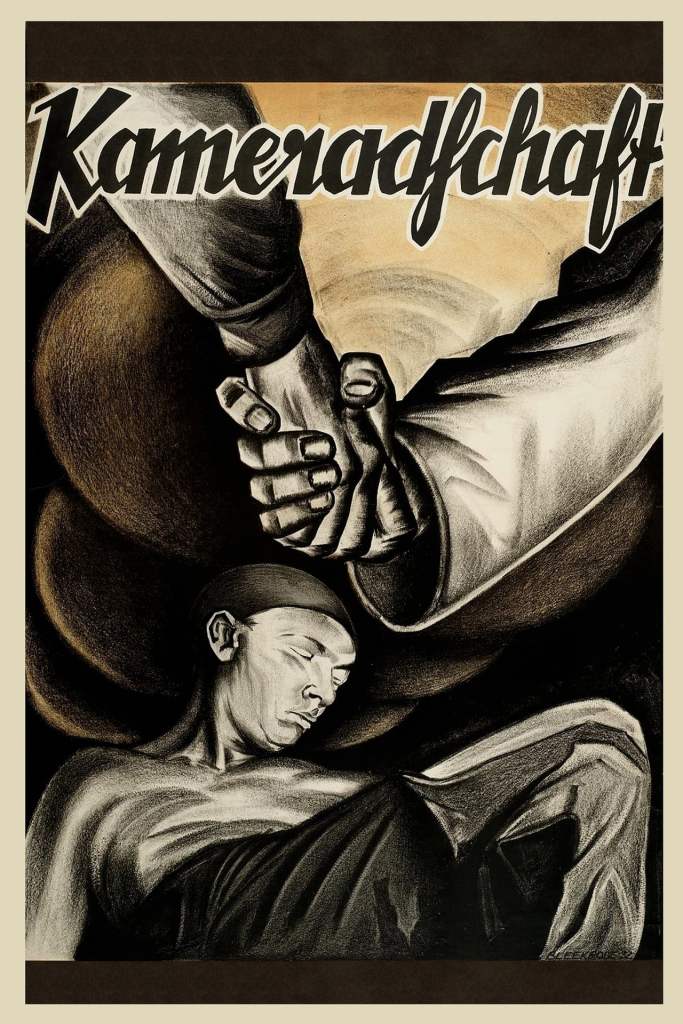
Kameradschaft (Comradeship) is another anti-war film, but with an entirely different setting. Taking place shortly after The Great War in a German border town, the main industry is mining, same as it is on the French town just on the other side of the gate (there’s even a barred gate inside the mine, right at the border, to keep the “2 mines” separate). The people from both towns intermingle at bars and their children play together, but there is always a tension, as the people still remember the recent war when they were at each other’s throats. When a fire breaks out in the French mine and there is a partial collapse, trapping miners underground, the Germans don’t hesitate to go help their mining brothers. As one of them calls out in a rallying cry, the Frenchman have wives and children at home too, and they are all miners first and foremost. The rest of the film plays out in the mines, on a spectacularly built set that certainly looks and feels like a real mine. As in the above film, Pabst’s use of sound is exemplary; you’d never guess he came out of the silent era. At the end of the film, the Germans are able to save most of their French fellow workers, but even as they give speeches about setting aside differences for the good of common man, their governments are rebuilding the gates down in the mine to keep them apart. Lots of tension in this movie, edge-of-your-seat thrills, and I couldn’t help but get swept up in the good feelings of helping someone you may have faced off against in war just a couple years prior. Would people be able to do that today, when even in our own country people can’t even converse with others of different political views? ★★★★
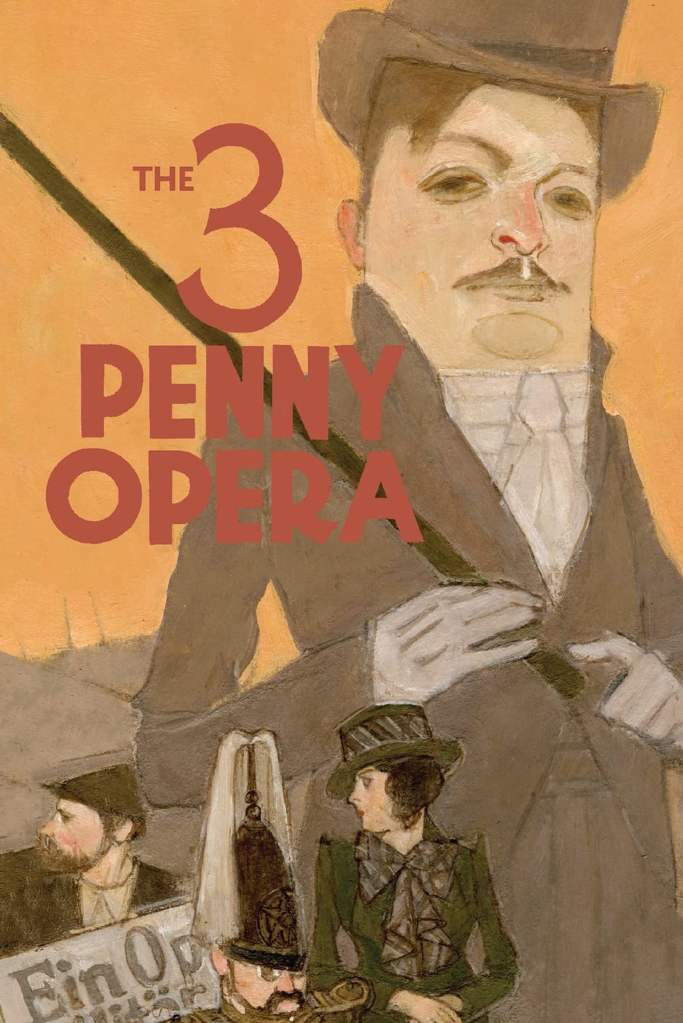
The Threepenny Opera is a decent film, but has a more exciting story behind its production (more on that at the end). Based on a German play which is itself based on an English ballad opera (“The Beggar’s Opera”), it follows a ne’er-do-well villainous kingpin named Mackie, known in the underworld as Mack the Knife (and yes, the popular song originated in the German play). Mackie clawed his way up the ranks until he now leads the underworld, so Jenny the prostitute is no longer good enough to hang on his arm. Instead, he sets his eyes on Polly Peachum, who is the daughter of the “king of beggars,” the only other person with the same amount of clout as Mackie on Berlin’s seedy streets. The two marry, infuriating Peachum, and making him set his eyes on taking Mackie down. Keeping Mackie safe from the law has been Jackie “Tiger” Brown, chief of police and Mackie’s old war buddy, so Peachum will have to target Brown as well. Mackie’s luck does run out finally though, and he is arrested, jailed, and prepared for the gallows. To his rescue comes good ol’ Jenny, who distracts the guard long enough for Mackie to make his escape. Peachum has an ace up his sleeve though, a final act to try to win the day. The film starts out great with lots of intrigue, some laughs, and great jazz-influenced tunes, but peters out in the last 20-30 minutes. Better is the story of the film’s production, which involves lawsuits, double crosses, bankruptcies, and being banned by the Nazi party shortly after its release. I’d urge you to look it up online if you are interested, because it’s great stuff, but the best tidbit comes from original playwright Bertolt Brecht. After his success with the play, he only agreed to sell the rights to the film if he could screenwrite it. A notorious procrastinator, he took so long in getting it done that Pabst went ahead without him. Brecht later sued (and lost) because the film ended up quite different from the original play (even though some of the changes were ones that Brecht himself was going to implement, due to his evolving Marxist ideals) and charged Pabst and his crew with plagiarism. Again, hilarious, because Brecht himself was often accused of the same practice! ★★½
- TV series recently watched: Monsieur Spade (series), Batman: The Animated Series (season 2), Monarch: Legacy of Monsters (season 1)
- Book currently reading: The Butlerian Jihad by Herbert & Anderson

 Jons Movie Takes