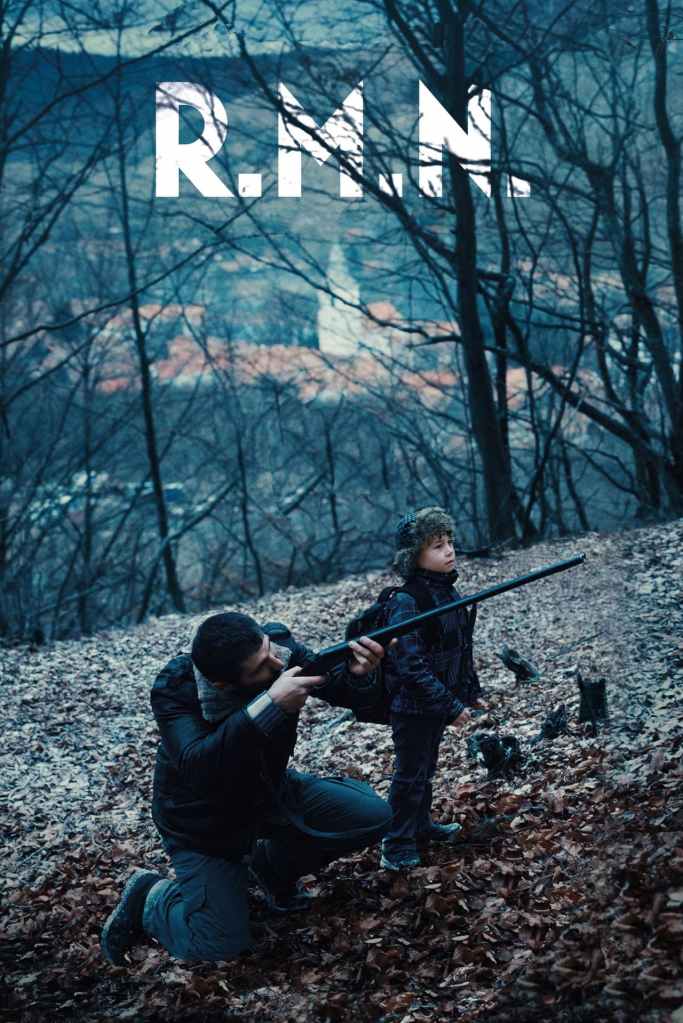
R.M.N. is the latest from director Cristian Mungiu, a lauded Romanian filmmaker, but this is the first of his films I’ve seen. I hope the others are better than this one, because I do not understand all the critical praise this thing has gotten. It follows a man named Matthias who leaves Germany to return to his hometown in Romania. He left Germany suddenly because he got in a fight with his boss at work after being called a gypsy, but back in his hometown with his estranged wife and neighbors, he pretends he left on his own accord and is “just in the area for a bit.” The town has seen better days. A nearby mine used to be the biggest employer, but it closed years ago, and most working men have left (like Matthias did) to work abroad for a decent wage. One local company is still active, a bakery, but they can only afford to pay minimum wages and no one is applying for its job openings, forcing them to take in immigrant workers from Sri Lanka. These new workers, who are not illegal and have the proper work permits, get the town in a tizzy, with all kinds of racial slurs being thrown around. You’d think that Matthias would side with the workers, having recently been targeted himself, but he almost refuses to take any side, only superficially aiding his lover (a manager at the bakery) but clandestinely siding with the good ol’ boys in town against the company. Against all of this backdrop, Matthias is also trying to make his young son “man up” after the boy saw something in the woods that spooked him, making him too fearful to sleep alone in bed or walk to school by himself. There’s some good moments here and there, but the town’s reaction to the workers is so over the top, in a region that is already multiethnic, that is almost seems too much (even though it is actually based on real events in the region in 2020). I try to believe that thinking like that doesn’t still exist in this world. The wild ending that you do not see coming almost makes up for the film’s shortcomings. Almost. ★★½

Amanda, on the other hand, hits it out of the park. A comedy drama with equal parts of both (will alternately make you laugh out loud and lean in towards the tv as it grips you), the film is about the 25-year-old eponymous young woman. Born into a wealthy family, she has reached her age without really doing anything with her life. To say she is a drifter may be putting it mildly; she doesn’t even drift. Very self-centered, but not in a narcissist way, she’s so wrapped up in her own problems that she doesn’t see what’s going on around her. When her family forbids the housekeeper from hanging out with her anymore, an act to try to force her to make a friend, Amanda finally decides she needs to do just that. Turns out, she may be able to find one. A neighbor’s daughter, Rebecca, is an isolationist who rarely leaves her room and never leaves the home’s compound. She and Amanda hung out as kids until Amanda’s family moved away for awhile. Now that they’ve returned to the area, Amanda is convinced that Rebecca is the longtime friend she’s always missed in her life, and sets out to make it happen. Of course, this is one thing she can’t just will into existence. A quirky comedy about people who all have a personality disorder (or 2), it’s a very funny yet also tenderly built film about finding your way without a map. Outstanding performance from lead Benedetta Porcaroli as Amanda, who gives off young Alicia Vikander vibes. ★★★★½
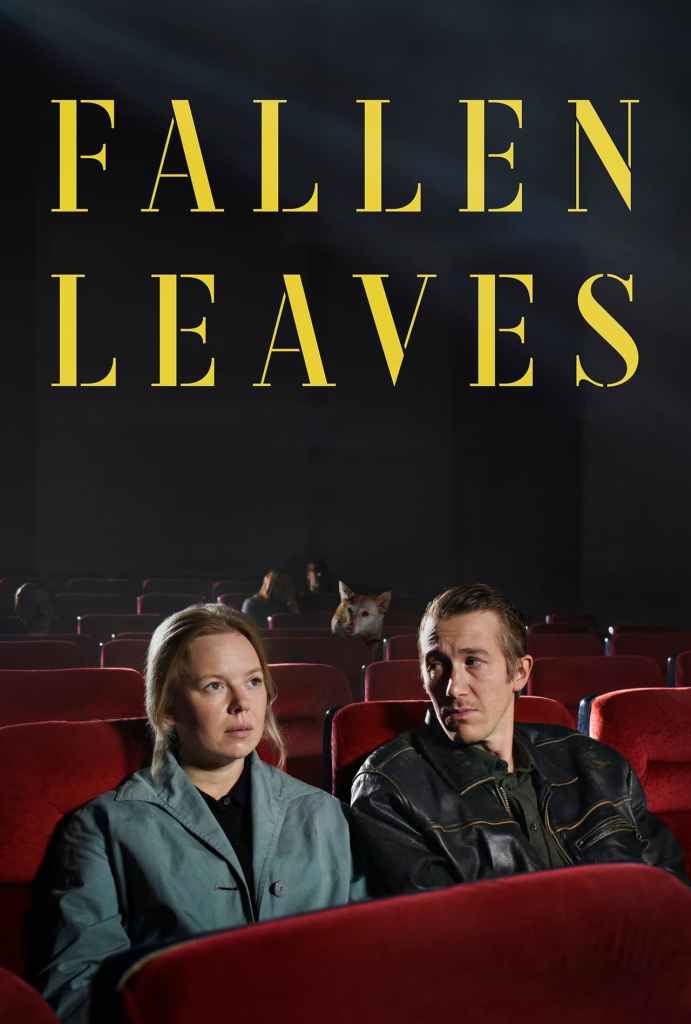
Fallen Leaves is the latest from Finnish director Aki Kaurismäki, with whom I have a passing familiarity. Two main characters here: Ansa and Holappa, both of whom are struggling with employment and loneliness. Anna’s problems are out of her control, as she is bouncing from job to job because of poor bosses (never a good thing when one is arrested for selling drugs on payday). Holappa’s issues are self inflicted; he is an alcoholic who can’t stop drinking, even on the job. The two briefly meet at a bar one night, and afterwards, it seems fate continues to keep them in each other’s orbit, even when Holappa loses her phone number or even (gasp!) gets hit by a train. But Ansa, who lost a father and brother to drinking, won’t accept Holappa unless he can give up the bottle. Though it has been awhile since I’ve seen a Kaurismäki film, his style is instantly recognizable, with scenes using his preferred color palettes and his telltale stationary camera angles. A sweet and endearing film with just the right amount of laughs too. It doesn’t break any new ground, but it is beautifully told and acted. ★★★½

Unrest, however, has none of those things. Taking place in the 19th century in Switzerland, it follows 2 competing watch factories, one supported by the government (municipality) and the other run by anarchists, who are trying to increase influence in the area. Much of the film is focused on the production of the timepieces, and we see whole stretches of time devoted to the making of them. If that sounds boring, honestly it’s the best part of the movie (fascinating to me, anyway). The anarchists are presented as these happy-go-lucky people who are willing to sacrifice their wages to help those in need, and all they want is to work and live without a centralized, taxing government telling them what to do. Golly gee, those wonderful anarchists! Goes out of its way to show how ridiculous managers can be in their treatment of lowly employees, and felt like propaganda. Awful, wooden acting (if you can call it that, seemed like they were just rehearsing lines) is the icing on top. Complete waste of time. ½

Rimini has been on my radar for awhile, and I’m glad it finally started streaming on Mubi. The story is of a man in his 50’s (but it’s a hard 50, if you know what I mean) named Richie Bravo. A popular pop singer decades ago, he’s relegated to lounge singing for 60+ year olds who still remember him for what he was. He prostitutes for them on the side, and rents out his house to adoring fans, sneaking into empty hotel rooms to sleep at night. An attractive young woman shows up one day and Richie starts hitting on her, but she storms off without a word. Turns out it is his 18-year-old daughter Tessa, here to collect the $30k in back child support that he never paid. Having not seen her in 12 years, Richie didn’t recognize her, and of course he doesn’t have anywhere near that kind of money, having drunk it all away years ago. He scrounges for what money he can, and eventually comes up with it through a dirty scheme, but what she does with that money may surprise you. It certainly surprises Richie! Along the way, we learn about a deeply troubled man who carries around a lot of baggage from a very early age. In a twist right out of the Bible, we also see that the downside of Richie’s life may not be his fault, when we see that his ailing father, a man who often doesn’t know where he is, shows that he has devilish secrets in his past. A very much “sins of the father visited upon his sons” kind of thing. I loved this movie; sometimes it is easy to explain a man’s downfall as the bad decisions he made along the way, but that is often only half the picture, and this movie explores it all. The director, Ulrich Seidl, made a companion film, Sparta, about Richie’s brother, but that film was broiled in controversy and has questionable (to say the least) material, so I may not visit it, but as good as Rimini is, I’ll at least have to think it over. ★★★★

 Jons Movie Takes
2 thoughts on “Quick takes on Rimini and other foreign films”