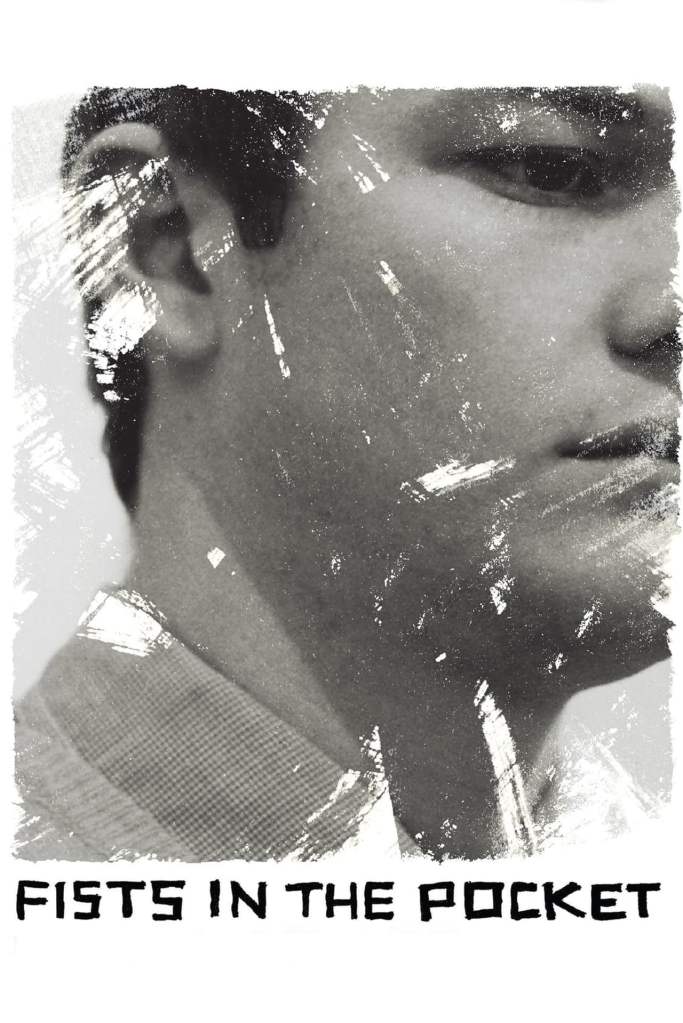
It’s been a little while since a film completely blew me away. Fists in the Pocket did just that, with a tale of a dysfunctional family in a rural villa. Once from money, the family has fallen on hard times, in no small part because of its living members. The matriarch is blind and mostly forgotten in the house; eldest son Augusto is the true man of the house and the only breadwinner; daughter Giulia is a self-absorbed bitch; and fellow brothers Leone and Alessandro are epileptic and have their own problems: Leone is simple of mind, and “Ale” is a psychopath by every definition of the word. It is mostly Ale and Giulia who vie for Augusto’s attention, but in the most unhealthy of ways. Giulia flaunts the lover letter her brother Ale wrote her, and Ale tries to exert power over anyone who is perceived weaker than himself, while fermenting an incestuous relationship with his sister. Augusto though, for the most part, keeps the family in check, but I get the feeling he secretly loves the power he wields, and he hoards it over his siblings. If Ale is going to get more of the power he covets, he will need to get Augusto out of the picture. He’s too afraid to attack him directly, so he instead plots to kill the rest of the family, which would then free Augusto to marry his girlfriend and move to the city. A lot goes on in this movie, but what makes it stand out is the amazing performances by the trio of leads. Lou Castel as Ale is always arresting in every scene, as a lunatic with no redeeming qualities, yet he fools his family enough to get by. Little things like when he rehearses movements with his hands before conversations with his brother drive home how hard Ale is working to appear normal. The film drew a lot of criticism from the Catholic church when it came out, as Ale also goes through the motions of observing his faith, often right before or after committing some crime, but I think it was used more to show the depths of Ale’s sociopathy. Loved every minute of it. ★★★★★
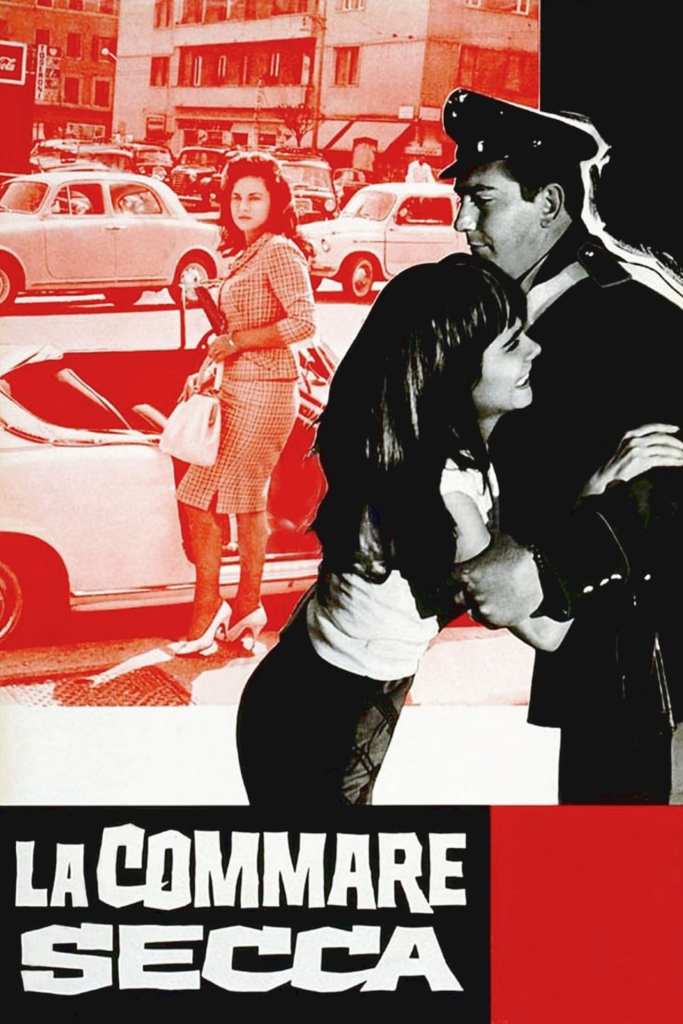
La Commare Secca gives the set up of the film from the very start: a prostitute is found dead along the riverfront, just outside of a park. The police round up a bunch of suspects, people who were in the park that night, and start getting alibis. For each one, the viewer sees immediately that no one is telling the truth. The film plays out as each person gives their side of the story, but unfortunately it plays out as sort of a poor man’s Rashomon. Though none of them are faultless, there’s one man in particular who exudes villainy from the get-go, so you don’t have to guess too far to know who the murderer is. ★★
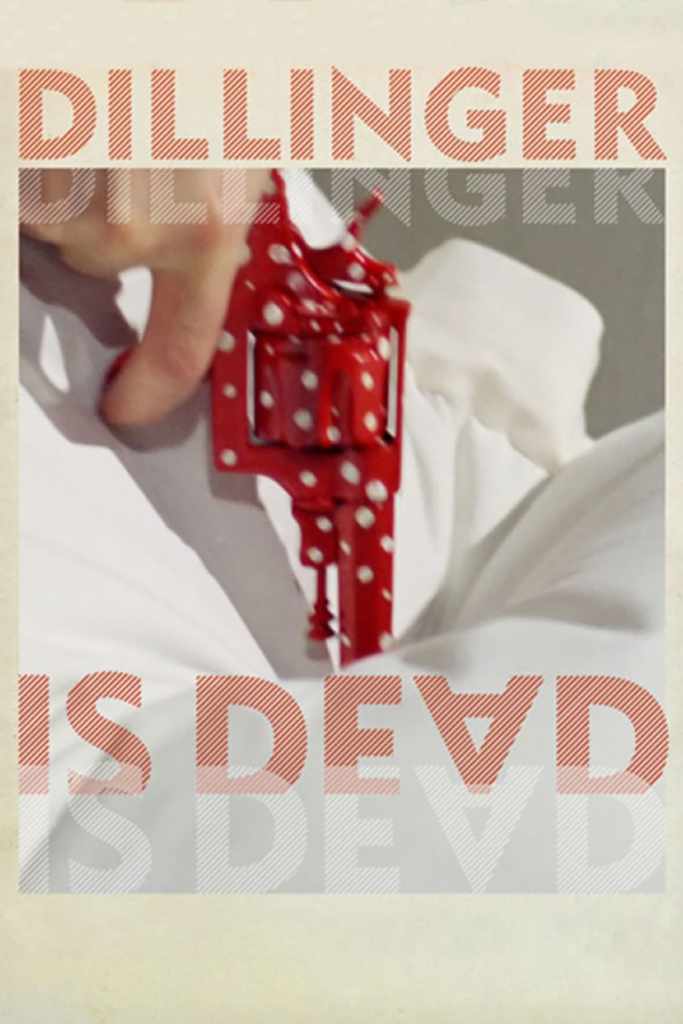
Dillinger is Dead is a slow-burn drama and very nearly one-man show, a showcase for the talents of esteemed French actor Michel Piccoli. The film follows his character, Glauco, over the course of one long day. We immediately see that the man is a bit disturbed and pervy, into voyeurism (when he can get away with it), and he is hiding his “true” self from the world around him. After leaving work (he designs gas masks, and his coworkers laud his work as an existential effort about masking ourselves from industrialist society, when in reality Glauco designed them from his own dark soul), he goes home to find his wife sick in bed. She made him dinner, but it is cold, so he begins to prepare a new, gourmet meal for himself. While looking for ingredients in the back of the cabinet, he stumbles upon a very old revolver, wrapped in a newspaper extolling the death of John Dillinger. Thinking this may be the killing weapon, Glauco sets out for the evening to restore the gun, cleaning and oiling it while he prepares his dinner. At times, he’ll hold it to his head and play-act at suicide. At some point, the family maid comes in, a woman to whom Glauco is attracted, and he later seduces her. The movie ticks by slowly, with this always-simmering feeling of perverseness and a real sense of impending doom. The finale does not disappoint. I got sort of Jeanne Dielman, 23 quai du Commerce, 1080 Bruxelles vibes. There are a lot of similarities, such as a nearly complete lack of dialogue, as well as watching our main character go about mundane actions (cooking, watching TV, etc), but mostly because of the boiling sense of wrongness and the fact that the character loses it in the end; but whereas Jeanne was just done with society because of the role it forced her into, Glauco is a pure sociopath from the beginning. ★★★★½
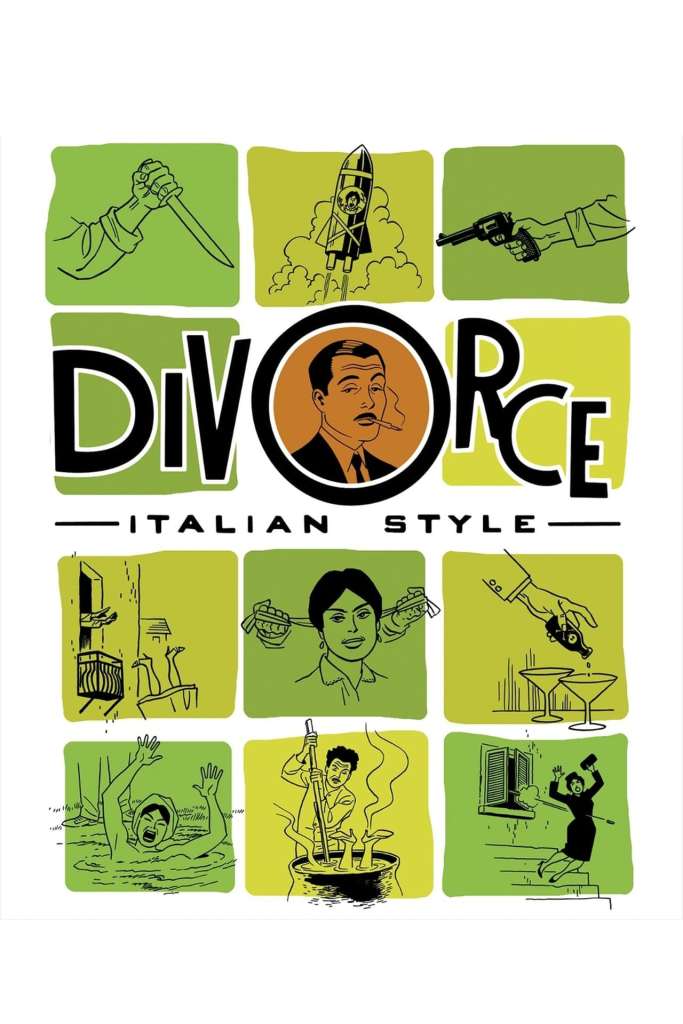
Some heavy films in a row there, so for some lighter fare, I hunted down a comedy, and to boot, it stars arguably the most recognizable Italian actor of all time, Marcello Mastroianni. Divorce Italian Style is fantastic, and an easy viewing for all, even if you are usually hesitant about reading subtitles. Mastroianni plays Ferdinando Cefalû (Fefè), a man from a formerly wealthy estate but whose father has lost much of their lands to his brother (Fefè’s uncle). Fefè is married 12 years to Rosalia, a woman for whom he has no more feelings. In fact, Fefè is deeply in love with his cousin (said uncle’s daughter), 16-year-old Angela. And Fefè is willing to do anything to get her, up to and including murder. After witnessing a recent trial where a woman was given a light sentence after murdering her philandering husband, Fefè hatches a plan to find a man to woo Rosalia, so that Fefè can kill her and free himself. He has trouble finding a candidate, until fate throws him just the man he needs. Rosalia was in love with a man before the war (WW2), but he was thought dead, and she moved on. Turns out he is alive, and Fefè hires him to do some work around the house. When this man and Rosalia see each other for the first time, Fefè thinks he is golden. But he still needs to enact his scheme. Lots of funny stuff, including from Fefè’s sister, who is in love with a man but whom Fefè has yet to approve their marriage, despite he continually walking in on their amorous actions in every dark corner of the house. You’ll laugh often and loud throughout this one. ★★★★
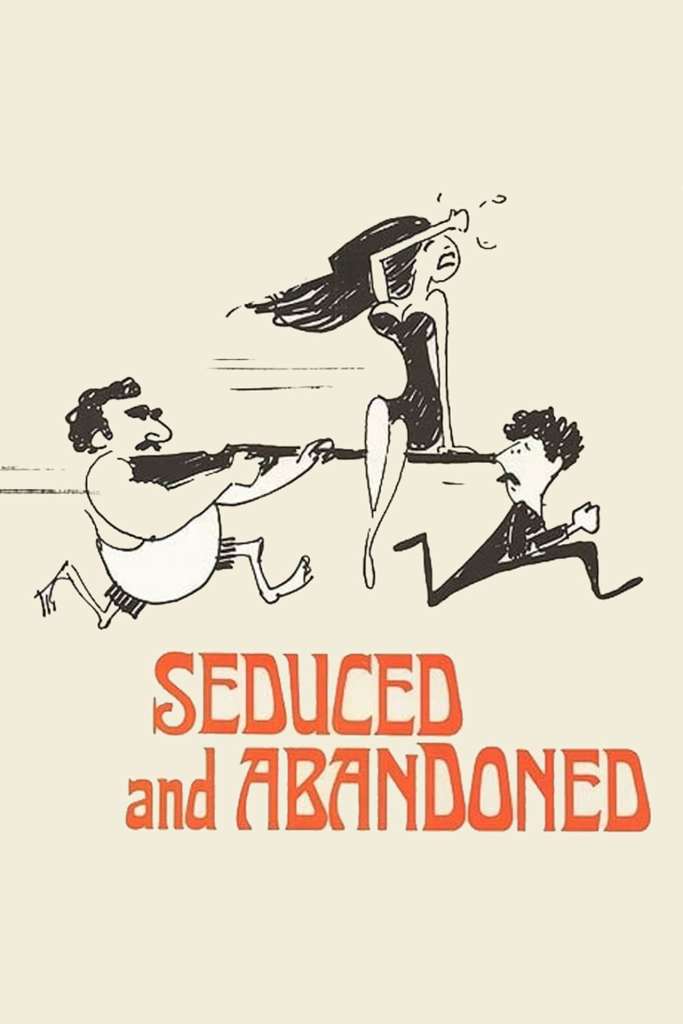
I liked the above movie so much that I went and found another from the same director (Pietro Germi). Seduced and Abandoned is another comedy, from 1964, and while elements are a whole lot darker, it was uproariously funny at times too. In a small town where everyone is in everyone else’s business, patriarch Vincenzo cares very much for his family’s honor. His daughter Matilde is about to marry a young man named Peppino, but Peppino seduces and beds Matilde’s 15-year-old sister Agnese one afternoon, setting off the film’s chain of events, especially after it is found that she is pregnant. Vincenzo will slap around Agnese and call her a tramp in his own home, but he doesn’t want anyone else knowing it, and he is dead set on getting Peppino to marry her before she starts showing. In a strange turn of events through, Peppino refuses, as he wants to marry a virgin (not forgetting that Agnese isn’t a virgin because of him). In the little town full of gossip, both families are doing everything they can to save face. It has slow moments, and some of the humor can be hard to get behind in 2023, but a lot of it is still very funny, and it’s an overall enjoyable comedy. ★★★
- TV series recently watched: Succession (season 4), The Serpent Queen (season 1), Lawmen: Bass Reeves (series), Gen V (season 1)
- Book currently reading: Lord of Chaos by Robert Jordan

 Jons Movie Takes