
Stonewalling is technically a Japanese film (Japanese directors and production company), but it was filmed in China and has the feel of some of the great, leisurely Chinese films of the last decade. The film follows 20-year-old Lynn in the year 2019. She’s living with her boyfriend, going to school to be a flight attendant, and taking English classes to help her career choice, but she doesn’t seem excited about any of it (including her boyfriend). Back home, her dad runs a health clinic and her mom is always into get-rich-quick schemes, the latest being a pyramid scheme involving beauty products. As such, Lynn’s parents are always in debt, and Lynn is continually trying to find odd jobs to send money. Her latest is an egg donation clinic, but lo and behold, she is unable to donate because she finds out she is pregnant. Not one to look a gift horse in the mouth, she moves back home to give birth in secret with her parents, and they start looking for ways to sell the baby to a couple looking to adopt. There’s laughs about the absurdity of Lynn’s life, but also lots of heart-wrenching moments that sometimes pop up unexpectedly. As I’ve said, Lynn doesn’t seem to care about much in life, but she obviously does want to have children one day (when she first found about egg donation, her first question was if she could still have children after the surgery). And in a don’t-blink-or-you’ll-miss-it short dialogue, we find out the real reason Lynn wants to sell this baby, and her reasoning will make you wince with pain for her. And even as her due date in the spring approaches, I had this sense of foreboding, because we all know what came out of China in early 2020. A very poignant film, but definitely takes its time in telling the story, so go in with time and patience and let it come to you. ★★★★
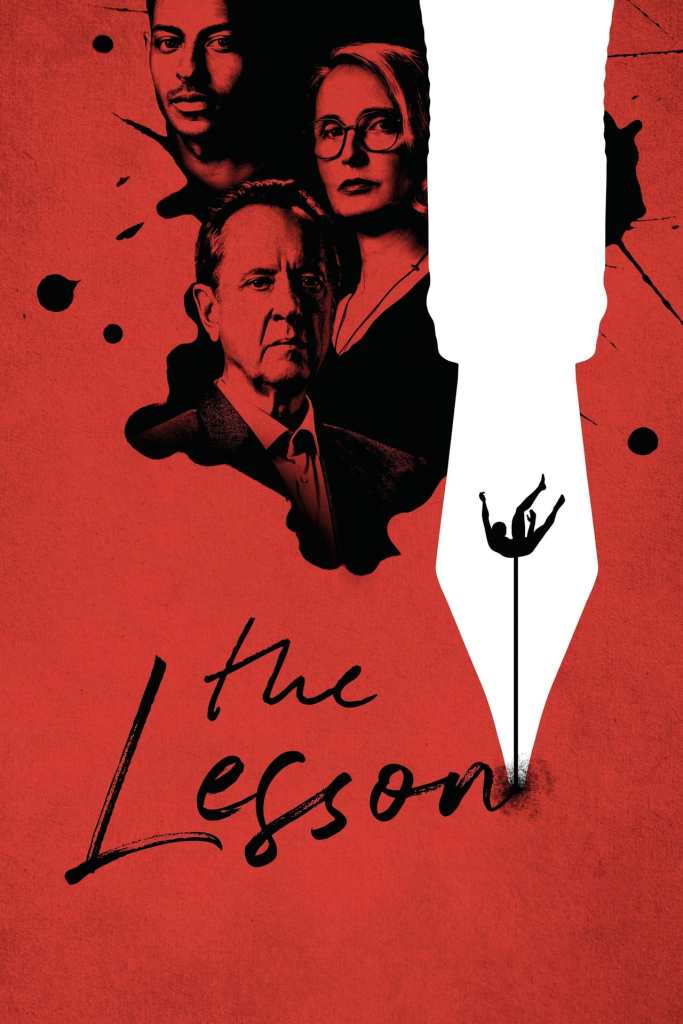
The Lesson is a “thriller” (heavy on the quotations, because it isn’t really) following a promising young writer named Liam. Liam has all the talent but has been working on the same first novel for years, but he is well regarded in scholarly circles. Because of this, he is hired by renowned author JM Sinclair to tutor his son Bertie, as Bertie nears his entrance exams for Oxford. Liam jumps at the opportunity, as Sinclair is his personal hero. Sinclair hasn’t written a book though in five years, and is feeling the pressure to keep the legacy going. As such, Liam enters a household fraught with tension: Sinclair, who can’t seem to finish this book; Bertie, who doesn’t even enjoy writing, but is being forced to follow in his father’s footsteps; and Sinclair’s wife Helene, who has her own part to play in all this. Add to everything the loss of their first son, Felix, who drowned a couple years ago in the small lake behind the house, and whose presence is still felt throughout the house. At first, I was getting vibes from the Letters from Zedelghem sections of the novel Cloud Atlas; substitute “author” for “composer” and it felt like much the same set up, and it would seem, even if the plots diverge, the writer for this film definitely found inspiration there. In the end, it does become its own story, though the acting is better than the telling of it. It has some heavy hitters (Richard Grant and Julie Delpy) but ultimately became too pulpy for what I was initially expecting. ★★½
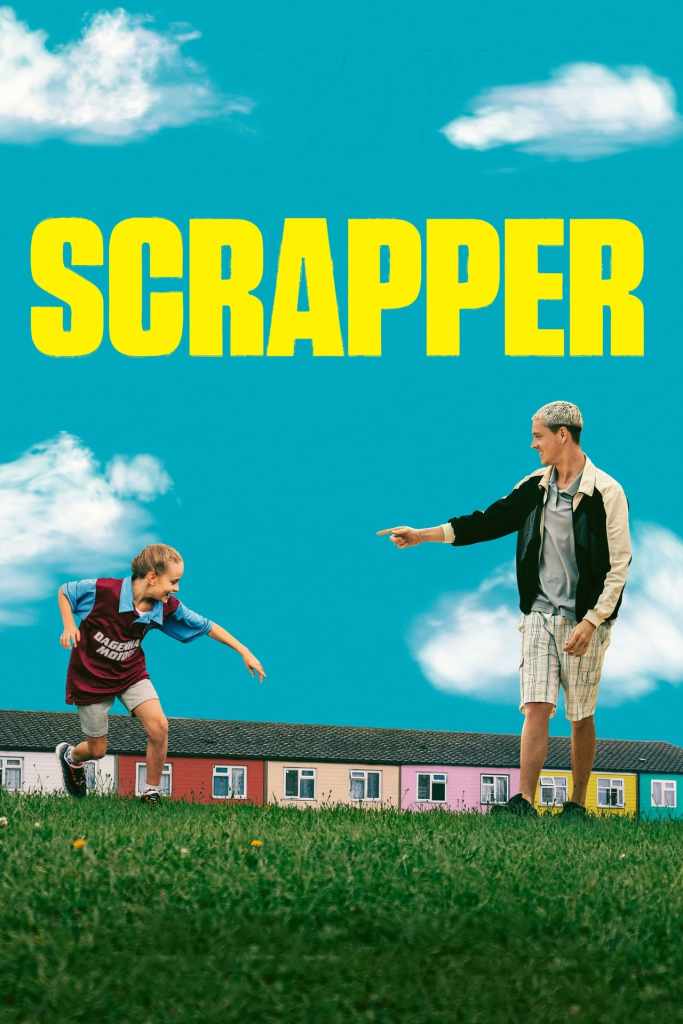
The title Scrapper refers to Georgie, a 12-year-old girl whose mother recently died after a prolonged illness, leaving her alone. She’s convinced the world that an uncle, “Winston Churchill,” has moved in to take care of her, but she is very much by herself, with only a friend (Ali) knowing the truth. She is scraping by by stealing bikes and selling them, but the writing is on the wall that this will not last forever, despite what she may think. Her plans go awry when her biological father, Jason, shows up. She doesn’t remember him, as he’s never been in the picture, but Georgie’s mother contacted him before she died, pleading for him to come take care of Georgie. The two immediately butt heads, as Georgie doesn’t think she needs him, and Jason has made a life of shirking responsibility. Jason needs to grow up, and Georgie needs to move past her grief. We all know where this is going. I didn’t much like the movie in the beginning; it seemed the young director (Charlotte Regan) was trying too hard to press all the right “indie film” buttons, but it settled in after awhile, and the performance by the always great Harris Dickinson (Where the Crawdads Sing, Triangle of Sadness, Beach Rats, etc) really helps. ★★★

Plan 75 is a dystopian Japanese film which shines a light on a very real problem in that country. Japan has the highest population of elderly in the world, and is a society where older folks would rather commit suicide than be a burden on their kids and grandkids. In this film, the government has enacted a program called Plan 75, in which people that age and older are given the option of a government assisted suicide. The movie follows 3 people involved in the program. Mishi is in her 70s and facing terrible age discrimination. Fired at her job, unable to find a new job because of her age, and too proud to take welfare, she’s facing the real possibility of becoming homeless. After she sees a friend commit suicide in her apartment because of similar problems, Mishi decides to sign up for Plan 75. However, as her day approaches, she struggles with letting go of this world, terrible as it may be at times. We also get to know Himoru, a young man who works at Plan 75, who discovers that the program isn’t as respectful with people’s remains as they claim to be. With this knowledge, he is torn when his estranged uncle signs up for the program. Though Himoru hasn’t seen his uncle in 20 years, he is reminded of his deceased father. The final person is Maria, an immigrant who loves caring for elderly at a nursing home, but hears that she can make more money at Plan 75. Expecting to care for old people there too, she finds the job is much different than advertised. You’d think a movie like this would be exceedingly depressing, and there are plenty of sad moments for sure, but I also found lots of heartwarming instances as well. A real reminder that, as a society, we should embrace rather than forget those that came before, and draw from their lifetime of experience and perspective. ★★★★½
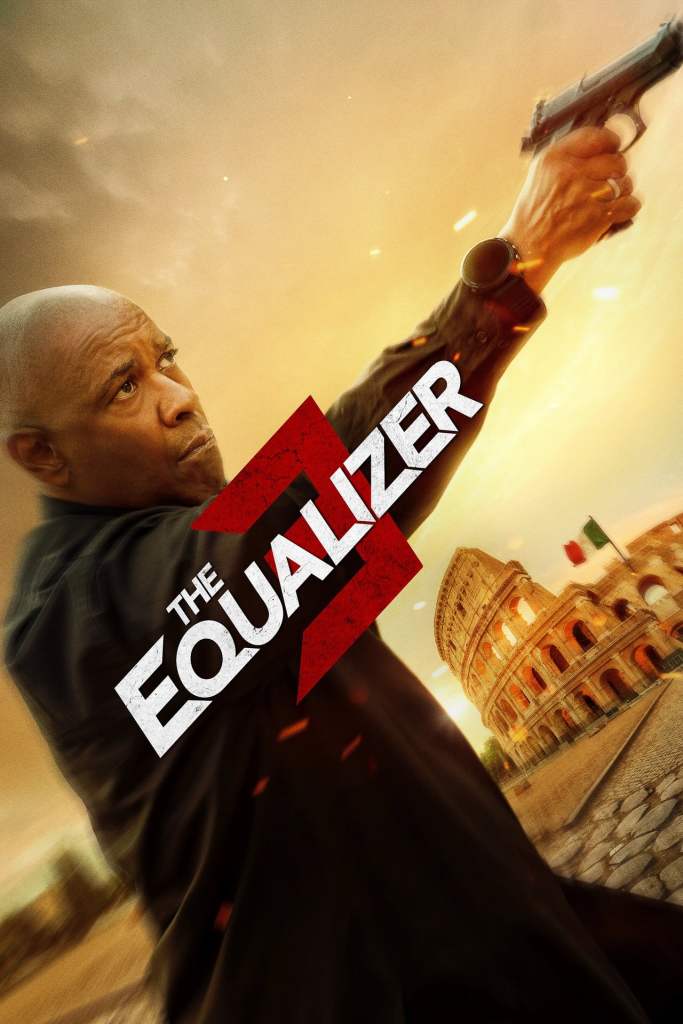
The Equalizer 3 returns Denzel Washington as Robert McCall, a do-gooder with the skills to brutally kill any bad guy in his way. In the opening of the film, McCall is in Sicily, killing a bunch of thugs in a winery. He’s there’s for a key (reason unknown until the end of the film), but stumbles upon something much more: evidence of a huge drug smuggling operation. Shot while exiting the villa, McCall makes it to mainland Italy before passing out, and is rescued by a policeman and doctor in the small coastal town of Altamonte. Recouping there for a few days, he phones in an anonymous tip to the CIA about his findings, and considers the matter resolved. Unfortunately for him, the bad guys won’t let it go so easily, and neither, for that matter, will the CIA. The town he is in happens to be a focal point for the mafia, involved in that drug operation, and McCall, who has grown close to the town’s warm and welcoming people, will not let them come to harm. I was a big fan of the first film in 2014 (the year I saw practically every movie released in theaters), but the sequel, while heavy on action, felt a lot lighter on plot. This film returned to its roots a bit, letting a real plot develop and letting the viewer get to know the victims (and hate the aggressors), so that when McCall goes on his rampage, we are cheering him on. However, the ending did fall a little flat, and seemed too neat. Still, a step up from the last film, and very enjoyable overall. ★★★½
- TV series recently watched: Succession (season 3), Justified: City Primeval (series), Scavengers Reign (series), Lessons in Chemistry (season 1)
- Book currently reading: The Thorn Birds by Colleen McCullough

 Jons Movie Takes