
How about a group of classic 1960s films from Britain? Up first is Blow-Up, the first English language film from Italian director Michelangelo Antonioni. A heralded film in its time (more on that in a bit), I had a terrible time getting into this one, even though I really liked some of Antonioni’s earlier films and am definitely a fan of his style. I enjoy counterculture cinema as much as the next guy, but when nothing much happens for an hour, even my patience is tested. This film follows a photographer named Thomas, who spends his time alternating between having sex with multiple women and berating them in his photo studio. Not a very good guy. Out one afternoon strolling through a park, he takes some photos of a couple, after which the woman chases him down demanding the film. Thomas refuses, and it isn’t until he gets back to his studio and develops the film that he realizes why: it seems the woman may have hired a man in the woods to kill the man she was with in the park, and Thomas caught a pretty good photo of it going down, without knowing it at the time. Sounds great doesn’t it? But man, this movie meanders along with no end in sight, and seems to enjoy really just pushing boundaries for what you can show on screen. And push boundaries it did. The sexual content was in open defiance of the Hollywood Hays Code at the time, and ultimately led to Hollywood abandoning the code for a new system (the MPAA film rating system that later became the one we still use today). Blow-Up is still very well regarded today, so I can only chalk this one up to not being my cup of tea. ★
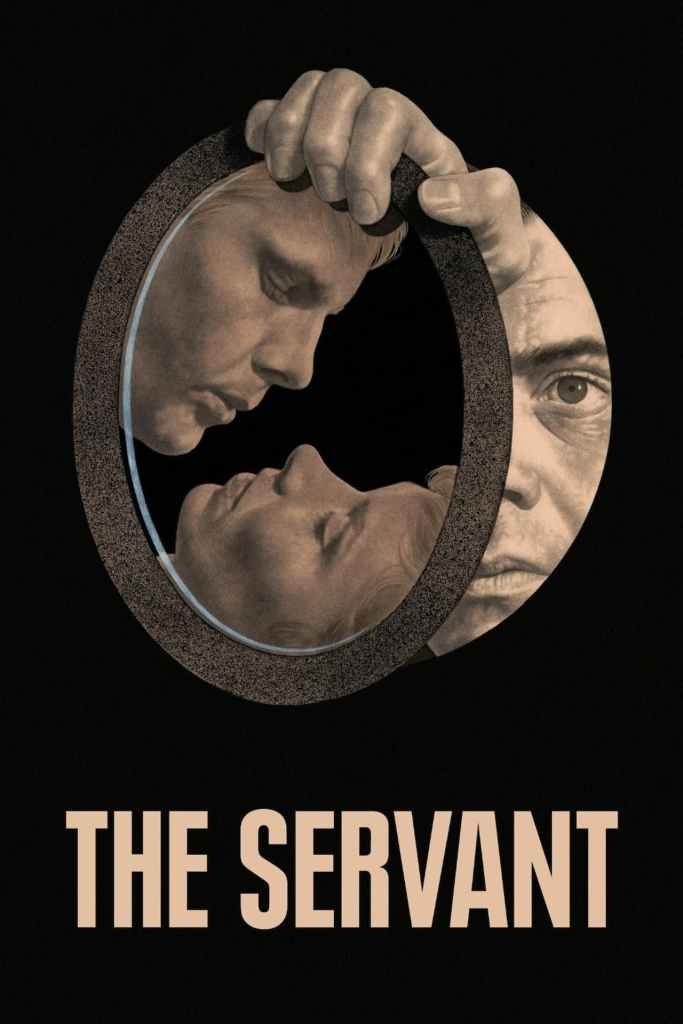
The Servant was directed by American director Joseph Losey, who spent the rest of his life making films overseas after being blacklisted in Hollywood during the McCarthy era. It is a delightfully weird and strange film about a manservant turning the tables on his master in London. Tony is a wealthy socialite who always seems to have a scheme cooking (his latest is getting financiers to build cities in Brazil) but who never seems to actually do anything. He’s recently purchased a large London house to renovate, and now needs a servant to keep the place. He hires Hugo Barrett, possibly the worst mistake in his life. Barrett seems very able and willing, anticipating Tony’s desires before he asks, but Tony’s girlfriend, Susan, takes an instant disliking to him. She finds something subversive about Barrett, and as the viewer, we see that she is right. First, Barrett convinces Tony that he needs a maid too, so they hire Barrett’s girlfriend, Vera, under the guise that Vera is Barrett’s sister. It is then hinted that Barrett has told Vera to seduce Tony, to some as-yet unknown goal. As the film goes along, Tony becomes more and more reliant on Barrett, until their roles are very much switched by the end of the picture. Gorgeous black-and-white cinematography and a superb turn from Dirk Bogarde as Barrett, an actor who took a lot of envelope-pushing roles in the latter half of his career (himself a gay man in England, at a time when that was outlawed). ★★★½

Women in Love is based on the scandalous DH Lawrence novel, a book I once tried to read (but was unable to finish). Was hoping the movie would be better, but unfortunately, again, I could not get all the way through this story. Taking place in the early 20th century, the film follows two sisters, Ursula and Gudrun, as they navigate life, love, and relationships in central England. Much like the book, there’s tons of discourse about current societal norms and taboos, and just like the book, the film really pushed the censors. There’s a scene where friends Gerald and Rupert engage in a naked wrestling match in front of a fireplace, and it was one of the first theatrical films to show male genitals on screen, in both this scene and others. The sexual tension between these two men is also hinted, but never shown, at least not as far as I got in the film. As I said, I couldn’t finish, and gave up about halfway through. The film is gorgeously shot, but so heavy in dialogue (and not even engaging, entertaining dialogue) that I could see no hope of it improving before the end. ½
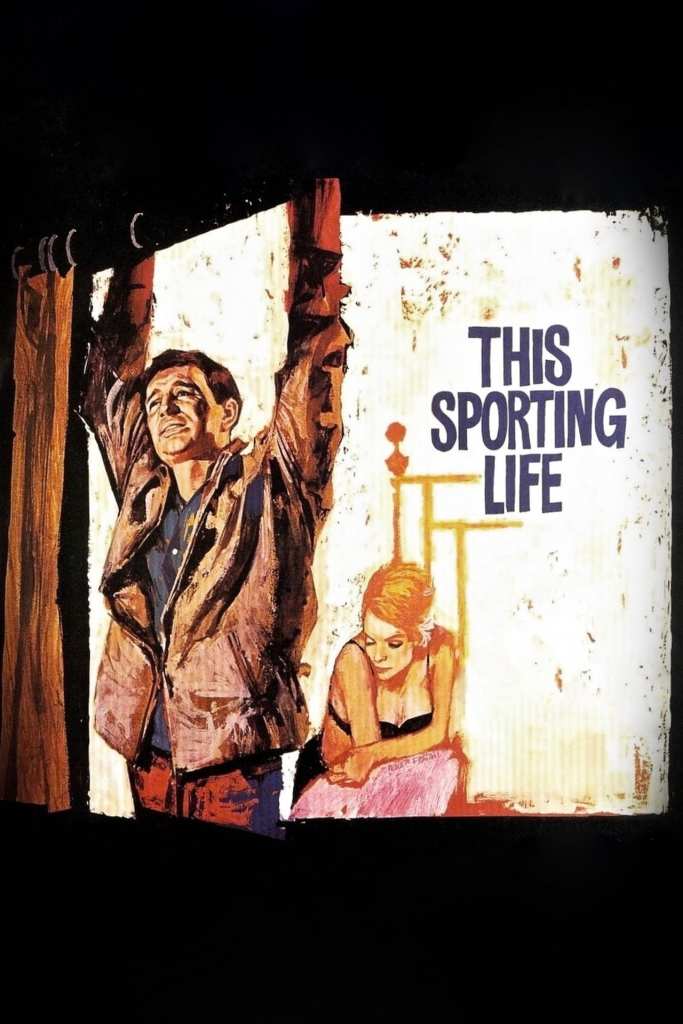
This Sporting Life is a stark realism drama (called a “kitchen sink” film, a term I’d never heard before) starring Richard Harris as a coal miner-turned-rugby player named Frank Machin. Not particularly talented but willing to play hard and dirty, he quickly becomes a fan favorite, forcing the team to sign him to a huge salary. Suddenly, and for the first time in his life, Frank has everything he could want, but the one thing he desires seems to be out of his grasp. Frank has an almost unhealthy attraction for his landlady, Margaret, a widow whose husband died under shady circumstances. The man died when he lost control of a tool at a lathe and was impaled, but an investigation stated he did it on purpose and ruled it a suicide, leaving her with no insurance payout. Trying to raise 2 kids on her own, she relies on Frank’s income, but in doing so, makes her feel like a kept woman, and she despises the whisperings when they are out together. Frank seems oblivious, and can’t understand why Margaret can share her body but not her affection, leading to fights and further turbulence at home. This film is sort of the anti-Rocky. Frank comes from a life where all he knew was pain and suffering, and whenever confronted with any setback in life, he reacts with anger and violence, never able to rise above. The movie takes a long time to develop, but that time is spent getting inside the heads and motivations of each of the characters, so that when the final act comes, it hits hard. Excellent film, with strong acting from Harris and especially Rachel Roberts as Margaret. The two of them reaped a bunch of award nominations, with Harris winning one at Cannes and Roberts winning a British Academy Award. ★★★½

I didn’t really set out to watch a bunch of movies that pushed boundaries, but that’s about what ended up happening, as there is more of the same in 1961’s A Taste of Honey. I guess it comes from watching movies from this era. This film shines a light on society outcasts Helen and her 17-year-old daughter Jo. The two bounce from home to home, leaving whenever they’ve fallen too far behind on rent (by sneaking out the window so as to avoid a confrontation with the landlord). Walking home from school one day, Jo catches the eye of a young sailor, Jimmy, who is black. The two start a fling just before Jimmy heads back to sea, and all Jo gets from it is an empty promise ring and a pregnancy. Before Jo is aware of the baby though, Helen finds a new man of her own and gets married fast enough to make your head spin. The new man of the house doesn’t want Jo around, so Jo finds a cheap place of her own and lands a job in shoe store. It is implied that she has dropped out of school. To help out around the apartment, Jo finds a man of her own, only this one will not be out to nab her: Geoffrey is gay, and thus an outcast too. He is willing to act a father though, in order to fool the neighbors, so you think Jo may actually have a path forward in her life. Until, that is, Helen’s husband finds a new toy and she lands in Jo’s tiny apartment too. This film starts as a comedy but gets real serious by the end, and its depiction of a gay man and an interracial couple on screen turned plenty of heads (think about what was going on in the USA in 1961…). Excellent subject matter far ahead of its time, but the movie felt a bit uneven for my tastes. I can appreciate its scope even if I wasn’t always on the same page with its presentation. ★★½

 Jons Movie Takes