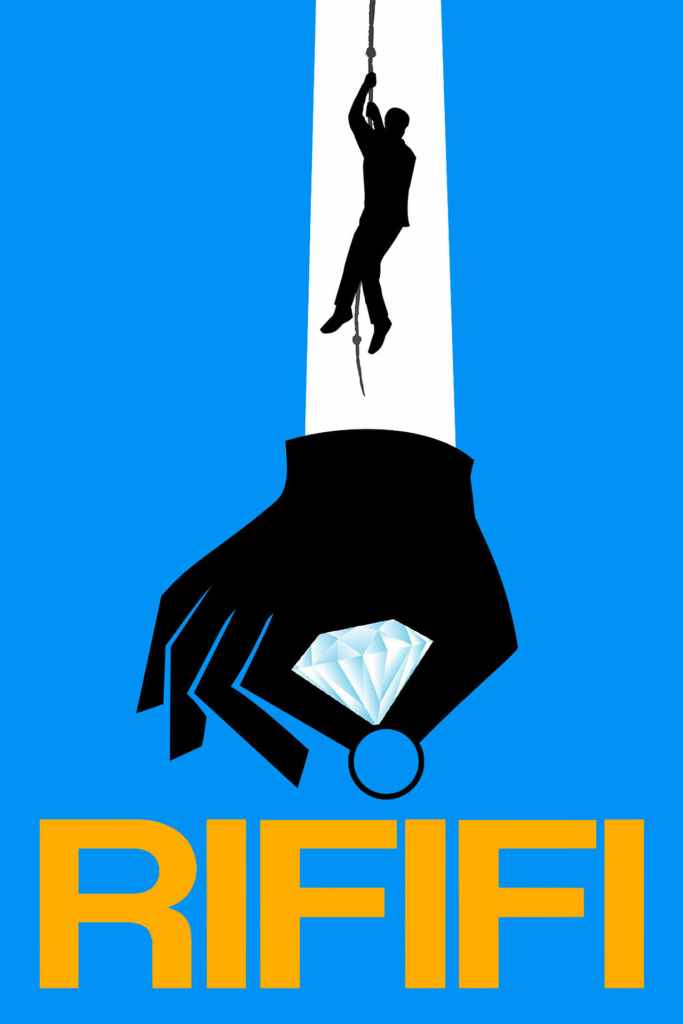
Going back in time to France in the 1950s for a set of films today, starting with 1955’s Rififi, a film that Roger Ebert credited as “the invention of the heist movie.” I mentioned wanting to see this one over 3 years ago and am just getting to it (I have quite the “wish list!”) but the wait was worth it. Directed by Jules Dassin while he was blacklisted in Hollywood during the McCarthy era, it is a film noir/heist picture about a quartet of thugs who’ve come together to pull off a near impossible job, and how even once they are out, they aren’t able to escape the city’s underworld unscathed. Tony “the Stephanois” has just gotten out of jail for serving five years for another robbery when he is approached for this new job: stealing from a high class jewelry store. At first hesitant, Tony takes the job in hopes of wooing back his girl Mado, who has taken up with crime lord Pierre Grutter. Tony is joined by Jo (who Tony took the rap for on the previous job, saving Jo from doing time as well), Mario, a two-bit gangster, and Cesar, an Italian safecracker with a penchant for the ladies. The four men take the time to case the job, planning every detail, and then execute. They do get the jewels successfully, but when word gets out and a hefty reward is offered for the recovery of the merchandise, Grutter and his henchmen will do anything to get their hands on that ice. The set up to the robbery is fantastic, when the team painstakingly routing the nighttime schedule of the neighbors, cops, and delivery people, not to mention how they plan on beating the alarm system, but the highlight of the film is the heist itself: a 30 minute-plus scene filmed with no dialogue, no music, just pure tension in silence as the men try to get in and out before the city awakens the next morning. It’s a film technique that was often imitated later (Le cercle rouge comes to mind) but anyone would be hard pressed to do it better. ★★★★★
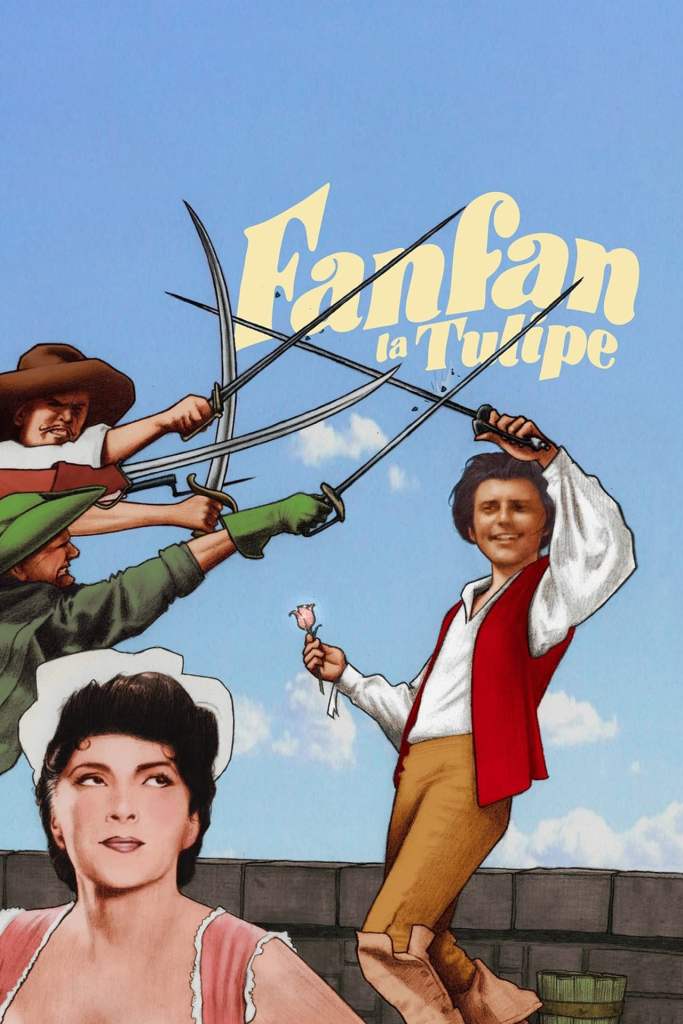
Fanfan la Tulipe, from 1952 and directed by Christian-Jaque, is a swashbuckling adventure film. Fanfan is a ladies man with no desire to settle down, but at least he tells that directly to his targets rather than woo them with false pretenses. He come across a traveling show where a gypsy foretells that Fanfan will marry the daughter of the King of France, and he buys in. Unfortunately for him, the gypsy, Adeline, works for the King’s army and is just making things up to get men to sign up for the army while it is at war, but even when faced with that news, Fanfan still believes it is his destiny to marry the princess. To make matters worse, Adeline herself starts to fall for Fanfan. Lots of sword fights and innuendo, and while there are some funny moments, the movie is fairly forgettable by the end. Too many loops and doubling back and some action sequences that run on a bit too long. ★★

Getting back on track with 1956’s And God Created Woman, from director Roger Vadim. This film is mostly known as the movie that launched the career of Brigitte Bardot (and termed the phrase “sex kitten” too!). She plays 18-year-old Juliette, a woman who cannot and will not be tamed by any man. She already has a bad reputation around town at the beginning of the film, when she is being pursued by two men: the wealthy older Eric and the working class Antoine. Juliette would prefer Antoine, who is young and strong, but he refuses to be with such a strong-willed woman, even when he can’t help but be aroused by her. Eric has money, for sure, but Juliette would be just another trophy for him, and she doesn’t want that either. Instead, Juliette ends up marrying Antoine’s younger brother Michel, who isn’t nearly the big strapping man that Antoine is. The older and wiser Eric knows this will not end well, as Michel doesn’t have the will to match Juliette’s, and sure enough, it isn’t long before Juliette is hanging out at the local bar and catching eyes again. Juliette bemoans her ability to find true happiness and wishes she could settle down with Michel, but it isn’t in her nature. Though the film does have plenty of sexist moments that wouldn’t fly today (it is from the 50s after all), it is a great early example of the sexual revolution. It caused quite the stir on its release: American posters used the tagline, “And God created woman… but the devil invented Brigitte Bardot,” and the Catholic Legion of Decency condemned it. ★★★½
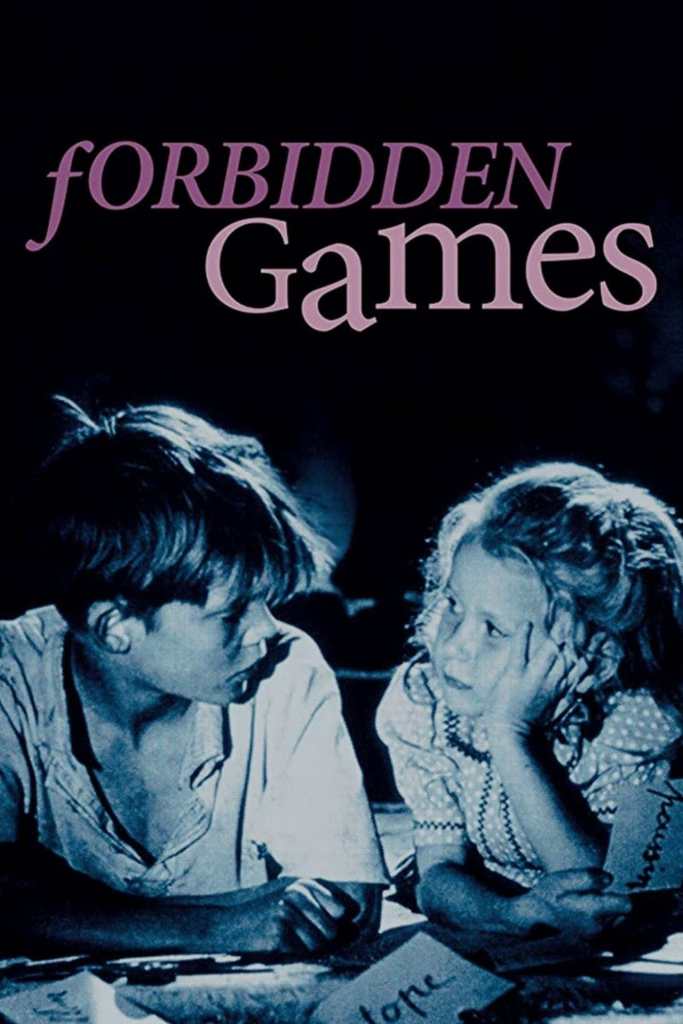
Finishing up today with two films from director René Clément, who is famous for launching the career of Alain Delon in Purple Noon (the first film developed from the book The Talented Mr Ripley). First is 1952’s Forbidden Games, a heart wrenching film dealing with the consequences on humanity from war. Taking place during World War II, the movie begins by following a sea of refugees fleeing Paris. The people are bombed from German planes flying overhead, and Paulette’s mother and father are killed. Young Paulette grabs their dog (also dead, but it’s the last remnant of her old life) and flees to the countryside, where she is found by Michel, a young boy who lives with his poor family. Though Michel and Paulette are about the same age, his harder life on a farm has given him a much more worldly view than the sheltered Paulette has experienced until now, and it is up to him to explain death and its meaning to her. Paulette is unable to let go, and she convinces Michel to build an impromptu cemetery inside a nearby abandoned mill. The cemetery starts with the remains of the dog, but it quickly grows from there, with Michel and Paulette burying anything dead they can find, from animals to insects. To make it a proper cemetery, Michel starts stealing crosses from a nearby (human) cemetery, and Paulette’s fascination with crosses everywhere (including on the garments of the local priest) leads to plenty of humor. But the humor is hiding Paulette’s loss of innocence, and if you are expecting a happy ending, remember that there is still a terrible war going on around them. A wonderful and engrossing film, it was France’s most successful picture in 1952, and picked up a Golden Lion at Venice and a Special Award at the Oscar’s (before there was a Best Foreign Language Film category). ★★★★½
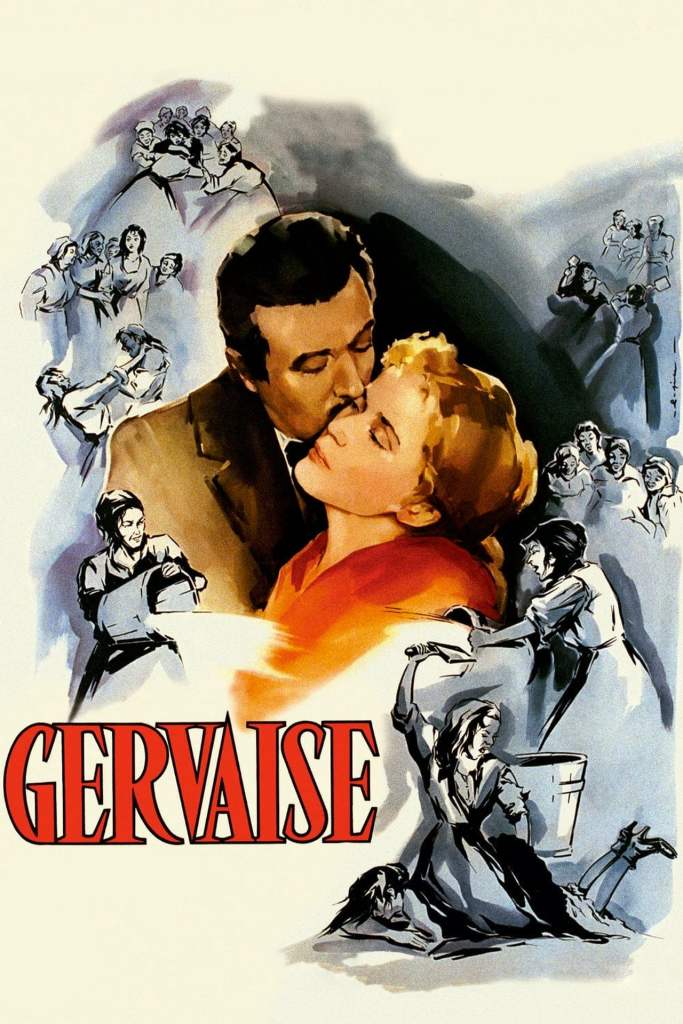
Gervaise tells the life of a woman who can’t seem to ever catch a break. In the beginning of the film, Gervaise gets left by the man in her life, Lantier, who was the father of her 2 boys. As a single mother in 1950s France she has few prospects, but seems to luck out when a roofer named Coupeau takes a liking to her and marries her, despite her past. Coupeau seems like a good guy, but an accident leaves him crippled and turns him into an alcoholic, and the couple’s path towards success is put in a precarious position. Add to this, Lantier shows back up in the area, and for some reason, he and Coupeau hit it off, so much so that Coupeau invites him to live with them. This of course starts a scandal in the neighborhood, but Coupeau doesn’t seem to care in his current state. Throughout all this, there’s Virginie, the sister of the woman Lantier initially left Gervaise for, who, for awhile, seemed to befriend Gervaise, but I always thought that she was a wolf in sheep’s clothing, and that certainly played out in the end. However, through all of Gervaise’s travails, I couldn’t help but think that she brought some of this on herself. If she had been more firm with Coupeau, or if she had taken the initiative to leave him for the blacksmith Goujet (Coupeau’s friend, but a much better stand-up guy who is apprenticing Gervaise’s and Lantier’s son Etienne), then maybe her life wouldn’t lead to complete shit at the end of the film. There’s some emotional moments, but honestly the movie felt really long (2 hours) and there’s a lot of soapy drama that drags. ★★½
- TV series recently watched: Fear the Walking Dead (final season), For All Mankind (season 2), Curb Your Enthusiasm (seasons 9-11)
- Books recently read: Candide by Voltaire, The Time Machine by HG Wells

 Jons Movie Takes