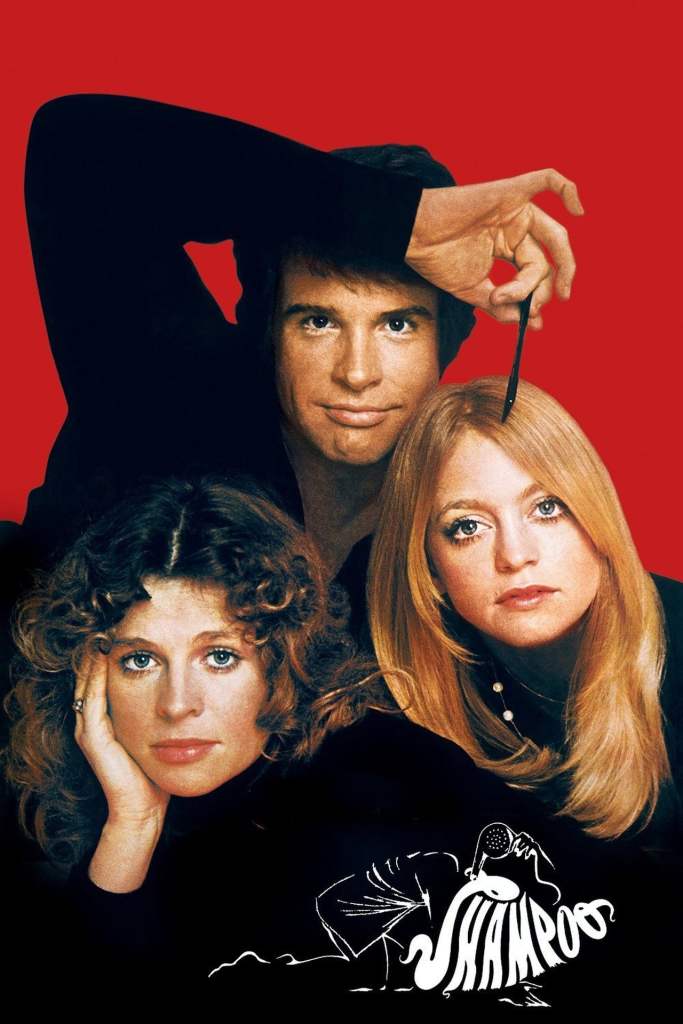
Up today are some films from my parent’s generation: American movies of the 1970s. First is 1975’s Shampoo (which takes place in 1968), from acclaimed director Hal Ashby. Starring Warren Beatty, Julie Christie, and Goldie Hawn (as well as a minor role for Carrie Fisher in her first movie at aged 17, 2 years before Star Wars made her a star), the film follows a Beverly Hills hairdresser named George, who seems to sleep with as many women as haircuts he gives. He starts the movie in bed with Felicia, but afterwards gets a call from his girlfriend Jill. Satisfied, Felicia is going to be hitting her wealthy husband Lester up for money to invest in George’s solo salon. Lester is willing to do anything to keep Felicia happy, so that she doesn’t notice his own dalliances with mistress Jackie. In fact, the pinnacle of the movie is a party where all of these people end up one night, and the hijinks that come about from the clandestine engagements. I laughed often and hard through that section of the movie, but otherwise, wasn’t hugely impressed. Very strong acting, but as is sometimes the problem with satire, if you didn’t live through that time period, it doesn’t always hit as hard. I bet my parents would enjoy the jokes aimed at societal norms and George’s crazy over-the-top behavior. The end has some very thoughtful, and frankly bleak, ideas on the state of things in America in the late 60s, but even then, there’s a bit of a disconnect from how the rest of the movie feels. 3 stars for that middle section, but could have been much more. ★★★
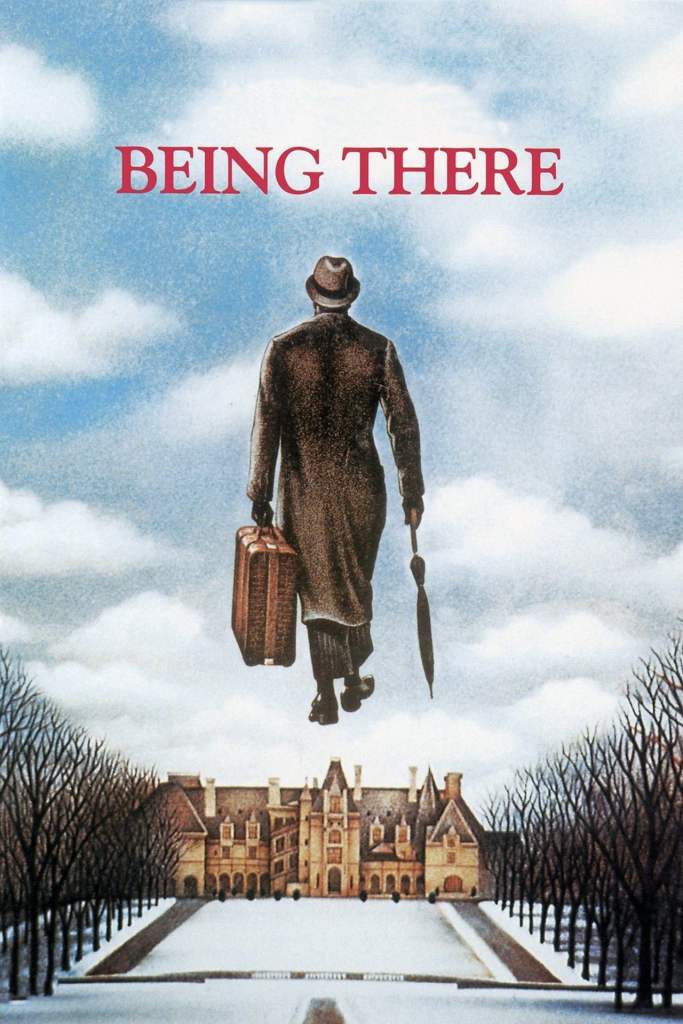
Another film from Ashby is 1979’s Being There, one of his most critically acclaimed films. Also a satire, but this one holds up well; in fact, it (alarmingly) seems even more timely in today’s explosion of social media “stars.” Chance (an amazing Peter Sellers) is a gardener to a wealthy old man. Chance has literally never left the large house and its gardens; his earliest memories are there, and he never went to school, learned to read, or had interactions with anyone other than the man or their housekeeper. Chance’s only education comes from watching television. A simple man, he is very deliberate in his way of speech, and everything he says is either something he saw on TV or something about gardening. Chance’s life changes one day when the old man dies, and Chance is cast out onto the street. A series of events lands him in another wealthy estate, that of political mover-and-shaker Ben Rand (Melvyn Douglas). Ben is dying, but before he goes, the current President of the United States is hoping for an endorsement to help his reelection campaign. Ben and his much younger wife Eve (Shirley MacLaine) are blown away by Chance. Mishearing “Chance the gardener” as “Chauncey Gardiner,” they think he is a former aristocrat fallen on hard times. Dressed in his old boss’s stylish but antiquated suits and speaking slowly and deliberately, they think Chance’s gardening talk is actually metaphors on society and politics. It’s a hilarious take on propping up a, excuse the wording, dummy, and fooling the world to believe he knows more than you do. I laughed often and hard, with jokes coming from anything from everything from sight gags to puns to good ol’ comedy. Great film that holds up well. ★★★★½
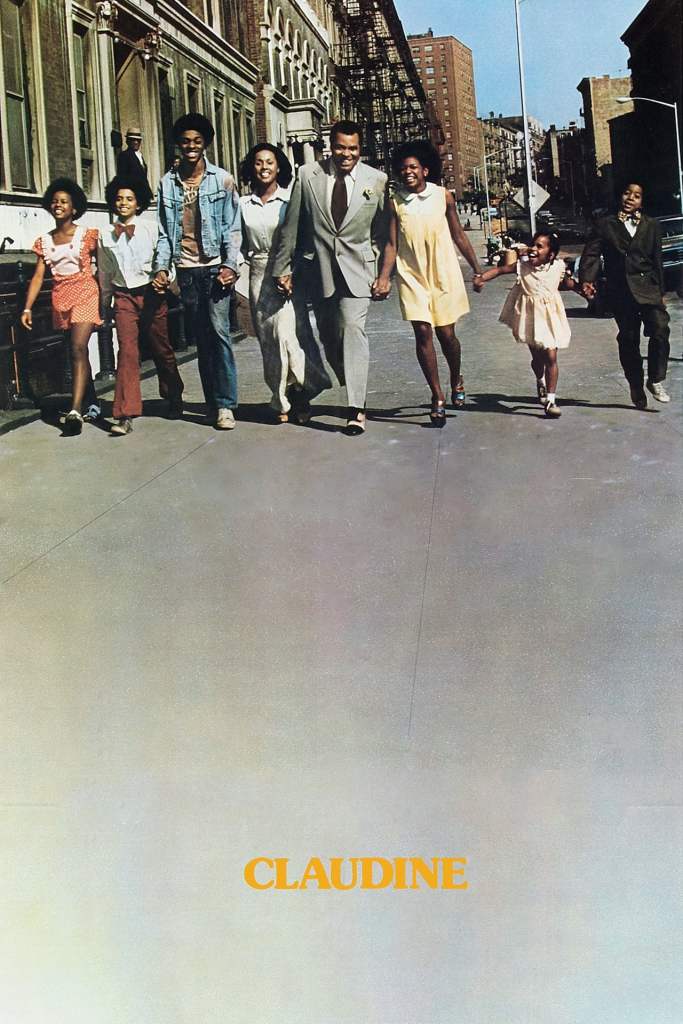
Up next is a romantic comedy/drama from 1974, Claudine, which stars Diahann Carroll and James Earl Jones. Claudine Price is barely scraping by; as she says, she’s been married twice and almost-married twice more, but all that has left her is 6 kids in a tiny 4-room apartment in Harlem. She has to work side jobs for cash under the table, or else risk losing her welfare benefits, which she desperately needs to help support her family. The last thing she needs in her life is another man, but that’s what she finds in Rupert Marshall, a happy-go-lucky garbage collector. The two fall in love quickly, and while the kids don’t take an immediate liking to him as “an interloper,” he wins them over before too long. But the situation is always on the edge of a knife, with the “welfare lady” frequently coming around to make sure no one is supporting Claudine with money or gifts and Rupert also having to acknowledge that, in the past, he hasn’t been the best father figure. Very funny moments, but also ground breaking for its depiction of the struggles of an inner city black family unit in the 1970s. There’s some very frank language that you won’t find in a similar movie with white people in the same era, and it speaks to the dehumanizing of the poor (no matter your color). Really tremendous film, ★★★★★
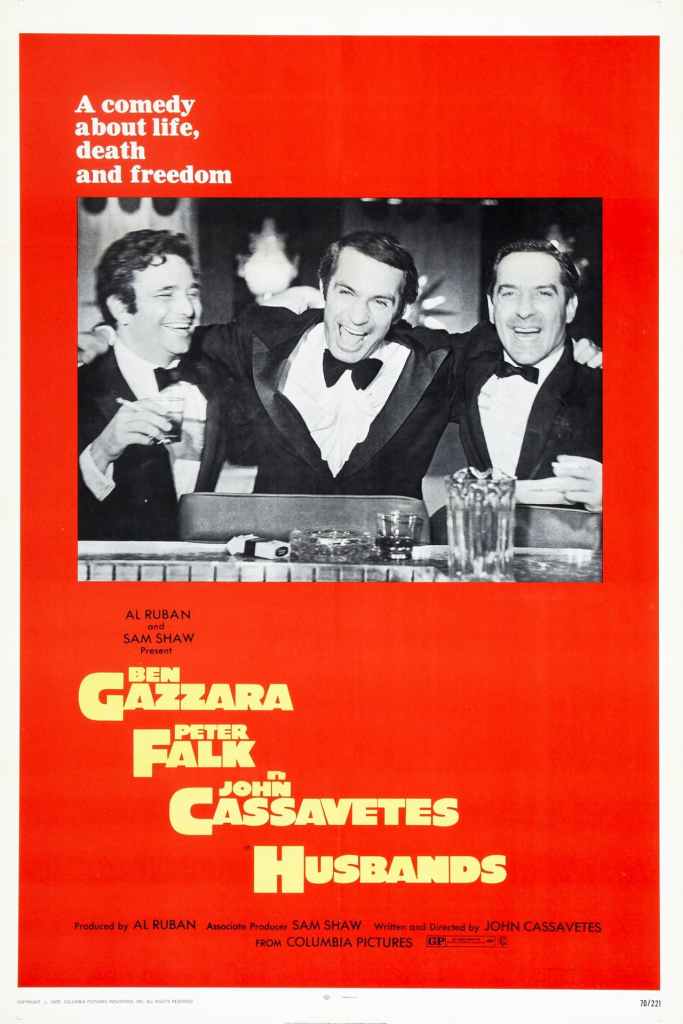
If I’m going to do a set from 70s, I had to find an unwatched film from John Cassavetes; for my money, one of the best filmmakers from that era. Unfortunately this one did not come close to my lofty expectations. Husbands came out in 1970, and stars Ben Gazzara, Peter Falk, and Cassavetes himself as three best friends coming together after the death of one of their buddies. The four of them had been friends since childhood, and now they’ve lost one of their own, too young as they all look to be no more than middle aged. This loss has the three remaining friends taking a close look at where their lives are, and whereas some would make changes to “be better,” this trio descends into a weekend of debauchery, reliving their glory days. The night of the funeral, they go out to a bar and stay out until dawn, carousing it up. In the morning, faced with having to return to the “real world,” they decide to extend their “vacation” and jump on a flight to London, where the party continues. Here though, they finally come face to face with their ages: when they pick up women, their ineptitude and clumsy overtures do not yield success. Ultimately, two of the friends realize it is time to return home to their wives and families, but the third cannot go back, and maybe never will. The idea of the film sounds a lot better than its realization. I have an idea that the film was mostly improvised, because there are long, awkward silences in the dialogue, and characters will repeat themselves often. The friends laugh constantly, at inside jokes that the viewer doesn’t get a chance to get in on, and scenes drag out for an ungodly amount of time. The great film reviewer Roger Ebert said in his review of this film that Cassavetes’ “Faces” was almost totally scripted, but seemed improvised (because of how easy the dialogue flowed and how “real” it felt), but that Husbands “sounds improvised in the worst sort of way.” Couldn’t agree more. ★½

Ending on a good note with a Brian De Palma film. De Palma’s biggest hits were Scarface, the first Mission Impossible, and Casualties of War, but four years before his breakout with his adaption of Stephen King’s Carrie, he came out with Sisters in 1972. After a strange, very 70s-era introduction where two characters meet at a candid camera game show, they go on a date. Philip is into Danielle (played by Margot Kidder in an early, pre-Superman role) immediately, and they end up back at her place afterwards. The next morning, he hears Danielle fighting with another woman in the kitchen. Turns out Danielle has a twin sister who is staying there for a time. Danielle asks Philip to go run an errand while her sister Dominique cools off. When he comes back, he approaches who he thinks is Danielle from the rear, but it turns out to be Dominique (again, Kidder as the twin), and she attacks him with a knife, mortally wounding him. Before he dies, Philip crawls to the window and gets the attention of Grace, a journalist who lives in an apartment across the street. Grace calls the cops and, as soon as they arrive, storms up to the apartment. By then though, Danielle’s ex-husband, who always seems to be around, has already hidden the body and cleaned up the place. Danielle denies anyone else is in the place, and there’s no sign of Dominique. The police think Grace is making it all up, so she hires a P.I. to get to the bottom of it. The rest of the films plays out much the same, with twists and turns and some great psychological thrills. These days, the plot would seem a bit overdone, but it is still done very well here, and De Palma is obviously showing glimpses of greatness to come. I enjoyed it, even the wild ending. ★★★½
- TV series recently watched: Justified (season 6), For All Mankind (season 1), The Thorn Birds (series), Gotham Knights (season 1), Succession (season 2)
- Book currently reading: Dune House Corrino by Herbert & Anderson

 Jons Movie Takes