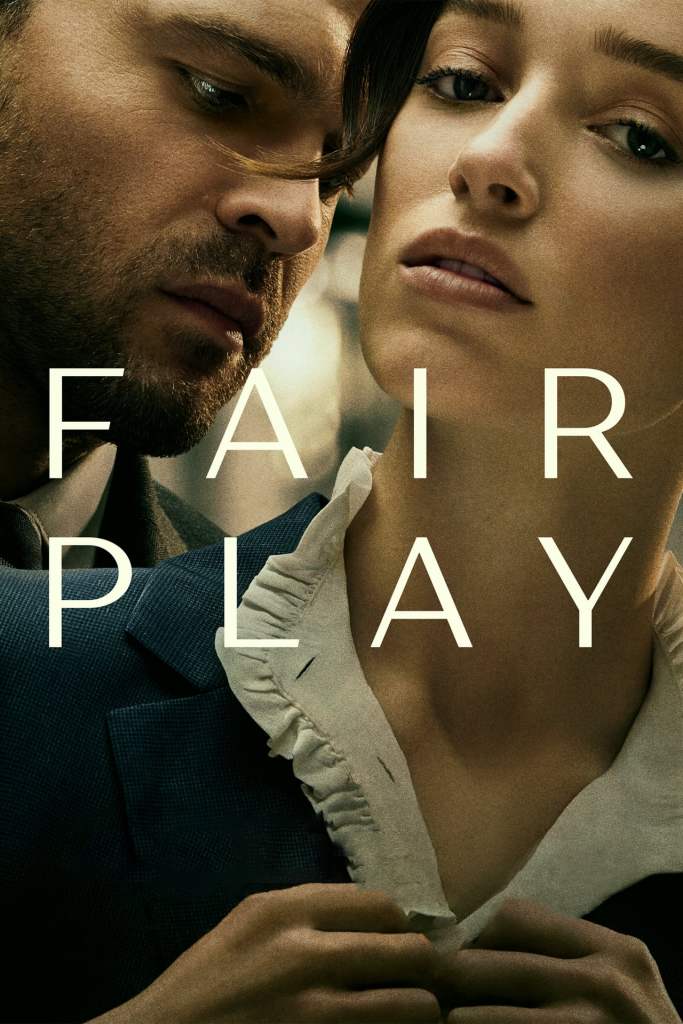
I liked Fair Play a whole lot more than I expected to. On the surface, it seems like a trashy romance novel, but there’s some heavy emotional intensity here, and it takes a hard look at how differently men and women are treated, and expected to act, in the professional work environment. Emily and Luke are in a relationship, serious enough that Luke proposes at the beginning of the film, but they have to keep it secret at work; they are both financial analysts at the same hedge fund company, and they have not disclosed their relationship, a big no-no. At the high pressure company, their immediate supervisor loses a lot of money and his job becomes available. Luke expects the promotion, but it is Emily who gets it. Immediately, there are whisperings around work about what she may have done to get it, even though Emily is a brilliant analyst and earned the job on her own. As boss now, Emily gives Luke every opportunity to make a standout move, but a poor decision on his part loses the company 25 million. Good moves by Emily and Luke earn the money back, but the harm has been done. As Luke gets more and more angry about Emily’s advancement and his own stagnation, their relationship deteriorates quickly. There’s an almost psychological thriller element to the film by the end, as Luke approaches and goes off the deep end, while Emily, a strong woman, won’t meekly let it go. Hot sex scenes to satisfy the pulp crowd, but good social commentary to give you something to think about too. ★★★½
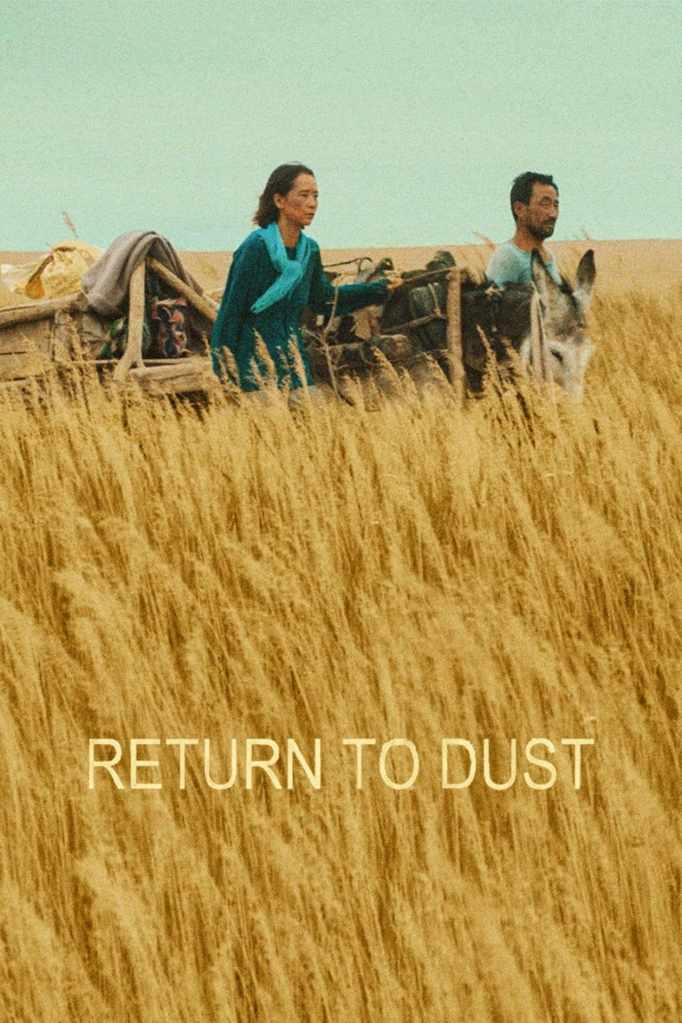
Return to Dust is the polar opposite of the above film. No edge-of-your-seat thrills, no fast-paced action, but it is no less emotional. A film out of China (which always seems to deliver slow-paced, thoughtful movies), the film begins on Ma Youtie, an older man who has remained single. The “fourth brother” in a society where wealth and influence flows downhill, he has very little in his life, but seems content with it. He is set up in an arranged marriage with Cal Guiying, a woman who suffers from a disability in her left arm, as well as incontinence (constantly wetting herself) and infertility, which has all added up to a lifetime of abuse by her family and no husband until now. Over the course of the rest of the film, this unlikely duo with shared past hurts build a loving life together. With the Chinese government offering cash for landowners to tear down empty buildings for future development, Youtie and Guiying initially bounce from place to place, always eventually being evicted, until he starts building a home of their own on empty land. While the city dwellers scoff at Youtie’s insistence to keep his mule instead of a car, he doesn’t seem to care at all what others think; when a chance at public housing in an apartment comes up, Youtie dismisses it, because he doesn’t know where he’d put his chickens and pigs. It all slowly builds to a resonant and emotionally draining finale. Not a film for everyone, but those with patience will be rewarded. The film opened to huge success in China in 2022, but aired for only 2 weeks before theaters banned it, for feelings that it cast a negative light on the government’s policies. ★★★★★
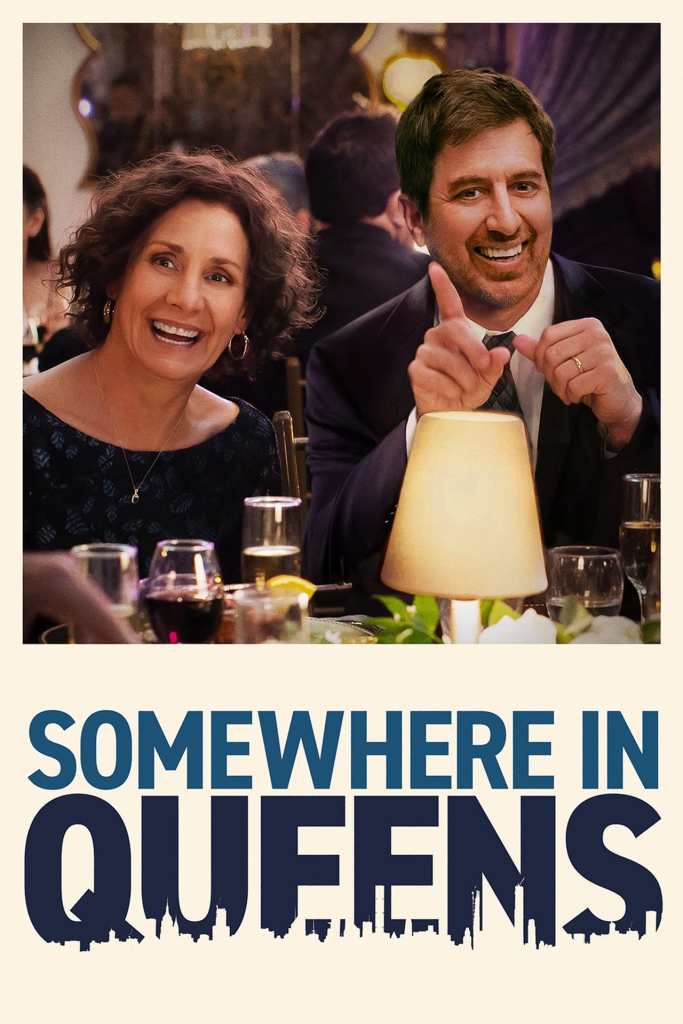
Somewhere in Queens is not a deep movie like the above, but it is a funny little picture with some tender moments. Leo works construction in the family business, but as a person who has stayed in the shadows, he’s been passed up by his younger brother, who is foreman on job sites and stands to take over when their dad retires. Leo has always had a hard time standing up for himself, and his shy and quiet son, “Sticks,” seems to be following in his footsteps. Sticks is a star player on their high school basketball team, but it is a team with no aspirations, and everyone expects Sticks to go into the family business upon graduation. However, a chance meeting with a talent scout at Sticks’ last game, who was there to see a player on the opposing team, gives Leo and his family hope that maybe the unheard-of step of going to college may be an option. However, all of Leo’s hopes regarding the matter may come crashing down when Sticks’ girlfriend breaks up with him, hurting the emotional young man’s concentration as tryouts approach, and Leo makes it worse when he bribes the girl to get back with Sticks in order to keep his confidence up. The movie does an excellent job of establishing the characters in the first 10 minutes: Leo is a “lovable loser” and his son has a hidden talent that you can root for. Lots of funny moments regarding Leo’s very Italian family (even if a lot of the jokes are all cliche at this point). But it’s not all fluff. There are some deep seated hurts in this family, which come to light in the final 20 minutes, and the film takes an (almost-too) dark turn as old and new grudges are brought to light. Still, it ends well. Some good talent involved, with Ray Romano as Leo and Laurie Metcalf as his wife Angela. ★★★½

Cassandro is a biopic about the lucha libre wrestler Saúl Amendáriz. The son of a Mexican immigrant after an affair with a married man, Saúl grew up in El Paso but regularly crossed the border to wrestle in Juárez. A gay man, Saúl has resisted wrestling as an exótico, which in the lucha libre world, is a wrestler who fights in drag. In Saúl’s time in the 1980s, they never won fights and were often the villains. However, when Saúl meets a new trainer, he finally goes all in and develops the persona of Cassandro, a flamboyant exótico who plays the crowd. While all of this is going on inside the ring, Saúl is struggling in his personal relationships as well. He is carrying around a lot of hurt from hearing his dad use homophobic language towards exótico wrestlers when Saúl was a child, as well as Saúl dealing with his closeted gay boyfriend. Strong acting from Gael Garcia Bernal in the lead, who always delivers, but the film is rather ho-hum, even if it does deal with an important subject. ★★½
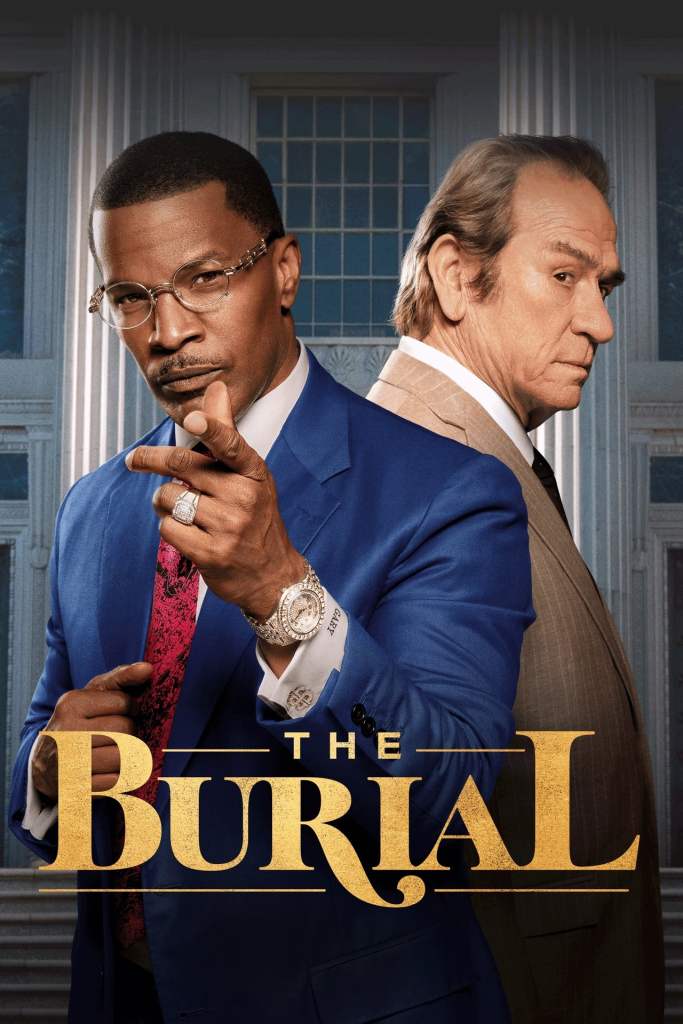
The Burial is also based on a true story. Tommy Lee Jones plays Jeremiah O’Keefe, who runs a funeral home and insurance family business in Mississippi. In financial straights, he is approached by a larger funeral business, Loewen Group’s owner Raymond Loewen, to sell a couple locations for some capital to shore up O’Keefe’s business. However, Loewen strings O’Keefe along, and he realizes that the company is waiting him out, hoping to gobble up everything in bankruptcy. So O’Keefe sues him. O’Keefe’s longtime friend and lawyer is a good ol’ white man from the south, which won’t play right in the predominately black county where the suit will be heard, so O’Keefe recruits power lawyer Willie Gary (Jamie Foxx). The rest of the film is the surprises that come out in the trial. There’s some laughs in the beginning, some very exciting moments later, but in my opinion the film had a few too many “gotcha” moments, bombshells that are dropped in trial that are just there to elicit a gasp from the viewer. The film could have been exciting on its own with a few of those dropped out. Still, it’s good, with some funny moments supplied by Foxx’s over-the-top ambulance chaser-turned-lawyer for justice. ★★★½
- TV series recently watched: Rome (season 1), Curb Your Enthusiasm (seasons 6-8)
- Book currently reading: Dune House Corrino by Herbert & Anderson

 Jons Movie Takes