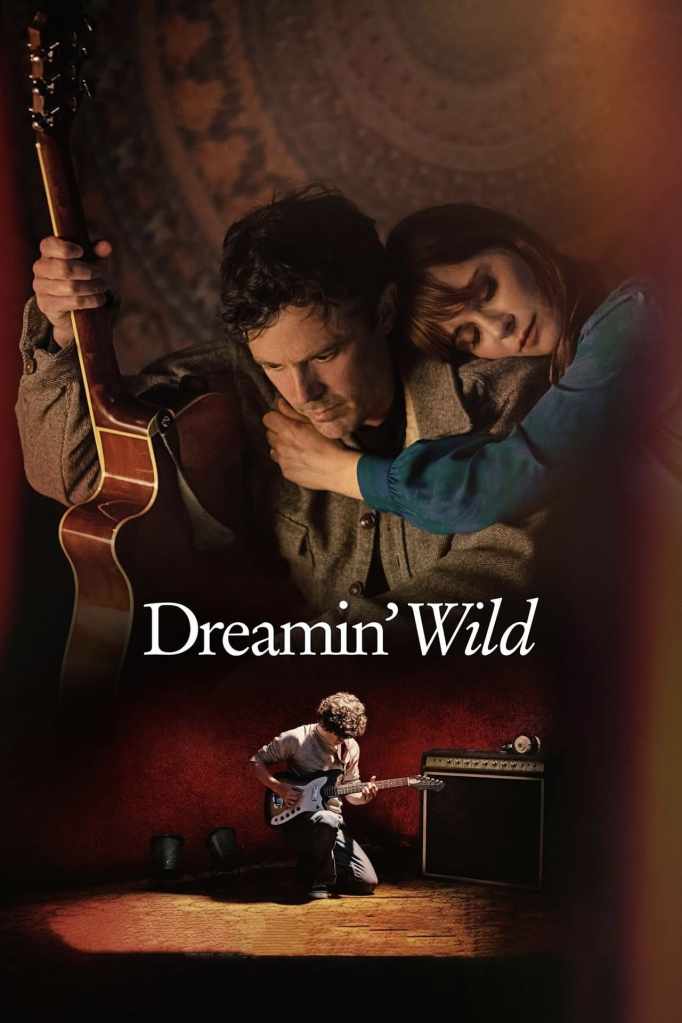
Over the past 20ish years, Casey Affleck has done an excellent job of balancing big Hollywood blockbusters with smaller budget indie films, and it is often the latter where he can really shine (Manchester by the Sea, A Ghost Story, etc). Dreamin’ Wild is another such film, based on the true story of Donnie Emerson. Donnie was a musical prodigy of sorts, growing up in rural Washington in the 1970s. He and his brother Joe self recorded an album in a makeshift studio in their parents’ barn when Donnie was just 15, but it never found an audience, and Donnie has been chasing the dream his whole life. In 2008, he and his wife Nancy run a small music recording studio in a town that can hardly support it, barely scraping by. While Joe stayed close to where they grew up, Donnie rarely returns to his parents’ ranch. Once a sprawling 1700 acres, his dad literally mortgaged the farm to support Donnie’s dreams way back when, and now, has just 65 acres left. Wracked with guilt, Donnie has stayed away. In this setting, unexpected success finally comes. A record collector stumbled across their album in Spokane one day, and loved it, showing it to all his vinyl-loving buddies. Word spread across the internet, and now magazines and music producers are banging on Donnie’s door, wanting to tell his story. Donnie, who has has never seen anything but failure, cannot find the hope in it, expecting it all to be too good to be true. The film does a great job of showing the mood of a musician. In my work, I see a lot of people chase that dream and it is easy to get frustrated when people don’t come out to hear you play; the movie shows what can become of a performer after a lifetime of those frustrations. Not all that complicated of a movie, as you know just about everything that’s going down in the first 20 minutes, but it is built on the performances of its leads, particular Affleck and Walton Goggins as his brother Joe. ★★★½
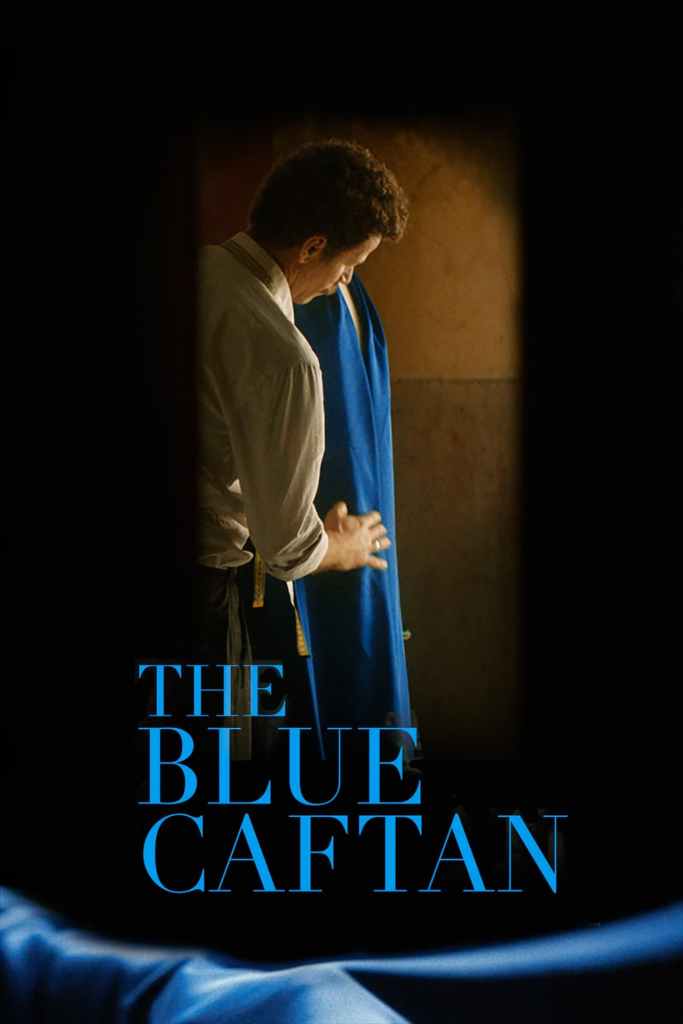
The Blue Caftan is tremendous, one of those great international art films that, if that’s your cup of tea, you should definitely watch. Halim is a loving husband to Mina, and the two run a caftan store in Morocco. In an age where everything is done by sewing machines, Halim is old school, doing all the sewing himself, and he’s very good at it, while Mina runs the front of the store. However, Halim has a not-so-hidden secret: he’s gay. When the two hire an apprentice, a good looking young man named Youssef, to help with their backlog of work, Mina can’t help her jealousies. But while Halim continues to visit bath houses to fulfill his desires with other men, he remains a doting husband, even more so after Mina’s cancer returns. The film’s pace is not for everyone, but if you are like me and enjoy the quiet stories of everyday life, this movie will envelop you and pull you in this trio’s tale. Outstanding picture with a high re-watchability factor. ★★★★★
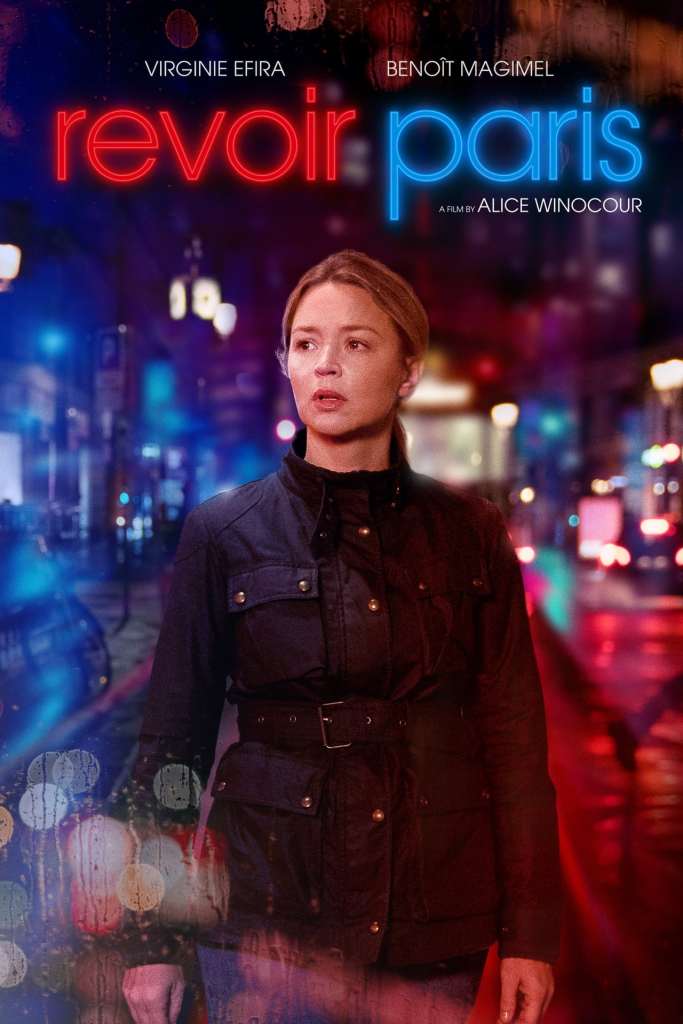
Revoir Paris (released in the USA as Paris Memories) follows a woman named Mia, who is having an average day until she is at a restaurant in the evening which is the target of a mass shooting. A gunman kills many there that night, and when we see Mia again 3 months later, she’s not been able to move on. The traumatic event has left her with no memory of that evening, so she joins a support group of other survivors of the attack, and tries to piece together her memories. Part of her journey is to find the man who sheltered with her, but turns out he was an illegal immigrant, so he disappeared after they were rescued by police, and has gone into hiding so as to not get deported. The best part of this movie is Mia’s day before the shooting; the blurb for the movie tells you the shooting is coming, and there’s a lot of tension in the buildup to that event, because it seems like any other day until that happens. But otherwise, I don’t understand why this movie has receives so many good reviews. Seems very rote to me: Mia goes to one place, remembers something new, goes to a different place, same cycle. Really seemed to get nowhere fast. ★★
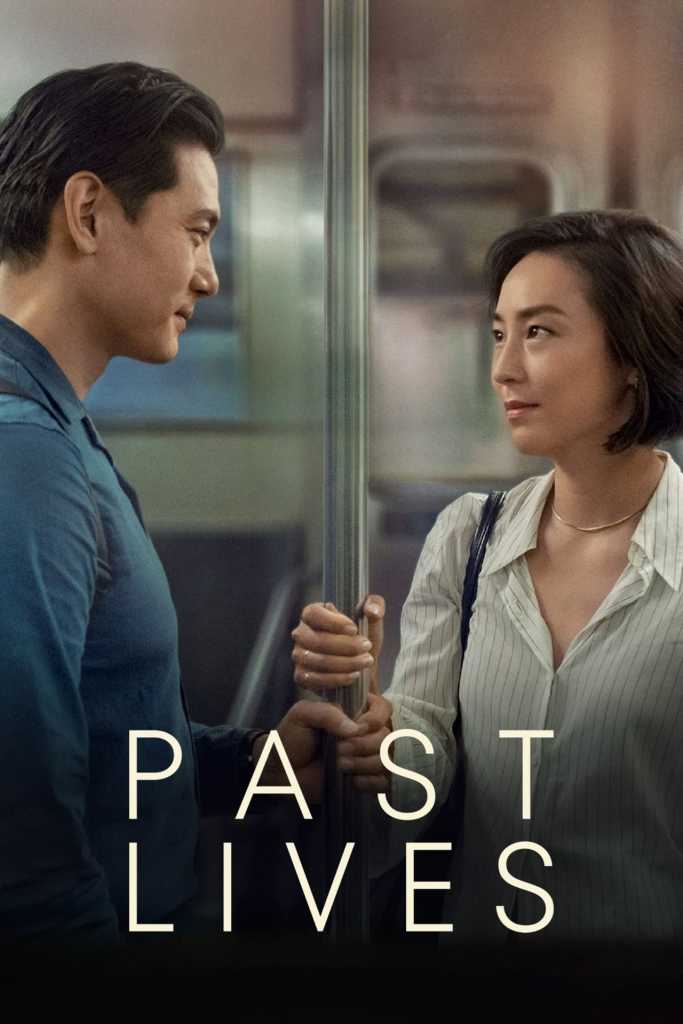
Past Lives, on the other hand, is highly deserving of its praise, but it’s not a film for everyone, due to an extremely languid pace. In Korea, Na Young and neighbor Hae Sung are 12-year-old best friends, who seem to have a strong connection to each other. Na Young’s mother recommends they go on their first date together, which they do under the watchful eyes of their parents, but the mom has an ulterior motive: Na Young will be moving with her family to Canada soon, and Mom wants her to have some strong, lasting memories of her homeland before they go. When we next see Na Young, 12 years later, she has changed her name to Nora and is living in New York, pursuing her dream of being a writer. Hae Sung never left Korea; he’s finished his required military service and is in college. They find each other on Facebook and immediately pick up where they left 12 years prior, and fall into an easy online relationship. However, their lives are busy with beginning careers, so they are unable to travel to meet in person. Another 12 years in the future, and Nora is now married (to an American), and Hae Sung, recently made single after a breakup, comes to New York to finally see Nora for the first time since they were kids. Neither knows what to expect, and while Nora’s husband doesn’t know how to feel about it, he suspects Nora needs closure. Again, Nora and Hae Sung hit it off right away, but Nora is never going to leave her loving husband. A wonderful film exploring fate and the concept of past lives/reincarnation and, above all else, true love. The ending is as emotional as you will ever find. ★★★★½
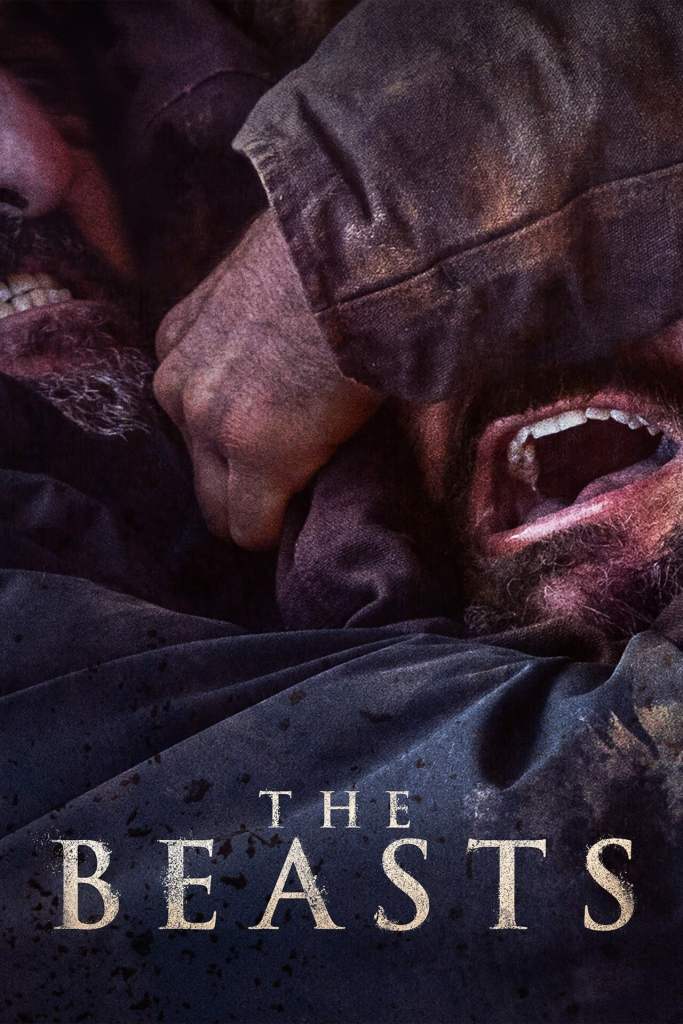
The Beasts is marketed as a thriller film, but isn’t really, compared to what Americans would typically consider a thriller. It revolves around Antoine and Olga, a French couple who’ve moved to rural Spain in order to start an organic farm. They’ve been there a couple years at the start of the film, and we see that they are butting heads with the locals who have lived in the region for generations, led by a man named Xan. Xan and most of the village want to sell their land to a foreign wind turbine company who wants to build on it, but Antoine, in love with the peaceful and quiet countryside, has refused. Xan of course sees Antoine as an interloper, and makes him the target of, at first, derogatory jabs and remarks and, later, physical violence. Antoine is a much bigger guy, but he’s not a violent person, and rather than respond in kind, he buys a pocket video recorder and tries to catch Xan in the act, in order to turn him over to the police. But Xan isn’t a dummy and catches on quick, leading to further acts when he knows he can get away with it. The first half of the movie, with its building suspense, is great, but after a big showdown between Antoine and Xan, with a good 45 minutes left, the pace dies and the movie goes off track. There’s a big thing with Antoine’s and Olga’s adult daughter coming into the picture, and all this other extraneous stuff that just seems to lengthen the film without adding to it. The movie got a lot of awards internationally (17 nominations at the Goya’s, Spain’s Oscar equivalent) and a French César award for best foreign film, but the end, for me, was a big let down. ★★½
- TV series recently watched: Slow Horses (season 2), Only Murders in the Building (season 3)
- Book currently reading: The Fires of Heaven by Robert Jordan

 Jons Movie Takes
One thought on “Quick takes on The Blue Caftan and other films”