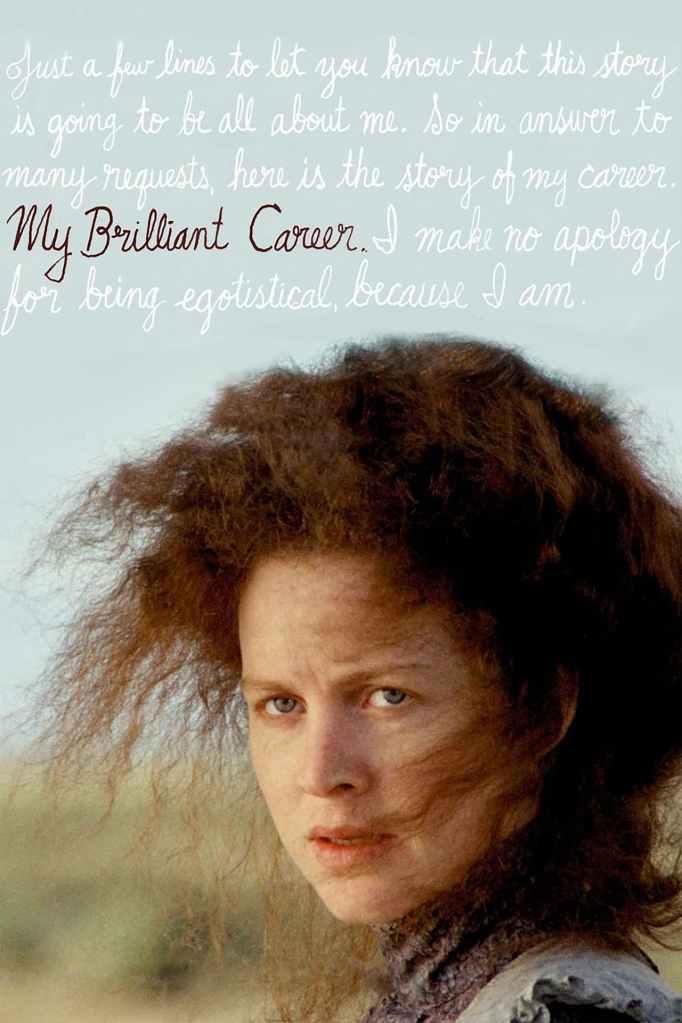
My Brilliant Career, from 1979, starts us off today on the right foot. From director Gillian Armstrong and based on a book released in 1901, the film takes place in rural Australia in the 19th century. Sybylla (Judy Davis) is a woman who dreams of a career in literature or music. The last thing she wants is a husband that will hold her back, but from a poor family, she has limited prospects to afford her an opportunity to reach her goals. Sybylla refuses to listen to her mother, so to try to teach her some manners, she is sent to live with her grandmother, her mom’s wealthy mother (Sybylla’s mom gave up the fortune to marry for love). Sybylla and her grandmother butt heads, but Grandma has hopes that Sybylla may settle down and marry the older Frank Hawdon (Robert Grubb), who is set to inherit a fortune. Sybylla obviously doesn’t want Frank, but she is attracted to the younger and more carefree Harry Beecham (a young Sam Neill), a childhood friend of hers, now all grown up. But, though she likes Harry, will she give up her goals and marry? The movie is extremely authentic feeling, and not just because of the rich scenery of rural Australia or the period costumes. In a lot of films like this one, the woman *seems* to be strong-willed, but backs down when confronted with a man’s sweet smile. Sybylla doesn’t back down, and she will not settle for less than what she wants. Great way to start today’s film set! ★★★★★
Long before The Truman Show and Dead Poets Society, before his breakout with Picnic at Hanging Rock (I’ve never reviewed this classic, but it’s really good), Australian director Peter Weir’s first film was Homesdale, released in 1971. It follows a half dozen or so eccentric people as they visit the Homesdale Hunting Lodge, a vacation spot with a staff of characters as strange as their guests. As the visitors get comfortable at the lodge, they start to play out weird fantasies, no matter if those fantasies adversely affect others or not. A black comedy with some horror elements, especially at the end, it is a weird, weird movie, and honestly not very good, but it is short (just under an hour) and there are a few truly funny moments that come out of all the zaniness. So better than nothing at all, but not much. ★½
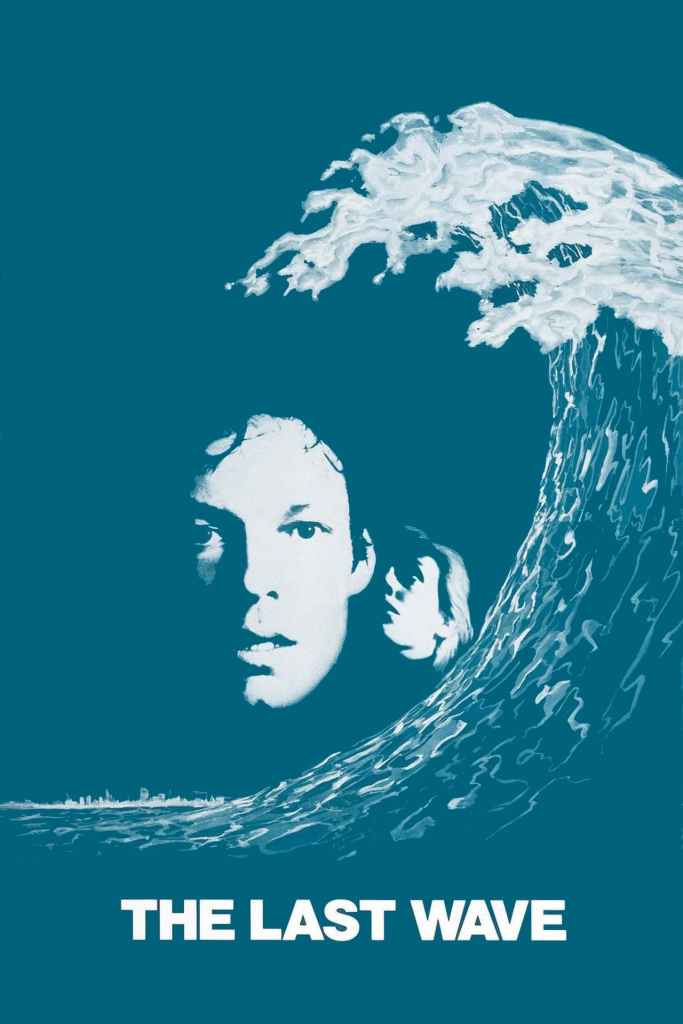
A couple films later, as Weir was starting to make a name for himself, he came out with The Last Wave in 1977. This is a surprisingly good movie; I say that only because I don’t see a lot of people talking about it, so didn’t really expect much. It has some of the same kind of uneasy, almost surrealist moments that I felt during Picnic at Hanging Rock, which is unsurprising given the two films came out so close to each other. This movie follows a lawyer named David Burton who has been named public defense counsel for a group of aboriginal men accused of murder. The victim was found drowned with strangulation marks on his neck. The 4 accused are mum, though David thinks there is more to the story, and he’s right. He begins to believe that the men did indeed kill the victim, but that it was a tribal execution, though Australia doesn’t recognize any remaining Aborigine tribes in the city of Sydney. While all this is going on, there’s been some crazy weather patterns over the city and surrounding area, dumping massive amounts of rain. David starts having premonitions (including dreaming of one of the accused, before he meets him) and nightmares about running water, with a big sense of foreboding. All of it may be connected to an impending disaster, the likes of which the Aboriginal men have foretold. Great apprehensive feel throughout the second half of the film, and if a little of it is “out there,” it really works in the context of the movie. ★★★★
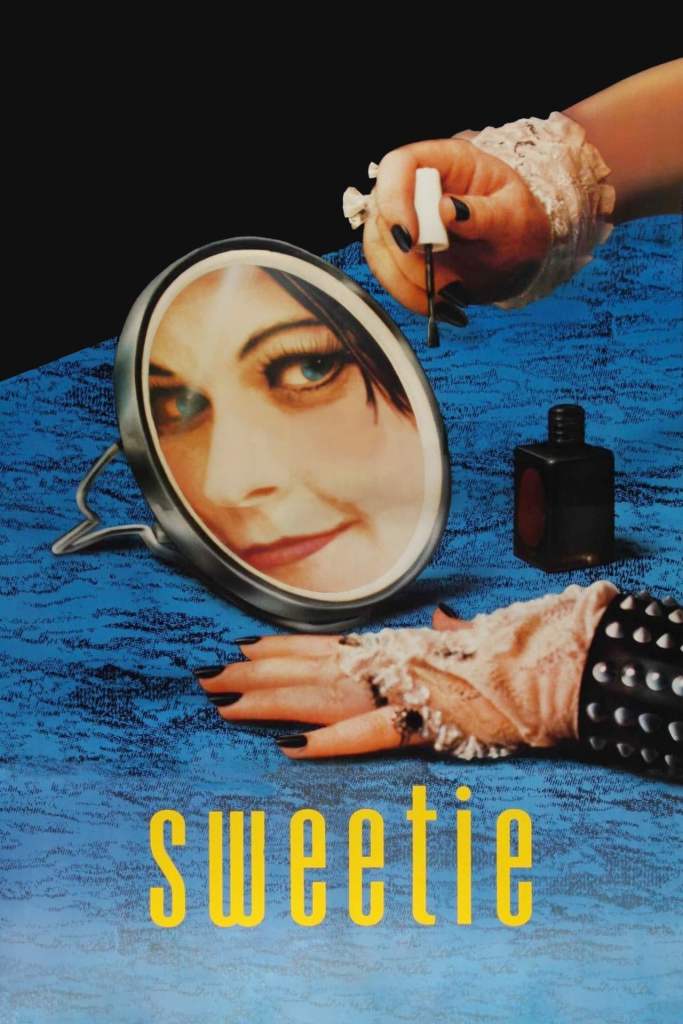
In recent years, New Zealand director Jane Campion is known for her The Power of the Dog, which got a lot of acclaim upon its Netflix release in 2021, netting her a Best Director Oscar. She’s also known for The Piano (haven’t seen it, but it’s up next!) and I highly recommend her miniseries An Angel at My Table (didn’t review it, but take my word on this one). Before I get to The Piano, let’s check out her first film, 1989’s Sweetie. All I can say is, they can’t all be hits. I’m willing to give her a pass based on her other work, and this being her first picture. It follows a woman named Kay, who either is socially awkward, or maybe every character in the movie is. I couldn’t quite tell, because all dialogue is delivered in a deadpan, black comedic way, and I wasn’t exactly getting it. Anyway, Kay is in a relationship with a man named Louis, but they are on the rocks. Into this bumpy life comes Kay’s estranged sister Dawn, whom everyone calls Sweetie. Sweetie was babied by their father and always thought she was going to be a star, but obviously that never happened. She still thinks it’s in her destiny though, and she’s dragging along some deadbeat named Bob who is her “manager.” The two break into Kay’s house and refuse to leave. Kay calls Dad to come take care of the situation, which is fortuitous timing, as he’s just been kicked out of his house by his wife/their mom. Apparently his coddling of Sweetie has always rubbed Mom the wrong way and she’s done with the whole thing. Sweetie’s antics border on the edge between repulsive and hilarious, but they are always to the extreme, as is the ending of the film, which you will not see coming. There’s good moments, some stuff works, but a lot of the comedy, and especially the way it was delivered, wasn’t doing it for me. Chalk this one up to a young director. ★★½
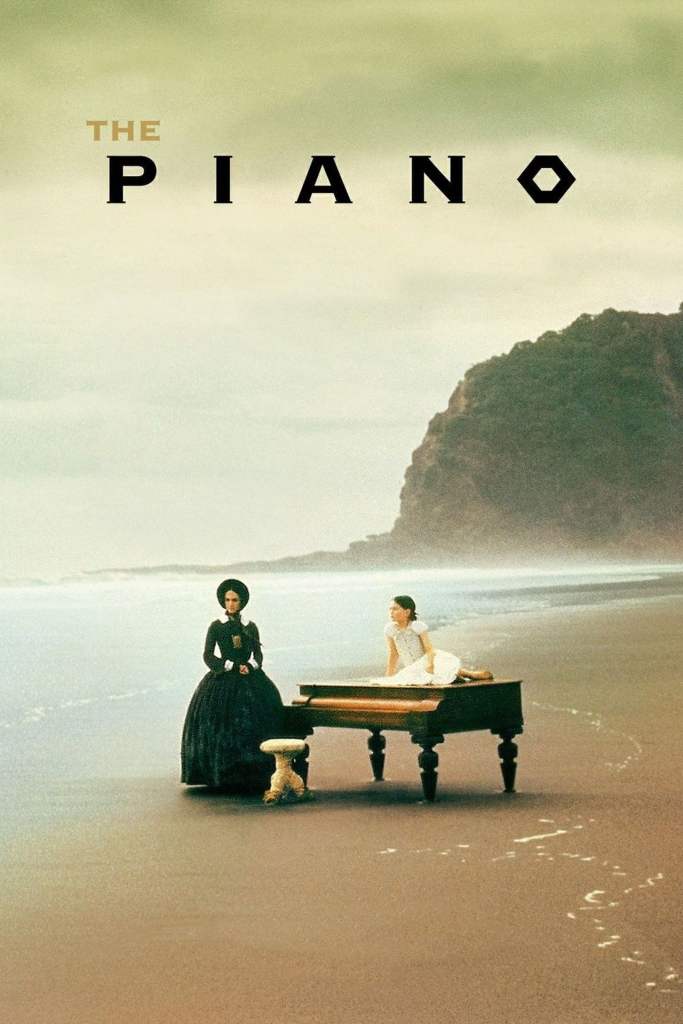
And finally, The Piano, the movie that put Campion on the map in 1993. It stars Holly Hunter as a mid-19th century woman named Ada, a woman who hasn’t spoken a word since she was 6 years old, the reason for which we never learn. At the beginning of the film, she lives in Scotland with her pre-teen daughter Flora (Anna Paquin) and her parents, but her father has just sold her to marry a man in New Zealand, Alisdair (Sam Neill). Mother and daughter head to the foreign land with all of her goods, including her beloved piano, Ada’s chosen way to express herself. She finds New Zealand wanting. First, Alisdair seems like a good man but he doesn’t get Ada at all, even leaving her piano on the beach where Ada and Flora arrive, because he doesn’t want to let his workers take the time to move it across the tropical land. Ada finally begs a local man, George Baines (a former whaler who has embraced the local people and their customs, played by Harvey Keitel) to take her to the beach so she can play it. George is moved by her playing; he’s a rough and tumble man who is moved to emotion for the first time in a long time. George gets the piano brought up to her house, and then contrives to get Alisdair to let Ada give him (George) piano lessons. Really he just wants to see and woo her. The two begin a passionate affair, which leads to all kinds of problems obviously. The film is gorgeously told, juxtaposing Ada’s silence with an at-times frantic piano soundtrack, all against the sweeping vistas of a rural country. The film won the Palme d’Or at Cannes, making Jane Campion the first female director to win the prize, as well as 3 Oscars (screenplay for Campion, Best Actress for Hunter, and Best Supporting Actress for Paquin at age 11, the second-youngest to win a competitive Oscar). ★★★★
- TV series recently watched: Superman & Lois (season 3), Foundation (season 2), Curb Your Enthusiasm (seasons 3-5)
- Book currently reading: The Fires of Heaven by Robert Jordan

 Jons Movie Takes
Thinking of Australia… Read the book, then watch the movie . The Thorn Birds… one of my all time favorites!!
LikeLike
I have seen the 80s miniseries The Thorn Birds, but have never read the book, will put it on my list! Little tidbit, Richard Chamberlain, who was the main guy in The Thorn Birds (Ralph de Bricassart) was David Burton in the above The Last Wave. Last Wave was in ’77, Thorn Birds in ’83.
LikeLike
Love My Brilliant Career, Piano and Last Wave. I haven’t seen the other two yet.
Here are my favorite Aussie movies (in no particular order):
Wake in Fright (1971)
Mad Max (1979)
Picnic at Hanging Rock (1975)
Breaker Morant (1980)
The Man From Snowy River (1982)
Road Games (1981)
A Cry in the Dark (1988)
The Road Warrior (1981)
Gallipoli (1981)
The Piano (1993)
Walkabout (1971)
Strictly Ballroom (1992)
Babe (1995)
Australia (2008)
LikeLike