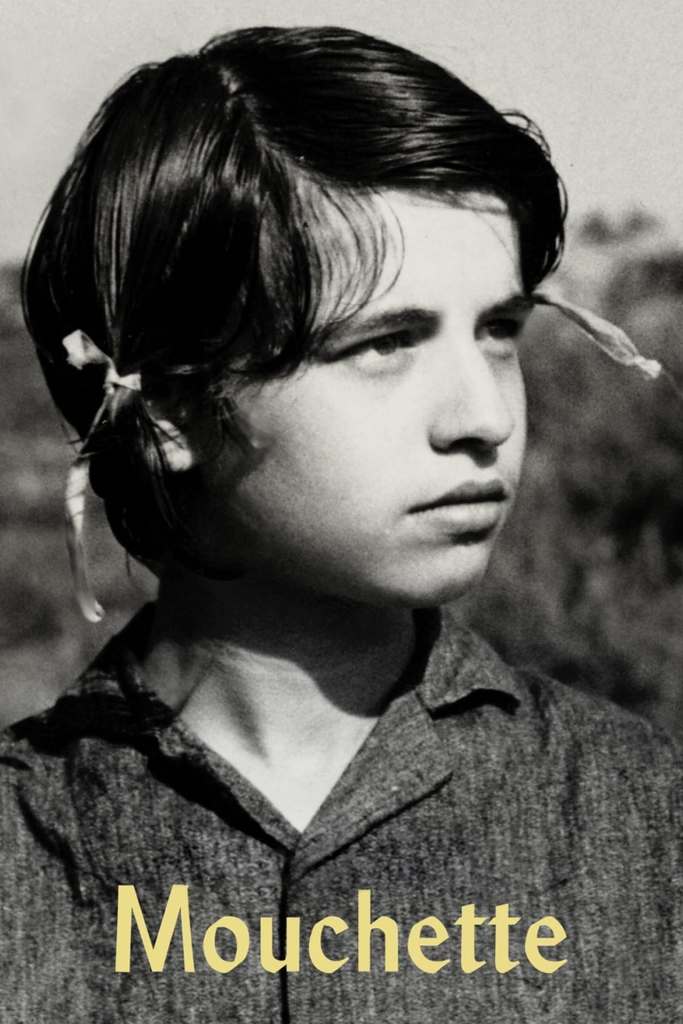
It’s been quite awhile since I did a set of reviews solely on French films, and with so many good ones out there, I’m back! Starting with a couple from Robert Bresson, whom I’ve mostly enjoyed. First, his film Mouchette, from 1967. For the first 20-30 minutes of this film (and it is only 81 minutes long), I was making fun of it in my head. First, every time Mouchette cries, which is often, there is a river of water running down her face; just an absurd amount of “tears.” Also, Bresson’s penchant for using non-professional actors and calling on them to show little emotion makes the performances feel very wooden. But as the movie goes along, you get the emotional heft that Bresson has built into the story, and I couldn’t help but get swept away. Mouchette is a young teenage girl who is the only one seemingly caring for her family. Her mom is bedridden, she has a younger brother who is only a baby, and her father is an alcoholic. Mouchette does all the housework, and while you’d think school would be a nice break, when she is there she is teased for her poor clothes and real wooden clogs. I think she has one true happy experience in the entirety of the film, a flirty moment with a boy at a fair, but it is cut short when her dad roughly escorts her away. Coming home from school one day, it begins to storm, and Mouchette becomes lost in the woods. She is found by a man who is the local poacher, and he warns her into silence about what she may have heard that night (the man killing another in the woods). The poacher will do more vile things to her than just warn though, before the night is through. Evil continues to descent on poor Mouchette, until she just can’t take it anymore. A very stark and haunting film, and the emotions that Bresson pulls from the viewer feel even stronger because he didn’t rely on “acting” to help you along. ★★★★
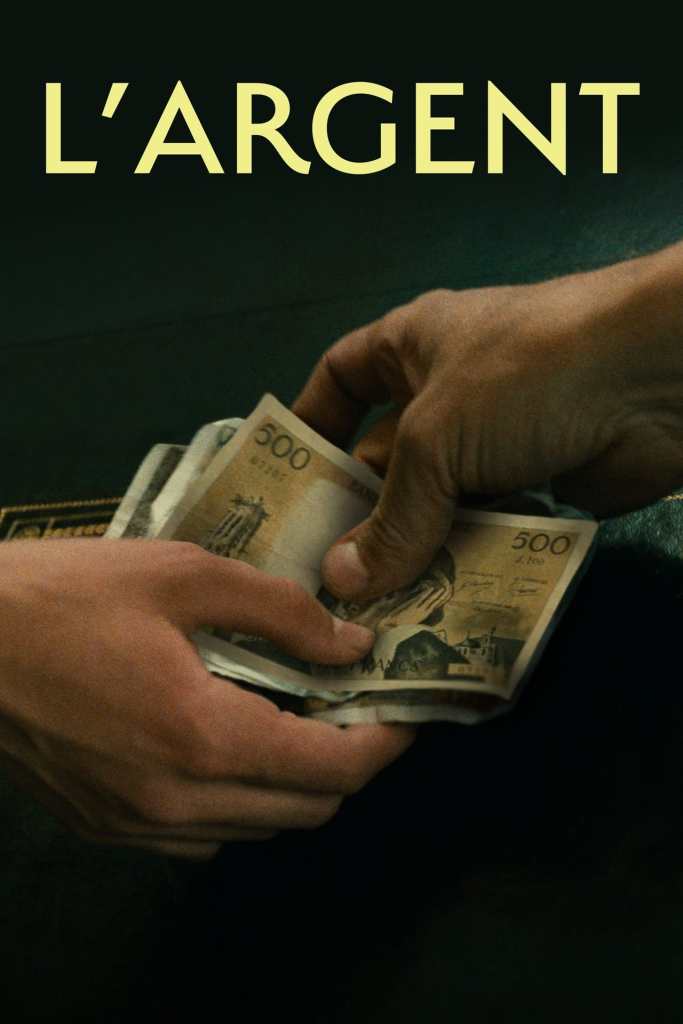
Bresson’s last film was L’Argent (Money), released in 1983. Based on a Tolstoy short story, the movie follows a man named Yvon, though at first, you don’t realize who is the main character, as the movie begins on a teen named Norbert. Norbert and his friends are a bunch of entitled idiots, who pass around counterfeit bills, rob ATM machines, and steal from their employers. One of those fake big bills brings about Yvon’s downfall. A shop he was servicing in his job pays him with the fake money (knowingly, because the manager didn’t want to get stuck with it). When Yvon tries to use that money later, he is arrested, and though he gets off with just a warning, that is the beginning of Yvon’s decent into crime. He loses his job over the ordeal, and when he gives a go at being the driver of a getaway car during a bank robbery, Yvon’s luck runs out. He is arrested again, and sentenced to 3 years. After his wife leaves him in jail, he tries (unsuccessfully) to kill himself. When he is released, he has pent up a bunch of anger that he will unfortunately unleash on the innocents he comes across out of jail. There are some emotional punches, like in the above film, but it does feel a bit all over the place, Again, a very brisk film at just 83 minutes, but I think more length could have made the picture feel fuller and less choppy. But of course, that was Bresson’s style, to only show “the important moments” in his character’s lives. Good, not great. ★★★
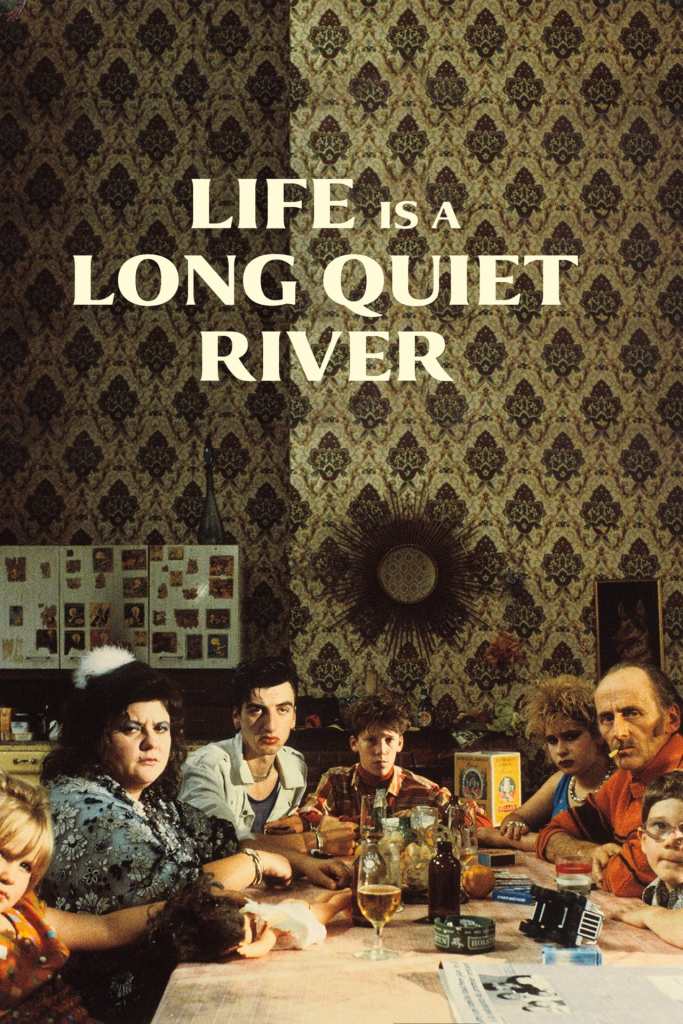
I hadn’t heard of this director, Étienne Chatiliez, but after the soul-sapping Bresson films I’d just watched, I was ready for a comedy. Life is a Long Quiet River is short on any kind of sustained laughter for quite awhile, but it redeems itself by the end. It follows two 12-year-olds, and their very different families. Maurice comes from the poor Groseille family, a motley group that scrapes by via hustles, cons, and outright thievery. Bernadette is of the Le Quesnoy family, whose head of household, Jean, owns the area’s electric company. Maurice and Bernadette have obviously lived very different lives, but they are all in for a rude awakening. A nurse and doctor at the local hospital have been having a long-term affair, and when the doctor’s wife dies, the nurse expects to finally be made legitimate. She is rebuffed though, so to get even, she comes clean to the doctor, the Groseilles, and the Le Quesnoys: the nurse switch their babies 12 years ago, in a moment of rage after a fight with the doctor. The Le Quesnoys are afraid that Bernadette will not take the news well and hide it from her, but they do go and “buy” Maurice from the Groseilles, introducing him to the family as a newly adopted son. Maurice has plans though to support his former family and friends, and starts putting them in action. Before the end, he has all of his friends and both families all hanging out together, much to the chagrin of his “new” parents. As I said, the movie begins slow, and I wasn’t into it at all for a good way through it, but once the child swap is made clear and Maurice digs in, it really picks up fast. ★★★

I don’t know why I keep going back to Claire Denis. Despite her esteem in film circles, I’ve yet to see one of her movies that I really liked. Beau Travail is supposed to be one of her best, and it’s just further proof that she’s not my cup of tea. The film is told from the perspective of a man named Galoup, relating the story of his days stationed in the African nation of Djibouti in the French Foreign Legion. Galoup is a hard-nosed sergeant who adores his commander, Forestier. This adoration leads to jealousy when Forestier praises a young man in the troop named Sentain. Galoup starts going out of his way to try to discredit or embarrass Sentain any time he can. When discussing this film, a lot of people talk about an explosive event when Galoup tries to take Sentain out, but that event isn’t until the very end of the movie. The entirety rest of the film has virtually no dialogue, and just lots of shots of the hot, sweaty, shirtless men working or playing out in the sun. The entirety of the plot of this film can be told in 2 sentences, so while the film is gorgeously shot, there’s no substance there. I don’t get the pride at all. ★½
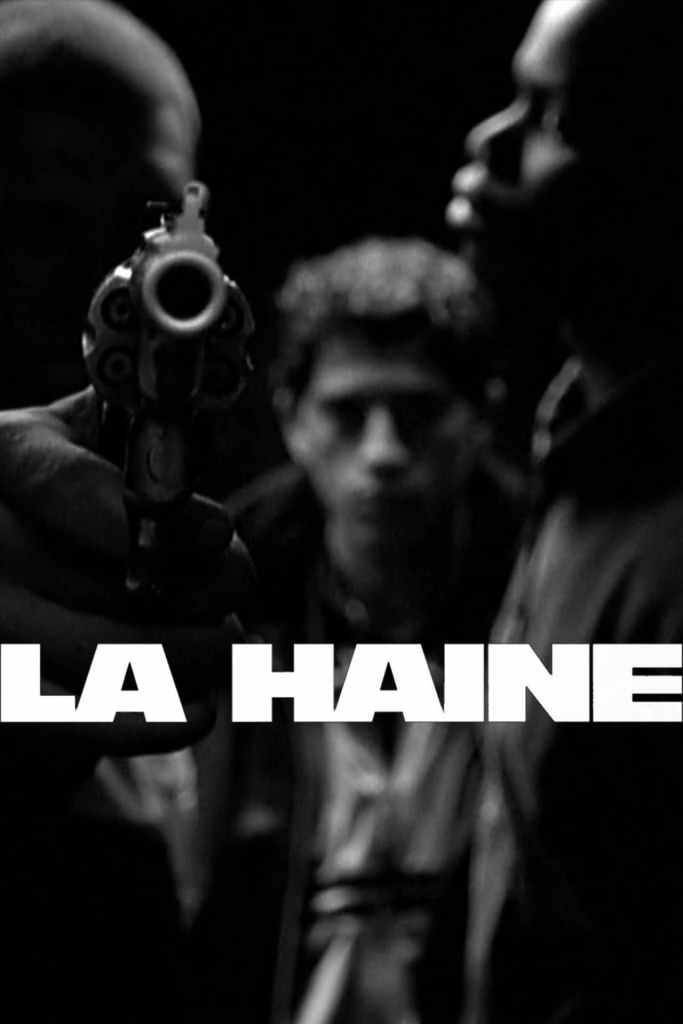
Let’s end on a high note. La Haine (literally Hatred, but released in the USA as Hate) is a social commentary about hatred leading to further hatred. Taking place in and around Paris in the mid-90s, a local Arab immigrant named Abdel has been injured while in police custody, an event that has led to riots in the streets. Friends of Abdel’s include Vinz (a Jewish man), Saïd (a Muslim), and Hubert (an African), all immigrants or sons of immigrants. The three friends are obviously very upset with police, and the movie follows a period of about 24 hours as the trio wander the streets of the poorer area where they live and, later, around Paris too. It shows their run-ins with drug dealers, gangs, skinheads, and, of course, various police officers. Tensions are high, especially because Vinz found a gun that had been lost by one of the policemen during the previous night’s riot, and he is vowing to kill a cop if Abdel dies in the hospital. There’s a lot of bravado by the three men, especially Vinz, but they are not much more than boys, which is apparent when faced with real violence. Hubert is the only one with a good head on his shoulders, thinking that the only real way out is to move and get to a better area. Of course, he too is a bit naive, because there are troubles everywhere. There’s lots to unpack from this film, the kind of picture that I think I could glean more and more from multiple viewings. And even though the ending is expected from early on, it is still shocking and absolutely incredible. ★★★★★
- TV series currently watching: Silo (season 1)
- Book currently reading: The Fires of Heaven by Robert Jordan

 Jons Movie Takes
One thought on “Quick takes on 5 French films”