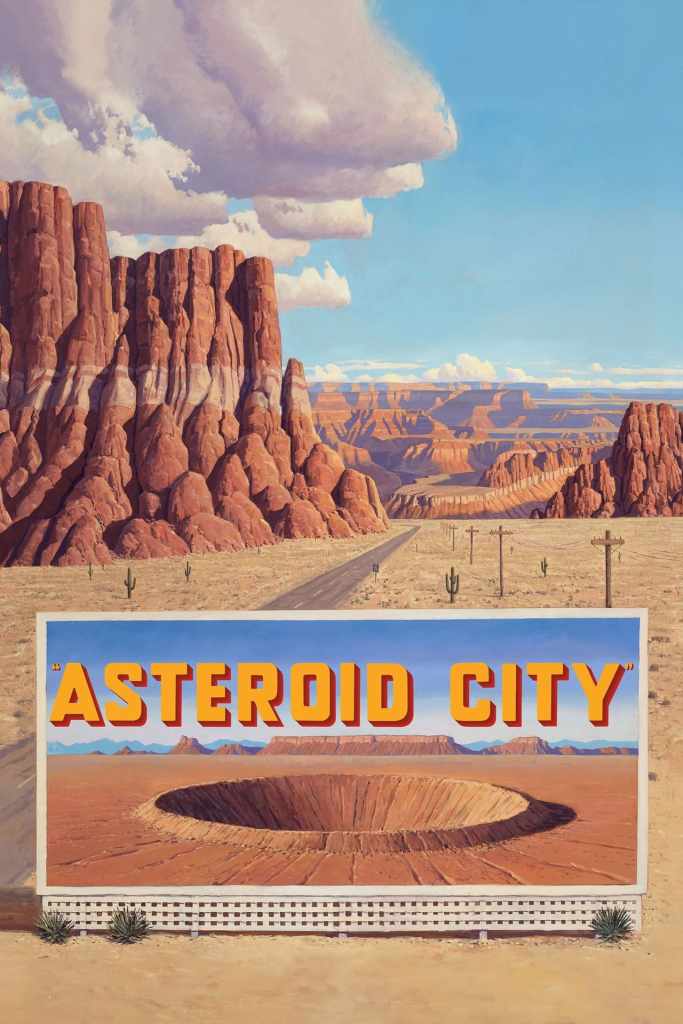
I’m very hot or cold on Wes Anderson, and his last film was a total bust, but I had expectations for his newest, Asteroid City, mostly because the cast is jam packed, so much so that just listing all the A-listers would fill this paragraph. Unfortunately though, talent doesn’t always deliver a great film, and I could not get into this one at all, so much so that I didn’t finish it. After 45 minutes, I had yet to see anything resembling a plot develop, and gave up. The film throws a ton of characters at the screen, as they deliver a play-within-a-play, with everyone going in a different direction. It is Wes Anderson doing his Wes Anderson-y thing, and it is all too much. He’s too busy trying to remind everyone how clever and quirky he is to try to give us some kind of overarching story to follow. I think I ready somewhere that his next picture would take a different course, and be a darker film. If true, I think that’s a great idea, because his shtick, once cute and fun, has gotten stale. ½
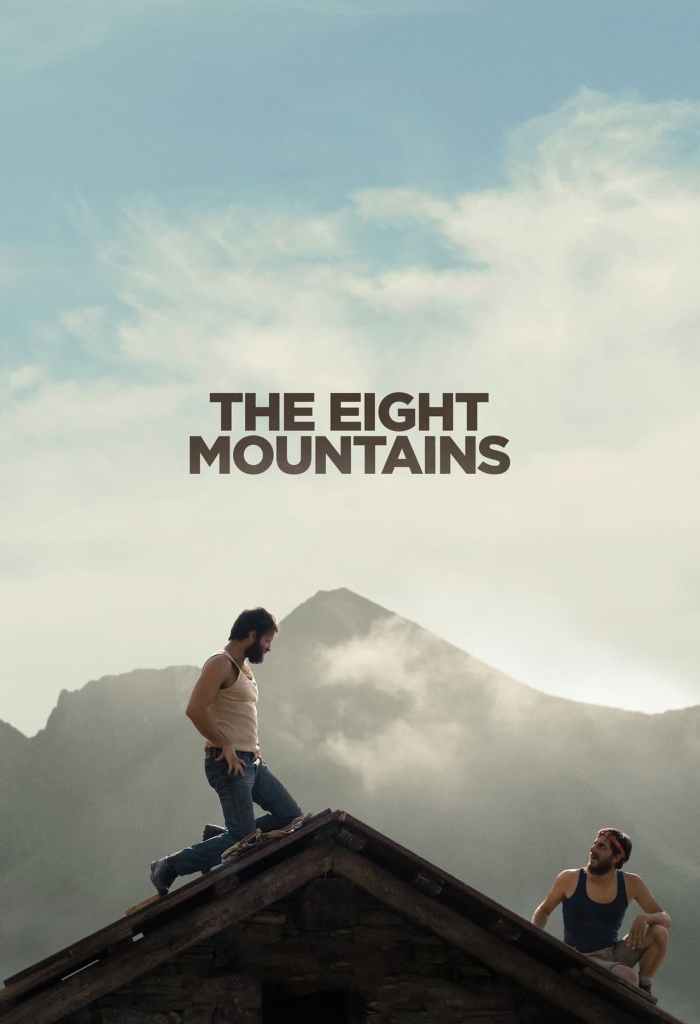
The Eight Mountains is an Italian movie with a deceptively intricate story and complex characters, and is quite simply one of the most gorgeous movies I’ve seen. It follows Pietro over a generation, starting when he’s a boy whose family rents a summer house in the Italian Alps. In the village, Pietro meets Bruno, the only other child in town, and the two become fast friends, a friendship which will come to last a lifetime. For those first couple years, Pietro’s family returns every summer and he and Bruno always pick up right where they left off, but a couple events change their course. First, Pietro’s family overreaches and offers to take Bruno with them to Turin at the end of one summer, to give him an opportunity at proper schooling. Bruno is a bright boy, but there’s already talk of him giving up on education to become a laborer as his family is, and Pietro’s family wants to give him an opportunity for something different. Bruno’s father shuts that down. Secondly, Pietro, always a bit at odds with his workaholic father, says some awful things, and heads out on his own, setting up a rift in his family that keeps him away for many years. He only returns after his father dies, to reconnect with his mom, and return to the mountain village to see to the rented house and close up his parents’ affairs there. Turns out Bruno is still around, and not only that, but Bruno kept in touch with Pietro’s parents all these years, continuing to hike the mountains with Pietro’s dad in the summers. The two young men bond again, in a project to rebuild a house up on the mountain, a house that Pietro’s dad always wanted to restore but never did. If the movie ended there, it would still be a great film, but it continues, as Pietro still needs to find himself and his course in life, and Bruno has his own rocky road to traverse. A deep and introspective film, with beautiful scenes that take your breath away. Makes me want to pack up and move to the mountains; I could watch this movie with no sound and still be awed and inspired. Helps that the story is just as moving! ★★★★★

Monica stars Trace Lysette as the eponymous Monica, a transgender woman returning to her hometown after years away. She’s a good looking woman, hammered home by all the catcalls she gets from men around her, so while she is accepted everywhere, she hasn’t been accepted in her own family. Monica is going home to watch after her ailing mother, from whom she is estranged. Her mother Eugenia (Patricia Clarkson) doesn’t even recognize Monica when she arrives, and at first Monica seems hurt by this, but her brother confirms that he knew she had transitioned, and even he wouldn’t recognize her if he didn’t know who it was. Monica and her brother slowly feel each other out, telling stories about their childhood as brothers, and eventually make confessions about deep hurts revolving around their mom. Unfortunately the film moves at a snails pace in a deliberately “art house” manner that gets old after awhile. The camera is always behind or to the side of the “action” on screen; at first I thought it was very indie, but after awhile, it seems like the director is either inept or purposefully hiding some shoddy acting. Knowing those involved, I tend to think it’s the former. There are some nice moments in the final 30 minutes, and while in some movies, the journey is worthwhile, I don’t think I can say the same this time. ★★½
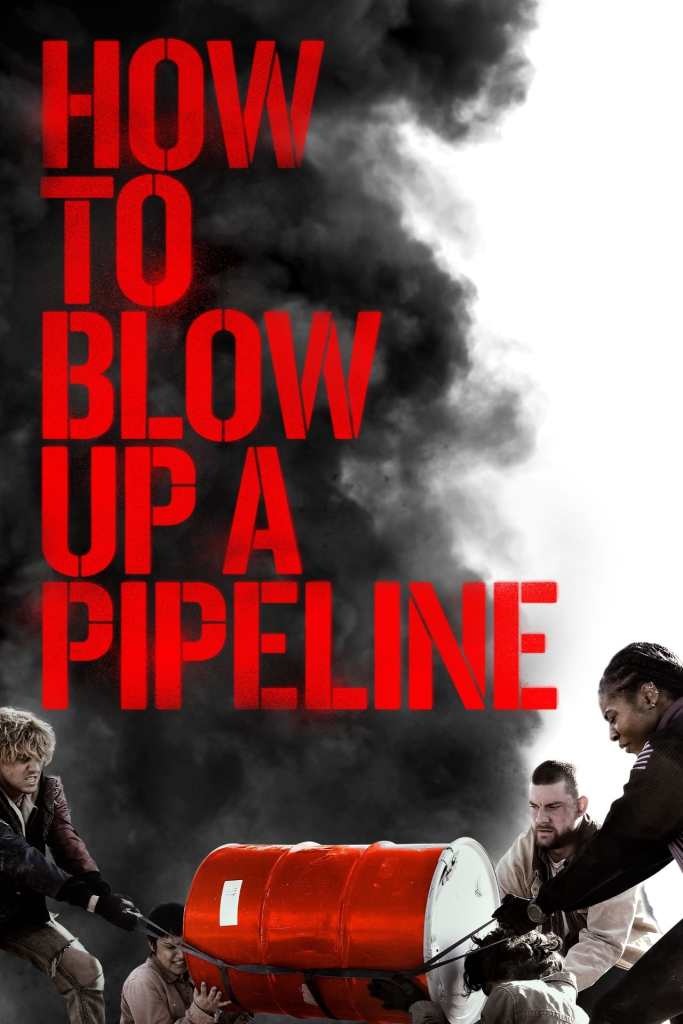
How to Blow Up a Pipeline is certainly a sensational title, and the movie is no less so, so it is unsurprising that reviews are on opposite sides of the spectrum with little middle ground. However, if you ignore the politics of it, the movie by itself is very engaging. Based on a nonfiction book by a climate activist who calls for sabotage against the companies that continue to perpetuate climate change, the film follows a group of like-minded 20-somethings who are tired of trying to bring about change peacefully and are ready to blow shit up to send a message. Each of the characters has been personally affected by climate change (one who lost a mother who died during a heat wave, one who has terminal cancer due to documented pollution from a local oil refinery, a man who has seen his generational land taken away by the government to build a pipeline, etc). The group is done talking, and while they don’t want to hurt anyone, they do want to do something that will be noticed. They target the new pipeline, and read up online how to build homemade explosives to pull it off. It is certainly an exciting film, and while it has a cast of little- or un-knowns, they (for the most part) do an admirable job of keeping the viewer engaged during the flashbacks that tell each person’s story. Obviously I am not a proponent of destroying property in any way, but I get why these characters are so angry. I’m not a denier; there’s far too much evidence of man-made climate change affecting our world, but I don’t think destroying stuff is the answer. Unfortunately I don’t know what the answer is. All that aside, this movie as a piece of fiction: ★★★½
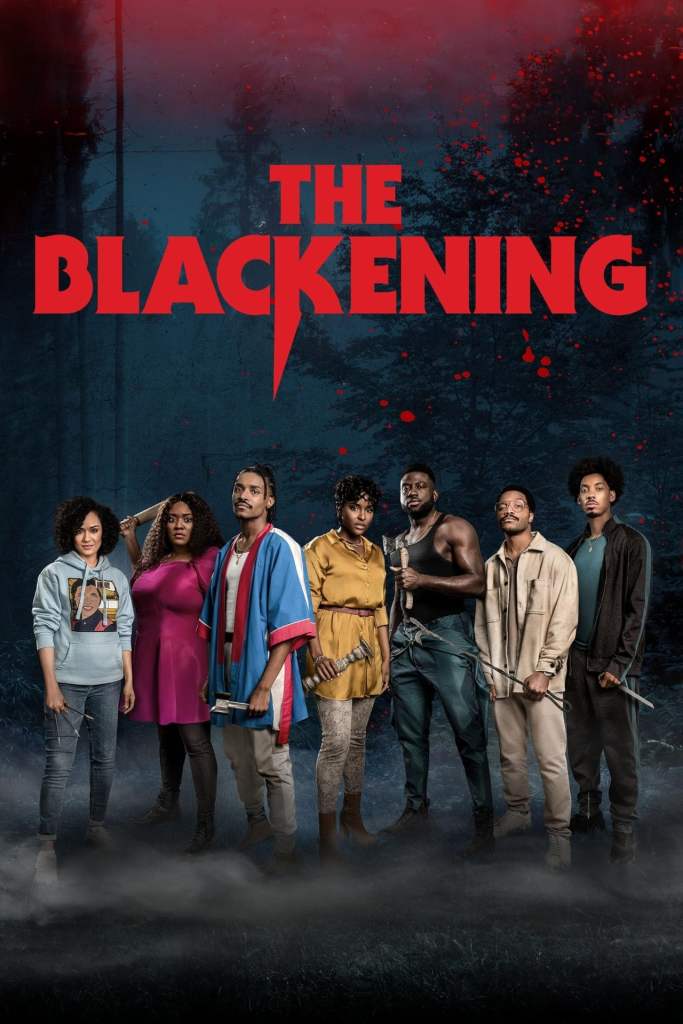
I recently wrote on my blog that I wasn’t much into modern comedies (I do like the classics, however) because even the ones that are supposed to be well thought of, I just don’t get into. Maybe I’m watching the wrong ones though, because I thoroughly enjoyed The Blackening. The set up itself is a joke: in a slasher film, it’s always the black person that is killed first, so what happens when the entire cast is black? Poking fun at the genre while remaining fun and funny, it follows a group of friends who rent a remote cabin to celebrate Juneteenth. Once inside, they discover a “game room” with a sadistic game, complete with a figurehead of a racist caricature front and center. The game asks questions about black culture and people of color in film and entertainment, and if a player answers wrong, someone dies, and eventually the friends are hunted by a giant Jason-like figure in a blackface mask. But this group of friends is willing to fight for each other, setting up a spectacular finale. The movie is smart but also biting, while keeping humor throughout. When it points out an element of racism from decades ago, the viewer laughs and thinks, “Well, at least we’ve come a long way since then.” When it points out something that is still a problem today, the viewer still laughs, but hopefully thinks about it. I certainly did. The jokes rarely go low brow for easy laughs, and yet I still laughed, out loud, non-stop. A rare modern comedy that I could watch again and again. ★★★★½
- TV series recently watched: The Big Door Prize (season 1), Slow Horses (season 1)
- Book currently reading: The Fires of Heaven by Robert Jordan

 Jons Movie Takes
One thought on “Quick takes on The Eight Mountains and other films”