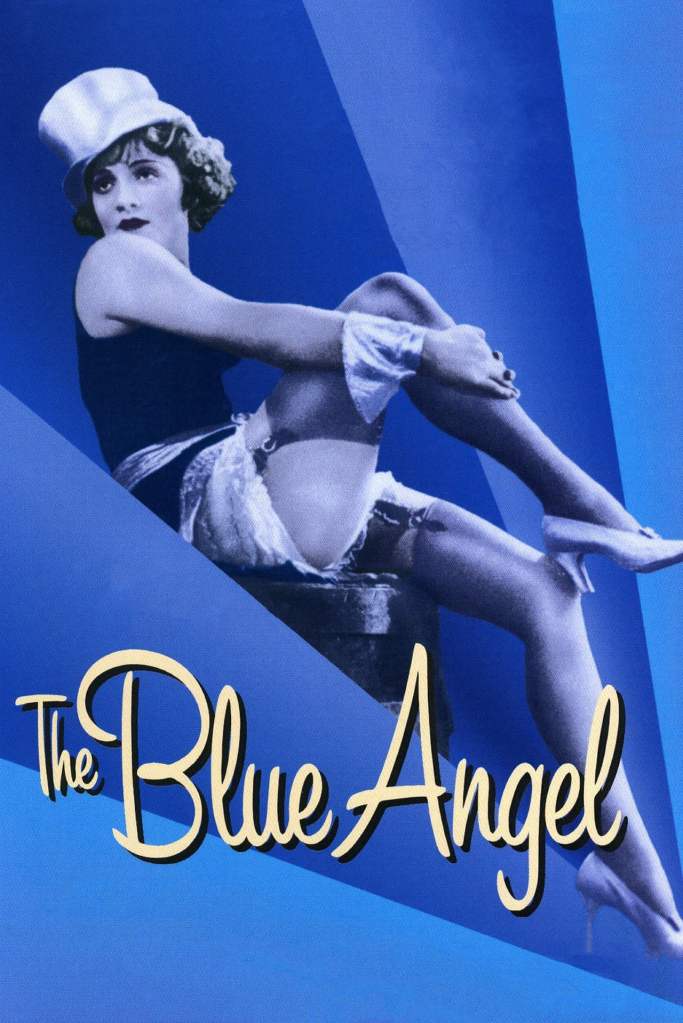
Up today is a series of films directed by Josef von Sternberg and starring Marlene Dietrich. I’ve seen a handful of Sternberg’s silent films and really liked them, but only even seen one Dietrich picture before. These are the ones that put her on the map, starting with her breakout, 1930’s The Blue Angel, filmed and released in her native Germany. It stars Emil Jannings as Dr Rath, a college professor. He learns that some of his boys have been frequenting a local cabaret called The Blue Angel, and in particular, ogling over its star, Lola Lola. Rath goes to ferret out his boys, but in doing so, becomes completely smitten by Lola (Dietrich), so much so that he spends the night with her, ruining his reputation and getting him fired from the college. Not one to admit defeat, Rath hits the road with Lola when her troupe is ready to move on. As the years go by though, he continually sinks to new lows, until 4 years later, when he has become the group’s stage clown, and Lola is entertaining new men. The film starts out slow with some dated, hokey comedy, but picks up speed and morphs into a serious drama before the end. Jannings, who won the first ever Best Actor Oscar for 1928’s The Last Command (also directed by von Sternberg) received top billing at its release, and he was hoping it would catapult his sound film pedigree, but Dietrich definitely steals the camera in every scene. Jannings would later star in several Nazi propaganda films, which ended his career after the war, but this would be Dietrich’s last film in Germany; she would find fortune and stardom in Hollywood. ★★★½
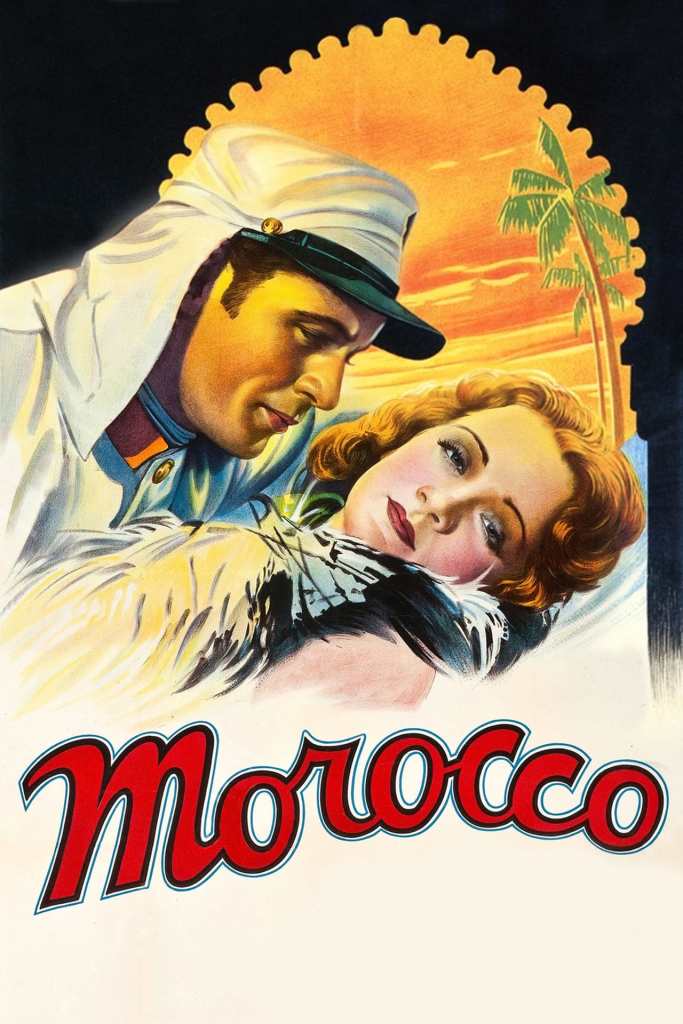
The Blue Angel had barely been released when Dietrich flew off to Hollywood to again team with von Sternberg for Morocco, a pre-Code film starring her and Gary Cooper. And pre-code it is: in the first 20 minutes we see Cooper’s character negotiating with a prostitute and Dietrich’s kissing a woman during a performance. It is the latter example that this film is most famous for. In the film, Tom Brown is a member of the French Foreign Legion and is new to the area, though he’s the type of soldier “with a lady in every port.” He becomes smitten by a new singer at the local club, Amy Jolly. Unfortunately for poor Tom, Amy has also caught the eye of wealthy French bachelor La Bessiere. Before Tom can pursue Amy though, he needs to get out of his current relationship, with his commander’s wife no less. This love quadrangle carries on for awhile, and honestly starts to drag the movie down, but the ending is just (barely) good enough. More than anything it was Dietrich’s coming out in Hollywood, and that one scene has left an iconic, lasting impression. I often see it in montages of old films. ★★½
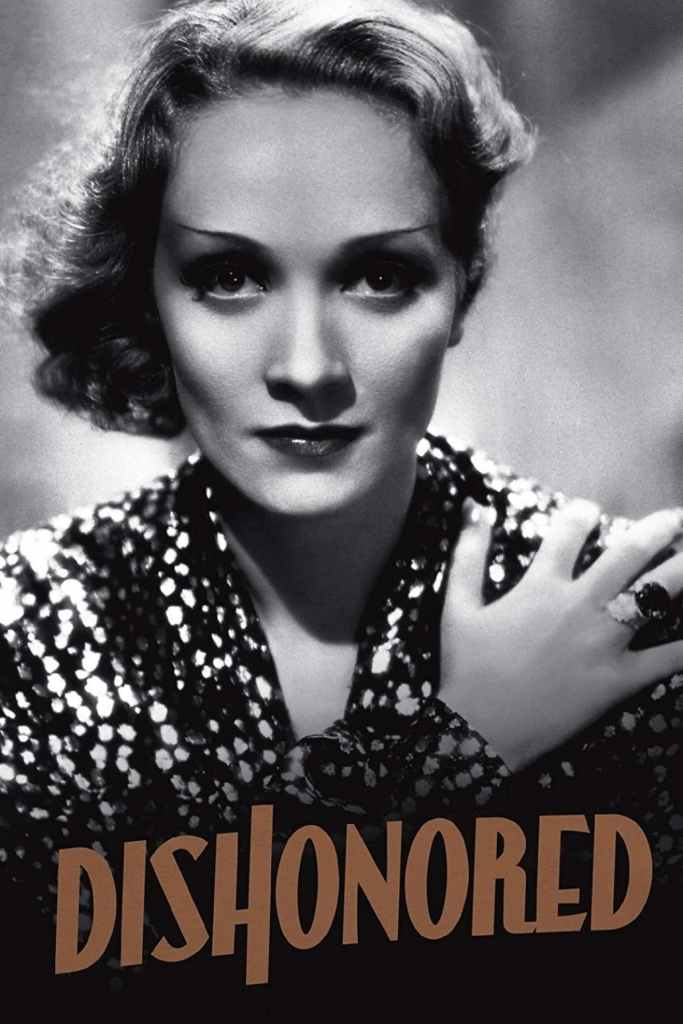
Dishonored is the best of the bunch (so far). Released in 1931, it gives Dietrich a much different role than her previous pictures. Taking place in Austria in 1915, as the first world war is chugging, she plays Marie Kolverer, a down-on-her-luck woman of the night. She quips early in the film that she is afraid of neither life nor death, a remark that gains the ear of an Austrian Secret Serviceman called simply “Chief.” He decides Marie has the looks and temperament to serve her country as a spy. Designated as Agent X-27, Marie is sent out into the field to root out traitors to Austria who’ve been flipped by Russia. Her first target goes down easily, giving Marie a bit of self confidence, but she finds her second quarry much more challenging, and not only because she falls in love with him. When Austria does nab him, Marie can’t bring herself to see him at the end of a firing squad, and so she acts to set him free, a decision she’ll come to regret. Strong film with lots of mystery, suspense, and even some 30s thrills, and an explosive ending that stuck with me. ★★★★½

Dietrich returned to her cabaret roots in 1932’s Blonde Venus, but unfortunately not with a great result. By 1932, she was a bonafide star and received top billing on this film, but it is also known for introducing the world to a very young Cary Grant, in one of his first films (and also an uncredited Hattie McDaniel in one of her first movies too; shoutout to my mom and her love of Gone With the Wind). Dietrich portrays a Helen, a German singer/dancer who falls for American scientist Ned Faraday, marrying him and relocating to America. A decade later, Ned has come down with Radium poisoning from his work and, unless they can come up with enough money to pay for a radical new treatment in Europe, he’s given about a year to live. Helen decides to return to the stage, and her looks immediately land her a well-paying job. On her first night out, she catches the eye of rich bachelor Nick Townsend (Grant), who, after hearing her story, decides to pay for her husband’s treatments. His actions aren’t completely on the up-and-up though; with Ned off to Europe for his therapy, Nick convinces Helen to move into his place. Over the next year, the couple genuinely fall for each other, leaving Helen in a very tight predicament when Ned is coming back. Upon his return, he learns of the affair and demands Helen leave, but she can’t take their son with her. Refusing to lose her son, and with Nick gone (he had previously left, unable to bear to see Helen around town with her husband), Helen takes her boy and runs away. But as money dwindles and investigators on her tail, she won’t find a happy ending out in the wild. The movie is pretty run-of-the-mill, and while Dietrich is eye-arresting as always, the movie is kind of all over the place and a bit of a mess. ★★

Shanghai Express is another hit. It is so different from the above movies, and really stands out. The film begins at a busy train station in Peking (Beijing), China, as characters from all over the world are trying to get on board for a train headed to Shanghai. Security is tight, as China is in the middle of a civil war. We spend the first half hour getting to know all these varied people, and it is awhile until we even see Dietrich on camera. But when she comes, she arrives with a splash. There are hints among the passengers that Shanghai Lily, a famous courtesan, will be on board, and that’s who Dietrich turns out to be. Unfortunately for her, she knows someone also on the train: former lover Doc Harvey, a British captain. The two still harbor feelings for each other, but the breakup was a bad one and they don’t know how to act towards each now, many years later. As they are feeling each other out, the war comes to the train, but not in physical fighting. After soldiers stop the train to pull off a suspected rebel fighter, another guest on the train unmasks himself as a leader in the insurgency, and he will use all of his chess pieces at his disposal, namely, the other guests as possible hostages/trade bait to get his fighter back from the government. A tidy film at just 80 minutes, but a whole lot happens in that time. Maybe not the best acting (I’m starting to see Dietrich as sort of a one-trick pony at this point), but the story is engaging and the ending, while predictable, is a good one. ★★★★
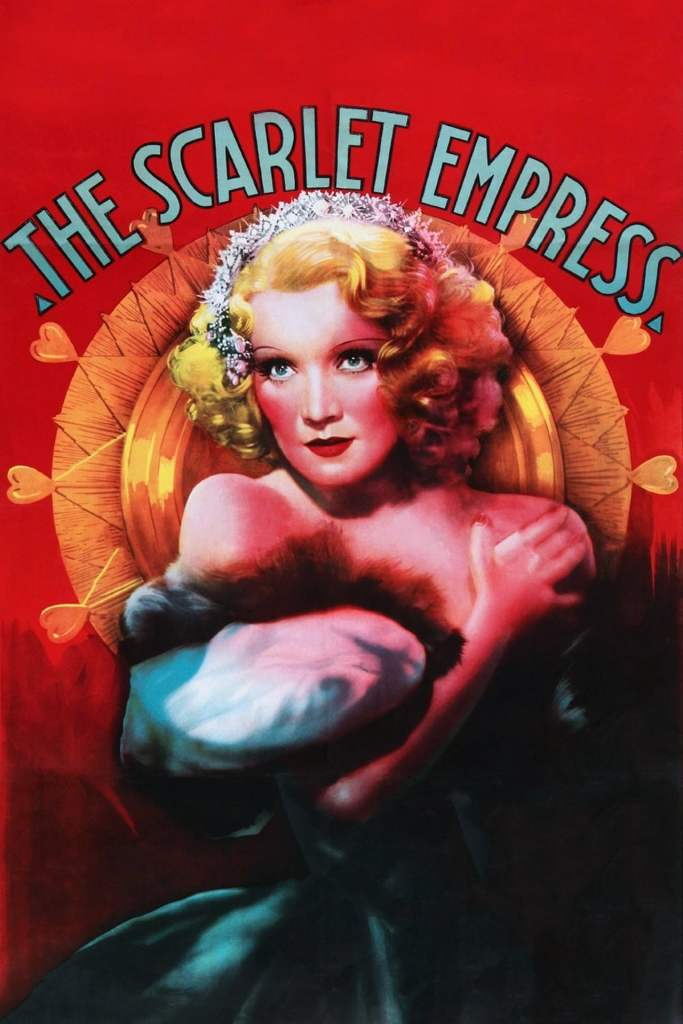
The Scarlet Empress has Marlene Dietrich portraying one of the most famous women of all time, Catherine the Great, empress of Russia. Lots of films and shows have touched on Catherine in the last few years, so I’m kind of Catherine’ed out, but I have to say, this film is one of the most spectacular of the bunch, regardless of being 80 years old (though it may not be the most accurate…). The movie follows Catherine as a young girl in Prussia, her innocence dashed when she is promised to the Grand Duke (and future emperor) Peter of Russia and she finds him to be anything but a young, dashing, heroic leader of men. Instead, she falls in love with Count Alexei, a womanizer at court and one-time lover of Peter’s aunt Elizabeth. When Catherine realizes that Peter will only keep her around until Elizabeth is gone, and plans to replace her, she moves to make sure she is the one doing the replacing. High on melodrama, but also high on production value, with gorgeous sets and costumes, the film isn’t bad, but it has some glaring problems. Its almost complete disregard for historical facts being one, but even as a film on its own, the flow of the story is cut (often) by constant intertitles narrating goings-on at court and around Russia. It seemed like anytime the movie started to gain some traction, it would come to an abrupt halt with an intertitle explaining something to the viewer. ★★★
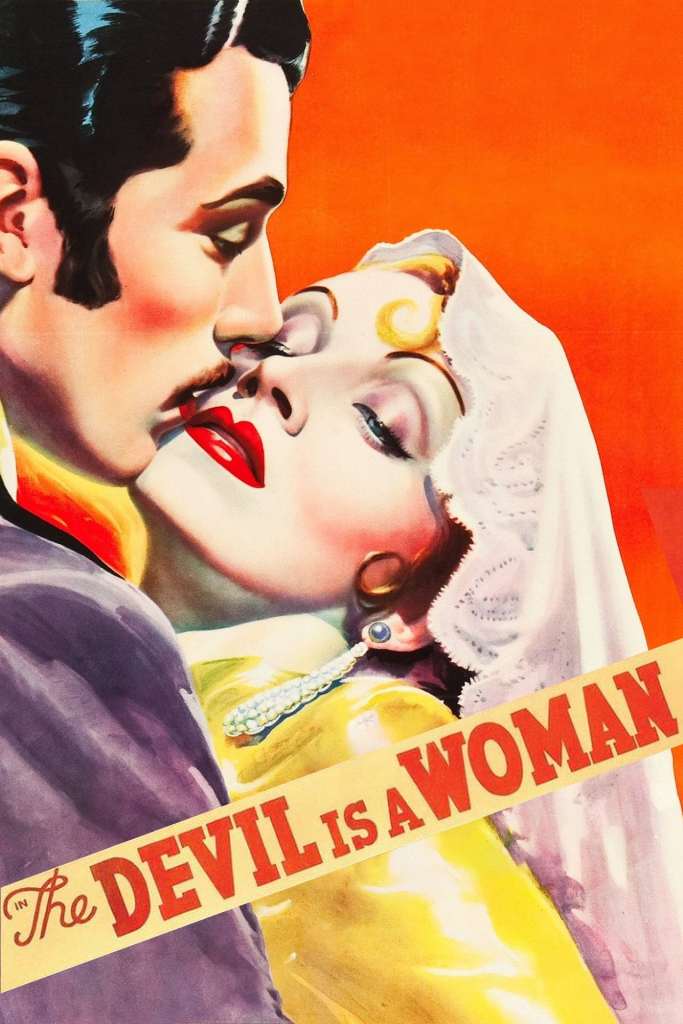
The Devil is a Woman was the last film made by this director/actress team, and the least well regarded at the time, though I liked it better than a couple of the above films. It begins with a young man newly arrived to Seville for a short stop before heading on to Paris. The man, Antonio, is smitten by a masked woman at the carnival. The woman, Concha, leaves him a note to meet that evening before disappearing, but before the rendezvous, Antonio runs into an old friend, Don Pasqual. When Antonio asks Don Pasqual if he knows this Concha, Don Pasquale relates an unbelievable-but-true story about the woman, who has given him (Pasquale) nothing but heartache. They first met many years ago, when Concha was just a poor factory worker, and over the years, he has lavished her with money and gifts to help her situation. In return, she would always disappear, for weeks, months, or years at a time, only to show up again when she was broke and in need of her sugar daddy. The last time Don Pasqual saw her, he gave her a small fortune to buy her out of a contract, and she promptly got into a carriage with another man and took off again. Antonio swears he’ll have nothing with the woman, now knowing all this, but he is just like every other man she has sank her teeth into, and it may lead to his ruin as well. It’s a fun little movie, with Dietrich openly playing the succubus that she so often hinted at in previous films. ★★★½
- TV series recently watched: Evil (season 3), Shantaram (series)
- Book currently reading: Moby Dick by Herman Melville

 Jons Movie Takes
One thought on “Quick takes on the von Sternberg/Dietrich films”