
Godland, from rising director Hlynur Pálmason (though I didn’t like his last film at all), received a lot of buzz over the last year in art film circles. Taking place in the 19th century, the film follows young and egotistical priest Lucas, as he leaves Denmark to build a church in Iceland. He goes in with all the self-importance of a man on a Godly mission, but is quickly humbled. He doesn’t speak the language, and early on his translator dies by drowning when Lucas insists on fording a river, despite his guide’s (Ranger’s) advice. Ragnar can’t stand this young hotshot; he can’t ride a horse, he can’t speak the language, and he refuses to listen to common sense. When they do reach their destination, Ragnar sticks around to help build the church building, but Lucas never gives him his due. Its a very austere movie, just like its setting in rural Iceland. The title can be taken many ways too; is it God’s land, Lucas’s land because of his drive, or is a land that God has forsaken? Despite the picturesque landscapes (pointed out by the priest, who, for awhile, keeps taking breaks to take pictures), tragedy befalls them at every turn. The movie shows the beautiful bleakness of the countryside, and that combined with its pacing definitely gives off Tarkovsky vibes, but I didn’t feel the emotional heft that his movies did. ★★½

What a stupid, meandering, meaningless movie. Montréal Girls is your typical “good boy turned bad” flick, but done with a budget of about $5 and terrible actors who seem to be just off the stage of their high school play. Ramy is new to Montreal, staying at his uncle’s house as he starts medicine school to become a doctor. He’s always stuck to the straight and narrow, but his cousin, who fronts a punk rock band, introduces him to some wild girls, and suddenly Ramy becomes a party boy, for seemingly the first time in his life. Pretty crazy that a couple pretty faces can derail a young man’s goals so easily, but I guess it wouldn’t be the first time. The story is so staid, and the acting and dialogue so wooden, that I had a hard time believing anything I was seeing. Should have quit after the first 15 minutes, but somehow made it about an hour in. With less than 30 minutes to go, I decided I had no desire to see how Ramy’s life turned out, and gave up. ½
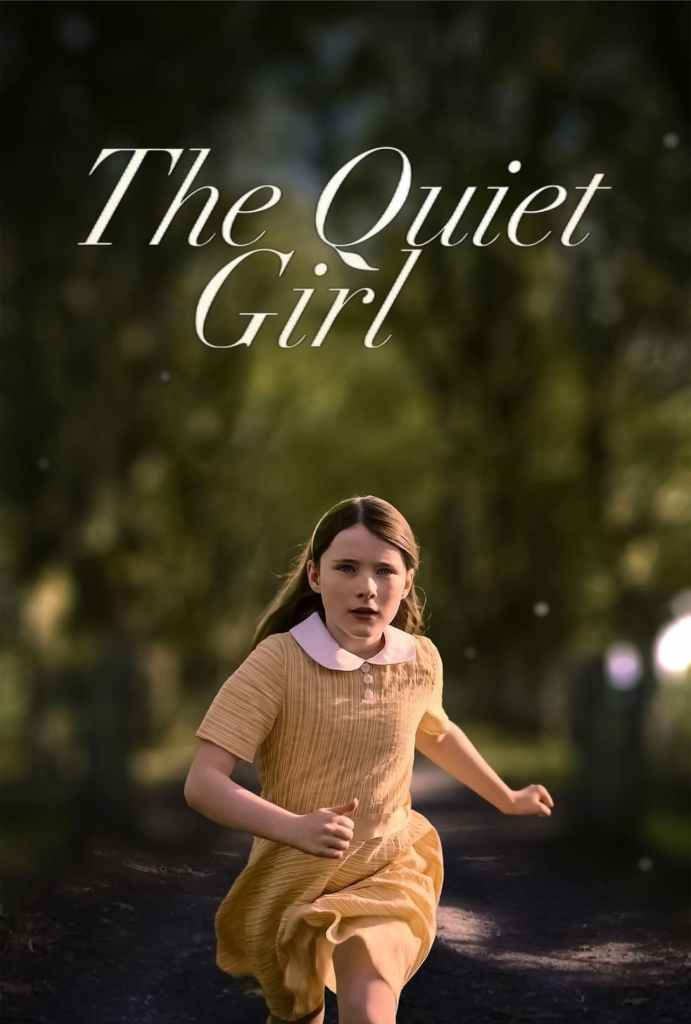
The Quiet Girl, on the other hand, shows what can be done with a small team and small budget, but in the right hands. In his feature film debut, Colm Bairéad tells the story of nine-year-old Cáit, an Irish girl from a poor family. She’s the third or fourth youngest daughter, with another child younger than her, and another baby on the way. Her dad is an uncaring asshole, and treats Cáit as bad as a human being can treat another. She lives in fear of home and school alike, and has built up a wall around herself for her own protection. She gets a reprieve when, one summer, her dad has had enough with her getting in trouble in school, and sends Cáit to live with her aunt and uncle, a couple towns over. Eibhlin is immediately welcoming and, while her husband Séan is quiet and almost unapproachable at first (the reasons of which will come out later), he still shows much more compassion than Cáit is used to at home. For the first time in her life, Cáit is in a nurturing, caring environment, and she starts to blossom. Along the way, we find out why this awesome older couple doesn’t have children of their own. When they are sitting around the table having dinner one evening, and the advertisement on the radio talks about all the new school supplies in stock at the local store, you realize this idyllic vacation is coming to an end, and Cáit will have to return home to her hell. No one can face it, not even the viewer. A quiet but beautifully told film about the perseverance of the human spirit, and not just for Cáit. Despite the duds like Montréal Girls, gems like The Quiet Girl are why I keep coming back to these independent pictures. ★★★★½

I think I was expecting something different from what Chile ’76 is actually about. The quick blurb online made it sound like a thriller, and while it has its (light) moments of tension, it is anything but a thriller. Taking place in the eponymous country and time, Carmen is a well-to-do housewife of a doctor, living a comfortable life despite the country around her in turmoil. 3 years ago, a military coup overthrew the government and there’s now a dictator running things. In this current environment, the local priest brings Carmen a man to hide in her winter home. Elias has been shot, and the priest explains that the man was just stealing food to survive and is now in hiding. Carmen suspects something more, and eventually learns that Elias is tied up in the resistance movement. Inexplicably, Carmen decides to join the cause. Other than the fact that before she was rich, she was a nurse, and still enjoys helping others, the movie doesn’t do a good job explaining why she’d be willing to put herself and her family at risk by helping a cause she doesn’t seem to believe in. Carmen spends the rest of the movie passing codes to people around the city. If you find that suspenseful, then good for you, but I kept waiting for some big explosive event which never comes. ★★

Let’s get the obvious out of the way first. Sisu is a ridiculous movie, but that doesn’t mean it’s not entertaining. Taking place in 1944 when Germany is in retreat on the eastern front, the movie follows an old man, former Finnish soldier Aatami Korpi, who made a reputation of slaughter and ruthlessness against the Russians in previous wars. He’s sworn off war though and has become a prospector. He strikes it rich, and while trying to get to a city that hasn’t been burned by Nazis, he is waylaid by them. They try to kill him and take his gold, but he initially gets away. Calling in to their superiors, they find out about Korpi’s legendary status among his enemies, and his nickname Koschei (the immortal), because he cannot be killed. Seeing dollar signs, the Nazi commander pursues him anyway, and eventually gets that gold, but do you think Korpi is going to let that go? Finding increasingly outlandish ways to kill Nazis is always a good time. Don’t expect any deep meaning or enlightenment, but it is a better-than-average action flick with plenty of gore to satisfy. ★★★
- TV series recently watched: Mrs Davis (miniseries), 1923 (season 1)
- Book currently reading: Dune House Harkonnen by Herbert & Anderson

 Jons Movie Takes
One thought on “Quick takes on The Quiet Girl and other films”